2027 Medical Assistant (MA) vs. Certified Nursing Assistant (CNA): Explaining the Difference

Co-Founder and Chief Data Scientist
If you are comparing entry-level healthcare careers, the medical assistant (MA) versus certified nursing assistant (CNA) decision usually comes down to one question: do you want a role that mixes front-office healthcare operations with basic clinical tasks, or do you want a more hands-on bedside care role focused on helping patients with daily needs?
Both jobs can be meaningful starting points in healthcare, but they are not interchangeable. Medical assistants commonly support physicians and clinics through patient intake, records, scheduling, billing support, and basic procedures. CNAs work under nursing supervision and spend most of their time helping patients with bathing, dressing, eating, mobility, toileting, and comfort. This guide explains the differences in duties, training, certification, workplaces, salary ranges, career growth, and how to choose the better path for your goals.
Quick Answer: MA vs CNA
A medical assistant is usually the better fit if you want a clinic-based role with both administrative and clinical responsibilities. A CNA is usually the better fit if you want direct patient care, especially in hospitals, nursing homes, home health, hospice, or long-term care settings. CNAs generally need state certification, while MA certification is often employer-preferred rather than universally required.
| Category | Medical Assistant | Certified Nursing Assistant |
| Main focus | Clinical support plus administrative work | Direct bedside care and activities of daily living |
| Typical supervisor | Physician, nurse practitioner, physician assistant, or clinic manager | Registered nurse or licensed practical nurse |
| Common settings | Physician offices, clinics, outpatient centers, urgent care | Nursing homes, hospitals, assisted living, home health, hospice |
| Training path | Certificate, diploma, or associate degree program | State-approved CNA training program and competency exam |
| Certification | Often recommended; may improve hiring prospects | Generally required through the state registry |
| Best for | Students who want variety, scheduling duties, records work, and patient intake | Students who want close patient contact and nursing-care experience |
What You Should Know About the Difference Between MA and CNA
- Medical assistants have a wider mix of tasks. MAs often combine patient-facing clinical duties with office responsibilities such as appointment scheduling, medical records, insurance forms, and billing support.
- CNAs provide more direct physical care. Certified nursing assistants help patients with activities of daily living, including bathing, dressing, eating, toileting, transferring, and mobility.
- CNA certification is tied to state requirements. CNA programs are often shorter, but graduates typically must pass a competency exam and be listed on a state registry before working as CNAs.
- MA training can vary more by employer and program. Medical assisting education may lead to a certificate, diploma, or associate degree. Certification such as CMA, RMA, NCMA, or CCMA is commonly valued by employers.
- Salary potential and advancement paths differ. MAs often have broader office, clinical, and administrative options. CNAs may use the role as a stepping stone toward LPN or RN education.
- What does a medical assistant do?
- What education is required to become a medical assistant for 2027?
- Which MA certifications should you compare?
- Where do medical assistants work?
- What does a certified nursing assistant do?
- What education is required to become a certified nursing assistant?
- How long does CNA certification take?
- How can continuing education help MAs and CNAs move forward?
- Which healthcare facilities hire CNAs?
- What advanced degree options can support healthcare career growth?
- Can short-term certification courses improve healthcare job options?
- Can accredited medical coding programs expand healthcare career paths?
- What is the average salary for MAs and CNAs?
- Can healthcare and technology skills improve career mobility?
- What training costs and financial aid questions should students ask?
- How can informatics education affect healthcare careers?
- Why combine clinical and administrative training?
- What is the job outlook for MAs and CNAs?
- How can digital skills reshape healthcare work?
- What accreditation and quality indicators matter in healthcare training?
What does a medical assistant do?
A medical assistant is a healthcare support professional who helps a medical practice run smoothly by performing both patient-care and administrative duties. In a typical clinic, an MA may take vital signs, record patient histories, prepare exam rooms, assist providers during procedures, collect basic specimens, or administer injections or medications when allowed by employer policy and state rules. In 2023, there were 783,900 MAs in the healthcare workforce.
The role also includes office work that directly affects the patient experience. MAs may schedule appointments, update electronic health records, organize test results, process insurance paperwork, support billing workflows, answer patient questions, and coordinate follow-up instructions.
This combination makes the MA role a practical choice for people who want patient interaction but also enjoy organization, documentation, and clinic operations. MAs are often among the first staff members patients meet, so communication, professionalism, and attention to detail matter as much as technical skills.
Students who want structured preparation often compare medical assistant trade schools because these programs focus on the practical clinical and administrative skills needed for entry-level work.
| Medical Assistant Task Area | Examples of Common Duties | Why It Matters |
| Patient intake | Taking histories, measuring vital signs, reviewing medications | Helps providers make efficient and informed care decisions |
| Clinical support | Preparing exam rooms, assisting with procedures, collecting specimens | Keeps patient visits moving safely and efficiently |
| Administrative support | Scheduling, records management, insurance forms, billing support | Reduces delays and improves clinic workflow |
| Patient communication | Explaining instructions, answering basic questions, coordinating follow-ups | Improves patient understanding and continuity of care |
What education is required to become a medical assistant for 2027?
Medical assisting requirements are not the same everywhere. There is no single national education rule that applies to every MA position, but most employers prefer applicants who have completed formal training and can show competency in both clinical and office procedures.
- High school diploma or GED: Most medical assistant programs expect applicants to have a high school credential or equivalent before enrollment.
- Medical assistant certificate, diploma, or associate degree: Formal training is strongly recommended because it covers medical terminology, anatomy, clinical procedures, pharmacology basics, patient communication, records, and insurance processes. Students looking for lower-cost options may compare affordable online medical assistant programs.
- Certificate or diploma route: These programs are usually focused on job-ready MA skills and are often completed in less time than an associate degree.
- Associate degree route: Associate programs typically include general education courses along with medical assisting coursework. They may be useful for students who want a broader academic foundation or plan to continue studying later.
- Externship or practicum: Many programs include supervised experience in a clinic or healthcare facility. This can be important for building confidence before applying for jobs.
- Professional certification: Certification is not always mandatory, but it can help employers verify your training and may improve competitiveness for some roles.
Certificate, Diploma, or Associate Degree: Which MA Path Makes Sense?
| Program Type | Best For | Trade-Offs |
| Certificate or diploma | Students who want focused MA preparation and a shorter route into the workforce | May offer fewer general education credits for transfer into another degree later |
| Associate degree | Students who want broader coursework or may continue into healthcare administration, nursing, or another healthcare degree | Usually takes longer and may cost more than a certificate or diploma |
| Employer-based training | Applicants who find a clinic willing to train on the job | May limit certification eligibility depending on the credentialing organization |
Which MA certifications should you compare?
Several medical assistant credentials are recognized by employers. The best choice depends on your training program, eligibility route, employer expectations, and whether you want a credential with broad clinical and administrative coverage. Students in a hurry sometimes look into accelerated medical assistant programs, but they should still confirm whether the program supports the certification they want.
Certified Medical Assistant (CMA)
- Credentialing organization: American Association of Medical Assistants (AAMA)
- Primary emphasis: Broad medical assisting knowledge across clinical and administrative tasks.
- Eligibility: Requires graduation from a CAAHEP or ABHES-accredited program.
Registered Medical Assistant (RMA)
- Credentialing organization: American Medical Technologists (AMT)
- Primary emphasis: Verification of medical assisting competence across common MA responsibilities.
- Eligibility: Offers multiple pathways, including accredited education and qualifying work experience.
National Certified Medical Assistant (NCMA)
- Credentialing organization: National Center for Competency Testing (NCCT)
- Primary emphasis: Clinical procedures, patient care, office operations, and related knowledge.
- Eligibility: Requires an NCCT-approved program or relevant qualifying experience.
Certified Clinical Medical Assistant (CCMA)
- Credentialing organization: National Healthcareer Association (NHA)
- Primary emphasis: Clinical tasks such as exam assistance, medication administration support, and EKG-related duties.
- Eligibility: Requires completion of a training program or qualifying work experience.
| Certification | Strong Fit If You Want | Before You Enroll, Confirm |
| CMA | A widely recognized credential tied to accredited MA education | That your program is CAAHEP or ABHES accredited |
| RMA | A credential with education and experience eligibility options | Which eligibility route you qualify for |
| NCMA | A credential covering patient care and office procedures | Whether your program is NCCT-approved or your experience qualifies |
| CCMA | A more clinically focused credential | Whether local employers value it for the roles you want |
Where do medical assistants work?
Medical assistants are most common in outpatient and office-based healthcare settings, where patient volume, scheduling, records, and basic clinical procedures all need coordinated support.
- Physicians' offices: This is the largest employment setting for MAs. They support physicians in private practices, group practices, and clinics. In 2023, a total of 430,490 medical assistants worked in offices of physicians.
- Hospitals: MAs may work in outpatient departments, specialty units, emergency-related settings, or hospital-affiliated clinics, depending on employer policies.
- Outpatient care centers: These facilities treat patients who do not require overnight hospitalization. MAs may assist with intake, histories, minor procedures, and follow-up coordination.
- Urgent care and specialty clinics: MAs may work in ambulatory surgery centers, physical therapy-related clinics, chiropractic offices, dermatology clinics, cardiology practices, and other specialty environments.
The MA role is also changing as clinics adopt more digital workflows. If you are researching how to become a certified medical assistant, pay attention to programs that teach electronic health records, telehealth workflows, patient communication, and privacy practices.
- Telemedicine support: MAs may help prepare patients for virtual visits, collect information before appointments, coordinate follow-up steps, and support remote patient education.
- Insurance and administrative roles: MAs with strong documentation and billing knowledge may move toward claims review, records coordination, prior authorization support, or revenue cycle roles.
What does a certified nursing assistant do?
A certified nursing assistant is a direct-care worker who helps patients with basic daily needs under the supervision of registered nurses or licensed practical nurses. The role is physically active, highly patient-facing, and especially common in long-term care, hospital units, rehabilitation, assisted living, home health, and hospice settings.
CNAs help patients bathe, dress, eat, use the restroom, reposition safely, transfer between beds and chairs, and move around when appropriate. They may also take vital signs and report changes in patient condition to the nursing staff. Because CNAs spend so much time with patients, they are often the first to notice changes in comfort, mood, mobility, skin condition, appetite, or alertness.
A college degree is not typically required for CNA certification. Some learners later choose broader academic options such as online associate degree programs, but the standard CNA entry path is a state-approved training program followed by a competency exam.
What education is required to become a certified nursing assistant?
To become a CNA, you generally need to complete state-approved training, pass a competency exam, and be added to your state’s CNA registry. Requirements vary by state, so students should always confirm the rules where they plan to work.
- High school diploma or GED: Many CNA programs require a high school credential or equivalent for admission, though requirements can vary.
- State-approved CNA training: Students must complete an approved program that teaches safe patient care, infection control, communication, basic anatomy, vital signs, and assistance with daily living. Some students also explore longer healthcare pathways, including programs discussed among the best associate degrees.
- Clinical experience: CNA training includes supervised practice in a healthcare setting so students can demonstrate safe care techniques.
- Competency exam: Graduates must usually pass a written or knowledge-based portion and a hands-on skills demonstration.
- State registry listing: After passing the required exam, candidates are added to the state registry and can work as CNAs if they meet all state conditions.
How long does CNA certification take?
Most certified nursing assistant training programs take between four and 12 weeks to complete, including classroom instruction and clinical practice. As of 2023, there were 1,469,400 nursing assistants and orderlies based on Bureau of Labor Statistics data.
The exact timeline depends on several practical factors:
- State rules: Each state sets its own minimum training and testing requirements, which can affect program length.
- Program schedule: Full-time, evening, weekend, hybrid, and online-supported programs may move at different speeds.
- Seat availability: Some programs fill quickly, so the start date can matter as much as the length of the course.
- Exam scheduling: Students may need additional time after training to schedule the competency exam and receive results.
CNAs who want to move into higher-level nursing roles often compare best CNA to LPN bridge programs online because bridge programs are designed for workers who already have patient-care experience.
| CNA Career Step | What Happens | Decision Tip |
| Training program | Classroom and clinical instruction | Choose only a state-approved provider |
| Competency exam | Written or knowledge test plus skills demonstration | Ask the program about pass rates and retake policies |
| State registry | Certification is recorded through the state | Confirm renewal and continuing education rules |
| First job | Commonly in long-term care, hospitals, home health, or assisted living | Compare patient ratios, shifts, benefits, and advancement support |
How can continuing education help MAs and CNAs move forward?
Continuing education can help MAs and CNAs move beyond entry-level duties, but the best option depends on the role you want next. An MA who enjoys records, coding, scheduling, and insurance workflows may benefit from administrative training. A CNA who wants more clinical authority may be better served by LPN, RN, or specialty care pathways.
For workers interested in administrative healthcare roles, medical billing and coding classes online can build practical knowledge in reimbursement, documentation, claims, and compliance. These skills may support moves into front-office coordination, billing support, records review, or revenue cycle work.
Which healthcare facilities hire CNAs?
CNAs are hired wherever patients need help with mobility, hygiene, comfort, feeding, toileting, and basic observation. The work setting strongly affects the pace, physical demands, schedule, and type of patient interaction.
- Nursing homes and skilled nursing facilities: These facilities provide round-the-clock care for residents who need support with daily living. Nursing homes employed around 4588,590 nursing assistants and orderlies in 2023.
- Hospitals: CNAs may work in medical-surgical units, rehabilitation units, intensive care support areas, and other departments under nursing supervision.
- Assisted living facilities: CNAs help residents who need support but may not require the level of medical care found in skilled nursing facilities.
- Home health agencies: CNAs provide care in patients’ homes, which can offer a more independent work environment but may require travel between clients.
- Hospice care: CNAs support comfort, dignity, hygiene, and emotional presence for patients near the end of life.
- Rehabilitation centers: CNAs assist patients recovering from illness, injury, surgery, or disability as they rebuild independence.
- Clinics and medical offices: These roles are less common for CNAs, but some facilities use CNAs for basic patient support. Students comparing nursing support roles can review an LPN and CNA job comparison to understand how scope and advancement differ.
| CNA Setting | What the Work May Feel Like | Good Fit For |
| Nursing home | Consistent residents, heavy ADL support, long-term relationships | People who value continuity of care |
| Hospital | Faster pace, varied patient conditions, team-based nursing support | People considering nursing school or acute-care experience |
| Home health | One-on-one care, travel, more independent workdays | People who prefer individualized patient support |
| Hospice | Comfort-focused care, emotional sensitivity, family interaction | People with strong compassion and communication skills |
What advanced degree options can support healthcare career growth?
Entry-level healthcare experience can clarify whether you prefer clinical care, operations, technology, pharmacy, administration, or patient services. Some professionals later pursue advanced credentials to qualify for leadership, research, policy, or specialized healthcare roles.
For example, an online pharmacy doctorate may interest students who want a rigorous clinical pathway related to medication therapy and pharmacy practice. Others may choose graduate certificates or master’s degrees in healthcare administration, public health, nursing, informatics, or clinical management depending on their long-term goals.
Can short-term certification courses improve healthcare job options?
Short-term training can be useful when it builds a specific skill employers recognize. For MAs and CNAs, the most practical add-ons are usually connected to patient care, documentation, EHR systems, phlebotomy, EKG, medical coding, billing, or compliance. However, students should avoid assuming that a fast course automatically leads to a better job. The course should match a real employer requirement or a clear advancement plan.
Students who need rapid upskilling may compare 4-week medical certificate programs online, but they should verify curriculum depth, accreditation, exam preparation, and employer recognition before enrolling.
Can accredited medical coding programs expand healthcare career paths?
Medical billing and coding can be a practical bridge for healthcare workers who like documentation, reimbursement, compliance, and data accuracy more than bedside care. For MAs, coding knowledge may complement front-office and records duties. For CNAs, it can provide a route into less physically demanding administrative healthcare work.
Comparing accredited medical coding programs can help students identify options that teach coding systems, claims processes, privacy rules, and revenue cycle basics in a structured way.
What is the average salary for MAs and CNAs?
The average medical assistant salary and certified nursing assistant salary varies by location, employer, shift, experience, certification, and responsibilities. Salary ranges should be treated as planning estimates, not guarantees.
Medical Assistants
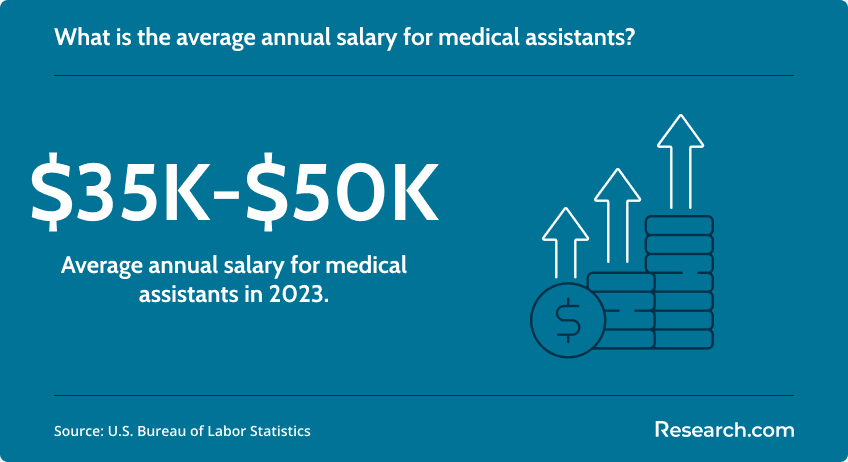
You can generally expect an average annual salary for MAs to fall somewhere between $35,000 and $50,000.
- Location: MAs in higher-cost metropolitan areas or states may earn more than those in lower-cost regions.
- Experience: New MAs generally start lower than workers with several years of clinic experience.
- Certification: Credentials such as CMA can strengthen an application and may support better pay in some workplaces.
- Work setting: Specialty practices and outpatient centers may pay differently from smaller physician offices.
- Education: Some employers may prefer or reward applicants with an associate degree.
Certified Nursing Assistants
The average annual salary for CNAs is generally lower than for MAs, typically ranging from $28,000 to $40,000.
- Location: CNA wages often rise in urban areas or states with higher living costs.
- Experience: Experienced CNAs may qualify for higher pay, lead roles, or preferred shifts.
- Work setting: Hospitals and specialized care facilities may pay differently from nursing homes or home care employers.
- Shift and overtime: Night shifts, weekends, overtime, and shift differentials can affect total earnings.
- Workforce conditions: Broader nursing trends can influence staffing needs, scheduling models, and compensation practices.
| Salary Factor | How It Affects MAs | How It Affects CNAs |
| Certification | May improve competitiveness and pay potential | State certification is generally required to work |
| Work setting | Clinic type and specialty can influence pay | Hospitals, long-term care, home health, and hospice may differ significantly |
| Schedule | Usually clinic hours, though urgent care may include evenings or weekends | May include nights, weekends, holidays, and overtime |
| Advancement | Can move toward office management, specialty clinics, billing, coding, or administration | Can move toward LPN, RN, medication aide, restorative aide, or supervisory roles |
Can healthcare and technology skills improve career mobility?
Technology is now part of nearly every healthcare job. MAs frequently use electronic health records, scheduling platforms, patient portals, telehealth tools, and billing systems. CNAs may use digital charting systems, mobile care documentation, remote monitoring tools, and facility communication platforms.
Healthcare workers who want to move beyond bedside or clinic support may benefit from stronger digital skills. Programs such as an accelerated bachelors degree computer science online may be relevant for professionals who want to shift toward health technology, analytics, software, or technical operations roles.
What training costs and financial aid questions should students ask?
MA and CNA training costs vary by school, location, program length, required supplies, exam fees, uniforms, background checks, immunizations, and textbooks. The cheapest program is not always the best value, and the most expensive option is not automatically better.
- Ask for the full cost of attendance. Include tuition, fees, books, equipment, exam fees, uniforms, transportation, and any required clinical costs.
- Check financial aid eligibility. Some programs may qualify for federal aid, scholarships, payment plans, employer sponsorship, or workforce funding.
- Compare completion and job placement support. A low-cost program with weak clinical placement or poor exam support may cost more in the long run.
- Consider opportunity cost. A short CNA program may get you working faster, while a longer MA program may offer broader options.
- Benchmark against other fields carefully. Reviewing an affordable software engineering degree online can show how education costs vary across industries, but healthcare training decisions should still be based on licensing, certification, local demand, and career goals.
How can informatics education affect healthcare careers?
Healthcare informatics connects patient care, data, systems, workflow, and decision-making. It can be a strong next step for workers who understand clinical environments but want to move into roles involving data quality, electronic records, reporting, implementation, or process improvement.
A fast online masters degree in health informatics may be relevant for professionals who already have a bachelor’s degree and want graduate-level preparation for clinical informatics, health data management, or technology-supported healthcare leadership.
Why combine clinical and administrative training?
Clinical knowledge helps healthcare workers understand patients and providers. Administrative training helps them understand scheduling, billing, compliance, staffing, records, and operations. Combining both can be especially useful for MAs because the role already sits between patient care and office workflow.
Professionals who want to supervise teams, manage clinics, or move into operational leadership may consider a healthcare administration online degree. This kind of training can support careers in practice management, patient services, compliance coordination, and healthcare operations.
What is the job outlook for MAs and CNAs?
The job outlook for both medical assistants and certified nursing assistants is supported by ongoing healthcare needs, aging populations, chronic condition management, and demand for outpatient and long-term care services. The U.S. Bureau of Labor Statistics (BLS) anticipates continued growth in both professions, with the home health and personal care aide sector projected to add over 800,000 jobs between 2023 and 2033.
For MAs, outpatient care is an important driver. Physician offices, urgent care centers, specialty clinics, and ambulatory settings need workers who can help with patient intake, documentation, scheduling, and basic procedures. For students comparing curriculum, what to expect in a medical assistant course can clarify what skills are usually taught.
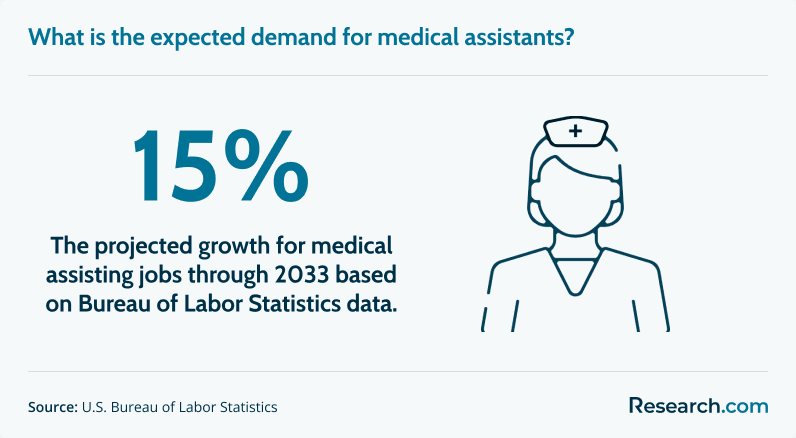
For medical assistants, the BLS projects 15% growth through 2023, largely due to the expansion of outpatient care and the shift toward preventative medicine. Students should read projections carefully and confirm current local demand, because hiring conditions vary by region and employer.
For CNAs, the need is closely tied to long-term care, hospital support, assisted living, rehabilitation, home health, and hospice services. The demand for CNAs is also shaped by staffing shortages, turnover, patient acuity, and the care needs of older adults.
Here’s What Graduates Have to Say About Their MA and CNA Programs
Medical assisting gave me a role where I could stay organized, help the clinic operate well, and still spend meaningful time with patients. I like that the job uses both people skills and office skills, and I can see several directions for future growth. David
I chose CNA training because I wanted to be directly involved in patient care. Helping someone bathe, eat, move safely, or feel comfortable can be hard work, but it also makes the impact of the job very real. Jose
What I enjoy most about being a medical assistant is the variety. One part of the day may involve vital signs and exam-room support, while another part involves records, follow-up calls, or scheduling. It keeps me learning. Maria
How can digital skills reshape healthcare work?
Digital tools are changing how healthcare teams document care, communicate with patients, manage appointments, process claims, monitor outcomes, and use data. MAs may see this most clearly through electronic health records, telehealth preparation, patient portals, and billing systems. CNAs may encounter digital charting, mobile documentation, alerts, and care coordination platforms.
Workers who build data and technology skills may qualify for roles beyond traditional patient support. Programs such as the best bioinformatics master's programs online may be relevant for students interested in biology, data, analytics, and computational approaches to healthcare.
What accreditation and quality indicators matter in healthcare training?
Before enrolling in any MA or CNA program, confirm that it meets the requirements for your intended credential, exam, license, or state registry. Accreditation and approval can affect whether you are eligible for certification, whether credits transfer, and whether employers recognize your training.
- For MA programs: Check whether the program supports the certification you want, especially if you plan to pursue CMA, RMA, NCMA, or CCMA eligibility.
- For CNA programs: Confirm state approval before paying tuition. A non-approved program may not qualify you for the state competency exam.
- Review outcomes: Ask about completion rates, exam pass rates, clinical placement, job placement support, and employer partnerships.
- Evaluate student support: Look for tutoring, exam preparation, career services, externship coordination, and clear advising.
- Check technology preparation: Healthcare programs that teach EHRs, privacy, digital documentation, and data literacy can better reflect current workplaces.
Students interested in advanced data-centered healthcare fields may also compare bioinformatics online programs, but this is a different path from entry-level MA or CNA training and usually requires more advanced academic preparation.
Common Mistakes to Avoid When Choosing Between MA and CNA
- Choosing based only on program length: CNA training is often faster, but the work is more physically hands-on. MA programs may take longer but can lead to broader clinic roles.
- Ignoring state requirements: CNAs must follow state certification rules. Always verify approval and registry requirements before enrolling.
- Assuming all MA certifications are the same: CMA, RMA, NCMA, and CCMA have different eligibility rules and employer recognition patterns.
- Looking only at tuition: Include exam fees, uniforms, background checks, transportation, books, lost work time, and retake fees.
- Relying only on rankings or ads: Ask for exam pass rates, clinical placement quality, employer partnerships, and graduate outcomes.
- Overlooking physical demands: CNA work often involves lifting, transferring, repositioning, and long shifts on your feet.
- Assuming salary outcomes are guaranteed: Pay depends heavily on location, employer, shift, experience, certification, and local labor conditions.
Questions to Ask Before You Enroll
| Question | Why It Matters |
| Is the program approved or accredited for the credential I want? | Without proper approval, you may not qualify for certification or state registry placement. |
| What are the total costs, including exam and clinical requirements? | Tuition alone does not show the full financial commitment. |
| Where do students complete clinicals or externships? | Strong hands-on placements can improve confidence and employer connections. |
| What are the exam pass rates and completion rates? | These outcomes can indicate whether the program prepares students effectively. |
| Which employers hire graduates? | Local employer relationships can affect job-search success. |
| Does the schedule fit my work and family responsibilities? | Even short programs can be difficult if class, lab, and clinical hours conflict with your life. |
| Can credits or experience apply to future education? | This matters if you plan to become an LPN, RN, healthcare administrator, coder, or specialist later. |
Key Insights
- Medical assistants and CNAs both support patient care, but MAs usually split time between clinical and administrative duties while CNAs focus on direct daily care.
- As of 2023, there were 1,469,400 nursing assistants and orderlies, and 783,900 MAs in the healthcare workforce.
- Nursing homes employed around 458,590 nursing assistants and orderlies in 2023, while 430,490 medical assistants worked in offices of physicians.
- MA training can lead to certificates, diplomas, associate degrees, and certifications such as CMA, RMA, NCMA, or CCMA. CNA training must meet state approval and lead to competency testing and registry listing.
- MAs may be a better fit for students who want clinic operations, records, scheduling, and patient intake. CNAs may be a better fit for students who want hands-on care and a possible nursing pathway.
- For medical assistants, the BLS projects 15% growth through 2023, largely due to the expansion of outpatient care and the shift towards preventative medicine.
- The U.S. Bureau of Labor Statistics (BLS) anticipates continued growth in both professions, with the home health and personal care aide sector projected to add over 800,000 jobs between 2023 and 2033.
- The best choice is not simply the faster or higher-paying option. Compare job duties, physical demands, certification rules, local employers, advancement plans, and total training cost before enrolling.
References
- American Association of Medical Assistants. (2024). 2024 CMA/RMA Compensation and Benefits Report.
- Bureau of Labor Statistics. (2023). Medical assistants. Occupational Outlook Handbook.
- Bureau of Labor Statistics. (2023). Occupational Employment and Wage Statistics, May 2023: Nursing assistants.
- Bureau of Labor Statistics. (2023). Nursing assistants and orderlies.
- Statista. (2024). Top 30 occupations in the U.S. with the largest projected increase in job openings.
Other Things You Should Know About the Difference Between MA and CNA
Many MA programs accept a high school diploma or GED, plus proof of CPR certification in some schools. For certification, employers often recognize credentials from NHA, AAMA, AMT, or NCCT. CNA programs usually require state-approved training before the nurse aide exam.
Medical Assistants need certification through organizations like AAMA after completing an accredited program, while CNAs require passing a state-approved training and competency exam. Certification requirements differ by state, with CNAs often requiring background checks.
In 2027, Medical Assistants typically complete a 1-2 year certificate or diploma program. Certified Nursing Assistants often attend a state-approved program lasting several weeks to a few months. Both require passing a competency exam for certification in most states.