
2027 Best Online Medical Assistant Programs

Co-Founder and Chief Data Scientist
Choosing an online medical assistant program is not just a question of convenience. The right program should prepare you for real clinical and administrative work, qualify you for certification exams when needed, and help you complete hands-on training without disrupting your schedule. Medical assistants support physicians, nurses, and office teams in settings where accuracy, patient communication, and workflow efficiency matter every day.
This guide is for students, career changers, working adults, and healthcare support workers comparing online medical assistant programs for 2027. You will learn what these programs include, how long they take, what they cost, how online training compares with campus-based study, which schools stand out, and what to check before enrolling.
Quick answer: Are online medical assistant programs worth it?
Online medical assistant programs can be worth it if they combine flexible coursework with required in-person labs, externships, or practicums. They are especially useful for working adults who need remote classes but still want preparation for entry-level healthcare roles. Before enrolling, confirm accreditation, certification exam preparation, clinical placement requirements, total cost, and whether the program is accepted by employers in your area.
What are the benefits of pursuing an online medical assistant program?
- Online medical assistant programs let students complete lectures, readings, and assignments around work, caregiving, or other obligations.
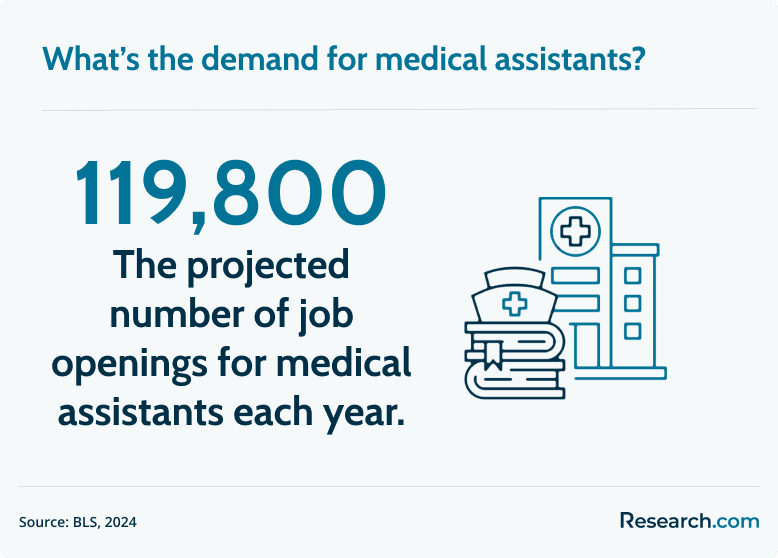
- The labor market remains favorable, with an average of 119,800 job openings per year for medical assistants (BLS, 2024).
- Medical assisting can offer stable entry into healthcare, with annual salaries ranging from $35,871 to $51,579 (Salary.com).
What can I expect from online medical assistant programs?
An online medical assistant program usually teaches both sides of the role: patient-facing clinical support and front-office healthcare administration. The classroom portion may be delivered fully online, but credible programs often require some in-person practice because medical assistants must learn skills that cannot be mastered through videos alone.
- Online coursework: Students typically study medical terminology, anatomy, healthcare documentation, insurance procedures, electronic health records, basic pharmacology, and patient communication through a learning platform.
- Clinical skill development: Programs may teach vital signs, infection control, specimen collection, injections, phlebotomy basics, electrocardiogram procedures, and exam-room support.
- Hands-on requirements: Many online programs include labs, boot camps, practicums, or externships at approved healthcare sites so students can practice under supervision.
- Certification preparation: Strong programs align coursework with exams such as the Certified Medical Assistant (CMA) or Registered Medical Assistant (RMA), although eligibility rules vary by certifying body and program accreditation.
- Career services: Some schools provide resume support, interview coaching, externship coordination, employer introductions, and help preparing for certification paperwork.
Where can I work with an online medical assistant degree?
Graduates of online medical assistant programs can work in many healthcare environments, provided they complete any required hands-on training and meet employer expectations. The best fit depends on whether you prefer direct patient interaction, administrative work, specialty medicine, or a mix of duties.
- Hospitals: Medical assistants may help with patient intake, documentation, scheduling, specimen handling, and communication between clinical teams.
- Physician offices and clinics: Many roles combine front-desk responsibilities with clinical tasks such as measuring vital signs, preparing exam rooms, and assisting during visits.
- Outpatient care centers: These settings provide services without overnight admission, so medical assistants often support intake, care coordination, records management, and routine procedures.
- Long-term care and rehabilitation facilities: Medical assistants may help clinical staff monitor patients, document care, organize records, and support medication-related workflows under appropriate supervision.
- Telehealth and remote care teams: Some roles focus on virtual visit coordination, electronic health record updates, patient follow-up, and provider support.
- Specialty practices: Dermatology, cardiology, pediatrics, obstetrics, internal medicine, ophthalmology, and chiropractic offices may require additional office-specific skills.
How much can I earn after completing an online medical assistant program?
Medical assistant pay depends on location, employer type, experience, certification, shift, and specialty. According to the U.S. Bureau of Labor Statistics (2024), wages differ by healthcare setting:
- Medical assistants in outpatient care centers earn a median annual wage of $46,090.
- Medical assistants working in hospitals, including state, local, and private hospitals, earn a median salary of $44,350.
- Medical assistants employed in physicians’ offices earn an average annual salary of $40,670.
- Medical assistants in offices of other health practitioners, such as chiropractors and optometrists, earn a median annual wage of $36,480.
Professional credentials such as Certified Medical Assistant (CMA) or Registered Medical Assistant (RMA) may improve employability and could strengthen salary prospects, but they do not guarantee a specific wage.
- Best universities for online medical assistant programs for 2027
- Program length: how quickly can you finish?
- Online vs. on-campus medical assistant programs
- Average cost of an online medical assistant program
- Financial aid options for online medical assistant students
- Common admission requirements and prerequisites
- Typical online medical assistant courses
- Specializations and skill add-ons
- Accreditation for online medical assistant programs
- Challenges of online medical assistant training
- Networking opportunities in online programs
- Job placement and career support
- Pathways into advanced administrative roles
- How programs keep curricula current
- How to choose the right online medical assistant program
- Using healthcare administration studies to advance
- Career paths after an online medical assistant program
- Job market outlook for medical assistants
- Using online biology programs to strengthen clinical knowledge
List of the Best Universities for Online Medical Assistant Degree Programs for 2027
How do we rank schools?
Selecting a medical assistant program affects your training quality, certification readiness, clinical experience, and job search. Research.com’s rankings are developed to help students compare programs using transparent, data-informed criteria such as academic quality, affordability, student outcomes, and institutional reputation. More information is available in our methodology section.
To support accuracy, our research draws from recognized education data sources, including the IPEDS database, Peterson’s database and its Distance Learning Licensed Data Set, the College Scorecard database, and the National Center for Education Statistics.
The programs below offer online or hybrid medical assistant training with varying costs, credit requirements, hands-on components, and credential outcomes.
| School | Program format and focus | Key details | Best for |
| University of Providence | Online coursework with in-person skill labs in designated California, Montana, and Oregon locations | 10 months; 16 credits; approximately $9,571; accredited by Northwest Commission on Colleges and Universities (NWCCU) | Students who can travel for select weekend labs and want preparation for NHA-CCMA, NCCT-NCMA, and AMCA-CCMA exams |
| Mercy College of Health Sciences | Fully online coursework with two six-hour skill boot camps and a 160-hour in-person clinical practicum | One year; 25 credits; $10,716; accredited by Higher Learning Commission (HLC) | Students who want structured online study plus a defined practicum requirement equal to four 40-hour work weeks |
| Keiser University | Online Medical Assisting Science Degree focused on broad clinical support skills | Approximately 20 months; 60 credits; estimated total cost not specified; accredited by Southern Association of Colleges and Schools Commission on Colleges (SACSCOC) | Students seeking an associate degree pathway with training in histories, vital signs, injections under physician supervision, venipuncture, CLIA-waived testing, and ECG work |
| Western Texas College | Medical assistant training covering administrative and clinical tasks | Program length not specified; credits not specified; $3,300–$10,480; accredited by Southern Association of Colleges and Schools Commission on Colleges (SACSCOC) | Students comparing lower-cost options that include records, scheduling, insurance forms, specimens, vital signs, exams, injections, and medications under supervision |
| Northwood Technical College | One-year medical assistant program focused on office procedures, patient care, lab procedures, safety, and professionalism | One year; 32 credits; $5,537; accredited by Higher Learning Commission (HLC) | Students who want a career-focused technical college option with emphasis on clinical policy, emergency response, and regulated care settings |
How long does it take to complete an online medical assistant program?
Program length varies widely. Some short-term training options focus on rapid workforce entry, while certificate and associate degree programs take longer because they include more coursework, clinical practice, or general education requirements.
- An accelerated medical assistant program may take as little as six weeks, which can appeal to students who need a fast route into entry-level healthcare support work.
- Many online medical assistant programs allow up to six months for completion, giving students more time to balance coursework with jobs, family responsibilities, and externship scheduling.
- Associate degree options, such as 60-credit programs, may take longer but can provide broader academic preparation and may be useful for students planning further healthcare education.
The U.S. Bureau of Labor Statistics reports about 119,800 medical assistant job openings projected each year over the next decade, so shorter programs can be appealing. However, speed should not outweigh accreditation, clinical training quality, and certification preparation.
How does an online medical assistant program compare to an on-campus program?
Both online and campus-based medical assistant programs can prepare students for entry-level roles, but they fit different learning styles. The main difference is where classroom learning happens and how hands-on practice is scheduled.
| Comparison factor | Online medical assistant program | On-campus medical assistant program |
| Best fit | Students who need flexibility, including working adults comparing online degrees for working adults | Students who prefer scheduled classes, face-to-face instruction, and immediate in-person feedback |
| Course delivery | Lectures, assignments, discussions, and quizzes are completed remotely | Most instruction occurs in classrooms, campus labs, or scheduled group sessions |
| Hands-on training | Usually completed through approved skill labs, boot camps, externships, or local clinical sites | Often integrated into campus labs and nearby clinical partnerships |
| Schedule | May be self-paced or structured, depending on the school | Typically follows a fixed academic calendar and class schedule |
| Main risk | Students must confirm clinical placement availability before enrolling | Students may have less flexibility if they work or have caregiving duties |
Choose online learning if you are organized, comfortable with technology, and able to complete in-person requirements when scheduled. Choose campus-based training if you need a highly structured environment, frequent faculty interaction, and regular hands-on practice built into your weekly schedule.
What is the average cost of an online medical assistant program?
Medical assistant program costs differ by institution type, credential level, and included services. The average cost of medical assistant programs from in-state public universities is $4,187 (Data USA, n.d.), while online schools can go as low as $65 per month. Some schools also offer payment plans, scholarships, or financial aid.
Students should compare total cost, not just tuition. On-campus and hybrid programs may add expenses such as books for $750, scrubs and medical tools such as a stethoscope and pulse oximeter for $300, and the National Center for Competency Testing (NCCT) exam fee for $90 (Oregon Coast Community College, n.d.). Cost can also influence longer-term plans, such as moving from medical assistant to LPN or shifting into administrative healthcare work.
Estimated Cost of a Medical Assistant Degree by Institution Type
| Type of Institution | Average Annual Cost | Notes |
| In-state public university | $4,187 | Excluding other expenses like books, scrubs, medical tools, and NCCT fees |
| Out-of-state private University | $17,397 | Higher cost due to private funding |
| Online schools | $1,988 | Based on a standard 2-semester academic year |
Sources: Data USA, n.d.; Penn Foster. (n.d.)
What are the financial aid options for students enrolling in an online medical assistant program?
Financial aid availability depends on the school, credential type, accreditation status, enrollment intensity, and student eligibility. Start by asking whether the program participates in federal student aid and whether your enrollment level qualifies.
- Pell Grants: These need-based grants do not require repayment for eligible undergraduate students. Students must enroll in at least one credit per term, maintain satisfactory academic standing, and demonstrate financial need under FAFSA guidelines.
- Federal Supplemental Educational Opportunity Grants (FSEOG): These limited grants are awarded to students with exceptional financial need and are often distributed on a first-come, first-served basis. Eligibility generally requires at least half-time enrollment in an undergraduate degree program.
- Direct Subsidized Loans: These federal loans are available to undergraduate students with financial need who enroll at least half-time. The government pays the interest while the student is in school.
- Direct Unsubsidized Loans: These federal loans are available to undergraduate and graduate students enrolled at least half-time, regardless of financial need. Interest begins accruing when the loan is disbursed.
- Federal Work-Study Program: This program provides part-time work opportunities to eligible students with financial need who are enrolled at least half-time.
Students planning a broader healthcare career may also want to compare long-term income possibilities across roles. For example, Research.com’s guide to nursing salary by state can help you understand how regional pay differences may affect future education decisions.
What are the prerequisites for enrolling in an online medical assistant program?
Admission requirements vary by school, but most programs expect students to meet basic academic, technical, and clinical-site readiness standards. Requirements may differ at private institutions, community colleges, technical schools, and non profit online colleges.
- High school completion: Most programs require a high school diploma or GED. Some may request transcripts showing prior coursework in biology, health science, or related subjects.
- Minimum age: Applicants may need to be at least 18 years old by enrollment or before starting clinical training.
- Technology access: Online students need a dependable computer, internet access, webcam or microphone when required, and any software specified by the program.
- Background check and drug screening: Programs with externships may require screening to satisfy partner healthcare facility policies.
- CPR or Basic Life Support: Some schools require CPR or Basic Life Support certification before students can begin labs or clinical placement.
What courses are typically in an online medical assistant program?
A good medical assistant curriculum should prepare students to move between patient care tasks and administrative workflows. Course names differ by school, but most programs include the following subjects:
- Medical Terminology: Students learn the language used to describe body systems, diagnoses, procedures, symptoms, and treatment documentation.
- Anatomy and Physiology: This course explains body structures, organ systems, normal function, and common medical conditions.
- Medical Law and Ethics: Students study patient confidentiality, professional boundaries, HIPAA-related responsibilities, documentation standards, and ethical conduct.
- Administrative Procedures: Topics often include scheduling, insurance forms, billing workflows, patient registration, office communication, and electronic health records.
- Clinical Procedures: Students learn exam-room preparation, vital signs, medication support, patient positioning, and assisting providers during routine care.
- Phlebotomy and Laboratory Techniques: Coursework may introduce blood collection, specimen handling, infection control, basic testing, and lab safety.
- Pharmacology Basics: Students review medication names, dosage concepts, safety procedures, and administration principles. Students considering a pharmacy pathway may also compare online pharmacy schools.
- First Aid and CPR: Training covers emergency response, wound care, CPR, and basic life support concepts used in healthcare settings.
- Medical Assistant Externship or Practicum: This supervised experience allows students to apply classroom learning in a real clinical environment.
Medical assistant training can also support broader entry-level healthcare goals. If you are looking for medical jobs no degree, short-term healthcare certificates and targeted clinical skills may help you qualify for certain support roles.
What types of specializations are available in online medical assistant programs?
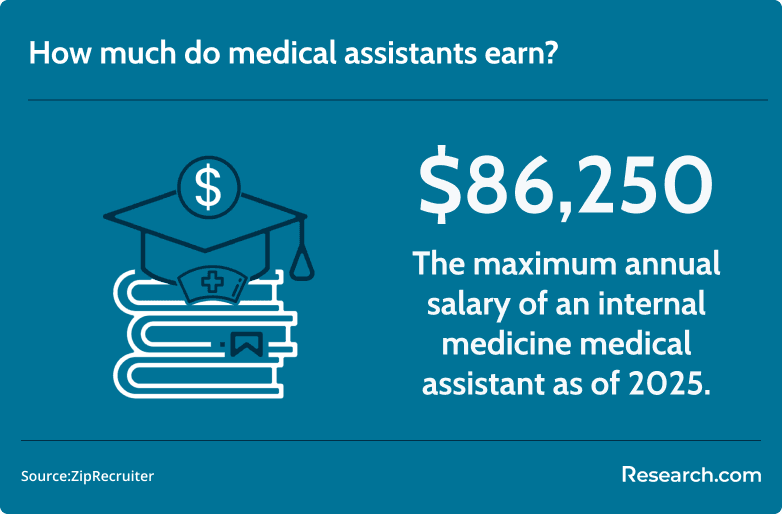
Some medical assistant programs focus on generalist training, while others offer electives, certificates, or skill add-ons in a specialty area. ZipRecruiter (n.d.) reports that the highest-paid medical assistants, such as those working in internal medicine, earn up to $86,250 a year. However, pay varies, and specialization should be chosen based on local employer demand, your interests, and whether additional credentials are required.
- Clinical Medical Assisting: Focuses on direct patient care, including vital signs, injections, exam assistance, minor procedures, and basic lab work.
- Administrative Medical Assisting: Emphasizes front-office operations such as billing, coding support, insurance claims, electronic health records, and office coordination.
- Phlebotomy: Trains students in venipuncture, blood collection, specimen handling, infection prevention, and lab safety.
- EKG/ECG Technician: Prepares students to perform electrocardiograms, set up equipment, recognize basic rhythm patterns, and support cardiology teams.
- Pediatric Medical Assisting: Covers communication with children and families, pediatric vital signs, growth milestones, immunization support, and age-appropriate care.
- Geriatric Medical Assisting: Focuses on care for older adults, including chronic condition support, mobility concerns, communication strategies, and safety awareness.
- Internal Medicine Assisting: Prepares students to support providers treating adults with ongoing or complex conditions through testing, patient education, documentation, and exam assistance.
- Chiropractic Medical Assisting: Introduces students to chiropractic office workflows, therapy support, exercise instruction, patient education, and musculoskeletal care documentation.
If you want a highly patient-facing support role, review CNA certification nursing assistant requirements. CNA and medical assistant roles are different, but some communication, vital sign, and patient support skills overlap.
Are online medical assistant programs accredited?
Some online medical assistant programs are accredited, but students should verify the exact type of accreditation before applying. Institutional accreditation confirms that the school meets broader academic standards, while programmatic accreditation can affect eligibility for certain medical assistant certification exams.
For medical assisting, students often look for programs accredited by the Commission on Accreditation of Allied Health Education Programs (CAAHEP) or the Accrediting Bureau of Health Education Schools (ABHES). Also confirm whether the school itself is accredited by a recognized institutional accreditor and whether credits can transfer if you later continue your education. When comparing value across allied health options, you may also want to review related training costs such as medical billing and coding certification cost.
What challenges should I expect in online medical assistant programs?
Online medical assistant training is flexible, but it requires planning. Students often underestimate the practical parts of the program, especially clinical placement, lab attendance, and technology requirements.
- Finding clinical placement: Some schools place students directly, while others expect students to locate approved sites. Ask this before enrolling.
- Staying on schedule: Self-paced courses can be difficult if you do not set weekly study goals.
- Learning hands-on skills remotely: Online lessons can introduce procedures, but students still need supervised practice to become confident.
- Managing technology: Internet issues, software access, webcam requirements, and online testing platforms can create delays.
- Balancing responsibilities: Work, family, and externship hours can overlap, so students should map out their schedule early.
Students considering other allied health fields should check whether online study is realistic for the role. For example, Can you become an ultrasound tech online? explains how some healthcare programs combine remote coursework with required in-person clinical training.
How can networking opportunities in an online medical assistant program boost career growth?
Networking can help online students avoid feeling disconnected from the healthcare field. Programs may offer virtual guest lectures, employer panels, alumni discussions, discussion boards, live skills sessions, or externship partnerships. These connections can help students learn which clinics are hiring, what certifications employers prefer, and how to prepare for interviews.
Students interested in office-based healthcare work can also strengthen their profile with related administrative credentials. For example, comparing the best school for medical coding may be useful if you want to combine patient support with coding, billing, or revenue cycle knowledge.
How do online medical assistant programs support job placement and career advancement?
Career support differs significantly by school. Some programs offer only basic resume templates, while others provide employer connections, interview coaching, externship matching, certification exam guidance, and job search advising.
Before choosing a program, ask for details about placement support, not just promotional language. Useful questions include: Does the school help secure externships? Which employers have hired graduates? Are career services available after graduation? Does the program prepare students for specific certification exams? Students comparing healthcare education value beyond medical assisting may also review the cheapest online public health degree in USA.
Can online medical assistant programs lead to advanced administrative roles?
Medical assisting can become a starting point for healthcare administration, office management, billing, coding, patient access, or care coordination. Graduates who gain experience in scheduling, records, insurance, compliance, and patient communication may be able to move into supervisory or administrative roles with additional training.
Advancement is not automatic. Students who want higher-responsibility roles should consider courses in healthcare management, health information systems, compliance, finance, or leadership. These skills can support movement toward roles discussed in Research.com’s guide to the highest paying jobs in healthcare administration.
How do online medical assistant programs maintain an industry-relevant curriculum?
Healthcare workflows change as electronic health records, telehealth, compliance requirements, and clinical technology evolve. Strong medical assistant programs review curricula regularly, consult advisory boards, use current case studies, and align skill training with employer expectations.
Students should ask how often courses are updated, whether instructors have recent healthcare experience, and how the program teaches electronic records, infection control, telehealth support, and patient communication. If you want a stronger science foundation, an accelerated biology online degree may provide broader preparation in anatomy, physiology, and disease processes.
How to choose the best online medical assistant program?
The best online medical assistant program is the one that fits your schedule while still meeting healthcare training standards. Do not choose based only on price, speed, or convenience. The program must prepare you to work safely with patients and function effectively in clinical and administrative settings.
| What to check | Why it matters | Questions to ask before enrolling |
| Accreditation | It may affect certification eligibility, employer acceptance, transfer options, and financial aid | Is the institution accredited? Is the medical assistant program accredited by CAAHEP or ABHES? |
| Clinical training | Medical assisting requires hands-on skill practice, not only online coursework | Who arranges externships? Where are labs held? Are travel or weekend sessions required? |
| Certification preparation | Credentials can improve competitiveness in some job markets | Which exams does the program prepare students for: CMA, RMA, NHA-CCMA, NCCT-NCMA, or AMCA-CCMA? |
| Total cost | Tuition may exclude books, equipment, uniforms, exam fees, background checks, and travel | What is the full estimated cost from enrollment through certification? |
| Schedule and format | Self-paced learning requires discipline, while structured programs require fixed availability | Are courses asynchronous, live, or hybrid? What happens if I fall behind? |
| Career services | Employer connections and externship support can affect job readiness | Does the school provide resume help, interview practice, placement data, or employer referrals? |
If your long-term interest is healthcare technology or operations, review the information systems manager career guide. Medical assistant experience can introduce you to clinical workflows, but health IT leadership usually requires additional education and technical preparation.
Common mistakes to avoid when choosing a program
- Choosing the fastest option without checking outcomes: A short program is only useful if it provides adequate training and employer-recognized preparation.
- Ignoring accreditation: Lack of accreditation can limit certification eligibility, transfer options, and financial aid access.
- Assuming online means fully remote: Most quality programs still require in-person labs, externships, practicums, or skills checks.
- Comparing tuition only: Books, scrubs, medical tools, exam fees, background checks, transportation, and missed work time can change the real cost.
- Not asking about clinical placement: If you must find your own site, delays can affect graduation.
- Assuming salary outcomes are guaranteed: Pay varies by employer, region, credential, experience, and specialty.
Can I Advance My Career by Integrating Healthcare Administration Studies?
Yes, medical assistants who want leadership, office management, compliance, scheduling, billing, or operations roles may benefit from healthcare administration coursework. A health administration degree online can build skills in management, finance, regulation, and healthcare systems. This combination can be especially useful for medical assistants who enjoy both patient care and the business side of healthcare.
What career paths are available for graduates of online medical assistant programs?
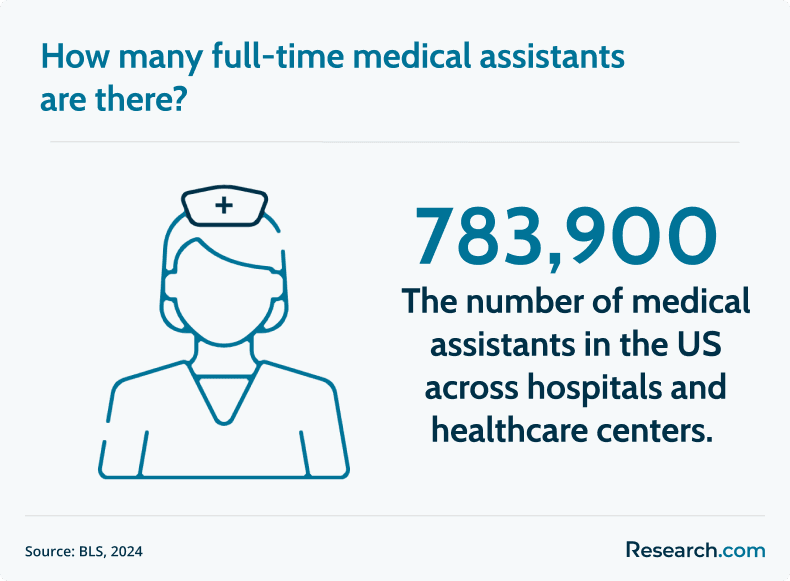
Online medical assistant training can lead to several entry-level and specialized healthcare support roles. As of 2023, over 783,900 medical assistants are employed across the U.S. (BLS, 2024), reflecting the size of the field.
- Clinical Medical Assistant: Supports physicians and nurses with exams, patient preparation, injections, vital signs, documentation, and basic testing.
- Administrative Medical Assistant: Handles scheduling, records, billing support, insurance information, patient communication, and front-office operations.
- Phlebotomy Technician: Draws blood for laboratory tests, donations, or transfusions in hospitals, labs, clinics, or blood banks.
- EKG Technician: Performs electrocardiograms and assists cardiology teams with heart activity monitoring.
- Medical Billing and Coding Specialist: Converts diagnoses and procedures into standardized codes for claims, billing, and reimbursement workflows.
- Internal Medicine Assistant: Works with adult patients, often supporting chronic disease management, routine testing, exam assistance, and patient education.
- Chiropractic Assistant: Helps with therapy support, exercise instruction, patient flow, documentation, and office duties in chiropractic practices.
- Ophthalmic or Optometric Assistant: Supports eye care providers with vision testing, contact lens support, patient records, and office tasks.
- Surgical Technician Assistant: Assists with preparation of operating rooms, sterilization, instruments, and procedural support under appropriate supervision.
Medical assisting can also become a stepping stone. Some graduates later pursue additional training to move from medical assistant to RN, physician roles, or other healthcare specialties.
What is the job market for graduates with an online medical assistant?
The job outlook for medical assistants is strong. Employment in this field is expected to increase by 15% between 2023 and 2033, significantly outpacing the average job growth rate (BLS, 2024).
Healthcare organizations continue to use medical assistants to support patient flow, documentation, routine procedures, care coordination, and office operations. Graduates with recognized certifications, externship experience, and reliable clinical skills may be more competitive for roles in hospitals, physician offices, outpatient centers, and specialty practices.
The chart below shows industries with the highest employment levels for medical assistants, including physician offices (430,490), hospitals (115,850), and outpatient care centers (70,470):
How can integrating complementary online biology programs enhance my clinical skills?
Adding biology coursework can help medical assistant students understand anatomy, physiology, disease processes, laboratory values, and patient symptoms more deeply. A stronger science foundation may improve clinical reasoning and prepare students for future healthcare education.
If you plan to continue into nursing, laboratory science, medicine, pharmacy, or another clinical pathway, comparing the best online biology programs can help you decide whether additional science coursework fits your goals.
Key Insights
- Online medical assistant programs are best for students who need flexible coursework but can still complete required in-person labs, boot camps, practicums, or externships.
- Accreditation matters. Check institutional accreditation and, when relevant, programmatic accreditation through CAAHEP or ABHES before enrolling.
- Cost varies widely. In-state public university medical assistant programs average $4,187, while online schools can go as low as $65 per month, but students should also budget for books, scrubs, tools, exam fees, and travel.
- Program length can range from accelerated options completed in as little as six weeks to longer certificate or associate degree pathways.
- Medical assisting has a favorable outlook, with approximately 119,800 job openings projected each year over the next decade and employment expected to grow 15% between 2023 and 2033.
- Employer setting affects pay. BLS-reported median wages include $46,090 in outpatient care centers, $44,350 in hospitals, $40,670 in physicians’ offices, and $36,480 in offices of other health practitioners.
- Medical assistant training can lead to clinical, administrative, phlebotomy, EKG, billing, coding, specialty practice, or healthcare administration pathways, but advancement usually requires experience and additional credentials.
References:
- Data USA. (n.d.). Medical assistant. Datausa.io. Retrieved 27 March 2025.
- Oregon Coast Community College. (2022). Medical assistant student curriculum map and costs. Oregoncoast.edu. Retrieved 27 March 2025.
- Penn Foster. (n.d.). Medical assistant associate degree. PennFoster.edu. Retrieved 27 March 2025.
- Salary.com. (n.d.). Medical assistant certified salary. Salary.com. Retrieved 27 March 2025.
- U.S, Bureau of Labor Statistics. (2024). Medical assistants. Bls.gov. Retrieved 27 March 2025.
- U.S. Bureau of Labor Statistics. (2024). Occupational employment and wages: Medical assistants. Bls.gov. Retrieved 27 March 2025.
- ZipRecruiter. (n.d.). Medical assistant salary. ZipRecruiter.com. Retrieved 27 March 2025.
Other Things You Should Know About Online Medical Assistant Programs
Look for institutional accreditation from a U.S. Department of Education-recognized accreditor, and for medical assistant training, programmatic approval from the CAAHEP or ABHES when available. These accreditations support eligibility for the CMA (AAMA) or RMA exam and improve transferability of credits.
After completing a 2027 online medical assistant program, certification entails passing the Certified Medical Assistant (CMA) exam from the American Association of Medical Assistants or similar credentials. This includes verifying the program's accreditation, as only graduates from accredited programs are eligible to sit for such certification exams.
When choosing a 2027 online medical assistant program, consider accreditation, curriculum comprehensiveness, support services, tuition costs, and job placement rates. These factors ensure a quality education that meets industry standards, provides vital support during your studies, and enhances your employment prospects upon graduation.





