2027 Best Online Animation Degree Programs

Co-Founder and Chief Data Scientist
Choosing an online animation degree is not just a question of finding the cheapest or most flexible program. The better question is whether the program will help you build a competitive portfolio, learn the software employers expect, receive useful feedback, and prepare for the type of animation work you actually want to do—film, games, visual effects, motion graphics, advertising, or freelance production.
This guide is written for students, career changers, working professionals, and self-taught artists comparing online animation degrees, certificates, and short-format training options for 2027. You will learn what online animation programs usually teach, how long they take, what they may cost, what careers they can support, how employers evaluate online credentials, and which mistakes to avoid before enrolling.
According to the U.S. Bureau of Labor Statistics, multimedia artists and animators earn a median annual wage of $78,790, and employment in the field is projected to grow by 5% through 2032. Pay and hiring outcomes vary by role, portfolio strength, software skills, location, industry, and experience, so the smartest program choice is one that connects coursework directly to portfolio-ready work.
Quick Answer: Is an Online Animation Degree Worth It?
An online animation degree can be worth it if the program is accredited, teaches current 2D or 3D production workflows, includes regular critique from instructors, and helps you graduate with a strong demo reel or portfolio. It is especially useful for students who need schedule flexibility but still want structured training in animation principles, digital storytelling, character movement, 3D modeling, visual effects, motion graphics, and industry software.
However, a degree alone will not guarantee an animation job. Employers usually care most about the quality of your work samples, your ability to revise based on feedback, and whether your skills match the pipeline used by studios, agencies, game companies, or freelance clients.
What Are the Main Benefits of Getting an Online Animation Degree?
- Career preparation across creative industries: Online animation training can prepare students for work as character animators, visual effects artists, game animators, motion graphics designers, multimedia specialists, storyboard artists, or 3D modelers.
- Portfolio development: Strong programs require projects that can become portfolio pieces, demo reel clips, or case studies for entry-level applications.
- Flexible learning: Online formats can make it easier to study while working, parenting, freelancing, or living far from a major animation school or entertainment hub.
- Software and workflow exposure: Many programs introduce tools used in animation, rendering, modeling, compositing, and motion graphics production.
- Potential earnings growth: Graduates with animation-related skills may pursue roles in a field where the median annual salary is cited as $78,790, with higher pay possible in specialized or senior roles.
What Can I Expect From an Online Animation Degree?
Most online animation degree programs combine art fundamentals, storytelling, technical production, and portfolio development. Students typically learn how movement works, how characters communicate emotion, how scenes are planned, and how digital tools are used to produce finished animation for film, games, advertising, streaming content, and interactive media.
- Typical subjects: 3D modeling, 2D animation, character animation, visual effects, storyboarding, motion graphics, digital storytelling, rigging, lighting, rendering, and portfolio production.
- Learning format: Many online programs use asynchronous courses, recorded demonstrations, project submissions, discussion boards, virtual critiques, and scheduled instructor feedback.
- Completion time: A full-time student often finishes in 3 to 4 years, while part-time students may need more time depending on course load and transfer credits.
- Estimated annual tuition: Online animation degree programs commonly range from $15,000 to $30,000 per year, depending on the school and program structure.
- Career preparation: Capstone projects, internships, portfolio reviews, and demo reel development can help students show employers what they can actually create.
| Student Goal | Program Features to Prioritize | Why It Matters |
| Work in 3D character animation | Character animation, rigging basics, acting for animation, body mechanics, Maya or Blender training | Studios want to see believable movement, strong posing, timing, and performance in a reel. |
| Enter game development | Game animation, real-time engines, interactive asset workflows, character cycles, collaboration projects | Game animators need to understand how animation behaves inside an interactive system. |
| Build a motion graphics career | Design principles, typography, compositing, audio timing, branding projects, short-form video production | Motion graphics roles often blend animation, graphic design, marketing, and video production. |
| Work in visual effects | Compositing, lighting, rendering, tracking, simulation, VFX production pipeline | VFX artists need both artistic judgment and technical precision. |
| Freelance or start a small studio | Portfolio strategy, client communication, project management, pricing basics, business electives | Freelancers need production skill plus the ability to manage clients, deadlines, and revisions. |
Where Can I Work With an Online Animation Degree?
An online animation degree can lead to work in any industry that uses visual storytelling, digital content, moving graphics, or interactive media. Common employers include animation studios, film and television production companies, video game studios, advertising agencies, design firms, special effects companies, educational media teams, corporate creative departments, and digital marketing agencies.
Major creative and technology markets such as Los Angeles, New York, and San Francisco remain important employment centers for entertainment, gaming, advertising, and digital production. At the same time, remote and freelance work have expanded the number of ways animators can work with clients, studios, and agencies without relocating. Location can still affect pay, networking, taxes, competition, and access to in-person studio roles.
How Much Can I Make With an Online Animation Degree?
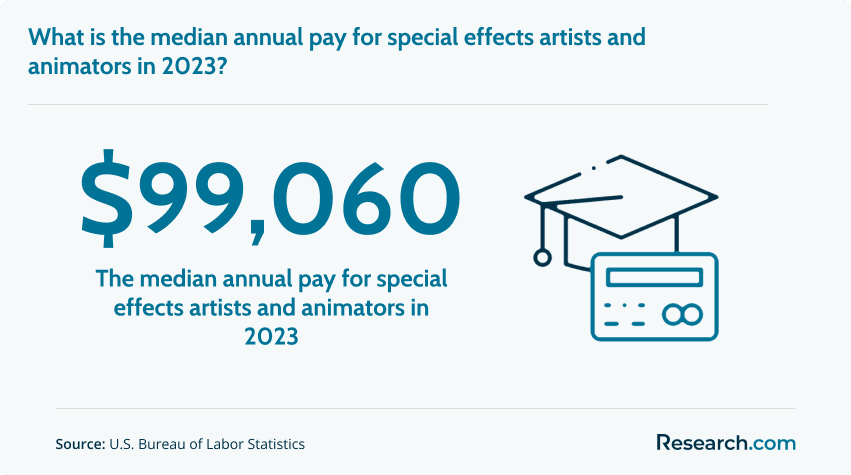
Earnings in animation depend heavily on specialization, experience, portfolio quality, employer type, market, and whether the role is full-time, contract, or freelance. According to the U.S. Bureau of Labor Statistics, the median annual salary for multimedia artists and animators is $78,790. The article also cites the median annual pay for special effects artists and animators in 2023 as $99,060.
Entry-level roles in animation are described as commonly paying $50,000 to $60,000 per year, while experienced animators, technical specialists, supervisors, and professionals in high-demand areas such as visual effects or game design may earn more. Top earners are described as making over $120,000 annually. These figures should be treated as reference points, not guarantees, because salaries vary by employer, geography, portfolio strength, and market conditions.
| Career Stage | Salary Information Cited | What Usually Affects Pay |
| Entry-level animator | $50,000 to $60,000 per year | Portfolio, internships, software skills, location, and first employer |
| Multimedia artists and animators | Median annual salary of $78,790 | Industry, experience, role type, technical specialization, and employer size |
| Special effects artists and animators | Median annual pay in 2023 is $99,060 | VFX pipeline skill, compositing, lighting, rendering, and studio demand |
| Top earners | Over $120,000 annually | Senior roles, lead positions, specialized skills, high-budget projects, or strong freelance client base |
- 2027 Best Online Animation Degree
- How long does it take to complete an online animation degree?
- How does an online animation degree compare to an on-campus program?
- What is the average cost of an online animation degree?
- What are the financial aid options for students enrolling in an online animation degree?
- What are the prerequisites for enrolling in an online animation degree?
- What courses are typically in an online animation degree?
- What types of specializations are available in online animation degree?
- How to choose the best online animation degree?
- What factors should be considered when choosing an online animation degree from accredited online universities?
- What career paths are available for graduates of online animation degree?
- What is the job market for graduates with an online animation degree?
- What emerging trends are shaping the future of animation and animation education?
- How do online animation programs support job placement and career advancement?
- How can an online animation degree enhance opportunities in game development?
- Expanding career options with graphic design skills in animation
- Can an online animation degree lead to advanced academic opportunities?
- Can artificial intelligence enhance your animation workflow?
- How can integrating engineering perspectives enhance your animation techniques?
- How do employers evaluate an online animation degree?
- How can emerging technologies elevate your online animation competencies?
- Are affordable online animation programs suitable for working professionals?
- How can supplemental certifications elevate your animation expertise?
- What role does data-driven decision making play in enhancing animation outcomes?
- How do soft skills and professional networks shape success in online animation programs?
- What software innovations empower online animation learning?
- How does return on investment impact your choice of an online animation degree?
- How do industry partnerships enhance skill development in online animation programs?
- What challenges do online animation degree students often face?
- How does accreditation impact the value of your online animation degree?
- How can lifelong learning accelerate your animation career?
- The importance of accelerated degree options for aspiring animators
2027 Best Online Animation Degree
How Do We Rank Schools?
Research.com evaluates online education options using a research-driven process that considers available data on cost, accreditation, student outcomes, and program structure. Key sources include the IPEDS database, Peterson's database, the College Scorecard database, and the National Center for Education Statistics.
Because an animation education can require a major investment in tuition, software, equipment, and time, our ranking methodology emphasizes transparency and decision-useful information. Students should still verify each program directly, especially when comparing accredited degrees with private courses, workshops, or platform-based training.
Important note: Several options below are short online courses, bundles, or private training programs rather than accredited degree programs. They may be useful for skill-building or portfolio improvement, but they should not be treated as equivalent to a regionally accredited bachelor’s degree unless the provider clearly states that status.
| Rank | Program | Provider | Length | Cost | Best Fit |
| 1 | Ultimate Lighting for Animation Bundle | Academy of Animated Art | Varies by course selection | $299 | Animators who want focused lighting training |
| 2 | Animation Basics | Animation Mentor | 12 weeks | $1,200 | Beginners who need structured fundamentals |
| 3 | Character Lighting for Animated Films | Academy of Animated Art | Varies by course selection | $399 | Artists improving character lighting and scene integration |
| 4 | 3D Animation Course | CG Spectrum | 6 months | $4,000 | Students seeking mentor-led 3D animation training |
| 5 | 3D Animation Program | Animschool | 12 months | $6,000 | Career-focused learners building 3D character animation skills |
| 6 | Intro to Maya Workshop | Academy of Animated Art | 4 weeks | $199 | Beginners who need a guided introduction to Maya |
| 7 | Learn 3D Animation: Create Credible & Unique Animations | Udemy | Self-paced | $119.99 | Self-directed learners seeking affordable practice |
| 8 | Arnold for Maya Workshop | Academy of Animated Art | 5 weeks | $299 | Maya users who want stronger rendering skills |
| 9 | Online Group Class: Big Creature Movement | Griffin Animation Academy | 6 weeks | $350 | Animators interested in fantasy creatures, weight, and action movement |
| 10 | Katana Workshop | Academy of Animated Art | 4 weeks | $249 | Artists learning Katana for lighting and look development |
1. Ultimate Lighting for Animation Bundle – Academy of Animated Art
The Ultimate Lighting for Animation Bundle from the Academy of Animated Art focuses on lighting, mood, rendering, and visual polish for animated scenes. It is best viewed as specialized skill training for artists who already understand the basics of animation or want to strengthen the final look of their shots.
- Program Length: Varies by course selection
- Tracks/Concentrations: Lighting Techniques
- Cost: $299
- Required Credits to Graduate: N/A
- Accreditation: Not applicable (Private institution)
2. Animation Basics – Animation Mentor
Animation Mentor’s Animation Basics course is designed for students who need a clear starting point. The course emphasizes foundational animation principles such as timing, spacing, keyframing, movement, and feedback-based improvement, making it useful for beginners who want structure instead of scattered tutorials.
- Program Length: 12 weeks
- Tracks/Concentrations: Beginner Animation
- Cost: $1,200
- Required Credits to Graduate: N/A
- Accreditation: Not applicable (Private institution)
3. Character Lighting for Animated Films – Academy of Animated Art
Character Lighting for Animated Films is a targeted course for animators and lighting artists who want to make characters feel believable within a scene. Students study how light direction, contrast, environment, and rendering choices affect the viewer’s perception of a character.
- Program Length: Varies by course selection
- Tracks/Concentrations: Character Lighting
- Cost: $399
- Required Credits to Graduate: N/A
- Accreditation: Not applicable (Private institution)
4. 3D Animation Course – CG Spectrum
CG Spectrum’s 3D Animation Course is built around 3D production workflows, project work, and mentorship. It can be a practical choice for students who want focused training in character movement, 3D animation principles, and portfolio development without committing to a full degree path.
- Program Length: 6 months
- Tracks/Concentrations: 3D Animation
- Cost: $4,000
- Required Credits to Graduate: N/A
- Accreditation: Not applicable (Private institution)
5. 3D Animation Program – Animschool
Animschool’s 3D Animation Program is intended for students who want deeper training in 3D character animation. The program emphasizes practical assignments, instructor critique, artistic development, and technical fluency for students preparing to create stronger reels.
- Program Length: 12 months
- Tracks/Concentrations: 3D Animation
- Cost: $6,000
- Required Credits to Graduate: N/A
- Accreditation: Not applicable (Private institution)
6. Intro to Maya Workshop – Academy of Animated Art
The Intro to Maya Workshop introduces Autodesk Maya to students who are new to 3D animation tools. It covers basic software navigation and core functions such as modeling, texturing, and rendering, making it a useful entry point before more advanced animation coursework.
- Program Length: 4 weeks
- Tracks/Concentrations: Maya Software
- Cost: $199
- Required Credits to Graduate: N/A
- Accreditation: Not applicable (Private institution)
7. Learn 3D Animation: Create Credible & Unique Animations – Udemy
Udemy’s Learn 3D Animation course is a self-paced option for learners who want a low-cost way to practice 3D animation concepts. Because it is platform-based and self-directed, students should compare the curriculum, instructor feedback options, and project quality before relying on it as primary career preparation.
- Program Length: Self-paced
- Tracks/Concentrations: 3D Animation
- Cost: $119.99
- Required Credits to Graduate: N/A
- Accreditation: Not applicable (Platform-based)
8. Arnold for Maya Workshop – Academy of Animated Art
The Arnold for Maya Workshop is meant for students who already have some familiarity with Maya and want stronger rendering skills. It covers lighting, shading, compositing, and Arnold workflows that can improve the realism and finish of 3D scenes.
- Program Length: 5 weeks
- Tracks/Concentrations: Arnold Rendering
- Cost: $299
- Required Credits to Graduate: N/A
- Accreditation: Not applicable (Private institution)
9. Online Group Class: Big Creature Movement – Griffin Animation Academy
The Online Group Class: Big Creature Movement from Griffin Animation Academy focuses on animating large creatures such as dragons and fantasy characters. It is especially relevant for students who want to practice weight, scale, action timing, and creature interaction with an environment.
- Program Length: 6 weeks
- Tracks/Concentrations: Creature Animation
- Cost: $350
- Required Credits to Graduate: N/A
- Accreditation: Not applicable (Private institution)
10. Katana Workshop – Academy of Animated Art
The Katana Workshop provides focused training in Katana software for lighting and look development. It is best suited for animators and lighting artists who want to understand complex scene lighting, rendering workflows, and visual effects integration.
- Program Length: 4 weeks
- Tracks/Concentrations: Katana Software
- Cost: $249
- Required Credits to Graduate: N/A
- Accreditation: Not applicable (Private institution)
Key Findings for Online Animation Students
- 37% of respondents believe cognitive computing will have a significant impact on the future of animation, pointing to growing interest in AI and machine learning within creative production.
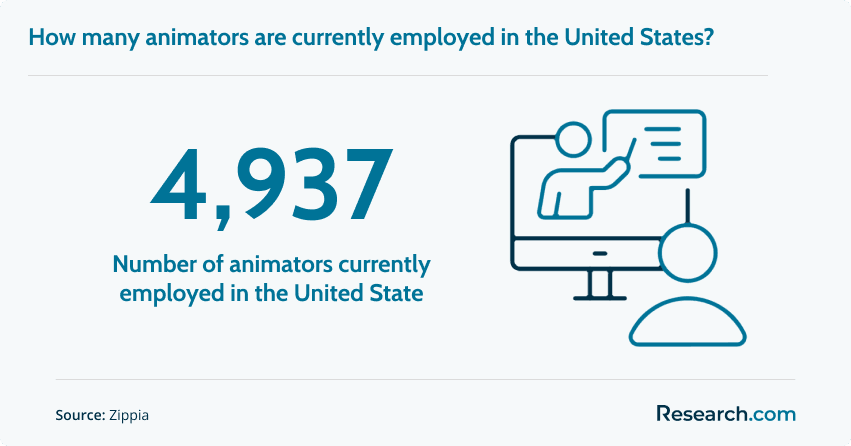
- There are currently over 4,937 animators employed in the United States.
- The median annual pay for special effects artists and animators in 2023 is $99,060.
- A full-time student can typically finish an online animation degree in 3 to 4 years, which is similar to many traditional campus-based bachelor’s programs.
- The annual cost of an online animation degree generally falls between $15,000 and $30,000, depending on school pricing and program design.
How Long Does It Take to Complete an Online Animation Degree?
A full-time online animation degree typically takes 3 to 4 years to complete. That timeline is similar to many affordable online bachelor degree programs. Students with transfer credits, heavier course loads, or accelerated schedules may finish faster, while part-time students may need 5 or 6 years.
Completion time also depends on whether the program requires internships, studio courses, sequential animation labs, or a final capstone. Because animation courses often build on one another, students should ask whether every required course is offered each term or only once per year.
| Enrollment Path | Typical Timeline | Best For |
| Full-time bachelor’s degree | 3 to 4 years | Students who can prioritize school and want a traditional degree timeline |
| Accelerated study | As little as 2.5 years | Students with transfer credits, strong time management, or a need to enter the workforce sooner |
| Part-time study | 5 or 6 years | Working adults, caregivers, and students balancing other obligations |
| Short course or workshop | 4 weeks to 12 months, based on the options listed above | Students who need a specific skill rather than a full degree |
How Does an Online Animation Degree Compare to an On-Campus Program?
Online and on-campus animation programs can cover many of the same core skills: 3D modeling, character animation, storyboarding, visual effects, motion graphics, and portfolio development. The biggest difference is not usually the subject matter; it is how students receive instruction, feedback, collaboration, and access to equipment.
Online learning can be a strong fit for students who need flexibility, just as flexibility matters in other online fields, including an affordable online master's degree in early childhood education. Animation students, however, should pay special attention to critique quality, software access, hardware requirements, and whether they will have meaningful collaboration with peers.
| Factor | Online Animation Degree | On-Campus Animation Program |
| Schedule | Often more flexible, especially with asynchronous classes | More structured, with set class and studio times |
| Feedback | May occur through recorded critiques, live video sessions, comments, and discussion boards | Often includes in-person studio critique and immediate classroom interaction |
| Equipment | Students may need to provide a capable computer, tablet, software, and reliable internet | Campus labs may provide workstations, rendering resources, and production spaces |
| Networking | Can include virtual events, online communities, remote internships, and portfolio reviews | May offer stronger local networking, studio visits, and in-person collaboration |
| Best fit | Working students, remote learners, career changers, and self-motivated artists | Students who want daily studio access, in-person critique, and campus culture |
What Is the Average Cost of an Online Animation Degree?
The average cost of an online animation degree usually ranges from $15,000 to $30,000 per year. For a 4-year program, that can total $60,000 to $120,000 before considering scholarships, grants, transfer credits, payment plans, or other financial aid.
As with some accelerated business degree online options, students should look beyond the advertised tuition rate. Animation programs may also require software subscriptions, hardware upgrades, drawing tablets, storage, rendering resources, textbooks, portfolio hosting, and fees. Online students may save on housing and commuting, but they should still budget for the technology needed to complete production-heavy coursework.
| Cost Category | Why It Matters | Questions to Ask |
| Tuition | Usually the largest cost and may vary by residency, school type, or credit load | Is tuition charged per credit, per term, or per year? |
| Technology | Animation software may require strong hardware and reliable internet | What computer specifications are required before the first course? |
| Software | Students may need tools for modeling, rendering, editing, compositing, and drawing | Are licenses included in tuition or purchased separately? |
| Portfolio expenses | A professional portfolio or demo reel may require hosting, editing, and presentation work | Does the program include portfolio review before graduation? |
| Time cost | Longer enrollment can increase total expenses and delay full-time work | Can transfer credits or accelerated terms reduce completion time? |
What Are the Financial Aid Options for Students Enrolling in an Online Animation Degree?
Financial aid can make an online animation degree more manageable, but eligibility depends on the school, accreditation status, student circumstances, and program format. Short private courses and workshops may not qualify for the same aid as accredited degree programs.
- Federal financial aid: The Free Application for Federal Student Aid, or FAFSA, is the starting point for eligible students seeking Federal Pell Grants, Federal Supplemental Educational Opportunity Grants (FSEOG), Federal Work-Study, and federal student loans such as Direct Subsidized and Unsubsidized Loans.
- State grants and scholarships: State higher education agencies may offer aid for residents, including some online students.
- Institutional aid: Colleges and universities may provide school-funded scholarships, grants, or assistantships for eligible online learners.
- Private scholarships: Creative-field scholarships may be available through foundations, professional groups, community organizations, and scholarship databases.
- Employer tuition assistance: Working adults should ask whether their employer offers tuition reimbursement or professional development funding.
Students comparing online study across disciplines may find similar aid categories in other programs, including the cheapest online master's in public policy. The key is to verify whether the specific school and program are eligible for the type of aid you plan to use.
What Are the Prerequisites for Enrolling in an Online Animation Degree?
Admissions requirements vary by school, degree level, and selectivity. Some animation programs are open to beginners, while others expect a portfolio showing drawing, design, storytelling, or digital media experience.
- High school diploma or equivalent: Most bachelor’s programs require a high school diploma or GED.
- Portfolio: Many animation programs ask for samples of drawing, character design, digital art, storyboards, animation tests, or other creative work.
- GPA requirement: Some schools set a minimum GPA, while others take a broader admissions approach.
- Standardized test scores: SAT or ACT scores are less common in many online admissions processes but may still be required by some institutions. Similar academic screening can also appear in rigorous online programs such as an online master's degree in biotechnology.
- Prerequisite coursework: Programs may recommend or require prior study in art, design, computer graphics, digital media, or computer science.
- Personal statement: Applicants may need to explain their career goals, creative interests, and reasons for choosing animation.
- Technical readiness: Online students may need a computer that can run animation, modeling, rendering, or video editing software.
- Recommendations: Some programs request letters from teachers, mentors, supervisors, or creative professionals.
What Courses Are Typically in an Online Animation Degree?
An online animation degree usually combines studio art, digital production, storytelling, and technical courses. Like online cybersecurity degrees, the strongest programs sequence learning so that students build foundational knowledge before advancing into specialized tools and applied projects.
- Fundamentals of animation: Timing, spacing, squash and stretch, anticipation, follow-through, arcs, staging, and motion principles.
- 2D animation: Digital drawing, frame-by-frame animation, character design, storyboarding, and 2D production workflows.
- 3D animation: Modeling, rigging, texturing, lighting, rendering, and animation inside 3D software.
- Character animation: Acting, posing, movement, personality, facial expression, and interaction with props or environments.
- Digital art and design: Composition, color, drawing, painting, visual hierarchy, and graphic communication.
- Storyboarding and scriptwriting: Visual planning, shot structure, narrative pacing, scene blocking, and communication with production teams.
- Visual effects and compositing: Layering, tracking, effects integration, green screen workflows, and post-production techniques.
- Portfolio or capstone: A final body of work that demonstrates technical ability, creative decision-making, and readiness for entry-level roles.
What Types of Specializations Are Available in Online Animation Degree?
Animation is broad, so specialization matters. Students should choose a concentration based on the work they want to show in a portfolio, not just the title that sounds most exciting. While animation is not the same as the easiest business majors, students can still use program comparisons to understand workload, career alignment, and skill expectations.
| Specialization | What You Learn | Best Career Fit |
| Character animation | Character performance, body mechanics, facial expression, acting, movement, and personality | Film, television, games, commercials, and character-driven media |
| 3D animation | Modeling, rigging, lighting, rendering, texturing, and 3D production pipelines | 3D studios, game companies, VFX teams, simulation, and digital production |
| 2D animation | Frame-by-frame animation, digital drawing, character design, storyboards, and stylized motion | Television, web animation, educational media, advertising, and independent production |
| Visual effects (VFX) | Compositing, motion tracking, effects integration, live-action enhancement, and digital cleanup | Film, streaming, television, advertising, and post-production |
| Game design and animation | Character cycles, environment assets, interactive animation, and game-engine workflows | Video game studios, interactive media, AR, VR, and real-time production |
| Motion graphics | Typography, animated graphics, branding, compositing, audio timing, and short-form video | Advertising, social media, digital marketing, broadcast, and corporate media |
Students interested in character behavior, learning science, or human interaction may also compare adjacent areas such as the fastest master's in applied behavior analysis online, especially if they want to understand how behavior and communication influence character performance.
How to Choose the Best Online Animation Degree
The best online animation degree is the one that fits your career goal, budget, schedule, learning style, and portfolio needs. A prestigious name is helpful only if the program gives you the training, critique, and finished work needed to compete for the roles you want.
- Check accreditation first: For degree programs, confirm institutional accreditation and understand whether the program is eligible for financial aid or transfer credit.
- Review the curriculum in detail: Make sure the courses match your target field, such as 2D animation, 3D animation, game animation, VFX, or motion graphics.
- Look at instructor experience: Faculty with relevant industry backgrounds can provide more practical feedback on reels, workflows, and production expectations.
- Verify software and hardware requirements: Ask whether students receive software access or must purchase subscriptions separately.
- Evaluate portfolio support: A strong portfolio is essential for entering the animation industry, so choose a program that includes critique, revision, and demo reel preparation.
- Study student support services: Advising, tutoring, technical help, career coaching, and portfolio reviews can matter as much as course content.
- Compare flexibility: If you work or have family responsibilities, look for asynchronous courses, part-time options, and predictable project deadlines.
| Question to Ask | Why It Matters | Warning Sign |
| Is the institution accredited? | Accreditation can affect transfer credits, financial aid, and employer confidence. | The school avoids clear accreditation information. |
| What software will I use? | Your assignments should match current professional workflows. | The curriculum lists outdated tools or no tools at all. |
| Will I receive individual feedback? | Animation improves through critique and revision. | The program relies only on prerecorded videos and automated grading. |
| Can I see student work? | Graduate portfolios reveal the program’s real production standard. | No demo reels, galleries, or capstone examples are available. |
| What career services are included? | Portfolio reviews, internships, and employer events can support job search readiness. | The school makes broad job claims without placement details. |
What Factors Should Be Considered When Choosing an Online Animation Degree From Accredited Online Universities?
When comparing accredited online universities, start with accreditation, then move to curriculum quality, faculty experience, student support, software access, transfer policies, and career outcomes. Accreditation signals that an institution meets recognized educational standards, but it does not automatically mean a specific animation program is the best fit for every student.
A strong online animation program should teach both foundations and advanced production skills. It should also provide frequent critique, structured portfolio development, and enough flexibility for online learners. Students searching broadly for online universities should confirm whether each institution offers animation-specific coursework and whether graduates produce work aligned with current industry expectations.
What Career Paths Are Available for Graduates of Online Animation Degree?
Graduates of online animation programs can pursue several creative and technical roles. The right path depends on specialization, portfolio, production experience, and software skill.
| Career Path | What the Role Does | Portfolio Evidence Employers Look For |
| Character animator | Creates movement, expression, acting, and personality for characters in films, shows, games, or ads | Strong timing, posing, emotion, body mechanics, and performance shots |
| 3D modeler | Builds characters, props, environments, and objects for animation, games, VR, or visual media | Clean models, topology awareness, textures, turntables, and finished assets |
| Visual effects artist | Combines digital elements with footage or animation to create effects for film, TV, games, and advertising | Compositing samples, before-and-after breakdowns, lighting integration, and effects tests |
| Storyboard artist | Plans shots, sequences, camera movement, action, and storytelling beats before production | Sequential boards, clear staging, scene pacing, and visual storytelling ability |
| Motion graphics designer | Animates graphics, typography, shapes, titles, and brand visuals for digital media | Short motion pieces, branding samples, typography animation, and audio synchronization |
| Game animator | Creates animation cycles, character actions, creature movement, and interactive motion for games | Walk cycles, combat or action animations, engine-ready assets, and gameplay context |
What Is the Job Market for Graduates With an Online Animation Degree?
The job market for animation graduates is competitive but active across entertainment, games, advertising, streaming, education, and interactive media. Demand is driven by digital content consumption, online video, gaming, social media advertising, and visual effects production. At the same time, entry-level candidates face competition from degree holders, bootcamp graduates, self-taught artists, and international freelancers.
Industry Growth
Animation and multimedia production continue to expand as more organizations use moving visuals to explain, market, entertain, and train. Streaming platforms, games, online advertising, and interactive applications all create demand for animation-related skills.
Employment Projections
According to the U.S. Bureau of Labor Statistics (BLS), employment for multimedia artists and animators is projected to grow 4% from 2021 to 2031. That projection is described as about as fast as the average for all occupations, similar in pace to fields discussed in guides such as the cheapest online project management degree.
Diverse Opportunities
- Entertainment: Film, television, streaming, and online studios use animators for characters, sequences, titles, effects, and digital assets.
- Video games: Game studios need character animation, environment assets, creature movement, and interactive motion.
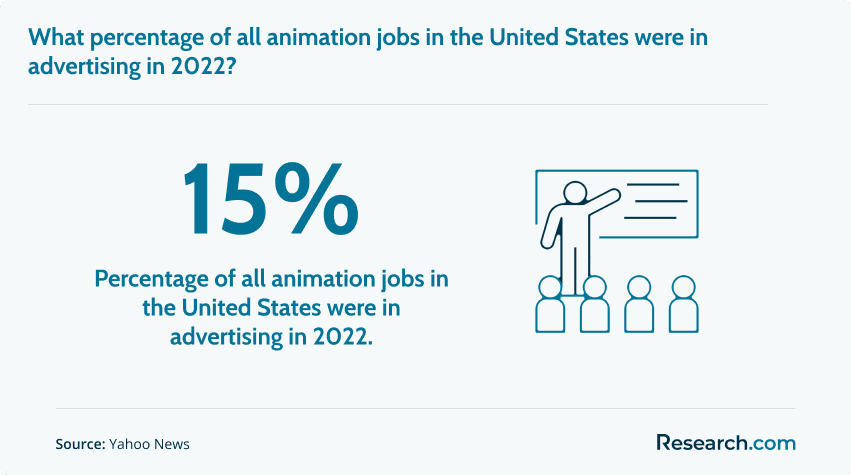
- Advertising and marketing: Brands use animation for commercials, explainers, social media campaigns, and product storytelling.
- Interactive media: VR, AR, simulations, and training platforms create new opportunities for animators who understand spatial and interactive design.
Freelancing and Contract Work
Freelance and contract work are common in animation. This can give artists flexibility and exposure to varied projects, but it also requires business discipline, client communication, pricing strategy, deadline management, and a steady pipeline of new work.
What Emerging Trends Are Shaping the Future of Animation and Animation Education?
Animation education is changing as production pipelines incorporate artificial intelligence, real-time rendering, virtual production, augmented reality, virtual reality, cloud collaboration, and faster content cycles. Students should look for programs that teach durable fundamentals while also exposing them to modern tools.
Virtual reality and augmented reality are expanding the kinds of environments animators can build. Students interested in immersive media should look for 3D environment design, game-engine workflows, spatial storytelling, interaction design, and real-time rendering coursework.
Motion graphics and visual effects are also becoming more important across advertising, streaming, social media, and corporate communication. Programs that combine animation with design, video editing, typography, and compositing can help students prepare for a broader range of roles. Students who want deeper visual design training may compare animation programs with an online graphic design degree.
AI is another major trend, but students should approach it realistically. AI tools may automate repetitive production tasks, assist with ideation, support motion capture cleanup, or speed up editing workflows. They do not replace the need for strong visual judgment, story sense, performance, timing, and ethical decision-making.
How Do Online Animation Programs Support Job Placement and Career Advancement?
Career support can make a major difference in an online animation program. Useful services include resume help, demo reel reviews, portfolio critiques, mock interviews, alumni networking, internship coordination, virtual career fairs, and employer events. Students comparing the best online degrees to get should pay attention to career services, but animation students should go further and ask whether reviewers have direct experience in animation hiring.
The best job placement support is specific, not generic. A general resume workshop is helpful, but a reel review from someone who understands game animation, character acting, VFX compositing, or motion graphics hiring is far more valuable.
How Can an Online Animation Degree Enhance Opportunities in Game Development?
An online animation degree can support a move into game development when it includes 3D animation, character cycles, creature movement, rigging, real-time asset workflows, and collaboration with designers or programmers. Game animation differs from film animation because movement must respond to player input, engine constraints, and gameplay needs.
Students who want this path should compare animation programs with a dedicated gaming degree online. A game-focused curriculum may include game engines, interactive design, prototyping, level design, and production teamwork in addition to animation.
Expanding Career Options With Graphic Design Skills in Animation
Graphic design skills can make animators more versatile, especially in motion graphics, advertising, brand storytelling, digital marketing, UI animation, and explainer videos. Design training improves composition, typography, layout, color, hierarchy, and visual clarity—skills that affect whether animated content communicates effectively.
Students exploring a graphic design career path alongside animation should look for programs that include typography, visual identity, layout, digital illustration, and brand-focused projects. This combination can be especially valuable for students who want agency, marketing, or freelance work rather than a narrow studio animation role.
Can an Online Animation Degree Lead to Advanced Academic Opportunities?
An online animation degree can support graduate study if it is from an accredited institution and includes rigorous coursework, research, production, or digital media theory. Students considering academic careers, media research, interactive design research, or teaching may later explore advanced study options such as cheap PhD programs.
Before choosing a program with graduate school in mind, ask whether credits are transferable, whether faculty support research or capstone supervision, and whether the curriculum includes writing, theory, or interdisciplinary digital media work.
Can Artificial Intelligence Enhance Your Animation Workflow?
Artificial intelligence can support animation workflows by helping with repetitive tasks, reference generation, motion cleanup, editing assistance, rotoscoping, asset organization, and early-stage ideation. Used carefully, AI can speed up production and let artists spend more time on performance, storytelling, design, and polish.
Students who want to connect animation with AI may consider technical study such as an MS in AI online. The strongest advantage comes from combining artistic judgment with technical literacy, not from relying on automation alone.
How Can Integrating Engineering Perspectives Enhance Your Animation Techniques?
Engineering concepts can strengthen animation work when projects involve simulation, physics-based motion, procedural effects, lighting systems, rendering optimization, or technical collaboration. Understanding forces, mechanics, electricity, optics, or systems thinking can help animators create more believable and efficient digital scenes.
Students interested in technical animation, simulation, robotics visualization, or advanced effects may benefit from cross-disciplinary coursework, including options like the most affordable online electrical engineering degree. This path is not necessary for every animator, but it can help technical artists and pipeline-focused professionals.
How Do Employers Evaluate an Online Animation Degree?
Most employers evaluate animation candidates by looking first at work quality. A degree can help, especially when it comes from an accredited school, but hiring decisions often depend on the portfolio, demo reel, specialization, production experience, software fluency, and ability to take feedback.
Employers may also consider whether the program included collaborative projects, internships, industry-standard tools, and real deadlines. Students comparing educational value more broadly can review Research.com’s guide to What is the best degree to get?, but animation applicants should remember that the reel usually carries more weight than the delivery format of the degree.
How Can Emerging Technologies Elevate Your Online Animation Competencies?
Emerging technologies can help animation students build more competitive skills when they are taught through hands-on projects. AI, VR, AR, real-time rendering, motion capture, cloud collaboration, and procedural tools can improve production speed and expand creative possibilities.
Students who want deeper technical exposure can compare animation coursework with programs such as accelerated AI masters degree programs online. The goal is not to replace animation fundamentals, but to expand what students can build and how efficiently they can work.
Are Affordable Online Animation Programs Suitable for Working Professionals?
Affordable online animation programs can be a good fit for working professionals if they offer flexible scheduling, realistic weekly workloads, strong technical support, and portfolio-focused assignments. Working adults should be especially careful about hidden costs, including software, hardware, fees, and unpaid time spent on production projects.
Students balancing employment and school may also compare broader affordability resources such as cheap online colleges for job holders. The best choice is not always the lowest tuition; it is the program that provides usable skills, credible credentials, and a manageable path to completion.
How Can Supplemental Certifications Elevate Your Animation Expertise?
Supplemental certifications can help animators add focused skills without enrolling in another full degree. They may be useful for software training, motion graphics, VFX tools, game engines, rendering, compositing, project management, or AI-assisted production workflows.
Professionals comparing short credentials can review certifications that pay the most. For animation specifically, the most valuable certificates are those that lead to better portfolio pieces, stronger technical fluency, or clearer specialization.
What Role Does Data-Driven Decision Making Play in Enhancing Animation Outcomes?
Data can help animation professionals make better creative and business decisions. Audience analytics, engagement metrics, production timelines, A/B testing, rendering performance, and workflow data can all inform how animated content is planned, revised, and distributed.
Students interested in analytics-driven creative work may explore programs such as the cheapest data science masters online. This is most relevant for animators working in digital marketing, games, UX animation, streaming content strategy, or interactive media.
How Do Soft Skills and Professional Networks Shape Success in Online Animation Programs?
Animation is collaborative. Even highly technical roles require communication, revision, time management, critique etiquette, file organization, and the ability to work with directors, designers, developers, clients, and producers. Online students should choose programs that create opportunities for peer critique, group projects, instructor feedback, and professional networking.
Students can also strengthen career mobility through additional credentials, including certifications that pay well without a degree. For animators, however, soft skills must show up in practice: meeting deadlines, responding well to notes, explaining creative choices, and maintaining professional relationships.
What Software Innovations Empower Online Animation Learning?
Online animation education increasingly depends on cloud collaboration, digital critique tools, real-time rendering, screen recording, remote labs, production management systems, and specialized software for modeling, compositing, motion graphics, and editing. These tools allow students to learn production workflows without being physically present in a campus studio.
Students interested in how technology supports online learning in other fields may compare an online health informatics degree program. For animation, the important question is whether the technology helps students produce stronger work, receive better feedback, and collaborate more effectively.
How Does Return on Investment Impact Your Choice of an Online Animation Degree?
Return on investment should be central to choosing an online animation degree. Students should compare total program cost, financial aid, expected completion time, portfolio quality, job placement support, software access, and likely career paths. A low-cost program may still be a poor investment if it does not produce portfolio-ready work.
Students seeking lower-cost online options should review whether schools participate in aid programs, including resources related to the cheapest online degree. For animation, ROI also depends on whether the program helps you build a reel that can compete in your chosen market.
How Do Industry Partnerships Enhance Skill Development in Online Animation Programs?
Industry partnerships can strengthen an online animation program when they lead to internships, portfolio reviews, guest critiques, mentorship, studio-style projects, or employer networking. These experiences help students understand production expectations and make the transition from coursework to professional work.
Students preparing for an animation career should ask whether partnerships are active and specific. A school saying it has “industry connections” is less useful than a program that can show recent guest speakers, internship sites, student placements, or employer-reviewed projects.
What Challenges Do Online Animation Degree Students Often Face?
Online animation students face several predictable challenges. The work is time-intensive, software can be demanding, feedback may feel slower than in a studio classroom, and students must stay motivated without daily campus structure. These challenges are manageable, but they should be planned for before enrollment.
| Common Challenge | Why It Happens | Better Strategy |
| Underestimating time requirements | Animation projects often require many rounds of revision. | Ask current students how many hours they spend each week per studio course. |
| Buying underpowered equipment | 3D animation, rendering, and video editing can strain hardware. | Check required specifications before enrolling and budget for upgrades. |
| Not getting enough critique | Online programs vary widely in instructor access. | Choose a program with scheduled feedback, portfolio reviews, and revision expectations. |
| Confusing courses with degrees | Short programs may teach useful skills but may not carry academic credit. | Confirm accreditation, credit value, and financial aid eligibility. |
| Building a scattered portfolio | Students sometimes create unrelated projects without a career target. | Choose a specialization and build work samples for that specific job market. |
Students who need financial and academic support should also compare aid-friendly institutions, including accredited online colleges that accept FAFSA.
How Does Accreditation Impact the Value of Your Online Animation Degree?
Accreditation matters because it can affect financial aid eligibility, transfer credit, graduate school admission, and employer confidence. For students seeking a degree rather than a short course, accreditation should be verified before applying.
Accreditation does not guarantee job placement, but it does provide a quality signal about the institution. Students comparing school types can review non profit colleges and confirm each school’s accreditation through official institutional sources.
How Can Lifelong Learning Accelerate Your Animation Career?
Animation tools and production pipelines change quickly. Even after earning a degree, professionals often continue learning through workshops, software training, mentorship, online courses, conferences, certificates, and graduate study. Lifelong learning is especially important for animators working in AI-assisted workflows, game engines, VFX, virtual production, or motion graphics.
Some professionals may later choose an advanced credential such as a 10-month masters degree online. Others may get more value from shorter tool-specific courses that immediately improve their portfolio or production speed.
The Importance of Accelerated Degree Options for Aspiring Animators
Accelerated online animation degree options can help motivated students enter the job market sooner, especially if they already have transfer credits, prior art training, or professional experience. Programs such as 2-year accelerated bachelor degrees online may reduce time to completion, but students should be realistic about workload.
Animation is difficult to rush because portfolio quality depends on practice, critique, and revision. An accelerated format works best for disciplined students who can handle intensive studio assignments and still produce polished work. Before enrolling, ask whether the compressed timeline leaves enough time for a strong demo reel.
Common Mistakes to Avoid When Choosing an Online Animation Degree
- Choosing a program without checking accreditation: This can affect financial aid, transfer credit, and graduate school options.
- Focusing only on tuition: Hardware, software, fees, portfolio expenses, and time away from work can change the real cost.
- Assuming all online programs are equal: Some offer deep critique and production projects; others are mainly recorded lessons.
- Ignoring portfolio outcomes: Ask to see student reels, capstones, or graduate work before applying.
- Choosing a specialization too late: A focused reel is usually stronger than a general portfolio with unrelated samples.
- Overlooking career support: Portfolio reviews, internships, and employer events can help bridge the gap between graduation and work.
- Expecting the degree to do the job search for you: Animation hiring is portfolio-driven, and students must actively network, revise, and apply.
References
- Linearity. (2023, January 11). Animation statistics and trends. Linearity.
- U.S. Bureau of Labor Statistics. (2023, April 19). Multimedia artists and animators. U.S. Bureau of Labor Statistics.
- Yahoo Finance. (2024, September 12). Latest global animation market size, share, and trends. Yahoo Finance.
- Zippia. (2024). Animator demographics and statistics in the U.S. Zippia.
Key Insights
- An online animation degree is most valuable when it produces a strong portfolio, not just a transcript.
- Full-time students commonly finish in 3 to 4 years, while part-time learners may need 5 or 6 years.
- Annual tuition commonly ranges from $15,000 to $30,000, but students should also budget for software, hardware, fees, and portfolio costs.
- Employers usually evaluate animation candidates by demo reel quality, specialization, software skill, and ability to respond to critique.
- Accreditation matters for degree programs, especially for financial aid, transfer credit, and future graduate study.
- Short courses and workshops can be useful for targeted skills, but they are not automatically substitutes for accredited degrees.
- The strongest program choice depends on your target role: character animation, 3D modeling, VFX, motion graphics, game animation, or freelance multimedia work.
- AI, VR, AR, real-time rendering, and cloud collaboration are changing animation education, but fundamentals such as timing, storytelling, design, and movement remain essential.
Other Things You Should Know About Online Animation Degree
Most online animation degree programs require students to use Autodesk Maya, Adobe Creative Cloud, and Blender, with some also requiring Toon Boom Harmony for 2D work. Many schools expect a computer that can run 3D rendering software, plus a tablet for drawing and digital storytelling assignments.
Many top online animation degree programs in 2027 require applicants to submit a digital portfolio showcasing their artistic and technical skills. Portfolios often include character designs, animation reels, and storyboards. Requirements may vary by school, emphasizing originality and creativity.
Students need proficiency in tools like Adobe Creative Suite, Blender, and Maya. Understanding coding languages such as Python for animation scripts is also valuable. These skills are crucial for effectively participating in current online learning environments and for future industry roles.