2027 Best Online Speech Pathology Master's Programs for Residents of Pittsburgh, PA

Co-Founder and Chief Data Scientist

Reviewed by Rhea Paul, PhD
SLP Education & Research Expert
Pittsburgh residents considering an online speech-language pathology master's degree need more than a convenient class schedule. They need a program that can support clinical training and Pennsylvania licensure.
This guide compares realistic online options, explains why local universities may not be online alternatives, and shows how to verify accreditation, state eligibility, placement support, travel requirements, and total cost before applying. It is designed for prospective SLPs who want a practical path from graduate school to Pennsylvania practice.
Key Things You Should Know
- For Pennsylvania licensure, choose a master's program accredited by ASHA's Council on Academic Accreditation (CAA), complete required supervised clinical education, pass the Praxis examination, and finish a clinical fellowship.
- Pitt and Duquesne are important Pittsburgh-area SLP schools, but applicants seeking a primarily online master's should verify their current delivery format rather than assuming local programs provide a fully online route.
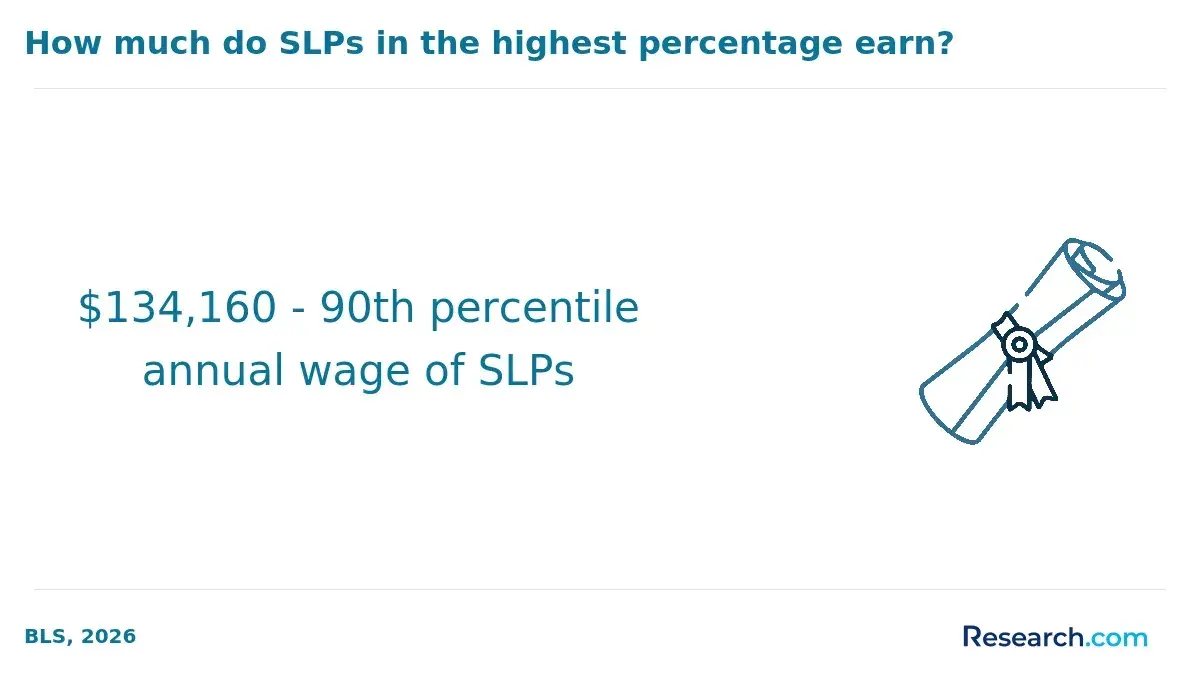
- The U.S. Bureau of Labor Statistics reports a $97,870 median annual wage for speech-language pathologists in May 2025 and projects 17% employment growth from 2025 to 2035; those favorable national figures do not replace the need to confirm Pennsylvania licensure compatibility.
Which online speech pathology master's programs can Pittsburgh residents realistically enroll in today?
Pittsburgh residents can consider accredited distance-delivery SLP programs offered by institutions outside Pennsylvania, but "online" does not mean entirely remote. CAA-accredited programs typically combine online academic coursework with local or regional clinical practica, live instruction, and one or more required immersions or campus experiences.
The programs below are examples of nationally known online or distance-oriented SLP master's options that prospective Pennsylvania students should investigate directly. Enrollment eligibility, cohort availability, clinical-site availability, travel requirements, and state disclosures can change by term.
| Program | Delivery consideration for Pittsburgh residents | Clinical-training consideration | Best fit |
| Emerson College, MS in Communication Disorders | Online coursework with required immersive experiences; confirm current Pennsylvania eligibility and travel dates. | Clinical education is a core requirement and may involve placements arranged with program support. | Applicants seeking a structured online cohort and willing to travel when required. |
| New York University, MS in Communicative Sciences and Disorders | Distance-oriented format with synchronous and experiential elements; confirm the current schedule in Eastern Time. | Students must complete supervised clinical education and should ask how local placement matching works. | Students comfortable with live learning and a high-touch university model. |
| Baylor University, MS in Communication Sciences and Disorders | Online academic delivery with required experiential components; verify the present campus-visit policy. | Clinical placement planning is required and may involve travel beyond Pittsburgh. | Applicants who want an online cohort but can plan ahead for fieldwork and travel. |
| University of Cincinnati, MS in Speech-Language Pathology | Distance-delivery option that should be checked for current Pennsylvania authorization and residency requirements. | Practicum placement requirements remain location dependent even when classes are online. | Students seeking a public-university option and willing to confirm all out-of-state details. |
Use a program directory as a starting point, not as final evidence of eligibility. A broader list of SLP masters online programs can help you identify additional options, but each school must confirm in writing that it accepts Pennsylvania residents and can support the required clinical education.
Pittsburgh applicants should generally avoid programs that cannot give a clear answer about CAA accreditation, Pennsylvania professional-licensure disclosures, or clinical placement responsibilities. A school may admit a Pennsylvania resident while still placing much of the site-search burden on the student.
How do Pennsylvania and Pittsburgh licensure rules shape which online SLP programs are acceptable?
Pennsylvania regulates speech-language pathology through the State Board of Examiners in Speech-Language and Hearing. For a graduate who plans to practice as an SLP in Pennsylvania, the central question is not whether the degree is labeled online; it is whether the degree, supervised clinical education, examination, and post-graduate fellowship satisfy the Board's current requirements.
A CAA-accredited graduate program is the safest academic starting point because CAA standards are closely aligned with the education expected for ASHA certification and state licensure. A typical professional pathway also includes documented clinical hours, the national Praxis examination in speech-language pathology, and a supervised clinical fellowship before independent practice.
The following distinction helps prevent a common mistake: graduation eligibility, ASHA certification eligibility, and Pennsylvania licensure eligibility are related but not identical decisions.
| Requirement area | Why it matters for Pennsylvania practice | What to verify before enrolling |
| Graduate degree | The Board expects qualifying graduate education in speech-language pathology or a closely related approved pathway. | CAA accreditation status and the degree title shown on the transcript. |
| Clinical education | Clinical training must be supervised and properly documented for professional credentialing. | How the program tracks clock hours, supervisor qualifications, and placement approvals. |
| Praxis examination | A passing Praxis score is part of the conventional route to professional credentialing and state licensure. | Current Pennsylvania score and submission requirements when nearing graduation. |
| Clinical fellowship | Graduates typically complete a mentored post-graduate fellowship before independent professional practice. | Whether local employers offer CF positions and what supervision documentation they require. |
Do not assume that a program's statement that it "meets educational requirements" automatically covers every Pennsylvania rule. Ask whether the disclosure addresses Pennsylvania specifically and request the answer by email, especially if you expect to move, work in schools, or pursue credentials in another state after graduation.
Which accredited online speech pathology master's programs offer the strongest options for Pittsburgh residents?
The strongest option depends on your tolerance for travel, need for part-time scheduling, prerequisite background, budget, and willingness to participate in live sessions. No program is universally best for every Pittsburgh applicant; the practical best choice is the one that is CAA-accredited, accepts Pennsylvania students, transparently supports clinical placements, and fits your available time and finances.
These comparison factors matter more than brand recognition because they directly affect whether you can complete the degree and become eligible to pursue Pennsylvania practice.
| Decision factor | Why it matters | What a strong answer looks like |
| CAA accreditation | It is the clearest academic-quality and credentialing safeguard for an entry-level SLP degree. | The program appears as accredited in ASHA CAA records, with no ambiguity about degree status. |
| Pennsylvania enrollment eligibility | Some distance programs restrict enrollment by state or make state-specific disclosures. | The school confirms it accepts Pennsylvania residents for your intended start term. |
| Clinical placement model | Fieldwork is required and can determine whether an online format is workable. | The program explains who identifies sites, approves supervisors, and handles an unsuccessful placement search. |
| Travel and immersion requirements | Travel creates real costs and scheduling pressure that advertised online formats may not show. | The school provides expected locations, timing, duration, and estimated frequency before you enroll. |
| Course schedule | Live classes and fixed clinical hours can conflict with work or caregiving. | The school identifies synchronous sessions, attendance rules, and typical weekly workload. |
| Prerequisites | Career changers may need leveling coursework before graduate study. | The admissions office evaluates your transcript and specifies remaining prerequisite courses in writing. |
Applicants who already have a communication sciences and disorders background may prioritize cohort timing and clinical support. Career changers should first compare prerequisite policies; programs presented as easiest SLP masters programs to get into may still require substantial foundational coursework, observation hours, interviews, or competitive academic preparation.
National online programs are often strongest for Pittsburgh residents who need flexible academic delivery and can meet travel requirements. A local residential program may be stronger for students who want face-to-face instruction, a more established local clinical network, or direct access to campus services.
What accreditation and ASHA CAA recognition must an online SLP master's have for Pennsylvania practice?
For an entry-level SLP master's, look specifically for accreditation by the American Speech-Language-Hearing Association's Council on Academic Accreditation in Audiology and Speech-Language Pathology. Institutional accreditation alone is not enough. A college can be institutionally accredited while a particular SLP program lacks CAA accreditation.
CAA accreditation evaluates whether a graduate program meets education standards for professional preparation, including curriculum, faculty, student assessment, resources, and clinical education. This is especially important in distance education because it provides an external quality signal beyond marketing language about flexibility or online convenience.
Before paying an application fee or deposit, complete these checks in order:
- Find the exact degree program in ASHA's CAA accreditation records and confirm its current status.
- Confirm that the accreditation applies to the delivery pathway you intend to enter, not merely to a separate residential program at the same university.
- Read the school's Pennsylvania professional-licensure disclosure and ask admissions whether it applies to online students.
- Ask whether a status change, probation, teach-out plan, or curriculum revision affects your planned cohort.
- Save written responses with your application records in case policies change later.
CAA candidacy and full accreditation are not interchangeable descriptions. A program in candidacy may be pursuing accreditation, while an accredited program has achieved it. Because credentialing consequences can be significant, Pittsburgh applicants should ask the Pennsylvania licensing board and the institution how the status applicable to their cohort affects future licensure eligibility.
How do Pittsburgh-area clinical placement opportunities work for students in out-of-state online SLP programs?
Clinical placements are supervised patient- or client-care experiences, not optional internships. Online SLP programs need to arrange or approve placements that allow students to build competencies across relevant populations and settings. Pittsburgh's concentration of hospitals, rehabilitation providers, schools, early-intervention services, and outpatient clinics can create potential learning environments, but no applicant should assume a particular organization has agreed to host students.
Programs use different models. Some have dedicated clinical-placement teams that identify and coordinate sites; some expect students to suggest local sites; many use a shared model in which the program approves all affiliations and supervisors. The difference can materially affect your risk, timeline, and ability to keep a job while enrolled.
Before choosing an out-of-state program, ask these placement questions in writing:
- Does the program secure placements for Pennsylvania distance students, or must I locate potential sites myself?
- What settings, client populations, and total clinical experiences are required before graduation?
- Can the program confirm existing affiliation capacity in western Pennsylvania without promising a specific site?
- What happens if a Pittsburgh-area placement is unavailable, delayed, or cancelled?
- Could I be assigned outside Allegheny County or required to travel or temporarily relocate?
- Who verifies supervisor credentials, liability coverage, background checks, immunizations, and site onboarding?
Clinical work is often less flexible than online coursework. School and medical placements generally follow the site's business hours, and early morning, daytime, or full-time blocks may be required. A working adult should plan finances and employer conversations around clinical semesters rather than assuming every part of an online degree can be completed evenings and weekends.
What are the key differences among Pitt, Duquesne, and major national online SLP master's options?
The important distinction is delivery model, not simply geography. The University of Pittsburgh and Duquesne University may be appealing because of their local presence and regional professional networks, but Pittsburgh applicants should confirm each school's current degree delivery format. A traditional or hybrid local program can be an excellent choice without being a substitute for a primarily online master's program.
This comparison identifies the decision trade-offs rather than treating any institution as automatically superior.
| Option type | Potential advantage for a Pittsburgh resident | Potential trade-off | Who should consider it |
| Pitt graduate SLP pathway | Local university environment and potential proximity to Pittsburgh-area faculty, services, and clinical relationships. | Confirm whether the specific entry-level master's pathway is offered in the online format you need. | Students who value local campus access and can meet the program's actual attendance model. |
| Duquesne graduate SLP pathway | Another local private-university option with regional relevance. | Do not assume online availability, part-time pacing, or local placement guarantees without current confirmation. | Students who prefer a Pittsburgh-based institution and accept its current format requirements. |
| National online CAA-accredited program | Online academic coursework may reduce routine campus commuting and broaden program choice. | May require immersions, synchronous classes, higher travel spending, or placements outside the immediate area. | Working adults and career changers who need distance delivery and can manage clinical constraints. |
A national program can be the better fit when your primary need is geographic flexibility. A local program can be the better fit when you want established in-person teaching and a campus-centered experience. Neither choice eliminates the need for supervised clinical education.
If speed is your priority, compare published course sequences and clinical-term calendars rather than relying on advertising alone. Guides to accelerated SLP programs can help frame the question, but an accelerated sequence may be unsuitable if you need to work full time or cannot accept daytime clinical assignments.
How can Pittsburgh residents verify that an online speech pathology program meets PA licensing standards?
Verification should happen before acceptance, not after graduation. Admissions representatives can explain a program, but the university's licensure disclosure and the Pennsylvania licensing board are the most important sources for state-specific questions.
Use this practical process to create a record of your decision:
- Confirm the program's current CAA accreditation status through ASHA's official accreditation records.
- Read the institution's professional-licensure disclosure for Pennsylvania and determine whether it says the curriculum meets, does not meet, or has not been determined to meet Pennsylvania requirements.
- Email the program's licensure or compliance office with your degree name, intended start term, Pennsylvania residence, and goal of Pennsylvania SLP licensure.
- Ask whether the school can arrange or approve required Pennsylvania clinical placements and whether any placement could require out-of-area travel.
- Review Pennsylvania Board requirements directly, including education, supervised experience, examination, and fellowship expectations.
- Keep copies of the catalog, disclosure, accreditation status, and written replies that applied when you enrolled.
Ask precise questions. "Can I enroll from Pennsylvania?" is not the same as "Will completion of this exact online degree satisfy the educational requirements for Pennsylvania SLP licensure?" The second question is the one that protects your career plan.
What PA state authorization and distance education rules affect online SLP enrollment from Pittsburgh?
State authorization concerns whether a college may provide distance education to students located in Pennsylvania. Professional licensure disclosure concerns whether a program's curriculum is designed to meet Pennsylvania credentialing requirements. These are separate issues, and both must be favorable before an online SLP program is a low-risk choice.
Pennsylvania participates in the State Authorization Reciprocity Agreement, commonly called SARA. SARA can simplify authorization for participating institutions that offer distance education across state lines, but it does not replace professional licensing rules, guarantee admission, require a school to find a clinical site, or settle disputes about whether a curriculum meets a licensing board's standards.
Distance students should also expect compliance requirements that are tied to clinical sites rather than classroom location. These can include criminal background checks, child-abuse clearances, immunization records, drug screening, CPR certification, health insurance, liability coverage, and site-specific onboarding. Pennsylvania school-based placements may have additional clearances or timing requirements.
Ask the program whether it has authorization to teach Pennsylvania residents, whether it has a Pennsylvania-specific licensure determination, and whether its clinical affiliation agreements cover the settings you may use. If the answer is vague, pause before depositing money.
How do costs, funding, and employer tuition benefits compare for Pittsburgh students in online SLP programs?
Online delivery can reduce routine commuting or relocation costs, but it does not necessarily make an SLP master's inexpensive. Total cost includes tuition, mandatory university fees, technology charges, clinical fees, travel for immersions, background checks, health requirements, textbooks, lost work hours during practica, and possible travel to distant clinical sites.
The most meaningful financial comparison is a program-by-program total-cost estimate, not a comparison of one school's per-credit tuition to another school's annual tuition. Ask every program for the credits required for your cohort, current tuition rate, mandatory fees, expected travel requirements, and whether tuition can change after enrollment.
| Cost category | Why online students should include it | How to reduce uncertainty |
| Tuition and mandatory fees | These are the core direct charges and may differ by residency, cohort, or course load. | Request a written estimate for the full degree sequence, not one term. |
| Immersion travel | Flights, lodging, local transportation, and missed work can add substantial out-of-pocket expense. | Request dates, locations, and required frequency before accepting admission. |
| Clinical compliance costs | Clearances, screenings, insurance, medical documentation, and equipment may be required before placement. | Ask for the current clinical-readiness checklist and estimated student-paid items. |
| Income disruption | Daytime practicum blocks may limit paid employment during parts of the program. | Build a clinical-semester cash-flow plan before borrowing. |
Federal student aid may be available to eligible students enrolled in qualifying programs, and some employers offer tuition assistance or education benefits. Review whether an employer requires continued employment, repayment after departure, a grade threshold, or preapproval before assuming the benefit will cover graduate coursework.
Compare borrowing with realistic career economics, not with a guaranteed salary. The national median annual wage for speech-language pathologists was $97,870 in May 2025, according to the Bureau of Labor Statistics, but earnings vary by setting, experience, employer, workload, and location. For additional career context, review speech pathology salary information alongside your expected debt and local employment goals.
What consumer-protection red flags should Pittsburgh residents watch for in online speech pathology programs?
The biggest red flag is a program that markets an easy online route to becoming an SLP while avoiding direct answers about CAA accreditation, clinical placements, Pennsylvania licensure disclosures, or required travel. Entry-level clinical preparation is intensive, and a credible school should describe its requirements clearly.
Watch for the following warning signs before signing an enrollment agreement:
- The school relies on broad institutional accreditation but does not identify CAA accreditation for the specific SLP degree.
- The program says it is "licensure aligned" but cannot provide a Pennsylvania-specific professional-licensure disclosure.
- Representatives promise local Pittsburgh placements without naming the process, approval conditions, or contingency plan.
- The advertised tuition excludes required fees, immersion travel, clinical expenses, or the number of credits needed for graduation.
- The school uses "100% online" language but does not disclose synchronous classes, campus visits, or daytime clinical obligations.
- The program pressures you to pay a nonrefundable deposit before answering state eligibility and placement questions in writing.
- Admissions staff imply that graduation alone guarantees a license, job, clinical fellowship, or salary.
A good alternative is to compare written disclosures from at least two CAA-accredited programs and calculate a conservative total budget for each. Transparency is a meaningful quality signal: a reputable program may not be cheap or effortless, but it should be able to explain the path, limitations, and student responsibilities plainly.
Other Things You Should Know About Speech Language Pathology
You may complete much of the academic coursework online, but entry-level SLP preparation includes supervised clinical education that must be completed in approved settings. Choose a CAA-accredited program, confirm Pennsylvania eligibility, and verify how clinical placements and any required immersions are handled.
Not always. Many programs accept students from other majors, but they may require prerequisite or leveling courses in areas such as phonetics, language development, anatomy, audiology, and speech science. Ask each school for a transcript evaluation before assuming you can start graduate clinical coursework immediately.
It may be possible during some academic terms, particularly in part-time formats. However, clinical placements often occur during normal business or school hours and can sharply limit work availability. Review the clinical calendar before making employment commitments.
The timeline depends on the program sequence, clinical fellowship arrangement, examination timing, and Pennsylvania Board processing. Graduation is an important milestone, but it is usually followed by examination and supervised post-graduate fellowship steps before independent practice.
References
- Online Master of Arts Degree Program in Speech-Language... https://catalog.upp.pitt.edu/preview_program.php
- Speech-Language Pathology | PennWest Global Online https://online.pennwest.edu/programs/speech-language-pathology-grad/index.php
- Best Speech-Language Pathology Programs in America https://www.usnews.com/best-graduate-schools/top-health-schools/pathology-rankings
- Online Master's in Speech Pathology Programs: 2026 Guide https://speechpathologymastersprograms.com/
- U.S. Department of Labor, Bureau of Labor Statistics. (2026). Speech-language pathologists. Occupational Outlook Handbook. https://www.bls.gov/ooh/healthcare/speech-language-pathologists.htm