2027 BCBA Master's Admission Essay Tips That Help You Stand Out

Co-Founder and Chief Data Scientist
Applying to a BCBA master's program is not just about proving that you can handle graduate coursework. Admissions committees want to see whether you understand applied behavior analysis, whether your goals fit the profession, and whether your prior experience—clinical, educational, caregiving, research-based, or even from another field—shows readiness for ethical, data-driven work with clients.
This guide is designed for prospective students comparing BCBA master's programs, preparing admissions materials, or deciding whether the BCBA path fits their career plans. It explains what the degree prepares you to do, how accreditation and certification work, what online and campus programs require, how costs and timelines compare, and how to evaluate job outlook, salaries, specializations, and post-graduation obligations before you apply.
Key Things You Should Know
- Strong personal statements highlighting passion for behavior analysis increase admission chances by 40%, reflecting the field's emphasis on commitment and ethical practice.
- Incorporating recent research developments and evidence-based practices from 2024 ensures essays demonstrate up-to-date knowledge crucial for competitive programs.
- Clear articulation of career goals and understanding BCBA certification requirements helps applicants align essays with program expectations and industry demands.
What does a BCBA Master's degree actually prepare you to do professionally?
A BCBA master's degree prepares you to work as a behavior analyst who assesses behavior, designs intervention plans, monitors progress through data, and adjusts treatment when outcomes are not improving. The professional focus is applied behavior analysis: using observable evidence to understand why behavior happens and how environments can be changed to support better outcomes.
In practice, graduates often work with individuals with autism spectrum disorder, developmental disabilities, learning challenges, behavioral health needs, or skill-building goals. The degree can also support work in schools, clinics, homes, residential programs, hospitals, and organizational settings. Many BCBA college programs online emphasize the same professional competencies as campus programs: assessment, intervention planning, ethics, supervision, data analysis, and collaboration with families or service teams.
Common professional responsibilities
- Conducting behavioral assessments: identifying patterns, triggers, environmental factors, and skill deficits that influence behavior.
- Building intervention plans: creating evidence-based strategies that are practical for clients, caregivers, teachers, or staff to implement.
- Collecting and interpreting data: using measurement systems to determine whether a plan is working.
- Supervising support staff: guiding behavior technicians and other team members who implement behavior plans.
- Communicating with stakeholders: explaining goals, progress, and recommendations to families, educators, clinicians, and administrators.
- Practicing ethically: applying consent, scope-of-competence, confidentiality, and client-welfare standards in daily decision-making.
The field has continued to expand. The BCBA certificant population reached 81,566 in 2025, up 10% from 74,125 in 2024. That growth reflects broader use of behavior analysis in clinical, educational, and organizational services, but it does not mean every graduate will have the same job options. Location, licensure rules, supervised experience, employer demand, and specialization all affect career outcomes.
For applicants, the key takeaway is this: a strong BCBA master's application should show more than general interest in helping people. It should demonstrate that you understand the work is structured, ethical, data-based, and accountable to measurable client outcomes.
What are the specific accreditation and licensing requirements for BCBA programs?
BCBA preparation involves three separate issues that applicants often confuse: graduate education, certification eligibility, and state licensure. A master's program may help you meet certification requirements, but you still need to verify that its coursework, supervised fieldwork structure, and state alignment fit your intended career location.
Accreditation and certification preparation
BCBA program accreditation standards in the United States are designed to confirm that programs cover required behavior-analytic content and prepare students for professional responsibilities. Applicants should look for clear documentation of BACB-aligned coursework, ethics training, supervised fieldwork expectations, and exam preparation outcomes.
The article's referenced standards include at least 270 classroom hours of foundational BACB task list coursework and a minimum of 1000 supervised fieldwork hours under a qualified BCBA supervisor. Because certification rules can change and may be interpreted differently by program pathway, applicants should not rely only on marketing copy. Confirm requirements directly with the program and the Behavior Analyst Certification Board before enrolling.
Licensing is state-specific
Certification and licensure are not the same. BCBA certification is commonly required before pursuing additional clinical licensure where applicable, but state licensing boards may impose their own rules. These can affect title use, independent practice, supervision, insurance billing, or employment in certain settings.
| Requirement area | What applicants should verify |
| Program status | Whether the program is BACB-aligned, accredited, or otherwise recognized for certification preparation. |
| Coursework | Whether the curriculum includes the required behavior analysis, ethics, research, assessment, and intervention content. |
| Fieldwork | Whether supervised hours can be completed in your state and with an eligible supervisor. |
| Exam outcomes | Whether the program publishes BCBA exam pass-rate data and how many candidates were included. |
| State licensure | Whether the program satisfies educational requirements in the state where you plan to practice. |
Program outcomes can help you judge preparation quality, but they need context. California State University, Northridge, for example, reported 100% pass rates on the certification exam for recent cohorts. A result like that is useful, but applicants should also ask about cohort size, advising, fieldwork support, faculty access, and how the program helps students who are new to ABA.
Students comparing BCBA masters programs should verify accreditation, certification alignment, and state licensing implications before applying. Discovering after enrollment that a program does not fit your state or certification plan can delay graduation, exam eligibility, employment, or licensure.
How do online BCBA Master's programs compare to campus-based options for working professionals?
Online BCBA master's programs are often the better fit for working professionals who need scheduling flexibility, live far from campus, or plan to complete supervised fieldwork near home. Campus-based programs may be stronger for students who want more structured interaction, in-person mentoring, local practicum pipelines, and direct access to faculty or peers.
The delivery format alone does not determine quality. Both online and campus programs can be rigorous, and both can leave students underprepared if advising, supervision, curriculum sequencing, or exam preparation is weak. The first-time BCBA exam pass rate dropping to 51% among 23,151 candidates shows that admission to a program is only the start; students still need disciplined study, strong supervision, and a curriculum that matches certification expectations.
| Factor | Online BCBA master's programs | Campus-based BCBA master's programs |
| Schedule | Often more flexible, especially when courses are asynchronous. | More structured, with set meeting times and campus expectations. |
| Fieldwork | May require students to locate or coordinate local placements. | May have established relationships with nearby clinics, schools, or agencies. |
| Networking | Can be strong if the program offers active virtual cohorts and faculty engagement. | Often easier through in-person classes, labs, and local professional contacts. |
| Costs | May reduce travel or relocation costs, but technology fees or residency travel can apply. | May involve commuting, parking, relocation, or campus fees. |
| Best fit | Working adults, caregivers, military students, and applicants outside major metro areas. | Students who prefer face-to-face support and structured learning environments. |
Before choosing an online format, ask exactly how fieldwork is handled. Some programs provide placement assistance; others expect students to arrange supervision independently. If you already work in a school, clinic, or ABA setting, confirm whether your workplace can count toward supervised experience and whether a qualified supervisor is available.
Cost also deserves close review. Online programs might offer lower tuition or eliminate relocation, but applicants should check for technology charges, proctoring fees, required campus visits, supervision costs, and travel for residencies. Comparing applied behavior analysis master programs by format, fieldwork support, and exam preparation is more useful than comparing tuition alone.
What admission prerequisites and GPA requirements do top-ranked BCBA programs expect?
Most top-ranked BCBA master's programs expect applicants to hold a bachelor's degree and show readiness for graduate-level work in psychology, education, behavior analysis, special education, human services, or a related field. Applicants from unrelated majors can still be competitive if they explain their transition clearly and show evidence of relevant skills, such as data tracking, client support, teaching, caregiving, research, case management, or staff training.
GPA expectations for top-ranked BCBA master's programs generally set a minimum cumulative GPA of 3.0, with many programs preferring applicants with a 3.3 GPA or higher, especially for competitive admission. Some programs review GPA in major coursework or recent academic work more closely than the overall cumulative number, which can help applicants whose early undergraduate record was weaker.
Common admission materials
- Bachelor's degree: often in psychology, education, special education, human services, or another relevant field.
- Prerequisite coursework: may include behavior principles, research methods, ethics, statistics, developmental psychology, or related social science courses.
- Statement of purpose or admission essay: should connect your background to ABA, BCBA responsibilities, and the specific program.
- Letters of recommendation: should speak to analytical ability, professionalism, ethical judgment, communication, and readiness for graduate study.
- Relevant experience: can include work in schools, clinics, autism services, mental health, disability services, research labs, or supervised support roles.
Experience matters because BCBA work is applied, not purely theoretical. The University of North Carolina Wilmington's Applied Behavior Analysis MS program achieved a 100% first-time BCBA exam pass rate among recent candidates, underscoring the value of strong academic preparation paired with structured practice and exam readiness.
How to strengthen an application from another field
If you are changing careers, do not apologize for your background. Translate it. A teacher might emphasize classroom behavior support and data-informed instruction. A social worker might highlight ethical practice and family collaboration. A manager might discuss staff training, performance feedback, and systems thinking. A researcher might point to measurement, experimental design, and evidence evaluation.
Applicants considering ABA masters programs online should be especially clear about self-direction, time management, and access to fieldwork opportunities. Online admissions committees need confidence that you can succeed without the daily structure of a campus program.
How long does a BCBA Master's degree typically take, and what's the total cost?
A BCBA master's degree generally takes 18 to 24 months, depending on whether you enroll full time or part time and how the program sequences coursework and supervised fieldwork. Accelerated online programs can reduce this timeline to 12 to 15 months, but faster is not automatically better. Students who work full time, have caregiving responsibilities, or are new to ABA may need a slower pace to absorb the material and complete quality fieldwork.
Many programs allow supervised fieldwork hours to be completed alongside coursework. That can shorten the total path to certification, but it also increases weekly workload. Applicants should ask how many hours per week students typically spend in class, studying, working in practicum settings, meeting supervisors, and preparing documentation.
Typical cost components
Tuition costs vary widely, usually ranging from $15,000 to $45,000 depending on residency status and program type. Public universities often offer lower in-state rates, while private schools tend to be more expensive regardless of where students live. Additional costs such as textbooks, certification exam fees, and supervision expenses can add between $2,000 and $5,000 to the total cost.
| Cost category | What to check before enrolling |
| Tuition | Per-credit price, total credits, residency rules, and whether tuition changes during the program. |
| Fees | Technology, online learning, student services, proctoring, graduation, or campus residency charges. |
| Books and materials | Required texts, assessment tools, software, and exam preparation resources. |
| Supervision | Whether supervision is included, employer-provided, program-arranged, or separately billed. |
| Lost income | Reduced work hours, unpaid practicum time, travel, or schedule changes. |
Data from Intelligent.com's Best Online BCBA Master's Degree Programs of 2025 indicates an average student debt of approximately $35,000 for online students. That figure makes financial planning important before—not after—enrollment. Applicants should compare scholarships, employer tuition assistance, graduate assistantships, payment plans, and whether the program's fieldwork structure allows them to keep working.
A realistic admissions essay can mention financial and scheduling awareness without making cost the focus. Strong applicants show they understand the commitment and have a workable plan for completing coursework, supervision, and exam preparation.
What core coursework and clinical practicum hours are standard in BCBA curricula?
BCBA master's curricula are built around behavior-analytic theory, ethical practice, research methods, assessment, intervention design, data-based decision-making, and supervision. The goal is not simply to teach terminology; it is to prepare students to analyze behavior, choose appropriate interventions, evaluate results, and practice within professional and ethical boundaries.
Standard BCBA master's programs require completion of coursework aligned with the Behavior Analyst Certification Board's (BACB) Fifth Edition Task List. Common course areas include behavior principles, measurement and experimental design, functional assessment, ethical and professional issues, research methods, behavior-change procedures, supervision, and data analysis.
Core curriculum areas
- Foundations of behavior analysis: principles of reinforcement, punishment, stimulus control, motivation, and learning.
- Measurement and data systems: selecting valid measures, recording behavior, graphing results, and interpreting trends.
- Assessment: conducting functional assessments and identifying variables that maintain behavior.
- Intervention design: building behavior support plans and skill-acquisition programs.
- Ethics: applying professional standards to consent, confidentiality, cultural responsiveness, competence, and supervision.
- Research methods: evaluating evidence and using single-case or applied research designs.
- Supervision and leadership: training staff, monitoring implementation, and providing performance feedback.
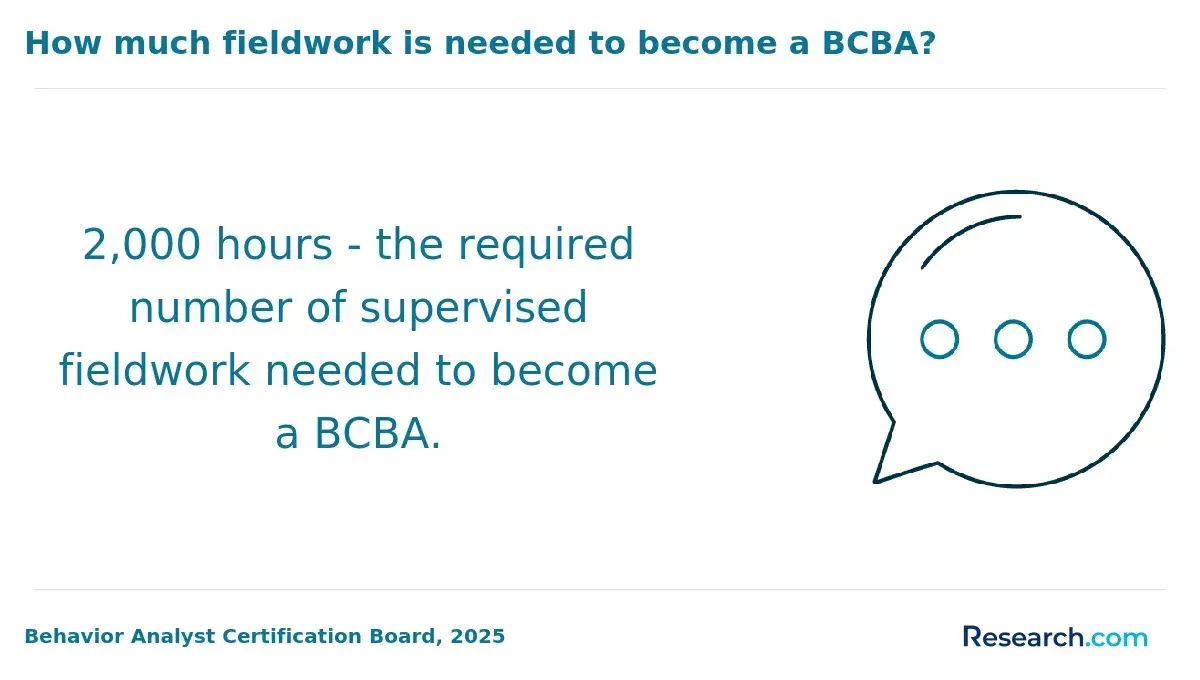
A crucial component is the accumulation of at least 1,500 supervised clinical practicum hours in applied settings. Practicum includes 75% direct implementation of behavior analytic services with clients, while remaining hours may involve supervision, ethics, and training activities. Students may complete experience in schools, clinics, homes, residential facilities, or other approved environments.
Structured supervision matters because poor fieldwork can leave graduates underprepared even if they pass their courses. A strong supervisor helps students connect theory to real cases, identify ethical issues early, improve documentation, and receive feedback on clinical judgment. The Florida Institute of Technology achieved a 100% BCBA pass rate with 11 candidates, illustrating how rigorous coursework and practicum structure can contribute to exam readiness.
Before enrolling, applicants should ask for a term-by-term curriculum map and a clear explanation of fieldwork support. Missing coursework, inadequate practicum arrangements, or misunderstanding supervision rules can delay exam eligibility and increase total cost.
What is the job outlook and salary range for BCBA-certified professionals?
The job outlook for BCBA-certified professionals is strong because behavior analytic services are used across healthcare, autism services, education, disability support, behavioral health, and organizational settings. The U.S. Bureau of Labor Statistics projects an employment increase of about 20% over the next decade for behavior analysts. Demand is supported by greater recognition of developmental disorders such as autism spectrum disorder and broader insurance coverage for behavioral treatments.
Salary varies by role, setting, geography, caseload, experience, licensure rules, and whether the position includes supervision or program leadership. Entry-level BCBA practitioners usually start near $55,000 annually, while seasoned professionals can earn between $70,000 and $95,000. Specialized clinics or metropolitan areas may offer salaries exceeding $100,000. Public schools, government roles, or nonprofits generally provide lower wages but often include benefits like job security and pensions. Private practice and consulting can generate variable earnings tied to client base and reputation.
| Work setting | Potential advantages | Possible trade-offs |
| Autism or ABA clinics | High demand, structured caseloads, supervision opportunities. | Productivity expectations, travel, or high caseload pressure. |
| Schools | Stable schedule, collaboration with educators, public-sector benefits. | Lower pay in some districts and complex systems-level constraints. |
| Hospitals or behavioral health settings | Interdisciplinary work and exposure to complex cases. | May require additional experience or state-specific credentials. |
| Private practice or consulting | Autonomy and income potential. | Business development, billing, liability, and income variability. |
| Organizational behavior management | Application of ABA to workplace performance and systems. | Fewer traditional BCBA roles and a need to market transferable value. |
Return on investment should be evaluated carefully. Leading online master's programs average $464 per credit for in-state students and $696 for out-of-state. When comparing that cost with expected salaries, applicants should consider not only tuition, but also debt, supervision expenses, time out of the workforce, licensure requirements, and the job market in the state where they plan to practice.
A strong career plan is specific. Instead of saying you want to “help people,” identify the population, setting, or service model you want to work in and explain how BCBA training supports that goal.
How do you choose between accredited BCBA programs with different specializations or focus areas?
Choose a BCBA program by matching its specialization, fieldwork options, faculty expertise, and graduate outcomes to the kind of behavior analyst you want to become. Accreditation and certification alignment are baseline requirements; specialization determines how well the program fits your actual career goals.
Some programs emphasize autism intervention and pediatric services. Others focus on school-based consultation, developmental disabilities, research, clinical practice, supervision, or organizational behavior management. A student aiming for early intervention should not evaluate programs the same way as someone pursuing workplace performance consulting or doctoral research preparation.
Questions to ask when comparing specializations
- What populations does the program emphasize? Review course examples, practicum sites, faculty research, and capstone projects.
- Where do students complete fieldwork? A specialization is only useful if the program can support relevant applied experience.
- Who teaches and supervises students? Faculty and supervisors should have expertise in your intended practice area.
- How are outcomes reported? Look at BCBA exam pass rates, placement patterns, and the number of candidates represented.
- Does the format fit your life? Flexibility matters, but not if it leaves you without adequate supervision or advising.
Program outcomes can be informative. The University of Alabama in Huntsville's online program, with a reported 100% BCBA exam pass rate among 10 candidates, demonstrates strong alignment of coursework with certification requirements. Still, applicants should interpret pass rates alongside cohort size, admissions selectivity, student support, and fieldwork structure.
The best program is not always the one with the broadest list of concentrations. It is the one that gives you the right coursework, supervised practice, mentorship, and professional network for your intended role. If you are unsure of your specialization, choose a program with strong generalist preparation and multiple practicum settings rather than a narrow track that may limit your options too early.
What professional certifications and continuing education requirements follow BCBA graduation?
Graduating from a BCBA master's program is not the end of professional preparation. After meeting education, fieldwork, and examination requirements, BCBAs must maintain their credential through continuing education and ethical practice. Ongoing learning is part of the profession because behavior analysis evolves through new research, changing practice standards, and updated ethical expectations.
Maintaining the Board Certified Behavior Analyst (BCBA) credential requires earning 32 continuing education units (CEUs) every two years, including at least 4 CEUs in ethics. Missing these requirements can jeopardize certification and limit the ability to practice in roles that require the credential.
Continuing education options
- BACB-approved workshops: focused training on assessment, intervention, supervision, ethics, or specialty areas.
- Professional conferences: opportunities to learn current research and build a professional network.
- Online CE courses: flexible options for working professionals, especially those in rural areas or full-time roles.
- Employer training: may count only if it meets approval requirements, so documentation is essential.
- Specialized training: useful for practitioners working in autism services, early childhood, schools, severe behavior, or supervision.
Advanced certification options exist, such as the BCBA-D, which involves a doctoral degree and provides deeper clinical and research expertise. Additional credentials may also support supervisory roles or specialized practice areas, although applicants should verify which credentials are recognized by employers, state boards, and funding sources.
Given a 54% pass rate among 9,911 first-time BCBA exam candidates, professional development should be intentional rather than generic. CEUs that directly strengthen your practice area, supervision quality, ethical decision-making, or data interpretation are more valuable than low-effort credits chosen only to satisfy a deadline.
New graduates should build a simple compliance system: track CE deadlines, save certificates, confirm provider approval, document ethics credits, and schedule learning throughout the two-year cycle rather than rushing at the end.
How does a BCBA Master's degree differ from bachelor's-level ABA certification pathways?
A BCBA master's degree prepares graduates for advanced, independent behavior-analytic responsibilities, while bachelor's-level ABA pathways usually prepare students for assistant, technician, or support roles. The difference is not only the credential level; it is the depth of training, scope of responsibility, supervision authority, and career ceiling.
A BCBA master's degree includes graduate coursework, research methods, ethics, intervention design, supervised fieldwork, and preparation aligned with Behavior Analyst Certification Board (BACB) standards. Typically, master's candidates complete at least 750 verified hours of supervised experience, whereas many bachelor's certificates focus on assistant roles or Registered Behavior Technician (RBT) training with limited practical hours.
| Pathway | Typical preparation | Common professional role |
| BCBA master's degree | Graduate-level ABA coursework, supervised experience, ethics, research, assessment, and intervention planning. | Behavior analyst, supervisor, consultant, clinical lead, or program designer. |
| Bachelor's-level ABA certificate | Foundational ABA concepts and limited applied training depending on the program. | Assistant-level or support role, depending on employer and credential requirements. |
| Registered Behavior Technician pathway | Entry-level training focused on implementing plans under supervision. | Direct service technician working under qualified supervision. |
The master's pathway develops the clinical reasoning required to assess behavior, design interventions, supervise others, and make ethical decisions when cases are complex. Bachelor's-level pathways can be valuable for entering the field, gaining experience, and deciding whether ABA is the right long-term career, but they generally do not replace the master's degree for applicants who want to become BCBAs.
For example, Marquette University's in-person BCBA master's program achieved a 100% pass rate on the BCBA exam among its 10 candidates, reflecting rigorous training and a polished admissions process. Results like this show why applicants should evaluate program quality, not just credential title.
If your goal is independent behavior-analytic practice, supervision, clinical leadership, or advanced consultation, the BCBA master's degree is the more appropriate path. If your goal is to enter the field quickly, test your interest, or work in a supervised support capacity, a bachelor's-level or technician pathway may be a practical first step.
Other Things You Should Know About Applied Behavior Analysis
To stand out in your 2027 BCBA Master’s admission essay, highlight your passion for applied behavior analysis, clear career goals, and personal experiences that show your dedication to helping others. Demonstrating your practical understanding of ethical practice and showcasing critical thinking skills can make a significant impact.
Ethical practice is fundamental in applied behavior analysis, guided by the BACB's Professional and Ethical Compliance Code. BCBAs are required to prioritize client dignity, ensure informed consent, and maintain confidentiality. Ethical considerations shape every aspect of assessment, intervention, and ongoing evaluation to protect client welfare.
Yes, many BCBAs choose to specialize in areas such as autism treatment, organizational behavior management, school-based interventions, or gerontology. Specialization typically involves additional training or supervised experience in the chosen subfield. Specializing can enhance a professional's expertise and expand career opportunities.
Effective communication, problem-solving, and data analysis skills are essential for BCBAs. They must collaborate with families, educators, and other professionals to ensure interventions are implemented consistently. Additionally, adaptability and cultural competence help professionals tailor interventions to diverse client populations.
References
- Board-Certified Behavior Analyst (BCBA) Salary Guide â Trusted Health https://www.trustedhealth.com/allied-career-guide/behavior-analyst/salary-guide
- Is It Possible to Become a BCBA Without a Master's Degree? https://blossomabatherapy.com/blog/bcba-without-masters-degree
- Writing a Top-Notch Graduate School Admissions Essay https://www.onlinemastersdegrees.org/student-resources/admissions/writing-an-admissions-essay/
- ABA Therapy Certification Requirements https://www.aprilaba.com/resources/aba-therapy-certification-requirements
- The 10 Best ABA Masters Programs [updated for 2025] https://abamastersprograms.org/best-aba-masters-programs/
- Behavior Analyst Practicum, Intensive Practicum and Field Experience | BCBA®, BCaBA® and BCBA®-D Experience Requirements https://www.appliedbehavioranalysisedu.org/aba-practicum-and-fieldwork/
- BCBA Career Outlook: Essential Guide to Salary and Growth Trends https://www.hiddenlightaba.com/bcba-career-outlook-essential-guide-to-salary-and-growth-trends/
- ABA Program Outline and Course Description - Cape Abilities https://capeabilities.org/aba-program-outline-and-course-description/
- Intelligent - Best Online Bcba Masters Degree Programs 2025 https://intelligent.com/best-online-bcba-masters-degree-programs-2025
- Understanding BCBA Fieldwork Hours | ABA Resource Center https://www.abaresourcecenter.com/post/bcba-fieldwork-hours