2027 The Best Undergraduate Majors for Future BCBAs

Co-Founder and Chief Data Scientist
Choosing an undergraduate major for a future BCBA career is less about finding one “perfect” bachelor’s degree and more about building the right academic base before graduate-level certification work. The strongest majors help you understand behavior, learning, development, data, ethics, disability services, and intervention planning—skills that matter later in applied behavior analysis coursework and supervised fieldwork.
This guide is for students comparing psychology, education, human services, social science, communication sciences, neuroscience, and other undergraduate routes into behavior analysis. It explains which majors provide the best preparation, what BCBA education actually requires, how online and campus ABA programs differ, what admissions teams look for, and how cost, salary, and job demand should factor into your decision.
Because BCBA certification requirements are specific, students should not assume that any related major will automatically qualify them. The safest plan is to choose a strong undergraduate foundation, confirm future graduate program requirements early, and look for coursework or experience tied to behavior analysis, research methods, ethics, and supervised practice.
Key Things You Should Know
- Undergraduate majors in psychology, education, and human services offer the strongest foundation for BCBA certification, with psychology programs often including essential behavior analysis coursework.
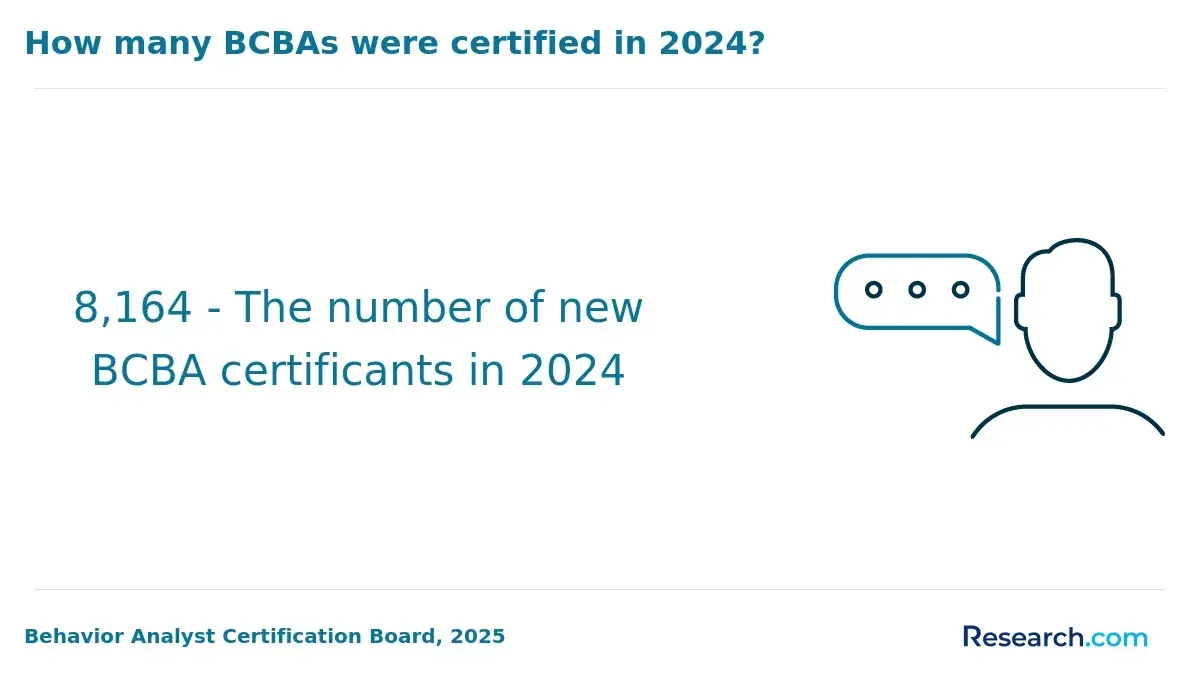
- From 2024 to 2025, the BACB reported a 15% growth in BCBA certification applications, reflecting increasing demand for applied behavior analysis professionals.
- Majors combining coursework in behavior analysis, ethics, and research methods improve graduate success rates on BCBA exams, which currently average a pass rate near 55% nationally.
What Are the Best Undergraduate Majors for Future BCBAs?
The best undergraduate majors for future BCBAs in the United States are usually psychology, education, special education, applied behavior analysis, human services, social work, communication sciences and disorders, and closely related behavioral science fields. These majors prepare students for graduate ABA coursework by developing a working understanding of human behavior, learning, intervention, assessment, data collection, and client-centered support.
Psychology is often the most direct undergraduate foundation because it introduces learning theory, research methods, developmental processes, assessment, and behavioral principles. According to the Bureau of Labor Statistics Occupational Outlook Handbook (2025 update), psychology majors entering ABA-related careers earn an average starting salary of $62,000, about 28% higher than non-psychology graduates pursuing BCBA certification.
Education and special education majors are especially useful for students who want to work in schools, autism support programs, early intervention, or instructional design. These programs typically emphasize classroom management, individualized education plans, disability services, and evidence-based teaching strategies—all relevant to applied behavior analysis.
Human services and social work majors can also be strong choices because they expose students to case management, family systems, community agencies, advocacy, and ethical service delivery. These backgrounds are helpful for future BCBAs who want to work in multidisciplinary clinics, child welfare systems, residential programs, or community-based services.
Students with majors such as sociology, neuroscience, communication sciences and disorders, or linguistics may also enter ABA successfully, particularly if they add behavior analysis coursework, statistics, research methods, developmental psychology, or supervised experience. The key is not the title of the major alone, but whether the program builds the competencies needed for graduate study and later certification.
| Undergraduate major | Best fit for future BCBA work | What to add if the major lacks ABA content |
| Psychology | Behavior, learning, development, assessment, research methods | ABA electives, practicum experience, ethics coursework |
| Special education | School-based behavior support, autism services, instructional intervention | Experimental design, data analysis, behavior assessment |
| Applied behavior analysis or behavioral science | Direct preparation for ABA concepts and graduate-level study | Broad clinical, educational, or human development experience |
| Human services or social work | Agency work, family support, case coordination, community programs | Learning theory, measurement, ABA-specific coursework |
| Communication sciences and disorders or linguistics | Verbal behavior, communication intervention, pediatric therapy settings | Behavior-change procedures, supervision exposure, ABA ethics |
| Neuroscience | Research-oriented ABA, neurobehavioral work, data-heavy roles | Applied intervention experience and client-facing practice |
Before choosing a program, students should review whether the curriculum includes learning theory, behavior principles, statistics, research design, developmental psychology, ethics, and opportunities for field experience. A related major combined with ABA-focused electives, a minor, volunteer work, or an undergraduate practicum is often stronger than a major that looks relevant on paper but offers little applied experience.
Students planning for graduate study should also compare flexible pathways such as online ABA master's programs, especially if they need to keep working while completing advanced certification-related coursework.
What Is a BCBA and Why Pursue This Career?
A Board Certified Behavior Analyst, or BCBA, is a graduate-level professional who uses applied behavior analysis to assess behavior, design intervention plans, train caregivers or staff, evaluate progress, and improve socially significant behaviors. BCBAs often work with individuals with autism, developmental disabilities, behavioral challenges, communication delays, or skill deficits, although ABA is also used in schools, clinics, homes, organizations, and community programs.
The career appeals to students who want a practical, evidence-based role that combines psychology, education, data analysis, coaching, and direct impact. BCBAs do not simply “manage behavior.” They identify why behavior occurs, teach replacement skills, measure outcomes, and adjust interventions based on data.
Undergraduate majors such as psychology, special education, applied behavior analysis, and human services can provide a useful starting point because they introduce behavior, development, instruction, assessment, and ethical service delivery. Students who gain early experience in autism support programs, schools, residential services, behavior clinics, or disability organizations are often better prepared for the realities of the work.
Demand for behavior specialists is increasing, with the U.S. Department of Education reporting a 22% rise in K-12 settings by 2025. This growth creates certified behavior analyst career opportunities in school-based ABA roles, private clinics, early intervention programs, healthcare organizations, and community agencies. Education-related undergraduate degrees can be especially valuable in school settings, where they boost employment rates by 35% in school-based ABA roles.
Students should pursue this career if they are comfortable with detailed observation, documentation, ethical decision-making, collaboration with families and professionals, and ongoing supervision or training. The work can be highly meaningful, but it also requires patience, consistency, strong communication, and a willingness to make decisions based on data rather than assumptions.
Those comparing the financial side of the profession can review BCBA salary information to understand how setting, region, credentials, and experience can affect earning potential.
What Education Is Required to Become a BCBA?
To become a Board Certified Behavior Analyst, students must plan beyond the bachelor’s degree. A related undergraduate major can prepare you for the field, but BCBA certification requires graduate-level education, verified behavior-analytic coursework, supervised fieldwork, and successful completion of certification requirements aligned with Behavior Analyst Certification Board standards.
In general, candidates need a graduate-level degree in behavior analysis, education, psychology, or an approved related area, along with behavior-analytic coursework that meets current eligibility standards. Many students begin with a bachelor’s degree in psychology, special education, ABA, human services, or a related field, then complete a master’s program or graduate-level coursework designed for BCBA preparation.
Common educational pathways include:
- Completing a bachelor’s degree in applied behavior analysis, psychology, education, special education, or a related field, then entering a master’s program with verified behavior-analytic coursework.
- Earning a bachelor’s degree in psychology or education and supplementing it with BACB-approved graduate behavior analysis coursework.
- Choosing an ABA-specific undergraduate program that builds early familiarity with behavior principles, ethics, measurement, and intervention before graduate study.
- Entering the field from an unrelated bachelor’s degree by completing prerequisite coursework, a graduate certificate, or a master’s program that includes the required ABA content.
Graduates from ABA-specific bachelor's programs show a 92% BCBA exam pass rate, surpassing the national average by 15 percentage points (Behavior Analyst Certification Board Annual Report, 2025). That does not mean an ABA bachelor’s degree is the only route, but it suggests that early exposure to ABA concepts may help students transition into graduate-level certification preparation more smoothly.
Students should pay close attention to supervised fieldwork requirements. Coursework alone is not enough. Future BCBAs must complete supervised experience that involves behavior assessment, intervention planning, data collection, ethical practice, and professional feedback. The quality of supervision can strongly affect readiness for independent practice.
For students who need flexibility, online master's in ABA programs may help meet graduate education requirements while allowing them to continue working. Before enrolling, students should confirm that the program’s coursework, supervision support, accreditation status, and state licensure alignment fit their goals.
Undergraduate degrees that best support BCBA prerequisites usually come from psychology, education, special education, applied behavior analysis, behavioral science, communication sciences and disorders, human development, social work, or related social science fields. However, an undergraduate degree by itself does not usually complete all BCBA certification requirements. It prepares students for the graduate coursework and supervised fieldwork that follow.
The strongest majors include courses in behavior, development, statistics, research methods, ethics, disability services, and intervention. Students should look closely at course descriptions rather than relying only on the major title. For example, one psychology program may offer learning theory, experimental analysis, and behavior modification, while another may focus more heavily on counseling or general social psychology.
Some of the best majors to become a BCBA include:
- Psychology, especially programs with developmental, clinical, experimental, learning, or behavioral coursework.
- Special education, particularly programs focused on autism, behavior support, disability services, or classroom intervention.
- Applied behavior analysis or behavioral science, when the curriculum includes measurement, ethics, behavior-change procedures, and research design.
- Speech-language pathology or communication sciences and disorders, especially for students interested in verbal behavior and pediatric therapy.
- Human services, social work, or human development, particularly when paired with ABA electives or practicum experience.
- Sociology, neuroscience, or linguistics, when supplemented with behavior analysis coursework and applied experience.
Graduates from speech-language pathology backgrounds have shown a distinct advantage in moving to BCBA roles. According to the American Speech-Language-Hearing Association Workforce Survey, SLP bachelor's alumni pursuing BCBA certification advanced 40% faster into supervisory positions. This reflects the growing interdisciplinary demand in pediatric therapy, where behavior analysis and communication intervention often overlap.
Students from less direct majors can still prepare effectively if they build the right academic bridge. Useful additions include courses in introductory psychology, developmental psychology, statistics, research methods, learning theory, ethics, autism studies, disability services, and behavior intervention. Volunteer or paid experience in schools, clinics, therapy centers, camps, or residential programs can also help confirm that ABA is the right career path.
Prospective students should verify whether their undergraduate curriculum includes measurement, experimental design, behavior-change procedures, and ethical content. Those who want deeper preparation after the bachelor’s degree may consider a master's degree in behavioral science or a closely aligned ABA graduate program.
An ABA undergraduate curriculum introduces students to the science of behavior and the practical methods used to assess, measure, and change behavior. While a bachelor’s degree alone is not typically enough for BCBA certification, it can prepare students for graduate study by building fluency in behavioral concepts, research methods, ethics, and applied intervention.
Core topics often include:
- Principles of behavior, including reinforcement, punishment, extinction, stimulus control, and motivating operations.
- Learning theory and fundamental behavioral processes.
- Behavior measurement through direct observation, recording systems, graphing, and data interpretation.
- Functional behavior assessment and the identification of variables that influence behavior.
- Behavior-change procedures used to teach skills and reduce interfering behaviors.
- Experimental methods for evaluating whether an intervention is working.
- Ethical and legal issues in behavior analysis, including consent, dignity, confidentiality, scope of competence, and responsible practice.
- Applications in schools, clinics, homes, community programs, and disability services.
Good ABA undergraduate programs do more than define terminology. They teach students how to observe behavior objectively, collect usable data, evaluate intervention effects, and communicate findings clearly to families, teachers, clinicians, and supervisors. Programs that include practicum, service learning, or research assistant opportunities are especially valuable because students can connect classroom concepts to real client or organizational needs.
ABA programs often overlap with psychology, education, sociology, communication sciences, and human services. Sociology majors concentrating on ABA may focus more on community-based interventions, social systems, group behavior, and service access. This can be useful for students interested in public programs, nonprofit agencies, school systems, or community behavioral health.
According to the National Association of Colleges and Employers Salary Survey (2025), sociology majors specializing in ABA fields saw a 25% return on investment within three years post-graduation, surpassing typical social science degrees. Students considering this route should still confirm that the program includes enough behavior-specific coursework to prepare for graduate BCBA requirements.
When comparing ABA undergraduate programs, prioritize curriculum alignment, fieldwork access, faculty expertise, ethics training, and opportunities to practice data-based decision-making. A program with a strong title but limited supervision or applied experience may be less useful than a broader major with rigorous behavioral coursework and meaningful field placements.
Online and campus ABA programs can both prepare students for applied behavior analysis careers, but they serve different learning styles, schedules, and fieldwork needs. The best choice depends on how much flexibility you need, whether you have access to local practicum sites, and how you prefer to learn complex clinical and data-based skills.
| Factor | Online ABA programs | Campus ABA programs |
| Best for | Working students, career changers, students far from campus, and those needing flexible scheduling | Students who want in-person structure, direct faculty access, and campus-based clinical opportunities |
| Instruction | Often uses recorded lectures, live virtual meetings, discussion boards, simulations, and remote advising | Usually includes face-to-face classes, labs, live discussion, and immediate classroom feedback |
| Fieldwork | May require students to locate approved local placements or supervisors | May offer easier access to university clinics, school partnerships, or affiliated practicum sites |
| Networking | Depends on virtual events, cohort design, faculty engagement, and local professional connections | Often stronger for students who benefit from in-person peers, faculty, clinics, and community partners |
| Main risk | Choosing a flexible program without confirming supervision and fieldwork logistics | Choosing an immersive program that is less compatible with work, caregiving, or relocation limits |
Online ABA programs are often a strong fit for working professionals, parents, rural students, military-connected students, or career changers who cannot relocate. They can provide access to ABA coursework through recorded lectures, virtual activities, and remote supervision structures. However, students should verify how the program handles supervised fieldwork, because direct client contact and qualified supervision are central to BCBA preparation.
Campus ABA programs provide more built-in structure and easier access to face-to-face support. Students who learn best through live discussion, immediate feedback, supervised labs, and direct interaction with faculty may prefer a campus setting. Campus programs may also have relationships with university clinics, local schools, hospitals, therapy centers, or community agencies.
Students with neuroscience or related undergraduate backgrounds may use either format to move toward research-focused ABA roles. Neuroscience bachelor's degree holders made up 18% of new research-oriented ABA positions during a notable 31% increase in neurobehavioral funding reported by the National Institutes of Health. Combining neuroscience coursework with ABA training can be useful for students interested in neurobehavioral assessment, intervention research, or data-intensive clinical work.
Before choosing online or campus study, ask the program direct questions: Does the curriculum align with current BCBA coursework expectations? How are supervised fieldwork placements arranged? Who provides supervision? Are there local restrictions for students in your state? What student support is available for certification planning? The format matters, but the quality of coursework, supervision, and applied experience matters more.
Admission requirements for ABA programs vary by school and degree level, but most graduate programs require a bachelor’s degree from an accredited institution, official transcripts, letters of recommendation, and a statement of purpose. Many programs accept applicants from different undergraduate majors, especially if they can show academic readiness and a clear reason for entering behavior analysis.
Applicants with backgrounds in psychology, education, special education, social work, human services, communication sciences, or related fields may have an advantage because their coursework often overlaps with ABA concepts. A minimum GPA around 3.0 on a 4.0 scale is typically expected, although some schools review applicants holistically and may consider work experience, upward academic trends, or prerequisite completion.
Common admission materials include:
- Official transcripts from all previously attended colleges.
- Letters of recommendation from faculty, supervisors, or professionals who can evaluate readiness for graduate study.
- A personal statement explaining interest in ABA, career goals, and relevant experience.
- A resume or CV listing work, volunteer, research, or clinical exposure.
- Prerequisite coursework, when required, such as introductory psychology, developmental psychology, statistics, or research methods.
- GRE scores, only if the program still requires them.
Relevant experience is not always mandatory, but it can strengthen an application. Admissions committees often value applicants who have worked or volunteered in schools, autism programs, behavioral clinics, youth services, disability support, mental health settings, or community agencies. Experience helps show that the applicant understands the field and is prepared for the demands of supervised practice.
Some online or hybrid programs may offer conditional admission if an applicant is missing one or more prerequisites. In that case, students may need to complete foundation courses during the first semester or before advancing into specialized ABA coursework.
Social work graduates entering ABA fields have experienced a 19% median salary increase year-over-year, reaching $68,500, reflecting growing roles in child welfare systems integrating ABA. This makes ABA graduate study appealing to some social work and human services graduates, but applicants should still confirm that the program meets certification and licensure expectations for their intended location.
Before applying, contact admissions or the program director with specific questions about prerequisites, fieldwork support, accreditation, state authorization, certification alignment, and graduate outcomes. Early clarification can prevent wasted applications, delayed enrollment, or coursework that does not support your BCBA goal.
Most ABA-related undergraduate degrees take about four years and 120 to 130 credit hours to complete, although accelerated formats can shorten this to three years. The total cost depends on institution type, residency status, transfer credits, program format, and whether ABA is offered as a full major, concentration, minor, or certificate within a broader degree.
Public universities typically charge $10,000 to $30,000 annually for in-state students, while out-of-state tuition ranges from $25,000 to $50,000. Private schools are generally more expensive, with yearly fees between $30,000 and $60,000. Students should also budget for textbooks, technology fees, background checks, practicum-related costs, transportation to field sites, and later certification preparation expenses.
| Program type | Typical length | Cost considerations |
| Public in-state bachelor’s degree | About four years and 120 to 130 credit hours | Often the lower-cost option for residents; tuition typically ranges from $10,000 to $30,000 annually |
| Public out-of-state bachelor’s degree | About four years and 120 to 130 credit hours | Tuition typically ranges from $25,000 to $50,000 |
| Private bachelor’s degree | About four years and 120 to 130 credit hours | Yearly fees are generally between $30,000 and $60,000 |
| Accelerated bachelor’s degree | Can shorten completion to three years | May reduce time in school but can require heavier course loads |
| Community college transfer pathway | Varies by transfer plan | Can reduce lower-division costs if credits transfer cleanly into a four-year program |
Majors like psychology or communication sciences and disorders can often support later ABA certification planning if students choose the right electives and graduate pathway. The Behavior Analysis Certification Board Practitioner Survey, 2025, found that CSD graduates report 45% higher job satisfaction in ABA careers, underscoring the benefits of diverse verbal behavior intervention skills.
Students trying to control costs should compare more than tuition. Ask whether the program offers ABA-specific coursework, practicum placement help, transfer-friendly policies, financial aid, scholarships, and advising for graduate school. A cheaper program that does not prepare you for the next step may cost more over time if you need extra prerequisite courses later.
Key factors affecting cost and length include:
- In-state versus out-of-state tuition.
- Public versus private institution pricing.
- Traditional, accelerated, online, hybrid, or part-time format.
- Whether ABA is a major, concentration, minor, or certificate.
- Transfer credits from community college or previous coursework.
- Availability of financial aid, scholarships, employer tuition support, and work-study options.
- Whether the curriculum aligns with future graduate and BCBA preparation needs.
New BCBAs typically earn between $50,000 and $70,000 annually, though pay varies by state, employer, clinical setting, caseload, supervision responsibilities, and prior experience. Entry-level salaries are usually lower in school or government roles and often higher in private clinics, specialized therapy centers, healthcare organizations, and private practice environments.
Salary is also influenced by how marketable a BCBA’s background is. Employers may pay more for professionals who bring additional clinical skills, bilingual ability, supervisory experience, expertise in severe behavior, knowledge of verbal behavior, or experience across school and clinical settings. Undergraduate major alone does not determine salary, but it can shape the type of graduate training, fieldwork, and specialization a student pursues.
For example, combining an occupational therapy (OT) bachelor's degree with BCBA certification can significantly enhance earning power. The American Occupational Therapy Association Salary Census (2025) reports that dual-certified professionals in private practice earn an average of $85,000 annually, representing a 27% premium over peers with just one credential. This reflects the value of interdisciplinary qualifications in applied behavior analysis, especially when professionals can address behavior, function, sensory needs, and daily living skills in coordinated care.
- Employer type matters: private clinics, hospitals, and specialized therapy centers often offer higher wages than some school or government positions.
- Location matters: urban and high-demand regions generally offer stronger compensation than many rural markets.
- Specialization matters: expertise in autism services, severe behavior, early intervention, supervision, parent training, or verbal behavior can improve competitiveness.
- Additional credentials matter: dual qualifications or closely related clinical training may expand job options and salary potential.
Students comparing undergraduate majors should think beyond first-year pay. A major that leads to strong graduate preparation, high-quality supervised fieldwork, and a useful specialization may create better long-term career mobility than a degree chosen only because it seems directly related to ABA.
What Is the Job Demand for BCBAs?
Job demand for BCBAs remains strong because schools, healthcare providers, autism service organizations, early intervention programs, and private clinics continue to need professionals trained in behavior assessment and evidence-based intervention. Demand is closely tied to autism services, developmental disability supports, insurance coverage, school behavior needs, and the broader use of data-based intervention models.
The U.S. Bureau of Labor Statistics forecasts that employment in behavior analysis will expand significantly faster than average across many industries through the late 2020s. Employers commonly seek BCBAs who can conduct assessments, design individualized plans, supervise technicians, train caregivers and staff, monitor progress, and maintain ethical documentation.
Healthcare providers, educational institutions, and private clinics actively recruit professionals skilled in behavior analysis to develop individualized treatment plans. Linguistics majors transitioning into ABA roles have contributed to a 33% improvement in verbal behavior program outcomes during recent clinical trials, enhancing communication for language-delayed clients, as reported in the Journal of Applied Behavior Analysis Annual Review, 2025.
Demand tends to be strongest in urban and suburban areas with substantial pediatric populations, but rural areas may also have unmet service needs. Job availability, compensation, and competition can differ by region. States with higher BCBA densities may offer better salaries but can also be more selective, while underserved areas may provide broader responsibilities and faster access to leadership roles.
Major drivers of BCBA demand include:
- Expanded insurance coverage for behavior analytic services.
- Increased federal and state funding supporting intervention programs.
- Ongoing need for autism and developmental disability services.
- School demand for behavior intervention, staff training, and individualized support.
- Growth in private clinics, early intervention providers, and community-based programs.
- Broader interdisciplinary use of ABA in communication, occupational therapy, mental health, and human services settings.
Students can improve employability by pairing a relevant undergraduate major with graduate-level ABA training, high-quality supervised fieldwork, strong references, and experience in the population they want to serve. Psychology and education remain common entry points, but majors in linguistics, communication sciences, social work, neuroscience, and human services can also be valuable when combined with the right ABA coursework and practical experience.
Other Things You Should Know About Applied Behavior Analysis
A strong major should include ABA-related coursework, research methods, statistics, and developmental psychology. The BACB requires graduate-level verified coursework for certification, but undergraduates who complete 18 to 21 credits in behavior analysis, psychology, and data analysis are better prepared for a BCBA-approved master’s program.
Yes, Applied Behavior Analysis is widely used beyond clinical environments. It is applied in educational settings to improve learning outcomes, in organizational behavior management to enhance workplace performance, and in animal training. The principles of behavior analysis are versatile and can address various social and developmental issues.
Supervision for BCBA certification involves guided practical experience under a qualified BCBA supervisor. Candidates must complete a specified number of supervised hours, during which they apply behavior-analytic techniques and receive feedback. This process ensures that candidates meet the professional standards before full certification.
Ethical practice in Applied Behavior Analysis includes maintaining client dignity, obtaining informed consent, and ensuring confidentiality. Practitioners must follow the Behavior Analyst Certification Board's (BACB) code of ethics, which emphasizes responsible and evidence-based interventions. Avoiding harm and constantly evaluating treatment effectiveness are also key ethical responsibilities.
- What Qualifications Are Required to Become a BCBA? https://bluegemsaba.com/bcba-qualifications-requirements/
- 11 Best BCBA Programs & Schools (In-Person & Online) https://www.crossrivertherapy.com/behavioral-analysts/best-bcba-programs
- BCBA Career Path To Take https://www.allaboutaba.com/blog/bcba-career-path-to-take
- How Long Does It Take to Become an ABA Therapist? Our Guide https://championsaba.com/how-long-does-it-take-to-become-an-aba-therapist/
- BCBA Salary in New York 2026: Averages, Ranges & Factors https://abcachieve.com/bcba-salary-in-new-york/
- Top 10 Best College Majors for Future Careers - Grace Christian University https://gracechristian.edu/blog/top-10-best-college-majors-for-future-careers/
- What Is A Board Certified Behavioral Analyst (BCBA)? https://www.psychology.org/resources/bcba-meaning-career-overview/
- The Top 30 ABA Degree Programs for 2025 - ABA Masters Programs https://abamastersprograms.org/top-aba-degree-programs/
- What Jobs Can a BCBA Do - What are the Roles? https://www.biermanautism.com/resources/blog/what-jobs-can-a-bcba-do/
- BCBA Job Outlook in 2025 Growing Demand and Opportunities https://www.connectncareaba.com/blog/bcba-job-outlook