2027 What to Expect in Your First ABA Research Course

Co-Founder and Chief Data Scientist
A first ABA research course is often the point where applied behavior analysis stops feeling like a set of intervention techniques and starts becoming a scientific decision-making process. Students learn how to define behavior clearly, measure it consistently, test whether an intervention is actually responsible for change, and interpret data without overclaiming results.
This guide is for prospective ABA students, psychology and education majors, RBTs planning graduate study, and professionals considering a BCBA pathway. It explains what an introductory ABA research course usually covers, what background helps, how online and campus formats compare, what accreditation signals to check, and how research training connects to certification and career options. The goal is to help you enter the course with realistic expectations and a stronger plan for succeeding in it.
Key Things You Should Know
- First ABA research courses in 2026 emphasize foundational principles, focusing on data collection, experimental design, and behavior measurement essential for certification readiness.
- Students can expect integration of recent 2024-2025 studies, highlighting a 15% increase in use of technology-enhanced interventions for behavior analysis.
- Regulatory updates require coursework aligned with BACB's current task list, ensuring a 98% exam pass rate among well-prepared candidates.
What is a first ABA research course?
A first ABA research course introduces students to the scientific methods used to study behavior and evaluate applied behavior analysis interventions. Instead of simply learning what an intervention is, students learn how to test whether it works, how to measure change, and how to judge the quality of evidence behind clinical decisions.
The course usually focuses on single-case research methods because ABA often evaluates behavior change at the individual level. Students practice turning broad concerns into observable, measurable behaviors; selecting appropriate data collection systems; graphing results; and deciding whether the data support a functional relationship between an intervention and behavior change.
Common expectations include learning how to:
- Write clear research questions that can be tested with behavioral data.
- Use research designs such as reversal, multiple baseline, and changing criterion designs.
- Evaluate reliability and validity, including interobserver agreement.
- Use visual analysis and, where appropriate, statistical reasoning to interpret behavioral outcomes.
- Identify ethical issues when research involves children, disabled individuals, or other vulnerable populations.
- Critique peer-reviewed ABA studies and connect findings to evidence-based practice.
Students should expect a mix of reading, graph interpretation, design comparisons, and applied assignments. A typical project might ask learners to create an operational definition, choose a measurement system, graph sample data, and explain whether an intervention produced meaningful behavior change.
Demand for certified behavior analysts grew by 14% recently, reflecting the importance of strong research skills in advancing the field (WeAchieve ABA). Students who plan to continue into graduate-level training can compare BCBA masters programs online, many of which introduce research methods early because data-based decision-making is central to behavior analytic practice.
What topics are covered in an introductory ABA research course?
An introductory ABA research course typically covers the tools students need to measure behavior, design small-scale experiments, evaluate intervention effects, and read research literature critically. The emphasis is practical: students learn how to produce defensible evidence, not just how to memorize research terms.
Core topics students usually study
- Behavioral definitions: how to define target behaviors in observable and measurable terms so different observers can collect data consistently.
- Measurement systems: continuous measurement, discontinuous measurement, partial interval recording, whole interval recording, momentary time sampling, frequency, duration, latency, and rate.
- Data quality: interobserver agreement, treatment integrity, procedural fidelity, and threats to reliable measurement.
- Graphing and visual analysis: level, trend, variability, immediacy of effect, overlap, and consistency across phases.
- Single-subject designs: reversal, multiple baseline, changing criterion, and alternating treatments designs.
- Research ethics: informed consent, assent when appropriate, confidentiality, risk-benefit analysis, and protections for vulnerable participants.
- Scientific reasoning: how to distinguish correlation from functional relations and how replication strengthens confidence in findings.
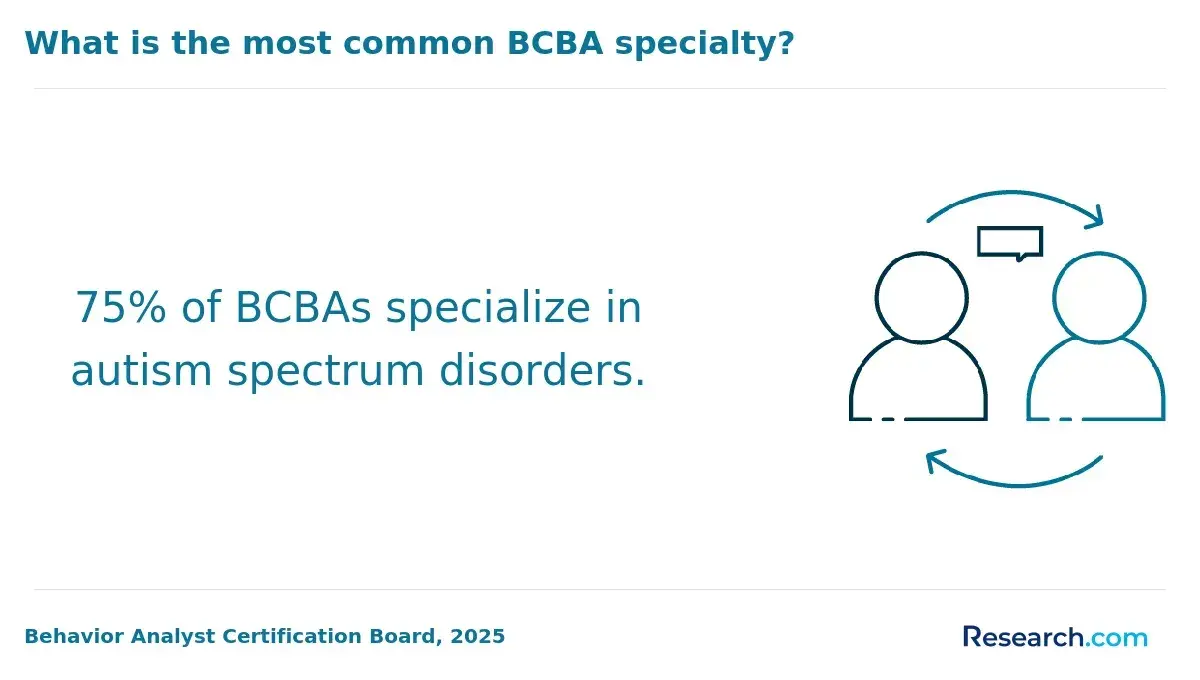
Measurement and data analysis receive significant attention because they are central to competent ABA practice. According to ABA Masters Programs, these topics comprise 12% of the BCBA exam content under Section C of the 2025 Test Content Outline. Students should therefore treat graphing, data interpretation, and measurement accuracy as core skills rather than side topics.
The course also helps students understand the dimensions of applied behavior analysis, including applied, behavioral, analytic, and technological features of research. These concepts matter because ABA interventions must be socially important, measurable, conceptually grounded, and described clearly enough for replication.
A common mistake is assuming that an introductory research course is mainly about statistics. Statistics may appear, but ABA research training often places heavier emphasis on repeated measurement, visual inspection, and experimental control within individual cases. Students planning advanced study can review accredited BCBA programs to see how research methods fit into broader certification-focused coursework.
What are the prerequisites for enrolling in an ABA research course?
Prerequisites vary by school, but most ABA research courses assume students already have some background in psychology, education, behavioral science, or applied behavior analysis. At minimum, students should understand basic behavioral principles such as reinforcement, punishment, stimulus control, extinction, prompting, and generalization before studying research design in depth.
Programs commonly expect one or more of the following:
- Undergraduate coursework in psychology, education, human development, special education, or a related behavioral science field.
- An introductory ABA course covering foundational concepts and terminology.
- Prior coursework in statistics, research methods, or experimental design.
- Experience collecting behavioral data as an ABA therapist, RBT, classroom aide, research assistant, or related role.
- For graduate-level courses, a statement of purpose or academic background showing readiness for research-focused work.
Statistics knowledge is helpful, but students do not need to be advanced statisticians before taking a first ABA research course. More important is the ability to think precisely: define behavior, follow a measurement procedure, read a graph, and explain why a design does or does not support a conclusion.
Students without field experience can still succeed, but they may need extra practice connecting abstract design concepts to real clinical or educational decisions. For example, it is easier to understand procedural fidelity after seeing how small changes in implementation can affect behavior data.
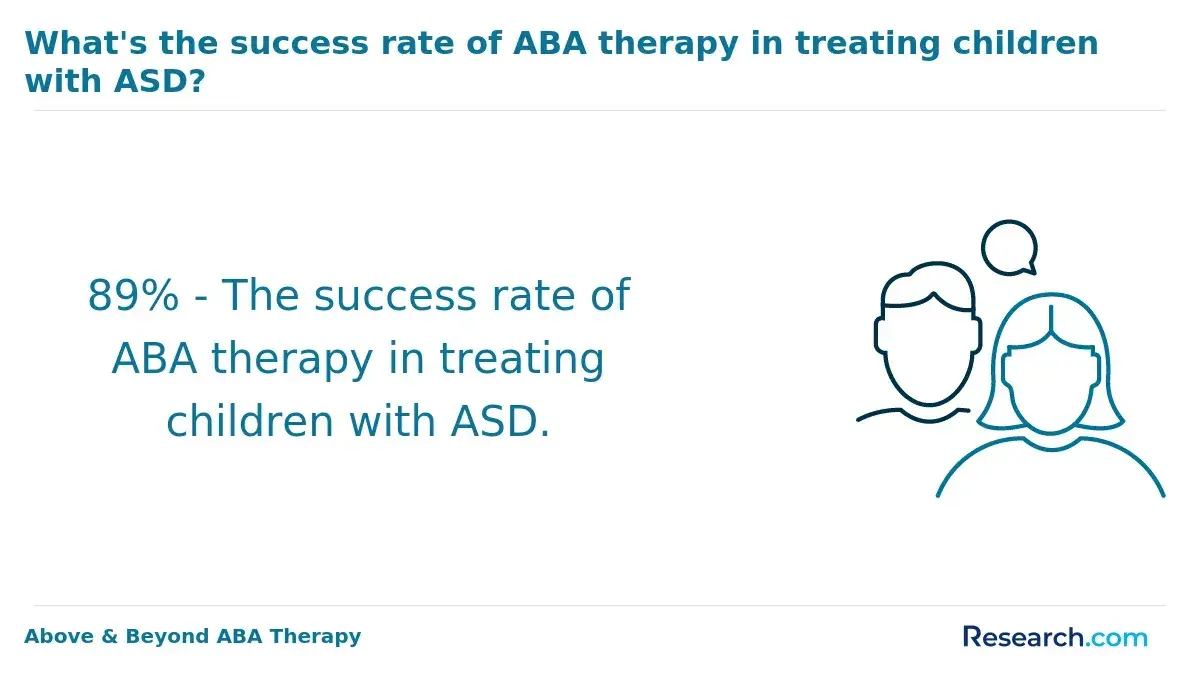
Data shows the importance of measurable targets: a 2022 scoping review covering 770 ABA studies for autism found that 63-88% reported gains in communication, social skills, daily living, and adaptive behaviors, highlighting the role of rigorous research protocols.
Before enrolling, check the course description for required prior classes and ask whether the instructor expects students to collect original data, analyze provided datasets, or complete a research proposal. If your background is thin, consider completing prerequisite coursework or supervised experience first. Students seeking a broader graduate pathway can explore an applied behavior analysis masters to build both conceptual and research competence.
A typical ABA research course lasts 8 to 16 weeks, depending on the school calendar, course level, and amount of applied work required. Shorter formats often move quickly through measurement and research design, while semester-length courses usually allow more time for graphing practice, article critiques, and project development.
Students may encounter several pacing models:
- Accelerated online course: often 8 weeks, with compressed weekly readings, discussions, quizzes, and applied assignments.
- Traditional semester course: often up to 16 weeks, with more time for feedback, revision, and deeper design analysis.
- Intensive bootcamp-style option: sometimes 4 to 6 weeks, with daily or near-daily work and less room to fall behind.
- Course with practicum or research project: may require additional time beyond standard class meetings if students collect data, complete observations, or prepare a full proposal.
The right length depends on your schedule and prior preparation. A student with a strong ABA and statistics background may handle an accelerated course well. A student new to single-subject design may benefit from a longer format because concepts such as baseline logic, experimental control, and visual analysis often require repeated practice.
Do not choose a course only because it is short. Research methods are cumulative: weak understanding of measurement can lead to weak graph interpretation, and weak graph interpretation can lead to poor intervention decisions. If you work full time, ask how many readings, assignments, and graphing tasks are due each week before enrolling.
With 93% of behavioral health workers reporting burnout due to growing intervention demands, balancing workload is crucial for sustained learning. Students looking for flexible starting points can compare ABA undergraduate programs online and review whether research-related courses are accelerated, synchronous, asynchronous, or tied to fieldwork.
ABA research courses are usually structured in a sequence that moves from measurement basics to experimental design, then to interpretation, ethics, and applied research products. The sequence matters because students cannot evaluate intervention effects responsibly until they understand how the data were defined, collected, checked, and graphed.
Typical curriculum progression
- Foundations of behavioral science: review of ABA as an empirical discipline and the role of research in evidence-based practice.
- Behavioral measurement: operational definitions, observation systems, data collection procedures, and selection of measurement methods.
- Data reliability and integrity: Interobserver Agreement (IOA), procedural fidelity, treatment integrity, and common sources of measurement error.
- Single-subject research designs: reversal, multiple baseline, alternating treatments, changing criterion, and design-selection trade-offs.
- Visual and quantitative analysis: graph construction, trend and level analysis, variability, overlap, and interpretation of intervention effects.
- Ethics and human subjects protections: consent, confidentiality, risk, vulnerable populations, and responsible reporting.
- Application: article critiques, research proposals, data analysis assignments, or small applied projects.
Early coursework often emphasizes data quality because poor measurement can undermine every later conclusion. Interobserver Agreement (IOA), for example, helps students evaluate whether two observers are recording behavior consistently. The demand for certified ABA therapists grew by 5,852% from 2010 to 2021, underscoring the importance of standardized data methods to support this rapid expansion (ABTABA).
As students progress, they learn how design choices affect conclusions. A reversal design may provide strong evidence in some cases, but it may be inappropriate if withdrawing an effective intervention would be unethical. A multiple baseline design may be more practical when behavior change is expected to be durable or when reversal is not acceptable. These decisions are central to ABA research training.
Advanced assignments may include functional analysis interpretation, staff training evaluation, fidelity checks, or critique of published intervention studies. Clinically focused courses often emphasize using research logic in practice settings, while research-oriented courses may spend more time on replication, publication standards, and methodological limitations.
ABA research courses are available in both online and on-campus formats. The better choice depends on how you learn, whether you need flexibility, and whether the course includes observation, graphing practice, synchronous discussion, or field-based assignments.
Online ABA research courses often use recorded lectures, live sessions, discussion boards, virtual labs, graphing assignments, and instructor feedback on data interpretation. They can work well for working adults, students outside major campus areas, and learners who need a predictable schedule. However, online students should confirm how the course teaches observational skills, how feedback is delivered, and whether any in-person or synchronous components are required.
On-campus courses offer direct interaction with faculty and classmates, which can be helpful when learning visual analysis, research design logic, and measurement procedures. Students may also have easier access to labs, clinics, research teams, or supervised observation opportunities. The trade-off is less scheduling flexibility and, in some cases, commuting or relocation costs.
Graphing and visual analysis are important in either format because ABA relies on repeated measurement to evaluate change. For example, graphing and visual analysis are essential for tracking behavioral outcomes like the well-documented 4.46-point ABC increase in children receiving ABA therapy annually.
Before enrolling in an online course, ask these questions:
- Is the institution properly accredited?
- Does the course satisfy the requirements you need for your degree or certification pathway?
- Are lectures asynchronous, live, or a mix of both?
- Will you receive detailed feedback on graphs, measurement plans, and design decisions?
- Are there any required practicums, residencies, observations, or proctored exams?
- Does the course use current BACB or other credentialing body requirements where relevant?
Both formats can be academically rigorous. The key is not whether the course is online or on campus, but whether it provides enough practice, feedback, and alignment with your professional goals.
Students should first look for a program offered by a regionally accredited college or university. Institutional accreditation matters because it affects credit transfer, graduate admission, federal financial aid eligibility, and employer confidence in the degree. For ABA-specific preparation, students should also check whether the program has ABAI accreditation or an ABAI Verified Course Sequence (VCS), where relevant to the credential they plan to pursue.
The most crucial accreditation for ABA research programs is recognition by the Behavior Analyst Certification Board (BACB) or approval from a regional accrediting agency recognized by the U.S. Department of Education. In practice, students should understand that the BACB sets certification requirements, while universities and ABAI-related review processes help signal whether coursework is aligned with professional expectations. Because certification rules can change, always verify current requirements directly with the credentialing body and the school before enrolling.
For students aiming at BCBA certification, the program should cover the required content areas, including ethics, behavioral assessment, intervention design, measurement, data analysis, and research methods. A course may be academically interesting but still fail to meet a student’s certification needs if it is not part of the right degree plan or approved coursework sequence.
When evaluating a program, confirm the following:
- The institution is regionally accredited or otherwise appropriately recognized for your location and goals.
- The ABA coursework aligns with current BACB requirements if you plan to pursue certification.
- The school clearly states whether the program includes an ABAI Verified Course Sequence (VCS) or ABAI accreditation, if applicable.
- Faculty have relevant ABA, research, and clinical expertise.
- The curriculum includes ethics, data-based decision-making, and research integrity rather than only intervention procedures.
- The program explains supervision, fieldwork, and exam-preparation responsibilities accurately.
Quality ABA research courses emphasize evidence-based practice and careful data interpretation. They may reference reputable findings, such as the Kennedy Krieger Institute’s work indicating that center-based ABA interventions at 25-40 hours weekly achieve the best skill development. Students should use such evidence carefully: research findings can guide decisions, but individual treatment planning still requires assessment, ethical judgment, and ongoing data review.
ABA research training supports BCBA certification by building the skills candidates need to make data-based clinical decisions. A BCBA must be able to define behavior, select appropriate measurement systems, evaluate intervention effects, and adjust treatment based on evidence. Research coursework develops that foundation.
Research training is not the only requirement for BCBA certification. Candidates must complete the appropriate degree, coursework, supervised fieldwork, and examination requirements set by the Behavior Analyst Certification Board (BACB). However, research methods are woven through the certification pathway because behavior analysts are expected to use scientific evidence rather than intuition alone.
In a certification-focused program, research coursework helps students learn how to:
- Use single-subject designs to evaluate behavior change.
- Interpret graphed data and determine whether an intervention is producing meaningful effects.
- Assess measurement reliability through tools such as interobserver agreement.
- Identify threats to validity and avoid overinterpreting weak data.
- Read research literature and apply findings ethically to practice.
- Document treatment decisions in a way that supports accountability and continuity of care.
Single-subject research designs are especially important because they help demonstrate functional relationships between environmental variables and behavior. This is the logic behind many ABA intervention decisions: if behavior changes only when the intervention is introduced, and the pattern is replicated, confidence in the intervention increases.
Students should not assume that any ABA research course automatically moves them toward BCBA eligibility. Before enrolling, confirm that the course is part of a qualifying sequence or degree plan, that it aligns with the current BACB Task List or applicable requirements, and that supervised fieldwork arrangements are clearly explained.
An ABA research course can support several career paths, but the role you qualify for depends on your degree level, certification status, supervised experience, and local requirements. The course itself does not make someone a behavior analyst, but it strengthens the research and data skills used across clinical, educational, academic, and program evaluation roles.
Common career directions include:
- Behavior analyst: designs, monitors, and revises behavior intervention plans using assessment and ongoing data.
- Clinical supervisor: supports ABA therapists or technicians, reviews data, checks treatment fidelity, and helps improve service quality.
- Research assistant or research coordinator: supports ABA studies through recruitment, data collection, fidelity monitoring, literature review, and documentation.
- ABA researcher: designs and conducts studies on behavioral interventions, assessment procedures, staff training, or treatment outcomes.
- Program evaluator: analyzes whether ABA programs are meeting clinical, educational, or organizational goals.
- Data analyst in behavioral health: works with behavioral datasets to identify patterns, evaluate progress, and support decision-making.
- Instructor or academic professional: teaches ABA concepts, supervises student research, or contributes to curriculum development.
- Policy or compliance specialist: uses research evidence to support ethical, regulatory, and quality assurance standards.
- Technology or product specialist: contributes ABA knowledge to behavior tracking tools, data systems, or clinical software.
These roles appear in schools, autism service organizations, hospitals, universities, research institutes, private practices, government agencies, and behavioral health companies. Some positions require BCBA certification or graduate education; others may be available to bachelor’s-level or master’s-level professionals with relevant research or data experience.
With the U.S. ABA market expected to reach USD 9.96 billion by 2030 at a 4.56% CAGR, careers focused on research ethics consultation and compliance monitoring have become increasingly essential. As services expand, organizations need professionals who can protect data integrity, evaluate outcomes honestly, and ensure interventions are implemented as intended.
The strongest career prospects often come from pairing research competence with a specialization, such as autism spectrum disorders, developmental disabilities, severe behavior, school consultation, parent training, staff training, or organizational behavior management. Research training helps professionals avoid a common career mistake: relying on a preferred intervention without enough data to show whether it is working for the individual client or setting.
What is the job outlook and salary for ABA researchers?
The job outlook for ABA researchers is generally favorable because schools, clinics, healthcare organizations, universities, and service providers continue to rely on evidence-based behavioral interventions. The U.S. Bureau of Labor Statistics anticipates about 10% growth over the next decade for behavior analysts and researchers, reflecting increased awareness of behavioral health needs.
Salaries vary based on role, education, certification, experience, employer type, and location. Salaries range from $50,000 to over $90,000 annually for advanced professionals. Entry-level research support roles may pay less than independent analyst or principal investigator roles, while experienced professionals with graduate training, BCBA certification, grant experience, or specialized clinical expertise may have stronger earning potential.
ABA researchers may work in:
- Universities and academic research centers.
- Healthcare systems and behavioral health organizations.
- Autism and developmental disability service providers.
- Schools and educational agencies.
- Government or nonprofit research programs.
- Private consulting, program evaluation, or clinical quality improvement.
Many positions also offer benefits beyond base salary, such as opportunities for grant-funded research, consulting, publication, conference participation, or leadership in program development. However, research careers can be competitive, especially in academic settings where advanced degrees, publication records, and methodological expertise matter.
Emerging trends, such as integrating Acceptance and Commitment Training (ACT) into behavior intervention plans targeting anxiety and rigidity, provide advantages for researchers with expertise in these areas. Professionals who can combine strong ABA methodology with autism spectrum disorder research, ethical data use, and practical implementation skills are likely to be better positioned for long-term opportunities.
Other Things You Should Know About Applied Behavior Analysis
Data collection in aba research typically involves direct observation and recording of specific behaviors. Common methods include continuous recording, partial interval recording, whole interval recording, and momentary time sampling. These methods ensure accurate measurement of behavior frequency, duration, or intensity for analysis and intervention planning.
Yes, aba research principles are applicable to individuals of all ages. From early childhood interventions to adult behavior modification programs and geriatric care, aba techniques are adaptable to suit diverse developmental stages. The research focuses on observable behavior change regardless of the subject's age.
Learn descriptive statistics, graphing, and basic measurement terms before the first class. Most ABA research courses expect students to read single-subject graphs, calculate percentages and rates, and understand variability and level changes, because those skills are used early in assignments and article reviews.
- Master of Science in Applied Behavior Analysis (ABA) https://tsengcollege.csun.edu/programs/ABA/curriculum
- BCBA Jobs and Salary: Demand for Behavior Analysts Continues to Grow, New Report Finds https://www.abamatrix.com/bcba-jobs-and-salary-demand-for-behavior-analysts-continues-to-grow-new-report-finds/
- Introduction to Applied Behavior Analysis https://behavioruniversity.com/product/548/introduction-to-aba
- Understanding ABA Therapy Duration Guidelines https://www.littleraysaba.com/blog/aba-therapy-duration
- How Long Does It Take to Become an ABA Therapist? Our Guide https://championsaba.com/how-long-does-it-take-to-become-an-aba-therapist/
- BCBA Job Outlook in 2025 Growing Demand and Opportunities https://www.connectncareaba.com/blog/bcba-job-outlook
- Discussing The Course Of ABA Therapy - Willow Reach https://willowreachaba.com/discussing-the-course-of-aba-therapy-how-long-is-it-needed-for/
- Applied Behaviour Analysis - Online CPD Course | ICEP Europe https://icepe.eu/cpd/applied-behaviour-analysis/
- What to Expect During Your Child's First 30 Days of ABA - Little Champs ABA https://littlechampsaba.com/blog/what-parents-can-expect-in-their-childs-first-month-of-aba/
- Applied behavior analysis - Wikipedia https://en.wikipedia.org/wiki/Applied_behavior_analysis