2027 How to Get ABA Research Experience Before Applying to Graduate School

Co-Founder and Chief Data Scientist
Getting into an applied behavior analysis graduate program is easier when you can show more than interest in the field. Programs want evidence that you understand behavior-analytic work, can handle data responsibly, and are ready for research-based training. That can be difficult if your undergraduate major was unrelated, your campus has no ABA lab, or you cannot access a traditional internship.
The good news is that ABA research experience can come from several credible sources: faculty projects, supervised fieldwork, clinical data work, online research teams, literature reviews, poster presentations, and carefully documented assistantship roles. What matters is not only where you gained the experience, but what you learned, how closely it connects to ABA methods, and how clearly you can explain your role.
This guide explains what applied behavior analysis research experience looks like, how it differs from clinical practice, which credentials can strengthen an application, and how to build a realistic preparation timeline before applying to graduate school.
Key Things You Should Know
- Gaining ABA research experience before graduate school increases admission chances by 30%, highlighting the importance of practical exposure in this competitive field.
- Volunteering or assisting in ABA labs offers critical skills in data collection, behavior analysis, and ethics, essential for Board Certified Behavior Analyst eligibility.
- Networking with faculty and attending ABA conferences in 2025 enhances opportunities for paid research roles and mentorship, accelerating academic and career advancement.
What is Applied Behavior Analysis and why pursue graduate study in this field?
Applied behavior analysis is the scientific study of how behavior changes in relation to environmental conditions. In practice, ABA professionals use observation, measurement, intervention design, and data analysis to improve socially meaningful behaviors in settings such as schools, clinics, homes, community programs, and disability services.
Graduate study matters because many advanced ABA roles require formal training in behavior-analytic concepts, ethics, assessment, intervention planning, supervision, and research methods. For students who want to pursue certification by the Behavior Analyst Certification Board (BACB), graduate-level coursework and supervised experience are central parts of the preparation pathway.
ABA graduate study is also useful for students who want to become stronger consumers and producers of evidence. A well-designed program teaches students how to evaluate whether an intervention is working, how to collect reliable behavioral data, and how to make ethical decisions when treatment outcomes affect real people.
Applicants should understand that ABA programs are not all the same. Some emphasize practitioner preparation, while others place greater weight on research productivity, faculty mentorship, publication, and doctoral preparation. Only about 50% of BACB-approved graduate programs have faculty publishing 10 or more articles in leading empirical journals, so students who already have research exposure may be better prepared to identify and succeed in research-active programs.
- Graduate study can support eligibility for BCBA certification, which is often required for clinical and educational behavior analyst roles.
- Students learn data-driven assessment and intervention methods used with developmental disabilities, autism spectrum disorder, and other populations.
- Research training helps students evaluate treatment effectiveness instead of relying on assumptions or anecdotal improvement.
- ABA skills can support careers in clinical practice, school consultation, supervision, program management, and academic research.
Before applying, compare programs by faculty expertise, research opportunities, supervision quality, practicum structure, cost, and delivery format. Students who need flexibility may also review affordable online BCBA master’s programs while checking whether each option fits their certification and career goals.
What research experience do graduate ABA programs require or prefer from applicants?
Most ABA graduate programs do not expect every applicant to have a publication before admission. They do, however, prefer applicants who can show readiness for research-based coursework and evidence-based practice. Strong applicants usually demonstrate familiarity with behavioral measurement, ethical data handling, intervention evaluation, and the basic logic of single-case or applied research designs.
Research expectations vary by program type. A practice-focused master’s program may value clinical data collection and supervised implementation experience. A research-intensive master’s or doctoral program may look more closely at lab work, conference presentations, thesis experience, faculty collaboration, and writing samples. Applicants should read each program’s faculty pages, admissions criteria, and curriculum instead of assuming all ABA programs weigh research the same way.
Useful ABA research experience may include:
- assisting with behavioral data collection in a school, clinic, or community setting;
- coding observation videos or scoring behavioral measures under supervision;
- helping with literature reviews on intervention effectiveness or assessment methods;
- participating in a faculty research lab, even without authorship credit;
- preparing a poster, class research project, or conference proposal;
- working on projects involving direct observation and experimental manipulation of behavior;
- learning procedures for consent, confidentiality, and research documentation.
Applicants without formal lab access can still build a credible profile. A carefully supervised project, a strong research methods course, or a role that involves repeated behavioral measurement may be more useful than an impressive-sounding position with little responsibility. Graduate committees often look for evidence that the applicant can follow protocols, think critically, write clearly, accept feedback, and explain how data inform decisions.
Because many faculty members in BACB training programs have no publications in primary ABA journals, applicants should not rely only on program labels when seeking mentorship. Look for faculty, supervisors, or research teams that can explain the project’s purpose, teach you measurement procedures, and give feedback on your work.
When describing experience in applications, be specific. Instead of saying “helped with ABA research,” explain the population, setting, measurement system, tools used, your responsibilities, and what you learned about behavior-analytic decision-making. Students comparing academic paths can also review a behavioral analysis degree guide to understand how degree formats and certification preparation differ.
What are the most effective ways to gain ABA research experience as an undergraduate?
Undergraduates should start by looking for research-adjacent work that involves behavior measurement, data quality, intervention evaluation, or scientific writing. A formal ABA lab is helpful, but it is not the only route. Psychology, education, special education, communication sciences, social work, and disability services departments may all have projects that connect to behavior change, learning, or intervention outcomes.
Start with faculty and campus research offices
Email professors whose work relates to behavior analysis, autism services, developmental disabilities, school behavior support, learning, or intervention science. A short, specific message works best: identify the faculty member’s research area, explain your interest in ABA, list any relevant coursework or experience, and ask whether undergraduate assistants are needed. If no ABA faculty are available, ask the department research coordinator or honors program about related projects.
Use clinical roles carefully
Clinical positions can support research readiness when they involve systematic observation, treatment fidelity, graphing, or data review. Becoming a Registered Behavior Technician (RBT) before or during research preparation may help students understand ABA procedures and direct-service realities. However, RBT work alone is not the same as research experience. To make it more relevant, seek supervisors who can teach you how data are used to adjust interventions and how treatment integrity is monitored.
Look for structured summer and remote options
Summer research internships, undergraduate research programs, and faculty-led projects can provide concentrated exposure to experimental design, data analysis, and scholarly communication. Students without local ABA resources can also pursue remote roles involving literature searches, article screening, data entry, behavioral video coding, reference management, or manuscript preparation.
Remote work is strongest when it includes regular supervision, clear procedures, and feedback. A virtual role with weekly mentor meetings and documented responsibilities is usually more valuable than an informal volunteer task with no training or outcome.
Build evidence of your work
Graduate applications are stronger when students can point to concrete outputs. These may include a poster, research summary, annotated bibliography, class project, presentation, data collection protocol, or recommendation letter from a faculty member or supervisor who observed the student’s work closely.
- Join student chapters or professional groups connected to ABA or psychology to find mentors and research leads.
- Take research methods, statistics, or single-case design coursework when available.
- Ask to help with data reliability checks, graphing, or literature reviews rather than only administrative tasks.
- Track your hours, responsibilities, populations served, tools used, and supervision received.
- Reflect on ethical issues such as confidentiality, consent, and accurate data reporting.
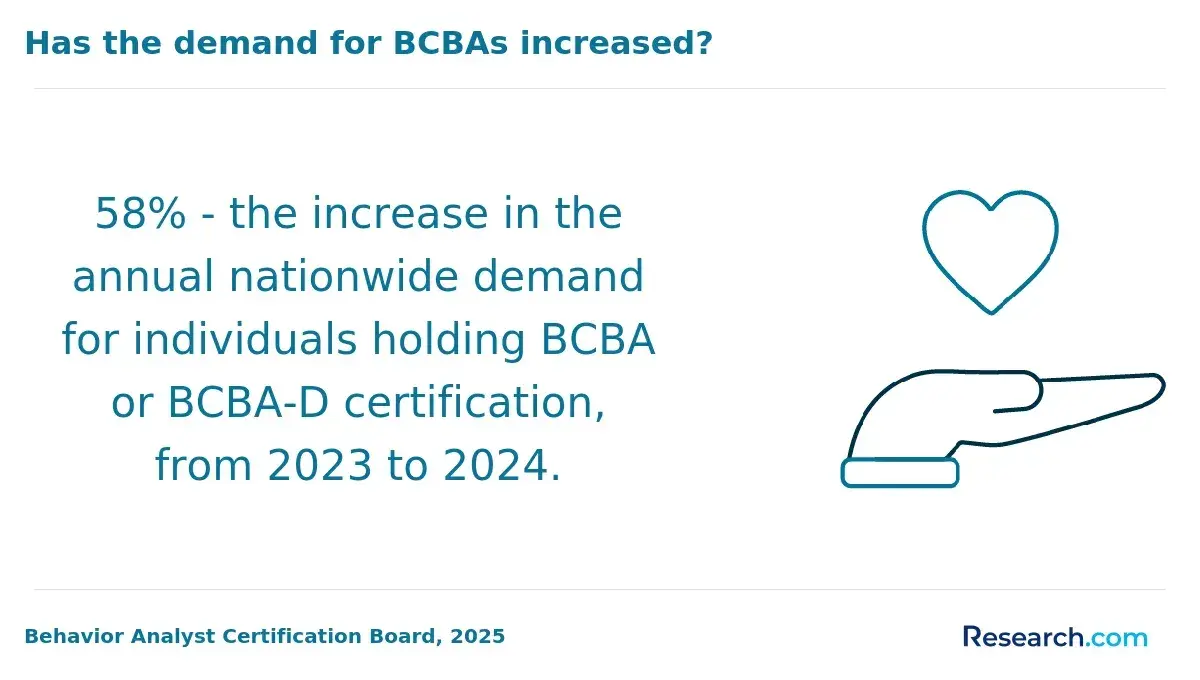
The demand for behavior analysts is projected to grow 17% through 2034, outpacing many occupations. For undergraduates, the best preparation is not simply accumulating hours; it is learning how behavior analysts make decisions from data. Students planning for graduate study may later compare options such as an online master’s degree in applied behavior analysis if they need a flexible route into advanced training.
Supervised practicum hours and fieldwork prepare students for ABA research by teaching them how behavior-analytic concepts operate in real settings. Research readiness depends on more than knowing terminology. Students must learn how to observe behavior consistently, follow protocols, collect accurate data, respond to procedural errors, and interpret trends without overstating conclusions.
Fieldwork can build research-related skills when supervisors emphasize measurement and decision-making, not only service delivery. For example, students may learn how to define target behaviors, collect baseline data, monitor intervention fidelity, evaluate progress, and revise procedures when data do not show the expected change.
- Systematic observation: Students learn to identify and record behavior in a way that another trained observer could replicate.
- Intervention fidelity: Fieldwork shows why procedures must be implemented consistently before outcomes can be interpreted.
- Data reliability: Students gain experience checking whether data are accurate enough to support decisions.
- Protocol troubleshooting: Real cases teach students how to identify missing steps, unclear definitions, or environmental variables that affect results.
- Ethical practice: Supervision helps students understand confidentiality, consent, client welfare, and professional boundaries.
- Team communication: Fieldwork develops the ability to explain data to families, teachers, clinicians, and other professionals.
For instance, completing 100-150 practicum hours under a BCBA supervisor may expose a student to single-subject design logic, repeated measurement, graph review, and data-based treatment adjustments. These experiences can be directly relevant to graduate programs that expect students to understand applied research, even if the fieldwork was not part of a formal study.
Students should be careful not to describe fieldwork as research unless it actually involved a research protocol or supervised study. A more accurate approach is to explain how fieldwork developed research readiness: measurement accuracy, treatment integrity, ethical data handling, and interpretation of behavioral trends.
Research-active BCBAs with leadership roles typically earn salaries well above the $59,190 median reported for related counseling fields, largely due to publication records and project leadership abilities (appliedbehavioranalysisedu.org, 2021). While salary outcomes vary by role, location, employer, and credentials, early supervised experience can help students build the skills needed for later research and leadership opportunities. Students comparing graduate pathways can review the best online ABA master’s programs to see how programs structure advanced training.
Credentials can strengthen an ABA graduate application when they show relevant preparation, ethical awareness, and sustained commitment to the field. They do not replace strong academic performance, research exposure, or good recommendations, but they can help admissions committees understand the applicant’s practical background.
The Board Certified Behavior Analyst (BCBA) credential is the most recognized professional credential in ABA, but most prospective graduate students are not yet eligible for it because it requires advanced coursework, supervised fieldwork, and a passing score on a national exam. For applicants who are already pursuing or planning a BCBA pathway, it is important to state the status accurately rather than implying certification has been earned.
The Registered Behavior Technician (RBT) credential can be useful for applicants who want direct exposure to ABA implementation. RBT experience may show that the applicant has worked with clients, followed behavior plans, collected data, and received supervision. However, RBT work is an entry-level credential and should be paired with research-oriented activities when applying to programs that value scholarship.
Additional training may also help when it is relevant and credible. Examples include workshops or certificates in data analysis, single-case design, ethics, behavior intervention plans, or technology-assisted ABA data collection. These should be presented as supporting evidence of skill development, not as substitutes for supervised graduate training.
- Most useful for clinical readiness: RBT experience, supervised direct-service roles, behavior intervention plan training.
- Most useful for research readiness: training in single-case design, data analysis, literature review methods, research ethics, and data management.
- Most useful for leadership potential: documented supervision exposure, student organization leadership, conference participation, or project coordination.
Leadership credentials or membership in professional ABA organizations correlate with higher salaries, averaging $48,008 in leadership positions. Considering ABA Ph.D. tuition averages $16,000 yearly (NCES data), applicants should think carefully about return on investment: a credential is most valuable when it supports admission, certification preparation, supervised experience, or a realistic career goal.
In short, use credentials to tell a coherent story. A strong application might combine RBT work, a faculty research assistantship, a poster presentation, and coursework in research methods. That combination shows both applied experience and readiness for graduate-level analysis.
ABA research experience focuses on producing, evaluating, or organizing evidence about behavior and intervention outcomes. Clinical practice experience focuses on applying ABA procedures to help clients achieve meaningful goals. Both are valuable, but they show different kinds of readiness for graduate school.
| Experience type | Main purpose | Common activities | What it shows graduate programs |
| ABA research experience | Study behavior, test interventions, or analyze evidence using systematic methods. | Literature reviews, data coding, single-subject research support, graphing, reliability checks, poster preparation, faculty lab work. | Scientific thinking, data accuracy, writing ability, ethical research conduct, and readiness for graduate scholarship. |
| Clinical practice experience | Implement ABA services with clients under appropriate supervision. | Direct intervention, skill acquisition programs, behavior reduction procedures, caregiver or school support, treatment data collection. | Applied knowledge, professionalism, client interaction skills, and understanding of real-world service delivery. |
A student working in a university lab on functional behavior assessment data, single-subject design, or intervention outcome analysis is gaining research experience. A student implementing a behavior intervention plan with a client under BCBA supervision is gaining clinical practice experience. The two can overlap when clinical data are used in a supervised research project, but applicants should describe the distinction honestly.
Graduate programs often value both experiences because ABA is an evidence-based discipline. Research experience helps students read studies critically, understand design limitations, and contribute to scholarship. Clinical practice experience helps students understand feasibility, ethics, client dignity, and the practical realities that affect intervention success.
Some top-ranked programs publishing in journals like the Journal of the Experimental Analysis of Behavior (JEAB) or the Journal of Applied Behavior Analysis (JABA)-like Ball State University-show 100% BCBA pass rates. Applicants interested in such programs should be prepared to discuss both their applied experience and their capacity to engage with empirical work.
The strongest applications connect the two. For example, an applicant might explain how direct service taught them the importance of reliable measurement, while research experience taught them how to evaluate whether a behavior change can reasonably be attributed to an intervention.
Online coursework and virtual research opportunities can build ABA research competency when they are structured, supervised, and connected to real research tasks. They are especially useful for students who live far from universities with ABA labs, work full time, or need flexible preparation before applying to graduate school.
Good online coursework can help students develop foundations in research methods, behavior measurement, ethics, single-case design, literature review, and data interpretation. The value depends on rigor. A course that requires students to define variables, analyze graphs, critique articles, or design a small project is more useful than one that only covers terminology.
Virtual research roles can also be legitimate. Many research tasks do not require being physically present in a lab. Students may assist with article screening, reference management, data entry, video coding, interobserver agreement checks, survey preparation, or research summaries. These roles can strengthen an application when a mentor provides training, monitors quality, and can verify the student’s contribution.
- Ask whether the role includes direct supervision and feedback.
- Clarify whether you will work with behavioral data, literature, recruitment materials, or administrative tasks.
- Request training on confidentiality, secure data storage, and ethical handling of participant information.
- Keep a record of your responsibilities, tools used, and products completed.
- If possible, work toward a presentation, poster, literature review, or writing sample.
Virtual opportunities can also introduce students to Institutional Review Board procedures, consent documentation, participant recruitment, and data management. These are important parts of graduate-level research even when the student’s role is limited.
Programs with a 100% BCBA pass rate, like the University of North Carolina Wilmington and Utah State, highlight the growing need for strong research backgrounds in competitive admissions (hiddengemsaba.com, program stats). While pass rates should not be the only factor in choosing a program, applicants who complete meaningful online research preparation may be better able to succeed in programs with high academic and professional expectations.
The best strategy is to combine online coursework with applied or virtual research tasks. Coursework builds vocabulary and conceptual understanding; supervised projects build judgment, accuracy, and confidence.
Faculty mentorship and research assistantships can be decisive for applicants who want to enter competitive ABA graduate programs. A mentor helps students understand what strong research looks like, while an assistantship gives them evidence that they can contribute to a research team.
With Ph.D. acceptance rates averaging about 18%, applicants to research-focused programs need more than general enthusiasm. Many programs now place less emphasis on GRE scores, and some waive them, so direct evidence of research readiness can become more important. That evidence may come from a faculty letter, a poster, a writing sample, a lab role, or documented responsibility on a project.
Faculty mentors can help students refine research interests, identify appropriate graduate programs, prepare application materials, and avoid vague statements of purpose. They may also teach students how to read empirical articles, frame research questions, analyze data, and understand the publication process. A strong recommendation from a mentor who can describe the applicant’s actual work is often more persuasive than a generic letter from someone with an impressive title.
Research assistantships provide practical experience with the routine work of scholarship. Students may collect or code behavioral data, prepare materials, check data quality, summarize articles, help with graphs, or assist with conference submissions. These tasks show whether the student is reliable, detail-oriented, ethical, and able to learn from feedback.
Key tips include:
- Contact potential mentors early and explain why their research fits your goals.
- Be honest about your experience level and availability.
- Ask what skills you should learn before joining a project, such as spreadsheet use, article databases, or observation coding.
- Follow through on small assignments; reliability often leads to more meaningful research tasks.
- Request feedback on how to describe your role accurately in a CV or statement of purpose.
- Choose recommenders who can discuss your research behavior, not only your course grade.
BACB-related certification requirements and program quality standards shape how ABA graduate programs think about research, assessment, ethics, and supervised practice. Although applicants should always verify the exact accreditation or coursework status of a program, the broader expectation is clear: ABA training is grounded in data-based decision-making, not informal opinion.
Graduate programs that prepare students for behavior-analytic practice typically expect students to engage with research methods throughout the curriculum. This may include experimental design, behavioral measurement, data interpretation, ethics, intervention evaluation, and critical reading of empirical literature. For applicants, prior research exposure can make this transition easier.
Applicants should expect stronger programs to offer or emphasize:
- coursework that integrates research design and behavior-analytic measurement;
- supervised projects or practicum experiences that require accurate data collection;
- mentorship from faculty involved in original studies or scholarly work;
- opportunities to present findings through posters, class projects, or conferences;
- training in ethical documentation, confidentiality, and responsible dissemination.
This foundation is especially important for students who may later pursue doctoral study or the BCBA-D designation, which signals doctoral-level expertise and leadership in behavior analysis. According to bestcolleges.com, ABA Ph.D. programs embedding research opportunities consistently prepare professionals who advance clinical practice, influence policy, and innovate academically.
Before applying, students should ask direct questions: Who supervises research? Are students involved in faculty projects? Do students present at conferences? What kinds of data systems are used? Are research opportunities available to online or part-time students? These questions help applicants avoid choosing a program that matches the credential goal but not the research training they need.
What timeline and preparation strategy should prospective students follow before applying?
A strong ABA graduate school application usually takes 12 to 18 months of planning. Students need time to complete prerequisites, gain supervised experience, build relationships with mentors, prepare application materials, and decide which programs match their goals. Rushing often leads to generic statements of purpose and weak documentation of experience.
Month 18-12: Build the foundation. Complete or plan coursework in psychology, education, research methods, statistics, behavior analysis, or related areas. Read faculty profiles at potential graduate programs and identify the kind of ABA work that interests you. Begin contacting professors, supervisors, or research coordinators about volunteer or assistant roles.
Month 12-9: Secure experience that involves data. Apply for research assistantships, practicum roles, internships, or supervised clinical positions where you can learn behavioral measurement and intervention evaluation. During this period, roles connected to applied behavior analysis are especially useful because they give you examples to discuss in essays and interviews. Mandatory research projects during this period are essential, as shown by a 91% BCBA pass rate at research-focused institutions like the University of Houston-Clear Lake.
Month 9-6: Turn experience into application evidence. Work on a poster, presentation, literature review, research summary, or writing sample if possible. Update your CV with specific responsibilities rather than vague job titles. Ask mentors what skills you should strengthen before graduate study, such as graph interpretation, single-case design, or academic writing.
Month 6-3: Prepare application materials. Draft a statement of purpose that connects your experience, research interests, and career goals to each program. Request recommendation letters from people who can describe your reliability, data skills, ethical judgment, and readiness for graduate work. Confirm deadlines, transcript requirements, prerequisite expectations, and any certification-related documentation.
Final 3 months: Refine and verify. Proofread every application, tailor each statement, and make sure you describe your experience accurately. Prepare for interviews by practicing clear answers about what you did, what you learned, how you handled data, and why the program is a good fit.
- Do not wait until the application semester to look for research experience.
- Prioritize supervised, documented roles over informal exposure.
- Keep a running record of hours, tasks, populations, tools, and supervisors.
- Learn basic ethical standards, including confidentiality and IRB-related concepts.
- Apply to programs that match both your certification goals and your preferred level of research involvement.
The best preparation strategy is focused and cumulative: learn the concepts, gain supervised experience, document your role, build mentor relationships, and explain your fit clearly. That combination helps admissions committees see not only that you want to study ABA, but that you are ready for graduate-level work.
Other Things You Should Know About Applied Behavior Analysis
Learn single-subject design, graphing, and basic data collection before joining a lab. Many ABA research teams also expect familiarity with interobserver agreement and treatment integrity measures. These skills let you contribute faster and understand studies used in behavior analysis graduate admissions and BCBA-related research settings.
Undergraduate students can participate in ABA research if they have a foundational understanding of behavior analysis principles and research methodology courses. Some programs may require at least credits in relevant psychology courses or prior experience in research settings, as specified by their guidelines.
Familiarity with behavior analytic software tools like R, SPSS, or behavioral data collection apps is highly beneficial for ABA research experience. These tools facilitate precise measurement, data analysis, and the visualization of behavioral interventions. Graduate programs often value applicants who demonstrate proficiency in these softwares, as it indicates readiness to engage effectively in research activities.
Yes, ABA research must strictly adhere to ethical guidelines specific to working with human participants, often including vulnerable populations such as children or individuals with disabilities. Researchers need to secure informed consent, maintain confidentiality, and minimize any potential harm caused by interventions or assessments. Institutional Review Board (IRB) approval is typically required before beginning ABA research projects to ensure ethical compliance.
- ABA Certification Explained: RBT, BCaBA, BCBA, BCBA-D https://onlinecounselingprograms.com/mental-health-careers/how-to-become-behavior-analyst-bcba/aba-certification-explained/
- How To Prepare For College Admissions in Grade 12. https://dremac.co/grade-12-college-preparation-timeline/
- The Role of Mentorship in the Professional Development of Graduate Assistants in Ghana: Education Book Chapter | IGI Global Scientific Publishing https://www.igi-global.com/viewtitle.aspx
- Association for Behavior Analysis International Accreditation Board https://accreditation.abainternational.org/faqs.aspx
- BCBA Fieldwork Requirements: A Guide to Supervision Hours and Compliance https://www.operationsarmy.com/post/bcba-fieldwork-requirements-a-guide-to-supervision-hours-and-compliance
- A New PsyD Practicum Experience in Applied Behavior Analysis (ABA): Evidence-Based vs. Traditional Approaches (The Daily BA) â A Decision Guide for BCBAs | BBC https://behavioristbookclub.com/ceu/compare/a-new-psyd-practicum-experience-in-applied-behavior-analysis-aba/
- What is the Timeline for the College Application Process? A Roadmap https://www.msquaredcounseling.com/post/what-is-the-timeline-for-the-college-application-process-a-roadmap
- How to Get Research Experience (3 Ways Students Find Labs) https://cindy-k-chen.com/2025/02/14/how-to-get-research-experience/
- The Prerequisites for Applying to an ABA Grad Program: What You Need to Know — Ruby's Nest https://www.rubysnest.com/blog/the-prerequisites-for-applying-to-an-aba-grad-program-what-you-need-to-know
- The Role of Mentorship in Graduate Studies https://www.lincolnu.edu/news/2025/05/mentorship-in-graduate-studies.html