2027 BCBA Exam Eligibility Requirements Explained

Co-Founder and Chief Data Scientist
Becoming a board certified behavior analyst is not limited to people who earned an undergraduate degree in applied behavior analysis. Many candidates enter the field from psychology, education, counseling, special education, social work, or another human-services background. The challenge is not your bachelor’s major; it is whether your graduate degree, ABA coursework, supervised fieldwork, and documentation match the certification rules used by the Behavior Analyst Certification Board.
This guide explains the main eligibility decisions future BCBAs need to make before investing in a program: which degrees can qualify, how coursework is verified, how supervised fieldwork works, whether online study is acceptable, what admissions teams usually ask for, and how the credential can affect career options, salary expectations, and job outlook. It is written for career changers, graduate applicants, current educators, autism-services professionals, and anyone comparing BCBA pathways for 2026 planning.
Key Things You Should Know
- Candidates must complete a verified master's degree in behavior analysis, education, or psychology from a BACB-approved program or an accredited university by 2026.
- An approved supervised experience, totaling 1,500 hours within 36 months, is mandatory before taking the BCBA exam.
- The BCBA exam eligibility requires applicants to apply through the BACB portal, meeting updated academic and experience standards effective January 2025.
What are BCBA exam eligibility requirements?
BCBA exam eligibility is based on three core requirements: an acceptable graduate degree, behavior-analytic coursework that meets BACB standards, and supervised fieldwork completed under a qualified supervisor. Candidates should treat these requirements as a checklist, not as separate milestones, because a problem in any one area can delay exam approval.
In the United States, candidates must hold at least a master’s degree in behavior analysis, education, psychology, or a related field from an accredited institution. The degree must be supported by graduate-level coursework aligned with BACB content expectations, including ethics, measurement, behavior assessment, intervention, experimental design, and professional practice.
The educational prerequisites for BCBA certification in the US include completing at least 270 hours of specific coursework. These hours are intended to show that the candidate has studied the concepts and methods needed to design, implement, monitor, and revise behavior-change programs responsibly.
Supervised practical experience is also required. Some pathways and program materials refer to 1,500 hours, especially when discussing concentrated fieldwork; candidates should confirm the current fieldwork category they plan to use before enrolling or starting supervision. Fieldwork must be completed under a BACB-certified supervisor who provides ongoing feedback, reviews documentation, and evaluates professional conduct as well as technical skill.
When applying for exam eligibility, candidates submit documentation showing degree completion, qualifying coursework, and supervised experience. Incomplete transcripts, unclear course sequences, missing supervision forms, or fieldwork logs that do not match BACB expectations are common causes of delays.
Demand for behavior analysts has continued to shape program growth. According to the U.S. Bureau of Labor Statistics Occupational Outlook Handbook 2025-2035, demand grew by 22% in 2025. Because the pathway is regulated and documentation-heavy, prospective students should compare BCBA certification programs not only by price, but also by accreditation, verified coursework, fieldwork support, and graduate outcomes.
What degrees qualify for BCBA certification?
A bachelor’s degree alone does not qualify someone for BCBA certification. Candidates need a graduate degree that fits BACB eligibility rules and includes, or is paired with, approved graduate-level coursework in behavior analysis.
Common degree options for BCBA certification include:
- Master of Science (MS) or Master of Arts (MA) in behavior analysis
- Graduate degrees in psychology with ABA coursework
- Graduate degrees in education or special education focused on behavioral interventions
- Other accredited graduate programs that meet BACB content standards
- Doctoral degrees such as a PhD or EdD with relevant ABA coursework
The safest option is usually a graduate program designed specifically for BCBA preparation, especially if it is ABAI-accredited or includes a BACB-verified course sequence. These programs are structured around the content areas candidates must master, reducing the risk that a transcript review finds missing topics later.
A non-ABA master’s degree may still qualify if the candidate completes the required behavior-analytic coursework. This route can work well for teachers, school psychologists, counselors, and other professionals who already hold a graduate degree, but it requires careful verification. Candidates should not assume that a psychology, education, or counseling degree automatically satisfies BCBA coursework standards.
Cost is another important factor. The median tuition for ABAI-accredited master's programs in behavior analysis was $45,200, reflecting a 12% increase from the prior year. Applicants comparing programs should ask whether tuition includes all required courses, whether fieldwork coordination is included, and whether additional certificate coursework will be needed after the degree.
Before enrolling, review the program’s accreditation status, course sequence approval, and eligibility disclosures. Students comparing routes can also use this behavioral analysis degree resource to evaluate program types and certification pathways.
How does BACB verify BCBA coursework?
BACB verifies BCBA coursework by checking whether a candidate’s graduate courses cover the required behavior-analytic content areas at the appropriate level. The most straightforward way to satisfy this requirement is to complete a Verified Course Sequence (VCS), because the curriculum has already been reviewed for alignment with BACB standards.
The VCS system confirms that a course sequence addresses required topics such as ethics, concepts and principles of behavior, assessment, measurement, intervention, supervision, and research methods. For students, the practical benefit is predictability: a verified sequence lowers the risk that an application will be held up because a course title or syllabus does not clearly match BACB expectations.
Applicants pursuing BCBA certification under Pathway 2 must complete a VCS program or equivalent verified coursework. BACB-related review may involve syllabi, instructor qualifications, course objectives, assessment methods, and institutional documentation. Programs must keep their information current so that students are not relying on outdated approvals.
There has been a 28% increase in VCS enrollment in 2025, reflecting more Pathway 2 applicants choosing verified courses to prepare before the 2032 mandate requiring accredited degrees. For prospective students, this means VCS status is not a small detail; it can affect eligibility confidence, application timing, and how easily employers understand the candidate’s preparation.
Students who complete non-verified coursework may need a more detailed equivalency review. That process can take longer because the candidate must prove that each course meets the required content areas. A syllabus that is missing objectives, readings, or assignments can create avoidable delays.
Before choosing a program, ask for the exact course sequence, confirm whether it is verified, and find out how the school supports students if BACB asks for additional documentation. Candidates looking for flexible coursework options can compare online masters in ABA programs that align with certification planning.
BCBA candidates must complete supervised fieldwork that gives them real experience applying behavior-analytic skills with clients, teams, data, and intervention plans. Coursework teaches the principles; fieldwork is where candidates learn to use those principles responsibly under supervision.
For 2026 BCBA exam eligibility planning, candidates generally compare two fieldwork routes: the Supervised Fieldwork path, which requires 2,000 hours, and the Concentrated Supervised Fieldwork path, which requires 1,500 hours. Both require oversight by a qualified BCBA supervisor and careful documentation of activities, contacts, and supervision.
The difference is not only the number of hours. Concentrated Supervised Fieldwork is more intensive and may fit candidates who already work in an ABA setting with reliable supervision available. The 2,000-hour route may be more realistic for candidates who are newer to the field, work part time, or need broader exposure before taking on advanced clinical responsibility.
Research shows the 2,000-hour Supervised Fieldwork pathway yields a 15% higher first-time pass rate on the BCBA exam compared to the shorter option, according to the BACB Exam Pass Rates Report, 2025. Candidates should not interpret this as a guarantee, but it suggests that more time in supervised practice can strengthen readiness when the experience is well structured.
Strong fieldwork includes more than direct client contact. Candidates should gain experience with assessment, data interpretation, treatment planning, caregiver or staff training, ethical decision-making, and progress monitoring. A fieldwork placement that offers only narrow tasks may meet hour totals but still leave the candidate underprepared.
Before starting, confirm that the supervisor’s credentials are current, the supervision contract is clear, and the site can provide the type of activities needed for certification. Keep records from the first day; trying to reconstruct months of fieldwork later is one of the most preventable mistakes in the BCBA process.
Students comparing graduate options can review applied behavior analysis masters programs and ask each school how it helps students locate or coordinate qualifying supervision.
Yes, candidates can complete BCBA-aligned coursework online if the courses meet BACB standards and come from an appropriate institution or verified sequence. Online and hybrid ABA programs can be a practical option for working professionals, teachers, parents, military-affiliated students, and applicants who do not live near a campus with an ABA program.
Online coursework does not remove the fieldwork requirement. Candidates still need supervised, hands-on experience with behavior-analytic activities. Completing 2,000 hours of supervised fieldwork remains essential for candidates using that fieldwork path, and those hours must be properly supervised and documented.
The most important question is not simply whether a program is online. It is how the program handles supervision. Some online programs expect students to find their own local site and supervisor. Others maintain employer partnerships, provide placement guidance, or offer supervision support through approved arrangements. Candidates should understand this before enrolling, because a flexible online curriculum can still become difficult if fieldwork is unavailable nearby.
Hybrid supervision models, combining in-person and remote observation, have made it easier and quicker for many candidates to complete requirements. According to the Association for Behavior Analysis International 2025 Workforce Survey, the average time to complete supervised hours dropped to 22 months from 28 months the previous year.
Before choosing an online BCBA program, ask these questions:
- Is the course sequence verified or otherwise clearly aligned with BACB requirements?
- Does the program help students secure fieldwork placements?
- Can supervision be completed in your state or local area?
- Are remote observation and feedback allowed for your placement?
- What documentation system does the program or supervisor use?
Online study can be a strong route to BCBA preparation, but it works best for students who plan fieldwork early rather than waiting until coursework is nearly finished.
BCBA program admission requirements depend on the type of program. A master’s degree program in applied behavior analysis typically evaluates undergraduate preparation, academic performance, professional goals, and readiness for graduate study. A post-master’s certificate or standalone VCS program usually expects applicants to already hold a qualifying graduate degree.
For 2026 planning, applicants should separate two issues: admission to the school and eligibility for BCBA certification. Being admitted to a university does not automatically mean every requirement for certification is satisfied. The program should clearly explain whether it provides a master’s degree, a Verified Course Sequence (VCS), fieldwork support, or only part of the certification pathway.
Common admissions materials may include:
- Official transcripts from previous colleges or universities
- A résumé showing education, work, volunteer, or human-services experience
- Letters of recommendation
- A personal statement describing career goals and interest in applied behavior analysis
- A background check, especially for programs tied to clinical or school placements
- Proof of a master’s degree for applicants entering post-graduate certificate or VCS-only options
Programs may prefer applicants who have experience in autism services, special education, mental health, behavioral health, developmental disabilities, or school support roles. Prior ABA experience can help, but it is not always mandatory. What matters most is whether the applicant understands the ethical and data-based nature of the field.
Applicants should also evaluate supervision access before enrolling. Standard supervised independent fieldwork requires 2,000 hours under a qualified mentor, while concentrated or practicum options demand fewer hours but more intensive weekly supervision. If the school does not provide placement assistance, candidates may need an employer or local provider willing to support fieldwork.
Ethical readiness is also important. Ethics violations led to revocation of 142 BCBA certifications in 2025-representing 3.2% of active certificants. Programs may look for applicants who can recognize professional boundaries, avoid dual relationships, protect client confidentiality, and respond appropriately to conflicts of interest.
BCBA preparation usually takes 1.5 to 3 years, depending on the program format, the student’s course load, and how quickly supervised fieldwork can be completed. Full-time master’s programs often take about two academic years, while part-time programs or certificate routes for people who already hold graduate degrees can take closer to three years.
The timeline is shaped by two parallel requirements: coursework and fieldwork. Some programs allow students to complete both at the same time, which can shorten the overall path. Others expect students to finish certain courses before beginning fieldwork, which may extend the timeline but can help ensure stronger preparation before working with clients.
Fieldwork is often the biggest variable. The pace often depends on accumulating the required 1,500 hours for candidates using that pathway, as well as maintaining supervision quality and documentation standards. Students who work full time in an approved ABA setting may progress faster than students who need to find a separate placement or can only complete fieldwork part time.
Documentation can also affect the timeline. BACB Application Analytics from the 2025 Annual Report show 92% approval rates for exam applications with full documentation, while 68% of rejections were due to incomplete fieldwork records. This means candidates should track fieldwork continuously rather than treating paperwork as a final step.
When comparing programs, ask about:
- Full-time, part-time, and accelerated pacing options
- Whether fieldwork can begin during coursework
- Availability of local or employer-based supervision
- How the program teaches fieldwork documentation
- Support for students who need to pause, reduce course load, or change placements
The fastest program is not always the best choice. A realistic timeline should allow enough time to master assessment, intervention, ethics, and data-based decision-making before applying for the exam.
BCBA certification can open roles in clinical, educational, residential, organizational, and community settings. The credential signals that a professional is trained to assess behavior, design behavior-change programs, use data to guide decisions, supervise implementation, and follow ethical practice standards.
Common roles include:
- Clinical behavior analyst
- Educational consultant
- Autism treatment provider
- Organizational behavior management specialist
- Behavioral research associate
In clinical settings, BCBAs often work with individuals with autism spectrum disorder (ASD), developmental disabilities, traumatic brain injuries, or other behavioral support needs. They may conduct functional behavior assessments, write treatment plans, train caregivers or technicians, and monitor progress over time.
In schools, BCBAs may help develop individualized education program (IEP) goals, support classroom behavior plans, train teachers and paraprofessionals, and collaborate with families and special education teams. School-based work often requires strong communication skills because recommendations must fit real classrooms, staffing levels, and student needs.
In organizations, BCBAs may apply behavior principles to staff training, safety, productivity, performance management, and process improvement through organizational behavior management (OBM). This route may appeal to candidates interested in systems-level change rather than direct clinical service.
Certification does not make every job automatic. Employers may also look for state licensure where applicable, experience with specific populations, supervision skills, insurance knowledge, and comfort with data systems. Candidates who want clinical leadership roles should build experience in assessment, treatment integrity, caregiver training, and supervision.
The 2025 BCBA exam pass rate for first-time takers was 65%, with the lowest proficiency of 58% in the "Behavior-Change Procedures" domain. For job readiness, candidates should give extra attention to selecting, implementing, and evaluating behavior-change procedures, since this is central to daily BCBA practice.
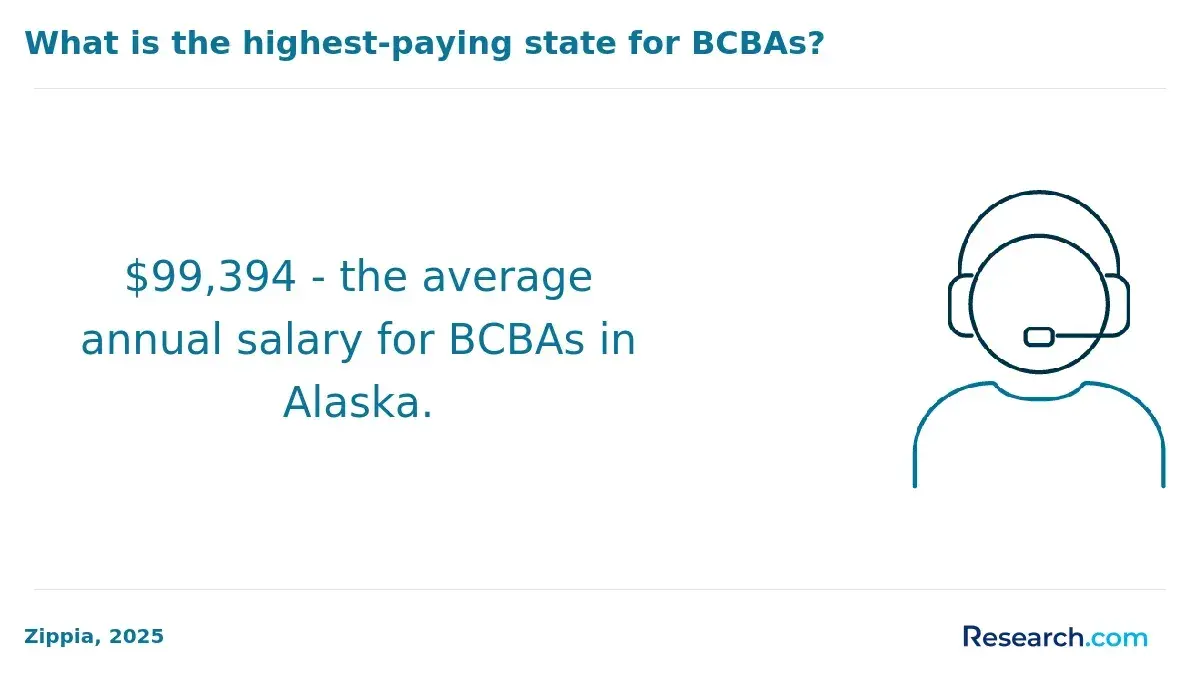
The U.S. Bureau of Labor Statistics reports a median annual salary of $92,500 for newly certified BCBAs. Actual pay can vary substantially by state, setting, experience, supervision responsibility, and local demand for ABA services.
Location is one of the biggest salary drivers. BCBAs in states like California may earn over $125,000, placing them in the top 10% nationally. Urban markets with larger healthcare systems, school districts, and private ABA providers often offer more openings and higher compensation than rural areas, although cost of living can offset part of that advantage.
Work setting also matters. Private clinics, hospitals, and multi-site providers may pay more than some school-based or nonprofit roles, especially when the job includes billable clinical supervision, program oversight, or staff management. School positions may offer stronger schedules, public-sector benefits, or academic-year calendars, even when base salary is lower.
Several factors can affect BCBA pay:
- Experience level, with mid-career BCBAs earning 20-30% more than entry-level professionals
- Supervisory or clinical director responsibilities
- Experience with high-demand populations or specialized interventions
- State licensure requirements and insurance reimbursement environment
- Employer type, including schools, hospitals, private practices, and behavioral health organizations
Prospective BCBAs should use salary data carefully. A high advertised salary may come with productivity requirements, travel, evening hours, or heavy caseloads. A lower salary may come with better benefits, paid supervision time, or a more sustainable workload. For current wage context, review sources such as the U.S. Bureau of Labor Statistics and compare them with local job postings.
What is BCBA job outlook?
The BCBA job outlook remains positive because behavior-analytic services are used in autism treatment, developmental disabilities support, schools, behavioral health programs, and organizational settings. Demand is strongest for candidates who can combine ethical practice, data-based decision-making, supervision skills, and experience with evidence-based interventions.
Credentialing standards are also shaping the market. The BACB Strategic Forecast in the September 2025 newsletter highlights a shift toward accredited programs for certification. By 2027, an estimated 85% of new BCBA certifications will come from Pathway 1, which mandates completion of accredited coursework. This shift will reduce non-accredited pathway applications by 40% compared to 2025.
For students, the message is clear: program choice matters. Employers are likely to value candidates whose preparation is easy to verify and aligned with current certification expectations. Accredited credentials may also make it easier to explain qualifications to employers, insurers, licensing boards, and clients.
To stay competitive, future BCBAs should:
- Choose accredited or clearly verified coursework whenever possible
- Build strong fieldwork experience across assessment, intervention, supervision, and data review
- Develop competence in behavior-change procedures, ethics, and treatment evaluation
- Track certification and state licensure requirements before relocating or accepting a job
- Continue professional development after certification, especially in supervision and specialized populations
Growth in autism services and behavioral health should continue to create opportunities, but the best positions will favor candidates with documented training, strong supervision experience, and practical skill in real service settings. For the latest credential rules and official updates, consult the BACB website.
Other Things You Should Know About Applied Behavior Analysis
The Behavior Analyst Certification Board (BACB) sets the 2027 BCBA exam eligibility rules. Candidates must meet BACB coursework, supervised fieldwork, and degree requirements before they can apply for the exam. The BACB also approves the exam application process and publishes the current certification handbook.
No, maintaining BCBA certification generally requires continuing education in applicable ABA topics and, in many cases, ongoing supervised experience or professional practice. The Behavior Analyst Certification Board (BACB) mandates continuing education units (CEUs) to keep the credential active. However, specific rules vary depending on work settings and regulatory requirements.
To be eligible for the 2027 BCBA Exam, candidates must have a master's degree or higher in behavior analysis or a related field from an accredited institution. Additionally, they must complete specific coursework approved by the Behavior Analyst Certification Board (BACB).
To sit for the 2027 BCBA exam, candidates must complete a graduate degree in behavior analysis or a related field, accumulate supervised experience, and complete essential coursework in behavior analysis. They must then apply for and be approved to take the exam through the Behavior Analyst Certification Board.
- What is a BCBA? Your Guide to the BCBA Certification and Exam https://www.thechicagoschool.edu/insight/career-development/bcba-guide-bcba-certification-exam/
- The Complete BCBA Application Process (2026 Guide): Step-by-Step Breakdown from Eligibility to Exam Authorization https://flashgenius.net/blog-article/the-complete-bcba-application-process-2026-guide-step-by-step-breakdown-from-eligibility-to-exam-authorization
- BCBA Job Outlook 2025 Shows Strong Growth and Demand https://blossomabatherapy.com/blog/bcba-job-outlook
- Certification Pathways, VCSs, & Accreditation: A Student's Guide https://www.abatechnologies.com/blog/certification-pathways-vcss-accreditation-a-students-guide
- BCBA Jobs & Board Certified Behavior Analyst Careers - LEARN Behavioral https://learnbehavioral.com/careers/advance-your-career
- BCBA Career Path to Take - A New Start ABA https://www.anewstartaba.com/blog/bcba-career-path-to-take
- Is Becoming a BCBA a Good Career in 2026? Salary, Growth, and What to Expect https://mindfulsproutsaba.com/blog/is-becoming-a-bcba-a-good-career-in-2026-salary-growth-and-what-to-expect/
- All About BCBA: Definition, Roles, and Importance | Able Stars ABA https://ablestarsaba.com/blog/bcba/
- Master of Science in Applied Behavior Analysis (ABA) https://tsengcollege.csun.edu/programs/ABA/admission-requirements
- BCBA Certification Without a Master’s Degree | Little Champs https://littlechampsaba.com/blog/bcba-without-masters-degree/