2027 BCBA Exam Content Areas Explained for New Test Takers

Co-Founder and Chief Data Scientist
Preparing for the BCBA exam is not just a memorization task. Candidates need to understand how behavior analytic concepts, ethics, assessment, intervention, data analysis, supervision, and professional judgment work together in real practice. The exam is designed to test whether you can apply those skills in client-centered, evidence-based situations.
This guide explains the major BCBA exam content areas, how the exam is organized, what education and fieldwork are required, which degrees may qualify, and how to compare BCBA programs. It is written for prospective behavior analysts, graduate students, RBTs planning their next credential, educators, psychology graduates, and career changers who want a clear path toward certification.
Use this overview to identify what to study, what to ask admissions offices, how to evaluate program quality, and how BCBA certification can connect to long-term career options.
Key Things You Should Know
- The 2026 BCBA exam covers content domains including foundational knowledge, client-centered responsibilities, and implementation of behavioral interventions, reflecting updated BACB task list revisions from 2024.
- Pass rates have stabilized around 65% nationally, emphasizing the need for thorough mastery of behavior-analytic principles, assessment tools, and ethical standards.
- Recent changes prioritize practical application skills and data-driven decision-making, making clinical experience and familiarity with behavior change procedures critical for exam success.
What are the BCBA exam content areas?
The BCBA exam content areas are based on the BACB task list and measure whether candidates can apply behavior analysis in ethical, data-driven, and socially meaningful ways. The exam does not only ask for definitions; many questions require candidates to interpret scenarios, choose appropriate procedures, evaluate data, or identify the most ethical next step.
In broad terms, candidates should be prepared for the following content categories:
- Foundations: Core behavioral concepts, principles of behavior, philosophical assumptions, measurement concepts, and ethical foundations. This includes ideas such as reinforcement, punishment, extinction, motivating operations, stimulus control, and behavior-environment relations.
- Behavior-change procedures: Intervention methods used to increase useful skills and reduce harmful or interfering behavior. Examples include shaping, prompting, chaining, discrete trial training, differential reinforcement, and functional analysis-informed procedures.
- Measurement, data analysis, and reporting: Selecting appropriate measurement systems, collecting accurate data, graphing results, interpreting trends, and using data to adjust treatment plans.
- Experimental design: Understanding single-subject research designs and how behavior analysts evaluate whether an intervention is responsible for behavior change.
- Supervision, training, and professional practice: Supervising others, training staff and caregivers, maintaining treatment integrity, communicating findings, and making decisions consistent with ethical and professional standards.
The difficulty of the BCBA exam often comes from the need to connect concepts to practice. The key topics covered in BCBA exam preparation increasingly emphasize conceptual understanding over rote memorization, which helps explain why the first-time pass rate was 51%, down from 66% five years earlier, as reported in the BACB Annual Data Report.
Candidates who do best usually study in layers: first learning the terminology, then practicing application questions, then using fieldwork examples to test whether they can explain why one answer is better than another. If you are still choosing a training pathway, compare online BCBA certification programs based on curriculum fit, supervision support, cost, and eligibility alignment.
How is the BCBA exam structured for test takers?
The BCBA exam is a computer-based multiple-choice exam with 150 questions and a four-hour time limit. For new test takers, the most important point is that the exam measures applied judgment, not just recall. You may need to analyze a short client scenario, choose a measurement method, identify an ethical concern, interpret intervention data, or select the best supervision response.
The exam structure aligns with BACB task lists effective for 2026 and covers major areas such as foundational knowledge, skill acquisition, behavior reduction, ethics, assessment, intervention design, and professional conduct. Content distribution includes approximately 20-30% foundational knowledge and measurement, 30-40% skill acquisition and behavior reduction strategies, and 10-15% ethics and professionalism.
Because the exam is timed, preparation should include both content review and pacing practice. A useful study plan includes:
- Blueprint review: Match each study block to the official task list rather than studying topics randomly.
- Timed practice: Complete practice questions under exam-like conditions to build stamina and reduce test-day surprises.
- Scenario analysis: Practice explaining why the correct answer is correct and why the distractors are weaker.
- Graph and data interpretation: Review examples that require decisions based on trends, variability, level, and treatment effects.
- Ethics practice: Study ethical decision-making as a process, especially where client rights, consent, supervision, and cultural variables are involved.
Many practice exams mirror this structure by asking candidates to interpret data graphs or design intervention plans from case examples. If you want a stronger academic foundation before certification, researching ABA master's programs can help you compare coursework, fieldwork access, and exam preparation support.
The BCBA certificant population increased from 74,125 in 2024 to 81,566 in 2025, according to the BACB Annual Data Report. As the field grows, candidates should treat exam preparation as professional preparation: the same skills tested on the exam are the skills expected in supervised practice and early BCBA roles.
What education is required to take the BCBA exam?
To qualify for the BCBA exam in the United States, candidates generally need a graduate degree from an accredited institution in behavior analysis, psychology, education, or a related field, along with coursework that meets BACB requirements. The degree alone is not enough; the coursework must cover the required behavior analytic content areas and be accepted for certification eligibility.
Common graduate options include a Master of Education (M.Ed.) with an applied behavior analysis focus, a Master of Science (M.S.) in applied behavior analysis, psychology, or special education, or another eligible graduate program with the required ABA coursework sequence.
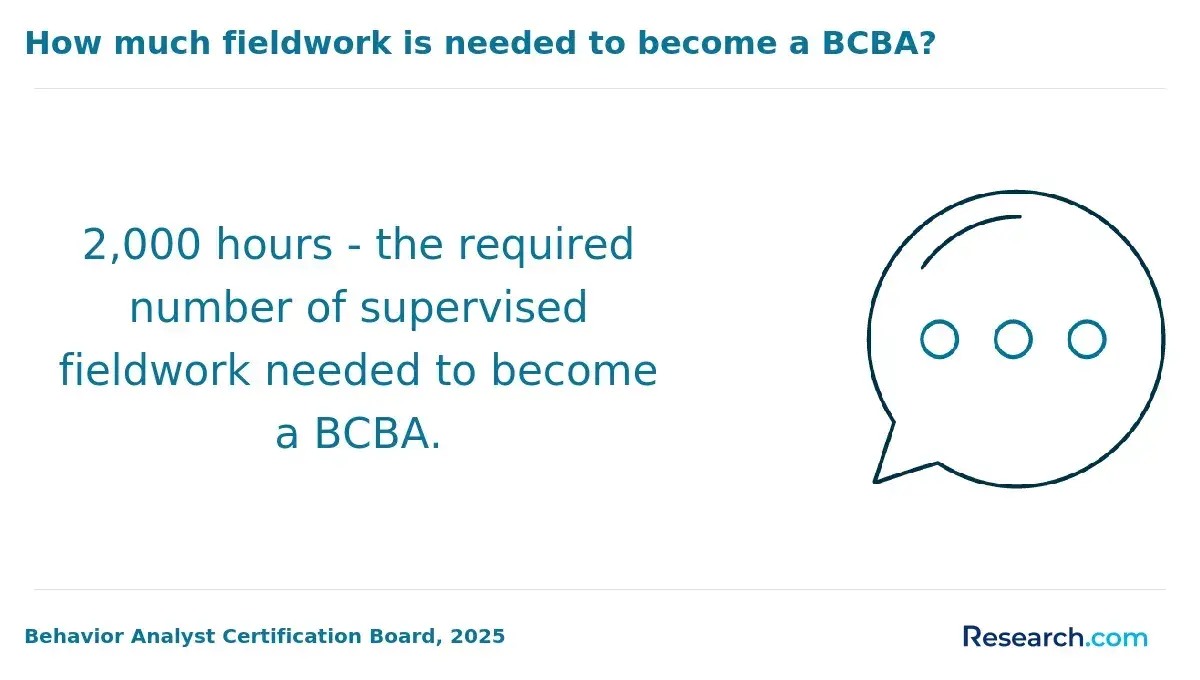
Candidates also need supervised fieldwork, usually between 1,500 and 2,000 hours, completed under a qualified BCBA supervisor. Fieldwork is where candidates learn to apply exam content to real cases, including assessment, intervention design, data collection, treatment evaluation, documentation, and professional communication.
One common mistake is enrolling in a graduate program before confirming whether it satisfies current BACB coursework standards. Before applying, ask the program for clear written information on:
- whether the coursework is aligned with current BACB requirements;
- whether the program includes or helps arrange supervised fieldwork;
- how students document experience hours;
- whether faculty include BCBAs with current field experience;
- how the curriculum prepares students for areas such as Domain C, which accounts for 12% of exam questions.
For students seeking a focused graduate route, an ABA therapist master's degree can help meet the academic preparation expected for BCBA exam eligibility, provided the program also aligns with BACB requirements.
Degrees that may qualify for BCBA certification are graduate-level degrees, such as a master's or doctoral degree, in behavior analysis, psychology, education, or related applied behavior science fields. Common examples include a Master of Science or Master of Arts in behavior analysis, psychology, or special education, as well as doctoral degrees such as a PhD, PsyD, or EdD.
However, the degree title is only part of the eligibility question. The BACB also evaluates whether the candidate has completed the required behavior analysis coursework and supervised experience. A degree in a related field may still require supplemental ABA coursework if it does not include enough content aligned with certification standards.
Professionals from adjacent fields, including speech-language pathology, counseling, education, and psychology, may be able to pursue BCBA eligibility if their graduate education and additional coursework meet BACB expectations. The curriculum must align with the BACB 6th Edition Task List, including areas such as experimental design, which accounts for 7% of the exam questions.
Before assuming a degree qualifies, candidates should review transcripts and compare completed courses against BACB requirements. Important questions include:
- Is the graduate institution properly accredited?
- Does the coursework cover the required ABA content areas?
- Is additional Verified Course Sequence coursework needed?
- Does the program provide advising on BCBA eligibility?
- Will fieldwork supervision be available in the candidate's state or setting?
Students who need flexibility can explore ABA online degree options, but they should verify eligibility details before enrolling because online delivery alone does not guarantee that a program meets certification requirements.
BCBA program admission requirements vary by school, but most programs look for evidence that applicants can succeed in graduate-level behavior analysis coursework and, when applicable, meet certification-related prerequisites. Applicants commonly need a bachelor's degree for master's programs or a master's degree for post-master's certificate pathways, depending on the program type.
Programs connected to BCBA preparation usually request transcripts and may also require a statement of purpose, resume, letters of recommendation, prerequisite coursework, professional experience, or GRE scores. Some programs prefer applicants with backgrounds in psychology, education, human services, special education, speech-language pathology, or related fields, but requirements differ by institution.
For candidates planning to sit for the BCBA exam, admissions review should go beyond getting accepted. Applicants should confirm that the program's coursework aligns with the BACB 6th Edition Task List, covering domains such as behavior assessment, experimental design, ethics, measurement, intervention strategies, and supervision.
Supervised fieldwork is another major planning issue. Many candidates must complete supervised fieldwork hours, usually between 1,500 and 2,000, under a qualified BCBA supervisor. Some programs integrate fieldwork support; others expect students to secure supervision separately. This difference can affect cost, timeline, and exam eligibility.
Applicants should also ask whether a program has ABAI accreditation, recognition, or a Verified Course Sequence where applicable. International applicants and students with nontraditional degrees should verify credential equivalency and BACB eligibility before committing to tuition payments.
Ethics and professional conduct are especially important in BCBA preparation. Domain E includes 22 exam questions, or 13% of the BCBA exam, and emphasizes cultural humility, client-centered ethics, and professional responsibility. Strong programs do more than teach the ethics code; they give students practice applying ethical decision-making to realistic supervision, consent, assessment, intervention, and service-delivery dilemmas.
A BCBA program curriculum covers the science and practice of behavior analysis. Students learn how to define behavior, measure it accurately, assess environmental variables, design interventions, evaluate outcomes, and revise plans based on data. A strong curriculum connects every concept to ethical and socially meaningful practice.
Core coursework commonly includes:
- Principles of behavior: Reinforcement, punishment, extinction, stimulus control, motivating operations, generalization, maintenance, and related concepts.
- Assessment: Functional behavior assessment, preference assessment, skills assessment, indirect and direct assessment methods, and hypothesis development.
- Intervention design: Skill acquisition, behavior reduction, replacement behaviors, antecedent strategies, consequence strategies, and individualized treatment planning.
- Measurement and data analysis: Frequency, duration, latency, interval recording, graphing, visual analysis, and data-based decision-making.
- Experimental design: Single-subject research designs and methods for evaluating intervention effectiveness.
- Ethics and professionalism: Client rights, informed consent, scope of competence, documentation, supervision, collaboration, and culturally responsive practice.
- Supervision and training: Staff training, caregiver training, performance feedback, procedural fidelity, and responsible oversight of behavior technicians or other team members.
Cultural competence is not an add-on. The BACB 6th Edition task list emphasizes the integration of cultural variables through Domain F, which accounts for 13% of the BCBA exam. Candidates learn to consider client values, family priorities, language, access barriers, and contextual variables when assessing behavior and selecting interventions.
Supervised fieldwork helps students move from classroom knowledge to practice. During fieldwork, candidates may participate in functional behavior assessments, write operational definitions, collect and graph data, monitor treatment integrity, train caregivers or staff, and revise interventions based on outcomes.
The best curricula prepare students to work with varied populations and settings, including children with autism spectrum disorder, adults with developmental disabilities, school-based teams, behavioral health providers, and organizational settings. The goal is not simply to pass an exam; it is to build the judgment needed to design, implement, and evaluate responsible behavior analytic services.
BCBA programs generally take 1.5 to 3 years, depending on the credential type, enrollment pace, course load, and fieldwork arrangement. Full-time master's programs with a Verified Course Sequence often take about 2 years of coursework, while accelerated options may take 18 months. Part-time programs for working professionals may extend beyond 3 years.
Cost varies widely. Tuition for BCBA programs typically ranges from $10,000 to over $30,000. Public universities may be closer to the lower end, while private and online institutions may charge between $20,000 and $35,000. Candidates should not compare tuition alone because the total cost of certification can include supervision, books, technology fees, exam preparation materials, application fees, and exam-related expenses.
Supervision can be one of the largest additional costs. Required practical experience hours usually fall between 1,500 and 2,000, and supervision fees can often cost $50 to $100 or more per hour depending on location and supervisor. Some employers provide supervision as part of a job role; others require candidates to pay privately.
| Cost or timeline factor | What to check before enrolling |
| Program length | Ask whether the listed timeline assumes full-time enrollment, year-round study, or transfer credit. |
| Tuition | Compare total program cost, not just cost per credit. |
| Supervision | Confirm whether supervision is included, employer-based, university-arranged, or paid separately. |
| Fieldwork pace | Ask how long students typically take to complete the required 1,500 to 2,000 hours. |
| Exam preparation | Look for integrated review, mock exams, data interpretation practice, and ethics scenario work. |
Program alignment also matters for exam readiness. Domain G contains 25 questions and makes up 14% of the BCBA exam. It focuses on procedural changes such as extinction, now evaluated alongside other interventions under the BACB 6th Edition Task List. A program that teaches these procedures in isolation, without case-based decision-making, may leave candidates underprepared.
Before choosing a program, calculate the full financial picture: tuition, supervision, materials, lost work time if applicable, and any travel or residency requirements. A lower-cost program may be a strong choice if it provides clear advising and fieldwork support; a more expensive program may be worth it only if it reduces delays and improves preparation.
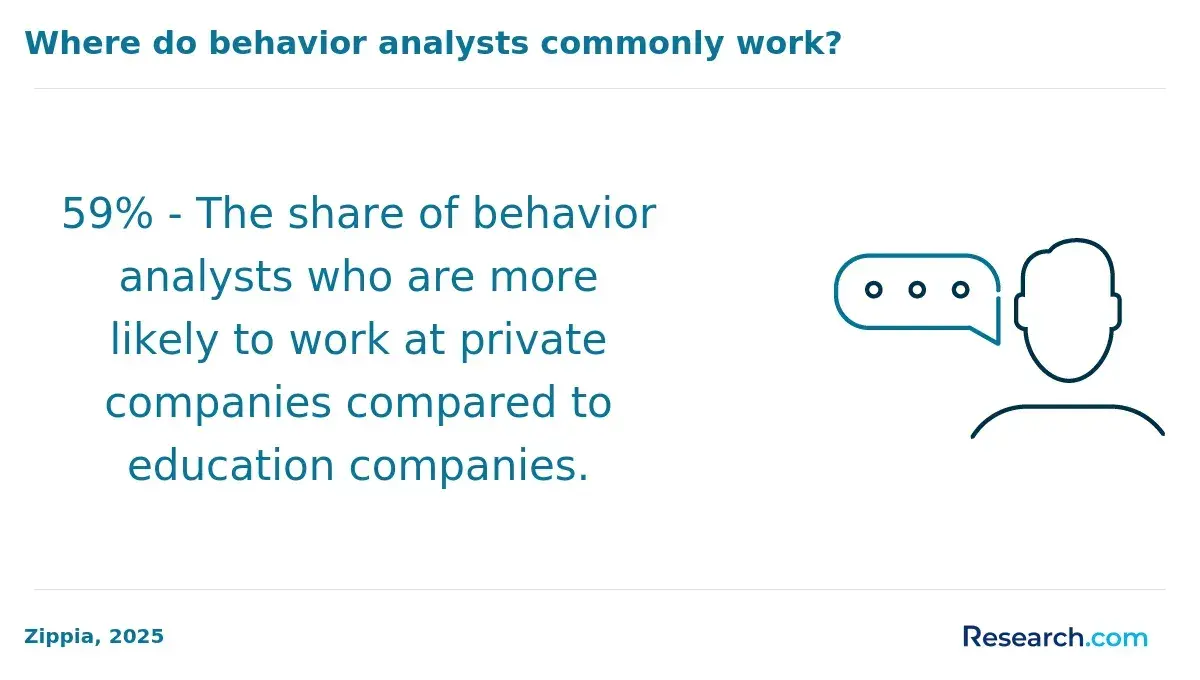
BCBA certification can lead to clinical, educational, supervisory, consultative, and organizational roles. Most BCBAs work in positions where they assess behavior, design intervention plans, train others, monitor data, and make treatment decisions within their scope of competence.
Common BCBA career paths include:
- Clinical behavior analyst: Develops and monitors treatment plans in clinics, homes, community settings, or healthcare environments.
- School-based BCBA: Supports students, teachers, and school teams through behavior assessments, intervention plans, and staff training.
- Autism services supervisor: Oversees behavior technicians and treatment programs for children or adolescents with autism spectrum disorder.
- Developmental disability services provider: Supports adults or children with developmental disabilities in residential, vocational, or community programs.
- Organizational behavior management consultant: Applies behavior analytic principles to workplace performance, safety, training, and systems improvement.
- Research or program evaluation specialist: Contributes to evidence-based practice by evaluating interventions, outcomes, and service quality.
- Clinical director or supervisor: Manages teams, supervises staff, oversees service delivery, and ensures ethical and regulatory compliance.
Domain H of the BCBA exam includes 20 questions, or 11% of the test, based on the BACB 6th Edition Task List. This domain emphasizes socially significant, client-centered goals based on accurate assessment and data. That focus reflects the reality of BCBA work: technical skill matters, but so does choosing goals that are meaningful to the client and context.
BCBAs should also be prepared for practical challenges. They may need to balance family preferences, payer requirements, school policies, staffing limitations, and ethical obligations. Strong communication, documentation, collaboration, and supervision skills are often what distinguish effective practitioners from candidates who only know the terminology.
Career growth can improve with experience in specialized populations, supervision, interdisciplinary collaboration, program management, or emerging areas such as organizational behavior management, gerontology, and behavioral health.
The average BCBA salary in the United States ranges from $60,000 to $90,000 annually, with pay influenced by experience, location, employer type, responsibilities, and specialization. Entry-level BCBAs generally earn between $60,000 and $70,000, while those in specialized or leadership roles can earn above $90,000.
Compensation often differs by setting. Healthcare organizations, private practices, and urban employers may offer higher salaries than some school-based roles, though school positions may provide schedule stability, public-sector benefits, or predictable calendars. Total compensation can also include health insurance, paid time off, retirement benefits, supervision opportunities, and continuing education support.
The job outlook for BCBAs remains strong. The Behavior Analyst Certification Board projects a 50% increase in certificants from 2021 to 2025, reflecting growing demand for behavior analytic services. Demand is not limited to autism treatment; applied behavior analysis is also used in education, organizational behavior management, gerontology, developmental disability services, and behavioral health settings.
Domain I of the BCBA exam includes questions on personnel oversight, which reflects a major part of many BCBA jobs. As BCBAs advance, they often supervise RBTs, train caregivers, manage service teams, review treatment fidelity, and ensure ethical implementation across cases.
To improve earning potential and job stability, candidates should build skills beyond exam preparation. Useful career steps include gaining high-quality supervised experience, learning to train and supervise others, developing strong report-writing skills, networking with local providers, and pursuing specialization in settings with growing demand.
How to choose an accredited BCBA program?
Choosing a BCBA program should start with eligibility. Before comparing price, format, or reputation, confirm that the program's coursework and degree structure support your intended certification pathway. Do not rely only on marketing language; ask for written confirmation of how the program aligns with BACB requirements.
Accreditation and recognition can help signal quality, but candidates should understand what is being accredited or verified. Look for appropriate institutional accreditation, ABAI accreditation or recognition where applicable, and coursework that aligns with the current BACB task list. If a school claims to prepare students for BCBA certification, it should be able to explain exactly how coursework, advising, and fieldwork support eligibility.
Use the following checklist when comparing programs:
- Eligibility alignment: Does the curriculum meet current BACB coursework expectations for your pathway?
- Institutional quality: Is the university properly accredited?
- Faculty expertise: Are instructors BCBAs or behavior analysis scholars with current applied or research experience?
- Fieldwork support: Does the program help students find qualified supervisors, or must students arrange supervision independently?
- Exam preparation: Are mock exams, content reviews, scenario questions, and data interpretation practice built into the program?
- Flexibility: Are courses online, hybrid, asynchronous, evening-based, or weekend-friendly for working students?
- Student outcomes: Can the program provide pass-rate information, completion data, or alumni feedback?
- Total cost: Does the published cost include fees, supervision, materials, and any required campus visits?
Pass-rate context matters. According to the BACB Annual Data Report, only 23% of retake candidates passed the exam compared to a 51% first-time pass rate. This does not mean a program can guarantee success, but it does show why candidates should choose training that includes structured exam preparation and not just minimum coursework.
Finally, speak with current students or alumni when possible. Ask whether they felt prepared for fieldwork, whether faculty were responsive, how easy it was to secure supervision, and whether coursework matched the exam's applied style. The right BCBA program should help you become eligible, prepared, and professionally competent—not merely enrolled.
Other Things You Should Know About Applied Behavior Analysis
The Behavior Analyst Certification Board, or BACB, sets the BCBA exam content outline. Its task list and exam blueprint define the tested domains, such as measurement, experimental design, behavior-change procedures, and ethics, and they guide how candidates should prepare for the 2027 exam.
Ethical practice in applied behavior analysis is governed by the Behavior Analyst Certification Board's Professional and Ethical Compliance Code. Practitioners must adhere to standards that ensure client dignity, confidentiality, and safety. Regular supervision, continuing education, and professional accountability help maintain ethical behavior in the field.
Behavior intervention plans (BIPs) are central tools used to guide treatment in applied behavior analysis. They outline specific strategies based on functional behavior assessments to address challenging behaviors effectively. BIPs ensure consistency in implementation and help measure progress toward behavioral goals.
For the 2027 BCBA exam, test takers should focus on key content areas like Measurement, Data Display, and Interpretation, Assessment, including Functional Behavior Assessment and Ethics. Understanding Behavior-Change Procedures and concepts such as Operant Conditioning is vital. These areas form the backbone of the BCBA exam, assessing a range of practical and theoretical competencies required for effective practice in applied behavior analysis.
- BCBA Programs and Schools: How to Choose https://www.apexaba.com/blog/bcba-programs-and-schools
- 11 Best BCBA Programs & Schools (In-Person & Online) https://www.crossrivertherapy.com/behavioral-analysts/best-bcba-programs
- Understanding the BCBA task list https://ensorahealth.com/blog/understanding-the-bcba-task-list/
- Is Becoming a BCBA a Good Career in 2026? Salary, Growth, and What to Expect https://mindfulsproutsaba.com/blog/is-becoming-a-bcba-a-good-career-in-2026-salary-growth-and-what-to-expect/
- Board-Certified Behavior Analyst (BCBA) Salary Guide â Trusted Health https://www.trustedhealth.com/allied-career-guide/behavior-analyst/salary-guide
- BCBA Programs & Schools | Sunray ABA https://www.sunrayaba.com/post/bcba-programs-schools-203c1
- BCBA Certification Requirements - Bluebell ABA https://bluebellaba.com/blog/bcba-without-masters-degree/
- What to Expect on the BCBA Exam: Study Tips and Resources | Links https://linksaba.com/what-to-expect-on-the-bcba-exam-study-tips-and-resources/
- BCBA Exam Study Guide for 2025 Success - Little Champs ABA https://littlechampsaba.com/blog/bcba-exam-study-guide/
- How Much Does it Cost to Take (Or Retake) the BCBA® Exam? https://passthebigabaexam.com/how-much-does-it-cost-to-take-or-retake-the-bcba-exam/