2027 Self-Paced & Flexible Online BCBA Programs

Co-Founder and Chief Data Scientist
Choosing an online BCBA pathway is usually a question of fit: can you meet graduate coursework, supervised fieldwork, and certification requirements without stepping away from work or family responsibilities? For many candidates, the answer is yes—but only if the program is verified, well supported, and realistic about deadlines and fieldwork.
Online graduate education is no longer a niche option. The National Center for Education Statistics reported that 26.4% of all graduate students were enrolled exclusively in distance education in Fall 2022. At the same time, the Behavior Analyst Certification Board (BACB) reported a 58% increase in demand for BCBAs from 2023 to 2024. That combination makes flexible online BCBA programs especially relevant for working educators, behavior technicians, psychology graduates, and human services professionals who want a credentialed path into applied behavior analysis.
This guide explains what self-paced online BCBA programs can and cannot offer, how they meet certification standards, what to know about fieldwork, how to compare program quality, and how to think about return on investment before you enroll.
Key Benefits of Self-Paced & Flexible Online BCBA Programs
- Meet the market's unprecedented demand, as the BACB reported a remarkable 58% year-over-year increase in job postings for certified behavior analysts.
- Achieve significant earning potential with a national average salary of approximately $89,075 per year, according to 2025 data.
- Gain a graduate degree without pausing your career, allowing you to maintain your income and apply your learning in real-time.
Why is a self-paced online BCBA program a strategic career move in 2025?
A self-paced online BCBA program can be a strong career move because it lets you pursue certification-aligned graduate study while staying employed and gaining relevant experience. The timing also matters: with the BACB reporting a 58% increase in demand for BCBAs from 2023 to 2024, candidates who can complete coursework and supervised fieldwork efficiently may enter a field with substantial hiring activity.
The value of the online format is not simply convenience. It removes geographic barriers, gives working adults access to programs outside their local area, and may reduce the need to relocate or pause income. For candidates already working in schools, clinics, autism services, or community programs, online study can also align directly with day-to-day practice.
Career and compensation considerations
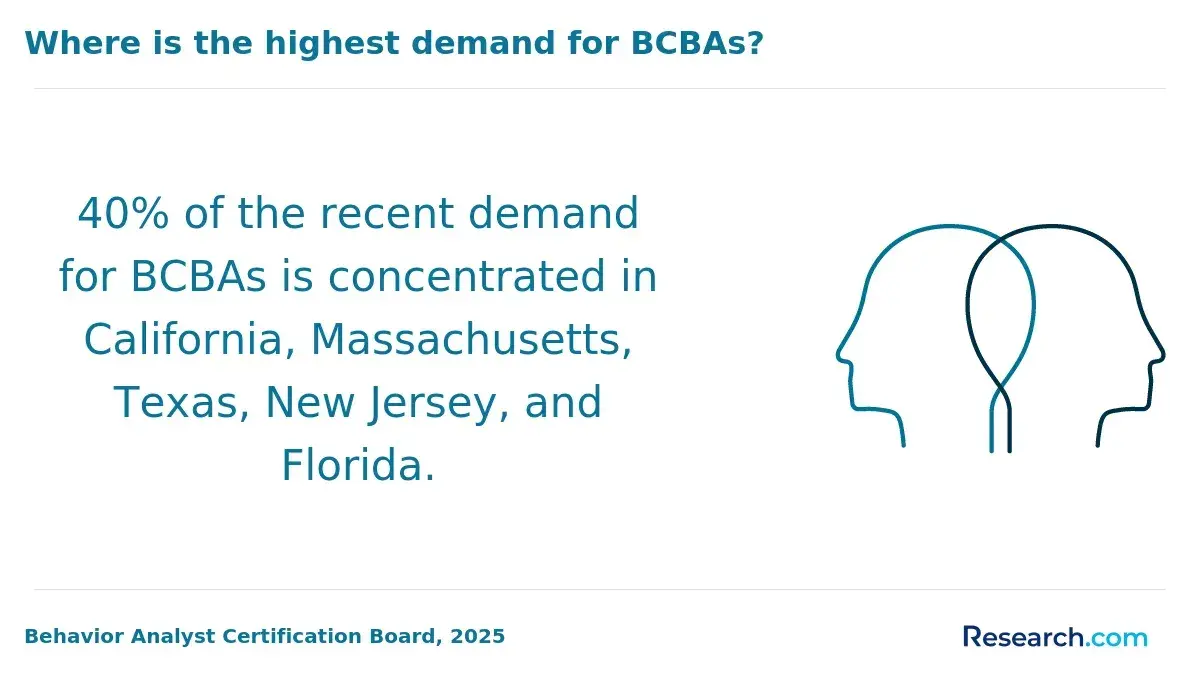
The professional outlook is promising, but it should be evaluated carefully. ZipRecruiter's data shows an average salary nearing $90,000, yet actual earnings vary by state, employer type, experience, caseload, supervisory responsibilities, and local demand. High-demand areas such as California and Massachusetts may offer stronger compensation, but they may also come with higher living costs and more competitive expectations.
| Strategic advantage | Why it matters | What to verify before enrolling |
| Flexible scheduling | You can complete coursework around work and family commitments. | Whether deadlines are weekly, term-based, or competency-based. |
| Continued employment | You may avoid the income loss associated with full-time campus study. | Whether your job can support fieldwork requirements. |
| Access to more programs | You are not limited to schools within commuting distance. | Whether the program is institutionally accredited and has a verified course sequence. |
| Career alignment | Current roles in education, behavioral health, or human services may support applied learning. | Whether local supervision options meet BACB requirements. |
The strongest candidates treat an online BCBA program as a professional plan, not just a degree. Before enrolling, compare the curriculum, fieldwork support, faculty qualifications, exam preparation resources, and total cost.
What are the foundational requirements to qualify for an online BCBA program?
Most online BCBA programs require applicants to hold a bachelor's degree from an accredited institution before admission. A background in psychology, education, special education, social work, counseling, or human services can be helpful, but it is not always required. Admissions teams typically look for evidence that you can handle graduate-level reading, writing, research, ethics, and applied decision-making.
Because BCBA preparation is demanding, programs also assess whether applicants understand the profession. Strong applications usually show direct or related experience with behavior support, teaching, disability services, clinical work, research, or supervised service delivery.
Common application materials
Application requirements vary by university, but most online programs ask for a package that demonstrates academic readiness and professional intent.
- Official transcripts: Schools commonly require transcripts from all undergraduate and graduate institutions attended. Many programs expect a minimum GPA of 3.0, although policies differ.
- Letters of recommendation: Most applicants submit two to three academic or professional letters. The strongest letters describe reliability, ethical judgment, communication skills, and readiness for graduate study.
- Personal statement: This essay should explain why you want to become a behavior analyst, what populations or settings interest you, and how the program fits your career plan.
- Resume or curriculum vitae: Include relevant employment, volunteer work, research, certifications, training, supervision experience, and applied behavior support roles.
How to strengthen your application
If your undergraduate major is unrelated or your GPA is not your strongest asset, use the rest of the application to show preparation. Highlight experience collecting data, implementing behavior plans, working with learners or clients, collaborating with families or teams, and following ethical procedures. If possible, ask recommenders who have observed your work in structured service, education, or clinical environments.
How does an online curriculum meet the BACB's rigorous standards?
An online BCBA curriculum meets BACB standards when it is built around coursework that satisfies certification requirements and is delivered by a qualified institution. The key term to look for is Verified Course Sequence (VCS). A VCS is a set of courses reviewed by the Association for Behavior Analysis International (ABAI) and confirmed as meeting the coursework requirements for certification.
Online delivery does not weaken the academic standard when the program is properly designed. Students still complete graduate-level assignments, case analyses, data interpretation, ethics work, intervention planning, and assessments. The difference is the learning format: lectures, discussions, quizzes, projects, and faculty feedback are delivered through a digital learning platform instead of a physical classroom.
Core content for certification
When comparing BCBA master's programs, confirm that the coursework covers the core areas expected for behavior analyst preparation. Common subjects include:
- Ethical and Professional Conduct
- Concepts and Principles of Behavior Analysis
- Measurement, Data Display, and Interpretation
- Experimental Design
- Behavioral Assessment and Intervention
- Personnel Supervision and Management
What a strong online course should include
A credible online curriculum should go beyond recorded lectures. Look for applied assignments, instructor feedback, opportunities to analyze real or simulated data, discussion of ethical scenarios, and assessment methods that test practical reasoning rather than memorization alone. If a program cannot clearly explain how its online courses align with certification requirements, treat that as a warning sign.
In a BCBA program, “self-paced” usually means you have control over when you complete weekly learning tasks, not that you can ignore deadlines or move through the program without structure. Many flexible online ABA programs use asynchronous coursework, so students can watch lectures, complete readings, contribute to discussions, and submit assignments outside fixed class meeting times.
This format works best for disciplined students who can plan ahead. BCBA preparation involves technical concepts, ethical decision-making, data analysis, and applied practice. Waiting until the end of the week to complete all coursework can quickly become unmanageable.
The balance of freedom and structure
- What “self-paced” means: You can often choose the time of day you study, whether that is before work, after children are asleep, on weekends, or during scheduled breaks. You may also be able to accelerate or slow your course load depending on program policy.
- What “self-paced” does not mean: It does not mean unlimited time. Most programs still operate within terms, such as 8 or 16 weeks, and require assignments, exams, projects, discussions, and practicum documentation by specific due dates.
Questions to ask about flexibility
| Question | Why it matters |
| Are courses asynchronous, synchronous, or a mix of both? | Live class meetings can affect work schedules and time zones. |
| How many hours per week should students expect per course? | This helps you decide whether part-time or full-time enrollment is realistic. |
| Can students pause, reduce course load, or change pace? | Flexibility policies matter if work, caregiving, or fieldwork demands change. |
| Are discussions and group projects required? | Collaborative work can improve learning but may reduce scheduling freedom. |
The best approach is to map coursework, employment, fieldwork, and personal obligations before the term starts. A self-paced program rewards planning; it does not replace it.
Supervised fieldwork in an online BCBA program is usually managed through a partnership among the student, the university, and a qualified local supervisor. The BACB requires 2,000 fieldwork hours or 1,500 concentrated hours, so fieldwork planning should begin early—not after coursework is nearly complete.
Online universities may provide fieldwork coordinators, placement guidance, supervisor approval processes, documentation tools, and advising. However, the level of support varies significantly. Some programs help students identify possible sites; others expect students to secure their own placements. Before enrolling, ask exactly what the school does and what remains your responsibility.
How online fieldwork typically works
- Identify a setting: Students may complete hours in schools, clinics, homes, community agencies, or other approved environments, depending on program and BACB requirements.
- Confirm supervisor qualifications: The supervisor must meet board requirements and be able to provide appropriate oversight.
- Set a supervision plan: The student and supervisor agree on activities, observation methods, feedback procedures, documentation, and communication expectations.
- Track hours carefully: Fieldwork hours must be documented accurately for later verification.
- Connect fieldwork to coursework: Strong programs help students apply concepts from class to real behavior-analytic practice.
The role of technology in supervision
Technology makes remote coordination possible, but it does not remove the need for high-quality supervision. Common tools and practices include:
- Video conferencing: Supervisors may use platforms like Zoom or Teams for meetings, direct observation, case review, and performance feedback.
- Secure data sharing: Cloud-based systems may be used to review session notes, data sheets, assessment materials, and behavior intervention plans.
- Digital timelogs: Students often use specialized software to track and organize fieldwork hours for BACB verification.
Fieldwork is often the most complex part of an online BCBA pathway. A program with clear fieldwork advising, responsive staff, and transparent documentation expectations can save students time and reduce certification delays.
Top online BCBA programs are not defined only by convenience. The strongest programs combine verified coursework, qualified faculty, meaningful interaction, clear fieldwork support, exam preparation, and transparent student expectations. A low tuition price or fast timeline is not enough if the program leaves students unsupported during fieldwork or unclear about certification steps.
Features to compare before applying
| Program feature | Why it matters | Red flag |
| Verified Course Sequence | Helps ensure coursework aligns with BACB requirements. | The program cannot clearly document verification status. |
| Institutional accreditation | Supports academic legitimacy and federal financial aid eligibility. | The school lacks recognized institutional accreditation. |
| Fieldwork support | Students need qualified supervision and accurate documentation. | The school offers only vague placement advice. |
| Faculty access | Behavior analysis requires feedback, correction, and applied reasoning. | Students rarely interact with instructors. |
| Exam preparation | The BCBA exam requires organized review and practice. | No structured review resources are available. |
| Student services | Working adults may need advising, technical support, and scheduling guidance. | Policies are unclear or support is difficult to reach. |
Cohort vs. individual learning models
The learning model also affects your experience. In a cohort model, students move through the program with the same group of peers. This can create accountability, stronger discussion, and a clearer schedule. It may be less flexible if courses are offered in a fixed order.
An individual or more self-directed model may provide greater control over pace and course load. This can benefit students with unpredictable schedules, but it requires more self-management and may feel less connected unless the program intentionally builds community.
Neither model is automatically better. Choose the structure that matches your work schedule, learning style, need for peer support, and tolerance for independent planning.
Building a professional network online requires intention. You will not casually meet classmates in a hallway, so you need to create repeated, professional points of contact through coursework, fieldwork, student groups, faculty conversations, and behavior analysis events.
Networking matters because BCBA careers often grow through referrals, supervision relationships, continuing education, conference participation, and local service systems. Your classmates, instructors, supervisors, and guest speakers may later become colleagues, collaborators, employers, or references.
Practical ways to build connections
- Participate seriously in discussion boards: Write thoughtful posts, ask useful questions, and respond professionally. Online discussions can shape how peers and faculty remember you.
- Join virtual study groups: Regular study meetings help reinforce difficult concepts and create accountability.
- Attend guest lectures and webinars: Many universities invite practicing BCBAs, researchers, and supervisors. Ask informed questions and follow up when appropriate.
- Connect with state and professional organizations: Student chapters and state behavior analysis groups can help you learn about local employers, conferences, and supervision expectations.
- Use LinkedIn strategically: Connect with classmates, faculty, supervisors, and professionals you meet through events. Add a short message that explains the connection.
How to make networking feel professional, not transactional
Focus on learning, contribution, and follow-through. Share resources, thank speakers, offer to collaborate on study sessions, and maintain respectful communication. A strong online reputation is built through reliability: meeting deadlines, being prepared, giving useful feedback, and showing ethical judgment.
The return on investment for an online BCBA degree depends on total cost, time to completion, fieldwork feasibility, certification success, and post-graduation earnings. The online format can improve ROI because students may continue working while studying, avoid relocation, and reduce commuting costs. However, a lower-cost program is not a good investment if it lacks verification, fieldwork support, or adequate preparation for certification.
The Education Data Initiative reports the average cost per credit for a public online master's program is around $337. Program costs still vary, so applicants should calculate the full expense rather than comparing tuition alone.
Costs and benefits to include in your calculation
- Direct costs: Tuition, technology fees, books or digital materials, exam application fees, background checks if required, and study resources.
- Indirect costs: Reduced work hours, childcare, travel to fieldwork sites, unpaid supervision time, or delayed income growth.
- Costs avoided: Lost salary from leaving the workforce, daily commuting, campus housing, and possible relocation.
- Potential financial gain: ZipRecruiter's data shows an average salary nearing $90,000, though individual outcomes depend on location, experience, employer, and role.
How to compare affordability without choosing the wrong program
When reviewing board certified behavior analyst online programs, compare total program cost alongside program quality. Ask whether tuition includes all required courses, whether fees are clearly disclosed, whether financial aid is available, and whether the program provides support for fieldwork and exam preparation.
| ROI factor | Why it affects value |
| Time to completion | A longer timeline may delay certification and higher earning potential. |
| Ability to keep working | Continuing employment can reduce the opportunity cost of graduate study. |
| Fieldwork access | Difficulty finding supervision can delay certification even after coursework is complete. |
| Exam readiness | Passing the exam requires preparation; weak support can add time and cost. |
| Local labor market | Salary and job availability vary by region and service setting. |
The best ROI comes from a program that is affordable, properly verified, realistic for your schedule, and strong enough to move you efficiently toward certification.
Accreditation and verification are essential because BCBA preparation is tied to professional certification, graduate education standards, and financial aid eligibility. Before applying, verify two separate things: the institution’s accreditation and the behavior-analytic coursework status.
Institutional accreditation from a regional body recognized by the U.S. Department of Education confirms that the university meets broader academic and administrative standards. It also affects eligibility for federal financial aid. For students investing time and money in a graduate program, this is a baseline requirement.
The ABAI verification: your key to certification
For BCBA candidates, a Verified Course Sequence (VCS) from the Association for Behavior Analysis International (ABAI) is especially important. It confirms that the specific coursework has been reviewed and meets the BACB's coursework requirements. When reviewing schools that offer BCBA certification, lack of a VCS should be treated as a serious concern unless the school can clearly explain another valid pathway under current certification rules.
What to verify before you enroll
- Institutional accreditation: Confirm the school’s status through official accreditation sources, not only marketing pages.
- Verified Course Sequence status: Check that the coursework aligns with BACB requirements for the credential you intend to pursue.
- State requirements: Some roles or settings may involve additional state rules, employer expectations, or licensure-related requirements.
- Financial aid eligibility: Accreditation can affect access to federal financial aid and credit transfer policies.
- Program disclosures: Ask for clear information about coursework, fieldwork, exam preparation, and certification outcomes.
Do not rely on phrases such as “BCBA-focused” or “ABA-aligned” without documentation. Verification and accreditation protect your eligibility, your investment, and your timeline.
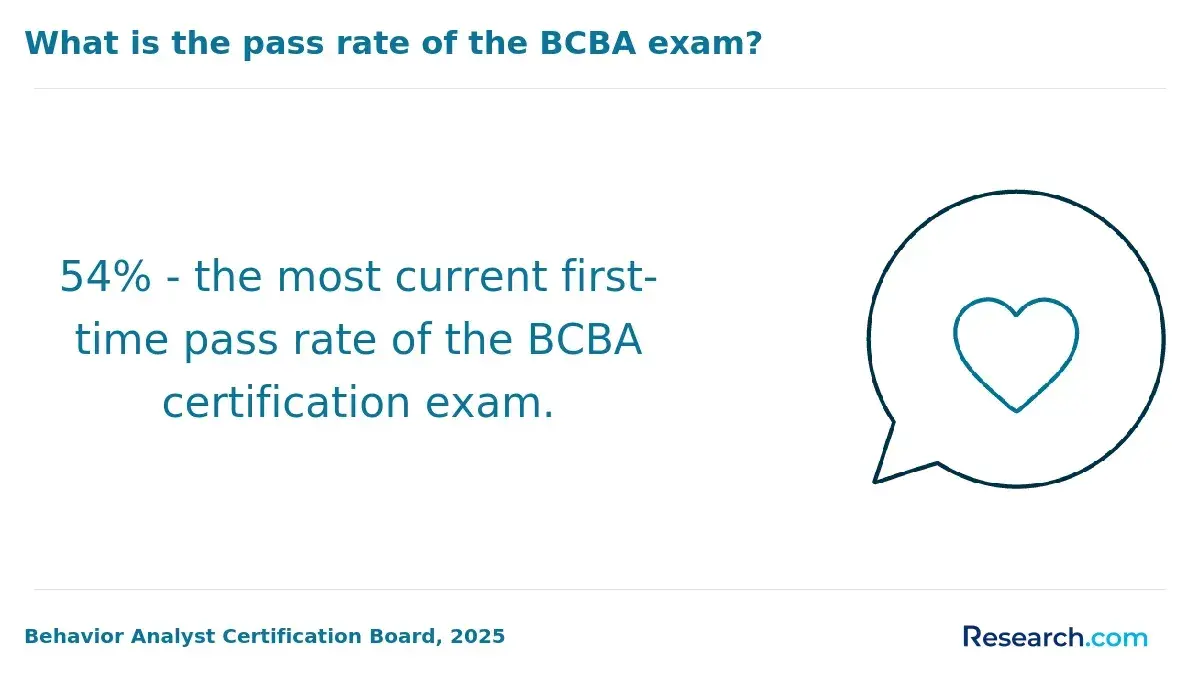
Preparing for the BCBA exam should begin before graduation, but it becomes especially important after coursework and fieldwork are complete. The exam is a rigorous 185-question multiple-choice test designed to assess broad knowledge of behavior analysis. The BACB's 2024 data shows a 54% first-time pass rate, which makes a structured study plan essential.
Build a study plan around the exam content
Start by identifying the content areas that need the most review. A strong plan should include reading, concept mapping, practice questions, mock exams, error analysis, and scheduled review of weak areas. Do not rely only on passive review, such as rereading notes or watching videos. The exam requires application, discrimination between similar concepts, and ethical reasoning.
Use proven study resources
- Official exam information: Use the BACB’s published guidance to understand the exam format and content expectations.
- Mock exams: Timed practice helps build stamina and reveals weak areas.
- Third-party prep courses: Many graduates use structured review programs with workshops, practice questions, and study schedules.
- Study groups: Virtual groups with classmates can help reinforce technical concepts and reduce isolation.
- Supervision notes: Fieldwork examples can make abstract concepts easier to remember and apply.
Common mistakes to avoid
- Waiting until after graduation to begin reviewing foundational concepts.
- Studying only definitions instead of practicing applied scenarios.
- Taking practice tests without reviewing why answers were wrong.
- Ignoring ethics, measurement, experimental design, or supervision topics until late in the process.
- Using too many resources without a clear weekly plan.
The goal is not simply to study more hours. The goal is to study deliberately, measure progress, and correct misunderstandings before exam day.
How do you maintain your BCBA certification long-term?
Maintaining BCBA certification requires ongoing professional development, accurate renewal practices, and continued ethical conduct. Certification is not a one-time milestone; it is a professional responsibility that must be sustained throughout your career.
The Behavior Analyst Certification Board requires renewal on a two-year cycle. To renew, certificants must complete 32 Continuing Education Units (CEUs). These requirements help ensure that practitioners stay current with standards, ethics, supervision practices, and developments in behavior analysis.
Meeting specific CEU requirements
- Ethics: A minimum of four units must be dedicated to ethics.
- Supervision: A minimum of three units must cover supervision if you are overseeing the work of other professionals.
- General: The remaining units can be earned through approved activities such as conferences, webinars, workshops, or advanced courses.
How to manage renewal responsibly
Keep documentation as you earn CEUs rather than trying to reconstruct records near the deadline. Save certificates, provider information, dates, topics, and credit details in one organized location. If you supervise others, track supervision-related CEUs separately so you can confirm that requirement is met.
Long-term certification also depends on professional judgment. Choose continuing education that strengthens your actual practice, not just the fastest available credits. Prioritize ethics, culturally responsive service, assessment quality, data-based decision-making, supervision skills, and areas relevant to the populations you serve.
Other Things You Should Know About Self-Paced and Online BCBA Programs
Yes, 2027 self-paced BCBA programs often require a practicum with a minimum of 1,500 supervised fieldwork hours. These must be completed to meet standards set by the Behavior Analyst Certification Board (BACB), ensuring hands-on experience in behavior analysis.
Yes. Asynchronous coursework is commonly accepted, but the program must still meet BACB coursework requirements and include supervised fieldwork. The BCBA exam is administered by the Behavior Analyst Certification Board, and candidates must also complete the required verified course sequence before applying.
- Behavior Analyst Certification Board. (2025). BACB annual data report. Retrieved November 12, 2025, from BACB.
- Behavior Analyst Certification Board. (2025). BCBA handbook. Retrieved November 12, 2025, from BACB.
- Behavior Analyst Certification Board. (2025). US employment demand for behavior analysts: 2010–2024. Retrieved November 12, 2025, from BACB.
- Hanson, M. (2024). Average cost of online college. Education Data Initiative. Retrieved November 12, 2025, from Education Data Initiative.
- National Center for Education Statistics. (2024). Digest of Education Statistics, 2023 (NCES 2024-026), Chapter 3. U.S. Department of Education. Retrieved November 12, 2025, from NCES.
- U.S. Bureau of Labor Statistics. (2024). Occupational outlook handbook: Psychologists. Retrieved November 12, 2025, from BLS.
- ZipRecruiter. (2025). BCBA salary. Retrieved November 12, 2025, from ZipRecruiter.