2027 AI Master's Degrees With Strong Employment Outcomes

Co-Founder and Chief Data Scientist
Many professionals with degrees in unrelated fields face challenges breaking into the AI sector due to technical skill gaps and limited program flexibility. The fast-evolving AI job market demands not only advanced knowledge but also recognized credentials from accredited programs. Traditional pathways often lack options that balance rigorous training with the needs of working adults.
For those seeking a practical transition, identifying master's degrees that deliver strong employment outcomes is crucial. This article explores top AI master's programs that combine flexible study formats and industry-relevant curricula, helping prospective students make informed decisions to successfully pivot their careers into Artificial Intelligence.
Key Things You Should Know
- Master's degrees in artificial intelligence reported a 92% employment rate within six months of graduation in 2025, reflecting strong demand across technology and healthcare sectors.
- Top U.S. programs now integrate ethics, machine learning, and data engineering to meet evolving industry needs and ensure graduates' competitive advantage.
- Median starting salaries for artificial intelligence master's graduates reached $115,000 in 2025, with significant growth expected as AI adoption expands in diverse fields.
What is an AI master's degree, and which specializations lead to jobs?
An AI master's degree prepares graduates to design, implement, and manage intelligent systems by combining expertise in machine learning, neural networks, natural language processing, and computer vision with practical skills. These programs foster the ability to analyze complex data, build innovative AI software, and apply solutions across various industries. Choosing AI master's degree programs with career-focused specializations can greatly influence employment prospects.
The highest employment sectors for AI master's graduates show strong demand in the U.S. software development leads with 32% of AI-related job postings, followed by data science at 16%, and IT/cloud/DevOps roles at 14%. Specializations aligned with these fields increase marketability:
- Software Development: AI software engineering, algorithm design, and scalable AI deployment.
- Data Science: Statistical modeling, data mining, and AI-integrated predictive analytics.
- IT/Cloud/DevOps: AI model deployment, cloud infrastructure, and automation tools.
Additional areas like robotics, reinforcement learning, and AI ethics are also increasingly valued in hiring. Prospective students should seek programs with hands-on projects and internships for job readiness.
For those undecided on specialization, broad curricula with options to shift toward software or data science streams offer flexibility. Many find pursuing a computer science accelerated program an effective path to gain these skills.
Which AI master's programs have the strongest employment outcomes in the U.S.?
U.S. master's programs with the strongest employment outcomes in AI consistently come from universities that maintain robust industry connections and offer specialized AI or machine learning tracks within computer science. Stanford University leads this segment, with a reported median base salary of $215,000 for MS Computer Science graduates focused on AI/ML pathways and 94% securing job offers within three months of graduation (Stanford University, Computer Science "Graduate Employment Outcomes"). Such top AI master's programs for U.S. employment emphasize applied AI skills, internships, research publications, and networking opportunities.
Programs closely tied to Silicon Valley and other tech hubs tend to produce highly employable graduates. Carnegie Mellon University's AI-focused master's and the University of California, Berkeley's interdisciplinary AI and data science programs are standout examples among top AI graduate degrees with high job placement in the U.S.
Key elements driving strong employment outcomes include curriculum blending theory with real-world AI projects, access to AI research labs fostering innovation, internship pipelines with major tech firms, and career services dedicated to AI roles such as interview preparation and recruiter engagement.
- Curriculum blending theory with hands-on projects on real-world AI challenges.
- Access to AI research centers and labs fostering innovation and collaboration.
- Internship pipelines with major tech companies, offering direct pathways to employment.
- Career services targeting AI roles, including resume workshops, interview prep, and recruiter engagement.
Graduates seeking career advancement or shifts should prioritize programs with AI specialization and transparent employment reports showing job placement rates within six months, alongside salary benchmarks in AI sectors.
This approach helps ensure a tangible return on investment in AI master's education. For those interested in related fields, exploring options such as a mechanical engineer degree online can also provide valuable pathways in STEM careers.
What careers can you get with an AI master's degree?
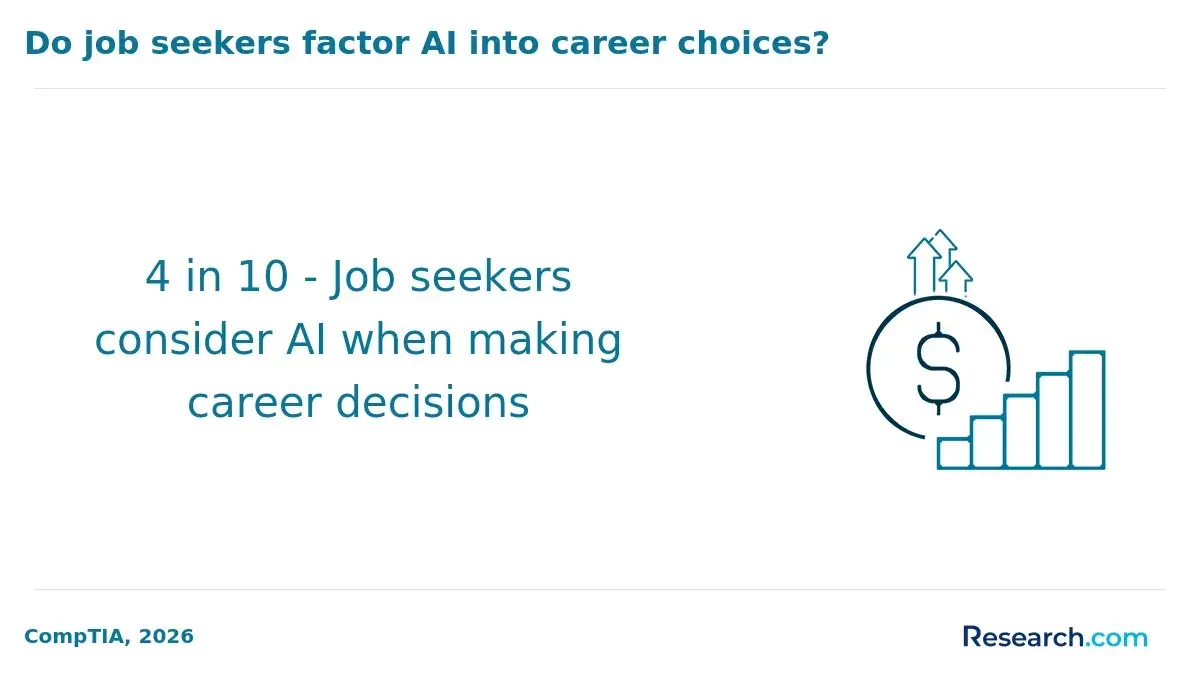
An AI master's degree opens pathways to multiple high-demand careers shaping technology and business landscapes. Graduates frequently pursue roles such as data scientist, machine learning engineer, AI research scientist, and AI product manager.
These careers leverage skills in algorithm development, data analysis, and system optimization to build intelligent systems and solutions. Careers in artificial intelligence and machine learning often intersect with domains such as software engineering and domain expertise, making adaptable skill sets essential.
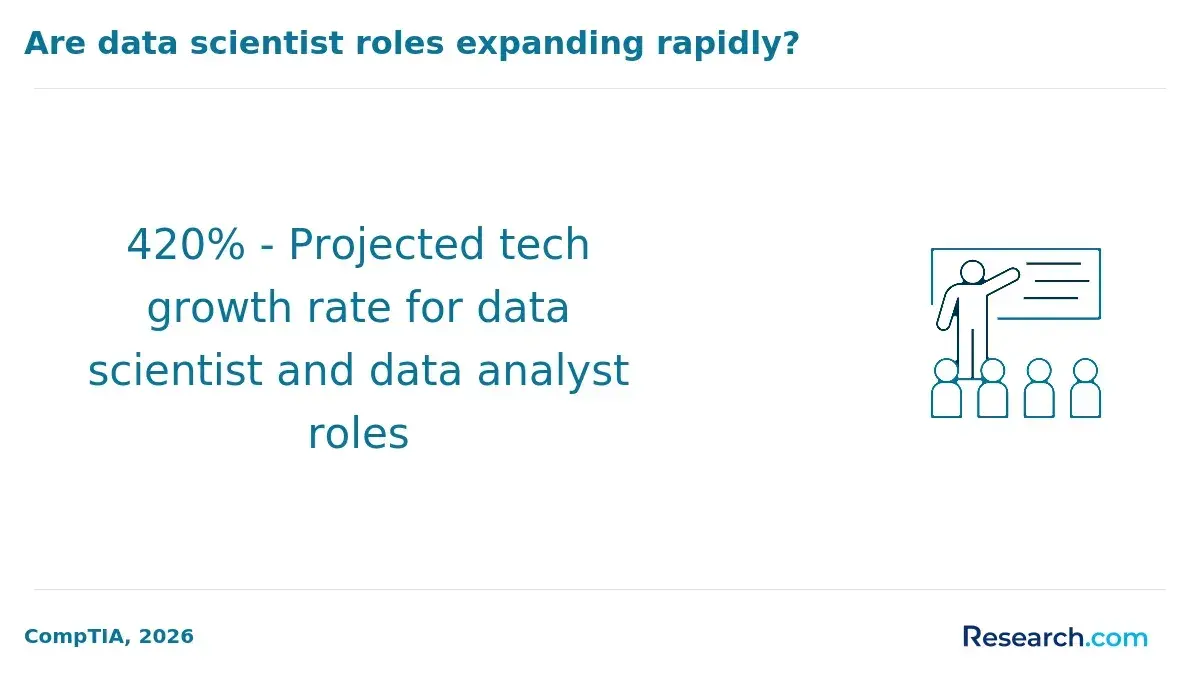
Data scientists analyze complex datasets to extract actionable insights, optimizing decision-making across industries like finance, healthcare, and marketing. Their employment is expected to grow 36% from 2023 to 2033, according to the U.S. Bureau of Labor Statistics (Occupational Outlook Handbook, Data Scientists, 2024-2025 edition), highlighting strong demand for professionals with AI expertise.
Machine learning engineers design, implement, and maintain models that enable software to improve automatically through experience. They work closely with data infrastructure and require proficiency in programming and statistical modeling. AI research scientists focus on advancing foundational AI knowledge, often engaging in experimental studies to develop novel algorithms.
Additionally, AI ethics specialists and policy advisors are emerging roles addressing the responsible deployment and regulation of AI technologies. AI product managers combine technical knowledge and business acumen to guide AI integration into products, ensuring practical and ethical applications. Top job roles for AI master's degree graduates often require certifications or internships to gain hands-on experience and improve employability in competitive fields.
Individuals interested in pursuing these careers should consider the best online master's in artificial intelligence to build a strong foundation and enhance their technical and strategic capabilities.
How do employers evaluate accreditation for AI master's programs?
Employers evaluating accreditation for AI master's programs largely prioritize regional accreditation over national accreditation. Data from 2024 shows 27% of U.S. job postings requiring accredited degrees explicitly reference regional accreditation, compared to only 3% mentioning national accreditation. This preference reflects employer standards for AI degree recognition, associating regional accreditation with higher academic quality and broader acceptance.
Regional accreditation is granted by recognized bodies approved by the U.S. Department of Education. These agencies ensure rigorous review of curriculum, faculty qualifications, and student support services. Graduates from programs accredited by regional commissions such as the Middle States Commission on Higher Education or the Western Association of Schools and Colleges often have an advantage in hiring decisions. Employers view such accreditation as evidence that graduates meet industry-relevant skill standards.
National accreditation generally applies to for-profit or career-focused institutions and tends to inspire less employer confidence due to concerns about program quality and transferability of credits. Candidates should note that some sectors, especially federal government and technology companies, specifically require degrees from regionally accredited institutions, although startups and small businesses may be somewhat more flexible.
Specialized accreditation, like ABET for computing disciplines, can further enhance a candidate's profile when paired with relevant AI master's degrees. Prospective students researching evaluation criteria for AI master's program accreditation should verify their program holds suitable regional or specialized accreditation. Exploring options like an online cybersecurity degree may also provide additional pathways aligned with industry needs.
What are the typical admissions requirements for AI master's programs?
Admission to AI master's programs typically requires a strong background in quantitative and technical subjects. Most applicants hold bachelor's degrees in computer science, engineering, mathematics, statistics, or related disciplines, demonstrating proficiency in programming, algorithms, linear algebra, calculus, probability, and statistics. Some programs consider candidates from other fields if they can prove their skills through coursework or standardized exams.
GRE general test scores, especially the quantitative section, remain important for many programs as a benchmark of analytical ability. According to ETS data, nearly half of GRE test takers aim for graduate studies in engineering and physical sciences, underscoring the competitive nature of AI master's admissions.
Additional admission components often include:
- Letters of recommendation highlighting academic or professional strengths in technical areas
- A statement of purpose detailing research interests or career objectives in artificial intelligence
- Relevant work or research experience in AI, machine learning, or data science
- Proof of English proficiency, such as TOEFL or IELTS, for international applicants
Some programs request coding samples or portfolios, particularly if the applicant lacks direct AI coursework. Contacting faculty or research labs beforehand can help clarify fit and improve application strength. Requirements vary, so candidates should carefully review individual program criteria, focusing on quantitative aptitude and technical readiness.
How do online AI master's programs compare with on-campus programs?
A significant portion of U.S. employers now regard online ai master's degrees as equal to traditional on-campus programs in both quality and employment outcomes, according to a Wiley University Services 2024 Employer Survey on Online Education. This shift reflects growing recognition of online credentials in ai fields.
Online ai master's programs typically offer flexibility, allowing working professionals to balance studies with jobs and family responsibilities. Many use the same faculty, curriculum, and research opportunities as their on-campus counterparts, often providing virtual labs and toolkits that replicate in-person resources to ensure practical experience.
On-campus programs may still hold advantages in networking, direct faculty access, and local employer connections through events like career fairs. However, online students can engage in virtual research groups, industry webinars, and remote internships to build comparable professional networks.
When choosing a program, candidates should consider factors such as accreditation, faculty expertise, and employer relationships. Those seeking traditional experiences might prefer on-campus study, while others valuing scheduling flexibility and geographic independence can find rigorous, recognized online options.
What courses and skills are covered in a strong AI master's curriculum?
A strong AI master's curriculum includes a comprehensive range of courses essential for today's job market. Core technical subjects cover machine learning algorithms, neural networks, natural language processing, computer vision, and data mining. Foundational mathematics such as linear algebra, probability, statistics, and optimization techniques underpin these methodologies.
Programming languages like Python, which appears in 35% of U.S. AI job postings, are central. SQL, demanded in 25% of positions, and frameworks like TensorFlow or PyTorch are also standard components. Hands-on projects develop skills in coding, model building, and data handling.
Advanced topics often include reinforcement learning, ethical AI design, system deployment, and cloud computing for scalable solutions. Programs may also teach software engineering best practices, version control, and API development to prepare students for collaborative environments.
- Critical thinking, problem-solving, and communication skills for conveying technical concepts to non-experts
- Experience with real-world datasets and interdisciplinary applications such as healthcare, finance, and robotics
- Balanced theory and applied learning through internships or research projects
Mastering Python, SQL, and machine learning lays a baseline, supported by algorithmic thinking and data analytics to address diverse AI challenges professionally.
How long does an AI master's degree take, and what does it cost?
The duration of an AI master's degree generally ranges from 12 to 24 months, varying by program format and enrollment status. Full-time commitment often results in completion within one to two academic years, while part-time or online options may extend up to three years or more to fit the schedules of working professionals. Some programs feature accelerated tracks or integrate internships, which can shorten the timeline but demand heavier course loads.
Tuition costs depend on whether the institution is public or private and the student's residency. For graduate programs in the U.S., typical tuition and fees average $12,596 for in-state students at public universities and $29,931 at private nonprofit institutions, serving as a reference point for AI master's programs often found in computer science or engineering departments.
Additional expenses to consider include textbooks, technology fees, and living costs. Graduate assistantships or research roles at research-focused universities may help offset some tuition fees.
Prospective students should review the curriculum intensity. Applied AI and machine learning focuses may require specialized courses and capstone projects, affecting credit hours and overall duration. Part-time study can balance work commitments but may increase total costs due to extended duration.
- Program formats: full-time, part-time, online, accelerated tracks
- Costs: public vs. private tuition, additional fees
- Financial aid: assistantships and research roles
- Curriculum focus: course intensity and credit requirements
What salaries can AI master's graduates expect in common job roles?
Graduates holding a master's degree in artificial intelligence can expect competitive salaries in various key roles. Information research scientists, central to AI and machine learning research, reported a median annual wage of $145,080 in the U.S., reflecting work in AI algorithm development and advanced data modeling.
Other common positions for AI master's graduates include data scientists, machine learning engineers, and AI software developers. Data scientists typically start between $95,000 and $130,000 annually, depending on the industry and location.
Machine learning engineers earn from $110,000 to $150,000, with senior roles surpassing $170,000. AI software developers generally see initial salaries ranging from $100,000 to $140,000, influenced by experience and company size.
Salary variations often hinge on factors such as geographic region, industry sector, and expertise level. Professionals based in tech hubs like Silicon Valley or New York usually command higher wages. Specializations in areas like natural language processing or computer vision tend to offer premium pay due to high demand for those niche skills.
Job benefits, rapid advancement opportunities, and continuous upskilling play crucial roles in enhancing compensation. Certifications and active engagement in research-focused organizations can further improve career prospects within the evolving AI field.
Which certifications complement an AI master's degree for employment?
Certifications in cloud computing, especially AWS credentials, play a critical role alongside an AI master's degree for securing employment. Data from Lightcast highlights AWS certifications as the most requested cloud skills in U.S. job postings, ahead of Azure and Google Cloud. This trend reflects the value of AWS expertise for AI professionals deploying models in production.
Additional certifications in data engineering and machine learning operations (MLOps) demonstrate skills in managing AI model lifecycles. Credentials such as Google Professional Data Engineer and Certified Kubernetes Administrator indicate proficiency in data pipelines and container orchestration, which are vital for scalable AI solutions.
Cybersecurity certificates like CompTIA Security+ and CISSP also enhance a candidate's profile, given AI systems often involve sensitive data. Employers seek professionals who can maintain secure AI environments.
Hands-on experience through cloud provider certifications addresses concerns about graduates' readiness for production. AWS Certified Solutions Architect and AWS Certified Machine Learning - Specialty validate expertise in cloud architecture, scalability, and cost control essential for AI projects.
Industry-focused certifications further complement AI degrees. Healthcare roles benefit from knowledge of HIPAA compliance, while finance professionals with credentials such as Chartered Financial Analyst (CFA) plus AI skills gain an advantage in quantitative fields.
Combining cloud, security, and domain-specific certifications aligns with hiring managers' expectations for responsible and compliant AI system management.
Other Things You Should Know About Artificial Intelligence
Most programs require calculus, linear algebra, probability, and basic statistics before admission or during the first term. Competitive applicants often have at least one programming course in Python and some exposure to algorithms or data structures. Some universities allow bridge modules instead of formal prior coursework.
Industries hiring graduates from AI master's programs in 2027 with strong employment outcomes include technology, healthcare, finance, and automotive. These sectors are leveraging AI for innovation, offering roles in machine learning, data analysis, and automation, reflecting high demand for skilled AI professionals.
Applicants typically need a bachelor's degree in computer science or a related field; some programs may also require GRE scores, letters of recommendation, and relevant work experience. Specific prerequisites vary by program, so check individual school requirements for 2027 admissions.
References
- Inside the AI Curriculum: The Skills You'll Use on the Job | IWU https://www.indwes.edu/articles/2025/12/inside-ai-curriculum-skills-youll-use-job
- What You'll Learn in an AI MS Program | University of Bridgeport https://www.bridgeport.edu/news/masters-in-artificial-intelligence-program-curriculum/
- AI Careers: Roles, Salaries, and Certifications to Get You Hired - ONLC https://www.onlc.com/blog/ai-careers-roles-salaries-certifications/
- Top AI Certifications for 2026: A Guide to Advancing Your Tech Career | DataCamp https://www.datacamp.com/blog/top-ai-certifications
- Top 10 AI graduate degree programs https://www.cio.com/article/350315/top-10-ai-graduate-degree-programs.html
- Most Affordable Online Master's in AI for 2025 https://www.mastersinai.org/degrees/affordable-online-masters-in-ai/
- Blogs https://www.leoglobaloverseas.com/blogdetails/ai-career-pathways-from-msc-to-industry-roles
- What to study to work in AI: new careers and key skills https://www.bbva.com/en/innovation/what-to-study-to-work-in-ai-new-careers-and-key-skills/
- New Use of Artificial Intelligence Accreditation Policy and Procedures - Middle States Commission on Higher Education https://www.msche.org/2025/07/02/new-use-of-artificial-intelligence-accreditation-policy-and-procedures/
- MS in Artificial Intelligence (AI) in USA: Top Universities & Fees 2025 https://yocket.com/blog/masters-in-artificial-intelligence-in-usa