2027 AI Master's Degrees for Data Analysts Seeking Advancement

Co-Founder and Chief Data Scientist
Data analysts often face a barrier when attempting to move into the artificial intelligence field due to the gap between their existing skills and the advanced technical knowledge required. Many find it challenging to balance full-time work while acquiring the credentials necessary to compete for AI roles. This difficulty is compounded by the limited availability of flexible programs that accept students from non-technical undergraduate backgrounds.
This article explores master's degree options in artificial intelligence designed to accommodate these needs, highlighting accredited, adaptable programs that enable data analysts to advance their careers effectively and strategically.
Key Things You Should Know
- Master's degrees in artificial intelligence for data analysts are increasingly tailored to integrate advanced analytics with machine learning, enhancing career advancement opportunities in data-driven industries.
- By 2026, over 60% of U.S. data analyst roles are expected to require proficiency in artificial intelligence tools, making specialized graduate education a strategic asset.
- Top programs emphasize practical skills in AI ethics, automation, and big data management, preparing graduates to address evolving challenges in technology and business environments.
What is an AI master's degree for data analysts, and who is it for?
An AI master's degree programs for data analysts are designed to provide advanced skills that combine traditional data analysis with artificial intelligence techniques. These degrees emphasize machine learning, natural language processing, computer vision, and predictive modeling, equipping professionals to develop AI-driven solutions. This education targets data analysts seeking to enhance their expertise and transition into AI-focused roles.
Curricula usually cover neural networks, algorithm design, data engineering, and the ethical aspects of AI systems. For example, analysts skilled in SQL and statistics might learn to create machine learning models that automate tasks such as data classification or forecasting. Graduates acquire practical capabilities in developing AI tools for business intelligence and optimizing data workflows through AI automation, reflecting the growing demand for advanced data analyst artificial intelligence degrees.
The degree is well-suited for individuals with backgrounds in statistics, computer science, mathematics, or analytics who want to remain competitive. According to the Stanford University AI Index Report 2025, AI-related job postings in the U.S. grew while general tech listings declined, underscoring the value of such credentials. Programs range from research-intensive tracks to applied degrees focusing on industry tools like Python and TensorFlow. Flexible options, including part-time and online formats, help working professionals.
These programs prepare graduates to lead AI projects, improve decision-making, and innovate across sectors like finance and healthcare. Exploring careers in applied artificial intelligence reveals diverse opportunities aligned with the skills gained in these advanced degrees.
What are the prerequisites for data analysts applying to AI master's programs?
Applicants to AI master's programs must have solid foundations in programming and data querying, particularly proficiency in Python and SQL. These skills are essential prerequisites, as highlighted by the Burning Glass Institute's report on AI jobs, which shows many AI job listings require combined Python and SQL expertise. Meeting these requirements ensures data analysts align with the expectations of AI master's degree admission requirements for data analysts.
Undergraduate coursework typically needed includes computer science, mathematics, and related technical subjects such as linear algebra, calculus, probability, and statistics. Candidates missing this background may need bridge courses to stay competitive. Experience with database management, data warehousing, and data structures also offers a strong advantage. Many programs prefer applicants with project or professional experience involving data pipelines, machine learning, or software development.
Programming fluency beyond Python, such as R or Java, may be valued, but Python remains the dominant language. Familiarity with libraries like NumPy, pandas, TensorFlow, or PyTorch can significantly strengthen an application. For professionals with non-technical degrees, substantial analytics experience combined with self-directed programming learning may suffice.
Proficiency in English and strong GRE quantitative scores are often part of the requirements for U.S.-based programs. Prospective students should carefully compare program prerequisites and costs, including considerations like mechanical engineering degree online cost, to plan their educational investment wisely.
How do employers value an AI master's degree for data analyst advancement?
Employers increasingly recognize an AI master's degree as a valuable asset for data analysts aiming for career growth. According to the World Economic Forum Future of Jobs Report 2025, hiring priorities are shifting toward AI and big-data roles, favoring candidates with advanced AI training and specialized skills in machine learning, natural language processing, and predictive analytics.
Holding such a degree signifies expertise in complex algorithms and data modeling beyond traditional analytics, enabling analysts to contribute strategically through AI-driven decision support systems and workflow automation. This credential is often viewed by employers as a mark of technical rigor and alignment with evolving industry demands, shaping positive employer perception of AI master's degree value.
Advanced qualifications can open doors to senior roles like AI strategist, machine learning engineer, or senior data scientist, particularly in sectors such as finance, healthcare, and technology. Data analysts should emphasize practical experience with real-world AI projects and interdisciplinary team collaborations. Certifications or AI-related internships further enhance the degree's impact by demonstrating applied skills.
For those considering education options, exploring degrees in AI can provide guidance on affordable, quality online programs tailored to career advancement in this dynamic field.
How do online AI master's programs compare with on-campus options?
Online ai master's programs offer unmatched flexibility and accessibility, making them especially suitable for working professionals and those facing geographic or scheduling challenges. Data from the National Center for Education Statistics (NCES) shows that most U.S. graduate students engage in at least one distance-education course, highlighting the mainstream acceptance of online learning. This trend supports the growing appeal of online ai master's programs versus on-campus degrees for data analysts.
On-campus programs remain valuable for those seeking face-to-face interaction, hands-on experiences, and direct mentorship. The immersive environment provides networking opportunities and immediate feedback that online formats may lack. However, for career growth, employer recognition and program reputation matter more than format. Well-established online degrees from accredited universities can carry equal weight with traditional campus offerings.
Students should weigh factors such as time flexibility, technology access, learning preferences, networking opportunities, and faculty expertise when choosing between online and on-campus ai master's degrees for data analyst career growth. Working data analysts can leverage online options to upskill without interrupting their careers. Those interested in research-heavy study may prefer campus-based programs linked to university labs.
Considering affordability and program selection is important. For example, exploring an online cybersecurity degree can provide insights into cost-effective online study models relevant to AI fields.
What core courses and skills are taught in AI master's programs?
Master's programs in artificial intelligence emphasize core skills in machine learning, algorithms, data structures, and statistical analysis. Coursework typically explores supervised and unsupervised learning, deep learning, natural language processing, and computer vision. Programs increasingly highlight emerging topics like generative AI, prompt engineering, and model evaluation methods to meet workforce demands for generative AI literacy, as noted by the LinkedIn Work Change Report 2024.
Students gain hands-on experience with programming languages such as Python and R, alongside frameworks like TensorFlow and PyTorch. Practical training in data wrangling, feature engineering, and scalable model development prepares learners to tackle real-world analytic problems.
Ethical AI, bias mitigation, and explainability are integrated to ensure responsible AI use. Some curricula include database management and cloud computing for seamless AI system integration.
Specialized skills taught include:
- Developing and fine-tuning neural networks to enhance prediction accuracy
- Designing prompt engineering strategies for generative language models
- Applying model validation techniques like cross-validation and A/B testing
- Implementing reinforcement learning in dynamic data environments
What specializations best match data analytics roles, like ML or NLP?
Specializing in natural language processing (NLP) and machine learning (ML) builds directly on the quantitative and computational skills data analysts already have. NLP enables analysts to work with unstructured text data for tasks such as sentiment analysis, chatbot creation, and automated summarization.
ML focuses on creating algorithms to detect patterns and make predictions from large datasets, critical capabilities in data analytics. According to Lightcast (2024), skills in generative AI and NLP, including large language models (LLMs) and transformers, have rapidly grown in job postings, underscoring robust market demand.
Additional relevant specializations include:
- Data engineering with an emphasis on scalable AI systems to develop efficient pipelines feeding AI models.
- Computer vision for image and video data applications like security monitoring and automated quality control.
- Reinforcement learning geared toward decision-making models used in predictive maintenance and operations optimization.
Data analysts should seek programs offering hands-on experience with Python-based AI frameworks such as TensorFlow and PyTorch. Coursework that highlights applied machine learning, NLP model development, and generative AI techniques offers a smoother transition to AI-driven analytics roles. Gaining knowledge about ethical AI and data privacy also prepares professionals for evolving compliance requirements in the field.
What accreditation should AI master's programs have in the United States?
Regional institutional accreditation is essential for AI master's programs in the U.S., particularly for data analysts aiming to advance their careers. This accreditation, granted by agencies recognized by the U.S. Department of Education, authenticates the entire institution and signals quality to employers. Common examples include the Middle States Commission on Higher Education (MSCHE) and the Western Association of Schools and Colleges (WASC). Many employers require regional accreditation to approve tuition reimbursement and validate degrees.
Beyond institutional accreditation, programmatic accreditation or endorsements are important, especially for fields like computer science or engineering. Organizations such as ABET (Accreditation Board for Engineering and Technology) provide specialized accreditation for computing programs, ensuring the technology education meets industry standards.
Choosing non-accredited or nationally accredited programs often limits access to federal financial aid, professional certifications, and credit transfer. Employers tend to prefer degrees from regionally accredited schools, which can influence job placement and salary negotiations.
Prospective students should verify accreditation status through official sources like the U.S. Department of Education Database of Accredited Postsecondary Institutions and Programs (DAPIP) or the Council for Higher Education Accreditation (CHEA) website to ensure their program meets recognized quality standards.
How long do AI master's programs take, and what do they cost?
Master's programs in artificial intelligence typically last 1 to 2 years, depending on whether students study full-time or part-time. Full-time enrollment usually takes 12 to 18 months, while part-time options can extend beyond two years, accommodating working professionals. Some programs offer flexible or hybrid formats, blending online and in-person classes, which may shorten or lengthen the duration.
Tuition costs vary widely by institution type. Public universities charge between $12,000 and $25,000 annually, while private nonprofit schools range from $30,000 to $50,000 per year. Additional fees for technology, labs, or materials may increase the total program cost. This wide price range significantly impacts the return on investment (ROI) for data analysts and other professionals aiming to advance in their careers.
Key considerations include:
- Public programs tend to be more affordable but might offer fewer specialized artificial intelligence courses.
- Private institutions often provide access to cutting-edge research and stronger industry connections.
- Financial aid, scholarships, and employer tuition reimbursement can help offset costs.
- Part-time and online program options offer flexibility to balance work and study demands.
Prospective students should carefully compare curriculum quality, cost, and career outcomes to select the best program for their goals.
What jobs can data analysts move into after an AI master's degree?
Data analysts with a master's degree in artificial intelligence often advance into specialized roles within analytics and technology. Common career paths include data scientist, machine learning engineer, and applied scientist positions. These roles utilize AI skills to design, test, and implement models that enhance decision-making and innovation across various industries.
Data scientists apply statistical methods, AI algorithms, and big data tools to generate insights and build predictive models. Their work frequently involves unstructured data, deep learning, and natural language processing.
Machine learning engineers focus on developing and deploying AI models, working closely with software engineers to ensure scalability and reliability in products or business processes. Proficiency with AI frameworks and programming is essential.
Applied scientists engage in research to create new AI techniques and improve existing ones. They typically combine domain expertise in fields like healthcare or finance with advanced AI knowledge.
The U.S. Bureau of Labor Statistics projects rapid growth for data scientist and analytics positions from 2024 to 2034, reflecting strong demand for AI-skilled professionals. Other notable roles include AI product manager, AI consultant, and research analyst, which blend technical AI expertise with strategic insights.
Professionals seeking AI-focused careers should carefully review job descriptions to find roles that best integrate their AI skills with previous data analysis experience.
What salaries and labor-market demand follow an AI master's for analysts?
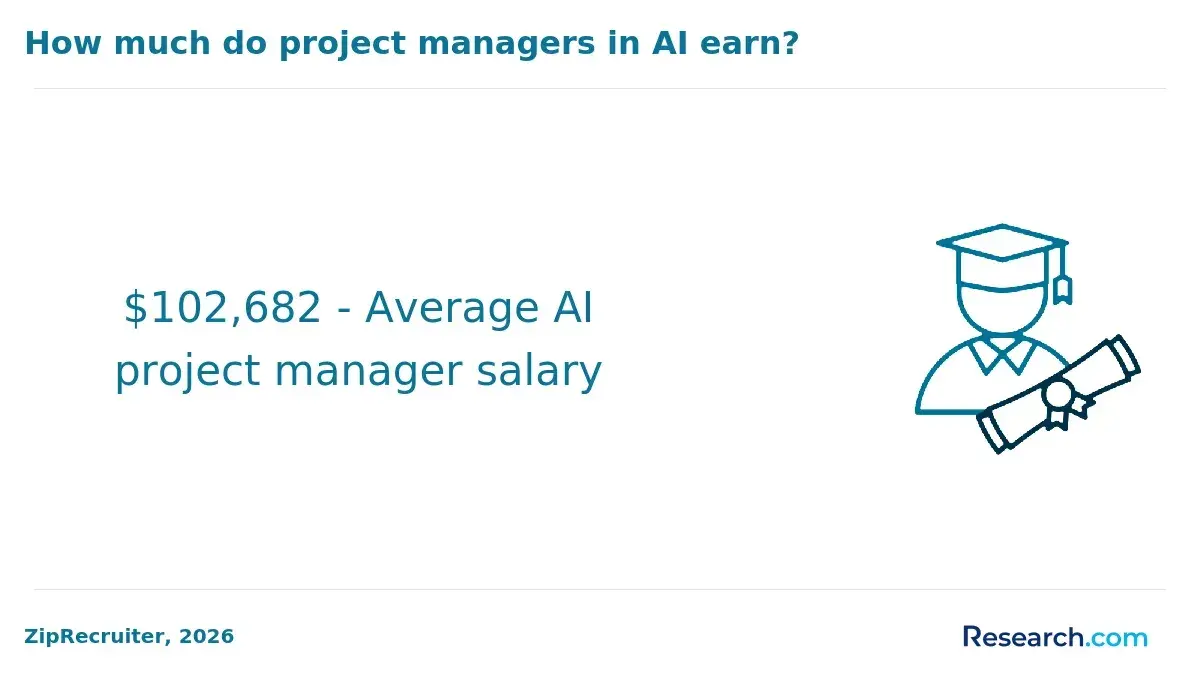
Data analysts with a master's degree in artificial intelligence often see a substantial salary increase when transitioning into AI or machine learning roles. Median wages for data scientists-one common path for AI master's graduates-typically exceed $110,000, compared to about $65,000 for traditional data analysts, according to the U.S. Bureau of Labor Statistics Occupational Employment and Wage Statistics (OEWS, 2024).
Demand for AI expertise continues to rise across industries such as healthcare, finance, and technology, creating strong labor market growth in data science and related roles. Professionals with AI skills can expect better access to senior analytic positions requiring programming, model development, and statistical knowledge.
Examples of salary improvements include:
- Moving from data analyst with an AI master's to a machine learning engineer role: around $112,000 median wage.
- Becoming an AI research scientist at tech firms: starting salaries often at $120,000 or more.
- Advanced AI consultant roles in finance: compensation packages exceeding $115,000 nationally.
Other Things You Should Know About Artificial Intelligence
Yes, an AI master's degree provides foundational knowledge in machine learning, deep learning, and data science techniques essential for AI research. While it builds strong practical and theoretical skills, transitioning fully into research may also require additional experience, such as publishing papers or pursuing a PhD. However, the master's program equips data analysts with the technical expertise to contribute to applied AI research projects in industry or academia.
Python is the most widely used programming language in AI due to its extensive libraries like TensorFlow, PyTorch, and scikit-learn. R is also valuable for statistical analysis and data visualization. Additionally, familiarity with SQL for database querying and languages such as Java or C++ can be beneficial for certain AI applications that require performance optimization or system integration.
Many AI master's programs are designed to accommodate students from various quantitative disciplines, including data analysis, statistics, and engineering. While a computer science background can help, these programs often include foundational courses in programming and algorithms to bridge gaps. Data analysts with strong analytical skills can succeed, provided they are willing to develop coding proficiency early in the curriculum.
In 2027, top AI master's specializations for data analysts include machine learning, natural language processing, computer vision, and deep learning. These areas are crucial in equipping data analysts with the skills needed to leverage AI technologies for advanced data analysis and business insights.
References
- Find Accredited Programs https://accreditation.org/find-accredited-programs/university-search
- Master's in data analytics jobs | edX | edX https://www.edx.org/resources/what-can-you-do-with-a-masters-in-data-analytics
- chea newsroom https://www.chea.org/
- Are online electives different from on-campus options? https://online.seas.upenn.edu/faqs/are-online-electives-different-from-on-campus-options/
- What Does Accredited Mean and Why Should You Care? https://www.ets.org/grad-school-journey/what-is-accredited.html
- Employers favor AI talent with master’s degrees, job posts indicate https://www.hrdive.com/news/AI-jobs-masters-degrees/720285/
- 1-Year MSc in Data Science and AI for Marketing https://www.audencia.com/en/our-programs/1-year-msc-in-data-science-and-ai-for-marketing/career
- Why I got a Master's Degree for AI / ML https://accessibleai.dev/post/why-i-got-a-data-analytics-masters/
- Career Paths After the M.S. in AI-Data Analytics | IWU https://www.indwes.edu/articles/2026/01/career-paths-after-ms-ai-data-analytics
- 6 High-Paying Jobs With a Master’s in AI | University of Bridgeport https://www.bridgeport.edu/news/high-paying-jobs-with-a-masters-in-ai/