2027 AI Associate Degrees for Students Interested in Data Visualization

Co-Founder and Chief Data Scientist
Many students with backgrounds unrelated to technology struggle to find accessible paths into data visualization roles within the artificial intelligence field. The challenge often lies in gaining relevant technical skills without committing to lengthy degree programs. Traditional education paths may not offer the flexibility or focused curriculum needed to bridge this gap efficiently.
This article explores associate degree options tailored for those aiming to enter data visualization through artificial intelligence. It highlights flexible, accredited programs designed to equip students with practical skills, helping readers identify suitable educational routes to transition smoothly into this growing industry.
Key Things You Should Know
- Associate degrees in AI with a focus on data visualization equip students with skills in machine learning, statistical analysis, and graphic representation to meet rising demand in tech and business sectors.
- By 2025, data visualization jobs integrated with AI are projected to grow 15% faster than traditional data roles, highlighting the career relevance of combined AI skills.
- Programs typically include hands-on experience with Python, TensorFlow, and visualization tools like Tableau, preparing graduates for roles that bridge data science and communication.
What is an AI associate degree focused on data visualization?
An ai associate degree focused on data visualization equips students with technical skills to transform complex data sets into clear, visual formats. These programs blend foundational AI concepts, programming, and statistics with specialized training in visual analytics, enhancing data visualization skills in ai associate programs. Students use tools such as Python, R, Tableau, and Power BI to design interactive dashboards, charts, and graphs that communicate data insights effectively.
The course curriculum often includes data mining, machine learning basics, and database management, with an emphasis on visually presenting AI-generated results. For example, students learn to convert predictive model outcomes into actionable dashboards tailored for business decision-makers or to visualize neural network performance metrics.
Hands-on projects are a key feature, where learners analyze real-world data sets using AI-driven visualization techniques to reveal trends and patterns. Graduates are prepared for roles such as data visualization analyst, AI visualization specialist, or business intelligence developer. Insights on what jobs can you get with an AI degree can help guide students toward career opportunities.
Industry forecasts by Gartner predict that by 2025, data stories will become the primary method for consuming analytics, overtaking traditional reports. This underscores the importance of crafting compelling narratives through visuals. We advise students to choose programs balancing AI fundamentals with strong visualization training and exposure to industry-standard software. Including ethics in data representation and interpretation adds critical context for future professionals pursuing AI associate degrees in data visualization.
Which colleges offer accredited AI associate degrees with data visualization tracks?
Several accredited colleges offering ai associate degrees in data visualization provide valuable tracks for students aiming for careers in data analysis and ai-driven insights. These programs, commonly found at community colleges and technical institutes nationwide, emphasize practical, industry-relevant skills. The U.S. Department of Education's College Scorecard identifies over 1,000 active institutions with institutional accreditation, a key requirement for awarding recognized associate degrees and ensuring transferability and quality.
Examples of colleges offering ai associate programs with data visualization concentration include:
- Miami Dade College (FL) - Associates in Applied Science in Artificial Intelligence with a focus on Tableau and Power BI.
- Hennepin Technical College (MN) - AI associate degree with data visualization, Python programming, and machine learning foundations.
- Lone Star College (TX) - Specialized track combining AI concepts and data visualization for business intelligence.
It is important for students to verify that an institution's accreditation comes from recognized bodies such as the Higher Learning Commission or regional accrediting agencies to ensure credits transfer and federal aid eligibility. Typical coursework covers areas like data modeling, dashboard creation, and applying AI algorithms for visual pattern recognition.
Due to the limited number of associate programs solely focused on AI and data visualization, students should also consider programs offering AI degrees with elective courses or certificates in data visualization, broadening skill sets useful across healthcare analytics, marketing, and business intelligence. Finding an affordable data science degree through accredited colleges can optimize both cost and career outcomes.
How do online AI associate programs for data visualization compare to on-campus programs?
Online AI associate degrees for data visualization programs increasingly align with on-campus counterparts in both curriculum breadth and technical rigor. Core skills like Python programming, data analytics, and visualization tools such as Tableau or Power BI are covered thoroughly in both settings. However, comparing on-campus and online AI associate programs for data visualization reveals that online options offer greater scheduling flexibility with asynchronous lectures, benefiting working students and those with family commitments.
On-campus programs generally provide more direct access to faculty and peer collaboration through in-person labs and study groups, enabling immediate feedback and hands-on experience with specialized software or hardware employers value. By contrast, top online programs incorporate live sessions, virtual labs, and discussion forums to mimic these interactions. Students should weigh their learning preferences carefully when choosing between these formats.
Cost differences are significant. Online degrees typically reduce expenses related to commuting, housing, and campus fees, which makes them financially accessible for many. According to a 2022 NCES report, 54% of undergraduates took at least one distance-education course, highlighting how hybrid and online models have become widespread options. For those evaluating financial aspects, exploring the cheapest engineering degree online can offer additional insights into affordable program pathways.
Networking and internship opportunities vary; students should confirm if online programs maintain strong industry connections or local partnerships. Ultimately, decisions hinge on balancing personal circumstances, career goals, and the evolving landscape of AI education options.
What classes and tools are covered in AI data visualization associate programs?
AI data visualization associate degree programs provide a strong foundation in programming, data analysis, and visualization tools essential for practical applications. Core classes typically include Python and JavaScript, widely used for building AI workflows and interactive dashboards. According to Stack Overflow's developer survey, 62.3% of developers use JavaScript and 51.0% use Python, which explains the emphasis on these languages in coursework.
Students gain knowledge in data structures and algorithms to handle data efficiently, alongside statistics and probability for accurate data interpretation. Training often includes ai data visualization tools and software training featuring libraries such as D3.js, Plotly, and Matplotlib to create dynamic graphics.
AI-specific classes cover machine learning concepts and neural networks, with practical experience in frameworks like TensorFlow and PyTorch that are vital for integrating AI with visualization tasks. Courses on database management and data wrangling teach SQL and NoSQL techniques for preparing datasets, while cloud platforms like AWS or Google Cloud support scalable data processing.
Hands-on projects simulate real-world scenarios such as visualizing sales trends or AI-powered decision support. These classes often include lessons on user experience principles to help graduates design clear, actionable visual presentations. Prospective students can explore affordable options for related degrees by checking programs like a data science degree online.
Many curricula also offer classes covering data visualization techniques in AI associate degrees to equip students with skills needed to overcome challenges like selecting appropriate visualization methods or managing large datasets.
What admission requirements are common for AI associate degrees in data visualization?
Admission to associate degree programs focusing on artificial intelligence and data visualization generally requires a high school diploma or equivalent, with some colleges setting minimum GPA thresholds near 2.0 to 2.5. Strong foundations in mathematics and computer science are often assessed through transcripts reflecting coursework in algebra, statistics, or introductory programming. Many programs have adopted test-optional policies for standardized exams like the SAT or ACT, allowing applicants to emphasize high school records, personal statements, and relevant experience. However, certain institutions may still require test scores for admissions or placement.
Applicants typically need to submit:
- A completed application form detailing personal and educational history
- A personal statement explaining interest in artificial intelligence and data visualization
- One or two letters of recommendation highlighting academic or technical abilities
- Proof of basic computer proficiency or introductory programming coursework
- Occasionally, portfolios featuring prior data analysis or visualization projects
Transfer students with college credits or vocational certificates in computer science may qualify for advanced standing. Placement exams in math or English might be required to ensure college readiness. Returning students should be prepared to demonstrate recent academic progress and commitment to technical skill development.
How long do AI data visualization associate degrees take and what do they cost?
AI data visualization associate degrees typically require about two years of full-time study, offering foundational training in artificial intelligence and visual data representation. Some programs provide accelerated options, reducing completion to around 18 months for students with prior credits or relevant experience.
Tuition varies widely based on institution type and residency. Public two-year colleges in the U.S. average about $4,000 per academic year for in-district students, totaling roughly $8,000 for the degree. Private colleges may charge over $15,000 annually but often include financial aid opportunities. Online programs can lower costs related to housing and transportation while maintaining similar tuition rates.
Besides tuition, students should budget for books, software licenses, and specialized materials. Part-time enrollment can stretch program length but helps spread out expenses. Many programs offer internships or cooperative education, providing paid practical experience that can offset costs.
When choosing a program, accreditation, credit transfer options, and scholarships focused on AI or STEM fields are crucial considerations. Balancing quality education with affordability ensures effective training in AI data visualization within a manageable timeframe.
What math, programming, and statistics skills are needed before starting these programs?
Students entering ai associate degree programs in data visualization need strong foundations in math, programming, and statistics. Proficiency in algebra and basic calculus is critical, as these form the basis for understanding data trends and optimization within visualization algorithms.
Programming skills, especially in Python, are highly valued. According to LinkedIn's 2024 Work Change / Skills reports, Python remains one of the fastest-growing and most in-demand skills, essential for ai and data visualization work. Students should be familiar with Python syntax, data structures, and key libraries like pandas, matplotlib, and seaborn to effectively process and visualize data. Basic knowledge of SQL for database querying also benefits students.
Statistical literacy is necessary to accurately interpret data. Key concepts include descriptive statistics such as mean, median, and variance, along with fundamental probability. Understanding distributions, hypothesis testing, and correlation helps students design valid visualizations and avoid misleading representations in dashboards or reports.
Additional helpful skills include an understanding of algorithms and data preprocessing methods, which aid in preparing datasets for visualization. Familiarity with spreadsheet tools like Excel can assist in initial data exploration. These competencies ensure students align with the expectations of ai and data visualization coursework and workplace demands.
What jobs can you get with an AI associate degree in data visualization?
An AI associate degree focused on data visualization equips graduates with the technical and communication skills needed for roles such as Data Visualization Specialist, Business Intelligence Analyst, and Junior Data Scientist. These professionals transform complex data sets into clear visual formats-charts, graphs, and interactive dashboards-that facilitate informed decisions in industries like finance, marketing, healthcare, and technology.
Data Visualization Specialists commonly use tools including Tableau, Power BI, and Python libraries such as Matplotlib and Seaborn to generate actionable insights. Business Intelligence Analysts often integrate data from multiple sources, apply basic machine learning methods, and contribute to strategic decision-making. Junior Data Scientists engage in data cleaning and predictive modeling, leveraging visualization to convey results effectively.
Job demand in this field is expanding rapidly. According to the U.S. Bureau of Labor Statistics, employment for Data Scientists is expected to grow 35% from 2022 to 2032, positively influencing related visualization careers. This growth is driven by a rising emphasis on data-driven strategies and AI technologies across sectors.
Graduates must be prepared to tackle challenges such as handling large, unstructured data sets, choosing suitable visualization techniques, and collaborating with diverse teams. Strong communication skills remain critical for translating technical findings to non-technical audiences. Ongoing learning in programming, statistics, and the latest AI visualization tools will greatly enhance career prospects.
What salaries can graduates expect in data visualization and related AI roles?
Graduates with associate degrees in AI focused on data visualization can find promising career paths as data visualization specialists, junior data scientists, and business intelligence analysts. According to the U.S. Bureau of Labor Statistics, the median annual salary for data scientists was $108,020, providing a benchmark for related professions.
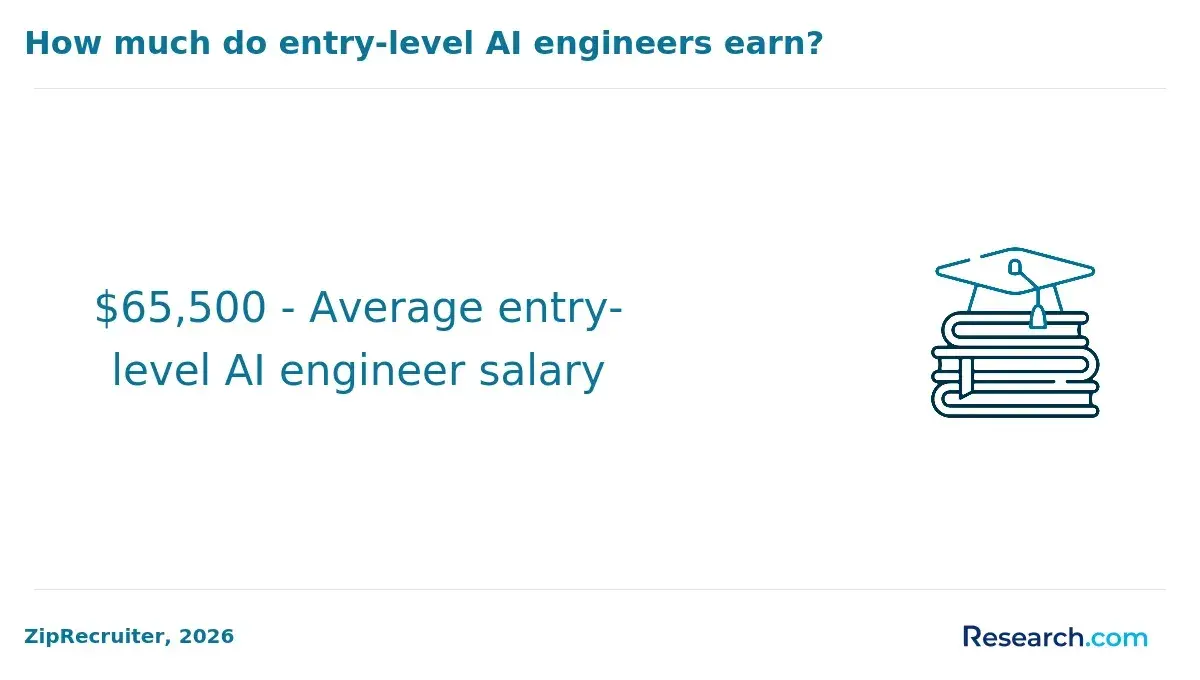
Entry-level salaries commonly range from $60,000 to $75,000, influenced by factors such as location, employer size, and industry. Mastery of popular tools like Tableau, Power BI, and Python visualization libraries combined with foundational AI knowledge often commands higher starting wages.
Employers in technology, finance, and healthcare sectors particularly value these combined skills, with mid-career salaries typically between $90,000 and $120,000. Geographic region plays a strong role, as urban tech hubs such as San Francisco, New York, and Seattle usually offer salaries above the national average.
Certification in AI and data analytics software can boost earning potential within five years of entering the workforce. Developing additional skills in machine learning or AI model interpretation may increase salaries by 10-20% compared to peers focused solely on visualization.
Practical experience through internships and a strong portfolio often leads to higher starting salaries. Networking within AI and data visualization communities also opens doors to opportunities beyond typical entry-level wages.
Which certifications complement an AI data visualization associate degree for entry-level roles?
Certifications that enhance an AI data visualization associate degree are essential for entry-level roles, blending data analytics, generative AI, and technical proficiency. Key certifications include:
- Certified Analytics Professional (CAP): Validates core skills in data analytics and interpreting AI outputs.
- Tableau Desktop Specialist: Proves expertise in Tableau, a top data visualization tool in business intelligence.
- Microsoft Certified: Power BI Data Analyst Associate: Demonstrates ability to build scalable data models and reports critical for visualizing AI insights.
- Google Data Analytics Professional Certificate: Provides practical knowledge in data cleaning, analysis, and visualization aligned with AI workflows.
- Fast.ai Practical Deep Learning for Coders (Certificate of Completion): Focuses on implementing generative AI models, a rapidly expanding skill set noted in Coursera's 2024 Global Skills Report.
Demand for generative AI skills is rising sharply, making certifications combining GenAI capabilities with visualization tools more valuable. Programming language certifications-especially in Python, R, and SQL-are recommended to complement visualization skills. Proficiency in these areas enhances data extraction and preparation for accurate AI-driven visuals.
IBM's AI Engineering Professional Certificate stands out as it integrates AI fundamentals with data handling expertise. Together with an associate degree, these credentials match employer expectations for jobs like AI data analyst, visualization specialist, or junior machine learning engineer.
Other Things You Should Know About Artificial Intelligence
Artificial intelligence is widely regarded as a strong career choice due to its rapid growth and broad applicability across industries. Demand for AI skills continues to rise, with roles expanding in data analysis, automation, and machine learning. Professionals equipped with AI expertise, especially those proficient in data visualization, are well positioned for future job security and advancement.
Successful careers in artificial intelligence often require skills in programming languages like Python, understanding of machine learning algorithms, and proficiency in data manipulation and visualization tools. Critical thinking and problem-solving abilities are essential to interpret data and develop AI models effectively. Familiarity with statistics and linear algebra also enhances one's capability to work in this field.
Yes, artificial intelligence degrees can lead to opportunities beyond traditional tech companies. AI applications are expanding in healthcare, finance, marketing, and manufacturing, where data-driven decision-making and automation are valuable. Graduates with a focus on data visualization can work in diverse sectors to interpret complex datasets and influence strategic planning.
A 2027 AI associate degree can enhance a student's data visualization skills by covering key concepts in machine learning, statistical analysis, and data interpretation. Graduates will gain proficiency in tools like Tableau and Power BI, crucial for creating insightful visualizations that meet the demands of the evolving job market.
References
- How Long Do Data Visualization Courses Take? https://www.nobledesktop.com/learn/data-visualization/how-long-do-data-visualization-courses-take
- Top 5 Data Visualization Jobs & Salaries | Data Story Academy https://www.datastoryacademy.com/blog/data-visualization-jobs-salary
- Online AI Degrees vs On-Campus: Which Is Right for You in 2026? https://aidegreeonline.com/online-ai-degrees-vs-on-campus-which-is-right-for-you-in-2026/
- AI Data Visualization Tools: Complete 2025 Guide & Top 10 https://sranalytics.io/blog/ai-data-visualization-tools/
- Data Analytics and Data Visualization Using AI https://neotiaskill.com/data-analytics-and-data-visualization-using-ai
- what are the basic math skills for computer programming | Ask MetaFilter https://ask.metafilter.com/41356/what-are-the-basic-math-skills-for-computer-programming
- Choosing a master’s degree: data science or artificial intelligence | edX https://www.edx.org/resources/choosing-a-masters-degree-data-science-or-artificial-intelligence
- The future of AI work: profiles, skills and salaries - Fundación Telefónica España https://en.fundaciontelefonica.com/news/the-future-of-ai-work-profiles-skills-and-salaries/
- Online vs On-Campus Artificial Intelligence Degrees: Which Is Better? https://hakia.com/degrees/artificial-intelligence/online-vs-campus/
- Kolegium Kształcenia Podyplomowego https://podyplomowe.vizja.pl/specialization/ai-and-data-science/