2027 AI Associate Degrees With Capstone Projects

Co-Founder and Chief Data Scientist
Transitioning into the AI field can be daunting for professionals with unrelated undergraduate backgrounds. Many face challenges identifying programs that combine practical experience with theoretical knowledge. This gap often limits career advancement or entry altogether. Associate degrees featuring capstone projects emerge as a promising solution, offering hands-on applications essential for understanding complex AI concepts. These programs provide flexibility and accreditation tailored for career pivoters seeking to build competitive skills.
This article examines 2026 AI associate degrees with capstone projects to guide readers toward effective educational choices that enhance employability in the evolving AI industry.
Key Things You Should Know
- Associate degrees in artificial intelligence emphasize practical skills and typically include capstone projects that require applying theoretical knowledge to real-world problems, enhancing job readiness.
- In 2026, over 60% of U.S. community colleges offering AI associate programs have integrated capstone requirements, reflecting growing industry demand for hands-on experience.
- These programs often cover machine learning, data analytics, and ethical AI, preparing graduates for entry-level roles in tech, business, and healthcare sectors.
What is an AI associate degree with a capstone project, and how does it differ from a bachelor's degree?
An AI associate degree with a capstone project is a focused two-year program that combines foundational concepts with practical skills in artificial intelligence. The capstone project requires students to design, develop, or implement AI-centered solutions, such as building machine learning models or creating natural language processing tools. This hands-on experience highlights applied knowledge and problem-solving abilities in real-world contexts. Compared to a bachelor's degree, which usually spans four years, the associate degree is more concise and career-focused.
The main difference between an AI associate degree and bachelor's degree lies in depth and scope. Associate programs emphasize practical training with programming languages like Python and tools such as TensorFlow, preparing students for roles like AI technicians or data analysts. Bachelor's degrees cover advanced AI algorithms, mathematics, research methodologies, and elective specializations, often culminating in more comprehensive capstone projects involving original research.
Choosing an AI associate degree with capstone project benefits students seeking quicker workforce entry or a cost-effective path before pursuing a four-year degree. The U.S. Bureau of Labor Statistics projects 15% job growth for computer and information technology fields from 2023 to 2033, highlighting rising demand for practical AI skills associate graduates offer.
Prospective students should balance career goals, finances, and time commitment when comparing degree options. To explore career possibilities and further education paths, visit AI degrees.
Which schools offer accredited AI associate degrees with capstone requirements, and how do I verify their credentials?
Several U.S. community colleges, including Northern Virginia Community College and Austin Community College, offer accredited associate degrees in artificial intelligence that require capstone projects. These projects combine skills in machine learning, data analytics, and programming to demonstrate students' readiness for AI-focused roles. Choosing a program with a mandatory capstone guarantees hands-on experience.
To verify accreditation for AI associate degree programs, it is important to confirm that institutions hold recognized accreditation from bodies like the Accrediting Commission of Career Schools and Colleges (ACCSC) or the Higher Learning Commission (HLC). ACCSC reports that about 680 institutions maintain active accreditation for technology and IT-related programs. Checking official ACCSC or HLC school directories helps ensure legitimacy.
Prospective students should review program details to confirm the presence of a capstone component and contact admissions offices to request syllabi or sample projects. Programs with industry partnerships are advantageous as they often involve real clients or datasets in capstones, expanding career opportunities. Researching graduates' job placement rates or internships connected to capstone work further supports program quality.
Students must avoid unaccredited schools since credits may not transfer or be recognized by employers. In the competitive AI job market, authentic credentials matter. For those exploring related fields, consider reviewing options such as the mechanical engineering online program to find affordable, accredited pathways.
What are the typical admission requirements and prerequisites for enrolling in an AI associate degree program?
Typical admission requirements for AI associate degree programs usually include a high school diploma or equivalent. Many institutions place significant emphasis on high school GPA, often setting minimum standards between 2.0 and 3.0 on a 4.0 scale, while more competitive programs may require higher academic achievement. Applicants typically need to submit official transcripts showing completion of core subjects like mathematics, science, and English, with foundational coursework in algebra, geometry, and basic computer science helping to improve admission prospects and readiness for program challenges.
Prerequisites for enrolling in an AI associate degree program in the US often involve familiarity with programming basics or logic. This can be demonstrated through high school classes, prior college courses, or required introductory computer science classes. Basic coding skills in languages such as Python or JavaScript are commonly expected, as these programs emphasize algorithmic thinking and problem-solving ability.
Some programs also request personal statements or essays outlining applicants' interest in artificial intelligence and related technologies, as well as letters of recommendation, to gauge motivation and suitability. Working professionals or non-traditional students might qualify for conditional admission by completing preparatory courses or proving proficiency through standardized tests. Candidates with STEM experience or coursework in data analysis and computer applications may bypass foundational classes.
For those exploring related fields, flexible options like a game design online program could provide complementary skills and interdisciplinary opportunities.
How long does an AI associate degree with a capstone project typically take to complete?
An AI associate degree duration with capstone project generally spans two to three years for full-time students. According to the National Center for Education Statistics (NCES), the average time to complete associate degrees is about 3.5 years, reflecting part-time students and other factors. Most full-time students finish within the 2-3 year range, which aligns well with AI programs that include a capstone project.
Capstone projects often take a semester to complete and involve applying technical skills in practical environments. These projects are frequently scheduled during the final term, sometimes extending program length slightly but offering crucial hands-on experience. Community colleges and technical schools usually arrange coursework over 5-6 semesters, with capstones running alongside advanced AI courses. The time to complete an AI associate degree program with capstone can vary based on enrollment status, course load, and program format.
Part-time students or those balancing jobs may take longer than three years, while online and accelerated programs can offer completion in under two years, though they often require significant weekly effort. It is important for students to confirm how their institution schedules capstone projects and if prior credits can shorten the timeline. Proper planning is needed since the capstone includes research, development, and presentation stages demanding substantial work.
Prospective students should consider these durations in light of their career goals and life circumstances. Those interested in advancing beyond an associate degree may explore options like an online master data science program to continue their education effectively.
What is the average cost of an AI associate degree, and what financial aid options are available?
The average cost for an AI associate degree at public two-year colleges in the United States is about $7,720 in total, based on an annual tuition and fee average of $3,860 reported by the College Board. Public four-year institutions charge significantly more, around $20,460 for a similar period, but most associate degrees are pursued at two-year colleges. Private colleges may exceed these figures, often charging over $15,000 per year.
Financial aid plays a crucial role in offsetting these costs. Federal Pell Grants, offering up to $7,395 annually for eligible students, are a major funding source. Federal student loans provide additional support but require repayment with interest. State grants, institutional scholarships, and work-study programs also help reduce expenses, though their availability varies. Students should complete the Free Application for Federal Student Aid (FAFSA) to access these options and many community colleges offer tuition payment plans. Employers in tech or data roles sometimes provide tuition assistance for AI degrees.
Because AI associate degrees typically have fewer dedicated scholarships compared to four-year programs, federal and state aid is essential. Exploring all aid sources early supports effective budgeting and accessible AI education pathways with valuable capstone experience.
What coursework and technical skills are covered in AI associate degree capstone projects?
AI associate degree capstone projects involve hands-on experience with programming languages such as Python and R, focusing on data structures, algorithms, and key machine learning libraries like TensorFlow or PyTorch. These projects challenge students to apply machine learning models to solve practical problems in areas like image recognition, natural language processing, or predictive analytics.
Students gain essential skills in data preprocessing, including cleaning, normalization, and feature extraction. Statistical analysis and probability concepts are emphasized to support evaluation techniques like cross-validation, precision, recall, and F1 scoring. Deployment knowledge through APIs or cloud platforms equips learners to operationalize AI solutions effectively.
Team collaboration and project management methods such as Agile are commonly integrated, aligning with industry standards. Ethical aspects involving AI bias, privacy, and data security are also critical components, encouraging students to consider the societal implications of their work.
Capstone projects often include work with databases like SQL and NoSQL, alongside data visualization tools, enhancing interpretation capabilities. The World Economic Forum's 2024 Future of Jobs Report highlights a 74% annual growth in AI and machine learning demand across sectors. Examples of student outputs include recommender systems, chatbots, and automated decision-making tools, providing a robust portfolio of applied projects.
Are AI associate degree programs available online, on campus, or in hybrid formats?
AI associate degree programs offer flexible formats including online, on-campus, and hybrid options to meet varied student needs. According to the National Center for Education Statistics (NCES), 62% of two-year colleges provided fully online degree programs by 2024, up from 48% in 2020. This increase enables many students, especially working professionals or those with scheduling or geographic constraints, to pursue AI education remotely.
Fully online AI programs commonly feature recorded lectures, virtual labs, and interactive assignments. Many community colleges collaborate with technology platforms to simulate AI coding environments, enhancing remote learning. Hybrid formats blend online theory with in-person sessions for lab work or capstone projects, appealing to students wanting hands-on experiences without full-time campus attendance.
Traditional on-campus AI programs remain valuable by offering direct faculty interaction and access to specialized AI hardware or software, which may be limited in online settings. Campuses also host AI-focused workshops and networking events, essential for career growth within the field.
Students should assess which format aligns with their learning style, work commitments, and technology access. Fully online programs maximize flexibility but require self-motivation and reliable internet. Hybrids balance flexibility and in-person interaction, though some travel is necessary. Campus programs provide immersive learning but might be less adaptable for those with tight schedules.
What career roles and job titles can graduates pursue with an AI associate degree?
Graduates with an AI associate degree can enter diverse roles across industries such as healthcare, finance, and manufacturing. Common positions include data analyst, machine learning technician, AI support specialist, and business intelligence analyst. These roles focus on data interpretation, pattern recognition, and maintaining AI systems. For instance, data analysts use statistical tools to analyze complex datasets and guide business decisions. The U.S. Bureau of Labor Statistics forecasts a 23% growth in data analyst jobs from 2023 to 2033, adding about 55,500 new jobs annually, reflecting strong demand.
Other career options include AI quality assurance tester roles, where graduates validate AI software performance, and AI application support positions that emphasize troubleshooting and user assistance. Some may specialize in natural language processing or robotics support, requiring knowledge of AI algorithms applied to automation and human-computer interaction.
Employers highly value hands-on experience, making capstone projects a key feature of associate programs. These projects showcase skills like developing AI models, data preprocessing, and deploying AI applications. Proficiency in Python, SQL, and machine learning frameworks is typically essential for entry-level roles. Continuous learning remains crucial as technology evolves, so aligning education with targeted industry sectors can maximize career opportunities.
What is the job outlook and salary potential for AI associate degree graduates in 2027?
The job outlook for graduates with an associate degree in artificial intelligence remains robust, driven by sustained demand across industries. Roles such as AI technician, machine learning assistant, data analyst, and automation specialist are growing. The U.S. Bureau of Labor Statistics projects computer and information technology jobs to increase by 13% from 2022 to 2032, a growth rate well above the average for all occupations. This trend benefits those with AI-related credentials at the associate degree level.
Salary prospects for AI associate degree holders exceed those of general IT professionals. According to PayScale's 2024 Salary Survey, individuals with AI and machine learning skills earn an average of $102,000 annually, a 28% premium over the $79,500 average in general IT roles. These salaries often reflect associate degree holders who complement their education with practical experience or certifications.
Capstone projects in AI programs provide hands-on experience in real-world applications like natural language processing and predictive analytics. Employers highly value candidates who can effectively apply AI tools in business settings. Additional certifications and internships further enhance job readiness and earning potential.
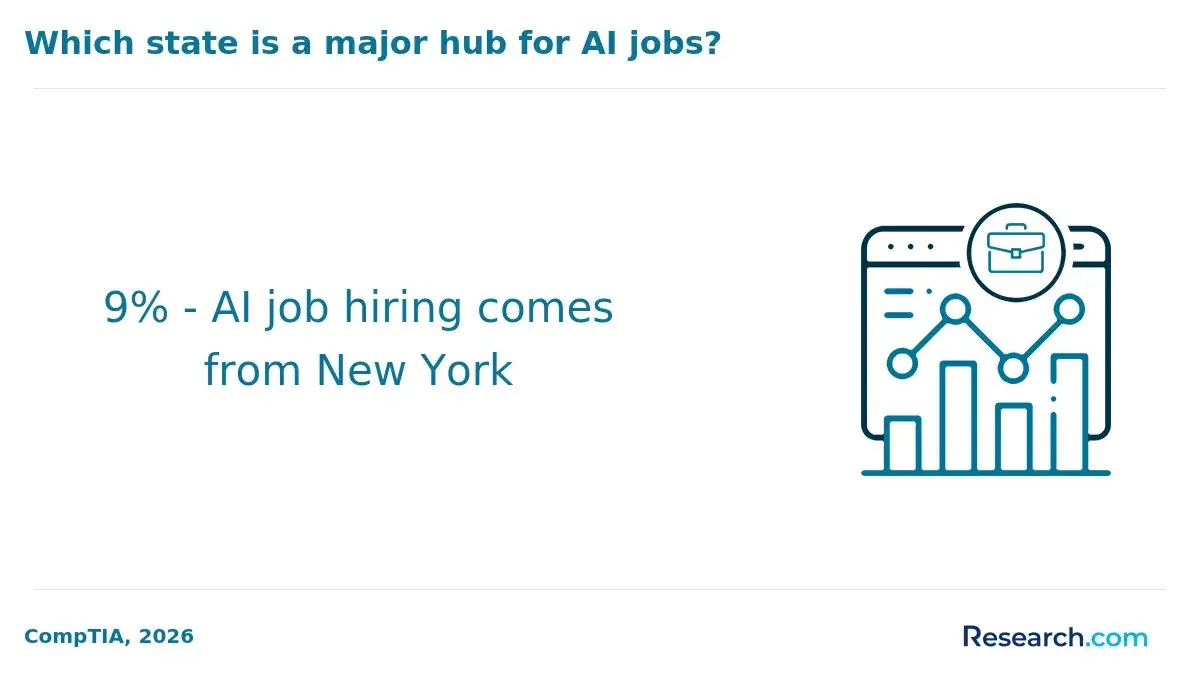
Strong skills in programming languages such as Python and TensorFlow, along with data visualization, are critical. Geographic location also influences salary, with tech hubs like San Francisco and New York offering higher pay. Strategic choices in skill specialization and location can significantly impact the career trajectory of AI associate degree graduates in the evolving job market.
What professional certifications or industry credentials complement an AI associate degree?
Professional certifications and industry credentials greatly enhance the value of an AI associate degree by providing practical validation of skills. Credentials such as the Certified Artificial Intelligence Practitioner (CAIP) and Microsoft Certified: Azure AI Fundamentals are highly regarded for demonstrating competence in AI platforms and tools. Cloud-focused certifications like the Google Cloud Professional Data Engineer and AWS Certified Machine Learning - Specialty emphasize expertise in deploying AI solutions in cloud environments.
Broader IT certifications add foundational credibility as well. For instance, the CompTIA A+ and Network+ certifications cover essential IT knowledge that supports AI system integration in enterprises. Security is also critical; certifications such as Certified Information Systems Security Professional (CISSP) and CompTIA Security+ address vital concerns about AI system trustworthiness and data protection.
Earnings data from the Computing Technology Industry Association (CompTIA) highlights that professionals holding multiple certifications earn on average 33% more than those with a single credential. This demonstrates the financial benefit of combining AI-specific certifications with complementary IT qualifications.
Project management credentials like the Certified Associate in Project Management (CAPM) can improve leadership opportunities within AI teams. Blending technical AI certifications with supportive IT and management credentials prepares graduates for diverse roles, including AI technicians, junior data scientists, and AI project coordinators.
Choosing certifications that align with evolving industry demands and personal goals ensures AI associate degree holders can stand out and adapt in a competitive job market and constantly changing technology landscape.
Other Things You Should Know About Artificial Intelligence
Capstone projects in AI associate degree programs typically involve developing a functional AI application or system, such as chatbots, image recognition tools, or data analysis models. Students often work in teams to solve real-world problems using machine learning algorithms, natural language processing, or robotics. These projects demonstrate practical skills and integrate knowledge across programming, data science, and AI theory.
AI associate degree programs often include coursework and projects designed to build foundational technical skills sought by employers, such as coding, data analysis, and AI tool usage. Many programs also encourage or require internships or cooperative education components, providing hands-on experience in real workplace settings. This practical exposure helps students develop professional competencies and build industry connections.
In some AI associate degree programs, capstone projects are reviewed or judged by faculty members along with industry experts to provide authentic assessment and feedback. This collaboration ensures that projects meet current industry standards and expectations. Such evaluations enhance the relevance and rigor of the capstone experience, preparing students for workforce demands.
AI associate degree capstone projects in 2027 commonly integrate real-world applications by partnering with local businesses or industries, allowing students to tackle genuine problems. This practical approach equips students with hands-on experience, crucial for pursuing graduate studies, such as an online master’s in AI in healthcare.
References
- Best Online AI, Machine Learning, and Computer Science Summer Programs and Research Internships for High School Students in 2026 https://www.eduretix.com/post/best-online-ai-machine-learning-and-computer-science-summer-programs-and-research-internships-for
- How Long Does It Take to Become Job-Ready in Artificial Intelligence? https://www.h2kinfosys.com/blog/how-long-does-it-take-to-become-job-ready-in-artificial-intelligence/
- What level of education is required for artificial intelligence? https://www.outrightcrm.com/blog/what-level-of-education-is-required-for-artificial-intelligence/
- AI’s Impact on Job Growth | J.P. Morgan Global Research https://www.jpmorgan.com/insights/global-research/artificial-intelligence/ai-impact-job-growth
- The Prerequisites for Artificial Intelligence- IABAC - IABAC https://iabac.org/blog/what-are-the-prerequisites-for-artificial-intelligence-a-modern-approach
- AI in Business Capstone - Golisano Institute for Business https://golisanoinstitute.org/for-students/advanced-certificate-in-ai-business/ai-in-business-capstone/
- 11 Best AI Certifications in 2025 to Deepen Your Technical Knowledge | DigitalOcean https://www.digitalocean.com/resources/articles/ai-certifications
- Best AI Courses & Certificates Online 2025 https://everworker.ai/blog/best-ai-courses-certificates-online-2025
- AI rises across industries and in community colleges https://www.ccdaily.com/2022/08/ai-rises-across-industries-and-in-community-colleges/
- Artificial Intelligence Course Syllabus: Topics and Modules https://futurense.com/blog/artificial-intelligence-course-syllabus