2027 States With the Most Affordable AI Degree Programs

Co-Founder and Chief Data Scientist
Professionals seeking to transition into the artificial intelligence field often face high education costs and limited flexible options. Many hesitate due to concerns about affordability and program accessibility. Identifying states that offer the most cost-effective AI degree programs can ease financial burdens and enhance decision-making. This article examines U. S. states that provide affordable, accredited graduate programs in artificial intelligence. It aims to guide prospective students and working professionals toward economical pathways that align with their academic and career goals.
Key Things You Should Know
- States like Texas, Florida, and Arizona offer the most affordable AI degree programs, with average annual tuition below $12,000 for in-state students as of 2025.
- Public universities dominate affordability rankings by providing lower tuition combined with strong AI research initiatives and expanding online degree options.
- Financial aid availability and living cost variations significantly impact overall affordability, making regional economic factors crucial for prospective AI students to consider.
Which states offer the most affordable accredited artificial intelligence degree programs?
States like Texas, Florida, and Georgia rank among the top states for affordable artificial intelligence degrees, offering accredited and budget-friendly online master's programs. These programs typically charge less than $20,000 in total tuition, making graduate-level AI education increasingly accessible. Notably, all 30 of the cheapest online master's in artificial intelligence programs in the U.S. cost under $20,000, reflecting strong affordability in this sector.
In Texas, universities such as the University of Texas at Arlington and Texas A&M provide competitive tuition rates between $12,000 and $18,000 for their AI master's degrees. Similarly, Florida's institutions like Florida International University and the University of Central Florida emphasize online flexibility tailored to working professionals. Georgia Tech's online master's in artificial intelligence is priced at about $17,000 and is known for its rigorous curriculum and industry connections.
Cost efficiency often aligns with public state institutions that offer in-state tuition advantages and minimal fees for online learners. When evaluating programs, students should consider program length, curriculum comprehensiveness, and accreditation status to ensure educational quality and career readiness.
Prospective students seeking states with the most affordable accredited artificial intelligence degree programs should explore tuition guarantees, scholarships, and total program costs. This approach balances affordability with career opportunities in this rapidly evolving field. More information about career paths after earning an artificial intelligence degree can further assist in making informed decisions.
How do in-state and out-of-state tuition costs for AI degrees compare across states?
In-state tuition for AI degree programs can be significantly lower than out-of-state costs, but the difference varies widely depending on the state. States with large public university systems such as Texas and Florida often charge in-state students around $15,000 to $20,000 annually, while out-of-state students may pay $30,000 or more. In contrast, states like Utah and Colorado show a more modest gap of a few thousand dollars, highlighting a state-by-state comparison of tuition costs for AI degrees.
The average total tuition across 14 online master's programs in artificial intelligence is $44,107, with a range from $13,428 to $98,970. This wide variation underscores how choosing an AI program in your home state can lead to substantial savings, though careful research is necessary. Online AI programs add complexity: some offer in-state rates to remote learners based on residency, while others charge a flat rate regardless of location. Prospective students should verify residency policies, as in-state tuition savings can exceed tens of thousands of dollars during the program.
For out-of-state and international students, scholarships and assistantships can help offset higher costs. Some states have reciprocity agreements allowing reduced tuition at neighboring public universities, further influencing the cost calculus. Budgeting should factor in tuition, fees, living expenses, and strict residency requirements, which often include time spent living in the state and intent to remain.
Those interested in an affordable option may find detailed options at AI degree programs that provide a thorough guide to navigating in-state vs out-of-state tuition for AI degree programs by state.
What factors should students use to compare affordability of AI programs in different states?
Students assessing states with the most affordable AI degree programs should focus on total tuition cost, which covers all required credits and fees. Georgia Tech's online computer science master's with an AI specialization, for example, has an estimated total tuition of $8,950, much lower than many private institutions. This highlights how public state schools often offer more budget-friendly options.
Regional tuition rates for artificial intelligence programs vary significantly due to residency status. Public universities usually charge less for in-state residents than for out-of-state students. It's important to check if online or part-time programs allow in-state tuition rates, which can substantially lower expenses. Some states also provide reciprocity agreements that offer tuition discounts to students from neighboring states.
Financial aid opportunities like scholarships, assistantships, or employer tuition reimbursement also impact affordability. These funding options differ widely by state and institution. Prospective students should explore state-funded grants that target STEM or AI studies for added support.
Indirect costs such as fees, books, and technology can increase overall price differences between programs. Programs requiring specialized software or hardware may have higher costs. Additionally, program length influences total expenses, as finishing faster can reduce living and opportunity costs.
The mode of delivery influences affordability through factors like commuting, housing, and food expenses. Online programs with competitive tuition, like Georgia Tech's, offer cost savings and flexibility. Considering these combined factors helps students make a well-informed cost comparison of AI degree programs. For related insights, see game design degree online.
How can prospective students verify accreditation for campus and online AI degree programs?
Prospective students aiming to verify accreditation for online AI degree programs in the United States should consult recognized accrediting bodies approved by the U.S. Department of Education or the Council for Higher Education Accreditation (CHEA). Accreditation confirms the program meets quality standards essential for AI education. Common agencies include the Accrediting Commission for Schools, Western Association of Schools and Colleges (WASC) for California institutions, and the Higher Learning Commission (HLC) for Midwestern schools.
It is important to verify whether the specific AI degree, not only the institution, holds accreditation. Many universities offer AI specializations within computer science or engineering departments, so confirming the relevant department's accreditation is critical. Contacting admissions offices to request official accreditation documentation or clarification about online AI programs helps ensure legitimacy and quality.
Affordable states with accredited campus artificial intelligence degrees often provide strong value, especially given the tuition disparity-DataUSA reports median annual costs of $10,037 at public universities versus $55,651 at private ones. Accreditation impacts eligibility for federal financial aid and employer recognition, making verification a necessary step before investing.
Additionally, prospective students should cross-reference claims with official databases to avoid scams or misrepresentations common among emerging online AI programs. For those interested in advanced education, exploring a doctorate in data analytics online offers a credible pathway to deepen expertise and career prospects.
What are the main differences between online and campus-based AI degree programs?
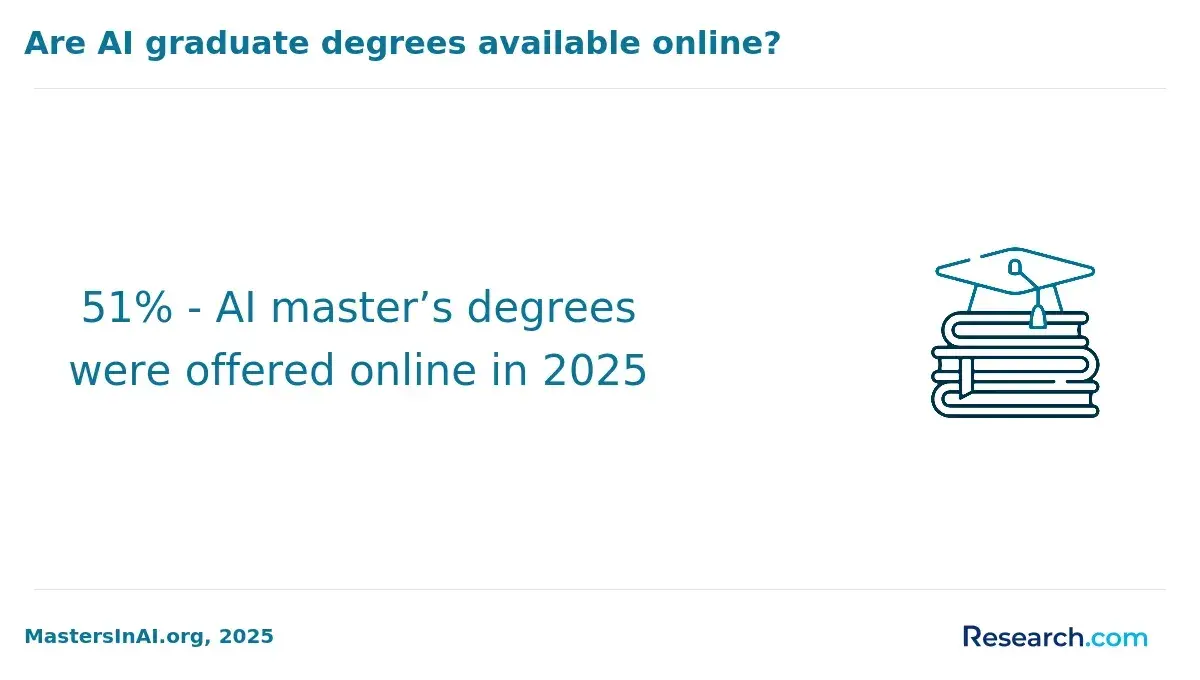
Online and campus-based artificial intelligence degree programs offer distinct learning experiences through their delivery methods and resources. Online programs provide greater flexibility, ideal for working professionals or those distant from campuses, enabling easier management of work and personal commitments. In contrast, campus programs facilitate face-to-face interaction with faculty and peers, fostering immersive collaboration, hands-on lab work, and valuable networking opportunities.
Both formats generally cover core topics such as machine learning, data science, and robotics, though campus programs often grant enhanced access to physical resources like advanced computing labs and research centers. Online students typically use virtual labs and simulation tools, which are steadily improving but may lack the tactile aspects of in-person learning.
Student interaction also differs significantly: campus learners benefit from spontaneous discussions and group projects, enhancing teamwork and communication skills critical in artificial intelligence careers. Online students engage through scheduled video sessions and forums, which promote self-discipline and strong written communication but might limit immediate feedback.
Program costs can vary, with some online offerings priced lower or featuring pay-as-you-go options, though students should carefully confirm accreditation and employer recognition regardless of format.
The value of an artificial intelligence degree is reflected in employment outcomes. For instance, 91% of graduates from a leading U.S. AI bachelor's program in the Class of 2025 secured jobs or advanced degrees within six months, reporting an average salary of $160,688.
What degree pathways exist for studying artificial intelligence at U.S. colleges?
Degree pathways in artificial intelligence across U.S. colleges cater to students from diverse academic backgrounds and career ambitions. Most commonly, students pursue a bachelor's degree in computer science or software engineering with an AI specialization. These programs cover essential topics like machine learning, neural networks, data mining, and natural language processing, while building strong programming and algorithmic foundations.
Some universities now offer degrees specifically titled artificial intelligence or artificial intelligence engineering, focusing on practical AI applications and ethics. Graduate options include master's and Ph.D. programs, often designed with working professionals in mind through part-time or online formats. Doctoral studies emphasize research and innovation, preparing graduates for academic and advanced development roles.
Interdisciplinary programs combining AI with robotics, cognitive science, or business analytics respond to industry demands for versatile professionals capable of integrating AI solutions. Additionally, micro-credentials and certification programs target niche skills such as deep learning or AI ethics, ideal for those seeking focused upskilling without long-term commitment.
Texas stands out as a strong AI labor market, with graduates earning a median salary of $115,110 and job growth projected at +22% through 2032, according to labor market research. This highlights the value of tailored AI education pathways aligned with evolving industry needs.
What core courses and skills are typically included in an AI bachelor's curriculum?
AI bachelor's programs focus on core subjects like programming languages (Python, Java), mathematics (linear algebra, calculus, statistics), and machine learning fundamentals. Students learn deep learning techniques to create systems that improve over time. Beyond these basics, courses often include natural language processing, computer vision, robotics, and software engineering to build scalable AI applications. Ethics and AI policy classes are also increasingly offered to foster responsible AI development.
Hands-on projects and internships provide essential experience in applying theory to practical tasks such as neural network design and AI-driven data mining. Many programs allow electives in areas like reinforcement learning, cognitive computing, and sector-specific AI applications in healthcare or finance, letting students tailor their education.
Cost is a significant factor when choosing a program. For example, Texas residents pay an average of $17,983 per year at public universities for AI degrees, compared to $39,563 per year at private institutions. Community colleges offer associate degrees for about $4,496 per year, which can lead to four-year savings of $107,900 by starting in a more affordable setting and transferring later.
For detailed comparisons of AI education costs and pathways, consult credible sources focused on research.com and educational data.
What are the typical admission requirements and program lengths for AI degrees?
Admission to AI degree programs generally requires a high school diploma or GED for undergraduate entry. Many schools expect foundational knowledge in mathematics, including algebra and calculus, while some programs also look for prior computer science or programming experience. For graduate studies, applicants usually need a bachelor's degree in computer science, engineering, mathematics, or a related field. Additional graduate application materials often include GRE scores, letters of recommendation, and a statement of purpose showcasing technical skills and genuine interest in AI.
Program lengths depend on the level of study:
- Associate degrees or technical certificates take about two years and focus on practical AI or data science skills.
- Bachelor's degrees usually require four years of full-time study, often covering AI topics within computer science.
- Master's programs last one to two years, emphasizing advanced AI, machine learning, and research methods.
Sub-bachelor credentials remain a practical choice. For example, Texas students following community college and transfer paths into AI roles can expect starting salaries averaging $63,311 in entry-level technical positions. This illustrates how shorter programs can lead to meaningful employment and wages. Prospective students should consider whether their aim is quick workforce entry or in-depth research, as this impacts the admission requirements and program durations.
What entry-level and advanced careers are available to graduates of AI programs?
Graduates of artificial intelligence programs can enter diverse roles, from entry-level to specialized careers across industries. Common starting positions include AI software developers, data analysts, machine learning engineers, and research assistants. These roles involve algorithm development, data analysis, and supporting AI model training. For instance, machine learning engineers enhance recommendation systems using supervised learning, while data analysts interpret trends to improve AI accuracy.
Advanced careers require deeper expertise and leadership. AI research scientists drive innovation in natural language processing and computer vision, while AI product managers implement AI into consumer products or enterprise systems. Roles focusing on AI ethics, safety, and regulatory compliance have become critical as ethical concerns and policies grow.
Accelerated online master's programs can cost $10,000-$20,000 in total tuition, significantly less than $70,000-$80,000 at private institutions. This price difference makes graduate training more accessible, which is crucial for mastering specialized knowledge in advanced roles.
Prospective students should seek programs with strong industry ties and curricula emphasizing hands-on projects. Building a portfolio in robotics, neural networks, or AI-driven analytics can boost employability for competitive roles.
- Entry-level roles: AI software developers, data analysts, machine learning engineers, research assistants
- Advanced roles: AI research scientists, AI ethics specialists, AI product managers
- Critical skills: algorithm development, data interpretation, leadership in AI integration
What is the salary outlook and long-term job demand for artificial intelligence professionals?
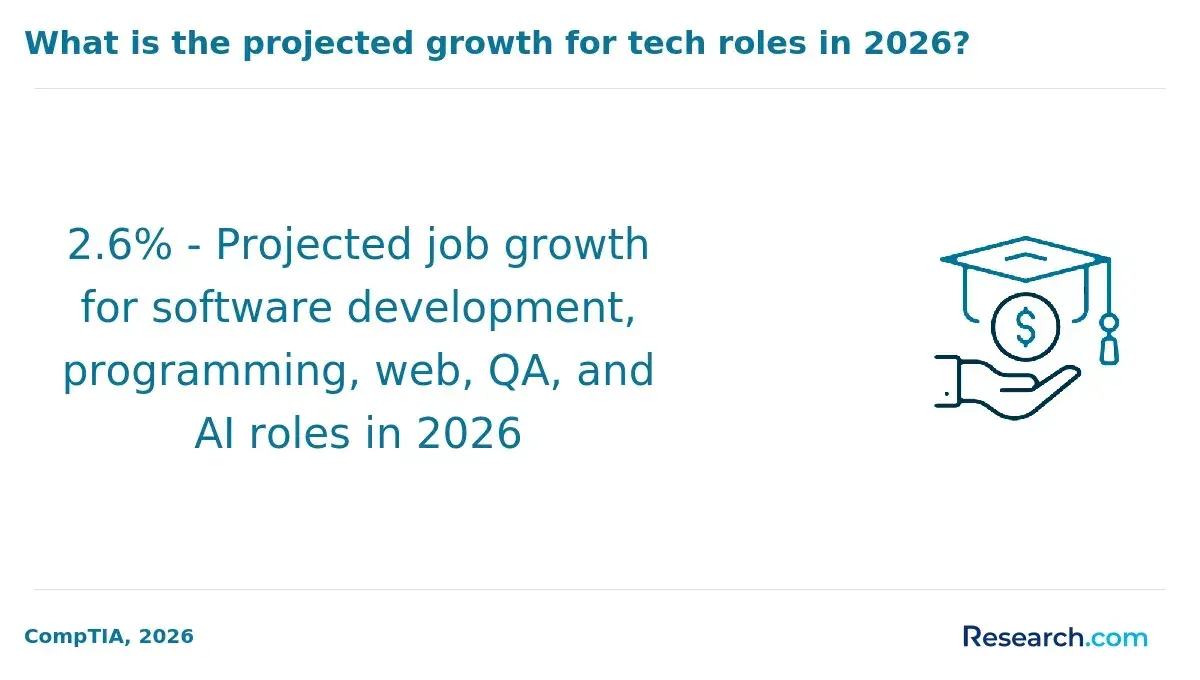
The salary outlook for artificial intelligence professionals is highly favorable, with median annual wages exceeding $120,000 in many U.S. metropolitan areas, according to data from the Bureau of Labor Statistics. Demand for AI skills is expected to grow by over 30% through 2031, driven by sectors such as healthcare, finance, and technology. This growth rate outpaces the average for all jobs, highlighting strong long-term career prospects.
Entry-level AI roles-including machine learning engineers, data scientists, and AI research scientists-typically start with salaries ranging from $90,000 to $110,000, while experienced specialists can earn upwards of $150,000. Employers prioritize expertise in areas like deep learning, natural language processing, and computer vision, making continuous skill development essential.
Tuition for U.S. online AI programs varies significantly, from about $10,000 to $95,000 before financial aid, based on Current Data Review. For example, the University of Texas at Austin offers an online master's degree in artificial intelligence at roughly $10,000 total tuition for residents, making it one of the most affordable paths nationally.
When exploring educational options, prospective students should also consider job market conditions and specializations. States with vibrant tech industries usually offer more opportunities and higher pay but may come with higher living costs. Emerging fields like AI ethics or robotics provide unique career avenues with potential for above-average compensation.
Other Things You Should Know About Artificial Intelligence
In 2027, states like California, Texas, and Massachusetts have developed partnerships with tech companies to both enhance affordability and provide real-world AI application opportunities. These collaborations often include internships, scholarship opportunities, and project-based learning, making AI programs more accessible and industry-relevant.
Yes, many artificial intelligence degree programs include practical components such as labs, projects, internships, or capstone experiences. These opportunities allow students to work with real-world data, develop machine learning models, and gain exposure to AI software tools. Hands-on experience is crucial for building skills applicable to industry roles and research.
Artificial intelligence programs often update their curricula regularly to incorporate the latest research, tools, and industry trends. Faculty members typically engage in ongoing research, which informs course content and teaching methods. Partnerships with technology companies and the integration of emerging topics like deep learning and natural language processing help maintain program relevance.
Many degree programs offer specialization tracks or electives in areas such as machine learning, robotics, computer vision, natural language processing, or data science. These options allow students to focus on specific fields within artificial intelligence according to their interests and career goals. Specializations provide deeper knowledge and skills tailored to particular AI applications.
References
- Most Affordable Artificial Intelligence Degree Programs 2026 https://hakia.com/degrees/artificial-intelligence/most-affordable-programs/
- Online Master's Degree in Artificial Intelligence (AI) & Machine Learning | CSU Global | Accredited https://csuglobal.edu/academic-programs/graduate-degrees/masters-science-degree-artificial-intelligence-machine-learning
- Top 25 AI Degrees: The Best Bachelor’s Programs in the US (2026) - Programs.com https://programs.com/programs/ai-bachelor-degree-programs/
- Most Affordable Online Master's in AI for 2026 https://aidegreeprograms.org/rankings/affordable-online-ai-masters/
- What do you learn in a bachelor's in artificial intelligence? | edX https://www.edx.org/resources/what-do-you-learn-in-a-bachelors-in-artificial-intelligence
- What Are the Career Paths After a Bachelor of Science in AI https://tetr.com/blog/what-are-the-career-paths-after-a-bachelor-of-science-in-ai
- Major Required Courses https://fst.bnbu.edu.cn/ai_en/students/undergraduate_studies/curriculum.htm
- 14 Best Entry Level AI Jobs: A Beginners Guide | Mercor https://www.mercor.com/resources/experts/best-entry-level-ai-jobs-guide/
- European Online University Accreditation Explained - MIA Digital University https://miauniversity.com/european-online-university-accreditation/
- 16 Artificial Intelligence Career Paths https://www.calmu.edu/news/artificial-intelligence-career-paths