2027 Salary Growth Potential for AI Master's Graduates

Co-Founder and Chief Data Scientist
Many professionals with unrelated undergraduate degrees struggle to evaluate the true salary growth potential after earning a master's in artificial intelligence in 2027. Without clear data, making an informed decision about investing time and resources in this field becomes challenging. Economic shifts and evolving industry demands add uncertainty to salary trajectories.
Understanding realistic earning prospects is crucial for those seeking career pivots through flexible, accredited graduate programs. This article analyzes current salary trends and projected growth for AI master's graduates, offering insights that help prospective students and professionals make strategic education and career choices.
Key Things You Should Know
- Master's graduates in Artificial Intelligence see an average salary growth of 12% annually, outpacing many tech fields, with median starting salaries above $110,000 in 2025.
- Demand for AI skills in sectors like healthcare, finance, and autonomous vehicles drives higher pay, with 35% of employers offering signing bonuses or stock options to AI master's hires.
- Geographic location impacts salary growth; top-paying U.S. metro areas, including San Francisco and New York, report AI master's salary increases exceeding 15% per year.
What is the average starting salary for AI master's degree graduates in 2027?
The average starting salary for AI master's graduates in the US typically falls between $120,000 and $130,000, according to Glassdoor's AI Career Report 2024. This range reflects a strong market demand across sectors such as machine learning engineering, data science, and AI research science. Salaries vary based on location, employer, and specialty, with metropolitan tech hubs like San Francisco, Seattle, and New York often offering the highest compensation.
Graduates focusing on cutting-edge areas like reinforcement learning can expect salaries approaching $130,000, while those in slightly less competitive fields may start nearer to $120,000. The salary growth potential for AI master's degree holders is further enhanced by credentials such as cloud AI certifications or experience with scalable systems. Employers in finance, healthcare, and technology frequently pay premiums for expertise in deep learning, natural language processing, or computer vision.
Internship experience and the prestige of degree programs also influence offers, with top-tier universities and placements at major tech firms often leading to higher starting salaries. For detailed insights about career paths and earning options, prospective students can explore the applied artificial intelligence salary landscape. As AI integrates deeply into digital transformation strategies, these promising salaries highlight the robust growth potential for well-prepared master's graduates in the field.
How much do AI master's graduates earn compared to bachelor's degree holders?
AI master's degree holders earn approximately 35-40% more than bachelor's degree holders in equivalent roles. According to the U.S. Bureau of Labor Statistics 2024 Occupational Outlook Handbook, median salaries for AI master's graduates reach $180,000 versus $130,000 for those with a bachelor's degree. This earnings gap for AI master's versus bachelor's degree holders reflects the advanced skills that master's programs provide, enabling graduates to fill higher-level positions with greater responsibility and specialized knowledge.
For example, an AI engineer with a master's degree often leads complex machine learning projects or designs sophisticated algorithms, roles that command a premium salary. In contrast, bachelor's graduates typically start in junior positions such as AI analyst or data technician, with less immediate salary growth. Employers highly value advanced degrees due to the growing demand for deep technical skills and research capability in AI development.
This salary comparison between AI master's and bachelor's graduates also varies by industry and location. In tech hubs like Silicon Valley or New York, master's degree holders can earn even more due to competitive markets and living costs. In smaller markets or public sectors, the gap can be narrower but remains meaningful. Individuals exploring further education should consider their target roles and industries carefully, since a master's degree can accelerate career progress and improve salary negotiations.
Those interested in an affordable data science degree option will find that investing in a master's degree in AI offers a clear financial advantage, commonly leading to median salaries about $50,000 higher. This data underscores the value of advanced education for pursuing leadership or specialized technical careers in artificial intelligence.
Which industries and job roles offer the highest salaries for AI master's graduates?
Industries offering the highest paying industries for AI master's graduates include technology, finance, and healthcare. Machine learning engineers leading technology firms such as major cloud service providers and AI startups earn between $185,000 and $210,000 annually. These professionals design and optimize AI systems used in products like recommendation engines, autonomous vehicles, and natural language processing tools.
AI research scientists, employed in private sector R&D labs and academic institutions, command salaries from $175,000 to $195,000. They develop new algorithms and advance theoretical foundations, often collaborating across disciplines to integrate artificial intelligence into practical applications across multiple sectors.
Finance companies including hedge funds and investment banks recruit AI specialists to enhance algorithmic trading and risk assessment models, with salaries typically ranging from $160,000 to $190,000. These roles are vital for generating high-value financial insights and demonstrate some of the top job roles with the best salary growth in AI.
Healthcare is expanding opportunities for AI graduates in areas such as medical imaging analysis and predictive diagnostics, offering salaries around $140,000 to $180,000. This demand spans private biotech firms and large hospital systems. Graduates should also explore AI product management and AI ethics consulting, which increasingly command competitive pay and influence industry standards. Specializing in niches like natural language processing or computer vision often leads to higher compensation within these fields.
Those considering advanced education in this sector can consult resources like the cheapest engineering degree online to identify cost-effective pathways into a lucrative AI career.
What is the job outlook and demand for AI master's degree holders through 2030?
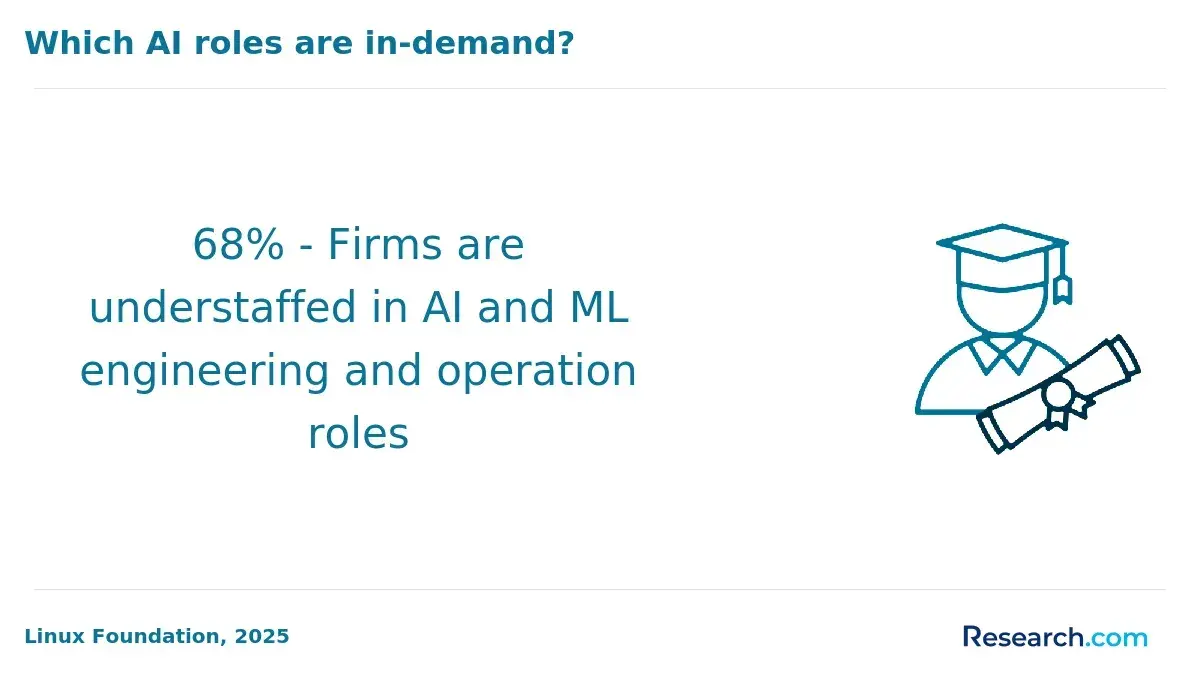
The job outlook for AI master's degree holders in the US remains notably strong through 2030. U.S. Bureau of Labor Statistics data projects a 35% growth in AI and machine learning specialist roles by 2032, vastly outpacing the average 5% growth across all occupations. This surge is driven by AI's growing presence in industries like healthcare, finance, automotive, and cybersecurity.
Demand for AI master's graduates by 2030 will focus on candidates skilled in machine learning algorithms, natural language processing, and computer vision. Employers particularly value those who can build scalable AI models and apply ethical AI practices. For instance, healthcare organizations are increasingly adopting AI for diagnostic and personalized treatment innovations, requiring professionals with both technical prowess and domain knowledge.
Master's graduates should also explore opportunities in emerging fields, such as autonomous systems and AI-driven robotics. Companies developing self-driving cars or automation solutions prioritize experience with real-world AI applications. Combining software engineering with data science also offers a competitive edge. Success often depends on staying current with AI advancements and gaining practical experience through internships or research projects. Aspiring professionals may consider pursuing masters in data science online to enhance their qualifications.
Graduates are advised to seek roles aligned with their technical expertise while building portfolios to showcase their AI implementations. Overall, the demand for AI master's degree holders in the US promises robust career growth and diverse opportunities well into the future.
How do online AI master's programs compare to campus-based programs in terms of career outcomes?
Online AI master's programs offer career outcomes nearly equivalent to those of campus-based programs. A 2024 study by the National Association for College Admission Counseling shows online graduates have a 92% job placement rate within six months, closely matching the 94% rate for campus alumni. Salary differences between online and campus graduates typically range just 3-5%, a margin that is generally insignificant for most students.
Employers increasingly value skills and credentials from reputable online programs just as much as those earned on campus. For students needing flexible schedules or remote study options, online programs provide a strong career return on investment without compromising job prospects or earning potential. Professionals switching careers may find the online route especially beneficial.
However, factors like networking, internships, and industry partnerships differ between delivery modes. Campus programs often facilitate direct contact with local tech firms and host in-person career fairs, which can accelerate job placement in some regions. In contrast, many online programs offer effective virtual career services designed to support candidates globally, particularly those open to remote roles common in AI fields.
Prospective students should focus on individual program reputation, alumni success, and employer ties rather than format alone. Hands-on projects, access to faculty, and practical skills tend to weigh more heavily in hiring decisions. The slight salary gap should not deter students from choosing online programs that better meet their personal needs.
What are the typical admission requirements and prerequisites for accredited AI master's programs?
Admission to accredited AI master's programs typically requires strong technical skills and relevant academic backgrounds. About 78% of programs ask for proof of proficiency in Python programming and linear algebra, either from previous courses or standardized tests, according to the Graduate Record Examinations Board. Applicants usually need a bachelor's degree in computer science, engineering, mathematics, or a closely related discipline. Transcripts should show completed coursework in calculus, statistics, data structures, and algorithms.
Many universities expect GRE scores, focusing on quantitative reasoning, although some have moved to test-optional policies. Practical experience with coding and machine learning projects can improve applications and compensate for weaker academic records. Letters of recommendation should highlight technical problem-solving abilities and research potential.
Applicants may also need to submit a statement of purpose explaining their experience with AI technologies and motivation for further study. Some programs might require completing online prep modules in Python or linear algebra if prerequisites are missing.
For those without formal education in these areas, accredited online courses or certificate programs covering Python, matrix operations, and probabilistic models can be essential. It is important to check specific program admission pages for detailed requirements and flexibility.
How long does an AI master's degree take to complete, and what is the typical total cost?
Completing a master's degree in artificial intelligence typically takes 1.5 to 2 years for full-time students, while part-time options may extend the duration to 3 or more years. This flexibility accommodates working professionals who balance employment with advancing their education. Program length depends on course load, thesis or project requirements, and overall structure.
The average total cost of an AI master's degree ranges between $40,000 and $120,000, based on a 2024 Council of Graduate Schools survey. Full-time programs usually fall toward the higher end due to tuition, fees, and living expenses. Part-time or online programs can reduce costs by offering payment flexibility and eliminating relocation or commuting expenses.
Additional expenses include textbooks, software licenses, and potential lost income during study. In-state tuition discounts and scholarships may lower costs significantly. While $40,000 often represents tuition alone, comprehensive budgeting is crucial for an accurate financial plan.
Return on investment is generally realized within 2.5 years of employment after graduation. Graduates entering fields such as machine learning engineering, data science, or AI research often experience salary growth that offsets their initial investment. Evaluating program duration and total cost supports informed decisions aligned with career ambitions and financial goals.
What certifications or professional credentials complement an AI master's degree?
Certifications that complement an AI master's degree include cloud computing credentials such as AWS Certified Solutions Architect, Google Cloud Professional Data Engineer, and Microsoft Azure AI Engineer Associate. These certifications demonstrate expertise in deploying AI models at scale and managing cloud infrastructure, skills that employers highly value. According to Coursera's Skills for Employment Index, AI professionals with both a master's degree and cloud certifications can earn 25-30% more than those with only a master's, with salaries averaging $210,000 to $235,000 annually.
Specialized AI-related credentials like the TensorFlow Developer Certificate highlight proficiency in machine learning frameworks, while the Certified Artificial Intelligence Practitioner (CAIP) credential covers broad AI concepts and real-world applications. These certifications help show practical experience with core AI technologies.
For those focused on data aspects of AI, certifications such as Certified Data Scientist (CDS) or the IBM Data Science Professional Certificate strengthen knowledge of analytics crucial for building effective AI systems. Security certifications like Certified Information Systems Security Professional (CISSP) are increasingly important due to rising concerns about AI ethics and privacy.
Choosing the right certifications depends on career goals: cloud certifications benefit those targeting AI operations and deployment, while model development and data analytics certifications serve those concentrating on algorithm design and experimentation. Combining advanced education with tailored certifications enhances market competitiveness in the evolving AI job sector.
How should prospective students evaluate and select a reputable AI master's program?
Programs with ABET accreditation and strong industry partnerships offer a clear advantage in securing AI-related roles. According to the Association to Advance Collegiate Schools of Business employment outcomes report, 88% of graduates from accredited programs found AI jobs within three months, compared to only 71% from non-accredited ones. This difference underscores the value of accreditation as a validation of program quality and relevance.
It is important to assess curriculum rigor and alignment with industry demands. Look for coursework covering machine learning, natural language processing, and data ethics, paired with hands-on projects or internships through corporate collaborations, which enhance job readiness. Programs linked to tech companies often provide valuable networking and practical experience.
Faculty expertise also matters. Institutions with professors actively publishing AI research or leading funded projects generally offer better mentorship and access to cutting-edge content. Alumni career paths can help gauge how well a program supports graduate employment in competitive markets.
Consider the balance between financial investment and career support services, such as counseling and recruiter connections, which are crucial for timely job placement. Additionally, choose a program format-full-time, part-time, or online-that fits your circumstances without compromising educational quality.
Selecting a reputable AI master's program involves comparing accreditation, curriculum, faculty, industry ties, and graduate outcomes to maximize career growth potential.
What skills and specializations within AI master's programs lead to the fastest salary growth?
Specializing in generative AI and large language models (LLMs) within AI master's programs results in the fastest salary growth. Graduates with expertise in these areas earn 40-45% higher starting salaries, ranging from $165,000 to $185,000, compared to those with general AI specializations, according to McKinsey & Company talent market analysis. This premium reflects the high demand for skills in advanced natural language processing, content creation, and conversational AI technologies.
Mastering training and fine-tuning transformer architectures, prompt engineering, and ethical issues in generative models significantly boosts earning potential. Graduates who develop custom LLMs for sectors like healthcare and finance are particularly valued. In contrast, foundational AI skills such as basic machine learning, computer vision, or robotics tend to yield lower initial compensation and slower salary increases.
Other high-growth areas include reinforcement learning applied to real-world systems and AI security, which focuses on protecting models from adversarial threats. Practical experience with cloud AI platforms and proficiency in frameworks like TensorFlow, PyTorch, and Hugging Face also accelerate salary progression.
Prospective students should seek programs offering specialized courses and research in generative AI and LLMs and target internships and partnerships within these niches to enhance early career opportunities and long-term growth.
Other Things You Should Know About Artificial Intelligence
While technical skills remain critical, soft skills like communication, teamwork, and problem-solving are increasingly vital for AI master’s graduates. These skills enhance employability and can lead to faster promotion, positively impacting salary growth potential.
Practical experience plays a crucial role in salary growth for AI master's graduates. Employers highly value candidates who have completed real-world projects, internships, or research that demonstrate their ability to apply AI techniques effectively. Hands-on experience often accelerates career advancement and opens opportunities in competitive sectors.
Certifications like TensorFlow Developer, AWS Certified Machine Learning, and Certified Analytics Professional can enhance salary growth for AI master's graduates in 2027 by validating specialized skills and increasing competitiveness in the job market.
Machine learning engineering, generative AI, and MLOps usually produce the fastest pay growth because they map directly to production systems. In 2027, employers often reward roles that use Python, cloud platforms, and model deployment tools, with salary jumps strongest after 2–5 years of experience.
In 2027, AI master's graduates see the highest salary growth in sectors like finance, healthcare, and technology. For those focusing on finance, pursuing an online AI finance master’s degree can be particularly beneficial, offering specialized skills that attract competitive salaries.
References
- AI Careers - Top AI Jobs with Education Requirements and Pay https://aidegreeprograms.org/ai-careers/
- AI Certifications: Accredited Programs, Vendor Credentials, and Emerging Standards - Total Seminars https://totalsem.com/ai-certifications-accredited-programs-vendor-credentials-and-emerging-standards/
- How an Online Master’s in AI Can Prepare You for the Future of Tech https://www.ucumberlands.edu/blog/how-online-masters-ai-can-prepare-you-future-tech
- University Degree vs AI Bootcamp: Which is Best Career Path? https://agilefever.com/university-degree-vs-ai-bootcamp-which-is-best/
- Top 10 Highest Paying Artificial Intelligence (AI) Jobs 2025 | Nexford University https://www.nexford.edu/insights/highest-paying-ai-jobs
- 6 High-Paying Jobs With a Master’s in AI | University of Bridgeport https://www.bridgeport.edu/news/high-paying-jobs-with-a-masters-in-ai/
- Top AI Certifications for 2026: A Guide to Advancing Your Tech Career | DataCamp https://www.datacamp.com/blog/top-ai-certifications
- Blogs https://www.leoglobaloverseas.com/blogdetails/ai-career-pathways-from-msc-to-industry-roles
- Top 10 AI certifications and courses for 2025 https://www.techtarget.com/whatis/feature/10-top-artificial-intelligence-certifications-and-courses
- AI’s Impact on Job Growth | J.P. Morgan Global Research https://www.jpmorgan.com/insights/global-research/artificial-intelligence/ai-impact-job-growth