2027 How AI Education Is Changing Higher Education

Co-Founder and Chief Data Scientist
Many professionals with undergraduate degrees in unrelated fields face difficulty accessing quality education to pivot into the Artificial Intelligence industry. Traditional graduate programs often require lengthy commitments, high costs, or lack relevant, up-to-date curriculum. This creates barriers for working adults seeking flexible, accredited options that balance career demands with rigorous learning.
As Artificial Intelligence reshapes job markets, acquiring specialized skills efficiently becomes critical. This article explores emerging trends and educational pathways in Artificial Intelligence that address these challenges, helping prospective students identify accessible programs designed to bridge skill gaps and support career transitions effectively.
Key Things You Should Know
- By 2026, over 60% of U.S. higher education institutions will integrate artificial intelligence into curricula, reflecting a 35% growth since 2024, enhancing interdisciplinary learning and skill development.
- The demand for AI-literate graduates is rising, with 72% of employers prioritizing artificial intelligence competencies in job applications across STEM and non-STEM fields.
- AI education increasingly focuses on ethical use and societal impact, with 45% of programs including comprehensive modules on bias, privacy, and responsible AI deployment.
How is AI education reshaping degree pathways and credentials in U.S. higher education?
U.S. higher education is increasingly integrating AI integration in U.S. higher education degree programs by expanding offerings beyond traditional computer science degrees. Universities now provide AI-focused minors, dual degrees, and certificates that combine AI with business, healthcare, engineering, and other fields. This evolution allows students to tailor their education to meet emerging job market demands effectively.
Credential innovation through AI education in American universities is evident in the rise of micro-credentials and stackable certificates that validate specialized skills like machine learning, natural language processing, and ethical AI use. These flexible credentials appeal to working professionals who seek career advancement without enrolling in full degree programs.
Degree programs emphasize practical AI applications, incorporating real-world data challenges, internships, and AI labs to provide hands-on experience. This practical focus addresses employer expectations for graduates capable of applying AI technologies to industry problems.
The rapid adoption of generative AI tools reflects this shift. Although the Higher Education Policy Institute's 2025 Student Generative AI Survey reports 92% of UK students used generative AI in 2025, this trend represents a global movement shaping U.S. higher education's emphasis on AI literacy.
Prospective students should explore programs offering flexible credentials and practical exposure to AI. To understand career trajectories, consider the insights on what can you do with an applied artificial intelligence degree.
What types of artificial intelligence degrees and certificates can students earn today?
Students pursuing AI degree programs in higher education have a variety of options tailored to different career goals and expertise. Undergraduate studies commonly include a Bachelor of Science in AI, computer science with an AI focus, or data science programs integrating AI coursework. These help build foundational skills in machine learning, neural networks, and natural language processing.
Graduate students often choose specialized Master's degrees such as Master of Science in Artificial Intelligence, Machine Learning, or Robotics. These programs emphasize advanced algorithm design, AI ethics, and practical applications across various industries. Doctoral paths focus on research areas like AI theory, human-computer interaction, and AI-driven innovations.
Many certificate programs offer working professionals or skill upgraders short-term credentials covering AI fundamentals, deep learning, computer vision, and AI integration in business. These flexible, often stackable certificates allow learners to progressively enhance their expertise and credentials.
Institutions may also provide dual degree options, combining AI with business analytics, cybersecurity, or healthcare informatics to meet interdisciplinary demands. This variety allows students to focus on sectors such as finance, autonomous systems, or AI ethics.
Certifications for artificial intelligence careers are increasingly important as demand grows. The value of AI-enhanced education is demonstrated by studies showing students in AI-active learning environments score 54% higher on tests compared to traditional methods.
For those considering cost-effective graduate studies, programs like the cheapest online master's mechanical engineering degrees offer affordable pathways into advanced technical fields.
How do AI-focused online programs compare with campus-based options in quality and outcomes?
AI-focused online programs often match or exceed campus-based options in curriculum quality but vary significantly in outcome effectiveness. Many online courses are designed by industry experts who offer up-to-date content and flexible pacing, catering to working professionals or students outside traditional college hubs. Programs on platforms affiliated with recognized universities provide rigorous training similar to on-campus classes, sometimes enhanced by integrated AI simulations and virtual labs unavailable in physical classrooms.
Campus programs excel in offering deeper mentorship, real-time collaboration, and hands-on experience with advanced AI hardware and research projects. These opportunities foster critical thinking and problem-solving skills essential in AI fields. However, 95% of college faculty in a 2025 global survey reported concerns that generative AI might increase students' overreliance on such tools, potentially reducing critical thinking by 90%, a widespread challenge across both formats.
Quality disparities also arise from student motivation and engagement. Online learners need strong self-discipline to avoid superficial understanding, whereas on-campus students benefit from structured environments and peer interactions that reinforce learning. Outcomes, such as skill mastery and job placement, depend on program accreditation, faculty expertise, and hands-on projects rather than delivery mode alone.
Prospective students interested in pathways like cyber security degrees should evaluate programs by:
- Checking faculty credentials and industry connections.
- Assessing availability of practical AI tools and labs.
- Reviewing alumni career outcomes and networking opportunities.
Online AI education quality in online versus campus programs can be balanced when practical skills and critical thinking development are prioritized. Students must actively address the risk of overreliance on AI tools identified by educators to maximize long-term student outcomes comparison for AI-focused higher education.
What should students look for in accreditation and quality standards for AI programs?
Students evaluating accreditation standards for AI education programs in higher education should prioritize clear evidence of institutional readiness and rigorous evaluation metrics. Accreditation must align with industry demands and evolving technologies. Look for endorsements from recognized bodies such as ABET or specialized AI education consortia that verify curricula integrate current machine learning techniques, ethical considerations, and practical applications.
Check if the program includes formal policies addressing generative AI use. A 2025 survey by Engageli found only 20% of universities have such policies, while 56% of students and educators feel unprepared for AI's impact. This gap highlights the importance of institutions establishing explicit frameworks guiding AI instruction, data integrity, and ethical AI development practices, reflecting key quality assurance criteria for AI degree programs in universities.
Comprehensive programs offer hands-on labs, updated software tools, and interdisciplinary learning opportunities. Collaborations among computer science, statistics, and domain-specific fields like healthcare or finance enable real-world AI problem-solving. Prospective students should ask about curriculum update frequency, faculty research or industry experience, resources for responsible AI use and bias mitigation, internships, and support for certifications or continued learning.
For those considering a career in artificial intelligence, selecting well-accredited programs with strong quality assurance criteria for AI degree programs in universities directly impacts employability and adaptability. Veterans interested in related fields may explore the online cybersecurity bachelor degree for veterans as a complementary or alternative pathway.
What core courses and skills are taught in artificial intelligence majors and bootcamps?
Core courses in artificial intelligence majors and bootcamps concentrate on essential technical skills and foundational knowledge needed for AI careers. Students begin with programming languages like Python and frameworks such as TensorFlow or PyTorch to develop AI models. Coursework covers machine learning algorithms, including supervised, unsupervised, and reinforcement learning, along with deep learning techniques involving neural networks, crucial for image and speech recognition.
Mathematics courses emphasize linear algebra, calculus, probability, and statistics, providing the basis for understanding model optimization and data patterns. Data science principles-covering data preprocessing, feature engineering, and visualization-are also integrated into the curriculum to prepare students for handling real-world datasets.
AI ethics and policy training addresses bias, privacy, and legal concerns surrounding AI deployment. Natural language processing (NLP) classes teach building conversational agents, chatbots, and sentiment analysis tools. Robotics and computer vision expand AI skills toward autonomous systems and visual data interpretation.
Bootcamps focus on accelerated, project-driven learning with practical applications, including predictive analytics, recommendation systems, and AI automation. They prioritize hands-on experience using real datasets and collaborative environments simulating workforce challenges.
In a 2025 randomized controlled trial published in Scientific Reports, students using an AI tutor scored 0.73 to 1.3 standard deviations higher compared to traditional active-learning peers. This supports the integration of AI tools into education to improve academic performance and skill acquisition.
What are the typical admission requirements and prerequisites for studying artificial intelligence?
Admission to undergraduate or graduate programs in artificial intelligence usually demands a solid background in mathematics, programming, and related sciences. Most universities require coursework in calculus, linear algebra, probability, statistics, and proficiency in at least one programming language like Python or Java.
For graduate applicants, a bachelor's degree in computer science, engineering, mathematics, or a similar field is essential. GRE scores and letters of recommendation often support the application by demonstrating technical skills and research potential.
Common prerequisites include:
- Proficiency in programming and data structures.
- Strong mathematical skills, especially in linear algebra and calculus.
- Understanding of algorithms and computer systems.
- For advanced studies, foundational knowledge in machine learning and computational theory.
Applicants lacking these areas may encounter concerns about their preparedness, but many institutions provide bridge or preparatory courses to develop necessary skills. Practical experience in software development or data analysis can sometimes substitute formal prerequisites for working professionals.
Equity issues persist, highlighted by a 2025 study showing that over 80% of students at an elite U.S. college used generative AI for academic work two years after ChatGPT's release, a sharp increase from under 10% before spring 2023. This reflects rapid yet uneven AI adoption across disciplines and demographics, emphasizing the digital divide prospective students should consider when planning AI education.
How long do AI programs take to complete, and what do they cost?
AI education programs vary widely in length and depth, ranging from short-term certificates to full degrees that take several years to complete. Certificate programs typically require 3 to 6 months full-time and focus on specific skills like machine learning frameworks or data analysis, making them ideal for working professionals aiming to upskill quickly. Associate and bachelor degrees in AI or related fields generally need 2 to 4 years and cover foundational topics, programming, and advanced methodologies, often offered in hybrid or online formats for flexibility.
Master's degrees usually take 1 to 2 years and provide in-depth theoretical knowledge and research experience, suited for specialized roles or academic career paths. Costs vary significantly: certificate courses may range from $1,000 to $5,000, bachelor programs at public universities cost between $20,000 and $40,000 annually for in-state students, and master's degrees range from about $15,000 to $50,000 per year. Online and part-time options can reduce upfront expenses but may lengthen study duration.
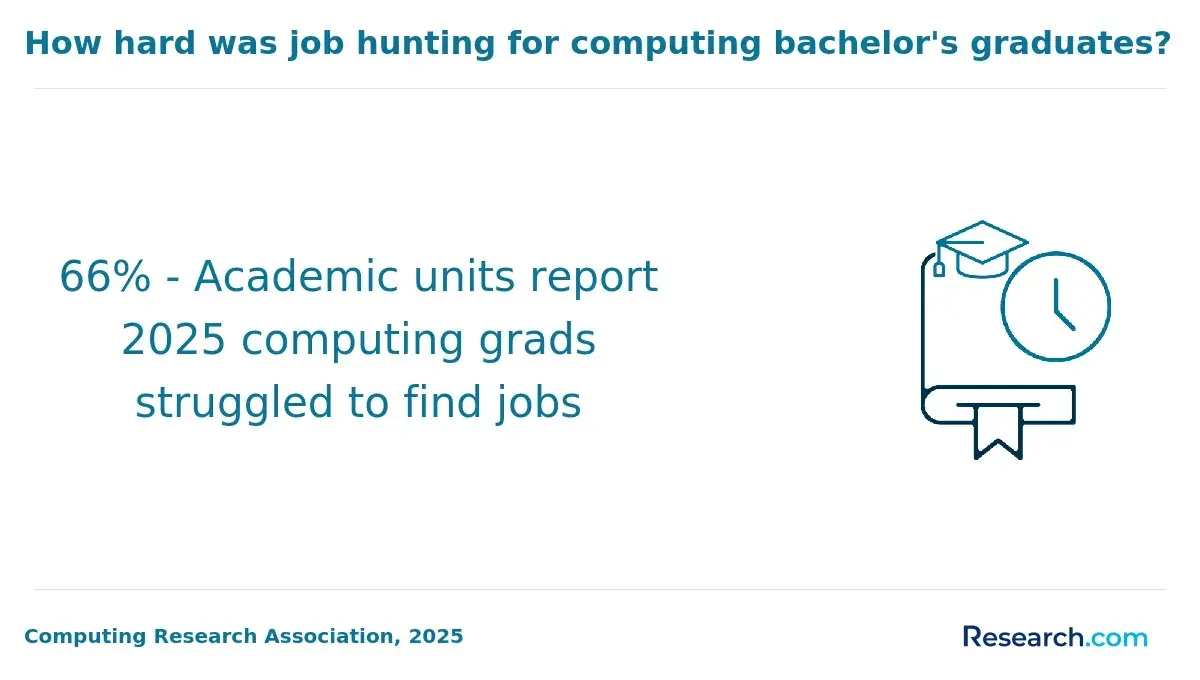
Surveys reveal divided opinions among students on AI's impact on job opportunities, with half of U.S. undergraduates believing AI will limit post-graduation prospects and only a small minority expecting growth. This underscores the value of selecting programs balancing theory and practical skills to enhance career readiness in a rapidly evolving labor market.
What AI-related careers can graduates pursue, and what roles are emerging fastest?
Graduates with AI education can pursue careers in machine learning engineering, data science, and AI product management. Machine learning engineers design and deploy models that enable systems to learn from data, while data scientists analyze large datasets to extract actionable insights. AI product managers guide AI-driven development by bridging technical and business teams. These roles demand strong programming skills, algorithm knowledge, and domain expertise.
Fastest growing roles include AI ethics specialists, AI trainers, and AI security analysts. Ethics specialists ensure responsible and unbiased AI deployment. AI trainers refine natural language processing and computer vision by curating datasets and tuning models. Security analysts protect AI infrastructure from adversarial attacks and data breaches, reflecting concerns about vulnerabilities.
Other expanding fields involve automation specialists implementing robotic process automation (RPA) across finance, healthcare, and beyond. AI research scientists innovate new algorithms and advance AI capabilities. Graduates with interdisciplinary skills combining AI with cybersecurity, healthcare informatics, or environmental science often gain a competitive edge.
The Economics of AI Programs and Institutional Investment report projects the global AI education market to grow from $7.05 billion in 2025 to $136.79 billion by 2035. This signals long-term demand for AI professionals and institutional investment in workforce development.
Prospective students should focus on programs offering hands-on experience with real-world datasets and industry collaborations. Roles emphasizing explainability, fairness, and compliance are expanding rapidly alongside traditional development jobs. Continuous learning and adaptation remain key to career flexibility in AI.
What salary ranges and earning potential can AI professionals expect across key roles?
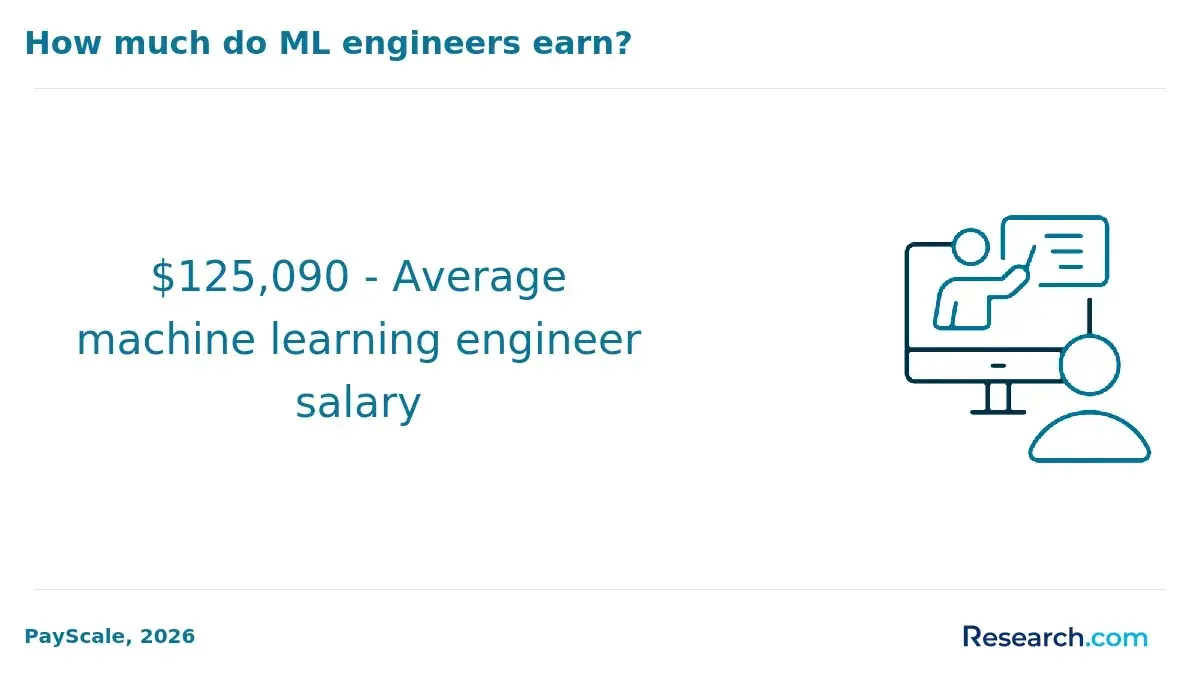
Salaries for AI professionals vary widely based on experience, role, and sector. Entry-level AI engineers earn between $85,000 and $120,000 annually, while mid-level specialists, such as data scientists and machine learning engineers, typically make $120,000 to $160,000. Senior positions, including AI architects who manage complex systems, can command salaries from $180,000 up to $250,000. Research-focused or academic roles often start near $75,000 but may exceed $130,000 for those with advanced degrees and published work.
AI product managers and consultants usually earn between $110,000 and $170,000, reflecting their combination of technical knowledge and leadership skills. Fields like AI ethics and compliance start around $80,000 but offer strong growth potential as they develop.
Factors influencing pay include geographic location, industry, and company size. Tech firms and finance sectors are notable for higher salaries, while academia and nonprofits provide valuable experience with typically lower pay. Continuous learning in AI specialties like natural language processing and computer vision can enhance career prospects.
According to Coursera's AI in Higher Education Report, 80% of students worldwide feel AI positively supports their learning, and 70% expect it to improve exam results and education quality. This rising AI integration in education suggests increased demand for skilled professionals.
How is AI changing job outlook, workforce demand, and ethical standards in tech fields?
AI is driving a significant transformation in workforce demands and ethical practices within technology sectors. Employers now prioritize candidates who combine technical AI skills with a strong grasp of ethical concerns such as data privacy, bias mitigation, and algorithmic transparency. Roles including AI specialists, data ethicists, and AI project managers are emerging rapidly, reflecting the shift toward interdisciplinary expertise.
According to Engageli's AI in education statistics report, 86% of education organizations use generative AI, signaling the importance of AI literacy across industries. Graduates proficient not only in AI algorithms but also in understanding societal impacts are highly favored. Tech companies increasingly seek professionals capable of designing bias-resistant systems and ensuring regulatory compliance.
Ethical standards in tech now require businesses to adopt frameworks emphasizing fairness, accountability, and transparency. Familiarity with guidelines from organizations such as IEEE and AI ethics boards is becoming essential for hiring managers aiming to reduce risks like discrimination and privacy violations that previously limited AI adoption.
Students and professionals should pursue programs that embed AI education alongside ethics, equipping them with the multidisciplinary skills demanded by dynamic job markets. This approach supports long-term career growth and aligns with evolving corporate and societal expectations.
Other Things You Should Know About Artificial Intelligence
Prerequisites for AI courses in 2027 include foundational knowledge in programming languages like Python and a basic understanding of data structures and algorithms. Some institutions also require prior coursework in mathematics, such as calculus or linear algebra, to grasp complex AI concepts effectively.
Artificial intelligence is revolutionizing academic research by enabling faster data analysis, pattern recognition, and predictive modeling across disciplines. It allows researchers to handle large datasets more efficiently and generate insights that were previously difficult to obtain. This integration improves research accuracy and opens new avenues for interdisciplinary studies.
In 2027, universities are introducing courses focused on AI ethics, machine learning applications, and AI-driven data analysis. These courses aim to equip students with the skills required to navigate the evolving landscape of artificial intelligence in higher education environments.
Universities must protect student data under FERPA in the United States and, for many institutions, GDPR in Europe. They should use vendor contracts that limit data sharing, require human review for high-stakes decisions, and publish clear policies on what student information AI systems can store or analyze.
References
- How Students Use AI: The Evolving Relationship Between AI and Higher Education https://www.digitaleducationcouncil.com/dec-insights/how-students-use-ai-the-evolving-relationship-between-ai-and-higher-education
- AI Bootcamp - Functional Skills UK https://functionalskillsuk.co.uk/courses/ai-bootcamp
- Top AI Courses After 12th to Kickstart Your Tech Career https://www.msruas.ac.in/blog/lead-the-future-of-artificial-intelligence-with-top-ai-courses-after-12th
- Total cost of ownership of AI coding tools https://getdx.com/blog/ai-coding-tools-implementation-cost/
- The opportunities and challenges of AI in higher education https://feedbackfruits.com/blog/opportunities-and-challenges-of-ai-in-higher-education
- what - Tłumaczenie po polsku - Słownik angielsko-polski Diki https://www.diki.pl/slownik-angielskiego
- AI Machine Learning Boot Camp https://www.njcu.edu/academics/professional-education-and-lifelong-learning/it-bootcamps/ai-machine-learning-boot-camp
- The Ethical Implications of AI and Job Displacement https://labs.sogeti.com/the-ethical-implications-of-ai-and-job-displacement/
- How AI is shaking up higher education https://www.eaie.org/resource/ai-higher-ed.html
- AI Careers: Roles, Salaries, and Certifications to Get You Hired - ONLC https://www.onlc.com/blog/ai-careers-roles-salaries-certifications/