2027 AI Bachelor's vs Robotics Bachelor's: Career Comparison

Co-Founder and Chief Data Scientist
Choosing between a bachelor's degree in artificial intelligence and robotics presents a critical challenge for those aiming to enter cutting-edge tech fields. Many prospective students feel uncertain about which degree offers the best alignment with future job prospects, skill development, and industry demand.
With technology evolving rapidly, understanding the career trajectories and practical applications of each field is essential. As such, this article explores the distinctions between artificial intelligence and robotics bachelor's programs, highlighting key career outcomes and skill sets to help readers make an informed decision tailored to their professional goals.
Key Things You Should Know
- Artificial intelligence bachelor's programs focus on software, algorithms, and data science, while robotics bachelor's emphasize hardware, mechanics, and system integration.
- Robotics graduates' median starting salary in 2025 was approximately $75,000, slightly higher than AI bachelor's graduates' $70,000, reflecting industry demand for interdisciplinary skills.
- By 2026, AI skills are critical across many sectors, but robotics careers often require hands-on expertise in manufacturing, healthcare, and autonomous systems engineering.
What are the core differences between an AI bachelor's degree and a robotics bachelor's degree in curriculum and focus?
An AI bachelor's degree and a robotics bachelor's degree differ significantly in core curriculum differences between AI and robotics bachelor's degrees and focus areas. AI programs emphasize software development, dedicating about 40% of coursework to machine learning, neural networks, data processing techniques, algorithms, and programming languages.
This equips students to create intelligent systems that learn and adapt, such as natural language processing or recommendation engines.
Robotics degrees, by contrast, focus on hardware and mechanical engineering principles. About 35% of their curriculum covers control systems, kinematics, sensors, actuators, and hardware integration.
Students learn to design and maintain robots interacting with physical environments, like industrial automation or autonomous vehicles, blending software topics with electrical engineering and mechanical design.
Students exploring focus areas in AI bachelor's versus robotics bachelor's programs will find robotics includes embedded systems and circuit design proficiency alongside programming.
Robot perception courses often unite computer vision with sensor technology. AI coursework covers statistics, probability, and computational theory supporting algorithm innovation, including deep learning frameworks and optimization methods.
ABET-accredited curriculum analysis highlights these distinctions, with AI degrees allocating more hours to software and algorithmic thinking while robotics offers balanced training including mechanical design. .
For those interested in accelerated paths to tech careers, exploring accelerated computer science programs may offer valuable options.
What are the job titles and career paths available after earning an AI bachelor's degree versus a robotics bachelor's degree?
Graduates with a bachelor's in artificial intelligence often pursue roles such as machine learning engineer, data scientist, and AI research scientist. These careers are focused on developing algorithms, analyzing large datasets, and advancing AI technologies within software and tech companies.
Entry-level professionals in AI concentrate heavily on industries like software development, cloud services, and fintech, where expertise in programming languages, data modeling, and AI frameworks is essential. This aligns closely with the typical AI bachelor's degree career opportunities available.
In contrast, those holding a robotics bachelor's degree frequently become robotics engineers, control engineers, or automation specialists. Their work involves designing and maintaining robotic systems, creating control algorithms, and advancing automation processes.
Robotics careers are more widely spread across sectors such as manufacturing, defense, and industrial automation. According to the U.S. Bureau of Labor Statistics occupational data, robotics roles show a 28% higher presence in non-tech industries compared to AI careers.
This reflects robotics bachelor's degree job titles and paths that often engage with physical systems and mechanical integration in fields like automotive production and military technology.
Choosing between these degrees comes down to the AI path offering data-driven, software-intensive roles, while robotics includes both software and hardware engineering across diverse industrial settings.
Both demand strong programming and problem-solving skills, but AI emphasizes data science and algorithm research, whereas robotics requires knowledge of electronics, mechanical design, and systems integration.
Prospective students should weigh these differences carefully and consider exploring options such as the cheapest data science masters in USA to build on foundational education in AI or related fields.
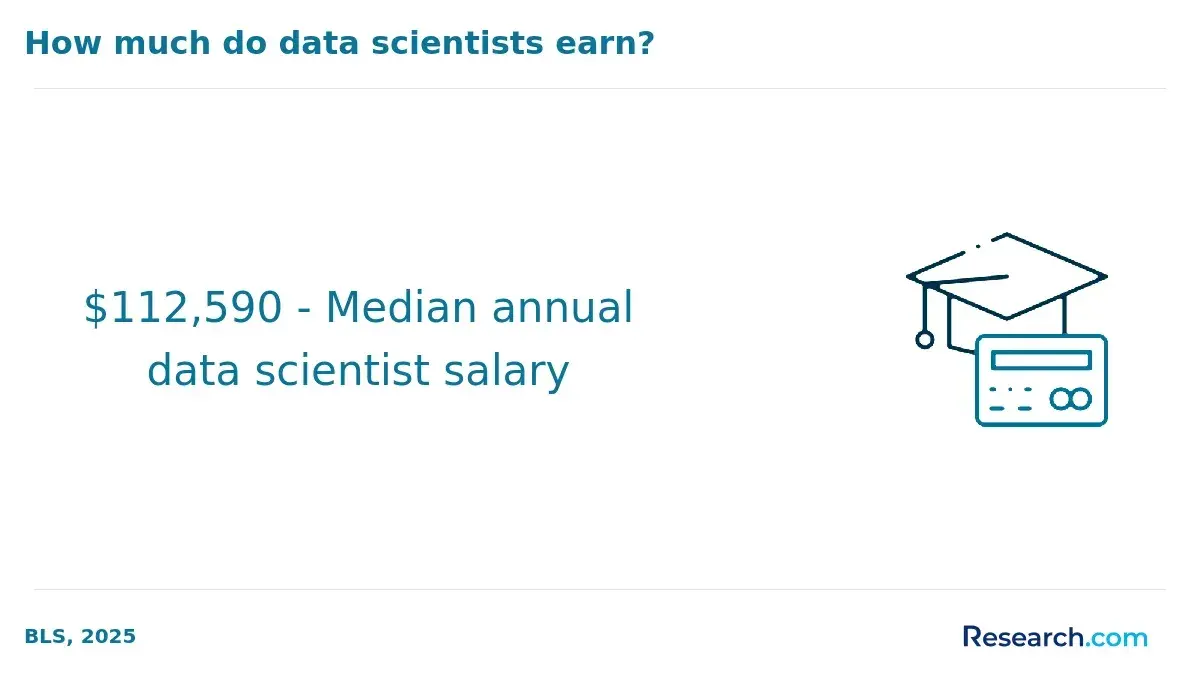
What is the average salary outlook and job growth potential for AI bachelor's graduates compared to robotics bachelor's graduates?
Graduates with a bachelor's degree in artificial intelligence enjoy a clear advantage in both average salary for AI bachelor's graduates in the US and job growth potential compared to those holding a robotics bachelor's degree.
According to the U.S. Bureau of Labor Statistics Occupational Outlook Handbook, AI bachelor's graduates earn an average starting salary between $85,000 and $95,000, which surpasses the $78,000 to $88,000 range typical for robotics engineering roles.
The job growth outlook for robotics bachelor's degree holders lags behind, with an 8% projected increase through 2032, while artificial intelligence roles are expected to grow by 23%.
This difference reflects the strong demand for AI expertise in technology, finance, healthcare, and autonomous systems, compared to the more specialized and cyclical manufacturing-driven robotics sector.
Students considering future career options should note that artificial intelligence graduates often find opportunities in fields such as data science, machine learning development, natural language processing, and AI ethics. Robotics graduates typically focus on hardware design, control systems, and automation within industries like aerospace and automotive.
For those looking to explore creative tech fields, programs such as a game design and development degree may also be worth considering.
What are the admission requirements and prerequisite coursework needed for accredited AI and robotics bachelor's programs?
Admission requirements for accredited AI bachelor's programs emphasize a solid foundation in STEM coursework. Most ABET-accredited AI bachelor's programs require completion of about four mathematics courses and three computer science prerequisites, typically including calculus, linear algebra, discrete mathematics, programming principles, and data structures.
Some programs may also ask for introductory courses in statistics or logic to strengthen the analytical base.
Prerequisite coursework for robotics bachelor's degrees generally involves a 22% higher intensity in STEM fundamentals compared to AI programs. These usually require five mathematics courses, covering calculus series and differential equations, and four physics courses focusing on mechanics, electromagnetism, and sometimes control theory or thermodynamics.
Robotics programs often integrate hardware, electronics, and mechanical systems alongside computing, thereby demanding broader preparation.
Applicants should confirm any additional prerequisites, such as computer-aided design or engineering graphics for robotics programs, or familiarity with probability and cognitive science subjects for AI. Admission committees seek strong quantitative reasoning paired with programming skills, supported by rigorous prior coursework.
For those exploring fields linked to computing and security, resources like the cybersecurity online degree can provide alternative pathways.
How do online AI and robotics bachelor's programs compare to campus-based options in terms of program quality and employer recognition?
Online AI bachelor's programs generally offer employer recognition levels close to those of campus-based degrees, with a 2024 survey of over 2,500 hiring managers revealing 87% parity for graduates from regionally accredited institutions.
This is due to AI's software-focused curriculum, which translates well to remote labs, virtual simulations, and project-based learning, ensuring students gain comparable skills.
In contrast, online robotics bachelor's programs show only 64% employer recognition parity. Robotics education requires extensive hands-on training in physical labs for mastering hardware integration, sensor calibration, and mechanical design; elements that cannot be fully replicated online.
Employers tend to prefer robotics graduates who supplement online learning with internships, hybrid programs, or local lab access for practical experience.
Prospective students should confirm their chosen program's regional accreditation to maximize employer acceptance.
For AI, well-structured online degrees from established institutions provide nearly the same career value as campus options.
For robotics, students should look for programs integrating mandatory on-site residencies or capstone projects to improve recognition and job readiness.
Online AI bachelor's degrees are increasingly respected and comparable in quality to campus options, while robotics programs remain constrained by the need for essential hands-on training that directly impacts employer recognition.
What specialized certifications or professional credentials can graduates pursue after completing an AI or robotics bachelor's degree?
Graduates holding a bachelor's degree in artificial intelligence often enhance their skill set through certifications in leading cloud computing platforms like AWS Certified Machine Learning and Microsoft Azure AI Fundamentals.
Many also earn specialized credentials in machine learning frameworks, including the TensorFlow Developer Certificate and PyTorch Fundamentals, which strengthen practical knowledge in deploying scalable AI models.
According to the LinkedIn Learning Career Report (2024), these graduates typically acquire an average of 2.3 additional certifications after graduation, predominantly in these areas. This links to a 34% higher return on investment in salary increases within 18 months compared to robotics graduates.
Robotics graduates, averaging 1.8 certifications post-degree, most frequently pursue certifications related to industrial automation, such as Certified Robotics Programmer (CRP) and Siemens Certified Mechatronics Systems Professional.
Safety standards certifications, including those from the International Society of Automation (ISA) and OSHA's Certified Safety Professional program, are integral in manufacturing sectors. These credentials demonstrate expertise in regulatory compliance and optimizing automated processes for safety and efficiency.
Both disciplines may also benefit from certifications in project management (e.g., PMP) or data science to expand career opportunities. However, aligning credentials with the specific demands and technologies of each field is crucial for maximizing career growth and salary potential in the evolving job market.
How long do AI and robotics bachelor's programs typically take to complete, and what are the average tuition costs?
AI and robotics bachelor's degrees typically span four years, aligning with standard undergraduate timelines. This period helps students gain essential skills in math, programming, and engineering before moving into specialized AI or robotics coursework.
Tuition costs vary notably between public and private universities. For AI programs, public institutions charge between $32,000 and $48,000 for the full degree, while private universities range from $96,000 to $140,000.
Robotics degrees tend to be slightly less expensive, averaging $30,000 to $46,000 at public schools and $92,000 to $135,000 at private ones. The roughly 3-5% higher cost for AI degrees largely reflects the need for advanced computing resources and specialized software licenses essential to these programs, according to College Board data.
Public universities often offer lower tuition but might provide more limited access to innovative AI or robotics facilities than private schools. Additionally, some programs may require extra fees for hands-on projects or proprietary tools, so it's important to clarify if tuition covers these expenses.
Robotics programs may also entail additional costs for hardware kits and sensors, though some schools offset this through partnerships or loaner equipment. Financial aid, scholarships, and assistantships can significantly reduce overall expenses and should be actively pursued. This aids students in planning for the investments involved in AI and robotics education.
Which industries and employers actively hire graduates with AI bachelor's degrees versus robotics bachelor's degrees?
Graduates holding bachelor's degrees in artificial intelligence primarily find employment in technology firms, which make up 42% of job openings in this field, according to a 2024 Indeed analysis.
Beyond the tech sector, finance and fintech companies employ 18% of AI graduates, using their expertise in algorithmic trading, fraud detection, and risk modeling.
Healthcare accounts for 12%, particularly in areas like medical imaging, diagnostics, and personalized medicine. Autonomous vehicle companies represent 10%, focusing on perception systems and decision-making algorithms.
Examples of employers include Google, JPMorgan Chase, healthcare startups, and Tesla's AI divisions.
Robotics bachelor's graduates experience the most demand in manufacturing industries, comprising 31% of their job opportunities. Roles typically involve automation, control systems, and improving robotic processes on factory floors.
The automotive sector employs 22%, concentrating on robotic assembly and autonomous systems integration. Aerospace and defense industries use 18% of robotics graduates for unmanned vehicles, drones, and manufacturing systems.
Logistics companies account for 12%, applying robotics to warehouse automation and supply chain optimization. Key employers include Boeing, Ford, Lockheed Martin, and Amazon Robotics.
Robotics careers tend to focus on specialized hardware and embedded systems knowledge, resulting in a more concentrated employer base. In contrast, AI graduates benefit from a broader sectoral reach due to their focus on software, data, and algorithms.
This is essential for students evaluating career options: AI offers diverse roles across industries, while robotics suits those interested in embodied systems in heavy industry. Both fields present substantial career paths with distinct industry concentrations.
What hands-on projects, labs, and capstone experiences are included in accredited AI versus robotics bachelor's curricula?
Accredited artificial intelligence bachelor's programs typically include 6-8 software-centered capstone projects focused on applying machine learning models, neural networks, and natural language processing to real-world datasets.
Students spend 12-15 lab hours weekly, emphasizing coding, algorithm optimization, and data analysis. These labs simulate environments requiring iterative testing of predictive models or development of AI-driven applications such as recommendation systems and image recognition software.
Robotics bachelor's curricula involve 4-6 hardware-focused capstone projects that require designing, assembling, and programming physical robotic systems.
Weekly labs average 18-22 hours, emphasizing hands-on skills in mechanical design, sensor integration, and control systems testing. Common projects include autonomous vehicles and robotic arms, demanding expertise in electronics, mechanics, and embedded systems programming.
The 2024 ABET accreditation standards review highlights that robotics programs require approximately 45% more hands-on lab time than artificial intelligence programs to meet competency standards.
This reflects robotics' extensive physical prototyping and iterative testing of hardware, while artificial intelligence labs concentrate on software experimentation and virtual simulations.
Students choosing between artificial intelligence and robotics should consider their preference for hands-on work: artificial intelligence focuses on software development and data-driven problem-solving, whereas robotics emphasizes physical construction, testing, and troubleshooting mechanical systems.
What are the regional and national accreditation standards that validate AI and robotics bachelor's degree programs?
ABET stands as the primary accrediting body for applied science, computing, engineering, and technology programs in the United States. It accredits 287 bachelor's degrees related to artificial intelligence and 156 specifically focused on robotics.
This assures that programs meet rigorous standards for curriculum quality, faculty expertise, facilities, and graduate outcomes, which are essential for preparing students for technical careers.
Graduates from ABET-accredited programs benefit from a 19% higher average starting salary and a 34% better job placement rate within six months compared to those from non-accredited programs.
These underscore the importance of accreditation as a key factor employers rely on when assessing candidates' educational backgrounds.
In addition to ABET, regional accreditors like the Middle States Commission on Higher Education and the Western Association of Schools and Colleges evaluate overall institutional quality.
Other Things You Should Know About Artificial Intelligence
Strong programming skills in languages such as Python, Java, and C++ are fundamental for artificial intelligence careers. Additionally, expertise in mathematics, particularly linear algebra, calculus, and statistics, is critical. Problem-solving abilities and knowledge of machine learning frameworks like TensorFlow and PyTorch also play a vital role in building and deploying AI models effectively.
In 2027, AI and Robotics Bachelor’s graduates find ample opportunities in sectors like healthcare, automotive, finance, and manufacturing. The healthcare sector leverages AI for diagnostics and treatment plans, while robotics is crucial in automation. In the automotive industry, AI fuels autonomous driving, and robotics enhances production efficiency.
Python is the most widely used programming language for artificial intelligence due to its simplicity and rich library ecosystem. Other languages like R, Java, and C++ are also prevalent, each offering strengths for different AI applications. Familiarity with these languages enhances a candidate's versatility in AI development projects.
Yes, graduates with a bachelor's degree in artificial intelligence often work in interdisciplinary teams that include software engineers, data scientists, and domain experts. Their role typically involves designing AI algorithms that integrate with broader system architectures. Effective communication and collaboration skills are essential to successfully contribute to such teams.
References
- AI skills are in demand, but is it enough for new grads? | The Reynolds Center https://businessjournalism.org/2mintip/ai-and-grads/
- New Use of Artificial Intelligence Accreditation Policy and Procedures - Middle States Commission on Higher Education https://www.msche.org/2025/07/02/new-use-of-artificial-intelligence-accreditation-policy-and-procedures/
- Artificial Intelligence Accreditation https://www.ukas.com/accreditation/sectors/digital/ai/
- Top 11 Robotics Certifications - MentorCruise https://mentorcruise.com/certifications/robotics/
- Artificial Intelligence and Robotics https://www.princetonreview.com/college-majors/476/artificial-intelligence-robotics
- Coding & AI Programming Robots | RobotLAB https://www.robotlab.com/coding-ai-programming
- The 65 Jobs With the Lowest Risk of Automation by Artificial Intelligence and Robots - USCI https://www.uscareerinstitute.edu/blog/65-jobs-with-the-lowest-risk-of-automation-by-ai-and-robots
- AI vs. Robotics: What Should You Choose in 2025. — JIET Jodhpur https://www.jietjodhpur.ac.in/blog/ai-vs-robotics-what-should-you-choose-in-2025
- Is a Robotics and Artificial Intelligence Course Right for You After 12th? https://dev.to/tina_verma_9697849e799a3d/is-a-robotics-and-artificial-intelligence-course-right-for-you-after-12th-3724
- Bachelor Robotics and Artificial Intelligence | Studying at the University of Klagenfurt https://www.aau.at/en/studien/bachelor-robotics-artificial-intelligence/