2027 AI Associate Degrees With Credit for Prior Learning

Co-Founder and Chief Data Scientist
Many professionals with unrelated undergraduate degrees face challenges when attempting to enter the artificial intelligence field due to a lack of formal credentials and relevant coursework. Traditional degree programs often require extensive time and tuition, making career pivots difficult. Additionally, valuable prior learning and work experience frequently go unrecognized, prolonging the education process. This disconnect limits access and affordability for those eager to transition efficiently into AI roles.
This article explores associate degree programs offering credit for prior learning, providing a streamlined and cost-effective pathway that acknowledges existing knowledge and accelerates career advancement in artificial intelligence.
Key Things You Should Know
- In 2026, over 40% of U.S. associate degrees in artificial intelligence offer credit for prior learning, accelerating completion for experienced students.
- Credit for prior learning often includes industry certifications and relevant professional experience, reducing tuition costs and time to degree by up to 50%.
- Institutions increasingly partner with employers to align artificial intelligence curricula with workforce needs, enhancing job placement for graduates.
What are AI associate degrees with credit for prior learning?
AI associate degrees with credit for prior learning (CPL) enable students to earn academic credits by recognizing knowledge gained outside traditional classrooms. This includes work experience, military training, certifications, and self-guided learning related to AI fields such as machine learning, data analysis, and programming. CPL helps accelerate degree completion and lower tuition expenses while validating practical expertise.
Prior learning credit for AI associate programs often comes from coding bootcamps, certifications like Microsoft Certified: Azure AI Fundamentals, or proficiency demonstrated through exams or portfolios. Most colleges use standardized evaluations such as portfolio assessments, challenge exams, or interviews to determine CPL eligibility. It's important to check each institution's cap on CPL credits, which commonly max out around 30% of degree requirements to ensure students complete core AI coursework on campus.
Benefits of CPL include faster degree completion and validation of real-world AI skills, but acceptance policies vary widely and some schools don't recognize non-formal AI learning. Prospective students should initiate CPL evaluations early and carefully document relevant prior learning to maximize advantages in their AI associate degrees.
For those seeking an accelerated path, exploring an accelerated computer science degree online may offer additional options and flexibility.
How does credit for prior learning work for AI associate programs?
Credit for prior learning (CPL) in AI associate degree programs helps students earn academic credit for skills and knowledge gained outside traditional classes. This includes college coursework, professional certifications, military training, or work experience related to AI fields such as machine learning, data analysis, or programming. Institutions assess CPL through portfolio reviews, standardized exams like CLEP, or competency evaluations. These credits reduce required courses, lowering tuition and accelerating graduation.
Policies on how AI associate degrees recognize previous coursework vary widely. Some programs grant credit for specific courses like Introduction to AI or Python programming if prior experience aligns with learning outcomes. Others accept broader credits from certifications offered by recognized providers like Microsoft or Google. For example, a certification in machine learning might count toward foundational AI classes.
Adult learners with CPL show higher completion rates; CAEL found they were 17% more likely to finish credentials due to fewer redundant courses and higher motivation. Prospective students should verify CPL policies early, providing transcripts, certificates, or work reports that clearly match program requirements. Many schools limit total CPL credits to 25-50% of degree credits to maintain educational rigor.
Exploring these options can make earning an AI associate degree more accessible and cost-effective. For additional insights and to compare affordable programs, see the data science ranking.
Which accredited colleges offer AI associate degrees with prior learning credit?
Several accredited community colleges and public two-year institutions offer associate degrees in artificial intelligence that include credit for prior learning (CPL). The National Center for Education Statistics, IPEDS, reports over 1,000 public two-year degree-granting institutions in the U.S., forming the primary sector for these programs with CPL opportunities. Colleges such as Miami Dade College (Florida), Northern Virginia Community College (Virginia), and Portland Community College (Oregon) provide AI-focused associate programs allowing students to apply prior work experience, military training, or professional certifications for up to 30 credit hours.
Prior learning assessments typically include portfolio reviews, standardized exams like CLEP or DSST, and industry-recognized credentials in coding, data science, or machine learning fundamentals. These methods help students earn formal academic credit without repeating skills already mastered, making them attractive for prospective students seeking the best accredited institutions for AI associate degrees with credit transfer.
Community colleges including Lake Washington Institute of Technology (Washington) and Central New Mexico Community College offer practical AI coursework coupled with flexible CPL policies that cater to diverse student backgrounds, including currently employed tech professionals. It is essential that students verify program accreditation and CPL guidelines early, as these can impact eligibility for federal financial aid and transferability to four-year institutions.
For those looking for affordable options, exploring the cheapest online master's in artificial intelligence can also provide insights into pathways for continuing education beyond associate degrees.
What AI coursework and skills are covered in an associate degree curriculum?
Associate degree coursework in artificial intelligence builds foundational skills through core subjects such as data management, programming languages like Python and R, and key concepts including data structures, algorithms, and statistics. These fundamentals support effective AI problem-solving and model development. Applied machine learning techniques covered often include supervised and unsupervised learning, natural language processing, and computer vision.
Hands-on projects enable students to gain practical experience with neural networks, clustering algorithms, and decision trees, simulating real-world AI applications. Cloud computing and AI tool integration, such as TensorFlow or other cloud-based platforms, are regularly featured to meet evolving industry demands. With 42% of large enterprises actively deploying AI, skills in AI-enabled automation and scalable machine learning workflows are increasingly valuable.
Ethical AI practices are frequently addressed, preparing students to navigate bias, privacy, and regulatory compliance issues. Complementary subjects like cybersecurity fundamentals, software development, and databases provide versatile career preparation in technology teams. Many programs recognize credit for prior learning in AI programs, allowing students with certifications or professional experience to accelerate degree completion and skill advancement.
Additionally, those exploring technology education may consider cyber security schools online as options that align with complementary skills in AI and technology. This flexibility helps working professionals update their expertise efficiently and respond to the fast-paced AI industry changes.
What admission requirements apply for AI associate degrees using prior learning credit?
Admission requirements for AI associate degrees that accept credit for prior learning (CPL) vary widely but generally demand documented proof of relevant coursework, certifications, or professional experience. Applicants must provide official transcripts or portfolios, which academic advisors review to determine credit eligibility. Typically, a minimum GPA of 2.0 to 2.5 is necessary for transferable coursework. Some programs require standardized test scores like ACCUPLACER or ALEKS to evaluate skills in foundational areas such as mathematics and computer science.
Those applying with CPL should be ready to submit detailed course syllabi or descriptions if their prior education came from multiple institutions. Relevant work experience in technology, coding, or data analysis, supported by employer letters, can also qualify. Some programs mandate completion of general education prerequisites, often including college-level algebra or programming.
Community colleges increasingly leverage CPL to help students avoid redundant classes and speed degree completion, particularly benefiting those transferring to four-year universities. According to the National Student Clearinghouse Research Center, community college transfers to four-year institutions increased by 5.3% year-over-year, emphasizing the growing role of associate-level pathways that incorporate CPL in meeting transfer and admission standards.
Prospective students should contact admissions offices early to clarify CPL policies, deadlines, and required documentation to ensure a smooth application process.
How long do AI associate programs take with prior learning credits applied?
AI associate degree programs usually require 60 to 65 credit hours for completion. Students who earn credit for prior learning (CPL) can often shorten their time to graduate. According to CAEL (2024), CPL students gain an average of 16.6 credits through assessments of previous experience, which can reduce a typical four-semester program to as few as three semesters.
The amount of time saved varies based on how many credits an institution accepts and how those credits fit with AI core requirements. Advanced coursework, professional certifications, or relevant work experience may fulfill foundational or elective credits, boosting progress. However, colleges often limit CPL credits to between 15 and 30 credits, so it's vital for students to verify transfer policies and CPL limits early.
Programs may place AI-specific classes later in the curriculum, meaning early CPL credits often reduce general education requirements rather than AI-specific courses, which can affect pacing. For working professionals, CPL can enable degree completion in less than two years instead of the usual two to three, increasing flexibility and lowering overall tuition costs.
Prospective students should obtain detailed CPL evaluations from admissions offices and academic advisors to accurately estimate their time-to-degree.
What is the cost of an AI associate degree, and how does CPL reduce tuition?
The cost of an AI associate degree at public two-year colleges generally ranges from $8,000 to $10,000 in total tuition. This is based on an average in-district tuition and fees of about $4,000 per year, covering roughly 60 credits. Actual expenses may differ due to additional fees, supplies, and individual school pricing.
Credit for prior learning (CPL) is a valuable way to reduce these tuition costs. CPL allows students to apply previously earned credits, certifications, or relevant work experience toward degree requirements. For example, students with 15 CPL credits can save approximately $2,000 to $2,500, given a typical cost of $130 to $170 per credit at two-year public colleges.
CPL opportunities often include:
- AP exam credits from high school
- Military training credits
- Portfolio assessments of professional experience
- Industry certifications relevant to AI coursework
Using CPL also shortens the time needed to complete the degree, lowering living expenses and opportunity costs. Students should review CPL policies carefully at prospective colleges, as there may be limits on accepted credits or assessment requirements.
Overall, CPL provides a clear financial benefit for AI associate degree seekers, making education more affordable and efficient in this rapidly advancing field.
What online and campus formats are available for AI associate degree programs?
AI associate degree programs offer flexible formats to meet varied student needs. Fully online options allow asynchronous study, ideal for working adults or those with family commitments. Hybrid programs combine remote lectures with occasional in-person labs or workshops, giving students hands-on experiences without full campus attendance. Traditional on-campus programs remain available, providing immersive learning, direct faculty access, and social interaction. Many institutions also offer evening or weekend classes for part-time students balancing jobs.
Credit for prior learning, including work experience and certifications, is commonly applied, helping students complete degrees faster and supporting transfers. According to the National Center for Education Statistics, most undergraduates took at least one online course recently, reflecting the popularity of online and hybrid formats at the associate level.
When selecting a format, consider your learning preferences, schedule, technology access, and need for collaborative projects or labs:
- Fully online: Best for self-motivated learners with reliable internet and limited time.
- Hybrid: Suited for those wanting a mix of remote study with some face-to-face support.
- On-campus: Preferred by students seeking structured environments and peer engagement.
Programs usually integrate AI-specific coursework such as Python programming, machine learning fundamentals, and data analytics through hands-on projects. Confirm that your program offers flexible scheduling and credit for prior learning to enhance your educational and career prospects.
What jobs can you get with an AI associate degree and prior learning credit?
Graduates with an AI associate degree and credit for prior learning can access a variety of roles in software development, IT support, and data-centric positions. According to Lightcast, AI skills are increasingly valuable not just in traditional data science but also across related occupations.
Typical roles for degree holders include:
- AI technician supporting algorithm implementation and maintenance
- Junior software developer specializing in AI-driven applications
- IT support specialist troubleshooting AI systems and infrastructure
- Data analyst assistant preparing and interpreting data for AI models
- Machine learning operations (MLOps) coordinator assisting with model deployment
Prior learning credits often reflect professional experience or certifications, enabling faster career progression in software engineering or AI-focused IT roles. Experienced IT professionals can leverage this degree to formalize skills needed for AI integration within their organizations.
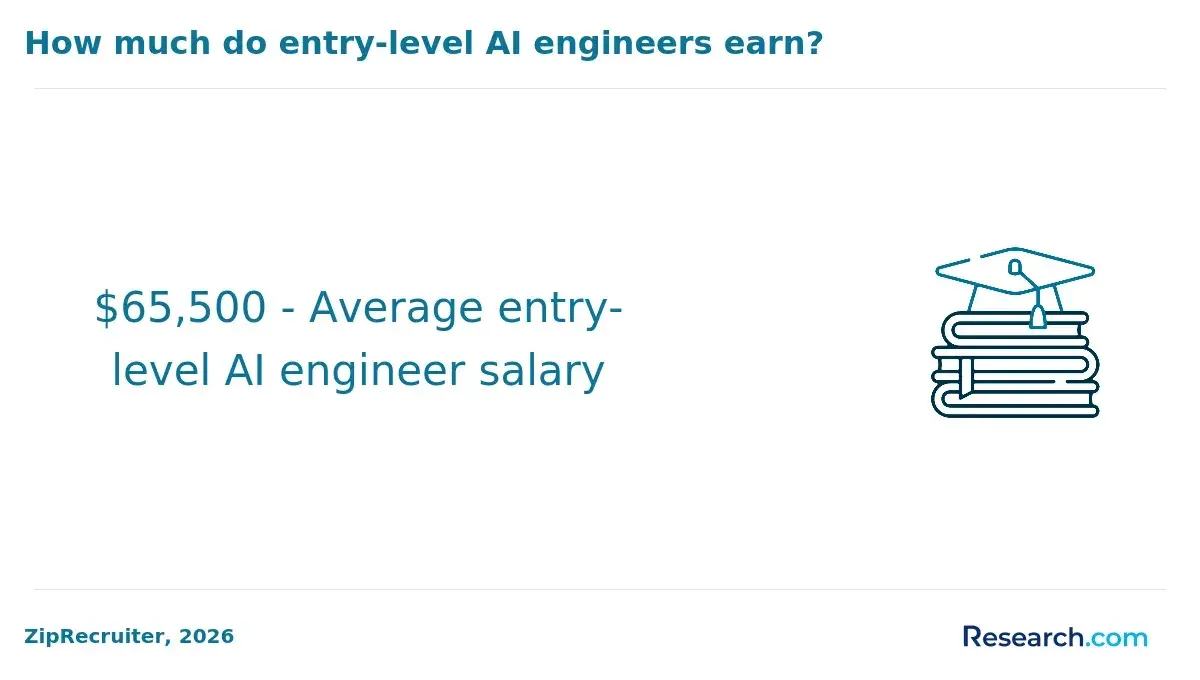
Employers seek candidates combining formal AI education with real-world experience. Additional certifications in cloud platforms, programming languages like Python, or AI frameworks further enhance employability. Entry-level salaries typically range from $50,000 to $70,000, influenced by location and demand.
Graduates usually find opportunities in industries such as technology startups, healthcare, finance, and manufacturing, where AI-driven automation and analytics are rapidly expanding. Practical experience and recognized AI education position candidates strongly in today's competitive labor market.
What are typical salaries and job outlook for AI-related roles after an associate degree?
Associate degree holders seeking careers related to artificial intelligence often begin in roles such as computer support specialists, which typically earn around $60,000 annually, according to the U.S. Bureau of Labor Statistics. These positions serve as entry points into AI-adjacent IT careers and often lead to specializations that offer higher pay.
The job outlook remains strong due to the widespread adoption of AI across sectors like healthcare, finance, and manufacturing. Positions accessible to those with an associate degree include AI technician, data analyst assistant, and machine learning support specialist, especially when combined with relevant experience or certifications.
Salary growth frequently depends on expanding skills in programming, data science, or cloud computing. Entry-level AI technicians may earn between $55,000 and $65,000, while experts who master certain AI tools can command $75,000 or more.
Key strategies for success include:
- Gaining hands-on experience through internships or AI-focused projects.
- Obtaining industry-recognized certifications to enhance your résumé.
- Using credit for prior learning to advance more quickly in specialized AI programs.
Targeting employers that actively integrate artificial intelligence and aligning skills with industry needs will improve your career prospects post-degree.
Other Things You Should Know About Artificial Intelligence
An associate degree in artificial intelligence provides foundational knowledge and technical skills suitable for entry-level positions. While it may qualify you for roles such as AI technician or data analyst assistant, many advanced AI careers require at least a bachelor's degree. However, combining this degree with relevant work experience or certifications can improve job prospects significantly.
Yes, many artificial intelligence associate degree programs allow transfer of credits from related fields like IT or computer science. These courses often cover overlapping prerequisites such as programming, mathematics, and algorithms. Applying these credits can reduce the time and cost of completing the AI associate degree.
Graduates with an AI associate degree often pursue careers in fields like data analytics, machine learning support, AI programming assistance, and automation technology. These roles typically involve supporting AI system development, maintaining databases, or managing AI-related software tools. Many graduates use the associate degree as a stepping stone toward further education for higher-level AI roles.
In 2027, the credit for prior learning in AI associate degrees involves assessing an individual's previous academic coursework, professional certifications, or work experience to potentially waive certain course requirements. For those interested in advancing further, exploring an artificial intelligence in healthcare master's may offer additional options.
References
- Inside the AI Curriculum: The Skills You'll Use on the Job | IWU https://www.indwes.edu/articles/2025/12/inside-ai-curriculum-skills-youll-use-job
- Best Online AI Degrees: 2025 Rankings & Program Directory - MastersInAI.org https://www.mastersinai.org/degrees/online-artificial-intelligence-degrees/
- Higher Education AI-Powered RPL & CPL: Turn Prior Learning Assessment into Enrolment Revenue - SkillsAware https://skillsaware.com/solutions/higher-education/
- Digital Education Council | Certificate in AI for Higher Education https://www.digitaleducationcouncil.com/digital-education-council-certificate-in-ai-for-higher-education
- 16 Artificial Intelligence Career Paths https://www.calmu.edu/news/artificial-intelligence-career-paths
- AI Careers - Top AI Jobs with Education Requirements and Pay https://aidegreeprograms.org/ai-careers/
- Associate Degree in Artificial Intelligence https://aidegreeguide.com/degrees/ai-associate-degree-and-certificate-programs/
- Do AI Degree Programs Worth It?Cost,Time, Career Alternative https://agilefever.com/artificial-intelligence-degree-programs/
- Accelerate Your Education At AIU® https://www.aiuniv.edu/admissions/accelerate-prior-learning-credits
- How long will the courses take? https://www.elementsofai.com/ie/faq/how-long-will-the-courses-take