2027 Is an Online Ed.D. in Leadership and Learning in Organizations a Good Fit for International NGO Managers?
Audited and Verified:
Our Editorial and Data Verification Process
Research.com uses government datasets, official education statistics and primary institutional information to support its career and degree guides. Our review process checks factual accuracy, occupational definitions, source dates and the requirements associated with the credentials discussed.
How This Article Was Fact-Checked
Our editorial team verifies salary estimates, employment projections, education requirements and program information against original data providers and official organizations. Salary figures are checked against the relevant occupational definitions and reporting periods. Information about licensure, accreditation and required in-person training is reviewed separately.
Fact-checked and verified on:

Co-Founder and Chief Data Scientist
International NGO managers often lead staff development and organizational change across countries, but a doctorate is a substantial commitment for work that may not require one. An online Ed.D. in Leadership and Learning in Organizations could strengthen your ability to evaluate programs and lead improvement - if its schedule, research requirements, and cost fit your role. This guide helps you judge the degree against your career goal, assess its practical demands across borders, and identify when a shorter or more specialized pathway would serve you better.
Key Things You Should Know
- An online Ed.D. is most useful when you already lead people or programs and need advanced skills in organizational learning, change, and applied evaluation - not merely a higher credential.
- Check overseas enrollment, live-session time zones, project-site permissions, and the full cost before applying; "online" does not necessarily mean self-paced or entirely remote.
- For US management analysts, a possible consulting comparison, the Bureau of Labor Statistics projects 10.1% employment growth from 2025 to 2035. That is not an NGO-specific forecast or a promise of work for Ed.D. graduates.
Is an online Ed.D. in Leadership and Learning a good fit for NGO managers?
Usually, it is a conditional fit. The strongest candidate is an experienced manager who can apply doctoral study to a continuing challenge - such as helping country teams share effective practices or assessing whether leadership training changes how managers work. The degree is less compelling if the immediate need is grant administration, a promotion that depends chiefly on field experience, or a technical monitoring-and-evaluation skill that a shorter course could teach.
The choice depends on the work you want to do, not the prestige of the credential. These pathways address different gaps for an NGO manager.
| Pathway | Best fit | Main limitation |
| Leadership and learning Ed.D. | Leading organizational learning and investigating a practice-based problem | Requires sustained doctoral work and a feasible applied project |
| MPA or relevant management degree | Building public-service management, policy, budgeting, or operations expertise | May offer less depth in adult learning and applied doctoral inquiry |
| Targeted training or employer development | Closing a defined evaluation, facilitation, or management skill gap | Offers less time and structure for sustained organizational research |
If your aim is broad organizational leadership rather than learning-focused inquiry, compare the curriculum and total cost with low-cost doctoral study in organizational leadership. A less expensive doctorate is not a better fit if it lacks the methods or faculty guidance your NGO problem requires.
What does an Ed.D. in Leadership and Learning in Organizations prepare graduates to do?
A practice-oriented Ed.D. can prepare experienced professionals to diagnose learning and performance problems, design an improvement effort, evaluate evidence, and communicate findings to decision-makers. In an NGO, that might mean examining why training does not transfer to field practice before funding another training cycle. The manager would still need local expertise and authority to implement any recommendation.
Programs differ in how they assess that work: one may require a dissertation in practice, another a capstone or different doctoral project. None should be presumed to accept a routine workplace report as its final deliverable. Before enrolling, ask whether a project involving country offices or an external partner is permitted, who supervises it, and what employer approval and data protections are required. For a broader comparison of formally offered pathways, review types of Ed.D. programs and concentrations rather than inferring a specialization from a course title.
How can an Ed.D. advance an international NGO manager's career?
The degree may help a manager move from overseeing a single program toward organization-wide learning, leadership development, or evidence-informed change. Its value is strongest when the manager can pair doctoral work with documented responsibility: decisions made, stakeholders engaged, improvements attempted, and limitations honestly reported.
It will not substitute for experience with donor requirements, budgets, local partnerships, safeguarding, or operations in the regions where an NGO works. For a move into a new function, seek a cross-country initiative, an evaluation assignment, or mentorship alongside any degree. If your target is academic research rather than improving NGO practice, compare a research-oriented PhD; if you chiefly need stronger executive management skills, examine an MPA, MBA, or employer-sponsored development first.
Relevant coursework commonly addresses adult learning, leadership, organizational change, and qualitative or quantitative inquiry, but depth and required courses vary. For NGO managers, the useful test is whether the curriculum connects learning to implementation: Can you assess what field teams need, distinguish a training gap from a resource or governance problem, and evaluate an intervention without claiming more than the evidence shows?
Examine syllabi and project requirements rather than relying on a program description. Ask how students learn program evaluation, work with partners, and handle sensitive employee or beneficiary information. Access to identifiable records may require organizational authorization, data safeguards, and academic ethics review; an ordinary internal evaluation should not automatically be treated as exempt research. A course in analytics alone does not establish expertise in handling restricted data.
Online delivery does not by itself determine a doctorate's standing. Verify that the degree-awarding institution holds recognized US institutional accreditation, then check the exact degree designation, curriculum, faculty support, and doctoral completion requirements. Do not assume institutional accreditation means an organizational leadership Ed.D. holds a particular programmatic recognition or qualifies anyone for a regulated profession.
For an international career, also ask prospective employers or relevant credential-recognition authorities how they assess a US online doctorate. Hiring practices differ among NGOs and countries. A credible program should be able to explain its overseas enrollment rules, required attendance, project oversight, and degree documentation; it should not rely on claims that the doctorate guarantees executive appointments.
Requirements vary by institution. Programs may assess prior graduate education, academic performance, leadership experience, recommendations, a statement of purpose, and readiness for applied research. An education master's degree or a particular managerial title is not a universal prerequisite. International applicants should confirm whether their qualifications require a credential evaluation and whether English-language evidence is needed.
Present a specific organizational challenge, your actual decision-making role, and how you would study it without promising access to data you do not yet have. Ask admissions staff separately whether prior graduate work establishes eligibility and whether any credits can be applied to the doctorate. Applicants returning after an unfinished doctorate can also investigate online Ed.D. options for all-but-dissertation applicants, but must obtain a written, program-specific assessment rather than assume prior work will shorten the degree.
Completion depends on required credits, enrollment pace, course sequencing, and the final project. An applied project can take longer if a partner changes priorities or access to records is delayed. Request the program's published completion expectations and policies for interruptions before treating an advertised timeline as your own.
Compare the full expense, not just tuition: required fees, materials, travel and lodging for any campus convenings, payment or currency-conversion costs, and time away from work. Ask whether employer support is paid upfront or reimbursed, whether continued employment is required, and whether overseas students qualify for institutional aid. US federal student-aid eligibility should never be assumed for an applicant outside the United States. For a starting comparison, tuition-focused education doctorate program choices can help identify schools to investigate; confirm each school's current charges and requirements directly.
An online Ed.D. may let an NGO manager remain employed near their teams, but location flexibility is not scheduling flexibility. Live seminars may fall outside local working hours; group assignments, faculty meetings, and required campus visits can create further conflicts. Campus-based study may offer easier in-person collaboration, but relocation can disrupt employment and access to an existing NGO project site.
Before choosing, obtain the timetable in your time zone, attendance and residency rules, expected group-work arrangements, and a contingency for unreliable connectivity or a new field posting. If the campus alternative is a research-focused higher education doctorate, compare its funding separately: grant and scholarship options for higher education leadership research study do not establish that comparable aid is available for an NGO-focused professional Ed.D.
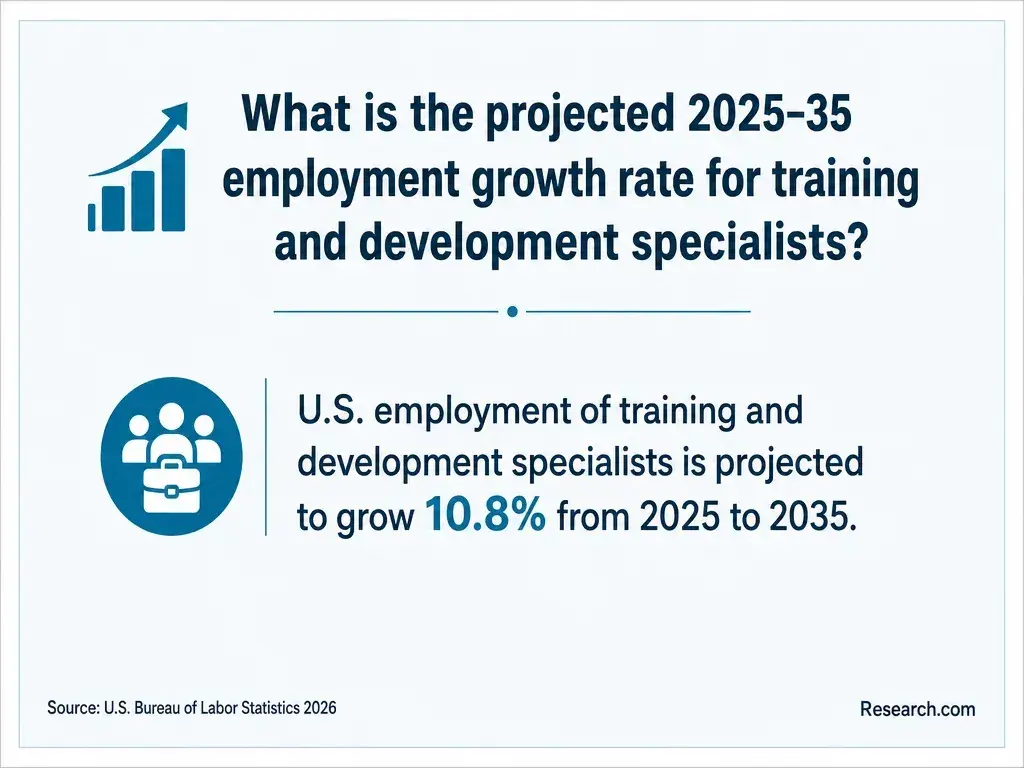
Relevant work includes organizational learning leadership, staff development, program-quality leadership, evaluation management, and consulting on organizational change. Titles vary widely: a training and development manager oversees learning functions, while an evaluation manager may need substantial methods and donor-reporting experience. Senior NGO roles also require operational judgment and sector credibility that coursework cannot replace.
US Bureau of Labor Statistics data offer context, not an NGO pay scale. The May 2025 median annual salary for management analysts was $101,860; that broad occupation can include organizational consultants across sectors. It does not describe international NGO compensation or the earnings of Ed.D. graduates. For a realistic decision, compare vacancies in your target organizations, locations, and functions with your existing qualifications before assigning the degree a financial return.
Do international NGO managers need licensure or professional certification?
General NGO management and organizational learning roles do not ordinarily require a US school-administrator license. A leadership and learning Ed.D. should not be mistaken for a state-approved pathway to teacher, principal, or superintendent licensure. If you intend to enter a regulated role, check the relevant authority's requirements and the program's written licensure disclosure before enrolling.
An employer may value a role-specific evaluation, project-management, or safeguarding credential, but that preference is different from a legal requirement. Compare job postings for your intended role and location: if they consistently seek a particular technical qualification rather than doctoral study, that is a reason to pursue the more direct credential first.
Other Things You Should Know About EdD Leadership
No. Admission to an online degree is separate from a US visa, immigration status, and employment authorization. Seek qualified immigration guidance if working in the United States is part of your plan.
Not automatically. Confirm the program's publication requirements and obtain the organization's permissions for its name, data, and intellectual property before sharing findings. Protect confidential staff and beneficiary information.
Ask the program in advance about attendance, deadlines, secure offline access, and leave policies. An online course may still require live participation that intermittent connectivity cannot support.
There is no universal recognition rule across employers and countries. Check the specific vacancy's degree criteria and ask the employer how it assesses the institution, credential, and online delivery.
- Maximizing the Impact and ROI of Leadership Development | nih.gov https://pmc.ncbi.nlm.nih.gov/articles/PMC11505461/
- Educational Leadership, Evaluation & Organizational Development | UofL | Information Technology Services https://education.louisville.edu/academic-programs/academic-departments/department-leadership-evaluation-and-development
- What Is Organizational Development? Why Leaders Need It | Edgewood College https://online.edgewood.edu/blog/what-is-organizational-development/
- Online Doctorate in Education and Leadership (Ed.D.) | Rockhurst University https://onlinedegrees.rockhurst.edu/online-edd-programs
- International Students | Penn GSE - University of Pennsylvania https://www.gse.upenn.edu/admissions-and-aid/how-to-apply/international-students
- International Applicants | Johns Hopkins https://publichealth.jhu.edu/offices-and-services/office-of-admissions-services/international-applicants
- In-Person Requirements | Dashew Center - UCLA https://internationalcenter.ucla.edu/in-person-requirements
- Public Service & Administration Capstone Projects | The Bush School of Government & Public Service https://bush.tamu.edu/research/capstone-projects/psa/
- International Applicants | How to Apply | Admission & Aid | Columbia University https://www.tc.columbia.edu/admission/how-to-apply/international-applicants/
- Online Doctor of Education in Leadership (EdD) | spalding.edu https://online.spalding.edu/programs/online-doctor-education-leadership