2027 Is an Online Ed.D. in Leadership and Learning in Organizations a Good Fit for Professional Services Practice Leaders?
Audited and Verified:
Our Editorial and Data Verification Process
Research.com uses government datasets, official education statistics and primary institutional information to support its career and degree guides. Our review process checks factual accuracy, occupational definitions, source dates and the requirements associated with the credentials discussed.
How This Article Was Fact-Checked
Our editorial team verifies salary estimates, employment projections, education requirements and program information against original data providers and official organizations. Salary figures are checked against the relevant occupational definitions and reporting periods. Information about licensure, accreditation and required in-person training is reviewed separately.
Fact-checked and verified on:

Co-Founder and Chief Data Scientist
Leading a professional services practice means developing people while meeting client commitments and protecting billable capacity. An online Ed.D. in leadership and learning in organizations could strengthen how you build managers, transfer expertise, and evaluate change - but it is a substantial investment, not a standard requirement for practice leadership.
This guide helps partners, directors, and practice managers decide whether doctoral study addresses a problem they actually own, what to check before enrolling, and when a more focused development route would serve them better.
Key Things You Should Know
- An Ed.D. is most relevant when you can apply learning and organizational research to a practice-wide challenge, such as developing new engagement leaders or improving knowledge transfer.
- It is rarely necessary for promotion to practice leader; client relationships, commercial judgment, delivery results, and people leadership remain central.
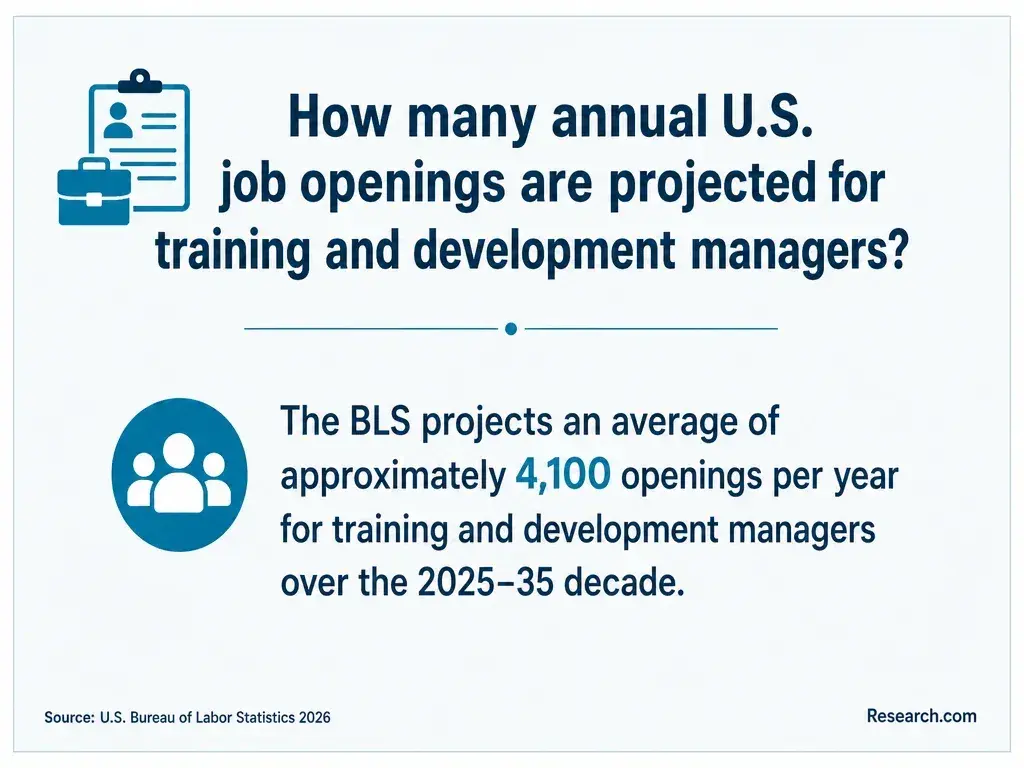
- The U.S. Bureau of Labor Statistics reports a $133,000 median annual salary for training and development managers in 2025, but that occupational figure is not an Ed.D. graduate salary or a forecast of your return on tuition.
What Is an Online Ed.D. in Leadership and Learning in Organizations?
An Ed.D. is a professional doctorate that applies scholarship and research methods to problems of practice. In a leadership and learning program, those problems may involve adult development, organizational change, leadership pipelines, or how a firm shares expertise. "Online" describes where much of the instruction occurs; it does not establish that classes are self-paced or that campus visits are unnecessary.
For a practice leader, the distinction is between running a training program and investigating whether the firm's systems help people perform. A recurring shortfall among new engagement managers, for example, might involve coaching, staffing incentives, workload, or decision authority - not simply a missing course. The Ed.D. is potentially useful when you want to diagnose and evaluate such interconnected issues. It is distinct from a research-oriented PhD and from a business-focused DBA; each program's actual curriculum and final project matter more than its degree label alone.
Is an Online Ed.D. a Good Fit for Professional Services Practice Leaders?
Yes, potentially - if you already lead people or practice operations and want to improve how the firm develops capability across teams. The degree is less compelling if your immediate goal is winning accounts, learning a technical specialty, or securing a partner title. Those goals usually depend more directly on commercial performance, domain expertise, and demonstrated leadership.
The strongest fit is a leader with authority to test an improvement, access to usable evidence, and support from colleagues who would implement it. A possible doctoral question is whether a redesigned manager-development process improves the quality of feedback across engagements. That question still needs a feasible measure, faculty approval, firm permission, and safeguards for employee and client information. An ordinary client assignment is not automatically an approved doctoral project. Compare programs' applied-project routes through an education doctorate rather than assuming every Ed.D. uses the same dissertation or capstone model.
If the need is narrower, an employer-sponsored leadership program, coaching, or targeted training in change management or evaluation may produce usable skills sooner and at lower cost. If your principal aim is business strategy or firm economics, compare an MBA or DBA instead. Choose the Ed.D. for sustained inquiry into learning and organizational performance, not for the perceived prestige of a doctorate.
What Careers Can an Ed.D. in Leadership and Learning Lead To?
An experienced practice leader may use the degree to deepen an existing role: building a leadership pipeline, overseeing firm-wide professional development, or advising clients on organizational change. A move into talent development or organizational consulting is possible, but employers will still assess your functional experience and results. The degree alone does not qualify someone for a partner appointment or an executive position.
The adjacent roles differ. A training and development manager owns learning strategy, staff, budgets, and implementation. An organizational consultant diagnoses a client's operating problem and recommends changes. A practice leader remains accountable for client delivery and business performance while deciding how the practice develops its people. If you want to change functions, seek a sponsored cross-practice initiative and document your contribution before relying on the credential to make the transition.
Relevant study can include adult learning, leadership theory, organizational culture, change implementation, research methods, and program evaluation. For professional services, the value lies in connecting these subjects to decisions: how new hires acquire tacit expertise, why managers do or do not coach, and whether a development initiative changes work practices rather than merely earning positive course ratings.
Inspect syllabi and project requirements for the depth you need. A course on learning analytics, for instance, does not by itself establish advanced measurement expertise. Useful preparation should address credible indicators, alternative explanations for apparent improvement, and responsible handling of employee or client data. Confirm whether the program permits a workplace-based project and who must approve its scope.
Requirements vary by institution. Programs may review prior degrees, graduate transcripts, professional experience, recommendations, a statement of purpose, and evidence that the applicant can undertake doctoral work. A master's in education or a particular job title is not a universal prerequisite. A practice leader can make a stronger case by describing decisions they owned, people they developed, and a genuine organizational problem they want to investigate - without claiming results they have not measured.
Ask admissions staff separately whether prior graduate study meets entry requirements and whether any credits can satisfy doctoral coursework. Those are different decisions. If you previously left a doctorate unfinished, reviewing Ed.D. completion programs for ABD applicants may be worthwhile, but obtain a written evaluation before assuming that earlier work will shorten this degree.
There is no reliable single timeline or price for online Ed.D. programs. Required credits, course sequencing, enrollment pace, convenings, and the final project's approval process all affect completion. When comparing Ed.D. completion timelines, check the published schedule against the time you can actually protect during client-delivery peaks; an accelerated calendar is useful only if you can sustain it.
Request a written estimate covering tuition, mandatory fees, travel, and the cost of any additional terms if the project takes longer. Then compare it with your employer's reimbursement policy, including caps, eligibility, continued-employment conditions, and repayment obligations. The opportunity cost may be just as important: study hours taken from business development, billable work, or time off. Do not base the decision on an assumed promotion or salary increase.
An online Ed.D. can be credible when the institution is appropriately accredited and the program provides rigorous coursework, faculty guidance, research oversight, and meaningful assessment. Delivery mode alone does not establish quality. It also does not tell you whether the program requires live attendance, group work, or campus convenings.
For a practice leader, test credibility against practical conditions: Can faculty guide a project involving confidential firm operations? Are the attendance rules compatible with client travel? Will you have a workable project if you change employers? Apply those checks even when reviewing online doctorates in education with affordable study routes; a lower advertised price does not resolve questions about academic support or total cost.
Professional services practice leadership generally does not require an Ed.D. license, and the degree does not replace credentials required for a particular field, such as accounting or another regulated profession. Nor should an organizational leadership Ed.D. be assumed to prepare graduates for teacher or school-administrator licensure.
If a target role has a legal or employer-imposed credential requirement, check that requirement with the relevant regulator or employer and ask the university for its applicable licensure disclosure. Evaluate the doctorate as additional preparation for leadership and inquiry, not as a substitute for professional authorization.
No occupational median describes what Ed.D. graduates - or professional services partners - will earn. The U.S. Bureau of Labor Statistics figures below describe adjacent occupations, not outcomes attributable to a doctorate. They are most useful if you are considering a move from practice leadership into a different function.
| U.S. occupation | Median annual salary, 2025 | Projected employment growth, 2025-2035 |
| Training and development managers | $133,000 | 6.4% |
| Management analysts | $101,860 | 10.1% |
Management analysts include organizational consulting work, but their median combines workers with different education and experience. Neither figure predicts compensation at your firm. For an internal advancement decision, compare the doctorate's full cost with your firm's actual promotion criteria and the responsibilities you are positioned to take on.
How Can You Choose an Accredited Online Ed.D. Program?
Start with the problem you expect to work on, then assess programs against it. Verify the institution's accreditation through the recognized accreditor and the institution itself; also confirm the exact degree awarded and whether the curriculum emphasizes organizational learning rather than school administration. Program materials should identify the final project's requirements and any campus attendance.
Before applying, get answers to the questions that determine whether study is workable for your practice:
- Which classes are live, and what attendance is required when client work conflicts?
- Can a project use firm data, and what faculty, employer, privacy, and ethical approvals would be needed?
- What happens to project progress if your employer or project sponsor changes?
- What is the estimated full cost at your intended pace, including travel and extra terms?
Compare written answers, not just marketing descriptions. If a higher education administration degree is also on your shortlist, information on financial support for online higher education leadership doctorates can inform the cost comparison, but confirm that its curriculum fits professional services before treating it as an alternative.
Other Things You Should Know About EdD Leadership
An earned Ed.D. supports use of the doctoral title. In client-facing settings, state your degree and professional role clearly so no one mistakes the title for a medical or other regulated qualification.
Ownership and permitted use depend on university rules, employment agreements, client contracts, and project approvals. Clarify publication, intellectual property, and confidentiality terms before selecting the topic.
Not automatically. A firm may value a project while treating coursework and academic writing as nonbillable. Obtain explicit approval before assigning study time or costs to a client engagement.
Describe the question, your methods, and your responsibilities without disclosing restricted client, employee, or firm information. Obtain permission before sharing a report, dataset, or identifying details.
- Maximizing the Impact and ROI of Leadership Development | nih.gov https://pmc.ncbi.nlm.nih.gov/articles/PMC11505461/
- Qualified Ed expenses | Internal Revenue Service https://www.irs.gov/credits-deductions/individuals/qualified-ed-expenses
- Cost of Attendance (Budget) | 2025-2026 Federal Student Aid Handbook https://fsapartners.ed.gov/knowledge-center/fsa-handbook/2025-2026/vol3/ch2-cost-attendance-budget
- The Graduate Field Program and Capstone Evaluation Project | Applied Learning in Social Work Education Journal https://alswe.simmons.edu/article/the-graduate-field-program-and-capstone-evaluation-project/
- Consulting & Organization Development | Human Resources https://hr.duke.edu/professional-development/consulting-organization-development/
- M.A. in Leadership Studies: Capstone Project Papers | University of San Diego https://digital.sandiego.edu/solesmalscap/
- What is Cohort vs. Self-Paced Learning? - Wharton | Wharton Executive Education https://executiveeducation.wharton.upenn.edu/thought-leadership/wharton-online-insights/cohort-vs-self-paced-learning/
- Walden University's Guide to Doctoral Capstone Projects https://www.waldenu.edu/online-doctoral-programs/resource/guide-to-doctoral-capstone-projects
- EdD vs. PhD in Education: Choosing the Right Program | Goodwin College of Professional Studies https://drexel.edu/soe/resources/career-path/edd-vs-phd/
- Doctoral Application Requirements | Crown Family School of Social Work, Policy, and Practice https://crownschool.uchicago.edu/admissions/doctoral-admissions/application-procedures