2027 Online Ed.D. in Leadership and Learning in Organizations After a Master of Healthcare Administration: Admission and Credit Questions
Audited and Verified:
Our Editorial and Data Verification Process
Research.com uses government datasets, official education statistics and primary institutional information to support its career and degree guides. Our review process checks factual accuracy, occupational definitions, source dates and the requirements associated with the credentials discussed.
How This Article Was Fact-Checked
Our editorial team verifies salary estimates, employment projections, education requirements and program information against original data providers and official organizations. Salary figures are checked against the relevant occupational definitions and reporting periods. Information about licensure, accreditation and required in-person training is reviewed separately.
Fact-checked and verified on:

Co-Founder and Chief Data Scientist
A Master of Healthcare Administration can provide a strong foundation for leading teams and improving organizations, but it does not answer two consequential Ed.D. questions: Will a leadership and learning program admit you, and will it apply any MHA coursework toward the doctorate? The distinction matters because eligibility does not necessarily shorten the degree.
This guide helps healthcare administrators assess their academic preparation, request a meaningful credit evaluation, and decide whether an online Ed.D. advances a specific leadership goal before committing time and money.
Key Things You Should Know
- An MHA may meet an online Ed.D. program's master's-degree requirement; a master's in education is not universally required.
- MHA credits used to establish admission eligibility are not automatically transferable. Ask for a written evaluation showing which credits, if any, satisfy Ed.D. requirements.
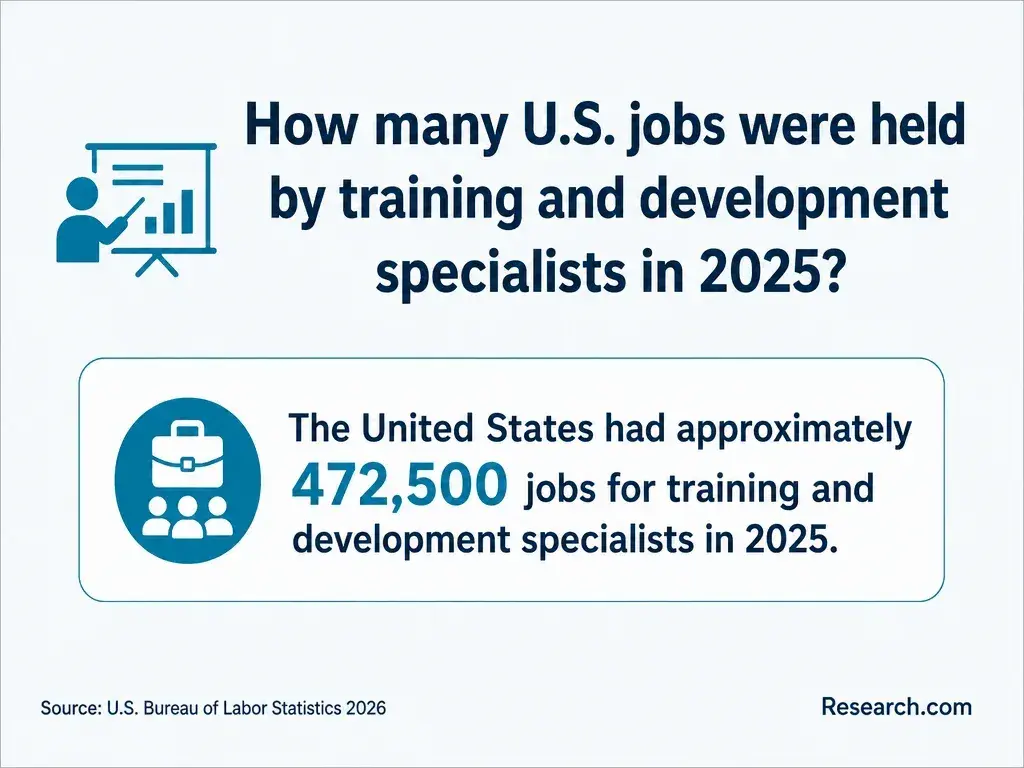
- Career value depends on the role, not the degree alone: the U.S. Bureau of Labor Statistics reports a $133,000 median annual salary for training and development managers in 2025, not for Ed.D. graduates generally.
What Is an Online Ed.D. in Leadership and Learning in Organizations?
An Ed.D. in leadership and learning in organizations is a practice-oriented doctorate focused on how people learn, lead change, and improve performance within organizations. For an MHA graduate, its potential value lies in extending healthcare management knowledge into workforce development, organizational learning, and evidence-based improvement - not repeating the MHA.
Programs with similar names can have different curricula and completion projects. "Online" describes where much instruction occurs; it does not establish whether classes are asynchronous, whether campus visits are required, or whether a dissertation in practice, capstone, or other project is required. Confirm the exact degree and requirements for your intended entry term. A general organizational leadership Ed.D. is also distinct from a school-administrator licensure program.
Can an MHA Graduate Apply to an Online Ed.D. in Leadership?
Often, yes - if the program accepts a completed master's degree outside education and the applicant meets its other conditions. An MHA can demonstrate preparation in organizational operations, finance, quality improvement, and management. Relevant healthcare leadership experience may strengthen an application, particularly when the applicant can explain a learning or change problem they have helped address.
Eligibility and competitiveness are different. A program might accept an MHA as the qualifying degree while still looking for evidence of professional responsibility, academic writing, and readiness to study organizational research. An applicant who has managed a training initiative should describe their decisions and evidence used, rather than relying on a managerial title or claiming an impact they cannot document.
Ask admissions whether your degree's awarding institution and academic field satisfy its policy. If your MHA is unfinished, do not assume its credits satisfy a completed-master's requirement; request a decision based on your actual transcript and expected completion date.
How Many MHA Credits Can Transfer Into an Online Ed.D.?
There is no universal transferable-credit amount. An Ed.D. may require a master's for admission yet apply none of that master's coursework to doctoral requirements. Another program may permit a limited number of eligible graduate credits, substitutions, or prerequisite waivers. Only the receiving institution can determine what applies to your degree.
The distinctions below help prevent the most costly misunderstanding: credit considered during admission is not necessarily credit that reduces coursework.
| Decision | What it means for an MHA graduate |
| Admission eligibility | The completed MHA satisfies a prior-degree requirement; doctoral requirements may remain unchanged. |
| Transfer credit | Approved prior coursework counts toward the Ed.D.'s required credits, subject to program limits. |
| Course substitution or waiver | Prior learning replaces or excuses a particular course; total required credits may or may not decrease. |
| Research preparation | An MHA methods course demonstrates readiness but does not necessarily replace a doctoral methods course. |
To obtain a usable answer, send official transcripts and, where requested, syllabi for potentially relevant MHA courses. Ask the program's admissions and academic-policy offices for a written determination identifying accepted courses, applicable Ed.D. requirements, any remaining credits, and whether the evaluation is final or conditional. Grades, course level and age, institutional recognition, and residency rules may matter. Coursework from multiple schools or an unfinished program needs its own review; quarter-system credits may also require conversion.
Prior doctoral work raises a different policy question from an MHA transfer request. If you previously completed doctoral coursework but not a degree, reviewing Ed.D. completion programs for ABD applicants may be more relevant than seeking credit for master's courses. Neither route guarantees a shorter program until the school issues a degree audit.
Requirements vary by institution and entry term. Common application materials include graduate transcripts, a résumé, recommendations, a statement of purpose, and sometimes an interview or writing sample. Schools set their own rules for minimum grades, professional experience, entrance tests, and exceptions; do not treat another program's checklist as authoritative.
For an MHA applicant, the strongest statement usually connects existing healthcare administration work to a specific leadership or learning challenge. For example, explain your responsibility for implementing staff development or assessing whether a change in workflow was adopted. Then identify what doctoral study would help you investigate. Do not present a proposed improvement project as completed research.
Check whether the program expects access to an organization for applied work and whether employer support is required at admission or only later for a project. Also confirm live-class attendance and campus-convening obligations before applying. Applicants who hold an education specialist credential instead of, or in addition to, an MHA face a separate progression question; guidance on Ed.S. progression into an online Ed.D. should not be assumed to describe MHA credit policies.
Evaluate the specific university and degree, not the label "online Ed.D." Verify the institution's accreditation with its recognized accreditor and confirm the degree listed by the university is the one you would earn. Institutional accreditation supports the standing of the institution; it does not mean that a general leadership doctorate qualifies someone for a regulated school-administrator role or carries a separate professional certification.
Employer recognition is also role-specific. A healthcare organization may value doctoral-level organizational research for a workforce-development position while prioritizing operational results and management experience for an executive opening. Review postings for your intended role and, if seeking internal advancement, ask the hiring manager how the credential would be assessed.
Price is not a substitute for these checks. When comparing affordable organizational leadership doctorates, verify each institution's accreditation, awarded degree, project requirements, and relevance to healthcare organizations before comparing tuition.
Coursework commonly connects leadership practice with adult learning, organizational change, and research or evaluation methods, but the required sequence differs by school. An MHA graduate should look for learning that adds to - not duplicates - their preparation: diagnosing workforce needs, designing professional learning, evaluating implementation, and interpreting organizational evidence responsibly.
Inspect required courses rather than relying on concentration labels. A course in leadership theory alone does not establish depth in instructional design; a research course alone does not establish competence with protected healthcare data. If your MHA included limited qualitative or quantitative methods, ask whether the Ed.D. provides introductory preparation before advanced applied research. Confirm how faculty supervise the actual capstone or dissertation requirement, particularly if your intended topic involves healthcare employees or patients.
Completion time depends on required credits, course sequencing, enrollment pace, and progress on the final project. Accepted MHA credits shorten the timeline only if they satisfy requirements that would otherwise need to be completed - and the remaining courses and project can actually be scheduled sooner. Request a degree plan based on your individual credit evaluation, not an advertised minimum completion time.
For cost, compare the school's published tuition basis with required fees and the cost of completing every remaining course. Include campus-convening travel, time away from work, and any employer reimbursement conditions. A waiver that does not reduce required credits may save neither tuition nor time. Online Ed.D. affordability and degree planning can help frame comparisons, but your written degree audit and the institution's charges should control your estimate.
Before enrolling, ask whether an employment change, slower course load, or project delay changes tuition, aid eligibility, or employer support. Online access can reduce commuting without making a cohort's meetings or deadlines self-paced.
The most direct opportunities build on existing healthcare experience: leading workforce learning, managing leadership development, evaluating organizational improvement, or consulting on change in healthcare settings. The MHA supplies sector and operational context; an Ed.D. may add deeper preparation in learning, implementation, and applied inquiry. Neither credential substitutes for experience managing people, budgets, or complex projects when a role requires it.
A move into higher education administration or teaching is possible but less direct. Employers may expect experience with university operations, instruction, or a particular academic discipline. If higher education is your target, compare role requirements before pursuing a specialized degree and investigate higher education leadership doctoral scholarships alongside the actual cost of that pathway; funding availability is not guaranteed.
If your immediate goal is a broader healthcare operations role, an employer leadership program, mentorship, or a cross-functional improvement assignment may be more direct than another degree. The Ed.D. is most compelling when the work you want to do calls for sustained expertise in how organizations learn and change.
There is no single reliable "Ed.D. salary." Pay follows the occupation, employer, location, and level of responsibility - not the degree title alone. The U.S. Bureau of Labor Statistics reports a 2025 median annual salary of $133,000 for training and development managers. That figure describes workers in the occupation, including people without an Ed.D.; it is not a starting salary or a projected raise for an MHA graduate.
For a personal financial decision, compare compensation in roles you can realistically pursue now with roles for which the doctorate would make you a stronger candidate. Factor in the full cost of study and any reimbursement agreement before attributing a possible career move to the degree.
What Job Outlook and Certifications Apply to Ed.D. Leadership Careers?
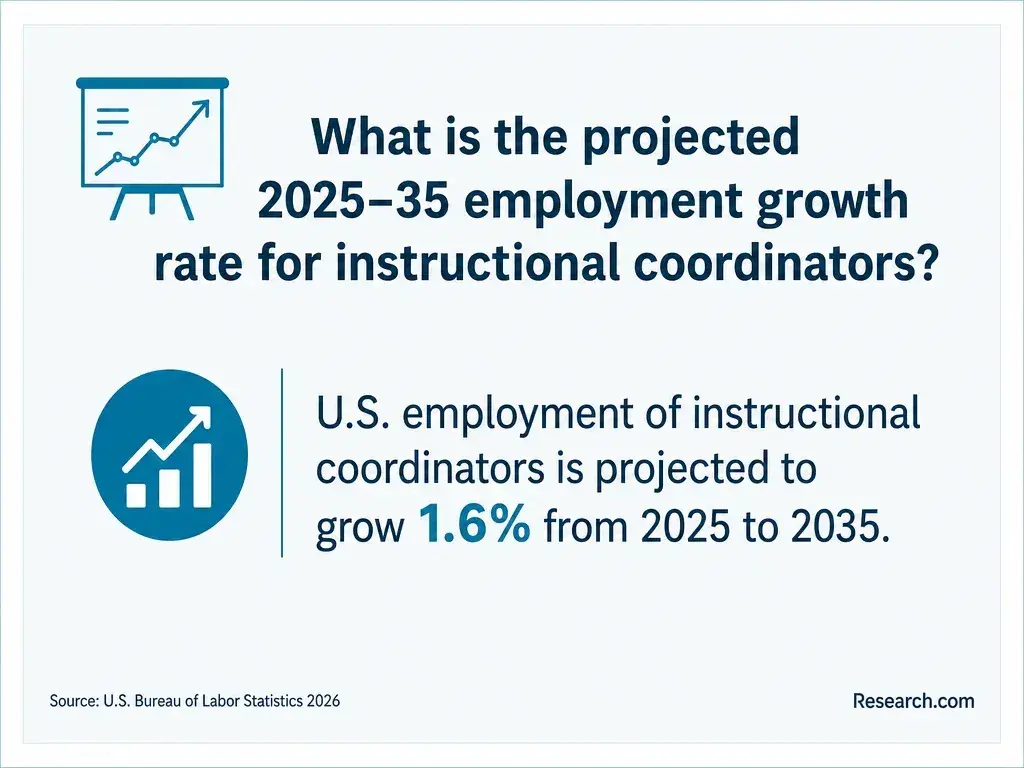
Demand varies across occupations. The U.S. Bureau of Labor Statistics projects 10.8% employment growth for training and development specialists from 2025 to 2035. That signals opportunities in a learning-focused occupation, but it does not measure demand for Ed.D. holders or predict openings in a particular healthcare system.
Certifications should be selected for the job, not accumulated as substitutes for experience. A healthcare employer might value a role-relevant credential in project management, quality improvement, or talent development, while another may prefer a record of implemented work. Check job postings and any certifying body's eligibility rules. A general leadership Ed.D. does not itself award such certifications or establish eligibility for educator or school-administrator licensure.
Other Things You Should Know About EdD Leadership
Not necessarily. Some programs permit an approved external partner, while others impose specific site or project rules. Confirm the options with the program before relying on a proposed organization.
Not without the required permissions and review. Check organizational data-access rules, privacy obligations, and the university's research-review process before collecting or using identifiable information.
Ask the university whether it can enroll students in your state and whether any required activities are available there. Online delivery alone does not resolve state authorization or placement restrictions.
Request the program's leave, reentry, and time-to-degree policies in writing. Also check how a pause affects financial aid, employer reimbursement, course sequencing, and any approved project site.
- Rule 3359-60-06.4 | Doctoral degree requirements. https://codes.ohio.gov/ohio-administrative-code/rule-3359-60-06.4
- Cost of Attendance (Budget) | 2025-2026 Federal Student Aid Handbook https://fsapartners.ed.gov/knowledge-center/fsa-handbook/2025-2026/vol3/ch2-cost-attendance-budget
- Online EdD Admission | UD-EDU https://educationonline.udayton.edu/edd/admission/
- Graduate School: Transfer Credits for Prior Coursework | wisc.edu https://policy.wisc.edu/library/UW-1216
- EdD in Educational Leadership - The University of Alabama | UA Online https://online.ua.edu/degrees/edd-in-educational-leadership/
- Admission requirements | NYU Steinhardt EdD in Leadership & Innovation https://leadershipinnovation.steinhardt.nyu.edu/admission-requirements/
- 2026 UNC Online EdD in Organizational Learning & Leadership https://online.unc.edu/online-doctoral-programs/online-edd-organizational-learning-and-leadership/
- Program Policies | Rural and Diverse Educational Leadership Doctoral Program | Southern Arkansas University https://www.saumag.edu/edd/program-policies/
- Leadership and Learning in Organizations Online Ed.D. | Peabody College of Education and Human Development https://peabody.vanderbilt.edu/academics/edd-programs/online-leadership-learning-organizations/
- Article - Graduate Credit | KU https://services.ku.edu/TDClient/818/Portal/KB/Article/21201/Graduate-Credit