2027 Paying for an Online Ed.D. in Leadership and Learning in Organizations: An Employer Asking for a Business Case for Sponsorship
Audited and Verified:
Our Editorial and Data Verification Process
Research.com uses government datasets, official education statistics and primary institutional information to support its career and degree guides. Our review process checks factual accuracy, occupational definitions, source dates and the requirements associated with the credentials discussed.
How This Article Was Fact-Checked
Our editorial team verifies salary estimates, employment projections, education requirements and program information against original data providers and official organizations. Salary figures are checked against the relevant occupational definitions and reporting periods. Information about licensure, accreditation and required in-person training is reviewed separately.
Fact-checked and verified on:

Co-Founder and Chief Data Scientist
Your employer is willing to consider paying for an online Ed.D. in leadership and learning - but wants a business case, not a description of the degree. That distinction matters: sponsorship competes with other uses of a development budget, and a doctorate may take years to complete. This guide helps working leaders and learning professionals connect a specific organizational problem to doctoral study, estimate the employer's full commitment, propose measurable deliverables, and identify conditions under which a shorter, less costly option would serve the organization better.
Key Things You Should Know
- Ask for a defined commitment, not open-ended tuition coverage: document the program's quoted charges, work-time needs, travel, payment schedule, and conditions for continued support.
- Build the case around an organizational decision you can influence, with approved access to baseline evidence and a realistic way to assess whether the work helped.
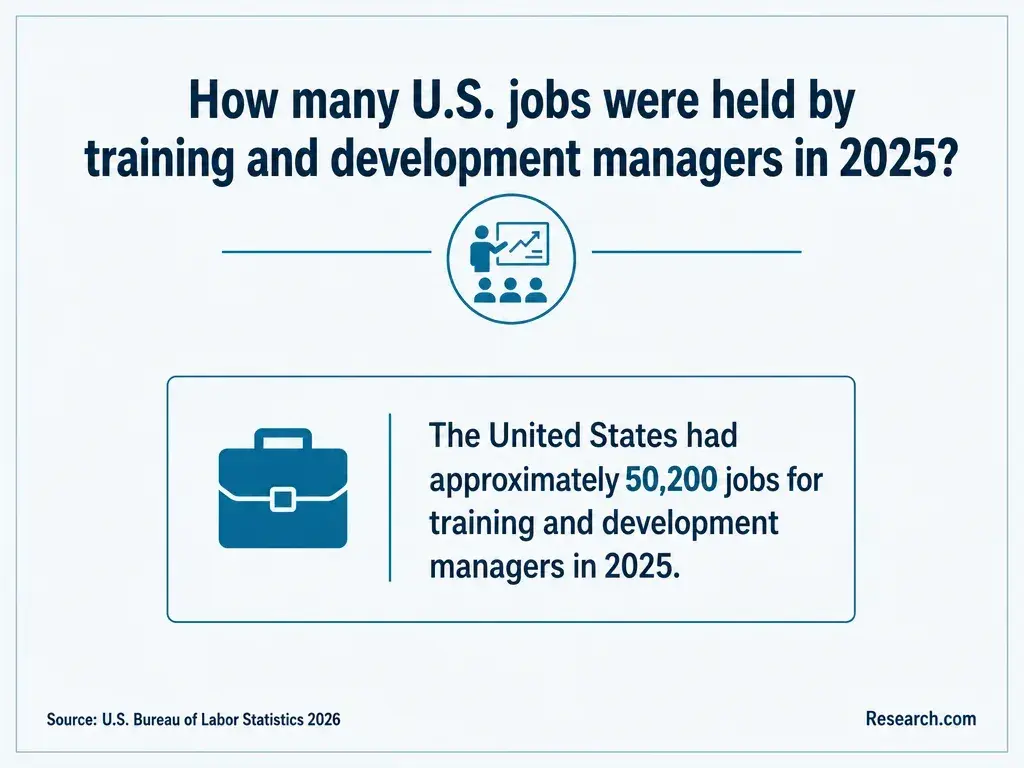
- The U.S. Bureau of Labor Statistics reports a $133,000 median annual salary for training and development managers in 2025; that occupational figure is not a forecast of your pay or a justification for employer reimbursement.
What Is an Online Ed.D. in Leadership and Learning in Organizations?
An Ed.D. in leadership and learning in organizations is a practice-oriented education doctorate focused on how people learn, lead, and implement change at work. It may be relevant in business, healthcare, government, nonprofits, and education. "Online" describes where some instruction occurs; it does not establish that classes are self-paced, that campus visits are unnecessary, or that workplace research can proceed without approvals.
Program titles and requirements differ. Before naming a school in a sponsorship request, confirm its exact degree, required courses, live meetings, campus obligations, and final doctoral project. If cost is already a constraint, a comparison of affordable online organizational leadership doctorates can help identify programs to investigate - but the employer should fund only a program whose curriculum fits its stated need.
How Can an Employer Build a Business Case for Sponsoring Your Ed.D.?
Frame sponsorship as a proposed investment in a defined capability and organizational problem, not as a promised return. A strong case explains what decision the employer needs to make, why existing staff development has not met that need, what you can reasonably deliver, and which benefits remain uncertain.
Use this sequence to prepare a brief proposal for your manager, budget owner, and HR or learning team:
- Specify the problem and your authority. For example, propose examining why a leadership-development program has inconsistent application on the job. Distinguish observed symptoms from untested explanations, and identify who can authorize changes.
- Choose a relevant learning pathway. Map required courses and the program's actual doctoral project to the problem. Compare the Ed.D. with a targeted evaluation course, executive education, or a supervised internal project; explain what the doctorate adds that those options cannot readily provide.
- Set proposed deliverables and decision points. These might include a needs-assessment plan, an evidence-informed intervention proposal, and an evaluation report. State when leaders will review each item and what decision it could inform; do not promise improved performance before measuring it.
- Define evidence and safeguards. Agree on feasible baseline and follow-up indicators, such as participation, observed use of a new practice, or an operational measure the organization already tracks. Specify data owners, access permissions, confidentiality rules, and any university review required before collecting information.
- Request precise support. State the amount and timing sought, any protected work time, travel approval, and a backup plan if a course or project conflicts with operations. Ask HR to put eligibility, grades, reimbursement, continued-employment terms, and any repayment provision in writing.
A useful business case also acknowledges attribution: an improved metric after a learning initiative does not, by itself, prove that doctoral work caused the change. If the organization mainly needs a near-term training redesign, sponsor a smaller pilot first and revisit the degree when its added value is clearer. For a broader view of possible funding arrangements, see higher education leadership doctoral grants and aid; verify every option with the actual institution and employer.
How Much Does an Online Ed.D. in Leadership and Learning Cost?
There is no reliable single price for this degree. Request an entry-term estimate from each institution and distinguish what the employer pays from what remains your responsibility. A tuition quote alone can understate a cohort program's cost if it omits fees, required travel, or additional terms needed to finish the doctoral project.
The table separates costs that are easy to overlook. Ask each school and your employer to fill in the amounts and payment rules before comparing offers.
| Cost component | What to verify | Business-case implication |
| Tuition and mandatory fees | Required credits or terms, billing basis, and possible rate changes | Establishes the likely payment schedule, not just an advertised rate |
| Travel and participation | Required convenings, lodging, technology, and accessibility-related arrangements | Clarifies expenses beyond tuition and time away from work |
| Project and completion costs | Continuation enrollment, approved research expenses, and time to finish | Shows what happens if completion extends beyond planned coursework |
| Work-time and household costs | Paid or unpaid leave, schedule coverage, and caregiving needs | Separates the employer's operational cost from the student's personal cost |
Calculate the proposed commitment as quoted charges plus approved expenses and any employer-paid time, stating each assumption. Subtract only funding that has been confirmed in writing; reimbursement after a passing grade is not the same as payment upfront. Compare full estimates - not advertised tuition alone - when reviewing education doctorate fees and total study costs. Ask the financial aid office about actual doctoral aid eligibility rather than assuming support comparable to a funded PhD.
Online delivery does not inherently make an Ed.D. a different degree. What matters is the awarding institution, the degree recorded on the transcript, and whether the program meets the academic and professional requirements relevant to your goal. Verify the institution's accreditation with its recognized accreditor and ask the school whether the online and campus pathways have the same award, curriculum expectations, and graduation requirements.
Accreditation does not establish that every employer will value two programs equally, that credits will transfer, or that the degree qualifies someone for a regulated position. For a sponsorship decision, give the employer the school's official degree and accreditation information, plus evidence that the program's required work addresses the organization's needs.
Relevant study may include adult learning, organizational change, leadership, research methods, and program evaluation. The business-case test is more specific: will required coursework help you diagnose the employer's problem, design a feasible response, and assess it responsibly? A course title alone does not demonstrate that you will gain advanced analytics skills or authority to change organizational policy.
Ask for the current curriculum and final-project requirements. If the need is primarily workforce learning, examine learning transfer and evaluation; if it is a cross-functional change problem, examine organizational diagnosis and implementation. A resource on comparing Ed.D. tracks before applying can help you distinguish a formally awarded concentration from an elective or a broadly named degree. Where the employer needs a narrow skill rather than sustained applied inquiry, a course or certificate may be a better purchase.
Requirements vary by institution and entry term. Programs may examine prior graduate education, transcripts, professional experience, recommendations, a statement of purpose, and evidence that an applicant can undertake doctoral-level work. Some may have additional tests, interviews, or project-related expectations; an education master's or executive title is not a universal prerequisite.
For this sponsorship scenario, confirm admission eligibility before requesting a firm funding commitment. Document your actual leadership decisions, an organizational learning problem you have permission to discuss, and the time available for study. Ask admissions whether employer access to a project site is expected, while keeping admission, employer sponsorship, and university approval of a future project as separate decisions.
Completion time depends on the program's required credits, course sequence, enrollment pace, and final-project rules. A published minimum timeline is not a promise that a working student will finish on that schedule. Live classes, team meetings, campus convenings, and project approvals can affect both attendance and progress even when instruction is online.
Ask the program for a term-by-term plan and its rules for interrupted enrollment or delayed projects; then ask your employer which parts of that schedule it can support. Prior doctoral study does not automatically shorten a new degree. If that applies to you, investigate online Ed.D. options for all-but-dissertation applicants and obtain a written evaluation of what, if anything, the school will recognize.
The degree may support advancement in learning and development, organizational development, talent management, consulting, or education and public-service administration. Those roles differ: a training manager oversees learning strategy and staff, while an organizational consultant diagnoses client problems and recommends changes. Neither position follows automatically from earning a doctorate.
For an employer already investing in you, the most credible career case is often an expanded internal responsibility: leading a larger evaluation, guiding a cross-functional change, or improving leadership-development decisions. Compare the target role's job description with your existing management and project experience. If the gap is chiefly operational leadership experience, seek a stretch assignment or mentorship alongside - or instead of - the degree.
No occupational median states what an Ed.D. graduate will earn. The U.S. Bureau of Labor Statistics reports a 2025 median annual salary of $133,000 for training and development managers and projects 6.4% employment growth for that occupation from 2025 to 2035. Those figures describe an occupation across workers with different credentials and experience, not the financial return from this degree.
For a sponsorship proposal, use your employer's actual pay bands, promotion criteria, and staffing plans instead of applying a national median to yourself. An employer may gain useful organizational capability without granting a raise; conversely, a potential promotion should not be counted as a financial benefit unless the employer has identified the role and its requirements.
Does an Online Ed.D. Require a Professional License or Certification?
Most organizational learning and development work does not require a professional license solely because it uses leadership or training skills. An Ed.D. also does not automatically confer a certification or qualify a graduate for a regulated school-administrator position. If your employer's intended role is licensed or otherwise regulated, check the program's disclosures and the relevant state authority's requirements before including that role in the business case.
For an unregulated role, ask whether the employer values a particular certification, demonstrated project results, or management experience more than a doctorate. Sponsoring the credential that matches the job requirement is a better use of funds than assuming the highest degree is necessarily the best fit.
Other Things You Should Know About EdD Leadership
Possibly. Ask whether the university permits the proposed enrollment and whether the employer can approve a limited pilot. Confirm in writing whether that course would later count toward the Ed.D.; do not assume it will.
Ownership and sharing depend on university rules, employment agreements, and any project-specific arrangement. Have the relevant offices clarify intellectual property, confidential information, and permission to publish before starting.
Tax treatment depends on the employer's education-assistance plan and applicable tax rules. Ask payroll or a qualified tax adviser how the proposed payments would be handled; do not assume all sponsored doctoral costs receive the same treatment.
It depends on the collective bargaining agreement and employer policy. Review the applicable education-benefit provisions and consult your union representative or HR before seeking a separate arrangement.
- Change Management: From Theory to Practice - PMC https://pmc.ncbi.nlm.nih.gov/articles/PMC9462626/
- Measuring Student Success In IPEDS: Graduation Rates (GR), Graduation Rates 200% (GR200), And Outcome Measures (OM) https://nces.ed.gov/ipeds/use-the-data/measuring-student-success-in-ipeds
- Frequently asked questions about educational assistance programs | Internal Revenue Service https://www.irs.gov/newsroom/frequently-asked-questions-about-educational-assistance-programs
- Types of Financial Aid: Grants, Work-Study, and Loans | studentaid.gov https://studentaid.gov/understand-aid/types
- Online EdD Admission | UD-EDU https://educationonline.udayton.edu/edd/admission/
- Employer-Provided Educational Assistance Benefits | aau.edu https://www.aau.edu/resource-library/employer-provided-educational-assistance-benefits-irc-sec-127
- Conflict of Interest and Student Interaction with Industry | Graduate School https://gradschool.missouri.edu/policy/student-interaction-with-industry/
- Online Ed.D. in Higher Education | Rockhurst University https://onlinedegrees.rockhurst.edu/programs/online-edd-education-leadership/higher-ed
- How to Ask Your Employer to Pay for Education | Northeastern Online https://online.northeastern.edu/resources/how-to-ask-employer-tuition-reimbursement/
- Tuition and Financial Aid - UNC-Chapel Hill Online https://online.unc.edu/online-doctoral-programs/online-edd-organizational-learning-and-leadership/admissions/tuition-financial-aid/