2027 Online Ed.D. in Leadership and Learning in Organizations: Degree Fit for Leaders Tackling Managers Avoiding Difficult Performance Conversations
Audited and Verified:
Our Editorial and Data Verification Process
Research.com uses government datasets, official education statistics and primary institutional information to support its career and degree guides. Our review process checks factual accuracy, occupational definitions, source dates and the requirements associated with the credentials discussed.
How This Article Was Fact-Checked
Our editorial team verifies salary estimates, employment projections, education requirements and program information against original data providers and official organizations. Salary figures are checked against the relevant occupational definitions and reporting periods. Information about licensure, accreditation and required in-person training is reviewed separately.
Fact-checked and verified on:

Co-Founder and Chief Data Scientist
When managers postpone difficult performance conversations, employees may lose the chance to improve and teams may receive inconsistent signals about expectations. For leaders responsible for developing managers, the challenge is deciding whether the problem calls for better coaching, changes to the performance system, or deeper organizational inquiry. This article explains when an online Ed.D. in leadership and learning in organizations can help, what it cannot fix on its own, and how to evaluate programs against the work you need to do.
Key Things You Should Know
- Start with diagnosis, not a degree: Avoidance may reflect weak conversation skills, unclear standards, incentives, or distrust. Each calls for a different response.
- An Ed.D. fits a sustained organizational challenge: It is most useful when you can lead cross-team improvement, study how managers learn, and evaluate change - not when you need a short course in giving feedback.
- Do not treat pay data as a return-on-investment forecast: The US Bureau of Labor Statistics reports a $133,000 median annual salary for training and development managers in May 2025, not for Ed.D. graduates specifically.
What Is an Online Ed.D. in Leadership and Learning in Organizations?
An Ed.D. is a practice-oriented doctorate. A program focused on leadership and learning in organizations generally examines how adults develop, how leaders influence organizational systems, and how to investigate problems in professional practice. "Online" describes where much of the instruction occurs; it does not necessarily mean self-paced study or eliminate live meetings and campus visits.
For the performance-conversation problem, the useful distinction is between teaching a manager what to say and understanding why many managers do or do not act. Doctoral study may help a leader connect adult learning, organizational culture, implementation, and evaluation. Program titles and required projects vary, however; a course mentioning coaching does not establish a formal coaching specialization. Readers comparing adjacent fields can review different education doctorate specialization pathways, then verify each school's awarded degree and curriculum.
Is This Ed.D. Right for Leaders Avoiding Difficult Performance Conversations?
Possibly - but only if the avoidance is part of an organizational learning or change problem you are positioned to address. A leader who needs to conduct their own first difficult conversation will usually benefit sooner from supervised practice, feedback, and appropriate HR guidance. A leader responsible for improving how hundreds of managers set expectations, respond to poor performance, and learn from experience may have a stronger case for an Ed.D.
The same visible behavior can have different causes. This comparison helps separate a manager skill gap from conditions that training alone cannot repair.
| Possible explanation | Evidence worth checking | More relevant response |
| Managers lack conversation practice | Role-play observations, manager requests for help, and feedback on existing training | Coaching, rehearsal, and job aids |
| Performance standards are unclear | Conflicting goals, inconsistent ratings, and disputed expectations | Clarify criteria and decision responsibilities before retraining |
| Managers expect adverse consequences for speaking up | Escalation practices, employee relations concerns, and reports of inconsistent support | Review leadership behavior, safeguards, and HR processes |
| A recurring problem persists across units | Comparable process evidence from multiple teams, gathered with appropriate authorization | Organizational diagnosis and a measured improvement effort |
These are hypotheses, not a diagnosis of any particular workplace. To test whether doctoral study would add value, work through the following sequence with the people authorized to address the issue:
- Define the behavior precisely: Which conversations are being delayed, and what should happen instead?
- Check the system as well as the individual: Review expectations, manager workload, escalation routes, and the support available after a conversation.
- Choose proportionate evidence: Consider aggregate process measures and voluntary, appropriately governed feedback rather than assuming access to private personnel records.
- Match the response to the finding: Pilot coaching for a skill gap, change a flawed process, or pursue a broader improvement study if the problem spans teams.
An Ed.D. becomes more compelling if you have the authority and organizational support to carry out that broader work, want sustained preparation in applied inquiry, and have a career goal beyond solving this one issue. It is a poor substitute for immediate manager training, legal or employee-relations advice, or a decision by senior leaders to change harmful incentives. A doctoral project would also require the program's academic approval and any applicable employer permissions, privacy safeguards, and research review.
What Careers Can an Online Ed.D. in Leadership and Learning Support?
For an established learning and development or organizational leader, the degree may support work designing leadership development, evaluating management practices, or leading cross-functional change. Relevant roles include training and development manager, organizational development leader, talent development leader, and organizational consultant. These jobs differ: a training manager oversees development programs, while a consultant may diagnose processes and advise multiple clients.
Experience remains decisive. Someone who has facilitated workshops but has not managed a change initiative should seek responsibility for a scoped organizational project, mentorship, and evidence of implementation before assuming a doctorate will qualify them for a director role. For a leader already responsible for a large performance-management system, an Ed.D. may deepen their methods; an MBA or targeted executive program may be a better fit if the primary gap is business operations rather than learning and applied inquiry.
The most relevant curriculum combines adult learning, leadership and organizational change, and applied research. Adult learning can inform how managers practice conversations and transfer that practice to work. Organizational analysis can reveal why a well-designed workshop fails when supervisors lack time, clear standards, or support. Research and evaluation courses can help distinguish evidence of participation from evidence that management practice changed.
Look for opportunities to practice needs assessment, interview or survey design, implementation, and interpretation - not just to discuss leadership theories. A feasible applied project might examine an authorized manager-development pilot using a baseline process measure and follow-up evidence, while acknowledging that changes could reflect workload or policy shifts rather than the pilot alone. Whether such a project satisfies a capstone or dissertation requirement depends on the program; completion of a course assignment is not the same as an approved doctoral study.
Requirements vary by institution. Programs may request a master's degree, transcripts, recommendations, a statement of purpose, and evidence of professional experience; some also assess an applicant's proposed problem of practice. A managerial title alone says less than a clear account of decisions you made, people you developed, and organizational changes you helped implement.
For this topic, describe the performance-conversation challenge without claiming you already know its cause or have achieved results you cannot document. Explain what you can realistically investigate and whether your employer could support appropriate access. Ask admissions staff separately whether prior graduate work meets entry requirements and whether any credits would apply to the doctorate. Applicants who hold an education specialist degree can examine education specialist to education doctorate programs, but should obtain a written evaluation before assuming a shorter path.
Online study can let a working leader remain in their organization while investigating a real problem. Campus-based study may make in-person collaboration more routine. Neither format, by itself, establishes the quality of faculty guidance, research preparation, or peer learning.
For a manager-development project, ask when live classes and team meetings occur, whether campus convenings are required, and how faculty supervise workplace inquiry. Also ask what happens if your employer changes or permission to use a project site is withdrawn. If speed is a priority, comparing the fastest online Ed.D. formats can help frame the search, but confirm whether the pace leaves enough time for organizational approval, implementation, and evaluation. Online access is not the same as flexible attendance.
Completion time and price depend on the program's required credits, enrollment pace, project structure, and tuition rules. A delay in securing a workplace partner or completing an approved study can extend the timeline even after coursework ends. Without a specific school's published charges and requirements, a reliable total cannot be stated.
Compare written estimates that include tuition, mandatory fees, technology charges, any campus travel, and the cost of continued enrollment during the final project. Then check employer reimbursement limits, continued-employment conditions, and how much work time the degree would require. Inexpensive education doctoral study options may provide a starting shortlist, but the lowest advertised tuition is not necessarily the lowest total cost for your situation. If a short coaching program would address the documented gap, compare its cost and speed before committing to a doctorate.
Organizational leadership and learning roles generally do not require a license simply because a person holds an Ed.D. The degree also does not automatically award a coaching certification, HR credential, or authority to practice a regulated profession. Employers may value such credentials for particular jobs, but their requirements are separate from degree completion.
If your goal is principal, superintendent, counseling, or another regulated position, verify both the program's licensure disclosures and the relevant state authority's rules. A broadly focused organizational Ed.D. should not be presumed to satisfy school-administrator preparation requirements.
There is no single Ed.D. salary: compensation follows the occupation, responsibilities, sector, location, and experience. According to the US Bureau of Labor Statistics, training and development managers had a median annual salary of $133,000 in May 2025. That figure describes people employed in the occupation, not the earnings of new doctorate holders or a likely raise for someone who improves manager conversations.
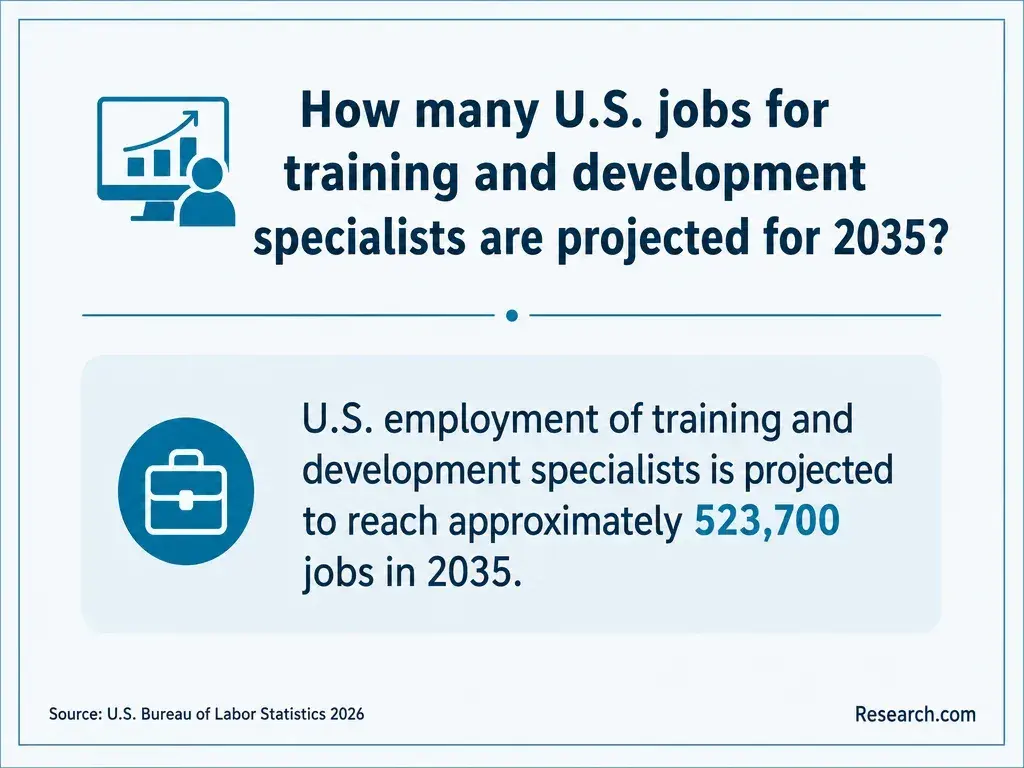
The BLS projects 10.8% employment growth for training and development specialists from 2025 to 2035. That outlook may matter to readers pursuing learning and development work, but specialist and manager positions have different responsibilities. Assess your likely next role and employer requirements rather than using either occupational figure as a forecast of the degree's financial return.
How Can You Choose an Accredited Online Ed.D. Program?
First, confirm the institution's accreditation with a recognized accreditor and verify the exact degree awarded. Then examine the program's required courses, live-session schedule, campus obligations, faculty guidance, and final project rules. Accreditation establishes institutional standing; it does not prove that a program teaches performance-management practice deeply or leads to licensure.
Ask a program representative to show where students learn organizational diagnosis, adult learning transfer, and evaluation, and how a workplace-based project is approved and supervised. Request the published total-credit and tuition rules, plus a realistic completion plan. If you are returning after unfinished doctoral study, investigate Ed.D. completion pathways after unfinished doctoral study while asking each institution for a written assessment of your prior work; an unfinished dissertation does not automatically replace its final requirement.
The strongest fit is a program whose actual obligations you can meet and whose applied work supports a problem you have the authority to investigate. If you mainly need managers to start having better conversations now, begin with a smaller, supervised intervention and revisit the doctorate if the evidence reveals a broader leadership and learning challenge.
Other Things You Should Know About EdD Leadership
Explain the improvement purpose, separate development activities from formal discipline, and clarify who will see identifiable responses. Have HR and the project supervisor review the invitation before collecting information.
Do not assume so. Recordings may contain sensitive employee information and require organizational authorization, appropriate consent, secure handling, and any review your institution requires. Simulated conversations may be a safer option.
Treat that as a possible governance or employee-relations issue, not simply a training deficit. Use established reporting and HR channels to assess safeguards before asking managers to practice more conversations.
Only within your employer's and program's permissions. A portfolio can describe your question, methods, and limitations while removing identifying details; permission to study information is not automatically permission to publish it.
- Cost of Attendance (Budget) | 2025-2026 Federal Student Aid Handbook https://fsapartners.ed.gov/knowledge-center/fsa-handbook/2025-2026/vol3/ch2-cost-attendance-budget
- Conflict Management: Difficult Conversations with... - PMC - NIH https://pmc.ncbi.nlm.nih.gov/articles/PMC3835442/
- EdD vs. PhD in Education: Choosing the Right Program | Goodwin College of Professional Studies https://drexel.edu/soe/resources/career-path/edd-vs-phd/
- Difficult Performance Conversations | umn.edu https://hr.umn.edu/supervising/resources/Difficult-Performance-Conversations
- 2026 UNC Online EdD in Organizational Learning & Leadership https://online.unc.edu/online-doctoral-programs/online-edd-organizational-learning-and-leadership/
- Educational Leadership Doctorate Admissions Requirements | Bay Path University https://www.baypath.edu/admissions-aid/graduate-admissions/educational-leadership-edd-admissions-requirements/
- EdD in Organizational Leadership | Chaminade University of Honolulu https://chaminade.edu/academics/programs/edd-organizational-leadership/
- Course Modes & Definitions - Office of the University Registrar https://registrar.washington.edu/classrooms/course-modes/
- What's the Difference Between Asynchronous and Synchronous Learning? | Ohio State Online https://online.osu.edu/content-hub/blogs/whats-the-difference-between-asynchronous-and-synchronous-learning/
- Careers Leaders Can Pursue with an Ed.D. | Peabody Online | VU-EDU https://peabodyonline.vanderbilt.edu/edd-in-organizational-learning/edd-careers/