2027 Are There Any One-Year Online Ultrasound Technology Degree Programs Worth Considering?

Co-Founder and Chief Data Scientist
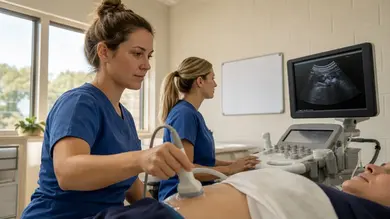
Choosing an online ultrasound technology program is really a choice about timeline, clinical training, accreditation, and credential eligibility. A one-year option can be attractive if you want to move into diagnostic medical sonography quickly, but this field is not one that can be learned entirely through online lectures. Sonographers need supervised scanning practice, patient-care experience, and familiarity with imaging equipment in real clinical settings.
For that reason, most fast ultrasound technology pathways are hybrid rather than fully online. Online courses may cover anatomy, physics, instrumentation, pathology, and patient care, while labs and clinical rotations must be completed in person. The strongest one-year options usually serve students who already have healthcare experience, prior college credits, or completed prerequisites.
This guide explains what is realistic in a one-year online or hybrid ultrasound technology program, how to evaluate accreditation and clinical placements, what the costs may look like, and which trade-offs to consider before choosing an accelerated pathway.
Key Points About One-Year Online Ultrasound Technology Degree Programs
- One-year online Ultrasound Technology programs focus on core diagnostic skills but limit extensive clinical training found in traditional multi-year degrees, affecting hands-on experience depth.
- These programs suit working professionals seeking quick certification updates, though fewer accredited options exist compared to traditional paths, influencing employer recognition.
- Enrollment trends show growing interest amid healthcare demand, but students should verify program accreditation and clinical practicum arrangements before committing.
Is It Feasible to Finish a Ultrasound Technology Degree in One Year?
Finishing ultrasound technology training in one year can be feasible, but it is usually not a standard entry-level degree path for students starting from scratch. The most realistic one-year options are accelerated certificate programs, distance-learning sonography tracks, or programs designed for applicants who already meet college-level science prerequisites or have prior allied health education.
A true diagnostic medical sonography degree often takes longer because students must complete both classroom instruction and supervised clinical hours. Ultrasound is a hands-on profession: students need repeated practice positioning patients, operating equipment, capturing diagnostic images, and working under clinical supervision. These requirements cannot be replaced by online coursework alone.
In practice, a one-year timeline is most realistic when the program does not need to include general education courses, when prerequisites are already completed, and when the school has an approved clinical placement available near the student. Without those conditions, even a program marketed as accelerated may take longer to complete.
Students should also distinguish between program completion and career readiness. Completing coursework is only part of the process. Certification exam eligibility, clinical competency, employer requirements, and any applicable state rules can affect how quickly a graduate can begin working as a sonographer.
Are There Available One-year Online Ultrasound Technology Degree Programs?
Available one-year online ultrasound technology degree programs are rare. The field’s clinical requirements make fully online degrees uncommon, and many accredited associate degree programs take closer to two years. However, students may find accelerated sonography certificates, distance-learning formats, and hybrid associate degree programs that shorten the path compared with traditional schedules.
The key is to read the program description carefully. Some schools use online delivery for didactic courses but still require on-campus labs, short intensive sessions, or local clinical rotations. Others may be designed only for students who already hold healthcare credentials or have completed specific science coursework.
Students comparing fast pathways can also review broader options among the quickest associate degree programs online, especially if they are still deciding whether sonography, radiologic technology, or another allied health field is the best fit.
- Institute of Ultrasound Diagnostics (IUD): Offers a One-Year Sonographer Program in resident and distance learning formats. The structure includes an intensive three-week “Sonography Boot Camp” followed by a year of didactic and clinical training. Prerequisites are required, which makes the program better suited to students prepared for an accelerated pace.
- State Fair Community College: Offers a CAAHEP-accredited associate degree in Diagnostic Medical Sonography that is typically completed in about 22 months. The program combines online coursework, clinical internships, and on-campus labs in areas such as patient care and sonography principles.
- Jackson College: Provides a CAAHEP-accredited Associate of Applied Science in General Sonography with a focus on abdominal, superficial structures, and OB/GYN specialties. The program pairs online didactic courses with hands-on clinical experiences and requires approximately two years to complete.
The most important takeaway is that “online” does not mean “no clinical training.” A credible ultrasound technology program should clearly explain where clinical hours take place, who supervises them, and how students demonstrate scanning competency before graduation.

Why Consider Taking Up One-year Online Ultrasound Technology Programs?
A one-year online or hybrid ultrasound technology program may be worth considering if you already have the academic background to handle advanced coursework and want a faster route into diagnostic medical sonography. The main appeal is efficiency: students can focus on sonography-specific content instead of spending additional semesters on general education requirements they may have already completed.
This pathway is best for disciplined learners who can manage compressed coursework, clinical scheduling, and frequent skills assessments. It can also be practical for career changers from allied health fields who already understand patient care, medical terminology, and clinical expectations.
- Faster preparation: One-year programs can shorten the time needed to prepare for entry-level sonography roles compared with traditional two-year associate degree pathways, provided the student already meets prerequisites.
- More flexible coursework: Online didactic courses can make it easier to study around work or family obligations, though students should still expect in-person labs or clinical rotations.
- Focused curriculum: Accelerated programs typically concentrate on anatomy, imaging principles, scan protocols, instrumentation, pathology, and supervised clinical practice rather than broad elective coursework.
- Useful for healthcare career changers: Applicants with allied health backgrounds may be able to build on prior patient-care experience and adapt more quickly to the clinical environment.
- Potentially lower opportunity cost: A shorter program can reduce the time spent out of the workforce, although students should compare tuition, fees, travel, equipment, and clinical placement costs before deciding.
These benefits are strongest when the program is accredited, transparent about clinical requirements, and aligned with certification goals. Students who need a more flexible admissions route may also compare options at open admission universities, while keeping in mind that sonography programs themselves often have selective clinical admission standards.
What Are the Drawbacks of Pursuing One-year Online Ultrasound Technology Programs?
The main drawback of a one-year online ultrasound technology program is that speed can create pressure in a field that depends heavily on hands-on skill. Sonography students must learn not only what normal and abnormal anatomy look like, but also how to obtain the right images consistently while communicating with patients and working under clinical protocols.
- Limited fully online options: Credible sonography training requires in-person scanning practice. Programs that appear to be entirely online should be reviewed carefully for clinical placement details and credential eligibility.
- Heavy academic and clinical workload: A one-year format compresses demanding material into a short schedule. Students may have little room for missed assignments, clinical absences, or repeated skill remediation.
- Clinical placement challenges: Some programs expect students to secure or travel to approved clinical sites. Placement availability can affect commuting time, scheduling, and even completion speed.
- Less time to explore specialties: A condensed program may focus on core areas such as abdominal and OB/GYN sonography, leaving less exposure to vascular, cardiac, pediatric, or other specialized tracks.
- Reduced peer and faculty interaction: Online delivery can limit informal mentoring and networking unless the program intentionally builds in advising, live sessions, and clinical feedback.
- Risk of choosing an unsuitable program: A fast, inexpensive program is not a good value if it does not support certification eligibility, clinical competency, or employer expectations.
Before enrolling, ask direct questions: Is the program CAAHEP-accredited? Where are clinical rotations completed? Are students guaranteed a clinical site or only assisted with placement? What certification exams do graduates commonly pursue? What happens if a student fails a clinical competency check? Clear answers matter more than marketing language about convenience or speed.
What Are the Eligibility Requirements for One-year Online Ultrasound Technology Programs?
Eligibility requirements for one-year online or hybrid ultrasound technology programs are often stricter than those for longer entry-level programs. Because the curriculum is compressed, schools usually expect students to arrive with a strong foundation in science, healthcare terminology, and college-level study skills.
Requirements vary by institution, but applicants commonly need to satisfy academic, clinical, and screening criteria before admission. Some programs are intended for beginners who have completed prerequisites, while others are designed for students with prior healthcare training or credentials.
- Minimum age and education: Applicants must typically be at least 18 years old and have a high school diploma or GED.
- Prerequisite coursework: Programs often require college-level anatomy, physiology, physics, and medical terminology before admission or before the clinical phase.
- Prior college credits or degrees: Many accelerated pathways expect prior college credits or an associate degree so the one-year curriculum can focus on sonography rather than general education.
- Healthcare experience: Some programs, especially advanced standing or bachelor’s-completion formats, prefer or require prior healthcare experience.
- Placement exams: Schools may use exams to assess readiness for math, science, reading, or technical coursework.
- Background checks and health requirements: Clinical sites commonly require background checks, immunization records, drug screening, CPR certification, and proof of health insurance or liability coverage.
- Interview or admissions review: Interviews may be used to evaluate motivation, professionalism, communication skills, and readiness for the accelerated workload.
- Advanced credentials: Some advanced or degree-completion programs may require certification or registry status, such as ARDMS credentialing.
Students should not assume that meeting the minimum requirements guarantees admission. Sonography programs can be competitive because clinical seats are limited. If you are comparing this pathway with longer-term education plans, it may also help to review bachelors that make the most money to understand how different credentials may affect future career options.
What Should I Look for in One-year Online Ultrasound Technology Degree Programs?
The best one-year online or hybrid ultrasound technology program is not simply the shortest one. It is the program that gives you enough clinical training, meets recognized education standards, and supports the credentialing path required for the jobs you want.
Use the following criteria when comparing programs:
- Accreditation: Prioritize programs accredited by the Commission on Accreditation of Allied Health Education Programs (CAAHEP), especially if certification eligibility and employer recognition are important to your plans.
- Clinical placement structure: Confirm whether the school assigns clinical sites, helps students find them, or requires students to secure their own placement. Ask how many clinical hours are required and whether sites are available near you.
- On-campus or intensive lab requirements: Even online programs may require boot camps, scanning labs, or short residencies. Make sure you can meet travel, lodging, and scheduling expectations.
- Curriculum fit: Review whether the program covers abdominal, OB/GYN, vascular, cardiac, or other areas aligned with your career goals. A general sonography program may differ significantly from a cardiovascular or vascular track.
- Credential preparation: Ask which certification exams the curriculum is designed to support, including ARDMS-related pathways where applicable.
- Faculty qualifications: Look for instructors with sonography credentials, clinical experience, and a track record of supporting students through scanning competencies.
- Technology and learning format: Check whether courses are asynchronous, live online, or blended. Also ask what simulation tools, scanning labs, image-review systems, or software students use.
- Transfer credit and prerequisites: A one-year timeline may depend on accepted transfer credits. Request a degree audit before relying on the advertised completion time.
- Total cost: Compare tuition, fees, textbooks, uniforms, background checks, travel, lab costs, equipment, and clinical-related expenses.
- Student support: Strong advising, technical support, tutoring, clinical coordination, and career services are especially important in accelerated programs.
Because true one-year ultrasound technology degree programs are limited, some students also explore other educational timelines and credentials. For broader planning beyond sonography, you can compare advanced online options and research what is the shortest PhD program, though doctoral study serves very different goals from entry-level ultrasound training.
How Much Do One-year Online Ultrasound Technology Degree Programs Typically Cost?
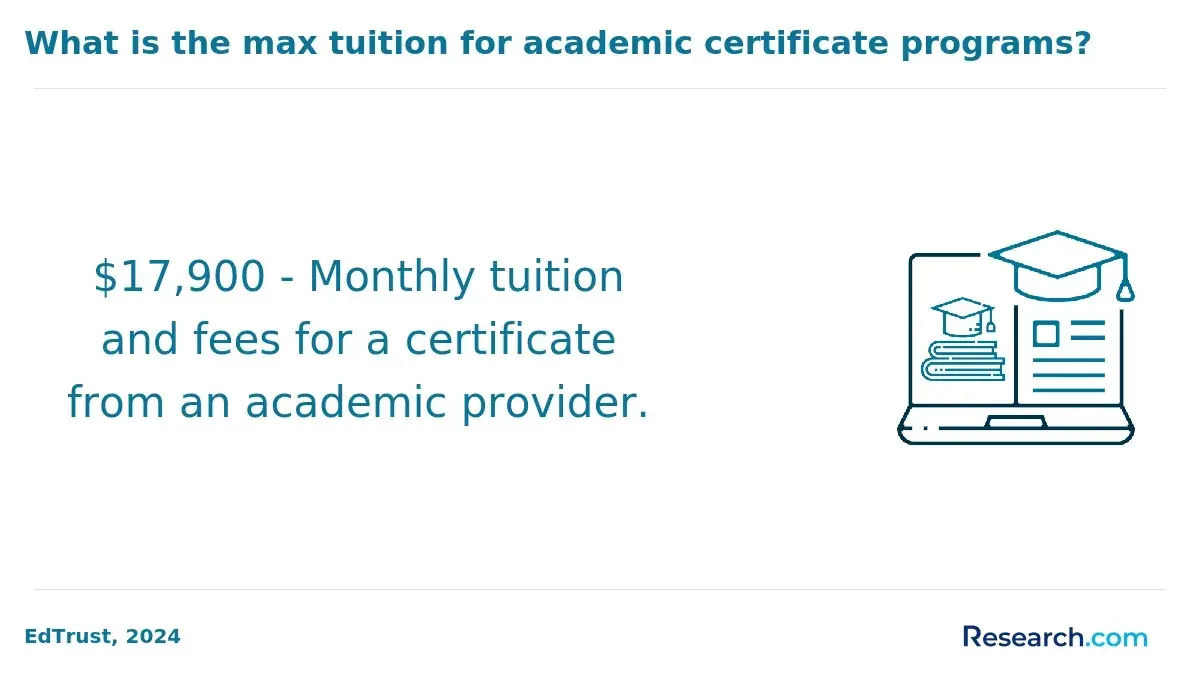
One-year online or hybrid ultrasound technology programs typically cost from $7,000 to $15,000. The final price depends on the school, program type, residency status, whether the institution is public or private, and the expenses tied to clinical training or specialized equipment.
Students should look beyond advertised tuition. Accelerated sonography programs may also involve application fees, textbooks, lab fees, uniforms, immunization records, background checks, drug screening, CPR certification, travel to clinical sites, lodging for in-person sessions, and exam preparation materials. These costs can affect affordability even when the base tuition appears manageable.
Compared with traditional two-year associate degrees, which average about $11,950 annually, one-year programs may offer a faster and potentially lower-cost route into the workforce. However, the shorter timeline can also mean a heavier weekly workload and less flexibility for paid employment while enrolled.
Before committing, ask the school for a written cost breakdown and confirm whether financial aid can be used for the specific program. Also ask whether any prerequisite courses are included in the stated price or must be completed separately.
What Can I Expect From One-year Online Ultrasound Technology Degree Programs?
Students in one-year online or hybrid ultrasound technology programs should expect an intensive schedule that combines online academic work with in-person skill development. The pace is usually faster than a traditional associate degree, and students may move quickly from foundational concepts into scanning practice and clinical application.
Coursework commonly includes anatomy, physiology, cross-sectional anatomy, ultrasound physics, instrumentation, pathology, patient care, medical ethics, and imaging protocols. Depending on the program, students may also study abdominal sonography, obstetric and gynecologic imaging, superficial structures, vascular concepts, or other specialty areas.
The clinical portion is where students learn to translate theory into practice. Under supervision, they may practice patient positioning, transducer selection, image optimization, measurement techniques, documentation, and professional communication. Some programs begin with a boot camp or skills lab before students enter clinical rotations.
Because the schedule is compressed, students should expect frequent assessments and limited downtime. Falling behind can be difficult, especially when online modules, lab requirements, and clinical schedules overlap. Strong time management, reliable transportation to clinical sites, and consistent communication with instructors are essential.
By the end of a strong program, graduates should have a clearer understanding of sonographic anatomy, scanning workflow, patient-care expectations, and the professional standards needed for certification preparation and entry-level practice. Students planning longer-term advancement may also compare related degree options, including a cheap online bachelor's degree, if a bachelor’s credential fits their career goals.
Are There Financial Aid Options for One-year Online Ultrasound Technology Degree Programs?
Financial aid may be available for one-year online or hybrid ultrasound technology programs, but eligibility depends heavily on the school, program type, accreditation, enrollment status, and whether the program qualifies for federal aid. Students should verify aid eligibility before enrolling, not after receiving an admissions offer.
- Federal and state aid: Eligible students can complete the FAFSA to apply for federal grants, such as the Pell Grant, and federal student loans. State aid may also be available based on residency, financial need, and program eligibility.
- Scholarships and grants: Organizations such as the Society of Diagnostic Medical Sonography (SDMS) and the American Society of Radiologic Technologists (ASRT) offer scholarship opportunities for sonography or imaging students. Requirements may include program enrollment, membership, essays, recommendations, or proof of academic progress.
- Employer tuition assistance: Healthcare employers may offer tuition reimbursement or education benefits for employees pursuing ultrasound technology credentials. Policies vary and may require employees to remain with the organization for a set period after receiving support.
- School-based aid: Some colleges offer institutional scholarships, payment plans, or need-based awards. Ask whether accelerated or certificate students qualify, because not all aid applies to every program format.
- Veterans and workforce funding: Eligible students may be able to use veterans benefits or workforce development funds, depending on the program’s approval status and local funding rules.
Before borrowing, compare the total program cost with completion requirements, certification preparation, and local employment expectations. A program that is not eligible for the aid you need may be difficult to finish, even if the academic timeline looks appealing.
What Ultrasound Technology Graduates Say About Their Online Degree
- Kylian: "Completing the one-year online Ultrasound Technology degree propelled my career faster than I expected. The accelerated format allowed me to finish quickly without sacrificing deep learning, and the affordable tuition made it even better. Now, I'm confidently working in a hospital setting and feel well-prepared for any challenge."
- Dallas: "The competency-based approach really suited my learning style in this online Ultrasound Technology program. Being able to progress at my own pace meant I mastered key skills thoroughly instead of just rushing through. Reflecting on the journey, the balance of flexibility and rigorous training was invaluable for my professional growth."
- Ryan: "What stood out most was how the program balanced speed and quality-finishing my degree in one year felt manageable and thorough. The support from instructors and practical modules prepared me well for certification exams and clinical practice. Investing in this degree was a smart move both financially and professionally."
Other Things You Should Know About Pursuing One-Year Ultrasound Technology Degrees
A one-year online Ultrasound Technology degree program typically covers skills such as operating ultrasound equipment, interpreting sonographic images, and understanding anatomical terminology. Students also learn patient care techniques and medical ethics, crucial for real-world application in clinical settings.
Accreditation is essential for any Ultrasound Technology program, including one-year online options. Accredited programs meet industry standards and increase graduates' eligibility for certification exams.
Students should verify that the program is accredited by recognized bodies like the Commission on Accreditation of Allied Health Education Programs (CAAHEP).
Applicants typically need a high school diploma or GED. Some programs may require prior coursework in biology or physics. It's important to check specific admissions criteria for each program to ensure eligibility for a one-year online degree in Ultrasound Technology in 2027.
References
- Best Online Sonography Programs In 2025 https://www.forbes.com/advisor/education/healthcare/best-online-associate-sonography/
- Top 6 Online Ultrasound Tech Schools and Sonography Programs | DRSONO https://drsono.com/blogs/news/online-ultrasound-tech-schools/
- Advantages of Ultrasound School https://www.gurnick.edu/advantages-of-ultrasound-school/
- Financial Aid and Scholarships for Sonographers https://www.ultrasoundschoolsinfo.com/financial-aid-scholarships-sonography/
- Financial Aid and Expenses | Grady Health https://www.gradyhealth.org/training-programs/school-of-diagnostic-medical-sonography/financial-aid-and-expenses/
- 7 Reasons to Train for a Career in Sonography | Ultrasound Technician, Diagnostic Medical Sonography, Bachelor and Associate Programs - Los Angeles, Glendale, Pasadena https://amsc.edu/7-reasons-to-train-for-a-career-in-sonography/
- Ultrasonographer Program https://medicine.utah.edu/radiology/education/technologist/programs/ultrasonography
- Diagnostic Medical Sonography | Washburn University https://www.washburn.edu/academics/college-schools/applied-studies/departments/allied-health/dms/index.html
- Financial Aid https://iudmed.com/financial-aid/
- 13 Pros and Cons of Being an Ultrasound Technician https://www.nursingprocess.org/ultrasound-technician-pros-and-cons.html