2027 Online Ed.D. in Leadership and Learning in Organizations: Evaluating the Role of a Faculty Capstone Adviser
Audited and Verified:
Our Editorial and Data Verification Process
Research.com uses government datasets, official education statistics and primary institutional information to support its career and degree guides. Our review process checks factual accuracy, occupational definitions, source dates and the requirements associated with the credentials discussed.
How This Article Was Fact-Checked
Our editorial team verifies salary estimates, employment projections, education requirements and program information against original data providers and official organizations. Salary figures are checked against the relevant occupational definitions and reporting periods. Information about licensure, accreditation and required in-person training is reviewed separately.
Fact-checked and verified on:

Co-Founder and Chief Data Scientist
A faculty capstone adviser can shape whether an online Ed.D. project becomes a manageable study of an organizational problem or stalls over scope, access, and approvals. For working leaders and learning professionals, the adviser's availability and authority matter as much as the project idea.
This guide explains what advisers typically do, where their responsibilities end, and what to verify before enrolling or proposing a project. It also puts the degree's curriculum, cost, and career value in context so you can judge whether the program supports the work you want to do.
Key Things You Should Know
- Evaluate an adviser's assigned responsibilities, feedback process, and availability - not just their research interests. Ask who approves the proposal and who can resolve delays.
- Academic project approval, organizational permission, and any required ethics review are separate steps. An adviser cannot grant an employer's data access on the employer's behalf.
- Confirm the program's actual final-project model before enrolling: an individual dissertation in practice, team capstone, and non-dissertation project can require different kinds of faculty guidance.
What Is an Online Ed.D. in Leadership and Learning in Organizations?
An Ed.D. in leadership and learning in organizations is a practice-oriented doctorate concerned with how people learn, lead, and implement change within workplaces and other institutions. Students may examine leadership development, adult learning, organizational systems, and evidence-based improvement. "Online" describes delivery, not necessarily a self-paced experience: live classes, group meetings, or campus convenings may still be required.
The degree's usefulness depends on the setting. A learning and development manager might investigate whether a training initiative transfers to daily work; a public-sector leader might study barriers to implementing a new process. Applicants interested in colleges and universities can also consider online Ed.D. study connecting organizations and higher education, while checking whether a particular curriculum addresses their intended role. A general organizational Ed.D. is not interchangeable with a doctorate designed for school-administrator licensure.
What Does a Faculty Capstone Adviser Do in an Online Ed.D. Program?
A faculty capstone adviser helps a doctoral student turn a workplace concern into an academically defensible, feasible project. Depending on program policy, the adviser may help refine the question, challenge assumptions, guide methods, review drafts, and prepare the student for proposal or final assessment. The adviser's precise authority varies: some programs assign a committee or project team, while others give one faculty member a larger supervisory role.
The most useful distinction is between guidance and authorization. The table identifies responsibilities worth confirming with the program and project site before work begins.
| Party | Typical contribution | Limit to verify |
| Faculty adviser | Guides academic scope, methods, interpretation, and revisions | May not be the sole proposal approver or ethics-review authority |
| Program or committee | Applies degree requirements and evaluates milestones | Rules may restrict project format, site, or deliverables |
| Organization or project sponsor | Identifies operational needs and may authorize participation or data access | Cannot waive academic standards or institutional review |
| Student | Manages the work, secures permissions, documents decisions, and completes analysis | Cannot assume job-related access permits doctoral use or publication |
To evaluate adviser support, ask for the adviser-assignment policy and a milestone schedule. Find out how often students receive meetings or written feedback, what happens during faculty leave, whether methods expertise is available, and who mediates a disagreement about scope. An impressive faculty biography is less valuable to your project if the person cannot provide timely guidance on its design or organizational setting.
How Does the Capstone Project Work in Leadership and Learning Programs?
A capstone usually starts with a bounded problem of practice, then moves through a proposal, approved evidence collection or analysis, findings, and a deliverable for academic assessment. The deliverable could include an evaluation, improvement plan, or dissertation in practice, but those are not universal or interchangeable requirements. Students exploring non-dissertation Ed.D. program options should inspect the substitute project's scope and supervision rather than assume it requires less work.
For example, a student might propose evaluating whether supervisors use skills taught in a leadership workshop. Before selecting surveys or interviews, the student and adviser would need to define what "use" means, what baseline evidence exists, whether participants can respond freely, and what conclusions the available data could support. Training satisfaction alone would not establish improved leadership performance.
Before committing to a project site, get answers to these separate questions:
- Academic fit: Does the question, format, individual or team arrangement, and timeline meet the program's written requirements?
- Organizational authority: Who can authorize participation, access to records, and use of the organization's name or findings?
- Ethics and privacy: Must the project undergo institutional review, and what consent, confidentiality, employment-data, or FERPA-related rules apply?
- Continuity: What can change if the sponsor withdraws, the student changes jobs, or usable data proves unavailable?
Ask the adviser which decisions they can approve and which require a committee, review office, or site representative. Agree on a smaller fallback question before data collection if continued site access is uncertain.
Relevant coursework can connect adult learning and leadership theory with organizational diagnosis, change implementation, research methods, and program evaluation. For capstone purposes, the critical test is whether students learn to distinguish a learning gap from a problem caused by incentives, workflows, resources, or governance - and then select evidence that can inform a decision.
Review the course sequence rather than a list of topics. Methods instruction offered before proposal development is more useful than instruction that arrives after students must commit to a design. Check whether faculty can advise on the methods your question needs, including qualitative interviews, quantitative measures, or mixed-methods evaluation. Exposure to a method does not, by itself, make a student an expert in it.
Requirements vary by institution. Programs may request evidence of graduate study, professional experience, recommendations, a statement of purpose, and an account of a leadership or learning problem the applicant wants to investigate. Some specify a completed master's degree or particular academic preparation; others set different entry routes. Relevant experience is best demonstrated through decisions made, people engaged, and improvements attempted - not a managerial title alone.
A proposed capstone topic can demonstrate readiness, but it is not proof of future site approval. Applicants returning from unfinished doctoral study should ask separately whether previous credits meet admission rules, transfer into degree requirements, or affect the final-project sequence. Those considering online all-but-dissertation Ed.D. pathways need a written evaluation of prior work and confirmation of how a new adviser would be assigned.
Completion time depends on required credits, course sequencing, enrollment pace, and the time needed for project approvals, data access, analysis, and revisions. A published program schedule is not a guarantee that an individual capstone will finish on that schedule. Ask when adviser assignment begins, whether project work can proceed during breaks, and how leave or a change of site affects progression.
For a usable cost estimate, request the program's current tuition schedule and required credits, then add fees, books or software, any required travel and lodging, and the cost of continued enrollment if the project takes longer. Employer reimbursement may help, but its conditions can depend on continued employment or successful course completion. When choosing a budget-friendly organizational leadership doctorate, compare the price of completing its actual project requirements - not tuition alone.
Confirm the institution's recognized accreditation status directly with the accreditor or US Department of Education records, then check the university catalog for the exact Ed.D. award, delivery format, and graduation requirements. Institution-level accreditation does not establish that a particular capstone model suits you or that the degree leads to a professional license.
Quality for this decision is unusually dependent on supervision. Request the capstone handbook, adviser-assignment rules, proposal and final-assessment rubrics, research-support information, and a sample project timeline. Ask how the program handles limited adviser availability and whether it publishes completion outcomes with clear definitions. When comparing affordable Doctor of Education degrees, use those documents to test whether a lower advertised price comes with the faculty access and project support you need.
Depending on prior experience, graduates may pursue or advance in learning and development management, organizational development, talent development, consulting, nonprofit or public-sector leadership, and some higher-education administrative roles. These jobs differ substantially: a training manager oversees learning strategy and staff, while a management analyst diagnoses operational problems and recommends changes.
A capstone can provide evidence of how you framed a problem, worked with stakeholders, evaluated information, and communicated limits. It is not a substitute for sector experience, budget responsibility, or a hiring organization's required skills. Before sharing project work in a portfolio, obtain any required permission and remove protected organizational or participant information. If the target job requires a narrow technical skill rather than doctoral-level inquiry, supervised work or targeted training may be the more direct route.
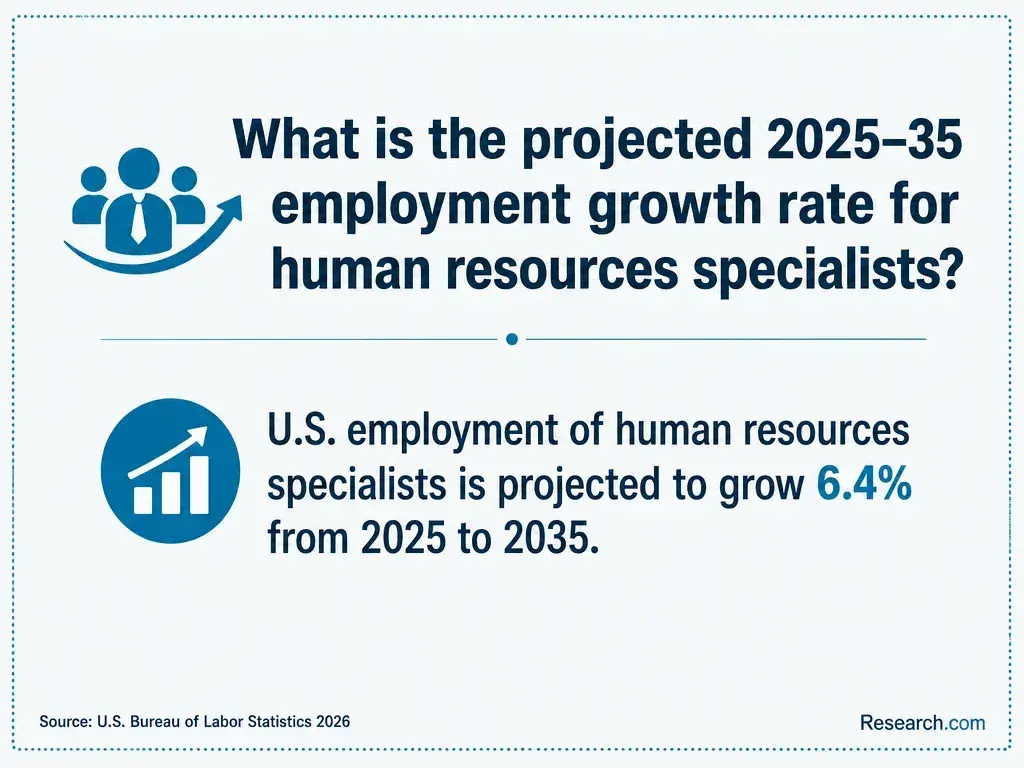
The US Bureau of Labor Statistics reports a May 2025 median annual salary of $133,000 for training and development managers and projects 6.4% employment growth for that occupation from 2025 to 2035. That is an occupation-wide measure, not an Ed.D. graduate salary or a forecast of promotion. Management analysts - another possible path for experienced organizational practitioners - have a $101,860 median and 10.1% projected growth over the same period.
Use the occupation closest to your intended duties when assessing the degree's value. Your existing role, sector, location, and ability to demonstrate leadership or consulting work matter more to an individual outcome than the occupational median alone. Compare any expected benefit with the program's full cost and the opportunities you would forgo while studying.
Does an Online Ed.D. Lead to Licensure or Professional Certification?
Not automatically. An organizational leadership Ed.D. is an academic degree; it does not by itself confer teacher, principal, superintendent, counseling, or other regulated licensure. Nor does completing leadership or learning coursework automatically award a separate professional certification.
If licensure is your goal, obtain the program's written licensure disclosure for your state and confirm eligibility with the relevant state authority before enrolling. If an employer requests a professional certification, check the issuing organization's requirements independently. A faculty adviser can help align a capstone with your interests, but cannot turn a non-licensure degree into an approved preparation pathway.
Other Things You Should Know About EdD Leadership
Possibly. Ask the program for its reassignment policy, decision-maker, and effect on your project timeline. A change may depend on faculty capacity and project expertise.
Document the conflicting requests and ask which concern is academic and which concerns organizational authority. Bring the issue to the program's designated coordinator before changing the approved plan.
Ownership and sharing rights depend on university policy, employer agreements, and any project-site terms. Clarify them in writing before using restricted materials or promising a public deliverable.
Only under arrangements that cover continued organizational access and any applicable research approvals. Degree completion does not automatically authorize further data collection or publication.
- Back to the basics: guidance for formulating good research questions - PMC https://pmc.ncbi.nlm.nih.gov/articles/PMC11129835/
- Ethical considerations associated with Qualitative Research methods - UK Statistics Authority https://uksa.statisticsauthority.gov.uk/publications/ethical-considerations-associated-with-qualitative-research-methods/pages/4/
- Selecting Research Methods - Teaching + Learning Lab - MIT https://tll.mit.edu/research-evaluation/selecting-research-methods/
- Instructors | Capstone SSM - University of Minnesota https://capstonessm.cfans.umn.edu/roles-and-responsibilities/instructors
- What Is a Problem of Practice? | spalding.edu https://online.spalding.edu/blog/what-is-problem-practice
- Core Responsibilities of a Tenured/Tenure-Track Faculty Member in the College of Education - Cato College of Education https://education.charlotte.edu/resources/faculty-resources/faculty-handbook/core-responsibilities-tenuredtenure-track-faculty/
- Understanding the Doctoral Capstone Coordinator Position | wmich.edu https://scholarworks.wmich.edu/cgi/viewcontent.cgi
- Capstone Project | uchicago.edu https://threatresponse.bsd.uchicago.edu/capstone/
- Guiding Capstone Progress Through Milestones and Feedback | UWEX Instructional Design https://id.uwex.edu/showcase/durable-skills/guiding-capstone-progress-through-milestones-and-feedback/