2027 LICSW vs. LCSW vs. LISW: Explaining the Difference in Social Work Licensure

Co-Founder and Chief Data Scientist
Choosing the right social work license can feel overwhelming if you're eager to advance in the field. It's a struggle to understand which credentials align with career goals, and you may face confusing state-by-state regulations.
According to the Bureau of Labor Statistics, the demand for social workers is projected to grow 7% by 2032, increasing the urgency to choose the right licensure track early. This article—prepared by experts in career planning—breaks down the distinctions between LICSW, LCSW, and LISW, guiding you toward the credential that best fits your goals and clears up confusion about requirements.
Key Benefits of Becoming a Licensed Social Worker
- Opens doors to advanced roles such as clinical social worker, behavioral health specialist, and supervisory positions in healthcare and community agencies.
- Licensed clinical social workers earn a median annual salary of about $58,380, according to the U.S. Bureau of Labor Statistics.
- Provides professional credibility, expanded career mobility, and eligibility for independent practice in most states.
- How do LICSW, LCSW, and LISW differ in scope of practice? Scope of Practice
- Which states use LICSW vs. LCSW vs. LISW terminology? Which states use LICSW vs. LCSW vs. LISW terminology?
- Do you need a master’s degree in social work for LICSW, LCSW, and LISW? Degree Requirements
- What types of clinical settings qualify for licensure experience? Clinical Settings
- What are the steps involved in applying for a social work license? License Application
- What types of jobs can you get with an LICSW vs. LCSW vs. LISW? Jobs
- How does licensure level influence long-term earning potential? Earnings
- Do you need to retake exams when moving to another state? Do you need to retake exams when moving to another state?
- How does a license improve access to specialized roles? How does a license improve access to specialized roles?
- Should you choose LICSW, LCSW, or LISW for working in healthcare settings? Should you choose LICSW, LCSW, or LISW for working in healthcare settings?
LICSW vs. LCSW vs. LISW: what these social work licenses mean in practice
Choosing between LICSW, LCSW, and LISW is less about picking the “best” acronym and more about understanding what your state calls advanced clinical social work licensure. These titles can affect whether you may diagnose mental health conditions, provide psychotherapy independently, supervise other clinicians, open a private practice, or bill for clinical services.
This guide is for MSW students, social workers planning for licensure, professionals moving between states, and career changers comparing mental health credentials. You will learn how the three licenses differ, which states use each title, what education and supervised experience are typically required, what jobs they can lead to, and how to avoid costly licensing mistakes.
Quick answer: what is the difference between LICSW, LCSW, and LISW?
LICSW, LCSW, and LISW are advanced social work licenses used by different states. In many cases, they require similar preparation: a CSWE-accredited MSW, supervised post-master’s clinical experience, and a clinical licensing exam. The biggest difference is state terminology and the exact scope of practice allowed by that state’s licensing board.
| License title | Typical meaning | Common scope of practice | Best next step |
| LICSW | Licensed Independent Clinical Social Worker | Often authorizes independent clinical practice, diagnosis, psychotherapy, and supervision without ongoing clinical oversight. | Check whether your state uses LICSW and whether the license allows private practice and clinical supervision. |
| LCSW | Licensed Clinical Social Worker | Most widely used clinical social work title; commonly permits therapy, assessment, diagnosis, and clinical roles under state rules. | Confirm whether your state requires supervised practice before full independent clinical authority. |
| LISW | Licensed Independent Social Worker | May include independent social work practice, clinical services, case management, advocacy, or broader advanced practice depending on the state. | Review whether your state’s LISW title includes clinical diagnosis and psychotherapy or requires a clinical designation. |
Scope of practice: where the real differences appear
The practical difference among LICSW, LCSW, and LISW is the level of clinical independence attached to the license in a specific jurisdiction. The acronym alone does not tell the full story. State law determines what you may do, where you may practice, whether you need supervision, and whether you can provide clinical services independently.
LICSW
A Licensed Independent Clinical Social Worker is generally considered a fully independent clinical social work credential in states that use the title. LICSWs commonly assess clients, diagnose mental health disorders, provide psychotherapy, create treatment plans, document clinical progress, and practice without routine supervision.
LCSW
A Licensed Clinical Social Worker is the most common advanced clinical social work title in the United States. LCSWs usually provide counseling, psychotherapy, behavioral health assessment, crisis intervention, and clinical case planning. Some states allow full independent practice after licensure, while others define additional rules for specific work settings, supervision, or billing.
LISW
A Licensed Independent Social Worker may practice independently, but the clinical authority attached to this title varies more by state. In some places, LISWs may provide therapy and clinical services. In others, the title may emphasize advanced generalist work, case management, care coordination, advocacy, supervision, or administrative leadership unless a clinical sub-designation is required.
The safest way to compare these credentials is to read your state board’s scope-of-practice language rather than relying on the acronym alone. This issue is similar to the difference between MSW and LPC: both pathways can relate to counseling and mental health services, but licensure rules determine who has diagnostic and independent clinical authority.
Which states use LICSW, LCSW, or LISW terminology?
Most states use LCSW, or Licensed Clinical Social Worker, as the main title for advanced clinical social work practice. A smaller group uses LICSW or LISW, often to emphasize independent practice, clinical authority, or historically established state licensing language.
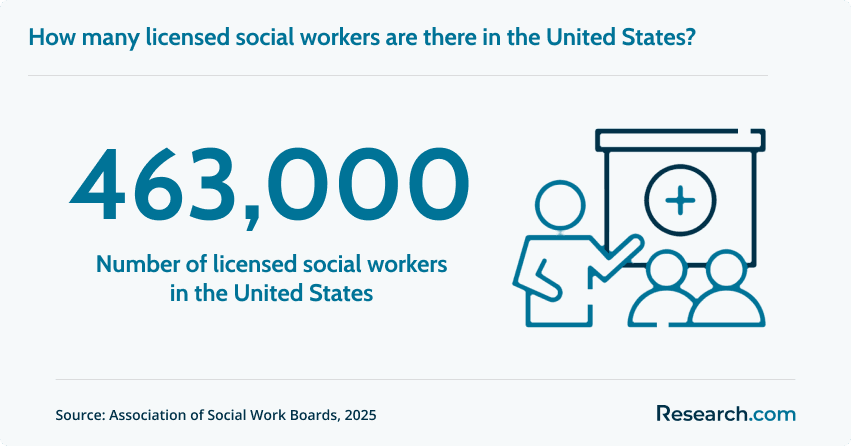
This matters because your license title depends on where you are licensed, not simply on your education or job duties. Two professionals may have similar MSW training, supervised clinical experience, and exam history but hold different titles because their states use different licensing terms. With about 463,000 licensed social workers across the United States, most carry the LCSW title.
| License title | Where the title is commonly used | What to verify before applying |
| LICSW | Massachusetts, Minnesota, Washington state, New Hampshire, Rhode Island, Vermont, West Virginia, Alabama, and the District of Columbia | Confirm independent clinical practice rules, supervision authority, private practice eligibility, and renewal requirements. |
| LISW | Ohio, Iowa, South Carolina, New Mexico, Minnesota, and D.C. | Check whether the LISW title includes clinical practice or whether a sub-designation is required, such as LISW-CP for clinical practice in South Carolina. |
| LCSW | More than 35 states, including California, New York, Florida, Texas, and Illinois | Review post-MSW supervised hour requirements, exam requirements, endorsement rules, and whether the state separates clinical and independent authority. |
LCSW is the dominant term nationally. LICSW and LISW are less common, but they do not automatically mean “lesser” or “greater” credentials in every situation. The board’s regulations are what determine the actual practice authority.
Students sometimes compare licensing terms while also researching unrelated online degree options, such as fastest online bachelor's in history degree programs. That comparison can be useful only as a reminder that titles vary across education and professional fields; for social work licensure, state board rules are the source that matters.
Across these titles, the typical foundation is the same: a master’s in social work, supervised experience, and a clinical or state-approved licensing exam.
Do LICSW, LCSW, and LISW licenses require an MSW?
Yes. LICSW, LCSW, and LISW licenses generally require at least a Master of Social Work from a CSWE-accredited program. A bachelor’s degree alone is not enough for these advanced clinical or independent social work licenses.
The MSW is the standard graduate degree for clinical social work preparation in the United States. After completing the degree, candidates usually need 2,000–4,000 hours of supervised clinical experience, depending on the state, and must pass the Association of Social Work Boards clinical-level exam or a state-approved equivalent.
Some states also look closely at whether the MSW included clinical, mental health, or advanced practice coursework. This is especially important for applicants who want to provide psychotherapy, diagnose disorders, or practice independently.
| Requirement | Why it matters | What applicants should check |
| CSWE-accredited MSW | State boards typically require accredited graduate social work education for advanced licensure. | Verify program accreditation before enrolling, especially for online or out-of-state programs. |
| Supervised clinical hours | Post-MSW supervision shows that the applicant can provide clinical services safely and ethically. | Confirm the required number of hours, supervisor credentials, and documentation forms in your state. |
| Clinical exam | The exam assesses readiness for advanced clinical social work practice. | Check whether your state uses the ASWB Clinical exam or a state-specific equivalent. |
| Ethics or jurisprudence requirements | States often require knowledge of professional conduct rules and local laws. | Ask whether your state requires an ethics course, jurisprudence exam, or background check. |
Career changers sometimes compare social work to adjacent public service paths, including a fast track corrections degree online. Those programs may support careers in criminal justice or corrections, but they do not replace the MSW requirement for LICSW, LCSW, or LISW licensure.
The bottom line is simple: the acronym may change by state, but the advanced licensure pathway almost always starts with a CSWE-accredited MSW.
What clinical settings usually count toward licensure hours?
Clinical licensure hours typically must be completed in settings where social workers provide direct mental health or behavioral health services under an approved supervisor. The work should give candidates experience with assessment, diagnosis, treatment planning, psychotherapy, crisis response, documentation, and case coordination.
According to the Association of Social Work Boards, there are 541,635 licensed social workers in the United States, with 325,442 practicing as clinical independent social workers. That large clinical workforce shows why supervised practice settings are a major part of the licensure pipeline.
Not every social service job automatically qualifies. A role focused only on administrative support, benefits enrollment, outreach, or general resource referral may not meet the clinical experience standard unless it includes approved clinical duties and supervision.
| Setting | Why it may qualify | Questions to ask before counting the hours |
| Outpatient mental health clinics | Candidates often provide therapy, assessments, treatment plans, and ongoing clinical documentation. | Will an approved clinical supervisor sign off on your hours? |
| Hospitals and integrated health systems | Social workers may support patients with psychiatric, medical, crisis, discharge planning, and care coordination needs. | Do your duties include clinical assessment or therapeutic intervention? |
| Community mental health agencies | These agencies frequently offer counseling, crisis support, case planning, and services for underserved communities. | Does the agency’s supervision structure meet board requirements? |
| Schools and university counseling centers | Some states accept hours when the work involves therapeutic services rather than only academic or behavioral support. | Does the state board recognize school-based or campus counseling experience? |
| Substance use and behavioral health programs | Residential and outpatient programs may provide experience in individual therapy, group treatment, relapse prevention, and crisis planning. | Are substance use treatment duties classified as clinical social work in your state? |
Outpatient mental health clinics
These are common training sites because they expose candidates to psychotherapy, intake assessments, care planning, and ongoing client treatment across different presenting concerns.
Hospitals and integrated health systems
Medical and psychiatric hospitals can provide experience with acute care, interdisciplinary teams, crisis intervention, discharge planning, and patients who have both physical and behavioral health needs.
Community mental health agencies
Public and nonprofit agencies often qualify when the work includes counseling, treatment planning, crisis response, and clinical supervision for clients with mental health or substance use needs.
Schools and university counseling centers
Some boards accept school or college counseling experience if the social worker provides clinical interventions and receives supervision from an approved licensed clinical social worker.
Substance use and behavioral health programs
Addiction treatment settings may count when candidates deliver individual counseling, group therapy, relapse prevention planning, risk assessment, and crisis services under proper supervision.
Students comparing social work with education-focused graduate programs, such as an accelerated master's degree in TESOL online, should note that social work licensure hours must align with clinical social work rules rather than general teaching, advising, or student support duties.
How to apply for LICSW, LCSW, or LISW licensure
The application process differs by state, but most candidates follow a similar sequence: earn the qualifying degree, complete supervised hours, document experience, pass the required exam, and maintain the license after approval.
- Earn a CSWE-accredited MSW. Complete a graduate social work program that meets your state’s educational requirements. If your undergraduate background is in another area, such as a top bachelor's degree in history online, you can still pursue an MSW, but you must meet the graduate program’s prerequisites and later satisfy licensing rules.
- Register your supervision plan if your state requires it. Some boards require candidates to identify the supervisor, practice site, and supervision arrangement before hours begin.
- Complete supervised post-MSW experience. Most applicants need 2,000–4,000 hours, though the exact number, time period, supervisor qualifications, and direct-client-hour rules vary by state.
- Keep detailed records. Track dates, hours, setting, supervisor meetings, direct clinical duties, and any required forms. Poor documentation can delay licensure even when the experience itself is valid.
- Submit the state board application. Provide transcripts, supervision verification, identity documents, background check materials, and required fees.
- Pass the ASWB Clinical exam or state equivalent. Many states use the ASWB Clinical exam for advanced clinical licensure, but applicants should verify the exact exam level required.
- Complete ethics, jurisprudence, or background requirements. Many boards require fingerprinting, a criminal background check, ethics training, or a test on state laws and professional rules.
- Renew the license and complete continuing education. After approval, licensees must follow renewal deadlines, continuing education requirements, and professional conduct rules.
Recent workforce data show that about 8% of master’s-level social workers are enrolled in a graduate program, 2.32% in a doctoral program, and 0.90% in a PhD program. These figures suggest that some license-seeking social workers continue advanced education while preparing for clinical requirements, research roles, teaching, or leadership opportunities.
Every step is designed to protect clients and ensure that licensed professionals can deliver competent, legally compliant, and ethical clinical social work services.
Common licensure mistakes to avoid
| Mistake | Why it can create problems | Better approach |
| Starting supervised hours before confirming board rules | Some states may not count hours completed before approval or without an eligible supervisor. | Read the board instructions and get the supervision plan approved if required. |
| Choosing an MSW without checking CSWE accreditation | A non-accredited program may not meet licensure requirements. | Verify accreditation directly before applying or enrolling. |
| Assuming online programs automatically meet every state’s rules | Online delivery does not guarantee licensure alignment in your state. | Ask the program which states its curriculum is designed to support. |
| Tracking only total hours | Boards may require specific direct practice, supervision, or clinical hour categories. | Maintain detailed logs using your state’s forms or categories. |
| Waiting until relocation to check reciprocity | Moving can trigger new documentation, fees, jurisprudence exams, or additional requirements. | Contact the receiving state board early, especially if you plan to practice immediately after moving. |
What jobs can you get with an LICSW, LCSW, or LISW?
LICSW, LCSW, and LISW credentials can lead to many of the same advanced social work roles, especially when the license includes clinical authority. The job title you qualify for depends on state law, employer requirements, your experience, and whether the position involves diagnosis, psychotherapy, supervision, or independent practice.
Common jobs for LICSWs
- Private practice psychotherapist or clinical therapist
- Behavioral health clinician in a hospital, clinic, or integrated care setting
- Trauma counselor or crisis intervention specialist
- Clinical supervisor in a mental health agency
- Program director for behavioral health or community mental health services
Common jobs for LCSWs
- Licensed therapist in outpatient, inpatient, or telehealth settings
- School-based clinical social worker
- Hospice, palliative care, or medical social worker
- Substance use treatment clinician
- Mental health consultant for nonprofits, public agencies, or healthcare organizations
Common jobs for LISWs
- Independent social work practitioner in a private or group setting
- Clinical case manager or care coordinator
- Substance use counselor in residential or outpatient treatment
- Community program manager
- Policy, advocacy, or social services administrator
| Career goal | License fit | What to verify |
| Open a private therapy practice | LICSW, LCSW, or clinical LISW if recognized by the state | Independent practice authority, business rules, insurance billing rules, and supervision requirements. |
| Work in hospitals or integrated care | Usually any recognized clinical social work license | Employer requirements for diagnosis, discharge planning, crisis care, and interdisciplinary documentation. |
| Supervise license candidates | Often requires advanced independent clinical licensure plus experience | Supervisor approval, training requirements, and minimum years licensed. |
| Focus on case management or policy | LISW, LCSW, or LICSW depending on role and state | Whether the job requires clinical authority or advanced generalist expertise. |
All three licenses can support direct mental health work when the state defines them as clinical or independent clinical credentials. LICSW and LCSW titles are usually more clearly associated with psychotherapy, while LISW may include a wider mix of clinical, administrative, case management, and advocacy duties depending on the jurisdiction.
This is similar to the way different types of business management degrees can prepare graduates for different levels of responsibility, specialization, and leadership. The label matters, but the authority attached to the credential matters more.
How licensure level can affect long-term earnings
Advanced clinical licensure can improve earning potential because it expands the services a social worker may legally provide. Licensed clinical or independent social workers may qualify for therapy roles, healthcare positions, supervisory jobs, private practice, and clinical leadership roles that are not typically available to bachelor’s-level or non-clinical social workers.
According to May 2024 wage data, social workers in higher-skilled or specialized roles report different median annual wages: “social workers, all other” have the highest median annual wage at $69,480, followed by healthcare social workers at $68,090. Mental health and substance abuse social workers earn $60,060, while child, family, and school social workers earn $58,570.
These wage differences do not guarantee a specific income for any individual license holder. Pay depends on location, employer type, specialty, years of experience, caseload, reimbursement model, supervisory duties, and whether the social worker works in private practice or an agency setting.
| Licensure advantage | How it can affect earnings | Important limitation |
| Independent clinical practice | May allow private practice, independent therapy services, and greater control over rates or caseload. | Income can fluctuate and depends on referrals, insurance contracts, business expenses, and local demand. |
| Clinical diagnosis and treatment | Can qualify social workers for therapy, behavioral health, and healthcare roles that require clinical authority. | Employers may still require specialty experience or additional training. |
| Supervision authority | Can lead to supervisory stipends, clinical director roles, or training responsibilities. | States may require additional supervisor approval or years of licensed experience. |
| Specialization | Trauma, substance use, medical social work, and family therapy roles may support advancement. | Specialty credentials or continuing education may be expected. |
Over time, licensure can function as both a legal requirement and a career accelerator. Entry-level pay may not differ dramatically at first, but the ability to move into private practice, clinical supervision, specialized therapy, or management can influence long-term compensation.
A similar credential-versus-career-path decision appears in comparisons such as CPA vs MBA which is better, where one path emphasizes regulated professional authority and another may focus more on organizational leadership.
Do you need to retake the exam if you move to another state?
Usually, you do not need to retake the national ASWB clinical exam when moving to another state if your passing score matches the license level required by the new jurisdiction. Because the exam is standardized, many boards accept previous ASWB scores during endorsement or reciprocity review.
However, moving does not mean your license automatically transfers. You still need to apply through the new state board, verify your current or previous license, submit supervision and education documentation, pay fees, and meet any state-specific legal or ethics requirements.
Some states may require a jurisprudence exam, ethics training, background check, fingerprinting, or additional documentation before you can practice. If your supervised hours were completed under rules that differ from the receiving state’s standards, the board may review them carefully.
| Requirement when moving states | Usually transfers? | What may still be required |
| ASWB Clinical exam score | Often yes | Official score transfer or board verification. |
| MSW education | Usually yes if CSWE-accredited | Official transcripts and degree verification. |
| Supervised hours | Often reviewed, not automatically accepted | Detailed supervision forms, supervisor verification, and proof that hours meet state rules. |
| Current license | Must be verified | License verification from every state where you have been licensed. |
| State law requirements | No | Jurisprudence exam, ethics course, background check, or local rules training. |
Professionals who relocate while pursuing other education options, such as a fast track online sports analytics masters degree, should plan licensure paperwork early. The exam score may carry over, but administrative review can still take time.
How licensure opens access to specialized roles
A social work license such as LICSW, LCSW, or LISW can make a professional eligible for roles that require clinical judgment, independent decision-making, and regulated mental health services. Employers often reserve therapy, diagnosis, treatment planning, clinical supervision, and behavioral health leadership positions for licensed professionals.
Licensure can support movement into specialties such as trauma therapy, substance use treatment, child and family therapy, medical social work, crisis services, and integrated behavioral healthcare. Many of these roles require the ability to assess symptoms, make clinical decisions, create treatment plans, and document care according to legal and ethical standards.
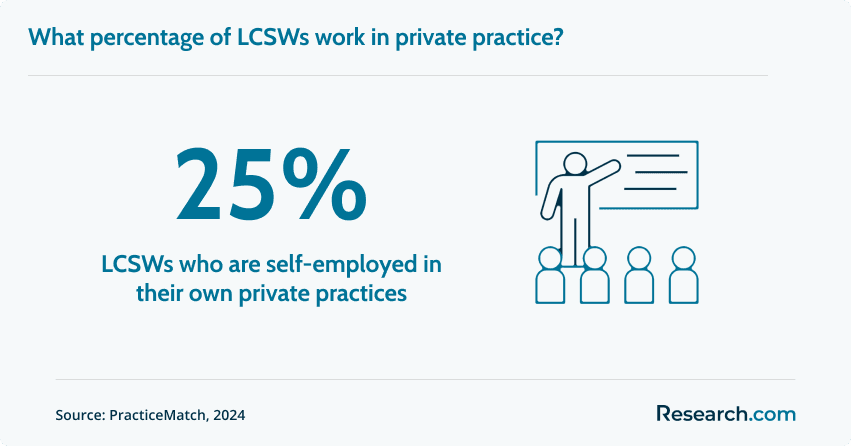
Data show that about 25% of LCSWs are self-employed with private practices. That figure illustrates one of the most important career effects of advanced licensure: it can create a path toward independent work, professional autonomy, and potential income growth outside traditional agency employment.
Licensure can also strengthen eligibility for roles such as clinical supervisor, program manager, behavioral health director, or consultant. These positions often require both practice authority and evidence that the social worker understands compliance, ethics, documentation, and risk management.
In education, advanced credentials can play a similar gatekeeping role. For example, a California school counselor PPS credential can expand eligibility for school counseling roles that require formal state authorization.
Which license should you choose for healthcare social work?
If your goal is healthcare social work, the right license is the one your state recognizes for clinical or independent practice. LICSW, LCSW, and LISW can all support healthcare roles when they meet the state’s standards for clinical authority.
Healthcare employers may hire licensed social workers for hospitals, integrated care clinics, behavioral health networks, hospice programs, rehabilitation centers, primary care settings, and specialty medical practices. Typical responsibilities may include psychosocial assessment, mental health screening, discharge planning, crisis intervention, brief therapy, care coordination, patient advocacy, and collaboration with physicians, nurses, psychologists, and case managers.
LCSW is the most widely recognized title nationally and is used in over 35 states. LICSW and LISW can carry similar authority in states that use those titles. For healthcare roles, the employer will care less about the letters themselves and more about whether your license allows the clinical duties required for the job.
| If you want to work in... | Look for a license that allows... | Ask the employer or board... |
| Hospitals | Assessment, crisis intervention, care planning, discharge planning, and interdisciplinary documentation. | Does the role require independent clinical licensure or supervised status? |
| Integrated behavioral health | Brief therapy, mental health screening, consultation, and collaboration with medical providers. | Can this license bill or document services in this care model? |
| Hospice or palliative care | Clinical support for patients and families, grief counseling, care coordination, and ethical decision support. | Does the employer require clinical licensure or healthcare social work experience? |
| Private practice connected to healthcare referrals | Independent psychotherapy, diagnosis, treatment planning, and compliance with payer requirements. | Does the license qualify for insurance panels and independent practice in this state? |
These roles often involve direct patient care, coordination across disciplines, and support for patients managing complex medical and behavioral health needs.
Current trends affecting LICSW, LCSW, and LISW careers
Several trends are shaping advanced social work practice. Telehealth has expanded access to therapy and behavioral health services, but it also makes cross-state licensure rules more important. A social worker licensed in one state may need additional authorization to serve clients located elsewhere.
Healthcare integration is also increasing the value of licensed clinical social workers who can collaborate with medical teams, address social determinants of health, and support patients with co-occurring physical and mental health needs. Documentation, compliance, and care coordination skills are becoming more important in these settings.
Technology is changing daily practice as well. Electronic health records, scheduling platforms, risk-screening tools, and AI-supported documentation products may reduce administrative burden, but they do not replace clinical judgment, informed consent, confidentiality obligations, or ethical decision-making. Licensed social workers remain responsible for the quality and legality of their work.
How to choose the right licensure path
You usually do not choose between LICSW, LCSW, and LISW as national options. Instead, you choose the state where you want to practice, then follow that state’s title and requirements. The right question is not “Which acronym is best?” but “Which license gives me the authority I need in the state where I plan to work?”
- Identify your target state. Start with the licensing board where you plan to practice, not with national job boards or informal advice.
- Read the scope-of-practice rules. Confirm whether the license permits diagnosis, psychotherapy, private practice, supervision, and billing.
- Choose a CSWE-accredited MSW program. Make sure the program supports the state requirements where you expect to seek licensure.
- Plan supervised experience before graduating. Ask employers whether the position, supervisor, and duties count toward the license you want.
- Track documentation from day one. Keep records of hours, supervisor meetings, direct clinical practice, and job duties.
- Consider future mobility. If you may move, review endorsement rules in nearby or likely destination states before committing to a role.
- Evaluate career fit. Private practice, hospital work, school-based clinical services, community mental health, and policy leadership may require different experiences even when they share the same license.
Questions to ask before applying for licensure
- Does my state use LICSW, LCSW, LISW, or another title for advanced clinical social work?
- Is my MSW program CSWE-accredited and accepted by my target state board?
- How many supervised hours are required, and how many must be direct clinical hours?
- Who is allowed to supervise me, and does the supervisor need board approval?
- Does my job setting count toward clinical licensure, or is it considered non-clinical social work?
- Which exam level is required?
- Does the license allow diagnosis, psychotherapy, private practice, clinical supervision, and billing?
- What continuing education is required to maintain the license?
- If I move, what endorsement or reciprocity rules will apply?
- Will this license support the specialty I want, such as healthcare, trauma therapy, substance use treatment, or child and family practice?
Here’s what graduates have to say about LICSW vs. LCSW vs. LISW
- Jerry: "Learning how LICSW, LCSW, and LISW titles differ by state helped me stop chasing acronyms and focus on the clinical authority I needed for mental health practice. Once I understood that scope of practice mattered more than the letters, my licensure plan became much clearer."
- Paige: "At first, the license names felt confusing. Comparing LCSW and LISW requirements showed me how much state rules affect job options, supervision, and independent practice. That made the process feel more manageable."
- Aileen: "Understanding the difference between LICSW and LCSW helped me plan for private practice and future supervision roles. It also pushed me to check exam and experience requirements earlier instead of waiting until graduation."
Key Insights
- LICSW, LCSW, and LISW are state-specific advanced social work license titles, not three universal national levels.
- LCSW is the most common title and is used in more than 35 states, while LICSW and LISW are used in a smaller group of jurisdictions.
- All three licenses typically require a CSWE-accredited MSW, supervised clinical experience, and a clinical or state-approved exam.
- The acronym alone does not determine what you can do. State scope-of-practice rules decide whether you may diagnose, provide psychotherapy, practice independently, supervise, or bill for services.
- Supervised hours must usually involve direct clinical work in approved settings such as mental health clinics, hospitals, community agencies, schools, counseling centers, or behavioral health programs.
- Advanced licensure can improve access to therapy roles, healthcare social work, private practice, supervision, and leadership positions, but salary outcomes are not guaranteed.
- Moving states usually does not require retaking the ASWB clinical exam, but you may still need license verification, documentation, fees, background checks, or a jurisprudence exam.
- The best licensure strategy is to choose your target state first, confirm the board’s rules, select an accredited MSW, document supervision carefully, and plan for the setting where you want to practice.
References:
- Bureau of Labor Statistics. (2024). Social workers: Occupational outlook handbook. U.S. Department of Labor. BLS.
- Kim, J. (2025, July). The licensed social work workforce: Analyses of the 2024 Social Work Workforce Survey (Report 2). Association of Social Work Boards.
- Kim, J. (2025, July). The licensed social work workforce: Analyses of the 2024 Social Work Workforce Survey (Report 2) [Specific excerpt]. Association of Social Work Boards.
- PracticeMatch. (2024). The future is bright: LCSW career outlook and opportunities in 2024. PracticeMatch.
- Social Work Census. (2025, July). Social work workforce study series: Report 3. Social Work Census.
Other Things You Should Know About LICSW vs. LCSW vs. LISW Differences
LICSW, LCSW, and LISW are regulated by state social work boards, not one national agency. Massachusetts issues LICSW through the Board of Registration of Social Workers, while LCSW and LISW are handled by each state’s social work or counseling board under state law.
Yes, in 2027, the requirements for LICSW, LCSW, and LISW vary by state and typically involve different levels of education, examination, and supervised experience. LICSW usually requires clinical experience and a higher-level exam, while LCSW may focus on general social work practices.
In 2027, LICSW, LCSW, and LISW license renewals often require 20-40 hours of continuing education. The exact number varies by state. These hours may include ethics training, specialized workshops, and state-specific updates, mandated by the state's social work licensing board.