2027 Online Ed.D. in Leadership and Learning in Organizations: Degree Fit for Leaders Tackling A Workforce Reskilling Initiative Without Manager Support
Audited and Verified:
Our Editorial and Data Verification Process
Research.com uses government datasets, official education statistics and primary institutional information to support its career and degree guides. Our review process checks factual accuracy, occupational definitions, source dates and the requirements associated with the credentials discussed.
How This Article Was Fact-Checked
Our editorial team verifies salary estimates, employment projections, education requirements and program information against original data providers and official organizations. Salary figures are checked against the relevant occupational definitions and reporting periods. Information about licensure, accreditation and required in-person training is reviewed separately.
Fact-checked and verified on:

Co-Founder and Chief Data Scientist
Your organization needs employees to learn new skills, but their managers will not release time, reinforce training, or help redesign work. An online Ed.D. in Leadership and Learning in Organizations could strengthen your ability to diagnose and address that problem - but it cannot give you authority you do not have. This guide is for learning and development professionals and emerging leaders weighing doctoral study against more immediate action. It explains what the degree can contribute, what manager resistance may signal, and how to decide whether an Ed.D. is worth pursuing.
Key Things You Should Know
- An Ed.D. may fit if you want to lead and evaluate complex workforce-learning initiatives over the long term; it is not a prerequisite for securing manager participation in a current project.
- Before proposing more training, establish whether managers lack time, incentives, staffing, confidence in the program, or authority to change employees' work.
- The U.S. Bureau of Labor Statistics reports a $133,000 median annual salary for training and development managers in May 2025; that occupational figure is not an expected salary for Ed.D. graduates.
What is an online Ed.D. in Leadership and Learning in Organizations?
An Ed.D. is a practice-oriented doctorate. Programs focused on leadership and learning in organizations generally examine how adults develop skills, how organizations change, and how leaders use evidence to improve practice. The exact degree title, curriculum, online format, and final project vary by university; a program may require a dissertation in practice, another applied project, or a different doctoral deliverable.
For a reskilling leader, the potential value is not simply learning to create courses. It is learning to distinguish a skill gap from a work-design problem, build support across departments, and evaluate whether new capabilities are used on the job. An Ed.D. differs from a research-oriented PhD, which usually emphasizes preparation for original scholarly research. Neither degree substitutes for organizational authority or hands-on change leadership.
Is an online Ed.D. right for leading workforce reskilling without manager support?
Possibly - but first determine why support is missing. Managers may agree that employees need new skills while facing production targets, understaffing, unclear job requirements, or incentives that reward immediate output over learning. Alternatively, they may doubt that the proposed training addresses the actual performance problem. Treating all resistance as a communication failure could lead you to invest in the wrong solution.
A useful first move is to separate the decisions you can make from those requiring a manager or executive sponsor. Before seeking a degree to solve this initiative, work through the following sequence:
- Define the work employees must perform differently and identify evidence of the current gap, such as task errors, workflow observations, or changing role requirements.
- Ask managers what time, staffing, performance measures, or tools would have to change for employees to practice the new skills.
- Seek a sponsor with authority to protect learning time and approve any changes to roles or workflow; if none exists, narrow the initiative to an authorized, low-risk pilot.
- Agree on measures before launch, including opportunities to practice and evidence of skill use - not just attendance or learner satisfaction.
- Reassess whether the remaining challenge calls for deeper study, executive sponsorship, process redesign, or a smaller training intervention.
An Ed.D. is a stronger fit if you expect to lead recurring, cross-functional learning and change initiatives and need advanced preparation in diagnosis, implementation, and applied evaluation. If your immediate obstacle is one leader's refusal to allocate staff time, a sponsor conversation, change-management coaching, or a targeted course may be faster and less costly. Doctoral research cannot authorize access to employee data or override a manager's control of work schedules.
If the initiative is based in a university and you are considering doctoral research alongside it, investigate grant and scholarship options for higher education leadership research study. Check eligibility and permitted uses separately; a possible research grant is not guaranteed tuition funding or permission to study employees.
What careers can an online Ed.D. in Leadership and Learning prepare you for?
The degree can support growth from learning and development practice into broader responsibilities, but hiring depends on your experience and the role. A training and development manager typically oversees programs, staff, budgets, and alignment with business needs. An organizational development consultant diagnoses and supports change across teams. A workforce-development leader may coordinate employers, education providers, and public or community partners.
For an experienced learning professional, a credible advancement portfolio could show how you negotiated manager participation, assessed skill needs, revised an intervention, and reported its limitations. If you have not yet managed people or budgets, the doctorate alone will not establish those competencies. Higher education has its own governance and employment structures; readers targeting that setting can compare Ed.D. preparation for organizational change in universities rather than assuming corporate reskilling experience transfers unchanged.
Relevant study may include adult learning and learning transfer, organizational diagnosis, change leadership, stakeholder engagement, research methods, and program evaluation. The distinction between learning and transfer matters here: employees may understand a new process yet never use it if managers do not provide practice time, feedback, or suitable assignments.
Compare curricula against the problem you actually face. A course on instructional design can help improve training; coursework in organizational systems and implementation may be more valuable when incentives or workflow block participation. Methods training can help you judge whether a pilot is reaching the intended employees and whether reported improvements have plausible alternative explanations. Confirm which courses are required, which electives will be offered during your enrollment, and what faculty will supervise in an applied project.
Online study can reduce routine commuting while allowing you to keep working. It does not necessarily make classes self-paced. Live meetings, cohort projects, required campus visits, and research milestones can conflict with a reskilling rollout - especially if managers already resist releasing employees' time and your own workload is increasing.
The format comparison below focuses on obligations that could affect your ability to lead the initiative while studying. These are questions to verify for each program, not universal features.
| Consideration | Online Ed.D. | Campus-based doctorate |
| Attendance | May include scheduled live classes and group meetings | Typically requires regular on-campus participation |
| Travel | May require occasional campus convenings | Usually requires ongoing travel or relocation |
| Workplace project | May be feasible alongside employment, subject to program and site approval | May offer more in-person faculty access, with project rules still varying |
If speed matters, compare online Ed.D. programs with intensive pacing against your actual work calendar. A shorter published schedule is useful only if you can meet attendance and project deadlines without depending on manager cooperation you do not have.
Requirements vary. Programs may ask for a completed master's degree, transcripts, professional experience, recommendations, a statement of purpose, and evidence that you can undertake doctoral-level work. Some assess leadership through responsibilities and decisions rather than job title alone. Do not assume that an education master's, a particular number of management years, or a published research paper is universally required.
In your application, describe the reskilling challenge accurately: the capability the organization needs, the barriers you have observed, the decisions within your authority, and what you still need to investigate. Do not claim manager sponsorship, access to personnel records, or successful results you have not obtained. Applicants with an education specialist degree can investigate Ed.S. progression into an online Ed.D., while asking each institution whether prior study meets admission conditions or can actually count toward doctoral requirements. Those are separate decisions.
Completion time depends on required credits, enrollment pace, course availability, and the final project. A workplace-based project may take longer if the organization delays approvals or withdraws access. Ask the program for its published curriculum sequence, maximum completion period, leave policy, and expectations if you must change project sites.
For cost, compare the full obligation rather than an advertised per-credit price: required tuition and fees, technology charges, any campus travel and lodging, and the time you may need away from paid work. Confirm whether employer assistance is available for a doctorate, whether it requires continued employment, and whether reimbursement depends on grades or repayment terms. An Ed.D. tuition comparison guide can help you identify programs to investigate, but obtain a current, program-specific cost estimate before committing. No salary increase should be assumed in that calculation.
Organizational learning and development roles generally do not require an Ed.D.-specific professional license. Employers may value relevant certifications or experience, but a certification is separate from the doctorate and does not by itself resolve an implementation problem.
If you intend to move into a regulated education role, do not assume a general leadership and learning Ed.D. qualifies you. Teacher, principal, and superintendent licensure depends on state requirements and the program's approved preparation status. Ask the institution for its licensure disclosure and confirm eligibility with the relevant state authority before enrolling for that purpose.
Check the institution's current accreditation with its recognized institutional accreditor and confirm that the advertised doctorate is awarded by that institution. Accreditation establishes an institutional quality-review framework; it does not prove that a particular curriculum fits workforce reskilling or grants professional licensure.
Program fit requires more specific evidence. Request the current degree plan and ask who teaches organizational learning and evaluation, how students receive project supervision, whether an external project site is permitted, and what happens if an employer will not approve access. Ask for published completion or career outcomes where available, including how they were measured. Most importantly, confirm whether you could complete the required project using an authorized setting rather than assuming your current initiative will qualify.
What salaries and job outlook can Ed.D. graduates expect in workforce learning?
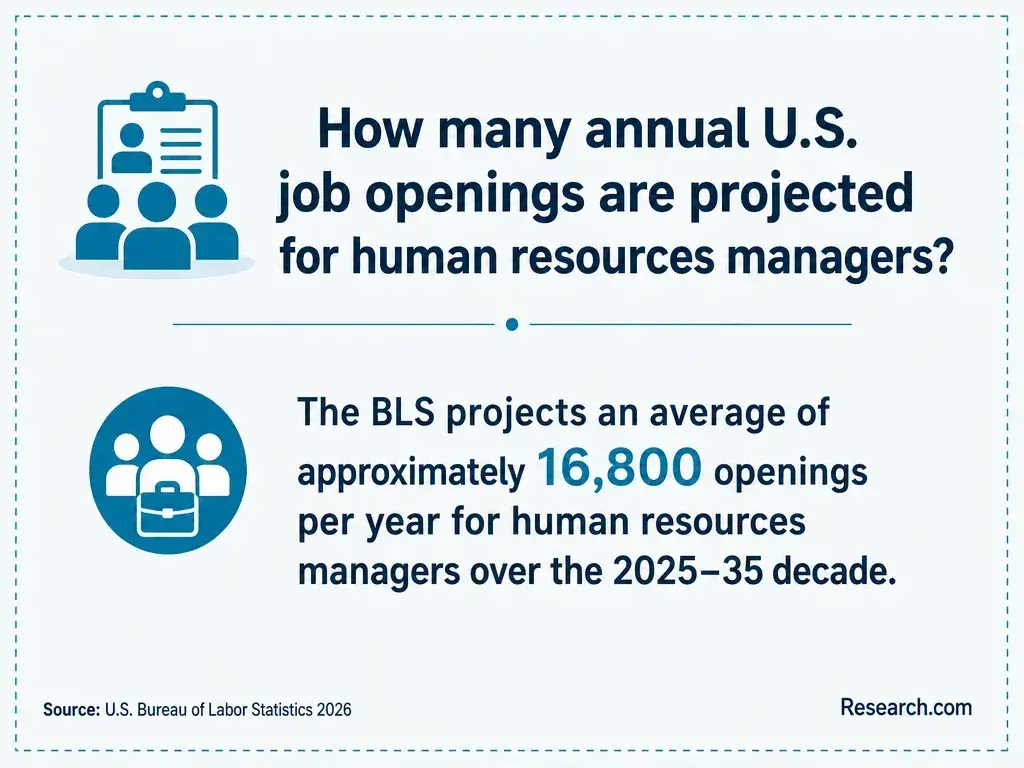
The U.S. Bureau of Labor Statistics reports a May 2025 median annual salary of $133,000 for training and development managers and projects 6.4% employment growth for that occupation from 2025 to 2035. That describes an occupation, not the earnings or prospects of Ed.D. graduates. Manager roles also require experience directing programs, people, and resources; the doctorate does not supply that experience automatically.
Use occupational figures to understand the market for your target role, then examine local job postings for required management scope, industry knowledge, and credentials. If your likely next step remains an individual-contributor learning role, calculate the degree's cost against that realistic path - not against an assumed executive salary.
Other Things You Should Know About EdD Leadership
Reskilling prepares employees for substantially different work; upskilling deepens skills used in their current work. The distinction helps clarify which roles, practice opportunities, and job transitions an initiative must support.
Do not impose participation beyond your authority. Clarify who sets work assignments and learning requirements, then resolve conflicts over scheduling and expectations with the appropriate leaders and HR partners.
Check applicable collective bargaining agreements and involve labor-relations staff or authorized representatives before changing training obligations, schedules, classifications, or evaluation practices.
AI may speed drafting, but it cannot allocate practice time or ensure feedback on the job. Review any generated material for accuracy, accessibility, confidentiality, and fit with the work employees must perform.
- General Schedule Qualification Policies | U.S. Office of Personnel Management https://www.opm.gov/policy-data-oversight/classification-qualifications/general-schedule-qualification-policies/
- Employer-offered educational assistance programs can help pay for college | Internal Revenue Service https://www.irs.gov/newsroom/employer-offered-educational-assistance-programs-can-help-pay-for-college
- Academics: Section 4: Academic Calendar, Admission, and Enrollment: Admission Requirements https://academics.waldenu.edu/handbook/registration-admission-enrollment/admission-requirements
- Who Pursues an EdD? Diverse Backgrounds in the Doctor of Education in Educational Leadership | Fairfield University https://www.fairfield.edu/news/insights/education-human-development/who-pursues-an-edd.html
- Online Ed.D. in Leadership and Learning in Organizations | VU-EDU https://peabodyonline.vanderbilt.edu/edd-in-organizational-learning/
- Leadership for Organizations Ed.D. | University of Dayton https://udayton.edu/academics/programs/leadership-for-orgs-edd/index.php
- What Is a Problem of Practice? | spalding.edu https://online.spalding.edu/blog/what-is-problem-practice
- What Can You Do With an EdD in Leadership? Top Careers | University of the Cumberlands https://www.ucumberlands.edu/blog/what-can-you-do-with-an-edd-in-leadership
- Organizational Leadership (Ed.D.) - Graduate Admissions | Stockton University https://www.stockton.edu/graduate/ed-d-organizational-leadership.html
- Doctoral dissertation or capstone: how to choose the right program | PhD/Doctorate | Capella University Blog https://www.capella.edu/blog/phd-doctorate/the-difference-between-a-dissertation-and-doctoral-capstone/