2027 Online Ed.D. in Leadership and Learning in Organizations vs. a Master's in Change Management: Which Fits Your Goals?
Audited and Verified:
Our Editorial and Data Verification Process
Research.com uses government datasets, official education statistics and primary institutional information to support its career and degree guides. Our review process checks factual accuracy, occupational definitions, source dates and the requirements associated with the credentials discussed.
How This Article Was Fact-Checked
Our editorial team verifies salary estimates, employment projections, education requirements and program information against original data providers and official organizations. Salary figures are checked against the relevant occupational definitions and reporting periods. Information about licensure, accreditation and required in-person training is reviewed separately.
Fact-checked and verified on:

Co-Founder and Chief Data Scientist
An online Ed.D. in leadership and learning and a master's in change management can both support organizational improvement, but they prepare you for different kinds of work. If you already lead learning or change initiatives, the choice affects how much time and money you invest, and whether you gain the skills your next role requires.
This comparison explains the differences in applied research, implementation, admissions, cost, and career relevance so you can choose a degree, a shorter credential, or more hands-on experience with a clear purpose.
Key Things You Should Know
- Choose the Ed.D. when your goal requires sustained leadership inquiry, organizational learning, and evaluating complex problems - not simply a higher credential.
- Choose the master's when you need focused preparation to diagnose, plan, and implement change, particularly if you have not yet led substantial initiatives.
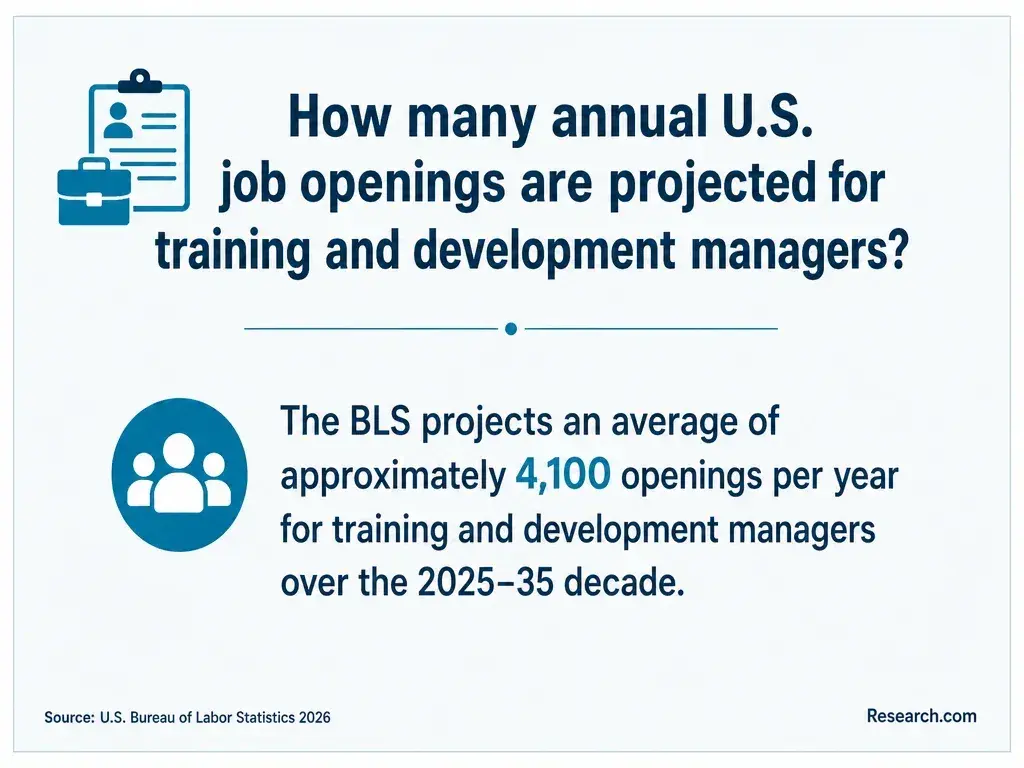
- Neither degree guarantees promotion: the U.S. Bureau of Labor Statistics reports a $133,000 median annual salary for training and development managers in 2025, but that occupational median is not a graduate salary.
What is the difference between an online Ed.D. in leadership and learning and a master's in change management?
An Ed.D. in leadership and learning is a practice-oriented doctorate concerned with how organizations develop people, make decisions, and improve systems.
A master's in change management is graduate study focused more directly on preparing and executing organizational transitions. Program names and requirements vary; neither title guarantees a particular course or project.
The distinction is clearest in the work you want to do after graduation. This comparison describes typical emphases, not requirements of every program:
| Decision factor | Leadership and learning Ed.D. | Change management master's |
| Central question | How can leaders investigate and improve a persistent organizational learning or performance problem? | How can an organization plan, communicate, and implement a specific change? |
| Academic depth | Doctoral study in leadership, learning, evidence use, and applied inquiry | Graduate-level study in organizational diagnosis, stakeholder engagement, and implementation |
| Typical culminating work | Program-specific capstone, dissertation in practice, or other doctoral project | Program-specific project, portfolio, or other master's-level assessment |
| Best initial fit | Experienced professionals with a complex problem they can investigate | Professionals building or sharpening change-implementation skills |
Online describes where much of the study happens, not the degree's purpose or scheduling flexibility. A master's can be online, too; compare each school's actual attendance and project requirements.
Which degree better fits your leadership, learning, or organizational change career goals?
Choose the Ed.D. if you already have meaningful responsibility for learning, workforce development, or organizational improvement and want to investigate why an important problem persists.
For example, a learning and development manager might need to evaluate whether a leadership program changes workplace practice, not merely deliver the program. Doctoral study is most useful when you can connect rigorous inquiry to decisions you have the authority or partnerships to influence.
Choose the master's if your next step is to manage change initiatives more effectively: assessing readiness, working with stakeholders, addressing resistance, and tracking implementation. It can also help a professional moving from training, operations, or project management into organizational development. You will still need opportunities to demonstrate that you can lead change in a real setting.
If your goal is one near-term initiative, neither degree may be necessary. A change-management certificate, employer development program, mentor, or supervised project may address the skill gap faster.
If you are leaning toward a doctorate but affordability could change your decision, use an online organizational leadership doctoral affordability guide to identify programs for closer, school-specific review.
What careers can you pursue with an Ed.D. or master's in change management?
Both degrees can be relevant to organizational development, learning and development, consulting, and change leadership. The better credential depends on the role's responsibilities and your prior experience.
Neither degree alone qualifies someone for an executive position or replaces a record of managing people, budgets, stakeholders, or results.
The following distinctions help you evaluate job postings rather than assuming similar-sounding titles involve the same work:
| Role or pathway | Work to prepare for | Degree-fit consideration |
| Change manager or organizational development practitioner | Diagnose implementation barriers, coordinate stakeholders, and assess adoption | A focused master's may be sufficient; employers may prioritize completed initiatives |
| Learning and development leader | Set development strategy, lead teams, and evaluate whether learning transfers to work | An Ed.D. may add value when the role calls for deeper inquiry and system-level leadership |
| Organizational consultant | Define client problems and recommend feasible changes | Either degree can support the work; sector expertise and credible project evidence matter |
| Higher education or public-sector leader | Improve programs within governance, budget, and accountability constraints | Check employer rules and any role-specific credential requirements |
For a career move, identify target job postings and compare their required experience with projects you can document. A workplace portfolio showing the problem, your contribution, implementation choices, and appropriately supported results may be more persuasive than the degree title alone.
A leadership and learning Ed.D. commonly connects adult learning, leadership, organizational systems, and applied research. A change management master's generally puts more weight on diagnosis, communication, stakeholder engagement, and executing change. Review required courses, not just promotional descriptions, to see whether the emphasis matches your skill gap.
The most consequential curricular difference may be how you must use evidence. Doctoral learners may need to frame a sustained practice problem, select defensible methods, analyze findings, and explain limitations.
A master's project may instead prioritize an actionable change plan. Neither approach is inherently better: choosing a research-intensive program for a straightforward implementation goal can add work without adding much career value.
Ask what culminating work students actually complete and whether it requires an approved partner, organizational data, or faculty-supervised research. An overview of Ed.D. programs emphasizing applied culminating work can help you develop questions, but confirm each program's current capstone or dissertation rules directly.
A master's program generally evaluates prior undergraduate study and other application materials specified by the school. An Ed.D. may additionally seek a completed master's degree or qualifying graduate study, relevant professional experience, and evidence that the applicant is ready for doctoral-level inquiry.
Requirements for grades, tests, recommendations, interviews, and experience differ by institution.
Do not mistake eligibility for readiness. An Ed.D. applicant should be able to describe a genuine organizational problem, their leadership responsibilities, and how they might obtain appropriate access or support for applied work.
A master's applicant changing functions should show transferable work, such as facilitating training or coordinating an implementation, without claiming experience they have not gained.
Before applying, request the current admissions criteria and ask whether prior graduate credits satisfy an entry requirement or can actually count toward the degree. Those are separate decisions; neither should be assumed to shorten doctoral study.
A master's generally takes less time than a doctorate because it requires less advanced study and typically does not include an extended doctoral inquiry project.
Your actual timeline depends on required credits, course availability, enrollment pace, project approvals, and any required campus convenings. An advertised completion timeline may assume uninterrupted enrollment and timely project progress.
If you work full time, ask for a term-by-term course sequence and the expected time commitment during the culminating project, not only during coursework.
When comparing doctoral pathways, a guide to comparing Ed.D. completion timelines can help you spot questions to raise with programs. Do not choose a fast track without checking whether its pace permits the leadership work and inquiry you hope to do.
There is no reliable single price for either degree type. Compare each program's published tuition basis, per credit, term, or program, along with required credits, fees, books, technology, and travel. A doctorate's longer enrollment and project work may increase total expense even when its advertised per-credit tuition looks competitive.
Calculate an estimated total using the school's current charges and your expected pace, then account separately for any income you may forgo. Ask your employer whether assistance is paid upfront or reimbursed, which grades and courses qualify, and whether leaving the job triggers repayment.
Do not count possible aid or a future raise as guaranteed savings. For a related doctorate funding comparison, evaluating aid eligibility for higher education leadership doctorates can provide a starting point; verify eligibility with the specific school.
Online study can reduce routine commuting, but it may still require live evening classes, group meetings, scheduled faculty sessions, or campus visits.
Campus-based study can offer regular in-person contact while imposing travel and attendance demands. Neither format tells you, by itself, how much flexibility you will have during a workplace project.
Ask each program for live-session times, attendance rules, residency requirements, accessibility support, and the process for continuing a project if you change employers.
If online delivery is part of your financial plan, an Ed.D. tuition comparison guide can help you identify options, but include required travel and fees before deciding that one format costs less.
Verify that the institution holds recognized institutional accreditation, then confirm the exact degree name and the program's current requirements with the school.
Do not assume institutional accreditation means a leadership degree carries specialized professional recognition or meets a state licensure requirement.
Neither a general organizational leadership Ed.D. nor a change management master's automatically confers school-administrator licensure or a change-management certification.
If your target job requires a regulated credential, check the relevant licensing authority and the program's disclosures before enrolling. If it calls for a particular professional certification, check the certifying organization's eligibility rules separately.
What salaries and job outlooks can graduates expect?
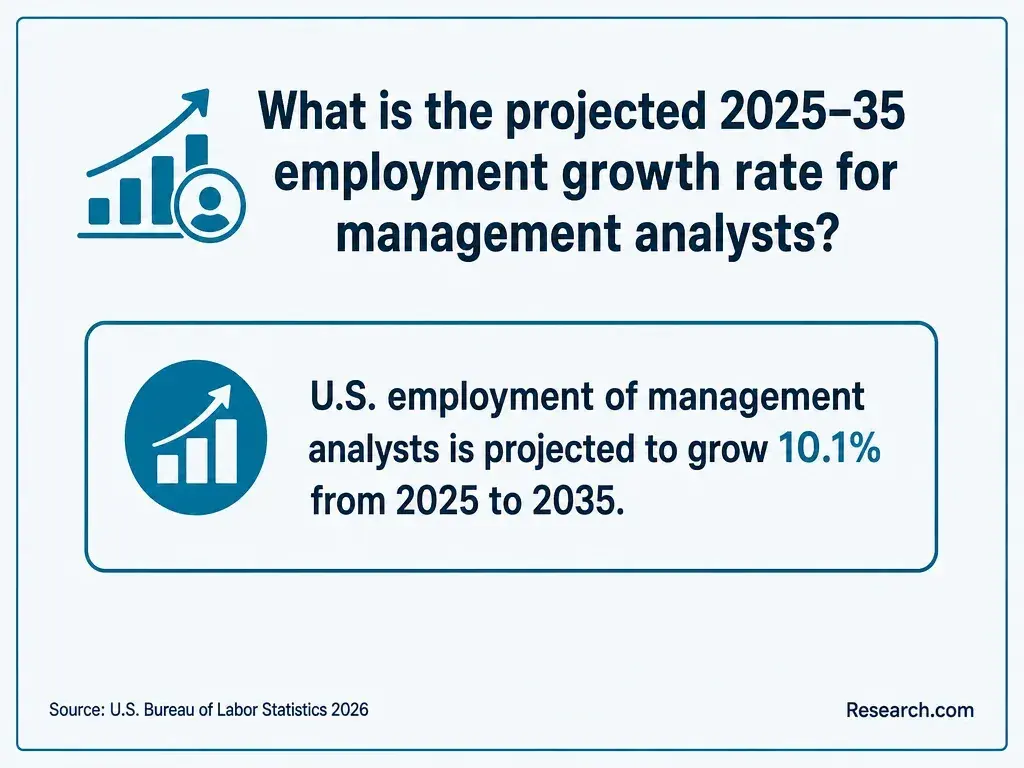
Occupational statistics offer context, not a forecast of what either degree will pay. U.S. Bureau of Labor Statistics figures for May 2025 show different pay levels across roles that may be relevant to graduates; projected growth covers 2025-2035:
| Occupation | Median annual salary | Projected job growth |
| Training and development managers | $133,000 | 6.4% |
| Management analysts, including organizational consultants | $101,860 | 10.1% |
| Training and development specialists | $69,280 | 10.8% |
These figures describe occupations across employers and experience levels, not Ed.D. or master's graduates. The managerial median is higher than the specialist median, but a degree does not itself move a specialist into management.
For a financial decision, compare the roles you can realistically pursue with your existing experience against the full cost of the program.
Other Things You Should Know About EdD Leadership
Yes, if the specific Ed.D. accepts that academic background and you meet its other requirements. The master's may strengthen your preparation, but do not assume its credits will transfer into the doctorate.
An Ed.D. is a doctoral degree, so graduates can use the academic title. In professional settings, identify the degree clearly to avoid implying a medical credential.
Ownership and permission to share the work depend on institutional rules, employment agreements, and any partner agreement. Clarify confidentiality, intellectual property, and publication permissions before using organizational information.
Contact your faculty advisor promptly. Continuing, changing the project site, or revising its scope may require new academic approval and organizational permissions; an online format does not remove those requirements.
- Maximizing the Impact and ROI of Leadership Development | nih.gov https://pmc.ncbi.nlm.nih.gov/articles/PMC11505461/
- DAPIP | Homepage - Office of Postsecondary Education (OPE) https://ope.ed.gov/dapip/
- An Overview of Accreditation of Higher Education in the United States | Congress.gov | Library of Congress https://www.congress.gov/crs-product/R43826
- How Long Does an Online Degree Take for Adult Learners? | MVNU https://mvnu.edu/blogs/how-long-does-an-online-degree-take-for-adults/
- Leadership and Learning in Organizations Online Ed.D. | Peabody College of Education and Human Development https://peabody.vanderbilt.edu/academics/edd-programs/online-leadership-learning-organizations/
- EdD in Educational Leadership | How to Apply | USC Rossier https://rossier.usc.edu/programs/doctoral/educational-leadership/educational-leadership-application-instructions/
- What Is a Capstone Project? - Boston University Questrom https://www.bu.edu/questrom/blog/what-is-a-capstone-project/
- Program: Educational Leadership Major, EdD - UTK Catalog https://catalog.utk.edu/preview_program.php
- Tuition & Fees | Long Island University https://liu.edu/registration-and-financial-aid/tuition-fees
- What Is a Capstone Project? | National University https://www.nu.edu/blog/what-is-a-capstone-project/