2027 Is an Online Ed.D. in Leadership and Learning in Organizations a Good Fit for Regional Operations Directors?
Audited and Verified:
Our Editorial and Data Verification Process
Research.com uses government datasets, official education statistics and primary institutional information to support its career and degree guides. Our review process checks factual accuracy, occupational definitions, source dates and the requirements associated with the credentials discussed.
How This Article Was Fact-Checked
Our editorial team verifies salary estimates, employment projections, education requirements and program information against original data providers and official organizations. Salary figures are checked against the relevant occupational definitions and reporting periods. Information about licensure, accreditation and required in-person training is reviewed separately.
Fact-checked and verified on:

Co-Founder and Chief Data Scientist
Regional operations directors already lead across sites, budgets, and teams. An online Ed.D. in Leadership and Learning in Organizations may help them investigate why improvements succeed in one location but stall in another - and design better ways to develop leaders and sustain change. It is also a substantial commitment that may not be necessary for the next promotion.
This guide examines what the degree adds to operations experience, where it falls short, and what to verify before choosing a program.
Key Things You Should Know
- Best fit: A regional director who wants to lead evidence-based workforce development or organization-wide change, not simply gain another management credential.
- Career caution: The U.S. median annual salary for training and development managers was $133,000 in May 2025, but that occupational figure is not an expected Ed.D. graduate salary.
- Before enrolling: Confirm live-class and travel requirements, total cost, and whether you can obtain approval and appropriate data access for an applied project across sites.
Is an online Ed.D. in Leadership and Learning in Organizations a good fit for regional operations directors?
It can be a good fit when your next responsibility is to improve how people learn, lead, and implement change across a region. Regional directors often know which sites miss targets. A practice-oriented Ed.D. can help them test explanations, distinguish training gaps from process or incentive problems, and evaluate an intervention rather than rolling it out everywhere on intuition alone.
The distinction matters: a director seeking broader financial authority, supply-chain expertise, or an immediate promotion may get more direct value from an MBA, executive development, or a stretch assignment. The Ed.D. is more compelling when the work itself calls for sustained organizational inquiry.
This comparison puts the degree beside two alternatives a working director might realistically consider.
| Path | Strongest fit | Key limitation |
| Leadership and learning Ed.D. | Studying and improving leadership development, learning, and change across sites | Requires substantial doctoral work; does not replace operational or executive experience |
| MBA or business-focused executive study | Deepening finance, strategy, and general business management | May offer less preparation in applied learning research and evaluation |
| Employer leadership program or targeted certificate | Solving a defined skills gap or preparing for a near-term internal role | Typically offers less depth in organizational research |
The deciding question is whether you expect to use doctoral-level inquiry in your work. If a promotion depends mainly on operating results and succession planning, seek feedback from your employer before assuming another degree will change the decision.
What does an online Ed.D. in Leadership and Learning in Organizations prepare graduates to do?
A practice-oriented program can prepare experienced leaders to diagnose organizational problems, design learning or change initiatives, and judge whether those initiatives are working. For a regional director, that might mean examining inconsistent supervisor onboarding across sites, then selecting measures that capture behavior on the job - not just course completion or participant satisfaction.
Those capabilities have boundaries. A course in learning analytics does not by itself make someone a data scientist, and an applied project does not authorize access to employee records. A workplace-based capstone or dissertation in practice may require faculty approval, employer permission, privacy safeguards, and institutional research review. The program determines the academic requirements; the organization controls access to its people and data.
The most useful outcome is often a stronger decision process: identifying plausible causes, listening to site-level stakeholders, piloting a response where feasible, and reporting limitations honestly. That builds on a director's existing authority rather than substituting academic work for operational judgment.
What career paths can regional operations directors pursue with an online Ed.D.?
The most direct path is often advancement within operations: taking responsibility for leadership development, implementation, or performance improvement across more locations. The degree may also support a move into organizational development, talent development, internal consulting, or workforce learning when the director can show relevant projects and stakeholder results.
These moves are not interchangeable. A training and development manager oversees learning strategy, staff, and budgets; an organizational consultant diagnoses client problems and recommends changes. Higher education administration introduces governance and institutional experience that a corporate operations director may not have. For a planned higher education transition, compare that experience gap and available higher education leadership doctoral scholarships before treating the doctorate as a bridge into the sector.
Build evidence for the target role while studying: lead a cross-site initiative, document your decisions and evaluation approach, and create a portfolio version that omits confidential information. An Ed.D. can strengthen that record, but employers will still assess sector knowledge, management scope, and demonstrated outcomes.
Online delivery reduces routine travel but does not necessarily reduce academic demands. Programs may require live evening classes, cohort meetings, group work, or campus convenings. A regional director whose busiest periods include site visits or irregular incident response should compare the actual weekly calendar, attendance policy, and travel dates - not just the word "online."
A campus-based program may offer easier in-person access to faculty and peers but require a commute or relocation. In either format, compare advisor access, research support, project requirements, and the type of doctorate awarded. An Ed.D. focused on improving practice is not automatically equivalent to a research-oriented PhD designed around scholarly research.
If you have already completed doctoral coursework elsewhere, format may be less important than whether the new institution accepts any of that work. Investigate doctoral completion options for ABD education students, then obtain a written evaluation; an ABD designation alone does not establish eligibility or shorten a particular Ed.D.
Relevant study commonly combines leadership and organizational change with adult learning, research methods, and applied evaluation. The useful connection for an operations director is between learning transfer - whether people use new skills at work - and the systems that support or obstruct it, such as scheduling, supervisor coaching, and performance incentives.
Program curricula differ. Check which subjects are required, which are electives, and how deeply students practice qualitative and quantitative methods. A director comparing different education doctorate specialization pathways should also distinguish a formally awarded concentration from a course with a relevant title. Programs centered on school administration may be less suitable than those designed for cross-sector organizational learning.
Look closely at the culminating project. A team capstone, individual dissertation in practice, and traditional dissertation impose different demands on topic choice, organizational access, collaboration, and writing. Ask to see the program's current requirements rather than assuming you can turn an existing operations initiative into doctoral credit.

Requirements vary by institution and entry term. Programs may ask for a graduate degree or specified graduate study, transcripts, recommendations, a statement of purpose, and evidence of professional leadership. Some add an interview, writing sample, or other conditions. A regional director should check the published rules and ask admissions how the program evaluates operational leadership outside education.
Show the decisions you actually owned: the scope of sites and teams, a change you led, how you handled competing stakeholder needs, and a problem you want to investigate. Describe a possible project without claiming that your employer has approved it or that its data will be available. If you hold an education specialist degree, reviewing Ed.S.-to-Ed.D. transition requirements can help frame questions for admissions; prior study used to establish eligibility is not necessarily credit applied to the doctorate.
There is no reliable single timeline or price for this degree category. Required credits, enrollment pace, course sequencing, and the culminating project determine completion time. A director who changes employers or loses access to a project site may need to revise a research plan, which can affect both time and expense.
Request a written estimate for the entire proposed course of study, including tuition, mandatory fees, required travel, lodging, materials, and costs associated with continued enrollment during the project stage. Compare that estimate with employer reimbursement limits and any repayment obligation if you leave your job. Leadership doctorate programs with lower tuition can be a starting point, but the lowest advertised tuition is not necessarily the lowest total cost.
For a personal return-on-investment test, compare the full cost with the responsibilities you could plausibly gain without the degree. Ask your supervisor or a hiring manager whether doctoral preparation would materially strengthen your candidacy for those specific roles. Do not budget around an assumed promotion or salary increase.
Regional operations leadership generally does not require a license simply because a director earns an Ed.D. Nor does a broadly focused leadership and learning doctorate automatically confer a training credential or qualify its graduate for teacher, principal, or superintendent licensure.
If you intend to enter a regulated education role, ask the program whether its specific degree and track are designed to meet requirements in your state, then confirm eligibility with the relevant licensing authority. For corporate operations or organizational development roles, review actual job postings: employers may value experience or a role-specific certification, but those preferences are separate from a legal licensing requirement.
No occupational salary table can predict what an Ed.D. graduate will earn. Compensation depends on the job, sector, region, employer, and prior responsibility. The U.S. Bureau of Labor Statistics reports a May 2025 median annual salary of $133,000 for training and development managers. That benchmark is relevant to a director considering a move into enterprise learning leadership; it is not a salary estimate for new doctorate holders.
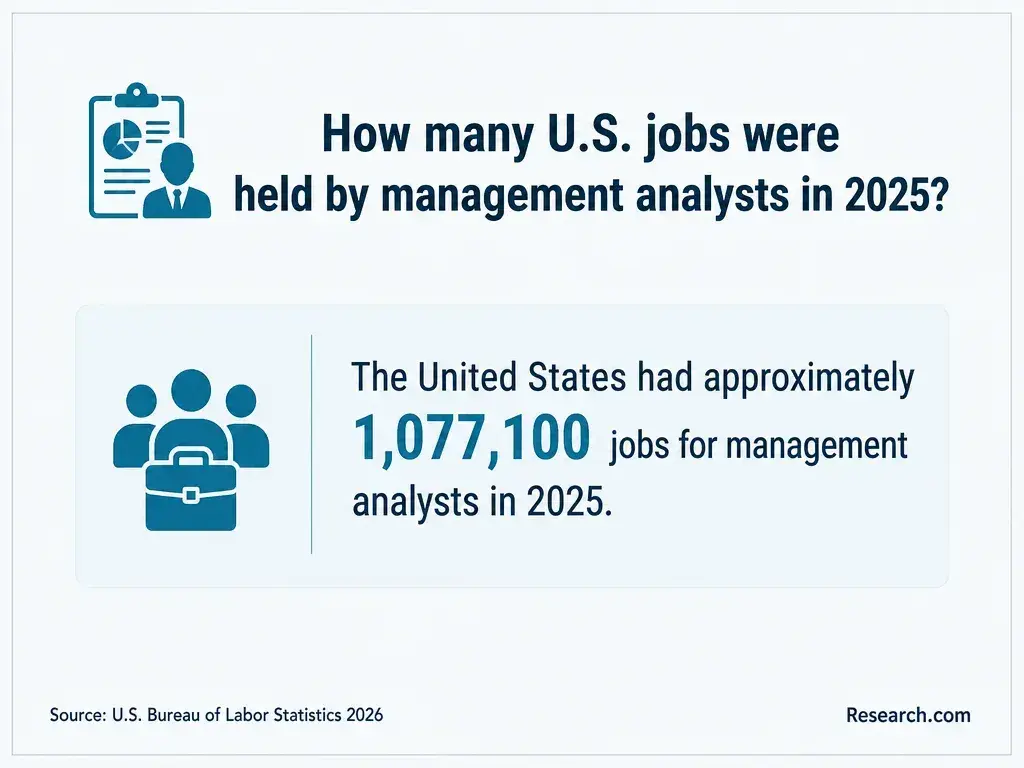
For directors considering consulting, BLS projects 10.1% employment growth for management analysts from 2025 to 2035. The projection describes an occupation, not demand for Ed.D. graduates. Compare postings for your intended role with your experience and portfolio before using either figure to justify tuition.
How can regional operations directors choose an accredited online Ed.D. program?
First, verify the institution's accreditation and the exact degree awarded through the institution and its recognized accreditor. Then examine whether the curriculum and project structure match a multi-site operations problem. Accreditation establishes institutional standing; it does not prove that a program fits your schedule, prepares you for a particular job, or meets state licensure rules.
Before accepting an offer, obtain answers to these decision-critical questions from the program and, where appropriate, your employer:
- Which classes, group meetings, and campus convenings require attendance, and when are they scheduled?
- What is the current total-cost estimate for my expected pace, and what happens financially if completion takes longer?
- What culminating project is required, and can a regional, multi-site problem meet its scope and supervision rules?
- Who must approve access to workplace participants or data, and what alternative is available if my employer or role changes?
- How do graduates with operations backgrounds use the program's career and research support?
A strong choice is one whose obligations you can meet and whose academic work addresses a problem you expect to keep owning. If the answers point instead to a narrow skills gap or an immediate promotion decision, a smaller professional-development commitment may be the better next step.
Other Things You Should Know About EdD Leadership
Possibly, if the program approves the design and your organization authorizes the data use. Differences among sites can make simple comparisons misleading, so discuss measures, context, and privacy with your advisor before collecting data.
Ownership and publication rights depend on university policies and any employer agreement. Clarify confidentiality, intellectual property, and what you may share publicly before committing to a topic.
Employer support can help with scheduling, tuition, and project access, but it is not universally required for admission. Discuss what you need from your employer without implying that an application guarantees a workplace project.
Ask the program about leave policies, course sequencing, cohort reentry, and financial-aid consequences before enrolling. An online format does not necessarily allow an informal pause without delaying progress.
- Maximizing the Impact and ROI of Leadership Development | nih.gov https://pmc.ncbi.nlm.nih.gov/articles/PMC11505461/
- Cost of Attendance (Budget) | 2025-2026 Federal Student Aid Handbook https://fsapartners.ed.gov/knowledge-center/fsa-handbook/2025-2026/vol3/ch2-cost-attendance-budget
- Understanding College Costs | studentaid.gov https://studentaid.gov/resources/prepare-for-college/students/choosing-schools/consider-costs
- Leadership Skills Developed in Online EdD Programs | Neumann https://learn.neumann.edu/neuperspectives/educational-leadership-skills-developed-in-online-edd-programs
- Intentions versus outcomes in doctoral degree completion | tandfonline.com https://www.tandfonline.com/doi/full/10.1080/07294360.2024.2396347
- The Major Payoff: Evaluating Earnings and Employment Outcomes Across Bachelor's Degrees - CEW Georgetown https://cew.georgetown.edu/cew-reports/major-payoff/
- What Does a Director of Operations Do? | snhu.edu https://www.snhu.edu/about-us/newsroom/business/what-does-a-director-of-operations-do
- Director of Operations Job Description and Salary Range | Warner Pacific University https://www.warnerpacific.edu/blog/director-of-operations-job-description-salary/
- Leadership and Learning in Organizations Online Ed.D. | Peabody College of Education and Human Development https://peabody.vanderbilt.edu/academics/edd-programs/online-leadership-learning-organizations/
- How Does Online Learning Work? | Drexel University Online https://www.online.drexel.edu/about/how-does-online-learning-work.aspx