2027 Online Engineering Management Degrees With Practice-Ready Leadership Curricula

Co-Founder and Chief Data Scientist
Choosing an online engineering management degree is really a leadership-and-ROI decision: will the program help you move from technical contributor to manager without pausing your career? The timing matters because BLS May 2024 wage data places median annual pay for architectural and engineering managers at $167,740, reflecting the value employers place on technical leadership.
This guide is for engineers, technologists, project leads, and STEM professionals comparing online options. You will learn how programs differ from MBAs, what they cost, how to verify quality, and which career paths they support.
Key Things You Should Know
- Online engineering management master's programs usually combine systems engineering, project leadership, finance, operations, analytics, and people management rather than the broad general-business focus of an MBA.
- BLS May 2024 data reports $167,740 as the median annual wage for architectural and engineering managers, but salaries vary widely by industry, region, experience, and technical specialization.
- NCES data published in 2024 shows average annual graduate tuition and required fees of $12,596 at public institutions and $29,931 at private nonprofit institutions, so total cost should be compared before enrolling.
What is an online engineering management degree and how does it differ from an MBA?
An online engineering management degree is typically a graduate program designed for engineers and technical professionals who want to lead projects, teams, budgets, products, facilities, or innovation programs. Common degree names include Master of Engineering Management, Master of Science in Engineering Management, Master of Engineering in Engineering Management, and technology management programs with engineering-oriented coursework.
The main difference from an MBA is the center of gravity. An MBA teaches general management across finance, marketing, strategy, operations, and organizational behavior. Engineering management applies management tools to technical environments where decisions involve design trade-offs, safety, quality systems, product development, manufacturing, infrastructure, software, data, or research and development.
The table below summarizes the decision point for students comparing an engineering management master's degree with an MBA. It is most useful if you already know whether your target role will remain closely connected to engineering work.
| Comparison point | Online engineering management degree | MBA |
| Best fit | Engineers, technical leads, product engineers, systems professionals, operations specialists, and STEM managers | Professionals seeking broader business leadership, consulting, finance, entrepreneurship, or cross-functional management |
| Curriculum emphasis | Technical project management, systems thinking, engineering economics, quality, risk, analytics, operations, and leadership | Accounting, marketing, corporate finance, strategy, organizational management, entrepreneurship, and business analytics |
| Typical peer group | Students with engineering, computer science, technology, manufacturing, construction, or applied science backgrounds | Students from varied industries, including business, nonprofit, healthcare, technology, government, and finance |
| Career signal | Shows readiness to lead technical work while understanding cost, schedule, risk, and people management | Shows broad business management training that may or may not include deep technical context |
| When it may not fit | If your goal is investment banking, brand management, or broad corporate strategy outside technical settings | If your target role requires credibility with engineers, design teams, technical operations, or R&D groups |
For many working engineers, the choice is not about which credential is "better." It is about which one matches the work they want to manage. If you want to supervise engineers, manage product development, lead manufacturing improvements, or direct technical programs, engineering management is usually the more targeted option.
How do online engineering management programs compare to campus-based options for working adults?
Online and campus-based engineering management programs often cover similar academic ground, but the student experience can differ significantly. Working adults should compare format, pacing, networking access, employer flexibility, and the amount of live interaction required.
The table below highlights the practical trade-offs. Use it to decide whether you need maximum scheduling flexibility or whether campus access and in-person networking are worth the commute and fixed meeting times.
| Factor | Online program | Campus-based program |
| Schedule fit | Often better for full-time employees, military students, frequent travelers, and caregivers | Better for students who can attend set class times and want face-to-face interaction |
| Learning format | May include asynchronous modules, live evening classes, simulations, virtual team projects, and recorded lectures | Usually includes scheduled classroom sessions, labs, seminars, and in-person teamwork |
| Networking | Can be strong when programs use cohorts, residencies, live sessions, and industry projects | Often more natural through campus events, faculty office hours, student groups, and local employer visits |
| Employer compatibility | Often easier to combine with tuition assistance and ongoing employment | May require schedule changes, relocation, or reduced work hours |
| Best for | Experienced professionals who want career mobility without leaving the workforce | Students who benefit from structured environments or who want local campus recruiting access |
The strongest online programs are not just recorded lectures. They build practice-ready leadership through team-based engineering cases, cost and schedule simulations, capstone projects, applied analytics, and communication exercises that mirror workplace decision-making.
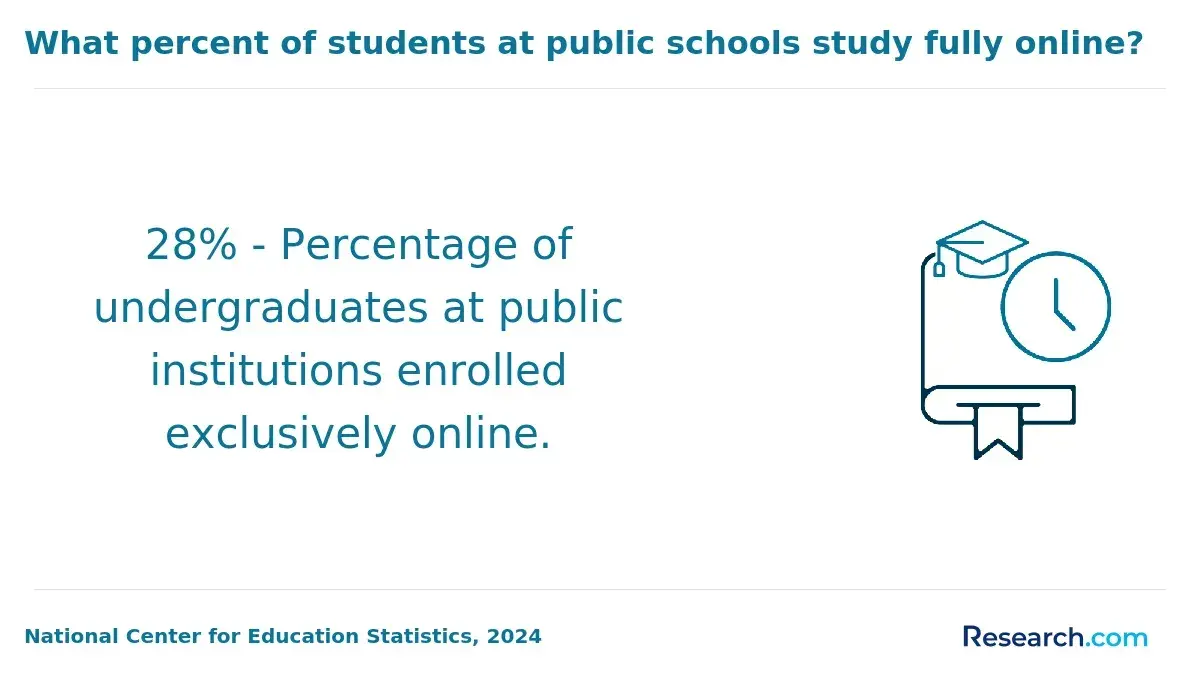
Online learning is also no longer a niche option for graduate students. Federal education data released in 2024 shows that distance education remains a major part of postsecondary enrollment, especially among adults balancing study with employment.
For prospective students, that means more choices, but also a greater need to separate high-quality online design from programs that simply move campus lectures onto a learning platform.
What are the admission requirements for online engineering management master's programs?
Admission requirements vary by school, but online engineering management master's programs usually expect applicants to show both quantitative readiness and professional direction. Some programs are built for applicants with engineering degrees, while others admit students from related STEM fields if they have enough math, statistics, computing, or technical experience.
Most applicants should be prepared to submit the following materials. These items help admissions teams judge whether you can handle graduate-level technical management coursework and contribute to team-based projects.
- Bachelor's degree from an accredited institution, often in engineering, computer science, technology, mathematics, physics, or a closely related STEM field
- Official transcripts showing prior coursework in calculus, statistics, engineering fundamentals, programming, or quantitative methods when required
- Resume documenting engineering, technical, project, operations, military, manufacturing, construction, software, or product experience
- Statement of purpose explaining career goals and why engineering management is a better fit than a general management degree
- Letters of recommendation from supervisors, faculty, technical leads, or managers who can speak to analytical ability and leadership potential
- GRE or GMAT scores only if required; many online programs have test-optional or waiver policies for experienced applicants
- English language proficiency scores for applicants whose prior education does not meet the school's language requirement
Applicants without an engineering bachelor's degree should ask whether bridge courses are available. A program that admits non-engineers without checking quantitative preparation may create risk for students who later struggle in systems analysis, engineering economics, risk modeling, or operations coursework.
A common mistake is applying only to the fastest program without checking prerequisites. Speed matters, but a compressed format can be difficult if you are also learning engineering finance, data analysis, and technical leadership concepts for the first time.
How can students verify accreditation and program quality for online engineering management degrees?
Accreditation is one of the most important quality checks for any online engineering management degree. At minimum, the institution should hold recognized institutional accreditation from an accreditor accepted by the U.S. Department of Education or the Council for Higher Education Accreditation. Programmatic accreditation is less common for graduate engineering management programs than for undergraduate engineering degrees, so students should evaluate several quality signals together.
Use the steps below before submitting an application or paying a deposit. This process helps protect your time, tuition investment, and future employer recognition.
- Confirm institutional accreditation directly through the accreditor's database or the U.S. Department of Education's public accreditation database.
- Check whether the engineering school, department, or college has recognized standing in engineering education, research, employer partnerships, or professional societies.
- Review faculty profiles to confirm that instructors have engineering, operations, systems, product, manufacturing, project, or technical leadership expertise.
- Ask whether online students complete the same curriculum and receive the same diploma wording as comparable campus students.
- Request recent information on retention, graduation, student support, employer engagement, and career services for online graduate students.
- Examine capstone or project requirements to see whether students solve real engineering management problems rather than only writing theoretical papers.
- Verify transfer credit, withdrawal, refund, and course-repeat policies before enrollment.
Quality also shows up in how transparent a program is. Red flags include vague tuition pages, unclear accreditation statements, limited faculty information, aggressive admissions pressure, no sample course descriptions, and unwillingness to explain how online students receive advising or career support.
What leadership and management courses are typically included in engineering management curricula?
Practice-ready engineering management curricula are designed to turn technical expertise into leadership capability. The best programs help students make decisions under constraints: budget, schedule, safety, stakeholder conflict, quality standards, regulatory requirements, supply chains, and emerging technologies such as AI-enabled design and predictive maintenance.
The table below groups common courses by the leadership problem they help students solve. This makes it easier to compare whether a program is preparing you for your target role rather than simply offering a long list of electives.
| Curriculum area | Common course topics | Leadership value |
| Technical project leadership | Project management, program management, scheduling, cost control, agile methods, risk management | Prepares students to coordinate engineers, vendors, timelines, budgets, and executive expectations |
| Systems and operations | Systems engineering, process improvement, operations management, supply chain, lean methods, quality management | Builds the ability to improve complex technical workflows and reduce operational waste |
| Engineering economics and finance | Engineering economy, capital budgeting, cost estimation, technology investment analysis | Helps managers justify technical decisions in financial and strategic terms |
| Data and decision-making | Analytics, simulation, decision models, statistics, forecasting, AI applications in engineering operations | Supports evidence-based decisions in design, production, reliability, staffing, and maintenance |
| People and organizational leadership | Team leadership, negotiation, ethics, communication, organizational behavior, change management | Develops the interpersonal skills needed to lead experts, communicate trade-offs, and manage conflict |
| Innovation and strategy | Technology strategy, product development, entrepreneurship, intellectual property, innovation management | Prepares students to connect engineering work with market needs and long-term competitiveness |
Students focused mainly on scheduling, scope, procurement, and cross-functional delivery may also compare engineering management with online accelerated project management degree programs. The project management route can be narrower but faster for professionals who do not need advanced engineering leadership coursework.
Look for assignments that require communication with nontechnical stakeholders. Engineering managers often succeed or fail based on whether they can explain trade-offs clearly to finance teams, executives, clients, regulators, and frontline employees.
How long do online engineering management programs take and what study formats are offered?
Most online engineering management master's programs are designed for working adults and can be completed in about one to three years, depending on credit load, transfer policies, course availability, and whether the student enrolls full time or part time. The fastest option is not always the best option if your job already involves travel, overtime, product launches, plant operations, or deadline-heavy engineering work.
The table below explains common study formats and what they usually mean for adult learners. Use it to compare workload expectations before choosing a program pace.
| Study format | How it usually works | Best fit |
| Part-time asynchronous | Students complete weekly modules, assignments, and discussions without fixed class meetings | Professionals who need maximum flexibility around work and family responsibilities |
| Live online cohort | Students attend scheduled virtual classes with the same peer group across multiple terms | Learners who want structure, discussion, and stronger networking without commuting |
| Accelerated terms | Courses run in shorter sessions with condensed assignments and faster sequencing | Experienced students who can handle intensive workloads and already have strong quantitative foundations |
| Hybrid or residency model | Most coursework is online, but students attend occasional campus sessions, labs, intensives, or presentations | Students who want online flexibility plus some face-to-face networking and faculty interaction |
| Self-paced or competency-based elements | Students progress through some material based on demonstrated mastery | Highly self-directed learners with relevant professional experience |
Before enrolling, ask how often required courses are offered. A program may advertise a short completion time, but if a required course is available only once per year, a missed term can delay graduation.
Students should also calculate weekly workload honestly. A three-credit graduate course can require substantial reading, quantitative work, team coordination, and applied projects. Taking two demanding courses while managing a full-time engineering job may be realistic for some students and unsustainable for others.
What are the typical tuition costs and financial aid options for online engineering management degrees?
Tuition for online engineering management degrees varies by institution type, residency policy, credit requirement, technology fees, and whether tuition is charged per credit or per term. NCES data published in 2024 reported average annual graduate tuition and required fees of $12,596 at public institutions and $29,931 at private nonprofit institutions.
Those averages are not engineering-management-specific, but they give students a useful benchmark for judging whether a quoted program price is unusually low, typical, or premium.
When comparing costs, look beyond the headline tuition rate. The following cost and aid items are especially important for working adults who may combine savings, employer support, and federal loans.
- Average annual graduate tuition and required fees at public institutions: $12,596, according to NCES data published in 2024
- Average annual graduate tuition and required fees at private nonprofit institutions: $29,931, according to NCES data published in 2024
- Federal Direct Unsubsidized Loan interest rate for graduate and professional students first disbursed in the 2025-26 award year: 7.94%
- Federal Direct PLUS Loan interest rate for graduate and professional students first disbursed in the 2025-26 award year: 8.94%
Those loan rates matter because a lower tuition program can still become expensive if you borrow the full amount and extend repayment. Students should estimate total borrowing, not just tuition, and should include fees, books, software, travel for residencies, and lost income if course demands reduce work hours.
Common financial aid and cost-reduction options include employer tuition reimbursement, military education benefits, federal graduate loans, institutional scholarships, assistantships in select programs, payment plans, and transfer credit for prior graduate coursework.
Some employers are especially willing to support engineering management because the curriculum can directly improve project delivery, operations, safety, and technical leadership.
If affordability is the deciding factor and you are still completing undergraduate preparation, compare broader engineering pathways such as the cheapest online mechanical engineering degree options before moving into a graduate management program. A lower-cost bachelor's pathway can reduce the debt you carry into graduate school.
A common mistake is choosing the cheapest tuition rate without checking completion time. A low per-credit price may not be the lowest total cost if the program requires more credits, charges high fees, offers limited course availability, or does not accept transfer credit.
What engineering management careers do these degrees prepare graduates for in the U.S. job market?
Online engineering management degrees prepare graduates for roles that sit between technical execution and organizational leadership. These roles often require the ability to evaluate engineering options, manage people, defend budgets, reduce risk, and communicate with both technical and nontechnical stakeholders.
The U.S. labor market rewards this blend of skills, but the degree is not a shortcut around experience. Many engineering management roles require several years of technical work before a professional is trusted to lead teams, approve designs, manage production issues, or direct major programs.
The table below shows common career paths and how the degree can support them. It does not imply that every employer requires the degree, but it shows where the credential can strengthen a candidate's readiness.
| Career path | Typical responsibilities | How the degree helps |
| Engineering manager | Supervises engineering teams, sets priorities, manages budgets, reviews technical work, and coordinates with executives or clients | Combines leadership, finance, project control, and technical decision-making |
| Technical project or program manager | Leads complex engineering initiatives across schedule, scope, vendors, compliance, and stakeholder expectations | Builds project governance, risk management, communication, and systems thinking skills |
| Product development manager | Coordinates design, testing, production, customer requirements, and launch timelines | Strengthens innovation, product strategy, analytics, and cross-functional leadership |
| Operations or manufacturing manager | Improves processes, quality, throughput, safety, maintenance, and cost performance | Supports lean operations, quality systems, data-driven improvement, and engineering economics |
| Systems engineering lead | Manages requirements, integration, testing, reliability, and technical trade-offs across complex systems | Develops systems-level decision-making and coordination across engineering disciplines |
| Construction or infrastructure technical manager | Oversees engineering coordination, contractors, schedule risk, cost control, safety, and owner communication | Connects project controls with technical and regulatory requirements |
Students who want to move specifically into building, infrastructure, and field operations leadership may also evaluate online construction management courses. Construction management may be a better fit when the target role centers on jobsite coordination, estimating, contracts, and construction delivery rather than broader engineering systems leadership.
AI and automation are changing the work of engineering managers rather than eliminating the need for them. Managers increasingly need to understand data quality, model limitations, automated design tools, cybersecurity exposure, predictive maintenance systems, and ethical use of AI in safety-critical environments.
What salary ranges and advancement opportunities can engineering managers expect by industry?
Salary potential for engineering managers depends on industry, technical domain, location, employer size, security clearance requirements, and prior engineering experience. BLS May 2024 wage data lists $167,740 as the median annual wage for architectural and engineering managers, which means half of workers in the occupation earned more and half earned less. Students should treat that figure as a labor-market benchmark, not as a promise of a post-graduation salary.
The table below summarizes how advancement can differ by industry. It is intended to help students think about where their technical background may have the strongest management value.
| Industry or setting | Common advancement path | Salary and mobility considerations |
| Technology and software-enabled products | Senior engineer, technical lead, engineering manager, director of engineering, vice president of engineering | Compensation may be influenced by product scale, equity, cloud or AI expertise, and competition for specialized talent |
| Manufacturing and advanced production | Process engineer, production lead, operations manager, plant engineering manager, director of operations | Advancement often rewards lean systems, quality improvement, automation, safety, and cost-control results |
| Aerospace, defense, and systems engineering | Systems engineer, program lead, engineering manager, chief engineer, program director | Security clearance, compliance knowledge, systems integration, and risk management can affect opportunity |
| Energy, utilities, and infrastructure | Project engineer, asset manager, engineering supervisor, capital projects manager, operations executive | Roles may emphasize reliability, regulatory compliance, capital planning, and long asset life cycles |
| Healthcare technology and clinical operations | Biomedical engineer, technical operations lead, facilities or systems manager, healthcare technology executive | Advancement may depend on regulatory knowledge, patient safety priorities, procurement, and cross-functional coordination |
For professionals who want to move beyond technical operations into hospital system strategy, policy, or executive healthcare administration, doctorate in healthcare administration programs may be more aligned than another engineering management credential. The better choice depends on whether the target role is primarily technical systems leadership or healthcare enterprise leadership.
The highest-return path is usually not simply earning the degree and waiting for promotion. Students should use the program to build a portfolio of evidence: capstone projects, cost savings analyses, process improvement results, stakeholder presentations, risk models, and examples of leading technical teams.
How should prospective students choose a reputable online engineering management program aligned with their goals?
The best online engineering management program is the one that matches your technical background, leadership goals, schedule, budget, and preferred industry. A highly ranked program may still be a poor fit if it lacks the electives, pacing, employer network, or applied projects you need.
Use the following process to compare programs systematically. It will help you avoid choosing based only on brand name, tuition, or speed.
- Define your target role first, such as engineering manager, product development manager, technical program manager, manufacturing operations leader, systems engineering lead, or construction technical manager.
- Match the curriculum to that role by checking required courses, electives, capstone options, analytics depth, leadership training, and industry-specific content.
- Verify accreditation, school credibility, faculty expertise, and whether online students receive the same academic credential as campus students.
- Calculate total cost, including tuition, fees, software, books, residency travel, loan interest, and potential lost income from reduced work hours.
- Ask admissions advisors how often courses are offered, whether prerequisites are required, how team projects work online, and what happens if you need to pause enrollment.
- Review student support services, including academic advising, technical support, career coaching, alumni access, writing support, and accommodations.
- Compare employer relevance by looking for industry projects, advisory boards, alumni outcomes, capstone partners, and faculty with current technical leadership experience.
- Check whether the format fits your life, especially if you work rotating shifts, travel, manage family responsibilities, or have unpredictable project deadlines.
Prospective students should also watch for red flags. Be cautious if a school cannot clearly explain accreditation, total cost, faculty qualifications, course sequencing, career services, or how online students interact with peers and instructors.
This degree is most likely to make sense for professionals who already have technical credibility and want to lead larger systems, teams, budgets, or programs. It may be less appropriate for students who want a purely technical research role, a nontechnical business career, or an entry-level engineering credential.
Other Things You Should Know About Engineering Management
Sometimes. Some programs admit applicants from related STEM fields such as computer science, physics, mathematics, industrial technology, or applied science. However, you may need prerequisite or bridge coursework if your background lacks calculus, statistics, programming, or engineering fundamentals.
Many 2027 online engineering management programs require a capstone instead of a thesis. Typical capstones run 3 to 6 credit hours and use a real workplace case, such as operations planning, budget control, or team leadership. Some programs also require a faculty-approved project proposal before enrollment.
Many professional online programs use a capstone, applied project, portfolio, or practicum instead of a thesis. Thesis options are more common in research-oriented programs or for students planning doctoral study.
Diplomas from online engineering management programs typically do not differ from those earned on-campus. The distinction between online and traditional formats is usually not specified, ensuring the degree has the same academic recognition and credibility.
References
- engineering manager https://www.randstad.ca/job-seeker/job-profiles/engineering-manager/
- Fast-Track or Part-Time? How Long a Master’s in Engineering Really Takes https://engineeringmanagement.org/how-long-does-it-take-to-get-an-mem/
- Engineering career map | Wise https://wise.jobs/engineering-career-map
- Engineering Manager Compensation: Salary and Equity Guide https://www.em-tools.io/career-path/engineering-manager-compensation
- Accreditation processes for technical programs https://edquip.co/blog/accreditation-processes-for-technical-programs
- 2025 Most Affordable Online Master's Degrees in Engineering Management https://www.onlineu.com/most-affordable-colleges/engineering-management-masters-degrees
- MEM/MSEM vs. Engineering MBA - What to Know https://www.onlineengineeringprograms.com/faq/mem-vs-engineering-mba
- Best Online Master’s Programs in Engineering Management https://www.onlinemastersdegrees.org/best-programs/engineering/engineering-management/
- Best Online Colleges for Working Adults [2026] https://www.straighterline.com/blog/degree-completion-best-online-colleges-for-working-adults
- How to Become an Engineering Manager: Role, Path,… https://rockstardeveloperuniversity.com/engineering-manager-salary/