2027 Online Cybersecurity Degrees With Incident Response Focus

Co-Founder and Chief Data Scientist
Choosing an online cybersecurity degree is harder when your goal is incident response, because the right program must teach both prevention and post-breach investigation. The need is immediate: the FBI's 2024 Internet Crime Report recorded $16.6 billion in reported losses, showing how costly cyber incidents have become for U. S. organizations. This guide is for prospective students, career changers, IT workers, veterans, and analysts who want a practical education path. You will learn how programs compare, what they cost, which schools to consider, and how the degree can support incident response careers.
Key Things You Should Know
- Incident response-focused cybersecurity degrees usually combine network security, digital forensics, malware analysis, security operations, cloud defense, and breach containment rather than treating cybersecurity as only a prevention discipline.
- U.S. labor data remains favorable: the Bureau of Labor Statistics lists information security analysts at a 2024 median pay of $124,910, but pay varies by role, location, clearance level, industry, and experience.
- Before enrolling, verify institutional accreditation, hands-on lab access, transfer-credit rules, certification alignment, and whether the curriculum includes real incident handling rather than only general security theory.
What is an online cybersecurity degree with an incident response focus?
An online cybersecurity degree with an incident response focus is a college program that prepares students to detect, analyze, contain, eradicate, and recover from cyberattacks. Unlike a broad cybersecurity degree that may emphasize governance, policy, or general network defense, this path pays special attention to what happens after suspicious activity appears in logs, endpoints, cloud systems, or user accounts.
Incident response is the structured process organizations use when security events become potential breaches. Students learn how to triage alerts, preserve evidence, identify root causes, document findings, coordinate with technical and nontechnical teams, and reduce the chance of repeat attacks. This makes the degree especially relevant for students interested in security operations centers, digital forensics, threat hunting, ransomware response, and cyber defense roles.
Different degree levels serve different goals. The table below summarizes how each option typically fits students at different points in their education and career path.
| Degree level | Best fit | Incident response value | Typical limitation |
| Associate degree | Students seeking entry-level IT or security support roles | Builds foundations in networking, systems, scripting, and basic security tools | May not go deep enough for dedicated responder or forensics roles without experience or certifications |
| Bachelor's degree | Career starters and transfer students seeking a full cybersecurity pathway | Covers technical labs, security operations, digital forensics, risk, and communication skills | Requires more time and tuition than a certificate or bootcamp |
| Master's degree | Working professionals moving into leadership, threat intelligence, or advanced defense | Supports deeper work in incident management, cyber strategy, cloud security, and enterprise risk | Usually assumes prior technical, IT, or security knowledge |
| Graduate certificate | Professionals who already have a degree and want targeted skills | Can add incident response, forensics, or security operations coursework quickly | May not substitute for a degree when employers require one |
This degree is most useful if you want a structured pathway into cyber defense and can benefit from academic credit, faculty support, labs, and employer-recognized credentials. It may be less efficient if you already have strong IT experience and only need a short, skills-specific credential for one tool or platform.
How do online cybersecurity incident response programs compare to campus-based options?
Online and campus-based cybersecurity programs can lead to similar academic credentials, but the learning experience is different. The better choice depends on your schedule, need for hands-on support, budget, military status, and access to local employers or labs.
The comparison below highlights the practical differences that matter most when evaluating incident response training, not just general online convenience.
| Factor | Online program | Campus-based program | Decision tip |
| Schedule | Often asynchronous or evening-friendly | Usually tied to set class times | Choose online if you are working, parenting, deployed, or changing careers while employed |
| Hands-on labs | Delivered through virtual cyber ranges, cloud labs, simulations, and remote tooling | May include physical labs, in-person exercises, and local team projects | Ask whether students investigate realistic incidents, not just watch demonstrations |
| Networking | Depends on discussion boards, live sessions, faculty access, and virtual clubs | May offer easier access to campus clubs, local employers, and competitions | Online students should look for active cyber clubs, CTF teams, and career events |
| Cost flexibility | May reduce commuting, housing, and relocation expenses | May include campus fees, commuting, or housing costs | Compare total cost, not only tuition per credit |
| Career fit | Strong fit for self-directed learners and working IT professionals | Strong fit for students who want structure and face-to-face mentoring | Pick the format that matches how you actually learn under pressure |
Online study can be especially practical for military-affiliated learners because incident response skills transfer well to defense, government, contractor, and private-sector security roles. Students comparing benefits, credit for military training, and flexible formats may also want to review the best online cybersecurity degree programs for veterans as a related planning resource.
A common mistake is assuming "online" means less rigorous. In cybersecurity, quality depends more on accreditation, lab design, faculty experience, assessment methods, and employer alignment than on whether students sit in a physical classroom.
Which accredited schools offer online cybersecurity degrees emphasizing incident response?
Several accredited U.S. institutions offer online cybersecurity degrees that include incident response, digital forensics, cyber defense, security operations, or closely related coursework. Program names change, so students should confirm current catalog details, delivery format, accreditation status, tuition, and specialization availability before applying.
The schools below are examples of accredited providers to investigate if incident response is a priority. This is not a ranking; it is a starting point for comparison.
| School | Online degree examples | Incident response-related emphasis | Accreditation note |
| Dakota State University | B.S. or graduate programs in cyber operations, cyber defense, or related areas | Cyber operations, digital forensics, malware, defensive security, and hands-on technical coursework | Institutionally accredited; also known for federal cyber education designations |
| University of Maryland Global Campus | Online bachelor's and master's programs in cybersecurity-related fields | Security operations, cyber threat analysis, digital forensics, and enterprise defense topics | Institutionally accredited; designed for working adults and transfer students |
| Western Governors University | B.S. Cybersecurity and Information Assurance | Security operations, network defense, incident response concepts, and industry certification preparation | Institutionally accredited; competency-based model |
| Champlain College Online | Online cybersecurity and digital forensics-related programs | Digital investigations, cyber defense, forensic processes, and incident analysis | Institutionally accredited; check current program pathway and course availability |
| SANS Technology Institute | Undergraduate and graduate cybersecurity programs | Incident handling, forensics, intrusion detection, malware analysis, and applied security labs | Accredited higher education institution; closely tied to GIAC certification training |
To compare schools responsibly, do more than scan program titles. Cybersecurity marketing language can be broad, and "cyber defense" does not always mean students practice full incident response workflows.
- Confirm institutional accreditation through recognized U.S. accreditation databases or the school's accreditor listing.
- Review the course catalog for incident response, digital forensics, malware analysis, security operations, threat hunting, cloud security, and scripting.
- Ask whether labs require students to analyze logs, disk images, memory captures, endpoint alerts, phishing artifacts, or simulated ransomware events.
- Check whether the program prepares students for certifications without making certification pass rates sound guaranteed.
- Compare transfer-credit policies, residency requirements, tuition by residency status, and required fees before applying.
Red flags include vague course descriptions, no clear lab environment, no stated accreditation, pressure-heavy admissions conversations, and career claims that sound like promises rather than typical outcomes.
What courses and skills are covered in an incident response-focused cybersecurity curriculum?
An incident response-focused curriculum should build a full chain of skills: understand the system, detect abnormal behavior, investigate evidence, contain the threat, restore operations, and communicate findings. Students who want deeper software, algorithms, or systems design preparation may also compare this path with a computer science degree online, especially if they are interested in secure software engineering or advanced technical research.
The course mix varies by school, but strong programs usually include both technical and operational training. Look for courses that connect tools to real response decisions.
- Networking and operating systems: TCP/IP, routing, Linux, Windows administration, identity, permissions, and system hardening.
- Security operations: SIEM workflows, alert triage, endpoint detection, log analysis, escalation paths, and case documentation.
- Digital forensics: evidence handling, disk and file-system analysis, memory artifacts, timeline building, and report writing.
- Incident response planning: preparation, detection, containment, eradication, recovery, lessons learned, tabletop exercises, and executive communication.
- Malware and threat analysis: phishing payloads, persistence methods, command-and-control behavior, indicators of compromise, and reverse-engineering basics.
- Cloud and identity security: misconfiguration detection, identity compromise, SaaS logs, cloud monitoring, and shared-responsibility models.
- Scripting and automation: Python, PowerShell, Bash, regular expressions, API use, and repeatable evidence collection.
- Risk, law, and ethics: privacy, chain of custody, breach reporting concepts, acceptable use, and responsible disclosure.
The most employable graduates are not just tool users. They can explain what happened, prioritize actions under uncertainty, preserve evidence, and write concise reports for managers, legal teams, insurers, auditors, and technical responders.
AI is also changing the curriculum. Security teams increasingly use automation to summarize alerts, correlate events, and accelerate triage, but responders still need judgment. A good program should teach students how to validate AI-assisted findings rather than blindly trust automated severity scores.
What are the admission requirements for online cybersecurity incident response programs?
Admission requirements depend on the degree level and school, but online cybersecurity programs commonly evaluate academic readiness, technical preparation, and fit for the program format. Some programs welcome beginners, while others expect prior IT coursework or professional experience.
The table below summarizes typical requirements so you can quickly identify where you are likely to qualify now and where you may need preparation.
| Program type | Common admission requirements | Helpful preparation |
| Associate degree | High school diploma or GED, placement assessment, basic application materials | Introductory computer literacy, algebra readiness, and comfort with online learning platforms |
| Bachelor's degree | High school transcript or transfer credits, minimum GPA policy, application, possible math or English placement | Networking basics, introductory programming, help desk experience, or prior college credit |
| Master's degree | Bachelor's degree, transcripts, minimum GPA, resume, statement of purpose, and sometimes technical prerequisites | IT, computer science, cybersecurity, military cyber, or related professional background |
| Certificate | Varies widely; may require prior degree, experience, or technical prerequisites | Clear goal for the certificate, such as forensics, incident handling, cloud security, or security operations |
If you are new to technology, do not assume you must already be a hacker or programmer. Many programs teach fundamentals, but incident response does require patience with logs, systems, command-line tools, and ambiguous evidence.
Before applying, take these practical steps to avoid enrollment mistakes.
- Ask admissions whether the program is designed for beginners, transfers, working IT professionals, or advanced cybersecurity students.
- Request a degree plan showing prerequisites, course sequence, lab requirements, and expected weekly time commitment.
- Confirm whether transfer credits apply to major courses or only to general education requirements.
- Ask whether prior learning, military training, or industry certifications can reduce time to completion.
- Check whether any required proctored exams, live sessions, internships, or residencies could conflict with your schedule.
How long do online cybersecurity degrees with incident response specialization typically take?
Completion time depends on degree level, transfer credits, course load, academic calendar, and whether the program is competency-based, cohort-based, or self-paced. Full-time students finish faster, but part-time study may be more realistic for working adults.
The table below gives typical U.S. completion ranges for planning purposes. Individual timelines vary, so use these as estimates rather than promises.
| Program path | Typical time to complete | Best for | Trade-off |
| Associate degree | About 2 years full time; longer part time | Students building IT and cyber foundations | May require additional education for higher-level response roles |
| Bachelor's degree from scratch | About 4 years full time | Students seeking a broad, employer-recognized credential | Higher total cost and longer time before completion |
| Bachelor's completion program | Often 1 to 3 years depending on transfer credits | Students with prior college credit or an associate degree | Transfer rules can significantly affect the actual timeline |
| Master's degree | Often 1 to 2 years full time; longer part time | Professionals seeking advancement or specialization | May require technical prerequisites or work experience |
| Graduate certificate | Often several months to 1 year | Degree holders seeking focused incident response skills | Less comprehensive than a full degree |
Accelerated programs can be valuable if you already have strong study habits and relevant experience. They can be risky if you are new to networking, Linux, scripting, or security concepts, because incident response labs require time to practice and troubleshoot.
To choose a realistic timeline, estimate your weekly availability before choosing full-time or part-time enrollment.
- List your fixed commitments, including work, family care, military duties, and commuting.
- Ask the school how many hours per week students typically spend per course, especially in lab-heavy classes.
- Start with a manageable course load if you have not studied online before.
- Use summer or shorter terms strategically, but avoid stacking multiple advanced technical labs at once.
- Revisit your plan after the first term and adjust before financial or academic pressure builds.
How much do online cybersecurity incident response degree programs cost, and what aid is available?
Costs vary widely by institution type, residency status, transfer credits, fees, books, lab platforms, certification exams, and how long you remain enrolled. The College Board's 2024 pricing data for public and private four-year institutions shows why comparing total cost is essential, even when an online program appears affordable at first glance.
- $11,610: published tuition and fees for in-state students at public four-year institutions.
- $30,780: published tuition and fees for out-of-state students at public four-year institutions.
- $43,350: published tuition and fees for private nonprofit four-year institutions.
Those figures are broad national benchmarks, not cybersecurity-specific prices. Online programs may charge per credit, per term, or by competency period, and some public universities offer a single online tuition rate regardless of residency. Always calculate the cost of the whole credential, not only the advertised rate.
The table below shows cost categories that students often overlook when comparing incident response programs.
| Cost factor | Why it matters | What to ask |
| Tuition model | Per-credit, per-term, and competency-based pricing can produce very different totals | What is the estimated total tuition if I follow the standard degree plan? |
| Technology and lab fees | Cyber ranges, cloud labs, proctoring, and software access may add costs | Are lab platforms included in tuition or billed separately? |
| Certification exams | Some programs include exam vouchers; others only prepare students for exams | Which certification fees are included, and what happens if I do not pass? |
| Transfer credits | Accepted credits can reduce both time and tuition | How many credits will apply to my major, not just electives? |
| Books and materials | Technical books, subscriptions, and hardware may be required | What materials are required for each course? |
| Time away from work | A faster program may reduce tuition but increase weekly workload | Can I maintain my work schedule while taking advanced labs? |
Financial aid options may include federal grants, federal loans, employer tuition assistance, military education benefits, scholarships, state aid, payment plans, and workforce development funding. Eligibility depends on the school, program level, enrollment status, citizenship or residency rules, satisfactory academic progress, and individual financial circumstances.
To reduce cost without weakening your education, prioritize the following steps.
- Complete the FAFSA if the school participates in federal student aid programs.
- Request an official transfer-credit evaluation before committing to a start date.
- Ask whether certifications, military training, or prior learning can count for credit.
- Compare total program cost across at least three schools using the same assumptions.
- Avoid borrowing based on expected salary alone; use conservative estimates and consider your current income, location, and experience level.
What cybersecurity and incident response careers can graduates pursue with these degrees?
Graduates can pursue roles across security operations, digital forensics, incident response, compliance-heavy industries, cloud security, and threat intelligence. The first job may not have "incident responder" in the title; many professionals enter through help desk, network support, SOC analyst, systems administration, or junior security analyst roles before moving into specialized response work.
The table below connects common job titles to the work they involve and the degree preparation that can matter most.
| Role | Typical responsibilities | Relevant degree preparation |
| SOC analyst | Monitor alerts, triage suspicious activity, escalate incidents, document cases | SIEM labs, networking, endpoint security, log analysis, and communication |
| Incident response analyst | Investigate confirmed incidents, coordinate containment, analyze evidence, support recovery | Incident handling, forensics, malware basics, cloud logs, and report writing |
| Digital forensics analyst | Collect and examine devices, files, memory, and artifacts while preserving evidence | Forensic methods, chain of custody, operating systems, and legal/ethical coursework |
| Threat hunter | Search for hidden attacker behavior using hypotheses, logs, and intelligence | Threat intelligence, scripting, detection engineering, and adversary tactics |
| Cloud security analyst | Review cloud configurations, identity activity, logs, and response procedures | Cloud security, identity management, automation, and shared-responsibility models |
| Cybersecurity consultant | Help organizations assess readiness, respond to incidents, and improve controls | Broad security knowledge, documentation, client communication, and risk management |
Industries with sensitive data or operational continuity needs often value incident response skills, including finance, healthcare, government, defense contracting, education, insurance, retail, and managed security service providers. Healthcare is a useful example because cyber incidents can affect privacy, billing, and patient operations; students comparing technology careers in healthcare may also find context in guides about health information management salary and career paths.
The smartest career path is usually staged. Build IT fundamentals first, add security operations experience, then specialize in incident response, forensics, cloud defense, or threat hunting. Students who skip foundations may struggle when investigations require understanding how systems normally behave.
What salary ranges and advancement opportunities exist in incident response cybersecurity roles?
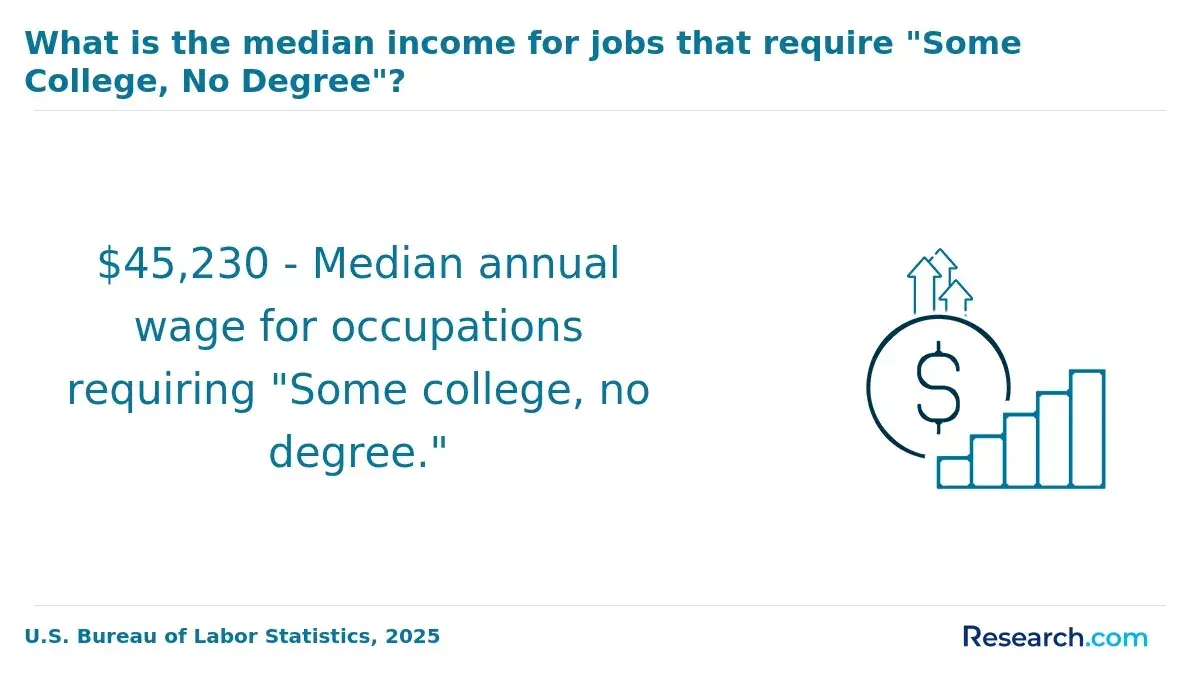
Incident response salary outcomes depend on role, geography, security clearance, industry, years of experience, leadership responsibility, and technical depth. The Bureau of Labor Statistics reports a 2024 median annual wage of $124,910 for information security analysts, a category that includes many cyber defense roles. Use that figure as a labor-market benchmark, not a guaranteed graduate outcome.
Entry-level security roles often pay less than advanced incident response, threat hunting, forensics, or cloud security roles because employers reward demonstrated judgment during real incidents. Advancement usually comes from combining technical skill, calm decision-making, documentation quality, and cross-team coordination.
The table below shows how incident response careers often progress. Titles vary by employer, so focus on responsibilities and skill depth rather than title alone.
| Career stage | Common titles | What advancement usually requires |
| Entry level | Help desk technician, junior SOC analyst, IT support specialist | Networking, operating systems, ticket documentation, basic alert triage, and reliability |
| Early security | SOC analyst, cybersecurity analyst, vulnerability analyst | SIEM use, endpoint tools, escalation judgment, scripting basics, and incident documentation |
| Specialized response | Incident response analyst, digital forensics analyst, threat hunter | Evidence handling, root-cause analysis, malware behavior, cloud logs, and executive-ready reporting |
| Senior or lead | Senior incident responder, detection engineer, IR lead, security operations lead | Playbook design, mentoring, cross-functional coordination, automation, and high-pressure decision-making |
| Management or strategy | SOC manager, incident response manager, security architect, director of security operations | Budgeting, staffing, risk communication, vendor management, legal coordination, and business continuity planning |
AI is affecting salary and advancement in two ways. First, responders who can use automation to speed triage may become more productive; second, attackers are also using automation, so employers value analysts who can validate findings and investigate beyond surface-level alerts. If you are comparing cybersecurity with other technical fields shaped by automation, reviewing artificial intelligence degree salary information can help frame broader technology-career trade-offs.
To improve earning potential responsibly, focus on a portfolio of evidence rather than assuming the degree alone will do the work. Useful proof can include home labs, documented investigations, CTF participation, internship experience, capstone projects, GitHub scripts, incident reports with sanitized data, and certifications aligned to your target role.
Which industry certifications align best with online cybersecurity incident response degrees?
Certifications can strengthen an online cybersecurity degree when they match your career stage and target role. They are not a replacement for practical skill, but they can help employers assess baseline knowledge, especially for applicants without years of incident response experience.
The table below summarizes certifications commonly aligned with incident response, digital forensics, security operations, and cyber defense. Requirements and exam details can change, so verify current rules before budgeting or registering.
| Certification | Best fit | Incident response relevance | Consideration |
| CompTIA Security+ | Students and early-career professionals | Validates broad security foundations used in SOC and junior analyst roles | Good starting point but not enough by itself for advanced IR roles |
| CompTIA CySA+ | SOC analysts and junior defenders | Focuses on threat detection, analysis, vulnerability response, and security operations | Useful bridge from fundamentals to analyst work |
| CompTIA PenTest+ | Students who want attacker-method awareness | Helps responders understand exploitation paths and attacker behavior | More offensive than incident response, so pair it with blue-team practice |
| GIAC Certified Incident Handler | Incident handlers and security analysts | Directly aligned with incident handling, attacker techniques, and response methods | Can be costly; check whether your program includes preparation or vouchers |
| GIAC Certified Forensic Analyst | Digital forensics and advanced response professionals | Supports deeper forensic investigation and evidence analysis | Best after foundational security and systems knowledge |
| Certified Information Systems Security Professional | Experienced professionals moving toward senior or management roles | Covers security governance and broad domains relevant to leading response programs | Experience requirements make it less suitable as a first certification |
| Cloud security certifications | Analysts working with AWS, Azure, Google Cloud, or SaaS environments | Helps responders investigate identity, logging, and configuration issues in cloud systems | Choose the platform most used by your target employers |
A practical certification sequence should match your experience level. Chasing too many credentials at once can dilute your effort and increase costs without improving employability.
- Start with foundational security knowledge if you are new to the field.
- Add analyst-focused certification once you can read logs, understand networks, and explain alerts.
- Choose incident handling or forensics credentials when your coursework or job duties involve investigations.
- Add cloud or vendor-specific credentials if your target roles require platform expertise.
- Use certifications to support hands-on evidence, not replace it.
Other Things You Should Know About Cybersecurity
CompTIA Security+ is the most common entry credential, and many incident response students also pursue CompTIA CySA+, EC-Council Certified Incident Handler (ECIH), or GIAC certifications such as GCIH. These are often required or recommended for SOC and incident response roles.
Some can be remote or hybrid, especially SOC, threat hunting, and cloud-focused roles. Jobs involving classified systems, physical evidence handling, or secure facilities may require onsite work.
A bootcamp can help with targeted skills, but incident response often requires deeper foundations in systems, networking, evidence handling, and communication. A degree, certifications, labs, and experience together usually create a stronger path.
References
- LDR553: Cyber Incident Management https://www.sans.org/cyber-security-courses/cyber-incident-management-training
- Incident Response Training | CISA https://www.cisa.gov/resources-tools/programs/Incident-Response-Training
- Online Bachelor's Degree: Cybersecurity Management & Policy https://www.umgc.edu/online-degrees/bachelors/cybersecurity-management-policy
- Cybersecurity and Incident Response for IT Professionals https://wawiwa-tech.com/upskilling/cybersecurity/cybersecurity-and-incident-response/
- 25 Best Online Cybersecurity Degree Programs https://cybersecurityguide.org/online/cybersecurity-bachelors-degree/
- Top 7 Cybersecurity Incident Response Courses in 2025 https://learnprompting.org/blog/cybersecurity-incident-response-courses
- Online Cybersecurity Masters Europe Guide - MIA Digital University https://miauniversity.com/online-cybersecurity-masters-europe/
- Cybersecurity Incident Response Planning & Management | Alison https://alison.com/course/cybersecurity-incident-response-planning-and-management
- Certifications and Awards https://csacyber.com/certifications-and-awards
- Cybersecurity Job Roles: Explore Key Career Paths https://beal.edu/cybersecurity-job-roles/