2027 Health Science Majors: Complete Student Guide

Co-Founder and Chief Data Scientist
Choosing a health science major is really a decision about how you want to enter healthcare: direct patient care, administration, public health, research support, or graduate study. The timing matters because the U. S. Bureau of Labor Statistics projects healthcare occupations to add about 1.9 million openings each year from 2024 to 2034. This guide is for students, transfer applicants, and career changers who want a practical comparison of degree paths, costs, accreditation, classes, online formats, and career outcomes before committing time and money.
Key Things You Should Know
- Health science is a broad major, so career outcomes depend heavily on concentration, accreditation, clinical requirements, state licensure rules, and whether you continue into graduate or professional school.
- College Board data for 2024-2025 lists average published tuition and fees at $11,610 for in-state public four-year colleges and $43,350 for private nonprofit four-year colleges, making total cost comparison essential.
- BLS 2024 wage data places the median annual wage for healthcare practitioners and technical occupations at about $83,090, but many health science bachelor's graduates start in support, coordination, education, or administrative roles before advancing.
What is health science as a college major?
A health science major is an interdisciplinary college program that studies healthcare systems, human health, disease prevention, patient services, ethics, communication, and the science behind care delivery. Unlike nursing, radiologic technology, respiratory therapy, or physical therapist assistant programs, a general health science degree may not automatically qualify you for a licensed clinical job unless it includes the required accredited clinical track.
The major is often used in three ways: as a broad bachelor's degree for healthcare-related entry-level jobs, as a transfer-completion pathway for students who already hold allied health credits, or as preparation for graduate programs such as physician assistant studies, occupational therapy, public health, healthcare administration, or medicine. That flexibility is valuable, but it also means students must match the program to a specific goal instead of assuming the degree title alone will lead to a particular job.
The table below shows how common health science degree levels differ. Use it to identify whether you need a short credential, a bachelor's degree, or graduate study for the kind of healthcare work you want.
| Credential level | Typical purpose | Best fit | Important limitation |
| Certificate | Focused training in areas such as medical coding, phlebotomy, community health, or healthcare administration support | Students seeking a faster entry point or skill add-on | May not transfer fully into a degree or qualify for advancement alone |
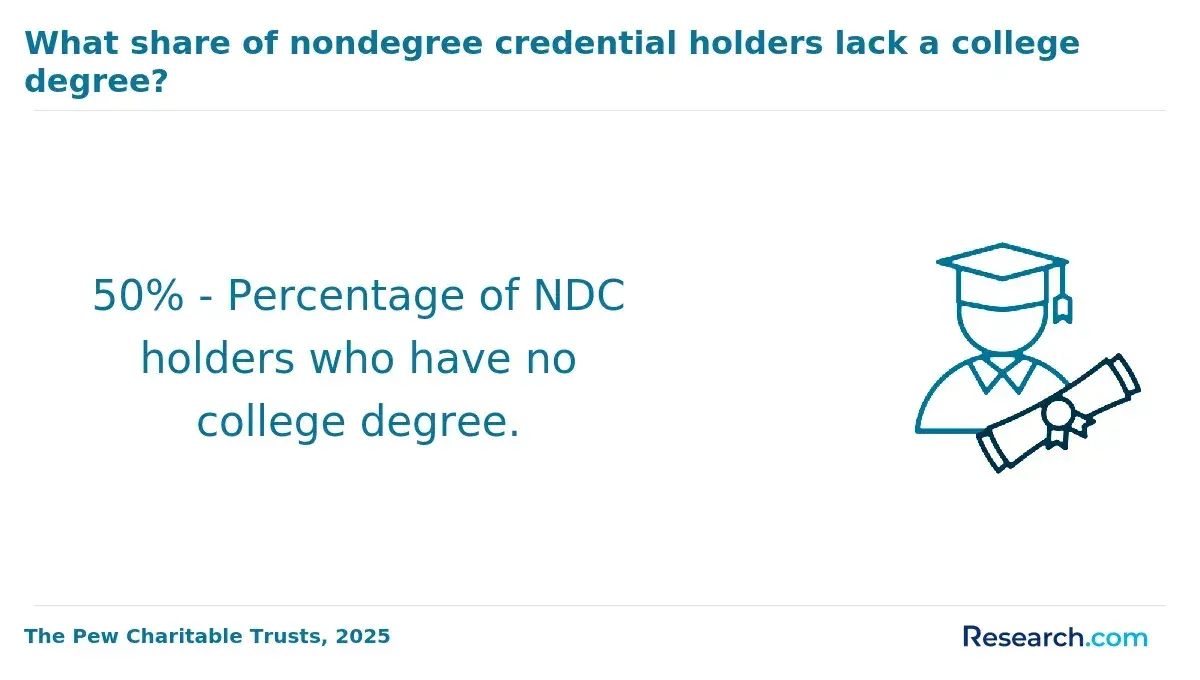
| Associate degree | Foundational science and healthcare coursework, often with transfer or allied health preparation | Students planning to transfer or enter selected support roles | Licensed clinical roles usually require a specific accredited program |
| Bachelor's degree | Broad healthcare preparation with concentrations such as public health, pre-professional studies, health administration, or wellness | Students seeking broader career options or graduate school preparation | Career outcomes vary widely by concentration, internship access, and credentials |
| Master's degree | Advanced preparation in public health, healthcare administration, clinical research, informatics, or professional health pathways | Students targeting leadership, specialized, or professional roles | Admissions may require prerequisites, experience, exams, or licensure |
If you are still deciding whether a flexible format fits your life, reviewing different types of online degree programs can help you understand how online, hybrid, and competency-based options are commonly structured.
Why choose a health science degree for healthcare careers?
A health science degree can be worth choosing if you want a healthcare-focused education but are not ready to commit to a single licensed clinical track. It is especially useful for students who want to build a foundation in anatomy, public health, healthcare systems, data, communication, and ethics while keeping several pathways open.
The strongest reason to choose this major is strategic flexibility. Healthcare employers increasingly need people who understand both patient-centered care and the systems behind it, including quality improvement, care coordination, health technology, compliance, and population health. AI-enabled documentation, telehealth, electronic health records, and remote monitoring are also changing how healthcare teams work, so students who can combine health knowledge with communication and data literacy may have more adaptable options.
Before choosing the major, compare your goal with the degree's likely outcome. The list below separates situations where health science is a good fit from cases where another major or accredited clinical program may be smarter.
- Choose health science if you want preparation for graduate healthcare programs and you can confirm that the curriculum includes the prerequisites required by those programs.
- Choose health science if you are interested in healthcare administration, community health, wellness, patient advocacy, health education, or care coordination rather than a single licensed bedside role.
- Choose health science if you already have allied health credits and need a bachelor's completion pathway for promotion, management, or graduate admission.
- Consider a different path if your goal is nursing, sonography, radiography, respiratory therapy, or another licensed clinical occupation and the health science program is not specifically accredited for that profession.
- Consider a different path if you want the shortest possible route to employment in a clearly defined technical role, because a targeted certificate or associate program may be more direct.
The key decision is not whether health science is broadly useful; it is whether the specific program's courses, clinical experiences, advising, and outcomes match your target career or graduate program.
What accreditation should a health science program have?
Accreditation is one of the most important quality checks for a health science program. At minimum, the college or university should hold institutional accreditation from an accreditor recognized by the U.S. Department of Education or the Council for Higher Education Accreditation. This affects transfer credit, financial aid eligibility, employer recognition, and graduate school acceptance.
Programmatic accreditation is different. A general health science bachelor's program may not have a specialized accreditor because it is not a single licensed profession. However, if the program claims to prepare you for a regulated clinical role, you should look for the accreditor required or preferred in that field.
The table below clarifies the types of accreditation you may encounter and why each matters before enrollment.
| Accreditation type | What it evaluates | Why it matters to students | Examples of when to check closely |
| Institutional accreditation | The overall college or university | Supports federal aid eligibility, transfer, graduate admission, and general legitimacy | Every health science student should verify it |
| Programmatic accreditation | A specific professional program or track | May be required for licensure, certification exams, or employer acceptance | Radiologic technology, respiratory care, sonography, public health, health administration, and other specialized paths |
| State authorization | Whether an institution can offer education to students in a state | Important for online students and students completing placements outside the school's home state | Online programs with internships, practica, or clinical experiences |
| Licensure alignment | Whether the curriculum meets state licensing or certification requirements | Prevents students from completing a degree that does not qualify them for their intended credential | Any clinical, counseling, therapy, or regulated healthcare pathway |
Do not assume that public, private nonprofit, or for-profit status alone proves quality. Institution type can affect mission, pricing, and governance, but your best protection is verifying accreditation, outcomes, total cost, and licensure alignment. If you prefer schools with nonprofit governance, a guide to non profit universities in USA can be a useful starting point, but it should not replace program-level research.
To verify a program, follow a simple sequence before you apply.
- Confirm institutional accreditation through the U.S. Department of Education database or the accreditor's official directory.
- Ask whether your specific health science concentration has programmatic accreditation, if applicable.
- Check whether the curriculum meets requirements for your state if you plan to pursue licensure or certification.
- Request written information about clinical placements, internships, certification exam eligibility, and graduate school prerequisite coverage.
- Compare graduation rates, retention rates, transfer policies, and job or graduate school placement information when available.
What classes are included in a health science major?
Health science majors usually combine natural sciences, social sciences, healthcare systems, communication, ethics, and applied experiences. The exact class mix depends on whether the program emphasizes pre-professional preparation, health administration, public health, wellness, informatics, or allied health completion.
A strong curriculum should do more than check off general education credits. It should help you understand how healthcare is delivered, how patients and communities experience care, and how evidence is used to improve outcomes.
The table below summarizes common course areas and how they connect to career or graduate school goals.
| Course area | Common classes | Why it matters |
| Foundational science | Anatomy and physiology, biology, chemistry, microbiology, pathophysiology | Builds the base needed for clinical, laboratory, therapy, and graduate health programs |
| Healthcare systems | U.S. healthcare system, health policy, healthcare finance, quality improvement | Prepares students for administration, coordination, compliance, and leadership support roles |
| Public and community health | Epidemiology, health promotion, health behavior, environmental health | Supports careers in prevention, outreach, education, and population health |
| Data and technology | Health informatics, statistics, electronic health records, research methods | Helps students work with healthcare data, digital tools, and evidence-based decision-making |
| Professional skills | Medical terminology, ethics, cultural competence, patient communication | Strengthens workplace readiness and interprofessional communication |
| Applied learning | Internship, practicum, capstone, simulation, fieldwork | Connects classroom learning to real healthcare settings and can improve employability |
Accelerated course formats can help students finish prerequisites or general education requirements faster, but they are not always ideal for demanding sciences with labs. If you are considering shorter terms, compare how schools structure 5 week college courses online and ask whether science labs, exams, and clinical preparation are supported adequately.
Common mistake: choosing the most convenient schedule without checking prerequisite sequencing. Many graduate healthcare programs require specific biology, chemistry, anatomy, physiology, statistics, and psychology courses completed with minimum grades, so a missed prerequisite can delay applications by a full term or year.
What are the admission requirements for health science programs?
Admission requirements for health science programs vary by degree level and selectivity. General bachelor's programs may have standard college admissions requirements, while clinical concentrations, professional tracks, or upper-division cohorts may require a separate competitive application after prerequisite coursework.
Most schools evaluate a mix of academic readiness and career fit. Before applying, pay attention to both university admission and major admission, because being accepted to the school does not always mean being accepted into the health science concentration you want.
The requirements below are common, but you should confirm details with each program.
- High school diploma, GED, or equivalent for first-year applicants.
- Official transcripts from high school and any colleges attended.
- Minimum GPA, often with a higher GPA expected for competitive tracks.
- Prerequisite courses in biology, chemistry, anatomy and physiology, statistics, psychology, or medical terminology, depending on the program.
- Personal statement, resume, recommendation letters, or interview for selective programs.
- Background check, drug screening, immunization records, CPR certification, or health documentation for programs with clinical or field placements.
- Proof of English proficiency for applicants whose prior education was not in English.
Transfer students should ask how previous science courses, allied health credits, military medical training, and professional certifications will be evaluated. Some bachelor's completion programs are generous with technical transfer credits, while others accept them only as electives.
If your goal is graduate school, admissions planning should begin early. Ask whether the program offers pre-health advising, mock interviews, test preparation guidance, research opportunities, and help documenting patient care, shadowing, or volunteer experience. These supports can matter as much as the major name.
How do online and campus health science programs differ?
Online and campus health science programs can lead to similar academic credentials, but the learning experience and practical requirements can differ significantly. The right format depends on your schedule, learning style, need for labs, access to healthcare sites, and whether the program includes internships or clinical placements.
Online formats are often strongest for healthcare administration, public health, health promotion, informatics, and degree-completion tracks. Campus or hybrid formats may be better for students who need in-person labs, simulation, clinical skills practice, faculty research access, or structured pre-health advising.
The table below compares online, hybrid, and campus health science formats so you can match delivery style with your goals.
| Format | Best for | Advantages | Trade-offs |
| Online | Working adults, transfer students, military learners, students focused on nonclinical or administrative pathways | Flexible scheduling, fewer commuting costs, broader school choice | May require self-discipline, local placement coordination, and careful licensure checks |
| Hybrid | Students who need flexibility but still need labs, simulations, or periodic campus meetings | Balances online coursework with hands-on learning | Travel requirements can be difficult if campus visits are frequent or unpredictable |
| Campus | Traditional students, pre-professional students, students needing intensive labs or close advising | Direct access to facilities, faculty, peers, clubs, research, and local healthcare partnerships | Less schedule flexibility and potentially higher living or commuting costs |
For online students, the most important question is not simply whether the degree is online. Ask where labs, proctored exams, internships, practicums, and clinical placements happen. Also confirm whether the school is authorized to enroll students in your state and whether any required field experience can be completed near your home.
Common red flags include vague placement promises, no clear process for finding internship sites, limited faculty access, and unclear answers about licensure or certification eligibility. A reputable program should explain these requirements before you enroll, not after you have paid tuition.
How long does a health science degree take and cost?
A health science degree can take a few months to four or more years depending on the credential, transfer credits, enrollment intensity, and whether clinical or internship requirements are included. A full-time bachelor's degree usually takes about four years from first-year entry, while transfer-completion programs may take one to two years if you bring substantial credits.
Cost varies even more than length. College Board's 2024-2025 data lists average published tuition and fees of $4,050 for in-district public two-year colleges, $11,610 for in-state public four-year colleges, and $43,350 for private nonprofit four-year colleges. Those figures are published prices, not necessarily your net price after grants, scholarships, employer tuition benefits, or transfer credits.
The table below summarizes common cost and time patterns. Use it as a planning tool, then request a program-specific cost breakdown from each school.
| Path | Typical time | Main cost drivers | Best cost-control strategy |
| Certificate | Several months to one year | Tuition, exam fees, supplies, background checks | Choose only credentials tied to a clear job, certification, or degree stack |
| Associate degree | Two years full time | Tuition, lab fees, commuting, books, uniforms if clinical | Use transfer agreements if planning to complete a bachelor's degree |
| Bachelor's degree | Four years full time, or shorter with transfer credits | Tuition, fees, housing, labs, technology, internship costs | Compare net price, transfer credit, graduation timeline, and required in-person experiences |
| Graduate degree | One to three years for many master's programs; longer for doctoral or professional study | Tuition, lost work time, clinical placements, exams, licensing costs | Choose based on required credential for your target role rather than prestige alone |
To estimate return on investment, compare total program cost with realistic target roles, not only the highest salaries advertised by a school. Include tuition, fees, books, transportation, childcare, housing changes, exam fees, unpaid internship time, and the income you may give up if you reduce work hours.
Students planning beyond the bachelor's degree should also think about credential stacking. A bachelor's in health science may support future study in administration, public health, informatics, therapy, or research. For experienced professionals considering doctoral study later, comparisons of online PhD programs for working professionals can help clarify how advanced online pathways differ from entry-level health science education.
What jobs can you get with a health science degree?
Health science graduates can pursue many healthcare-related roles, but the degree is not a single-job credential. Your options depend on concentration, internships, certifications, state rules, and whether you complete additional clinical or graduate education.
At the bachelor's level, common pathways include healthcare administration support, community health, patient navigation, wellness coordination, clinical research support, health education, and preparation for graduate or professional programs. Some graduates also use the degree to qualify for promotions after earning separate allied health credentials.
The table below connects common health science career directions with typical responsibilities and extra requirements you may need.
| Career direction | Typical responsibilities | Additional credential often needed |
| Health services administration support | Coordinate schedules, support operations, manage records, assist quality improvement projects | Experience, healthcare management coursework, or later MHA/MBA for leadership |
| Community health and health education | Develop outreach programs, teach prevention strategies, connect communities with resources | CHES certification may help for some health education roles |
| Patient navigation or care coordination | Help patients understand appointments, referrals, resources, insurance steps, and care plans | Employer-specific training or experience in clinical settings |
| Clinical research support | Assist with study coordination, consent documents, data tracking, and regulatory records | Research experience, GCP training, or clinical research certification after experience |
| Health informatics support | Work with electronic health records, reporting, data quality, and workflow improvement | Health IT coursework, analytics tools, or informatics certification |
| Graduate or professional healthcare study | Prepare for physician assistant, occupational therapy, physical therapy, medicine, public health, or related programs | Prerequisites, exams, patient care hours, shadowing, and competitive admission |
Health science can also fit students who want meaningful healthcare work without spending every day in a highly social patient-facing role. If that describes you, exploring healthcare-adjacent options within broader lists of careers for introverts may help you compare lab, data, administration, and research-oriented paths.
The biggest mistake is assuming a bachelor's degree in health science automatically qualifies you for licensed roles such as registered nurse, occupational therapist, physical therapist, radiologic technologist, or physician assistant. Those careers have separate accredited education, exams, clinical hours, and state licensure requirements.
What salary can health science graduates expect?
Salary expectations for health science graduates should be tied to actual occupations, not the major name. A graduate working in health education, care coordination, administration support, or research support may see very different pay from someone who later completes a licensed graduate program or moves into management.
BLS May 2024 data reports a median annual wage of about $83,090 for healthcare practitioners and technical occupations, which is higher than the $49,500 median for all occupations. However, many general health science bachelor's roles fall outside the highest-paid licensed practitioner categories, so students should use occupation-specific wage data when estimating return on investment.
The table below shows examples of related roles and salary context. Figures are national medians or broad occupational indicators, so local wages can vary by region, employer, experience, and credentials.
| Role or occupational group | How it connects to health science | Salary context | Career note |
| Healthcare practitioners and technical occupations | Includes many licensed clinical and technical healthcare roles | Median annual wage of about $83,090 in BLS May 2024 data | Many roles require specific accredited programs and licensure beyond a general health science degree |
| Medical and health services managers | Relevant for graduates who gain experience and move into leadership | Median annual wage of about $117,960 in BLS May 2024 data | Management roles usually require experience and may prefer a graduate degree |
| Health education specialists | Relevant to public health, wellness, prevention, and community health concentrations | Median annual wage of about $63,000 in BLS May 2024 data | Certification and public health experience can improve competitiveness |
| Clinical laboratory technologists and technicians | Related for students who complete laboratory-focused accredited preparation | Median annual wage of about $61,890 in BLS May 2024 data | Requirements vary by state and employer; a general health science degree may not be enough |
| Healthcare support occupations | Includes many entry-level patient support roles | Median annual wage of about $38,000 in BLS May 2024 data | Can provide experience for advancement, but pay may be lower without further credentials |
Use salary data carefully. National medians do not show starting pay, overtime, shift differentials, regional cost of living, union contracts, rural shortages, or employer benefits. A smart comparison includes expected starting role, likely next credential, debt level, and whether the program provides internships or employer connections.
Job outlook is also occupation-specific. The healthcare sector is projected to remain one of the stronger areas of U.S. employment demand, but competition can still be high for popular graduate programs and desirable hospital-based roles. Students who build experience, certifications, data skills, and clear specialization often have a more coherent job search than students with only a broad degree and no applied experience.
How do you choose a reputable health science program?
Choosing a reputable health science program starts with your career target. A program that is excellent for healthcare administration may be a poor fit for pre-physician assistant preparation, and a convenient online bachelor's completion program may not provide the labs or advising needed for a competitive clinical graduate application.
Use the following steps to compare programs before you apply. This sequence helps you avoid the most expensive mistakes: enrolling in a program that is not accredited, does not meet prerequisite needs, costs more than expected, or lacks the applied experience your target role requires.
- Define your target outcome first, such as employment after a bachelor's degree, graduate school, a licensed clinical profession, or promotion in your current healthcare role.
- Verify institutional accreditation and any required programmatic accreditation for your concentration or clinical pathway.
- Map the curriculum against prerequisites for your intended graduate program, certification, or state licensure requirement.
- Request a total cost estimate that includes tuition, fees, books, technology, labs, placement costs, exam fees, travel, and likely time to completion.
- Ask how many credits will transfer and whether transferred science courses expire after a certain number of years.
- Review internship, practicum, capstone, research, or clinical placement support, especially if you are online or live far from campus.
- Compare student support services, including academic advising, pre-health advising, tutoring, career coaching, and alumni networks.
- Look for transparent outcomes, such as graduation rates, certification exam eligibility, graduate school placement information, or employer partnerships.
Several red flags deserve extra caution. Be skeptical if a school advertises vague healthcare career outcomes without naming specific roles, avoids accreditation questions, pressures you to enroll quickly, refuses to provide total cost information, or promises licensure without explaining state-by-state requirements.
Ask admissions advisors direct questions and request answers in writing when the issue affects cost, licensure, transfer, or graduation timing. Useful questions include whether the program has a separate application for clinical tracks, who arranges field placements, whether online students receive the same advising as campus students, and what graduates commonly do within six to twelve months of completion.
The best program is not always the cheapest, fastest, or most prestigious. It is the one that combines verified accreditation, reasonable net cost, relevant coursework, practical experience, and a clear path to your next step.
Other Things You Should Know About
Health science can be a good major if you want a flexible healthcare foundation for administration, public health, care coordination, research support, wellness, or graduate study. It is less ideal if you need a direct path to a licensed clinical job and the program does not include the required accredited clinical training.
A general health science degree does not make you a registered nurse. To become an RN, you must complete an approved nursing program, meet clinical requirements, pass the NCLEX-RN, and satisfy state licensure rules. Some health science coursework may help with prerequisites, but it is not a substitute for nursing education.
An online health science degree can be respected if it comes from an accredited institution and fits the career path you want. For roles involving licensure, clinical placements, or graduate prerequisites, confirm state authorization, lab requirements, internship support, and programmatic accreditation before enrolling.
The best concentration depends on your goal. Choose pre-professional studies for graduate clinical programs, healthcare administration for operations and management pathways, public health for prevention and community work, informatics for data and technology, and wellness or health promotion for education-oriented roles.
References
- Accreditation https://www.uthsc.edu/afsa/ieds/institutional-effectiveness/accreditation.php
- What Can You Do with a Health Sciences Degree? https://www.ycp.edu/news/what-can-you-do-with-a-health-sciences-degree
- Accreditation — ASAHP https://www.asahp.org/accreditation
- What Is a Health Science Degree? https://www.nec.edu/news/what-is-a-health-science-degree
- Choosing a Doctor of Health Sciences Program | University of Bridgeport https://www.bridgeport.edu/news/how-to-choose-a-doctor-of-health-sciences-program/
- Where can a health science degree take you? | Natural Healers https://www.naturalhealers.com/health-science/
- Home https://www.husson.edu/online/blog/2025/04/careers-in-health-science
- Health Science - CAHIIM https://www.cahiim.org/accreditation/health-science-accreditation/
- Guide to a Health Science Degree | Caduceus https://cipcourses.com/blog/guide-to-a-health-science-degree/
- Best Online Health Sciences Degrees https://www.onlineu.com/degrees/health-sciences