
2027 Most Affordable Online BS in Computer Information Systems Degree Programs

Co-Founder and Chief Data Scientist
Choosing an affordable online BS in Computer Information Systems is not just about finding the lowest tuition. The better question is whether a program can help you build practical IT, business, cybersecurity, database, and systems-analysis skills without creating unnecessary debt. For students comparing online CIS degrees for 2027, the challenge is separating programs that are flexible and legitimate from options that may be inexpensive but weak on accreditation, career support, transfer policies, or hands-on learning.
This guide explains what an online BS in Computer Information Systems covers, how much it can cost, how long it usually takes, which schools offer lower-cost options, and how to compare programs based on accreditation, curriculum, specialization, support services, and career outcomes. It is designed for working adults, transfer students, first-time college students, career changers, and IT professionals who want a practical bachelor’s degree pathway into technology roles.
Quick Answer: Is an Online BS in Computer Information Systems Worth It?
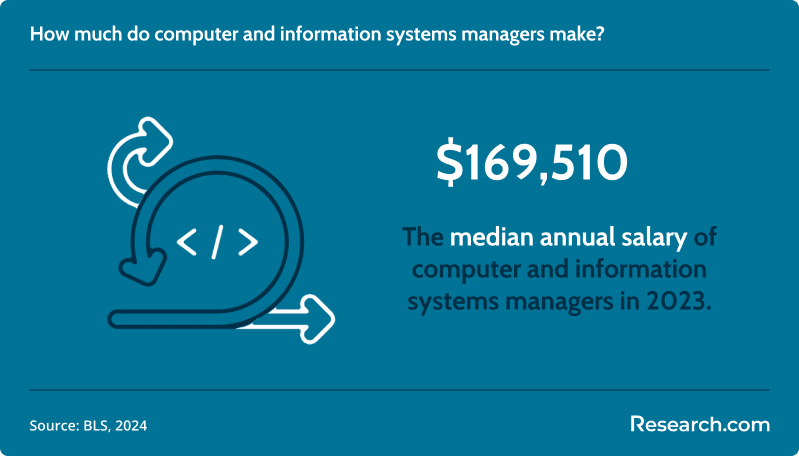
An online BS in Computer Information Systems can be worth it for students who want a technology-focused bachelor’s degree that connects IT skills with business operations. Graduates may qualify for roles in systems analysis, network administration, software development, IT support, cybersecurity, data analytics, and technology management. According to the U.S. Bureau of Labor Statistics, computer and information systems managers earn a median annual salary of $169,510, while network and computer systems administrators earn around $95,360. Outcomes vary by experience, location, employer, technical portfolio, certifications, and specialization.
- Best fit: Students who want applied technology training, business systems knowledge, and the flexibility of online learning.
- Potential career value: CIS graduates can pursue technical, analytical, support, security, and management-oriented IT roles.
- Main caution: Students should verify accreditation, total cost, transfer credit policies, and whether the program includes hands-on projects or career services.
What can I expect from an online BS in Computer Information Systems degree program?
An online BS in Computer Information Systems teaches students how organizations use technology to store data, run operations, secure networks, support users, and improve business processes. Unlike a purely theoretical computer science degree, CIS usually blends technical coursework with applied business problem-solving. Students often study programming, databases, networking, systems analysis, information security, and project management while also completing general education requirements.
Most online CIS programs are built for flexibility. Some courses are asynchronous, meaning students can view lectures and complete assignments on their own schedule. Others may include scheduled virtual meetings, group projects, labs, or exams. A strong program should give students opportunities to build work samples, complete applied projects, use current software tools, and connect coursework to real workplace problems.
| What Students Usually Study | Why It Matters for CIS Careers |
| Programming and scripting | Helps graduates automate tasks, understand software systems, and support application development. |
| Database management | Prepares students to organize, query, protect, and manage business data. |
| Systems analysis and design | Builds the ability to evaluate business needs and recommend technology solutions. |
| Networking and infrastructure | Supports roles involving networks, servers, cloud platforms, and connected systems. |
| Information security | Introduces risk management, access control, secure systems, and protection of sensitive data. |
| IT project management | Develops planning, communication, Agile, Scrum, and implementation skills for technology projects. |
Where can I work with an online BS in Computer Information Systems degree?
CIS graduates can work in nearly any organization that depends on data, networks, applications, and secure digital operations. Common employment settings include finance, healthcare, government, education, retail, technology firms, nonprofits, start-ups, consulting companies, and large corporations. The degree is broad enough to support both technical and business-facing roles.
Students who choose concentrations or electives in cloud computing, cybersecurity, database administration, analytics, or software development may be better positioned for specialized roles. However, a degree alone is rarely enough for the strongest entry-level outcomes. Employers often look for internships, projects, certifications, GitHub or portfolio work, help desk experience, or familiarity with common enterprise tools.
How much can I make with an online BS in Computer Information Systems degree?
Salary depends heavily on role, experience, location, industry, and technical specialization. According to BLS, the median annual salary for computer and information systems managers is $169,510. Network and computer systems administrators earn around $95,360. Other CIS-related roles, such as systems analyst or software developer, can also offer strong earning potential, but graduates typically move into higher-paying roles after gaining experience and building specialized skills.
Students should treat salary data as a benchmark, not a guarantee. A new graduate in an entry-level support or analyst role may earn less than the median for experienced managers. To improve ROI, students should compare total degree cost against expected local wages, pursue internships or project-based experience, and consider certifications aligned with their target role.
- Most affordable online BS in Computer Information Systems programs for 2027
- How long does an online BS in Computer Information Systems take?
- Online vs. on-campus CIS degree: what is different?
- How much does an online BS in Computer Information Systems cost?
- Financial aid options for online CIS students
- Admission requirements for online CIS bachelor’s programs
- Common courses in an online BS in Computer Information Systems
- Popular CIS specializations
- How to choose the right online CIS program
- How to evaluate ROI for an online CIS degree
- Can a CIS degree lead to data science?
- Why accreditation matters for online CIS degrees
- Can an online associate degree lead to a BS in CIS?
- Certifications that can strengthen a CIS graduate’s resume
- Online support, networking, and student success
- Creative technology careers for CIS graduates
- Industry partnerships and experiential learning in online CIS programs
- Cross-disciplinary learning in CIS programs
- Ethical and legal issues in computer information systems
- CIS opportunities in health informatics
- Career paths for online CIS bachelor’s graduates
- Job outlook for CIS graduates
- Why cybersecurity matters for CIS students
- Current trends in computer information systems
List of the Most Affordable Online BS in Computer Information Systems Degree Programs for 2027
How do we rank schools?
Affordability is a major concern for online students, but price should not be evaluated in isolation. This ranking considers cost and quality using data from trusted sources, including the IPEDS database, Peterson’s Distance Learning Data Set, College Scorecard, and the National Center for Education Statistics. Students should use this list as a starting point, then verify current tuition, fees, transfer policies, and program requirements directly with each school.
| School | Online Program | Cost per Credit | Credits | Accreditation |
| University of the People | BS in Computer Science | $0; students pay examination fees | 120 | DEAC |
| Western Governors University | BS in Information Technology | $320 | 120 | NWCCU |
| Southern New Hampshire University | BS in Computer Information Systems | $320 | 120 | NECHE |
| Purdue University Global | BS in Information Technology | $371 | 180 quarter credits | HLC |
| Colorado State University Global | BS in Information Technology | $350 | 120 | HLC |
| Eastern New Mexico University | Information Systems program | $293 | 120 | HLC |
| Lamar University | BS in Computer Information Sciences | $248 | 120 | SACSCOC |
| Old Dominion University | BS in Computer Science with information systems focus | $356 | 120 | SACSCOC |
| Liberty University | BS in Information Systems | $390 | 120 | SACSCOC |
| Saint Leo University | BS in Computer Information Systems | $370 | 120 | SACSCOC |
1. University of the People
The University of the People offers a fully online BS in Computer Science designed for global access and low direct tuition cost. Founded in 2009, the school uses a tuition-free model in which students pay assessment-related fees rather than traditional per-credit tuition. This option may appeal to students who need the lowest possible upfront tuition structure and can manage a highly independent online learning format.
- Program Length: Three to four years
- Tracks/Concentrations: General CIS
- Cost per Credit: $0; students only pay examination fees
- Required Credits to Graduate: 120
- Accreditation: DEAC (Distance Education Accrediting Commission)
2. Western Governors University
Western Governors University uses a competency-based model that lets students move forward as they demonstrate mastery. Its online BS in Information Technology, launched in 1997, may work well for motivated students with prior IT exposure, career changers, or working professionals who want an efficient path through familiar material.
- Program Length: Three to four years (self-paced)
- Tracks/Concentrations: Network Administration, Software Development
- Cost per Credit: $320
- Required Credits to Graduate: 120
- Accreditation: NWCCU (Northwest Commission on Colleges and Universities)
3. Southern New Hampshire University
Southern New Hampshire University offers an online BS in Computer Information Systems that has been available since 2012. The program emphasizes practical applications of technology in organizational settings and may fit students interested in cybersecurity, data analytics, or business-focused IT roles.
- Program Length: Four years
- Tracks/Concentrations: Cybersecurity, Data Analytics
- Cost per Credit: $320
- Required Credits to Graduate: 120
- Accreditation: NECHE (New England Commission of Higher Education)
4. Purdue University Global
Purdue University Global offers a BS in Information Technology that combines core IT foundations with specialization options such as cybersecurity and IT management. Since its 2018 launch, the program has served students seeking flexible online study and career-relevant technical preparation through a quarter-based structure.
- Program Length: Four years
- Tracks/Concentrations: IT Management, Information Security
- Cost per Credit: $371
- Required Credits to Graduate: 180 (quarter credits)
- Accreditation: Higher Learning Commission (HLC)
5. Colorado State University Global
Colorado State University Global offers a fully online BS in Information Technology that has been available since 2007. The curriculum focuses on technology problem-solving, critical thinking, and leadership, with specialization options that can help students align the degree with roles in data management, cybersecurity, or general IT operations.
- Program Length: Four years
- Tracks/Concentrations: Data Management, Cybersecurity
- Cost per Credit: $350
- Required Credits to Graduate: 120
- Accreditation: HLC
6. Eastern New Mexico University
Eastern New Mexico University offers an online Information Systems pathway that began in 2014. The program combines technical and business-oriented courses, making it a possible fit for students preparing for IT support, business systems, or information systems roles.
- Program Length: Four years
- Tracks/Concentrations: IT, Business Information Systems
- Cost per Credit: $293
- Required Credits to Graduate: 120
- Accreditation: HLC
7. Lamar University
Lamar University, part of the Texas State University System, offers an online BS in Computer Information Sciences. Introduced in 2016, the program provides broad preparation in information systems and their use in business environments. Its lower listed cost per credit may make it attractive to budget-conscious students comparing accredited online options.
- Program Length: Four years
- Tracks/Concentrations: General CIS
- Cost per Credit: $248
- Required Credits to Graduate: 120
- Accreditation: Southern Association of Colleges and Schools Commission on Colleges (SACSCOC)
8. Old Dominion University
Old Dominion University offers an online BS in Computer Science with an information systems focus. Available since 1994, the program includes areas such as database management, systems security, and network administration. Students should review whether the program’s balance of computer science and information systems matches their career target.
- Program Length: Four years
- Tracks/Concentrations: Database Management, Network Security
- Cost per Credit: $356
- Required Credits to Graduate: 120
- Accreditation: SACSCOC
9. Liberty University
Liberty University has offered its online BS in Information Systems since 2010. The program connects business strategy with technology and includes tracks such as web development and database management. Students who want a curriculum built around a Christian worldview may find this program distinctive among online CIS-related options.
- Program Length: Three to four years
- Tracks/Concentrations: Web Development, Database Management
- Cost per Credit: $390
- Required Credits to Graduate: 120
- Accreditation: SACSCOC
10. Saint Leo University
Saint Leo University offers an online BS in Computer Information Systems that has been available since 1998. The program covers systems design, management, and implementation, with a focus on applying IT in business contexts. Its general CIS structure may suit students who want a broad foundation rather than a narrow specialization.
- Program Length: Four years
- Tracks/Concentrations: General CIS
- Cost per Credit: $370
- Required Credits to Graduate: 120
- Accreditation: SACSCOC
Key Findings About Online BS in Computer Information Systems Degree Programs
- CIS-related roles can span salary benchmarks from about $95,000 to $170,000, depending on occupation, experience, and specialization.
- Online CIS programs are often a practical choice for working adults because many allow flexible scheduling.
- Most bachelor’s programs require 120 credits, although some quarter-based programs list 180 quarter credits.
- The affordable programs in this guide list per-credit costs from $0 to $390.
- Common focus areas include cybersecurity, data management, network administration, web development, and software development.
How long does it take to complete an online BS in computer information systems degree program?
A full-time student can usually complete an online BS in CIS in four years by finishing about 120 to 126 credit hours. Students who transfer previous college credits, choose a competency-based format, or enroll in accelerated computer science degrees or CIS programs may finish in as little as three years.
Part-time learners often need more time, especially if they are working full time or managing family responsibilities. Some students may take up to six years to complete the degree. Before enrolling, ask whether the program has maximum completion limits, course sequencing requirements, transfer credit caps, or terms that affect how quickly you can progress. Students who want a shorter starting point may also compare options such as the best associate degree in 6 months online before moving into a bachelor’s pathway.
| Student Situation | Typical Timeline | What to Check Before Enrolling |
| Full-time first-time student | Four years | Course load, general education requirements, and required credits. |
| Transfer student | Possibly less than four years | Transfer credit evaluation, articulation agreements, and upper-division credit rules. |
| Accelerated or competency-based student | As little as three years | Self-paced policies, assessment requirements, and prior learning options. |
| Part-time working student | Up to six years | Course availability, academic advising, and whether required classes rotate less frequently. |
How does an online BS in computer information systems degree compare to an on-campus program?
An accredited online BS in CIS can cover the same core subjects as an on-campus program, including programming, systems analysis, networking, database management, and information security. The main difference is delivery. Online programs are usually built around learning management systems, virtual labs, recorded lectures, discussion boards, and remote collaboration tools.
Students comparing online CIS and BS in computer science programs should focus less on format and more on learning outcomes. Ask whether online students complete the same assignments, use the same labs, receive faculty feedback, and have access to career services. A well-designed online program can be rigorous, but it requires strong time management and self-direction.
| Factor | Online CIS Degree | On-Campus CIS Degree |
| Scheduling | Often more flexible, especially when courses are asynchronous. | Usually follows set class times and campus schedules. |
| Location | Students can enroll without relocating. | Students may need to live near campus or commute. |
| Networking | Virtual career fairs, discussion boards, online groups, and remote projects. | In-person events, clubs, labs, and campus recruiting. |
| Employer perception | Strongest when the school is accredited and the student has skills, projects, and certifications. | Also depends on school reputation, experience, and demonstrated skills. |
| Best for | Working adults, transfer students, military learners, and students who need flexibility. | Students who want face-to-face instruction and campus-based support. |
Employers increasingly evaluate applicants by their technical ability, experience, portfolio, certifications, communication skills, and the credibility of the institution. The online format itself is less important when the degree comes from an accredited school and the graduate can demonstrate job-ready skills.
What is the average cost of an online BS in computer information systems degree program?
Like many affordable online computer science degree options, an online BS in CIS can vary widely in total price. The programs reviewed here list per-credit costs from $248 to $390, with total program costs commonly ranging from $30,000 to $50,000. University of the People is an exception because it lists $0 per credit and requires students to pay examination fees.
When comparing cost, do not look at tuition alone. Ask about technology fees, course materials, proctoring fees, graduation fees, transfer credit limits, and whether tuition differs for in-state and out-of-state online students. A program with a higher sticker price may become more affordable if it accepts more transfer credits or offers strong institutional aid.
| Total Number of Credits | 120 |
| Per-Credit Cost | $248 to $390 |
| Total Program Cost | $30,000 to $50,000 |
What are the financial aid options for students enrolling in an online BS in computer information systems degree program?
Online students at eligible institutions may qualify for many of the same aid options available to campus-based students. These may include federal financial aid, Pell Grants, Direct Loans, state aid, scholarships, work-study programs, institutional grants, and employer tuition reimbursement. Eligibility depends on the school, program, enrollment status, financial need, and other federal or institutional requirements.
- File the FAFSA early: This is the starting point for federal aid and often for state or school-based aid.
- Ask about online learner scholarships: Some institutions set aside funds for distance education students.
- Use employer benefits: If you already work in IT or a related field, tuition assistance may reduce out-of-pocket cost.
- Compare net price: The cheapest listed tuition is not always the lowest final cost after aid and transfer credits.
- Borrow cautiously: Loans can help with access, but students should estimate monthly repayment before committing.
What are the prerequisites for enrolling in an online BS in computer information systems degree program?
Admission requirements vary by institution, but online bachelor’s programs in CIS generally expect applicants to show readiness for college-level technical and quantitative coursework. Typical requirements include:
- High school diploma or equivalent
- Minimum GPA of 2.5 to 3.0
- Previous coursework in mathematics, often algebra, pre-calculus, or calculus
- Basic computer literacy
Transfer applicants may also need official college transcripts. Some schools review prior IT coursework, military training, professional certifications, or work experience for possible credit. Students who have been out of school for several years should ask about academic support, math placement, and introductory programming resources.
What courses are typically in an online BS in computer information systems degree program?
An online BS in CIS typically combines technical courses, business-oriented systems courses, and general education. The goal is to prepare students to understand both how technology works and how organizations use it to solve problems.
- Database Management Systems: Students learn how databases are designed, implemented, queried, and maintained, including exposure to SQL and NoSQL concepts.
- Programming Languages: Courses may use Python, Java, C++, or similar languages to teach software logic, application development, and systems integration.
- Systems Analysis and Design: Students learn to evaluate business needs, model processes, document requirements, and design information systems.
- Information Security: This area introduces cybersecurity principles such as encryption, firewalls, access control, and network protection. Students exploring what are the benefits of cyber security should understand that security skills can support roles focused on risk reduction, data protection, and confidentiality.
- Networking Fundamentals: Coursework covers network structures, communication protocols, devices, and the basics of modern connected infrastructure.
- Project Management: Students study methods used to plan, coordinate, and complete technology projects, including Agile and Scrum approaches.
Students who prefer the management and business side of technology may also compare CIS programs with a management information systems degree.
What types of specializations are available in online BS in computer information systems degree programs?
Specializations help students turn a broad CIS degree into a more targeted career pathway. Not every school offers every concentration, so students should match electives and capstone projects to the roles they want after graduation.
- Cybersecurity: Focuses on protecting systems and data from threats, identifying vulnerabilities, and applying security controls. Students researching compensation can review cyber security analyst salary information to compare earning potential by location and role.
- Data Analytics: Covers data interpretation, reporting, databases, and tools such as SQL, Python, and R for organizational decision-making.
- Web Development: Prepares students to build, maintain, and improve websites and web applications using front-end and back-end technologies.
- Network Administration: Focuses on configuring, maintaining, and troubleshooting LAN, WAN, cloud-based, and enterprise network environments.
| CIS Degree Courses | CIS Degree Specializations |
| Database Management | Cybersecurity |
| Programming | Data Analytics |
| Systems Analysis and Design | Web Development |
| Information Security | Network Administration |
| Networking Fundamentals | |
| Project Management |
How to choose the best online BS in computer information systems degree program?
The best online CIS program is the one that matches your budget, schedule, learning style, transfer credits, and career target. A low-cost program can be a smart choice, but only if it is accredited, offers relevant coursework, and provides enough academic and career support to help students complete the degree.
- Verify accreditation: Confirm that the institution is recognized by a legitimate accreditor, such as one listed among accredited by a recognized agency.
- Compare total cost: Review tuition, fees, books, software, transfer credits, and financial aid instead of relying only on cost per credit.
- Check flexibility: Determine whether courses are asynchronous, synchronous, self-paced, part-time, or accelerated.
- Match specializations to career goals: Choose cybersecurity, data analytics, network administration, web development, or general CIS based on your intended role.
- Review career services: Ask about internships, employer partnerships, resume help, interview coaching, portfolio development, and job placement support.
Questions to ask before enrolling
- Is the institution accredited, and is the accreditor recognized?
- How many of my previous credits will transfer into the program?
- Are online students eligible for the same career services as campus students?
- Does the curriculum include labs, projects, capstones, or internship options?
- Which certifications does the coursework prepare me for, if any?
- What is the total estimated cost after fees, books, and aid?
- Are courses available every term, or could scheduling delay graduation?
Common mistakes to avoid
| Mistake | Why It Can Hurt You | Better Approach |
| Choosing only by tuition | A cheap program may cost more if credits do not transfer or support is limited. | Compare net cost, graduation requirements, support, and career outcomes. |
| Ignoring accreditation | Unrecognized programs can limit financial aid, transfer, graduate school, and employer acceptance. | Verify accreditation before applying. |
| Assuming online means easy | Online technical courses require time management, discipline, and independent troubleshooting. | Ask about tutoring, faculty access, and workload expectations. |
| Skipping hands-on experience | Employers often want evidence of practical ability, not just completed courses. | Build projects, pursue internships, and document technical work. |
| Picking a specialization too late | Delayed planning can lead to extra courses or missed electives. | Choose a career direction early and align electives with it. |
What is the return on investment for an online BS in computer information systems degree?
ROI depends on how much you pay, how quickly you finish, how much prior credit you bring, and what role you qualify for after graduation. A student who transfers credits into a lower-cost program and enters a growing technical field may see a stronger return than a student who pays more, takes longer, or graduates without practical experience.
To estimate ROI, compare the total program cost with realistic career outcomes in your region. Students interested in security roles can use the cyber security salary guide to compare earning benchmarks by state. Also consider non-salary benefits, such as promotion eligibility, access to management tracks, stronger technical credibility, and preparation for graduate study.
Can an online BS in Computer Information Systems lead to a Data Science Career?
Yes, an online BS in Computer Information Systems can support a move toward data science, especially if the program includes programming, databases, analytics, statistics, and systems thinking. CIS graduates often understand how organizations collect, manage, and use data, which is useful in data analyst, business intelligence, and entry-level analytics roles.
However, data science roles may require stronger preparation in statistics, machine learning, data modeling, and advanced programming than a general CIS degree provides. Students who want deeper preparation can choose analytics electives, build a portfolio of data projects, or consider graduate study. Comparing options such as the cheapest online data science master's may help students plan an affordable path toward specialization.
How does accreditation affect the quality and career outcomes of an online BS in Computer Information Systems degree program?
Accreditation matters because it signals that a school has been reviewed against established academic standards. For online CIS students, accreditation can affect financial aid eligibility, transfer credit acceptance, graduate school admission, and employer confidence. It does not guarantee a job, but it helps protect students from programs with weak academic oversight.
Students planning to continue into graduate study should be especially careful. A properly accredited bachelor’s degree can support admission into advanced options such as an online computer science master's. Before enrolling, confirm the school’s accreditation status directly through official accreditor or government-recognized listings.
Can an associate degree online pave the way to a BS in Computer Information Systems?
Yes. Starting with an associate degree online can be a cost-conscious route into a CIS bachelor’s program, especially for students who want to complete general education or introductory IT courses before committing to a four-year degree. This path may reduce total cost if credits transfer cleanly.
The key is transfer planning. Students should ask bachelor’s programs which associate-level courses count toward the major, whether there are articulation agreements, and how many credits can be applied. Without careful planning, students may repeat courses or lose credits, which can increase both time and cost.
Which certifications can boost career prospects for online CIS graduates?
Certifications can strengthen a CIS graduate’s profile by validating specific technical skills. They are not a substitute for a bachelor’s degree, but they can help students target roles in networking, cybersecurity, cloud computing, data analytics, systems administration, or project management. The right credential depends on the student’s career goal.
Students interested in security-focused careers may consider how a certification strategy fits alongside a degree in cyber security or cybersecurity concentration. Employers may value certifications most when they are paired with hands-on labs, projects, internships, and clear evidence that the student can apply the skill in a real environment.
How can online support and networking opportunities enhance success in a CIS program?
Support services can make a major difference in an online CIS program because technical coursework can be demanding. Strong programs offer academic advising, virtual tutoring, faculty office hours, library access, online labs, career coaching, and technical support. Students should confirm whether these services are available during evenings or weekends if they plan to study around work.
Networking also matters. Online discussion groups, team projects, virtual career fairs, alumni events, and employer webinars can help students find internships, mentors, and job leads. When comparing an affordable IT degree online with a CIS program, students should look closely at how each school helps online learners build professional connections.
Can a CIS degree open doors to careers in creative technology?
A CIS degree can support creative technology careers when students combine technical systems knowledge with design, media, or interactive development skills. Graduates may work in web development, user experience support, interactive applications, virtual reality, augmented reality, game systems, or digital production environments.
Students who want a stronger creative portfolio may pair CIS coursework with electives or additional training in design, storytelling, or game production. For example, comparing a CIS pathway with a game design degree online can help students decide whether they want a broader IT foundation or a more specialized creative technology curriculum.
How do industry partnerships and experiential learning opportunities enhance online CIS programs?
Industry partnerships and experiential learning help online students connect classroom concepts to real technology work. These opportunities may include internships, employer-sponsored projects, capstone assignments, mentorship, virtual labs, hackathons, or case studies based on current industry problems. They are especially valuable for students who do not already work in IT.
When evaluating programs, ask whether experiential learning is required or optional, whether online students can participate fully, and whether the school has relationships with employers in your target industry. Students comparing broader STEM pathways may also look at cost and applied learning in related fields, such as the cost of electrical engineering degree, to understand how different technical degrees compare in structure and value.
How can cross-disciplinary collaborations enhance the value of an online BS in computer information systems degree?
CIS work often sits between technology, business, data, operations, security, and user needs. Cross-disciplinary learning can therefore make the degree more practical. Students who study topics from management, engineering, analytics, healthcare, or artificial intelligence can become better prepared to solve complex organizational problems.
Programs that encourage collaboration across departments may expose students to broader projects, research, and applied problem-solving. Students interested in technical fields beyond CIS can compare opportunities through programs such as the most affordable engineering colleges to see how engineering, IT, and systems-focused education differ.
What ethical and legal challenges do CIS professionals face?
CIS professionals often work with sensitive data, access controls, security policies, user systems, and business-critical technology. That means they must understand privacy, compliance, intellectual property, responsible data use, and security obligations. In regulated environments, professionals may encounter laws and standards related to GDPR, HIPAA, data retention, breach response, and system auditing.
Emerging technologies add further complexity. Machine learning, automation, surveillance tools, and large-scale data analytics can create concerns related to bias, transparency, consent, and misuse. Students interested in these issues may compare CIS coursework with an online degree artificial intelligence to understand how technical innovation and ethics intersect.
How can an online BS in CIS degree expand opportunities in health informatics?
Healthcare organizations depend on secure, accurate, and accessible information systems. An online BS in CIS can prepare graduates to support healthcare databases, patient information workflows, security controls, reporting systems, and compliance-driven technology operations. This can be useful for students interested in health IT, electronic health records, clinical systems support, or healthcare analytics.
Students who want a more specialized healthcare technology path may build on CIS skills through an online health informatics program. This can add focused training in digital health systems, healthcare data, regulatory requirements, and clinical technology environments.
What career paths are available for graduates of online BS in computer information systems degree programs?
An online BS in CIS can lead to several IT and technology-adjacent roles. Students can also explore broader computer science career paths if they are considering software, analytics, systems, or technical management options.
- Systems Analysts: These professionals evaluate an organization’s technology processes and recommend improvements, upgrades, or new systems. BLS reports that the median annual wage for systems analysts is approximately $103,800, with demand supported by organizations’ reliance on data and technology.
- Software Developers: Graduates who build strong programming skills may design, test, and maintain applications or software systems. The median annual salary for software developers is $130,160, with pay influenced by software type, industry, location, and experience.
- Network and Systems Administrators: These professionals maintain networks, servers, accounts, security settings, and daily IT operations.
- Cybersecurity Analysts: Students who specialize in security may help monitor systems, investigate threats, implement controls, and support compliance.
- Database or Data Support Roles: Graduates with database and analytics skills may help organize, query, secure, and report on organizational data.
- IT Project Coordinators: Students with strong communication and project management skills may support software rollouts, infrastructure upgrades, or business systems projects.
What is the job market for graduates with an online BS in computer information systems degree program?
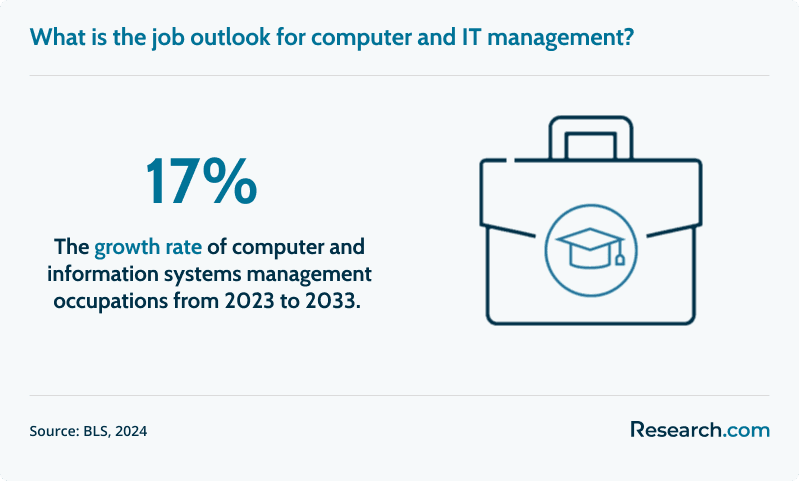
The job market for CIS graduates is supported by continued demand for professionals who can manage systems, analyze technology needs, build software, secure networks, and support data-driven operations. BLS projects employment for computer and information systems managers to grow by 17% from 2023 to 2033. BLS also projects 11% growth for computer systems analysts and 17% for software developers by 2033.
Graduates who add specialized training may improve their competitiveness for emerging roles. For example, students who pursue a master artificial intelligence online after a CIS degree may position themselves for AI-related systems, analytics, or automation roles. Still, employment outcomes depend on skills, experience, location, networking, and the strength of the student’s portfolio.
How can an online BS in computer information systems degree complement an MBA in IT?
An online BS in Computer Information Systems builds technical fluency, while an MBA in Information Technology adds strategic, financial, and leadership training. Together, the two credentials can support a transition from hands-on or analyst-level work into IT management, project leadership, digital transformation, or enterprise technology strategy.
Professionals who pursue an MBA in IT may study IT governance, enterprise architecture, technology budgeting, organizational leadership, and digital transformation. These topics are especially relevant for roles such as IT Director or Chief Information Officer, where leaders must understand both systems and business priorities.
Working professionals who want to move toward leadership may compare flexible graduate options such as the cheapest online MBA in Information Technology. Before enrolling, they should consider whether they need management training now or whether gaining more technical experience first would produce a stronger return.
Why is cybersecurity an essential focus for CIS graduates?
Cybersecurity is now central to computer information systems because nearly every organization depends on digital infrastructure, connected applications, cloud platforms, and sensitive data. CIS graduates who understand security can design safer systems, reduce operational risk, support compliance, and communicate with security teams more effectively.
- Risk is built into modern systems: Networks, applications, databases, and cloud tools all require security planning.
- Security skills apply across roles: Even non-security IT professionals benefit from understanding access control, secure configuration, and incident response basics.
- Regulated industries need security-aware staff: Finance, healthcare, education, government, and retail all manage sensitive data.
Students who want a deeper security path may compare CIS programs with an affordable online cyber security degree. A CIS degree with cybersecurity electives can be a flexible option, while a cybersecurity degree may provide more focused preparation for security analyst, ethical hacking, or IT risk roles.
What are the latest trends and emerging technologies in computer information systems?
Computer information systems continues to evolve as organizations adopt cloud platforms, automation, cybersecurity tools, analytics systems, and artificial intelligence. Students entering CIS programs should look for curricula that stay current with these workplace changes rather than focusing only on older software or theory.
Important areas to watch include cloud computing platforms such as AWS and Microsoft Azure, data analytics, artificial intelligence, machine learning, cybersecurity, secure software practices, automation, and business intelligence. These trends are changing the skills employers expect from graduates, especially in roles that connect technology operations with business decisions.
Graduates who build skills in high-demand technical areas may qualify for more competitive roles over time, including some of the highest paying computer science jobs. The strongest strategy is to combine the degree with projects, internships, certifications, and continuous learning.
Key Insights
- An online BS in Computer Information Systems is best for students who want a practical technology degree that connects IT systems with business needs.
- Affordable programs in this guide list costs from $0 to $390 per credit, but total value depends on fees, aid, transfer credits, flexibility, and career support.
- Most programs require 120 credits and take four years full time, though accelerated, transfer-friendly, and competency-based options can shorten the timeline.
- Accreditation should be nonnegotiable because it can affect financial aid, transfer credit, graduate school options, and employer confidence.
- Students can improve ROI by choosing a specialization, building a portfolio, completing internships or projects, and earning role-relevant certifications.
- Cybersecurity, data analytics, cloud computing, AI, and systems integration are important areas for CIS students to understand as employer expectations evolve.
- The lowest-cost program is not automatically the best choice. The right program is accredited, affordable after aid, aligned with your target career, and strong enough to help you finish with demonstrable skills.
References:
- BLS. (2024). Computer and Information Systems Managers. https://www.bls.gov/ooh/management/computer-and-information-systems-managers.htm
- BLS. (2024). Computer Systems Analysts. https://www.bls.gov/ooh/computer-and-information-technology/computer-systems-analysts.htm
- BLS. (2024). Network and Computer Systems Administrators. https://www.bls.gov/ooh/computer-and-information-technology/network-and-computer-systems-administrators.htm
- BLS. (2024). Software Developers. https://www.bls.gov/ooh/computer-and-information-technology/software-developers.htm
Other Things You Should Know About Online BS in Computer Information Systems Degree Programs
Yes. Many accept up to 60 semester credits from regionally accredited community colleges, which can cut tuition sharply. Schools usually require a minimum 2.0 GPA for transfer courses, and the credits must match lower-division general education or CIS requirements approved by the registrar.
Admission requirements typically include a high school diploma or GED, letters of recommendation, a personal statement, and meeting minimum GPA guidelines. Some programs may also require standardized test scores or prerequisite coursework in mathematics or computer science.


