
2027 Best Online Locksmith and Home Security Technician Trade School Programs

Co-Founder and Chief Data Scientist
Every home needs a robust security system that can make you and your family feel safe, whether it’s a smart lock on your front door or a fully integrated alarm network. Behind those safeguards are skilled locksmiths and home security technicians who know how to install, repair, and upgrade systems for maximum protection.
Today’s locksmith and home security technician training goes far beyond cutting keys. Modern programs teach everything from mechanical lock systems to smart home integration. With online trade school, you can build these skills from anywhere on your schedule.
In this guide, I'll highlight the best online locksmith and home security technician programs. Each program is chosen for its quality, flexibility, and real-world relevance. Whether you’re starting fresh or leveling up your career, these options can help you break into a growing, in-demand industry.
What are the benefits of enrolling in online locksmith and home security technician programs?
- Build a career in a skilled, hands-on trade with a median annual salary of $54,192, offering solid earning potential (ZipRecruiter, n.d.).
- Employment for locksmiths and home security technicians is projected to grow 2% from 2023 to 2033, showcasing stability in an evolving market (BLS, 2025).
- Gain practical locksmith skills through flexible, self-paced online training that allows you to practice with real tools from your own workspace.
What can I expect from online locksmith and home security technician programs?
Online locksmith and home security technician programs are designed to help you build job-ready skills while balancing your studies with work or personal commitments. Here are some key elements you can expect:
- Flexible Learning Formats: Study at your own pace with access to recorded lectures, interactive modules, and live instructor sessions.
- Hands-On Skill Development: Practice lock installation, repair, re-keying, and security system setup using toolkits shipped directly to your home.
- Comprehensive Curriculum: Learn a mix of mechanical and electronic security systems, including automotive locks, safes, and smart home technology.
- Lock Picking and Key Cutting Training: Develop practical expertise in essential locksmith tasks, from cutting keys to picking and bypassing locks.
- Automotive Locksmithing Skills: Learn how to work with car locking systems, ignition cylinders, and modern keyless entry technology.
- Safe and Vault Servicing: Understand the techniques for opening, repairing, and maintaining safes and vaults of various types.
- Career Preparation Support: Receive guidance on certification requirements, job placement, and launching your own locksmith or security business.
Where can I work after completing an online locksmith and home security technician program?
The best part of graduating from online locksmith and home security technician programs is the wide range of career paths in both residential and commercial settings. Your skills can be applied in hands-on roles, specialized service companies, or even your own business.
Here are some of the most common career options:
- Locksmith Shops: Work in a dedicated locksmith business providing key cutting, lock installation, and emergency lockout services.
- Security System Companies: Install, repair, and maintain home and business alarm systems, surveillance cameras, and access control devices.
- Automotive Locksmith Services: Specialize in car key replacement, ignition repair, and programming modern keyless entry systems.
- Safe and Vault Companies: Service, open, and repair a range of safes and vaults for residential, commercial, or banking clients.
- Facilities Maintenance Departments: Manage lock and security system upkeep for schools, hospitals, hotels, and other institutions.
- Self-Employment: Launch your own locksmith and home security business, offering mobile or shop-based services to your community.
How much can I make after completing an online locksmith and home security technician program?
Completing a locksmith and home security technician program can lead to a steady, well-paying career with room for growth as you gain experience. Earnings vary based on skill level, location, and specialization, but qualified technicians enjoy solid income potential.
Here’s a breakdown of potential earnings:
- Top Earners: Make up to $68,500 annually by specializing in high-demand areas or running a successful business.
- 75th Percentile: Earn around $63,500 per year with several years of experience and advanced technical skills.
- Average Salary: Bring in about $54,192 annually as a skilled locksmith or home security technician.
- 25th Percentile: Start around $44,000 per year, with opportunities to increase your income through experience, certifications, and additional services.
- List of the Best Universities for Online Locksmith and Home Security Technician Programs for 2027 List of Programs
- How long does it take to complete an online locksmith and home security technician program? Completion Time
- How does an online locksmith and home security technician program compare to an on-campus program? How does an online locksmith and home security technician program compare to an on-campus program?
- What is the average cost of an online locksmith and home security technician program? Average Cost
- What are the financial aid options for students enrolling in an online locksmith and home security technician program? Financial Aid
- What are the prerequisites for enrolling in an online locksmith and home security technician program? Prerequisites
- What courses are typically in an online locksmith and home security technician program? What courses are typically in an online locksmith and home security technician program?
- What types of specializations are available in online locksmith and home security technician programs? What types of specializations are available in online locksmith and home security technician programs?
- How to choose the best online locksmith and home security technician program? How to choose the best online locksmith and home security technician program?
- What career paths are available for graduates of online locksmith and home security technician programs? Career Paths
- What is the job outlook for graduates of online locksmith and home security technician programs? Job Outlook
- Which Certifications Enhance Industry Competitiveness? Which Certifications Enhance Industry Competitiveness?
- What Additional Support Services Boost Student Success? What Additional Support Services Boost Student Success?
- How Do Online Programs Cultivate Real-World Problem-Solving Skills? How Do Online Programs Cultivate Real-World Problem-Solving Skills?
Best Online Locksmith and Home Security Technician Programs for 2026
Choosing an online locksmith and home security technician program is a practical career decision, not just a school search. You need training that teaches mechanical lock work, key systems, basic electronics, access control, customer service, and safety practices without wasting time or money on a weak credential. This guide is for students, career changers, maintenance workers, and aspiring trade professionals who want flexible training that can lead to residential, commercial, automotive, or security-system work.
Below, you will find a decision-focused comparison of online locksmith and home security technician programs, expected timelines, costs, financial aid options, common courses, specializations, job paths, licensing considerations, and mistakes to avoid before enrolling.
Our program review draws on public and institutional sources, including the IPEDS database, Peterson’s database and its Distance Learning Licensed Data Set, the College Scorecard database, and the National Center for Education Statistics. You can read more about our evaluation process in the Research.com methodology section.
Quick Answer: Are Online Locksmith and Home Security Technician Programs Worth Considering?
Online locksmith and home security technician programs can be worth considering if you want affordable, flexible, skills-based training and are comfortable practicing hands-on techniques at home. The strongest programs combine clear lessons, practice assignments, instructor support, tool-based exercises, and guidance on state licensing or certification. They are best for self-motivated learners, career changers, and people who want to enter a trade without committing to a multi-year degree.
However, online training is not the right fit for everyone. If you need direct lab supervision, access to full-scale security systems, or in-person automotive locksmithing practice, a hybrid or campus-based option may be better. Before enrolling, confirm accreditation or state approval, licensing requirements in your state, included tools and materials, refund policies, and whether the curriculum covers both traditional locks and modern electronic security systems.
Top Online Locksmith and Home Security Technician Programs
The programs below include career schools and training providers offering online or flexible locksmith and home security instruction. Because locksmith training is not regulated the same way in every state, students should verify licensing rules, school approval, and employer recognition before enrolling.
| Program | Best Fit | Length | Estimated Cost | Accreditation or Approval Information |
| Penn Foster College | Students who want a structured, self-paced career diploma from a DEAC-accredited provider | 2-5 months | $839 | Distance Education Accrediting Commission (DEAC) |
| Locksmith Trade Academy | Learners seeking a short, practical course focused on core locksmith techniques | 1-3 months | $500 | Not explicitly stated |
| California Institute of Locksmithing | Students who prefer live online instruction and optional in-person workshops | 3-6 months | Available upon request | Bureau for Private Postsecondary Education – California (BPPE) |
| Stratford Career Institute | Students looking for a lower-cost, self-paced locksmithing curriculum | 6-12 months | $750 | Not explicitly stated |
| Sullivan and Cogliano Training Center | Learners interested in online or hybrid training with career support | 6-9 months | $900 | Listed through the Council for Higher Education Accreditation (CHEA) source; students should verify current accreditor status directly with the school |
1. Penn Foster College
Penn Foster College offers an online Locksmith and Home Security Technician Training Program designed for independent learners who want structured trade instruction. The program uses practical exercises and graded online assignments to teach key making, lock operation, electronic safety, and work involving automotive locks, safes, and vaults.
- Program Length: 2-5 months
- Tracks/concentrations: Locksmith and Home Security Tech Training
- Estimated Cost: $839
- Accreditation: Distance Education Accrediting Commission (DEAC)
2. Locksmith Trade Academy
Locksmith Trade Academy provides a self-paced online locksmith course built by instructors with over 50 years of combined experience. Students study lock installation, repair, re-keying, key duplication, lock picking, and automotive locksmithing while working through lessons and practice-based assignments at their own pace.
- Program Length: 1-3 months
- Tracks/concentrations: Lockpicking, Safe Opening, Rekeying
- Estimated Cost: $500
- Accreditation: Not explicitly stated
3. California Institute of Locksmithing
California Institute of Locksmithing is a state-licensed locksmith school that offers live online training. Its format blends recorded lessons, live lectures, Q&A sessions, and optional in-person workshops for students who want more direct instruction and exposure to current locksmithing standards and tools.
- Program Length: 3-6 months
- Tracks/concentrations: General Locksmithing, Safe Technician
- Estimated Cost: Available upon request
- Accreditation: Bureau for Private Postsecondary Education – California (BPPE)
4. Stratford Career Institute
Stratford Career Institute offers a self-paced locksmithing program covering residential, automotive, and safe locksmithing topics. Students move through four modules, with tuition covering textbooks, study guides, instructor support by phone or email, and a career diploma.
- Program Length: 6-12 months
- Tracks/concentrations: General Locksmithing
- Estimated Cost: $750
- Accreditation: Not explicitly stated
5. Sullivan and Cogliano Training Center
Sullivan and Cogliano Training Center provides online and hybrid locksmith training for students preparing for entry-level work. The curriculum includes interactive learning tools, hands-on assessments, practical assignments, and career services intended to support the move from training into employment.
- Program Length: 6-9 months
- Tracks/concentrations: General Locksmithing
- Estimated Cost: $900
- Accreditation: Council for Higher Education Accreditation (CHEA)
How Long Does It Take to Complete an Online Locksmith and Home Security Technician Program?
Most online locksmith and home security technician programs are self-paced, so completion time depends on how many hours you can study each week. Many students finish in 6–12 months, especially if they are balancing coursework with a job, family responsibilities, or other commitments.
Shorter options are available for students who can move quickly. Some locksmith school and career training paths, including Penn Foster College’s program, may be completed in as little as 1 month by highly focused learners. These accelerated options make the most sense if you already have mechanical aptitude, prior trade experience, or enough weekly study time to practice consistently.
Longer programs may be better if you want more repetition, live instruction, optional workshops, or deeper coverage of safe work, automotive systems, or electronic security. The key is not simply finishing fast. The better goal is completing training with enough confidence to perform lock, key, and basic security tasks safely and professionally.
| Program Pace | Typical Student Profile | Advantages | Possible Trade-Offs |
| Accelerated | Motivated students with strong availability each week | Faster entry into practice, lower time commitment, useful for career changers ready to move quickly | Less time for repetition and troubleshooting practice |
| Standard self-paced | Students studying around work or family schedules | Flexible schedule, manageable workload, time to repeat difficult skills | Requires self-discipline and consistent practice |
| Longer or hybrid | Learners who want live help, workshops, or deeper applied training | More instructor interaction and stronger hands-on reinforcement | May cost more or take longer to complete |
Online vs. On-Campus Locksmith and Home Security Technician Programs
Online and campus-based locksmith programs often teach similar fundamentals: lock types, key duplication, rekeying, installation, basic security systems, ethics, and customer service. The main difference is how you practice. Online programs require more independent hands-on work, while campus programs usually provide direct access to labs, equipment, and in-person coaching. This is similar to other online applied programs, where students comparing flexible study formats, such as online geography degrees, need to examine how practical learning is delivered outside a traditional classroom.
Online Locksmith and Home Security Technician Programs
- Best for students who need schedule flexibility and can practice independently at home.
- Often use videos, readings, simulations, assignments, and instructor feedback to explain lock and security concepts.
- May include tool-based exercises, practice locks, or project submissions, depending on the provider.
- Can be a cost-effective option for students who do not live near a trade school.
- Require students to be proactive about asking questions, checking licensing rules, and finding additional practice opportunities.
On-Campus Locksmith and Home Security Technician Programs
- Best for students who learn more effectively through in-person demonstration and immediate correction.
- May provide access to locksmith labs, automotive lock systems, safe tools, and security installation equipment.
- Can make it easier to practice complex tasks under instructor supervision.
- May offer local networking opportunities with employers, suppliers, or apprenticeships.
- Can be less flexible for students who work full time or live far from the training site.
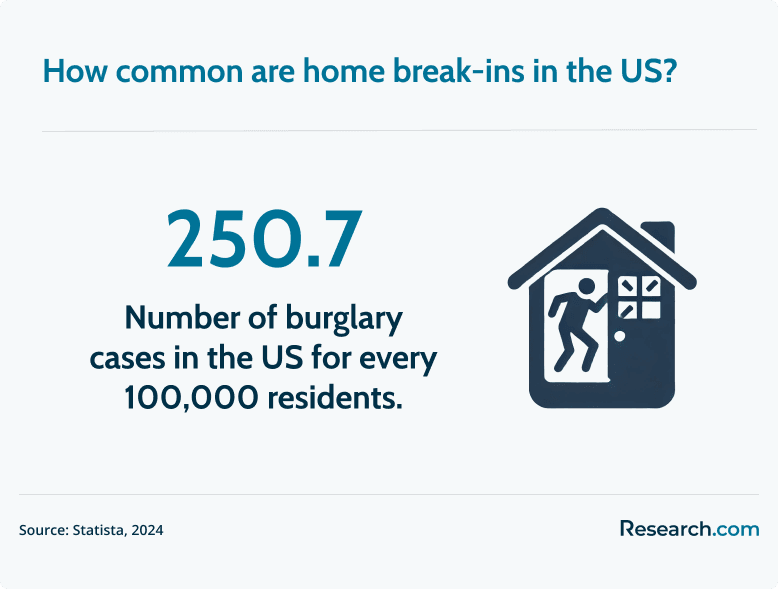
Security work remains relevant because homes, businesses, schools, and public facilities continue to need reliable access control. In 2023, the burglary rate in the US reached 250.7 cases per 100,000 people. Locksmiths and home security technicians help clients reduce risk through properly installed locks, rekeying, access control, alarms, and maintenance.
| Choose Online If... | Choose On-Campus or Hybrid If... |
| You need to study around work, childcare, or irregular hours. | You want direct supervision while practicing with tools and equipment. |
| You are comfortable learning from videos, manuals, assignments, and remote feedback. | You prefer instructor demonstrations and immediate correction. |
| You already have basic tool skills or mechanical experience. | You are new to trades and need more structured practice. |
| You want a lower-cost training option and can build your own practice routine. | You want access to full labs, automotive setups, or specialized security systems. |
What Is the Average Cost of an Online Locksmith and Home Security Technician Program?
Online locksmith and home security technician programs are usually less expensive than many longer trade or college programs. Based on the programs listed here, entry-level online training may start around $500, while broader programs with additional modules and support may cost up to $900. Students comparing online trade options can use similar cost-checking strategies when reviewing other flexible programs, including a general studies online degree.
A reasonable planning estimate is around $700 for a complete program, although the final price depends on curriculum depth, included learning materials, toolkits, payment plans, optional workshops, and any certification or licensing-related fees. Always ask whether books, practice materials, exams, and tool requirements are included before comparing tuition figures.
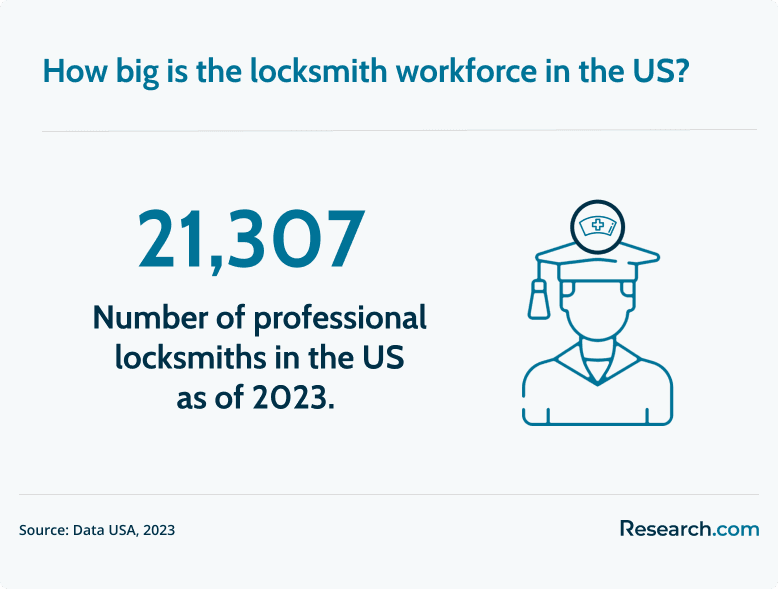
The broader workforce context also matters. Around 21,307 professional locksmiths and home security technicians currently working in the US are part of this trade area. Training alone does not guarantee employment, but a practical program can help you build the skills needed to compete for entry-level roles or start preparing for self-employment.
| Cost Factor | Why It Matters | Question to Ask Before Enrolling |
| Tuition | This is the advertised program price, but it may not include everything you need. | Does tuition cover all required lessons, assignments, and exams? |
| Tools and practice materials | Locksmithing requires physical practice, not just reading. | Are practice locks, key blanks, tools, or training kits included? |
| Books and study guides | Some programs include printed or digital materials; others charge separately. | Will I need to buy additional textbooks or manuals? |
| Certification or licensing costs | Some states or employers may require extra exams, background checks, or credentials. | Does the program prepare me for state or industry requirements? |
| Workshops or hybrid sessions | Optional in-person training may strengthen hands-on skills but add travel or tuition costs. | Are workshops required, optional, or priced separately? |
Financial Aid Options for Online Locksmith and Home Security Technician Students
Financial aid for locksmith and home security technician training varies by school, accreditation status, program type, and student eligibility. Some students may qualify for federal, state, union, private, or trade-focused scholarships, while others may need payment plans or employer assistance. Online trade students reviewing options such as floor installation training certificate online should use the same approach: confirm eligibility directly with the provider before assuming aid is available.
Consider these funding sources when comparing programs:
- Federal Student Aid (FAFSA): FAFSA may connect eligible students with federal grants, loans, and some state aid programs, but not every locksmith program qualifies. Confirm the school’s eligibility before planning around federal aid.
- mikeroweWORKS Foundation Work Ethic Scholarship: This scholarship awards nearly $1 million annually to students entering approved trade programs and requires applicants to submit a short video and character references.
- DEWALT Trades Scholarship: This program offers $5,000 worth of scholarship support for students at two-year colleges or vocational schools in skilled trades, with only the first 1,000 applications considered.
- American Postal Workers Union Vocational Scholarship: This scholarship provides up to $3,000 for high school seniors pursuing specialized training, with an additional $2,000 available for the strongest essay submission.
- Associated Locksmiths of America (ALOA) Scholarship Foundation: This foundation supports students preparing for locksmithing and home security careers, with funding that may help cover tuition, training materials, and certification costs. Scholarship amount varies.
- Texas Premier Locksmith Scholarship: This scholarship offers a $500 award to one full-time student in a locksmith program and requires a 1,000-word essay on how access control systems have evolved over the past 50 years.
Some students later move from locksmithing into broader safety, public security, or emergency planning roles. If that long-term direction interests you, an accelerated online bachelor's in emergency management may be worth comparing after you understand the trade-level pathway.
Prerequisites for Online Locksmith and Home Security Technician Programs
Most online locksmith and home security technician programs are designed for beginners, but that does not mean there are no expectations. Students need enough academic, technical, ethical, and physical readiness to handle security-related work responsibly. As with other online technical programs, including an online ethical hacking certification, programs often care more about practical skill development and responsible conduct than extensive prior college experience.
- Minimum Education: Many programs expect applicants to have a high school diploma or GED.
- Basic Math Skills: Measurements, spacing, cutting depth, hardware placement, and diagram reading all require comfort with practical math.
- Clean Criminal Record: Locksmiths work with access to homes, vehicles, businesses, and security systems, so many states require background checks before licensing.
- Technical Aptitude: Experience with hand tools, small parts, mechanical systems, or basic electronics can make training easier.
- State Licensing Requirements: Some states require coursework, an apprenticeship, an exam, or other steps before someone can legally work as a locksmith.
- Physical Dexterity: Rekeying, key cutting, lock disassembly, and wiring tasks require steady hands and good hand-eye coordination.
- Customer Service Skills: Locksmiths often meet clients during stressful situations, such as lockouts or security problems, so clear communication matters.
If you enjoy hands-on technical work but are still comparing trades, you may also want to review the cheapest HVAC training programs online, another skill-based path where tools, safety, licensing, and practical troubleshooting are central to the job.
Common Courses in Online Locksmith and Home Security Technician Programs
A strong locksmith and home security technician curriculum should teach both traditional lock skills and the basics of modern security technology. The best programs do not stop at theory; they help students understand how to diagnose a problem, choose the right tool, complete the job safely, and communicate clearly with the client.
| Course Area | What Students Learn | Why It Matters on the Job |
| Locksmith Fundamentals | Lock parts, common lock types, tool use, and the basic mechanics of locking systems | Builds the foundation for repair, replacement, installation, and troubleshooting |
| Key Duplication and Rekeying | How to create duplicate keys and change lock configurations | Supports common residential, commercial, and property management requests |
| Home Security Wiring | Basic layouts, power sources, sensors, alarms, and wiring considerations | Prepares students for entry-level security installation and support tasks |
| Ethics in Security Services | Client privacy, legal boundaries, responsible access, and professional conduct | Security work requires trust, documentation, and judgment |
| Security Codes and Compliance | Rules that may affect locks, exits, fire safety, access systems, and installations | Helps reduce liability and supports safer work in homes and facilities |
| CCTV, Recording, and Detection Systems | Camera placement, motion detection, recording setup, and basic maintenance | Expands a technician’s services beyond mechanical locks |
| Business and Customer Service Skills | Pricing, scheduling, client communication, documentation, and service workflow | Useful for independent contractors and technicians handling customer calls |
| Emergency Management for Security Professionals | Planning, response, and recovery concepts related to security incidents | Can support advancement into broader safety roles; students interested in graduate-level study can compare the fastest online master’s in emergency management programs |
Specializations in Locksmith and Home Security Technician Training
Specialization can help you decide what kind of customers, tools, and work environments you want after training. Some students want residential service calls, while others prefer commercial facilities, safes, automotive systems, or electronic security. Choose a focus based on local demand, licensing requirements, your comfort with tools and electronics, and whether you plan to work for an employer or start your own service business.
Locksmith Specializations
- Residential Locksmithing: Focuses on home locks, deadbolts, rekeying, lock replacement, and smart lock support for homeowners and property managers.
- Commercial Locksmithing: Covers master key systems, high-security hardware, restricted access, and lock solutions for offices, warehouses, retail locations, and institutional buildings.
- Safe and Vault Technology: Teaches work involving secure storage systems, including opening, repair, installation, and service of combination, keypad, and high-security units.
- Forensic Locksmithing: Involves examining locks, keys, and signs of tampering after suspected unauthorized entry. Students interested in investigative careers can also explore forensic science degree jobs.
Home Security Technician Specializations
- Electronic Security Systems: Covers alarms, sensors, motion detectors, and surveillance systems used in homes and businesses.
- Access Control Systems: Focuses on keypads, card readers, biometric entry, and controlled access for commercial and institutional settings.
- Smart Home Security Integration: Teaches how locks, cameras, lights, sensors, and voice-enabled systems may work together in connected homes.
- Security System Compliance and Auditing: Emphasizes safety standards, documentation, inspections, and compliance considerations for residential and commercial installations.
Your specialization should match the work you actually want to do. A student interested in emergency lockouts needs different practice than a student who wants to install access control systems in schools or offices.
How to Choose the Best Online Locksmith and Home Security Technician Program
The right program should prepare you for real work, not just provide a certificate of completion. Before enrolling, compare programs on training quality, hands-on practice, instructor access, licensing guidance, cost transparency, and career support.
| Selection Factor | What to Look For | Red Flag |
| Accreditation, approval, or recognition | Clear information about accreditation, state approval, or industry recognition | No explanation of school status or vague claims about being “recognized” |
| Hands-on practice | Practice locks, tool exercises, projects, demonstrations, or optional workshops | A program based only on reading with little applied work |
| Curriculum coverage | Lock repair, key duplication, rekeying, installation, access control, alarms, CCTV, ethics, and customer service | Heavy focus on one topic with no preparation for common service calls |
| Instructor expertise | Experienced locksmiths or security professionals available for questions and feedback | No clear instructor qualifications or limited student support |
| Licensing guidance | Information about state requirements, background checks, exams, or apprenticeships | Claims that a certificate automatically allows you to work everywhere |
| Career support | Resume help, job search guidance, employer connections, or business-startup resources | No discussion of employment, apprenticeship, or customer acquisition after graduation |
Questions to Ask Before You Enroll
- Is the program accredited, state-approved, or recognized by employers in my area?
- Will this training meet any licensing requirements in my state?
- Are tools, practice locks, textbooks, exams, and online access included in the price?
- How do instructors evaluate hands-on skills in an online format?
- Can I speak with an advisor about refunds, payment plans, completion rules, and student support?
- Does the program teach electronic security, access control, and smart lock technology, or only traditional lock work?
- What career services are available after completion?
Once you have narrowed your list, compare the skills taught in each program against the work you want to do locally. A residential locksmith, facilities technician, and access control installer may all need different training emphasis.
Common Mistakes to Avoid When Choosing a Program
| Mistake | Why It Can Hurt You | Better Approach |
| Choosing only by lowest tuition | A cheap program may exclude tools, support, or enough hands-on practice. | Compare total cost, included materials, curriculum depth, and student support. |
| Ignoring accreditation or state approval | Some employers, licensing boards, or financial aid programs may not recognize the training. | Verify accreditation, state authorization, and licensing relevance before enrolling. |
| Assuming online training automatically meets licensing rules | Locksmith licensing varies by state, and some places require background checks, exams, or apprenticeships. | Check your state requirements before paying tuition. |
| Underestimating hands-on practice | Locksmithing is a physical skill; watching videos alone is not enough. | Choose a program with practice assignments, tools, projects, or hybrid options. |
| Overlooking customer service and ethics | Security work involves trust, urgency, and access to private property. | Look for training that covers communication, documentation, legal boundaries, and ethical service. |
| Expecting guaranteed income after graduation | Salary and job outcomes depend on location, licensing, experience, employer demand, and business development. | Treat training as the first step, then build experience, references, and local market knowledge. |
Career Paths for Graduates of Online Locksmith and Home Security Technician Programs
Graduates can pursue work in residential service, commercial facilities, security companies, property management, government buildings, schools, and self-employment. The best path depends on your training, state rules, local demand, driving availability, customer service ability, and willingness to work emergency or on-call schedules.
- Independent Locksmith Business Owner: Runs a locksmith service for residential, commercial, automotive, or emergency clients. This route requires technical skill, licensing compliance, marketing, pricing, and strong customer service.
- Field Technician for Security Companies: Travels to job sites to install, repair, or maintain locks, alarms, cameras, access systems, and related equipment.
- Emergency Response Locksmith: Handles urgent lockouts for homes, vehicles, and businesses. This work may involve nights, weekends, and on-call availability.
- Facilities Maintenance Specialist: Maintains locks, keys, access systems, and security hardware in schools, hospitals, offices, government buildings, or campuses.
- Security Equipment Sales and Training Representative: Sells locks, access systems, alarms, cameras, or related products and trains customers on proper use and maintenance.
Students who want to move beyond hands-on trade roles into wider security, emergency planning, or public safety leadership may later consider an accelerated homeland security degree online.
The chart below highlights the industries where locksmiths and safe repairers are paid the most.
Job Outlook for Locksmith and Home Security Technician Graduates
Locksmith and home security technician work is expected to remain steady rather than explosive. Employment for locksmiths and home security technicians is projected to grow 2% from 2023 to 2033, which matches the average for all occupations. That means students should focus on building employable skills, meeting state requirements, and positioning themselves in industries that regularly need security maintenance and access control support.
Industries employing notable numbers of locksmiths and safe repairers include:
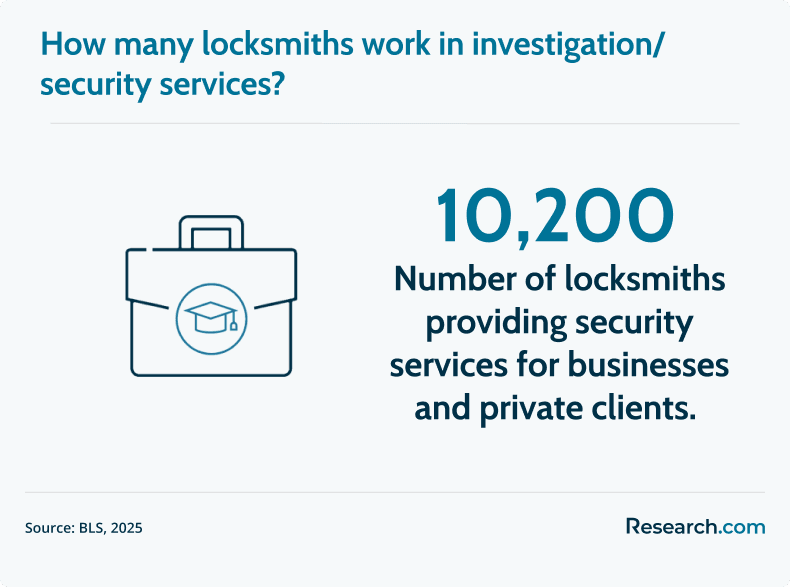
- Investigation and Security Services: Employs about 10,200 professionals who provide lock, access, and security services to private clients, institutions, and businesses.
- Colleges, Universities, and Professional Schools: About 1,090 locksmiths support campus access, building security, and maintenance needs.
- Elementary and Secondary Schools: Around 620 professionals help maintain secure access in K–12 environments.
- Local Government, excluding Schools and Hospitals: About 390 locksmiths work in public facilities and municipal buildings.
- Federal, State, and Local Government: Around 31 specialists work in higher-security public-sector environments.
Because opportunities are spread across private security, education, government, facilities, and self-employment, graduates should research local employers before choosing a specialization. In some areas, residential service may be strongest; in others, access control, institutional maintenance, or commercial work may offer better prospects.
Student Perspectives on Online Locksmith and Home Security Technician Training
- Chad: "Online locksmith and home security training let me keep my daytime job while building trade skills in the evening. Practicing the lessons on real service tasks helped me gain confidence and start seeing how each skill connected to customer work."
- Harris: "The mix of hands-on projects, video-based demonstrations, and online interaction made the program more practical than I expected. I could review difficult lessons, ask questions, and keep learning without commuting to a classroom."
- Brenda: "I needed training that fit around family responsibilities. Studying after my kids were asleep gave me a way to build a marketable skill without putting the rest of my life on hold."
Which Certifications Can Improve Competitiveness?
Certifications and licenses can help show employers and clients that you have verified skills, but requirements vary by location and job type. Some locksmiths pursue industry credentials, state licenses, or specialized training in safes, automotive systems, access control, alarms, or electronic security. The best credential is the one that aligns with your state rules and target role.
If you are comparing skill-based credentials across career fields, Research.com’s guide to certificates that make good money can help you evaluate how certificate programs differ in cost, length, and career value.
What Student Support Services Matter Most?
Support services can make a major difference in an online trade program because students often practice outside a lab. Look for academic advising, instructor access, tutoring or help sessions, career counseling, job search resources, and clear technical support. If a program promises career assistance, ask what that includes: resume help, employer introductions, apprenticeship guidance, interview preparation, or business-startup advice.
Students trying to control costs should also compare payment options and aid eligibility. Broader affordability resources, including Research.com’s list of cheapest online colleges, can help you understand how tuition, financial aid, and school eligibility differ across online education providers.
How Do Online Programs Build Real-World Problem-Solving Skills?
Good online locksmith and home security technician programs teach students to think through problems, not just memorize lock parts. Effective training uses scenarios, demonstrations, practice assignments, case studies, and troubleshooting exercises that require students to identify the issue, select the right tool, complete the task, and document the solution.
For example, a strong course may ask students to diagnose why a lock is sticking, decide whether to rekey or replace hardware, explain options to a customer, or troubleshoot a basic alarm or camera setup. Students who want broader online education options can also compare affordability and support structures through resources such as cheapest online colleges.
Key Insights
- Online locksmith and home security technician programs are best for self-directed learners who want flexible, affordable trade training with practical assignments.
- Program length varies widely, from accelerated options to 6–12 months of self-paced study, so choose based on your available weekly practice time and learning style.
- Costs commonly fall between $500 and $900 among the programs reviewed, with around $700 serving as a practical planning estimate before tools, exams, or optional workshops.
- Accreditation, state approval, and licensing guidance matter. Do not assume that a certificate alone allows you to work legally in every state.
- Hands-on practice is essential. The strongest online programs include applied exercises, tool work, instructor feedback, or optional in-person training.
- Specializations such as residential locksmithing, commercial locksmithing, safe technology, access control, and smart home security can shape your job options.
- Employment is projected to grow 2% from 2023 to 2033, so graduates should focus on practical skills, licensing compliance, customer service, and local employer demand.
- Before enrolling, ask about total cost, included materials, refund terms, instructor access, career services, and whether the program matches your state’s locksmith requirements.
References:
- American Postal Workers Union. (n.d.). Scholarship programs. Apwu.org. Retrieved 13 August 2025.
- Associated Locksmiths of America. (n.d.). Scholarship. Aloa.org. Retrieved 13 August 2025.
- California Institute of Locksmithing. (n.d.). Enrollment. Californiainstituteoflocksmithing.com. Retrieved 13 August 2025.
- Council of Higher Education Accreditation. (n.d.). Sullivan and Cogliano Training Centers. Chea.org. Retrieved 13 August 2025.
- DEWALT. (n.d.). Scholarship. Dewalt.ca. Retrieved 13 August 2025.
- Data USA. (n.d.). Locksmithing & safe repair. Datausa.io. Retrieved 13 August 2025.
- Locksmith Trade Academy. (n.d.). The Premier Locksmith Training Course. Locksmithtradeacademy.com. Retrieved 13 August 2025.
- MikeroweWORKS Foundation. (n.d.). Scholarship. Mikeroweworks.org. Retrieved 13 August 2025.
- Penn Foster. (n.d.). Locksmith career diploma curriculum. Pennfoster.edu. Retrieved 13 August 2025.
- Statista. (n.d.). Reported burglary rate in the US. Statista.com. Retrieved 13 August 2025.
- Texas Premier Locksmith. (n.d.). Scholarship. Txpremierlocksmith.com. Retrieved 13 August 2025.
- US Bureau of Labor Statistics. (2023). Occupational employment and wages, May 2023: Locksmiths. Bls.gov. Retrieved 13 August 2025.
- ZipRecruiter. (n.d.). Locksmith salary. Ziprecruiter.co. Retrieved 13 August 2025.
- Zippia. (n.d.). Locksmith jobs: Skills. Zippia.com. Retrieved 13 August 2025.
Other Things You Need to Know About Online Locksmith and Home Security Technician Programs
In 2027 online programs, core topics include key identification and duplication, lock installation and repair, electronic security systems, safe and vault repair, and cybersecurity fundamentals. These courses are designed to equip students with comprehensive skills required for modern locksmithing and home security solutions.
Some top online programs in 2027 include Penn Foster Career School, Ashworth College, and Stratford Career Institute. These programs are recognized for their comprehensive locksmith training curriculums with flexible online learning modules and expert faculty guidance, preparing students for successful careers.
Students typically need a computer or tablet with a stable internet connection capable of streaming video content. Programs often recommend updated browsers and software for interactive modules and video conferencing. Some courses may also require a webcam and microphone for live instruction and assessments.


