2027 Fastest Online Interdisciplinary Studies Degree Programs

Co-Founder and Chief Data Scientist
Finding a degree that is both fast and flexible can feel overwhelming, especially if you want to blend multiple interests into one career-focused program. Many working adults and nontraditional students struggle to identify accredited online interdisciplinary studies degrees that allow them to graduate quickly without sacrificing quality.
This article solves that problem by breaking down the fastest online interdisciplinary studies programs, their costs, durations, and specializations. You will discover how these degrees work, what you can expect in coursework, and which schools offer the best options. By the end, you will know exactly how to choose a program that fits your timeline, budget, and professional goals.
What are the benefits of getting an online degree in interdisciplinary studies?
- An online interdisciplinary studies degree can lead to jobs in project management, communications, human resources, nonprofit administration, marketing, and public policy.
- Professionals with this degree often earn a median salary ranging from $55,000 to $105,000 per year, depending on their industry, experience, and chosen specialization.
- Earning the degree online allows you to study on your schedule, accelerate your graduation, and balance work or family commitments without relocating or pausing your career.
What can I expect from the fastest online interdisciplinary studies degree?
An online interdisciplinary studies degree is a flexible program that allows you to design a curriculum drawing from two or more academic fields. Instead of focusing on just one subject, you can combine areas like business, psychology, communication, or environmental studies to match your unique career goals. These programs typically include core courses in research methods, critical thinking, and integrative learning, along with electives you select based on your interests.
Many schools offer accelerated formats or competency-based learning, so you can graduate faster by taking more courses each term or demonstrating mastery of skills. Interdisciplinary studies appeal to working adults, career changers, and students who want to build a versatile skill set that applies across industries. By blending disciplines, you gain broader perspectives and develop problem-solving abilities that employers value in complex, fast-changing workplaces.
Where can I work with the fastest online interdisciplinary studies degree?
Graduates of online interdisciplinary studies degree programs often work in a wide range of industries that value adaptable skills and cross-functional knowledge. Many find roles in business and corporate environments, where they handle project coordination, operations, and human resources.
Nonprofit organizations also hire interdisciplinary graduates to manage community programs, fundraising campaigns, and outreach initiatives. Education and training are common paths as well, especially in adult learning, instructional design, and academic advising.
Other industries where these graduates thrive include healthcare administration, public policy, and government agencies. Depending on your chosen concentrations, you could also work in marketing, communications, or technology companies. Some common types of employers include:
- Large corporations needing versatile team members
- Nonprofits focused on social services or advocacy
- Government offices handling policy or program development
- Startups and small businesses requiring multi-skilled staff This flexibility makes the degree valuable in today’s dynamic job market.
How much can I make with the fastest online interdisciplinary studies degree?
Graduates with an online interdisciplinary studies degree often enjoy strong earning potential thanks to their versatile skill sets. According to the Bureau of Labor Statistics, median annual salaries for roles commonly pursued by these graduates range from $62,810 for public relations specialists to up to $121,220 for human resources managers.
Degree holders entering mid-career often see salaries between $69,600 and $98,580, especially in roles like social services management and project coordination .
Salary ranges vary by concentration and industry: Eastern Oregon University reports that sales managers make around $138,060, while policy analysts average $66,407 per year. Nationally, interdisciplinary studies alumni typically earn between $40,000 and $100,000, with a median of $63,000, and physical sciences concentrations can earn up to $90,000.
Overall, interdisciplinary graduates who combine their degree with experience or certifications often command median salaries around $70,000, making this a strong return on investment .
- Fastest Online Interdisciplinary Studies Degree Programs for 2027 List of Programs
- How long does it take to complete the fastest online interdisciplinary studies degree program? Completion Time
- How does the fastest online interdisciplinary studies degree program compare to an on-campus program? How does the fastest online interdisciplinary studies degree program compare to an on-campus program?
- What is the average cost of the fastest online interdisciplinary studies degree program? Program Cost
- What are the financial aid options for students enrolling in the fastest online interdisciplinary studies degree program? Financial Aid
- What are the prerequisites for enrolling in the fastest online interdisciplinary studies degree program? Program Requirements
- What courses are typically in the fastest online interdisciplinary studies degree program? What courses are typically in the fastest online interdisciplinary studies degree program?
- What types of specializations are available in the fastest online interdisciplinary studies degree programs? What types of specializations are available in the fastest online interdisciplinary studies degree programs?
- How do you choose the best among the fastest online interdisciplinary studies degree programs? How do you choose the best among the fastest online interdisciplinary studies degree programs?
- What career paths are available for graduates of the fastest online interdisciplinary studies degree programs? What career paths are available for graduates of the fastest online interdisciplinary studies degree programs?
- What is the job market like for graduates with the fastest online interdisciplinary studies degree program? Job Outlook
- Are these programs accredited and quality-assured? Are these programs accredited and quality-assured?
- Is a Fast Online Interdisciplinary Studies Degree a Good Investment? Is a Fast Online Interdisciplinary Studies Degree a Good Investment?
- Can This Degree Accelerate Your Pathway to Advanced Studies? Can This Degree Accelerate Your Pathway to Advanced Studies?
- What Technological and Support Resources Empower Online Interdisciplinary Studies Students? What Technological and Support Resources Empower Online Interdisciplinary Studies Students?
Fastest Online Interdisciplinary Studies Degree Programs for 2027
Choosing an online interdisciplinary studies degree is usually a speed-versus-fit decision. You may want to finish a bachelor’s degree quickly, use previous college credits, qualify for a promotion, or build a degree around several career interests instead of one traditional major. The challenge is that “fast” can mean different things: short terms, generous transfer credit, competency-based pacing, year-round enrollment, or a program built specifically for adult learners.
This guide explains how accelerated online interdisciplinary studies programs work, which schools offer some of the fastest options, what affects completion time, and how to compare cost, accreditation, transfer policies, specializations, and career outcomes. It is designed for working adults, transfer students, military learners, and anyone who wants a flexible bachelor’s degree without spending unnecessary time or money.
Quick answer: What is the fastest way to earn an online interdisciplinary studies degree?
The fastest route is usually a regionally accredited online bachelor’s program that accepts a large number of transfer credits, offers accelerated 6-, 7.5-, 8-, 10-, or 12-week terms, and allows year-round enrollment. Students with substantial prior credit may finish in 12 to 18 months, while students starting with no college credit should expect a longer timeline, often closer to 2 to 4 years depending on course load and program format.
| Best fit | Program feature to prioritize | Why it matters |
| Students with many prior credits | High transfer-credit allowance | Fewer remaining credits can shorten both time and cost. |
| Working adults | Asynchronous online courses | You can study around work, caregiving, or irregular schedules. |
| Highly self-directed learners | Competency-based or self-paced format | You may progress faster when you already know the material. |
| Career changers | Customizable concentrations | You can combine fields such as business, communication, technology, policy, or health services. |
| Budget-focused students | Flat-rate tuition, public tuition rates, and credit for prior learning | These policies can reduce total out-of-pocket cost. |
How do we rank schools?
Research.com evaluates online interdisciplinary studies degree programs with a data-informed approach because program speed, affordability, flexibility, and academic quality all affect whether a degree is worth pursuing. The goal is to help students compare programs using practical criteria rather than relying only on marketing claims.
Our rankings are based on a transparent methodology that draws from established education data sources, including the Integrated Postsecondary Education Data System (IPEDS), Peterson's databases, including the Distance Learning Licensed Data Set, and the College Scorecard from the National Center for Education Statistics. These sources help us assess programs across factors such as online availability, institutional profile, completion-related data, and student-relevant program characteristics.
1. Arizona State University (ASU Online)
Arizona State University offers an Online Bachelor of Interdisciplinary Studies for students who want to combine two academic focus areas in one bachelor’s degree. ASU Online uses accelerated 7.5-week classes and offers several start dates, which can help motivated students maintain momentum throughout the year. A typical student may finish in about 3–4 years, while learners entering with substantial transfer credit may complete the degree in less time. The program is well suited to students who want a customizable academic plan connected to career goals.
- Program Length: 3 to 4 years, less than 2 years with maximum transfer credits
- Tracks/Concentrations: Over 170 areas of emphasis
- Cost per Credit: $561
- Required Credits to Graduate: 120
- Accreditation: Higher Learning Commission (HLC)
2. Liberty University
Liberty University provides an Online Bachelor of Science in Interdisciplinary Studies that lets students shape a degree plan by combining coursework from multiple subjects. Its 8-week course format and transfer-friendly structure can make it appealing for adults who have already earned college credit. Liberty accepts up to 90 transfer credits, which may allow some students to finish in as little as 1.5–2 years. Coursework is 100% online and generally designed for learners balancing school with work, military service, or family responsibilities.
- Program Length: 1.5 to 3 years (accelerated 8-week courses)
- Tracks/Concentrations: Fully customizable—students design their own focus areas
- Cost per Credit: $390
- Required Credits to Graduate: 120
- Accreditation: Southern Association of Colleges and Schools Commission on Colleges (SACSCOC)
3. University of North Texas
The University of North Texas offers an Online Bachelor of Applied Arts and Sciences (BAAS) for students who want to apply previous academic, technical, vocational, or military learning toward a degree. Because the program is built around credit flexibility, students with substantial prior experience may shorten their path to graduation, with some finishing in under 2 years. Courses are delivered online in accelerated 8-week sessions. This option is especially relevant for adult learners returning to complete a bachelor’s degree for career mobility.
- Program Length: 2 to 4 years
- Tracks/Concentrations: Custom plan combining applied and academic credits
- Cost per Credit: $330
- Required Credits to Graduate: 120
- Accreditation: Southern Association of Colleges and Schools Commission on Colleges (SACSCOC)
4. Southern New Hampshire University (SNHU)
Southern New Hampshire University offers an Online Bachelor of Arts in General Studies that can serve a similar purpose to an interdisciplinary studies degree because students can build a broad, flexible academic plan. SNHU uses 8-week terms and rolling admissions, which allows students to begin at multiple points during the year. Many students complete the degree in 2 to 3 years depending on transfer credit and pace. The program is designed for online learners who need consistent flexibility and a straightforward path to degree completion.
- Program Length: 2 to 4 years (accelerated 8-week terms)
- Tracks/Concentrations: General Studies (flexible interdisciplinary courses)
- Cost per Credit: $330
- Required Credits to Graduate: 120
- Accreditation: New England Commission of Higher Education (NECHE)
5. Western Governors University (WGU)
Western Governors University offers a Bachelor of Science in Business – Interdisciplinary Studies through a competency-based model. Instead of moving through a fixed weekly schedule, students advance as they demonstrate mastery of required competencies. This structure can benefit disciplined learners who already have related knowledge or professional experience. Some students complete the program in 12 to 18 months, although actual pace depends on time commitment, preparation, and academic progress.
- Program Length: 12–18 months (self-paced competency-based)
- Tracks/Concentrations: Interdisciplinary business focus areas
- Cost per Credit: Flat rate of $3,625 per 6-month term
- Required Credits to Graduate: 120 competency units
- Accreditation: Northwest Commission on Colleges and Universities (NWCCU)
6. University of Massachusetts – UMass Global
UMass Global offers an Online Bachelor of Arts in Liberal Studies with options for interdisciplinary concentration planning. The program uses 8-week sessions and supports year-round study, giving students more opportunities to keep progressing without long breaks. Completion time varies, but students who transfer credits may be able to finish in about two years. The format is designed for working adults, military-affiliated students, and learners who want online coursework with flexible scheduling.
- Program Length: 2 to 4 years
- Tracks/Concentrations: Liberal Studies with customizable interdisciplinary courses
- Cost per Credit: $500
- Required Credits to Graduate: 120
- Accreditation: WASC Senior College and University Commission (WSCUC)
7. University of Maryland Global Campus (UMGC)
University of Maryland Global Campus offers an Online Bachelor of Science in Interdisciplinary Studies for students who want to combine coursework across areas such as business, social science, and technology. The school offers multiple start dates and accelerated 8-week sessions, which can support faster progress for students who can manage a heavier workload. Most students finish in 2–4 years, depending largely on transfer credit. UMGC’s format is built for adult learners seeking career-relevant academic flexibility.
- Program Length: 2 to 4 years (accelerated 8-week sessions)
- Tracks/Concentrations: Interdisciplinary Studies (flexible emphasis areas)
- Cost per Credit: $318
- Required Credits to Graduate: 120
- Accreditation: Middle States Commission on Higher Education (MSCHE)
8. Franklin University
Franklin University offers an Online Interdisciplinary Studies Degree Program that allows students to create a personalized plan from multiple focus areas. The school offers 6- and 12-week courses and continuous enrollment, which can help students move steadily through requirements. Completion commonly takes 2–3 years, although students with transfer credit may finish faster. The program is designed for busy adults who need an online path that can connect previous learning with current career goals.
- Program Length: 2–3 years
- Tracks/Concentrations: Self-designed focus areas within Interdisciplinary Studies
- Cost per Credit: $398
- Required Credits to Graduate: 124
- Accreditation: Higher Learning Commission (HLC)
9. Colorado State University Global
Colorado State University Global offers an Online Bachelor’s in Interdisciplinary Professional Studies that lets students choose coursework from several disciplines to support specific professional goals. CSU Global uses accelerated 8-week terms and accepts up to 90 transfer credits, which can allow some students to graduate in under 2 years. The asynchronous format is designed for adults who need to balance school with work and other responsibilities.
- Program Length: 2 years (accelerated 8-week terms)
- Tracks/Concentrations: Interdisciplinary Professional Studies with customizable specializations
- Cost per Credit: $350
- Required Credits to Graduate: 120
- Accreditation: Higher Learning Commission (HLC)
10. Purdue University Global
Purdue University Global offers an Online Bachelor of Science in Professional Studies, a flexible degree option that functions similarly to interdisciplinary studies by allowing students to combine multiple areas of learning. The program uses 10-week terms and transfer policies that may help students reduce time to completion. With maximum transfer credits, motivated students may finish in about 2 years. The program is intended for working adults and military learners who want an online degree aligned with professional experience.
- Program Length: 2 to 4 years (with maximum credit transfers)
- Tracks/Concentrations: Professional Studies with interdisciplinary options
- Cost per Credit: $371
- Required Credits to Graduate: 180 quarter credits
- Accreditation: Higher Learning Commission (HLC)
How long does it take to complete the fastest online interdisciplinary studies degree program?
The shortest online interdisciplinary studies bachelor’s programs may be completed in 12 to 18 months, but that timeline usually applies to students who already have a large number of transfer credits, military credits, professional training credits, or prior college coursework. Students entering with no transfer credits should generally plan for a longer timeline, often around 24 months or more in an accelerated format.
Some schools use competency-based education, which can let students progress at their own pace. In these models, highly prepared students may finish in 12 to 15 months if they can devote significant time to coursework and assessments.
Program length depends on credit requirements, transfer-credit rules, term length, course load, prior learning assessment, and whether the school offers year-round enrollment. Most programs require 120 to 124 semester credits, while Purdue University Global lists 180 quarter credits. If speed is your top priority, compare how many credits the school will accept before enrollment, not after you have already committed.
Students considering graduate study after earning a bachelor’s degree may also want to compare accelerated options such as the shortest public policy masters programs online, especially if policy, government, or nonprofit work is part of their long-term plan.
| Student situation | Likely completion pattern | What to verify before applying |
| No prior college credit | Typically longer, often 2 to 4 years depending on pace | Maximum course load, term frequency, and total required credits |
| Some transfer credit | May reduce the degree by one or more terms | Whether credits apply to general education, electives, or major requirements |
| Up to 90 accepted transfer credits | May finish much faster if remaining requirements are available online | Residency requirements and required upper-division coursework |
| Competency-based learner | Potentially 12 to 18 months for highly motivated students | Assessment structure, pacing rules, and tuition-by-term model |
How does the fastest online interdisciplinary studies degree program compare to an on-campus program?
Accelerated online interdisciplinary studies programs are usually built around flexibility, transfer credit, and shorter academic terms. Depending on your previous credits and workload, an online program may allow completion in 12 to 24 months. Similar accelerated structures are also found in options such as the fastest online humanities degree programs, where students may take multiple classes across compact terms or move through self-paced coursework.
On-campus programs tend to follow a more traditional semester calendar. Students starting without prior college credit commonly take about four years because courses are sequenced around fall and spring terms. The trade-off is that campus programs offer in-person advising, classroom discussion, student organizations, labs or facilities, and a more structured academic routine.
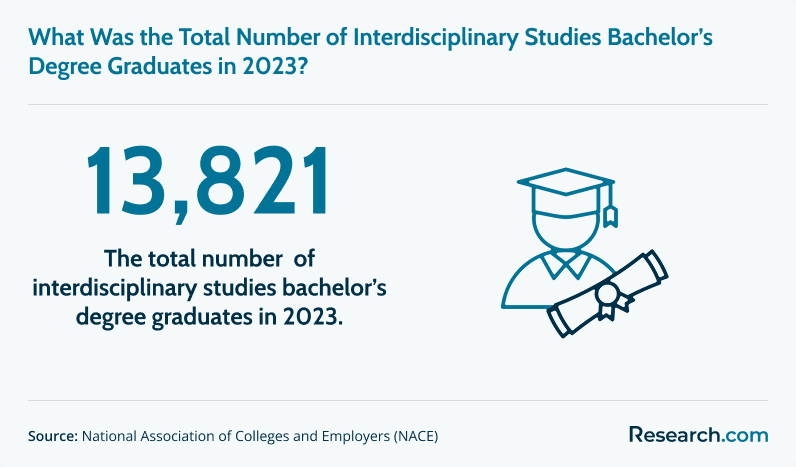
In 2023, a total of 13,821 students graduated with a bachelor's in interdisciplinary studies. Online programs often work best for adults who need schedule control, while campus programs may be better for students who want face-to-face learning, campus life, and a more predictable weekly structure.
| Factor | Fast online program | Traditional on-campus program |
| Speed | Can be faster with transfer credits, accelerated terms, or competency-based pacing | Usually follows a standard semester sequence |
| Schedule | Often asynchronous and designed for working adults | Requires attendance at scheduled class times |
| Interaction | Mostly virtual through discussion boards, video meetings, email, and learning platforms | In-person interaction with classmates, faculty, and campus services |
| Best for | Transfer students, adult learners, military learners, and full-time workers | Students who want campus resources, structure, and in-person engagement |
| Main risk | Requires strong time management and self-direction | Less flexibility and fewer options to accelerate |
What is the average cost of the fastest online interdisciplinary studies degree program?
The total cost of an accelerated online interdisciplinary studies degree varies by institution type, tuition model, transfer credit, and required fees. A program that looks expensive per credit may cost less overall if it accepts more transfer credits, while a low per-credit price may still add up if few credits transfer.
- Public universities: Accelerated online interdisciplinary degrees at public institutions often fall between $8,000 and $20,000 in total tuition.
- Private colleges: Private institutions may cost more, often ranging from $20,000 to $40,000 in total tuition.
- Competency-based tuition: Some programs use subscription-style or flat tuition per term. For example, some universities charge around $3,500 to $4,500 per 6-month term. Students who complete more coursework within fewer terms may lower the total cost.
- Additional expenses: Fees, books, and technology costs may add $1,000 to $3,000.
- Transfer credits: Accepted credits can significantly reduce total cost because you pay for fewer remaining courses.
To find the most affordable option, compare the total estimated program cost after transfer evaluation, not only the listed cost per credit. Public universities, flat-rate tuition models, and generous transfer-credit policies are often worth close attention.
Students seeking career-aligned flexibility may also compare interdisciplinary studies with a more focused path such as an online project management degree, particularly if their goal is to move into project coordination, operations, or management roles.
What are the financial aid options for students enrolling in the fastest online interdisciplinary studies degree program?
Eligible students in accredited online interdisciplinary studies programs may use several types of financial aid. Before applying, confirm that the institution participates in federal aid programs and that your enrollment status qualifies for the aid you plan to use.
- Federal financial aid: Students can complete the Free Application for Federal Student Aid (FAFSA) to be considered for federal grants, loans, and work-study opportunities.
- State grants and scholarships: Some states fund residents who attend approved online programs, particularly at public colleges and universities.
- Institutional scholarships: Schools may offer awards for online learners, transfer students, adult learners, military-affiliated students, or students with financial need.
- Employer tuition assistance: Working adults should ask whether their employer offers tuition reimbursement or education benefits that can reduce out-of-pocket expenses.
- Private loans: Private student loans may cover remaining costs, but interest rates, repayment protections, and borrower terms vary. Compare carefully before borrowing.
Because interdisciplinary studies allows students to combine multiple academic areas, it can be useful for learners who want a broad curriculum rather than a single narrowly defined major. Students who want similar flexibility may also compare a fast track liberal arts degree online. Among interdisciplinary studies bachelor's graduates in 2023, 1,417 majored in international globalization studies while 329 majored in sustainability studies.
The chart below shows common undergraduate specialization patterns within interdisciplinary fields.
What are the prerequisites for enrolling in the fastest online interdisciplinary studies degree program?
Admission requirements vary by school, but accelerated online interdisciplinary studies programs generally ask for proof that you are academically prepared for bachelor’s-level work. Transfer students should pay especially close attention to transcript policies, because credit evaluation can determine how fast they can graduate.
If you are considering a career-focused concentration, it may also help to review what a project management major typically requires, since project management coursework is a common fit within interdisciplinary or professional studies programs.
- High school diploma or equivalent: Applicants usually need a high school diploma, GED, or recognized equivalent.
- Official transcripts: Schools typically request transcripts from all previously attended colleges or universities to evaluate transfer credit.
- Minimum GPA: Some programs require a minimum GPA, commonly around 2.0 to 2.5 on a 4.0 scale.
- Previous college credit: Prior credit is not always required, but it is often the key factor that makes an accelerated timeline possible.
- Personal statement or essay: Some colleges ask applicants to explain their academic goals and how interdisciplinary studies supports their career plan.
- Application and fee: Applicants usually complete an online form and pay an application fee, which typically ranges from $25 to $75.
Students who prefer a more traditional humanities focus can also review the shortest online philosophy degree programs as an alternative accelerated path.
What courses are typically in the fastest online interdisciplinary studies degree program?
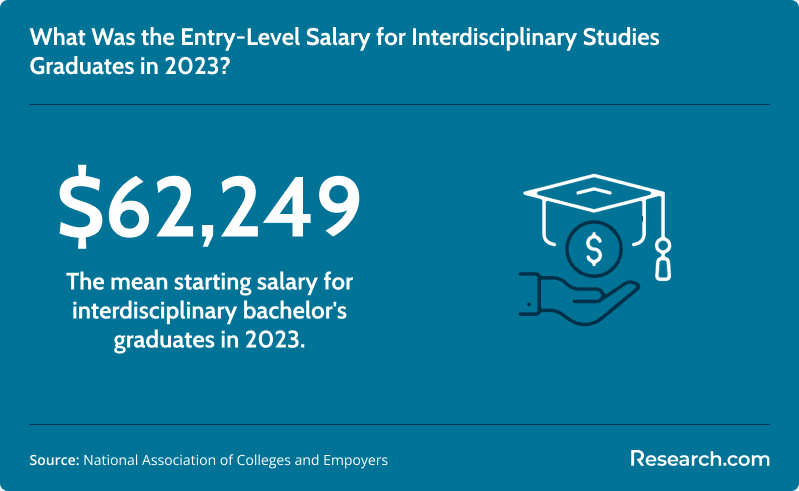
An online interdisciplinary studies degree usually combines general education, interdisciplinary core courses, concentration coursework, and a final capstone or integrative project. According to the National Association of Colleges and Employers (NACE) report, interdisciplinary studies bachelor's graduates received $62,249 starting salary in 2023.
Core interdisciplinary courses
- Introduction to Interdisciplinary Studies
- Research Methods in Interdisciplinary Studies
- Integrative Capstone Project or Senior Seminar
- Critical Thinking and Problem Solving
- Ethics in Interdisciplinary Practice
Concentration or theme-based courses
Your concentration determines much of the degree’s career direction. Common subject areas include:
- Business and Management
- Communication Studies
- Psychology or Social Sciences
- Environmental Studies
- Health and Human Services
General education courses
- English Composition
- College Algebra or Statistics
- Humanities and Arts
- Natural Sciences
- Social and Behavioral Sciences
What types of specializations are available in the fastest online interdisciplinary studies degree programs?
Specializations help turn a broad interdisciplinary degree into a more marketable credential. The best concentration is not always the most interesting one on paper; it should connect to the job titles, industries, graduate programs, or skills you want after graduation. Some interdisciplinary concentrations may support pathways related to public policy careers, especially when coursework includes government, sustainability, nonprofit administration, or data-informed policy analysis.
- Business and Management: Covers leadership, organizational behavior, marketing, operations, and project management fundamentals.
- Health and Human Services: Combines topics such as healthcare administration, public health, social services, and community programs.
- Communication Studies: Builds skills in professional writing, public relations, digital communication, media, and workplace messaging.
- Environmental Studies: Integrates sustainability, environmental policy, natural resources, and social impacts of environmental decisions.
- Psychology and Social Sciences: Connects human behavior, sociology, development, research, and community-focused practice.
- Information Technology: Focuses on computer systems, data management, IT coordination, and technology-supported problem solving.
- Education and Training: Prepares students for roles related to adult learning, workforce training, instructional support, or learning design.
- Arts and Humanities: Allows students to combine literature, philosophy, cultural studies, writing, history, or creative fields.
- Public Policy and Administration: Includes government, policy analysis, nonprofit management, public service, and administrative decision-making.
- Customized or Self-Designed Concentration: Lets students build a tailored plan by selecting courses across departments, usually with advisor approval.
How do you choose the best among the fastest online interdisciplinary studies degree programs?
The best accelerated program is the one that gets you to a credible degree quickly without sacrificing accreditation, transfer value, career alignment, or support. Use the following criteria before narrowing your list.
- Verify accreditation: Choose a regionally accredited institution so your degree is more likely to be recognized by employers, graduate schools, and other colleges.
- Compare actual completion time: Ask how long students with your number of transfer credits usually take to graduate. If you are comparing related accelerated options, such as an accelerated communications degree, check whether the pacing and course availability match your schedule.
- Get a transfer-credit estimate: Do not assume every completed course will count toward graduation. Ask which credits apply to general education, electives, major requirements, and upper-division requirements.
- Calculate total cost: Add tuition, fees, books, technology charges, graduation fees, and any cost tied to taking more courses per term.
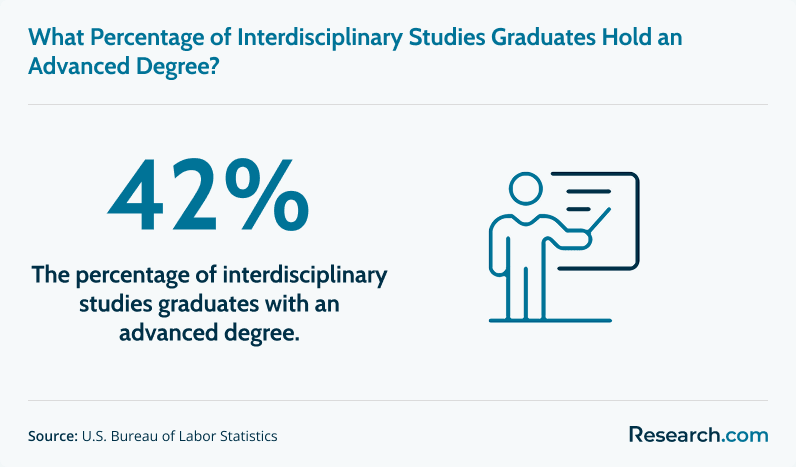
- Match the specialization to your goal: Choose a degree plan that supports your intended career or graduate program. In 2023, 42% of interdisciplinary studies graduates in the U.S. workforce have an advanced degree.
- Review faculty and advising support: Strong advising matters in interdisciplinary programs because course selection can affect both graduation speed and career relevance.
| Question to ask | Why it matters | Red flag |
| How many of my credits will transfer into the degree? | Transfer acceptance is often the biggest factor in completion speed. | The school will not provide a clear transfer estimate before enrollment. |
| Are all required courses offered online every term? | A missing required course can delay graduation even in an accelerated program. | Required courses are offered only once per year or only on campus. |
| What is the full cost after transfer credits? | Total cost is more useful than the per-credit rate alone. | Fees and materials are not clearly disclosed. |
| Who helps me design my concentration? | Interdisciplinary degrees need careful planning to avoid a scattered transcript. | Students are left to choose courses without academic advising. |
| Will this degree support my graduate or licensure plans? | Some graduate programs require specific prerequisites. | The program claims broad career outcomes but does not explain course requirements. |
What career paths are available for graduates of the fastest online interdisciplinary studies degree programs?
Interdisciplinary studies graduates can pursue roles across business, nonprofit, education, public administration, communications, technology-adjacent fields, and healthcare-related organizations. The degree’s flexibility can be valuable, but career outcomes depend heavily on concentration choices, internships, work history, certifications, and how clearly students connect their coursework to employer needs. Students comparing broad bachelor’s options may also review accelerated general studies online degree programs.
Common career options include:
- Project Manager: Coordinate timelines, budgets, stakeholders, and deliverables in industries such as technology, construction, healthcare, education, or nonprofit work.
- Communications Specialist: Support public relations, internal communication, digital content, media outreach, and organizational messaging.
- Human Resources Specialist: Work on recruiting, onboarding, employee relations, training, benefits coordination, or workplace policy support.
- Marketing Coordinator or Manager: Help plan campaigns, analyze audiences, manage digital channels, and coordinate brand or product messaging.
- Program Coordinator: Manage outreach, logistics, reporting, and stakeholder communication for nonprofit, education, healthcare, or community programs.
- Policy Analyst or Public Administrator: Research public issues, evaluate programs, and support decision-making in government, advocacy, or nonprofit settings. Students interested in policy-focused environmental work may also compare top environmental policy degree programs.
The degree is strongest when the student builds a clear professional narrative. For example, “interdisciplinary studies with business and communication coursework plus project experience” is usually easier for employers to understand than a broad degree with unrelated electives.
The following chart shows median annual wage information for interdisciplinary studies graduates in 2024, including roles in which project management specialists and management analysts received more than 100K annual salaries.
What is the job market like for graduates with the fastest online interdisciplinary studies degree program?
The job market for interdisciplinary studies graduates is broad but competitive. Because the degree combines multiple subject areas, graduates may pursue opportunities in business operations, nonprofits, education, communications, public administration, healthcare organizations, and other settings that value adaptable problem solvers. This versatility helps you adapt to different industries, especially when your coursework is paired with relevant experience.
Employers often look for skills that interdisciplinary programs can develop, including communication, research, project coordination, analysis, teamwork, and critical thinking. However, the degree is not as specialized as majors such as accounting, engineering, nursing, or computer science. For roles with strict technical requirements, students may need certificates, internships, portfolio work, graduate study, or targeted electives.
The Bureau of Labor Statistics projects steady growth in fields that often hire interdisciplinary graduates, including business operations, project management, human resources, and marketing. Your strongest job prospects will come from combining the degree with a focused concentration, measurable experience, and a resume that translates your interdisciplinary background into specific workplace value.
Are these programs accredited and quality-assured?
Accreditation should be one of the first checks in your program search. A regionally accredited institution has been reviewed by a recognized accrediting agency, which can affect transfer credit, graduate school admission, employer recognition, and access to federal financial aid. Accreditation does not guarantee a job or a specific salary, but it is an important quality signal.
Students should also look beyond accreditation and review advising quality, faculty qualifications, online tutoring, library access, career services, transfer-credit transparency, and graduation support. If affordability is a major concern, compare accredited options such as low cost online schools for working adults and verify that the program structure fits your timeline.
Is a Fast Online Interdisciplinary Studies Degree a Good Investment?
A fast online interdisciplinary studies degree can be a strong investment when it helps you finish a recognized bachelor’s credential, use prior credits efficiently, and build a coherent academic plan tied to your career goals. It may reduce opportunity cost by helping you graduate sooner, especially if you already have transfer credits or professional experience that aligns with the curriculum.
The degree is less likely to pay off if you choose random courses, ignore employer requirements, borrow more than you can reasonably repay, or assume that flexibility alone will lead to career advancement. To improve return on investment, pair the degree with relevant certificates, internships, portfolio projects, supervisor recommendations, or experience in your target field. Students comparing broader accelerated bachelor’s pathways can also review fast bachelor degree online options.
What Graduates Say About Fast Online Interdisciplinary Studies Programs
- Lara: "Online interdisciplinary study let me keep my full-time job while taking courses in business, psychology, and communication. The flexible schedule and self-paced work helped me finish sooner than I expected, and I now feel better prepared for a leadership role."
- Carlos: "My program allowed me to build a degree around sustainability and public policy. The virtual discussions and project-based assignments made the experience practical, and the broad skill set helped me move into nonprofit work."
- Jasmine: "Earning my interdisciplinary studies degree online fit my family and career responsibilities. I could study from anywhere, communicate with professors through video meetings, and complete the degree in under two years."
Can This Degree Accelerate Your Pathway to Advanced Studies?
An interdisciplinary studies bachelor’s degree can support graduate study when the student chooses courses strategically. Because graduate programs may require specific prerequisites, students should identify target master’s programs early and work with an advisor to select relevant coursework in areas such as research methods, statistics, policy, communication, management, education, or the social sciences.
The broad analytical and integrative skills developed in interdisciplinary programs may help students transition into professional or research-focused graduate programs. Learners who want a shorter graduate timeline can compare options such as 1 year masters programs online, but they should verify admission requirements before assuming an interdisciplinary degree will meet every prerequisite.
What Technological and Support Resources Empower Online Interdisciplinary Studies Students?
Online program quality depends heavily on the learning platform and student support systems. A strong program should provide a reliable learning management system, clear course navigation, online library access, academic advising, technical support, tutoring, writing help, and career services. These resources matter even more in accelerated programs because falling behind in a short term can be difficult to recover from.
Before enrolling, ask whether support is available during evenings or weekends, how quickly instructors respond, whether tutoring is included in tuition, and how online students access career advising. Students comparing cost and aid eligibility may also review online colleges that accept financial aid.
Common mistakes to avoid when choosing a fast online interdisciplinary studies degree
- Choosing speed over accreditation: A fast degree is not useful if the institution lacks recognized accreditation.
- Looking only at cost per credit: Total cost after transfer credits, fees, books, and term-based charges is more important.
- Assuming all credits will transfer: Schools may accept credits as electives but not apply them to major or upper-division requirements.
- Building an unfocused degree plan: Too many unrelated courses can make it harder to explain your value to employers or graduate schools.
- Ignoring course availability: Even accelerated programs can be delayed if required courses are not offered frequently.
- Skipping career preparation: Internships, certifications, projects, and professional experience often determine how competitive you are after graduation.
- Assuming salary outcomes are guaranteed: Salary depends on occupation, location, experience, industry, and skill alignment, not the degree title alone.
Key Insights
- The fastest online interdisciplinary studies degrees are usually fastest for students with transfer credits, not students starting from zero.
- Regional accreditation, transfer-credit policy, course availability, and advising quality are more important than marketing claims about speed.
- Competency-based programs can be efficient for disciplined students with prior knowledge, but they require strong self-management.
- Interdisciplinary studies works best when you design a focused concentration around a clear career or graduate-school goal.
- Total cost should be calculated after transfer evaluation and fees, not by tuition rate alone.
- The degree can lead to roles in project management, communications, human resources, marketing, program coordination, policy, and administration, but experience and specialization strongly affect outcomes.
- Students interested in graduate study should check prerequisites early so their bachelor’s coursework supports the next step.
References:
- National Association of Colleges and Employers. (20244). First-Destination Survey, Class of 2023: Interactive Dashboard.
- U.S. Bureau of Labor Statistics. (2025). Human Resources Specialists. Occupational Outlook Handbook.
- U.S. Bureau of Labor Statistics. (2025). Interdisciplinary Studies: Field of Degree. Occupational Outlook Handbook.
- U.S. Bureau of Labor Statistics. (2025). Labor Relations Specialists. Occupational Outlook Handbook.
- U.S. Bureau of Labor Statistics. (2025). Management Analysts. Occupational Outlook Handbook.
- U.S. Bureau of Labor Statistics. (2025). Project Management Specialists. Occupational Outlook Handbook.
- U.S. Bureau of Labor Statistics. (2025). Training and Development Specialists. Occupational Outlook Handbook.
- Zippia (2025). Project Manager Jobs.
Other Things You Should Know About the Fastest Online Interdisciplinary Studies Degree Program
The completion time for a 2027 fast-track online interdisciplinary studies degree is influenced by transfer credits, the number of courses taken each term, and any prior learning experiences. Accelerated programs allow for quicker completion by offering condensed coursework and recognizing transferable skills and credits.
Transfer credits can significantly reduce the time needed to complete a 2027 fast-track online interdisciplinary studies degree program. Many institutions accept previous coursework, which allows students to bypass certain courses, accelerating their path to graduation faster than traditional timelines.