
2027 Best Online Master’s in English Degree Programs

Co-Founder and Chief Data Scientist
An online master’s degree in English is usually best for readers who want advanced training in writing, literature, language, research, rhetoric, teaching, editing, or communication without relocating or pausing full-time work. The degree can support careers in education, publishing, content strategy, marketing, public relations, technical communication, research, and doctoral study, but its value depends heavily on program quality, cost, accreditation, specialization, and how well the curriculum fits your career goal.
This guide explains how online master’s in English programs work, what they typically cost, which courses and specializations to expect, how employers view online degrees, and how to compare programs before enrolling. It also covers career paths, funding options, accelerated formats, networking, experiential learning, and common mistakes to avoid. If you are still comparing undergraduate and graduate options, Research.com also maintains a broader guide to online English degrees.
Quick Answer: Is an Online Master’s in English Worth It?
An online master’s in English can be worth it if you need graduate-level writing, research, literary analysis, teaching, or communication skills for a clear career objective. It is most useful when the program is accredited, affordable for your budget, aligned with your specialization, and supported by strong faculty, advising, career services, and writing-intensive coursework. It may be less practical if your target role does not require graduate education, if the program has weak employer recognition, or if the total cost would outweigh the likely career benefit.
| Best fit | Use caution if | Questions to answer before enrolling |
| You want to teach, write, edit, publish, conduct research, pursue doctoral study, or move into communication-heavy roles. | You are choosing the degree only because you enjoy reading, without a career plan or cost strategy. | Does the curriculum match the roles you want after graduation? |
| You need flexibility because of work, caregiving, location, or scheduling limits. | You need extensive in-person mentoring, campus teaching experience, or local licensure preparation. | Are courses asynchronous, synchronous, or a mix of both? |
| You can verify accreditation, total cost, faculty expertise, and student support before applying. | You are comparing programs only by brand name or tuition sticker price. | What are the added fees, technology requirements, and graduation requirements? |
Online Master’s Degree in English Table of Contents
- Can you earn an English master’s degree fully online?
- Will employers respect an online master’s in English?
- Are online English degrees recognized internationally?
- Online vs. traditional master’s degree in English
- How much does an online master’s degree in English cost?
- What are the requirements for an online master’s degree in English?
- Courses to expect in an online master’s degree in English
- Specializations to consider in an online master’s degree in English
- What to look for in an online master’s degree in English
- 2027 best online master’s in English programs
- Professional development resources for online English master’s students
- Career benefits of an online master’s degree in English
- How to fund an online master’s degree in English
- Job opportunities for online master’s in English graduates
- How to fast-track your master’s with accelerated online programs
- How supplementary certifications can strengthen an English career
- How online English master’s programs support professional networking
- How online English master’s programs include experiential learning
- How online English master’s programs prepare students for advanced research
- Can an accelerated bachelor’s degree help with an online English master’s?
- Post-graduation outcomes for online master’s in English graduates
Can you get a degree completely online?
Yes. Many colleges and universities offer online master’s in English programs that allow students to complete graduate coursework without regular campus attendance. These programs use learning management systems, digital libraries, recorded or live lectures, discussion boards, writing workshops, video meetings, and online submission tools to deliver the academic experience remotely.
Program formats vary. Some degrees are fully asynchronous, meaning students can complete weekly work at times that fit their schedule. Others include live evening seminars, scheduled peer workshops, online presentations, or deadline-based group projects. Before applying, confirm whether the program is fully online or whether it includes campus visits, residencies, teaching practica, internships, or proctored exams.
| Online format | How it usually works | Best for |
| Asynchronous | Students access readings, lectures, discussions, and assignments on their own weekly schedule. | Working adults, parents, military learners, and students in different time zones. |
| Synchronous | Students attend live online classes, seminars, or workshops at set times. | Learners who want real-time discussion and more structured faculty interaction. |
| Hybrid or low-residency | Most work is online, but the program may require limited campus or residency participation. | Students who want online flexibility but can travel occasionally for intensive workshops or research events. |
Will employers take my online degree seriously?
Employers are generally more concerned with the institution, accreditation, relevant skills, portfolio quality, and experience than with whether the coursework was completed online or on campus. An online master’s in English from an accredited and reputable institution typically leads to the same credential as the corresponding campus-based program.
That said, employer perception can still vary by field. Hiring managers in writing, editing, communications, marketing, technical writing, and publishing often want evidence of strong work samples, audience awareness, research ability, and digital communication skills. For teaching roles, employers may also review graduate credits in the discipline, teaching experience, state or institutional requirements, and whether the degree fits the level you plan to teach.
| What employers may evaluate | Why it matters | How to strengthen your application |
| Accreditation and school reputation | They help employers judge whether the degree met recognized academic standards. | Verify institutional accreditation before enrolling and list the degree clearly on your resume. |
| Writing portfolio | English-related careers often depend on proof of writing, editing, analysis, or research skill. | Save polished papers, professional writing samples, edited work, teaching materials, or digital projects. |
| Relevant specialization | A literature-focused program may serve different goals than a technical writing or rhetoric program. | Choose electives that connect directly to your target job market. |
| Experience | Graduate coursework alone may not replace teaching, editorial, or industry experience. | Pursue internships, tutoring, freelance projects, assistantships, or volunteer editing work. |
Are online degrees recognized all over the world?
Online master’s degrees in English from accredited institutions are commonly recognized across many academic and professional contexts. Accreditation indicates that an institution has been evaluated against quality standards, and online programs from accredited schools are typically reviewed through the same institutional quality processes that apply to campus offerings.
However, international recognition is not automatic in every country, institution, or profession. Some employers, universities, government agencies, or credential evaluation bodies may have specific rules about the institution, delivery format, degree title, credit structure, or country of origin. If you plan to use the degree outside the United States or for a regulated teaching role, contact the relevant employer, licensing body, ministry, or credential evaluation service before enrolling.
Online vs. Traditional Master’s Degree in English
The core academic goals of online and campus-based English master’s programs are often similar: advanced reading, writing, interpretation, research, and communication. The main differences usually involve delivery format, interaction style, schedule, networking, cost structure, and access to campus-based experiences.
| Factor | Online master’s in English | Traditional campus master’s in English |
| Schedule | Often more flexible, especially when courses are asynchronous. | Usually tied to fixed class times and campus attendance. |
| Interaction | Uses discussion boards, video meetings, collaborative documents, and virtual workshops. | Relies more on in-person seminars, office hours, workshops, and campus events. |
| Networking | Can connect students across regions, but requires intentional participation. | Offers easier access to campus events, local faculty, and peer communities. |
| Learning pace | May include part-time, full-time, accelerated, or self-paced elements depending on the program. | Often follows a more traditional semester or quarter structure. |
| Best for | Students balancing graduate school with work, caregiving, location limits, or travel constraints. | Students who want daily campus access, in-person mentorship, or local teaching opportunities. |
Schedule
Schedule flexibility is one of the biggest reasons students choose online English graduate programs. Campus programs typically require attendance at specific times and locations, while online programs may allow students to complete readings, essays, workshops, and discussions around work or family responsibilities. The trade-off is that online learners must manage deadlines without the rhythm of daily campus life.
Learning Experience
Campus programs can offer face-to-face seminars, library access, in-person faculty meetings, literary events, and informal peer networks. Online programs instead rely on digital course platforms, virtual writing groups, online feedback, recorded content, and remote advising. These tools can work well, but students need to participate consistently to avoid feeling isolated.
Online collaboration can also create meaningful academic community. For example, the Shut UP N Write (SUNW) model, developed in an Australian university context during the pandemic, showed how structured online writing sessions can support graduate researchers. A study in Issues in Educational Research reported that “The regular online Shut Up N Write (SUNW) sessions created the conditions that allowed these researchers not only to share their work and solicit critical feedback, but to be aware of their own learning styles." The same research observed that “the writing sessions became a facilitative ground in which a process and genre approach to writing allowed them to work independently, yet also drawing on advice from others that provided a greater sense of belonging." (Chakma et al., 2021)
Pacing
Traditional programs often move through a fixed academic calendar. Online programs may offer more options, including part-time enrollment, full-time study, accelerated terms, or multiple start dates. Faster formats can be efficient, but they also compress heavy reading and writing loads into shorter timeframes. Students should review weekly workload expectations before choosing an accelerated option.
Teaching Methods
English graduate instruction often depends on close reading, seminar discussion, feedback on writing, research assignments, and revision. Online programs may deliver these through video lectures, annotated readings, peer workshops, threaded discussions, shared documents, virtual office hours, and recorded faculty feedback. A strong online program should not simply post readings and collect essays; it should create regular opportunities for critique, discussion, and revision.
Is an online degree cheaper?
Sometimes, but not always. Online programs may reduce relocation, commuting, parking, and some campus-related expenses. Some schools also price online courses differently from campus courses. However, other institutions charge similar tuition across formats, and online learners may pay technology, platform, proctoring, or distance-learning fees.
The better question is not only “Is online cheaper?” but “What is the total cost to finish?” Compare tuition, fees, books, required software, travel requirements, lost work time, transfer credit policies, and expected completion time.
Is an online degree as good as a regular degree?
An online master’s in English can be academically comparable to a campus degree when it comes from a reputable, accredited institution with rigorous coursework, qualified faculty, strong library resources, meaningful feedback, and clear graduation standards. The format alone does not determine quality.
The main difference is the learning environment. Online students must be proactive about participation, faculty contact, peer relationships, and career planning. Campus students may have easier access to spontaneous conversations, teaching assistantships, writing centers, and literary events. Either path can be strong if the program fits the student’s goals and learning style.
Before enrolling, review accreditation, curriculum, faculty publications or professional experience, student support, graduate outcomes, and capstone or thesis expectations. A low-quality online program with weak support is a poor investment, but a well-designed online degree can be a practical route to advanced English study.
How much does an online master’s degree in English cost?
The cost of an online master’s degree in English varies by institution, program structure, student residency status, fees, credit requirements, and whether students attend full time or part time. Cost also depends on whether the program uses per-credit pricing, per-course pricing, flat-rate tuition, or international tuition structures.
Advanced arts degrees, including master’s or PhD degrees in communication and English, cost about $71,140 for on-campus programs, according to the Education Data Initiative. Online graduate learners pay $1,099 per class. These figures are useful benchmarks, but individual English programs can differ substantially.
Students should look beyond headline tuition. Online programs may include technology fees, online course fees, proctoring fees, graduation fees, digital library fees, required software, books, or travel for optional or required residencies. A program that appears affordable per credit may become more expensive if it requires more credits, adds fees each term, or does not accept transfer credits.
| Cost category | What to check | Why it affects affordability |
| Tuition | Per-credit, per-course, annual, or flat-rate pricing. | This is usually the largest cost, but it does not show the full price alone. |
| Required credits or courses | Total credits, courses, thesis hours, or capstone requirements. | A lower per-credit rate may still cost more if the program requires more credits. |
| Online fees | Technology, platform, distance-learning, proctoring, and graduation fees. | Fees can accumulate across multiple terms. |
| Books and materials | Literary texts, databases, style guides, writing tools, and software. | English programs can require heavy reading loads and specialized resources. |
| Residency or travel | Campus visits, workshops, exams, internships, or low-residency sessions. | Travel can change the real cost of an otherwise online degree. |
| Time to completion | Full-time, part-time, accelerated, and leave policies. | Longer enrollment may increase fees and delay career benefits. |
Is an online English degree worth it?
An online English degree is worth considering when it directly supports a career move, teaching requirement, writing portfolio, research goal, doctoral preparation, or professional advancement plan. The degree can build advanced writing, analytical thinking, research, and communication skills that are useful across many industries.
It may not be worth the cost if you do not need a graduate credential for your target role, if the program lacks accreditation or career support, or if you enroll without a clear plan for using the degree. Prospective students should compare expected benefits with tuition, debt, time commitment, and opportunity cost.
How to evaluate return on investment before applying
- Define your target outcome. Decide whether you want to teach, publish, write professionally, pursue doctoral study, change careers, or advance in your current organization.
- Check job postings. Look for roles you actually want and note whether they require a master’s degree, prefer one, or emphasize experience and portfolio instead.
- Compare total cost, not only tuition. Include fees, books, technology, travel, and the cost of reducing work hours if needed.
- Ask about career support. Strong programs should offer advising, portfolio guidance, networking, and access to writing or teaching opportunities.
- Avoid assuming salary outcomes are guaranteed. The degree can improve qualifications, but income depends on role, industry, location, experience, and employer demand.
What are the requirements for an online master’s degree in English?
Admission requirements differ by school, but most online master’s in English programs look for evidence that applicants can handle advanced reading, research, analysis, and writing. Some programs expect an undergraduate background in English or a related field, while others admit students from other majors if they can demonstrate strong writing and academic preparation.
Admission Requirements
Applicants should review each program’s admissions page carefully because requirements can vary. Some programs may require standardized testing, including meeting the required GRE score, while others may waive it or not request it at all.
- Bachelor’s degree: Most programs require a bachelor’s degree from an accredited institution. English, literature, writing, rhetoric, humanities, communications, and education backgrounds are common, but some programs consider other majors.
- Minimum GPA: Many programs ask for a minimum undergraduate GPA of 3.0 or above. More selective programs may expect a stronger academic record.
- Letters of recommendation: Programs often request two to three recommendations from professors, supervisors, or professional contacts who can evaluate the applicant’s writing, work ethic, intellectual ability, and readiness for graduate study.
- Writing sample: A writing sample may be required to assess analytical, scholarly, creative, or professional writing ability. Examples may include a literary analysis, research paper, essay, or creative manuscript.
- Personal statement: Applicants may need to explain their academic background, professional goals, reasons for pursuing graduate English study, and fit with the program.
General Requirements
Beyond formal admissions materials, successful online English master’s students usually share several academic and personal strengths. These skills matter because the workload is reading-heavy, writing-intensive, and often independent.
- Advanced writing ability: Graduate English programs require clear, organized, persuasive writing. Students should be prepared to draft, revise, cite sources correctly, and respond to detailed feedback.
- Critical thinking: Students analyze literary texts, rhetorical choices, cultural contexts, language use, and scholarly arguments. Strong programs expect interpretation, not summary.
- Research skills: Graduate work requires locating credible sources, evaluating scholarship, synthesizing arguments, and using appropriate citation practices.
- Prior English coursework: Many programs prefer applicants with previous study in literature, language, rhetoric, writing, or related areas. Prior creative writing degree coursework may also support applications to writing-focused programs.
- Relevant work experience: Experience in teaching, tutoring, editing, writing, communications, publishing, or research can help applicants show practical readiness, even when it is not required.
What are the technological requirements of students for online learning?
Online English graduate students need reliable technology because class participation, feedback, research, and assignment submission happen digitally. Specific requirements vary by institution, but most programs expect the following:
- Computer: Students need a dependable computer capable of running the learning platform, video conferencing tools, word processing software, and library databases.
- Internet access: A stable high-speed connection is important for live seminars, recorded lectures, large file uploads, and research access.
- Software: Programs may require a web browser, word processor, PDF reader, citation tools, video conferencing software, and possibly specialized digital humanities or publishing tools.
- Headset and microphone: These are useful for seminars, peer workshops, presentations, and meetings with faculty or advisors.
- Webcam: Some courses require video participation for presentations, oral exams, workshops, or synchronous discussions.
- Basic digital skills: Students should be comfortable navigating course shells, uploading assignments, using discussion boards, accessing online library resources, and resolving common technical issues.
Gen Z's Top Fields of Study

Courses to Expect in Online Master’s Degree in English
Curricula vary by program and specialization, but most online master’s in English degrees combine literary study, theory, research, writing, and electives. Some programs require a thesis, capstone, portfolio, comprehensive exam, or final research project.
| Course area | What students typically study | Career relevance |
| Literary theory and criticism | Critical schools and interpretive frameworks such as structuralism, post-structuralism, feminism, psychoanalysis, and related approaches. | Useful for research, teaching, literary analysis, and doctoral preparation. |
| British literature | Major writers, texts, movements, and periods from medieval literature through contemporary works. | Supports teaching, scholarship, editing, and humanities research. |
| American literature | Literary traditions from colonial writing to contemporary American texts. | Useful for teaching, cultural analysis, publishing, and research. |
| Writing workshop | Creative, academic, or professional writing with critique and revision. | Builds portfolio material for writing, editing, publishing, and communications work. |
| Research methods | Scholarly inquiry, source evaluation, research design, archives, and academic writing practices. | Prepares students for thesis work, doctoral study, policy writing, and research roles. |
| Multicultural literature | Texts shaped by race, ethnicity, gender, sexuality, class, language, migration, and cultural identity. | Strengthens cultural literacy for education, publishing, media, and public-facing communication. |
| Digital humanities | Digital archives, online publishing, electronic literature, text analysis, and technology in humanities research. | Connects English studies to digital scholarship, content strategy, and information work. |
Specializations to Consider in an Online Master’s Degree in English
Specialization is one of the most important decisions in an online English master’s program. A literature-centered curriculum may prepare students for teaching, research, or doctoral study, while a professional writing pathway may be more useful for technical communication, marketing, publishing, or corporate roles.
| Specialization | What it emphasizes | Best suited for |
| Literature and cultural studies | Literary texts, historical context, theory, culture, identity, genre, and interpretation. | Future teachers, researchers, editors, writers, and doctoral applicants. |
| Creative writing | Fiction, poetry, nonfiction, scriptwriting, workshop critique, revision, and publishing awareness. | Students building a creative portfolio or pursuing writing, editing, or publishing paths. |
| Technical and professional writing | Clear documentation, workplace writing, grant writing, web content, audience analysis, and usability. | Technical writers, grant writers, content strategists, editors, and corporate communicators. |
| Teaching English as a Second Language (TESL) | Language learning, pedagogy, linguistics, second-language instruction, and curriculum design. | Students planning to teach English language learners in schools, universities, private programs, or international settings. |
| Rhetoric and composition | Writing pedagogy, argumentation, persuasion, composition theory, and communication strategy. | College writing instructors, writing center professionals, communication specialists, and doctoral applicants. |
Flexibility for Non-Traditional Students
Online specializations can be especially useful for adults who are already working, caring for family members, or living far from a campus. Many online colleges for working adults use asynchronous courses or flexible schedules so students can continue earning income while completing graduate work.
Choosing the Right Specialization
Choose the specialization by working backward from your desired outcome. If you want to teach literature or pursue a PhD, look closely at theory, research, and thesis options. If you want to write for technology, healthcare, business, or nonprofit organizations, technical and professional writing may be more marketable. If you want publishing or creative work, prioritize workshop quality, faculty mentoring, portfolio development, and access to editorial or literary networks.
Things to Look for in an Online Master’s Degree in English
The best online master’s in English for one student may be a poor fit for another. A strong choice should match your academic interests, schedule, budget, career plans, and learning preferences. Use the factors below to compare programs before applying.
Accessibility
Confirm whether the degree can be completed fully online. Some programs marketed as online may still require residencies, campus workshops, proctored assessments, or in-person internships. If you cannot travel, ask for a written explanation of all location-based requirements.
Teaching Methods
Look for more than uploaded readings. Strong online English programs include structured discussion, close faculty feedback, peer critique, research support, writing revision, library access, and clear communication expectations.
Reputation and Accreditation of the Institution
Accreditation should be a nonnegotiable screening factor. Institutional accreditation helps verify that the school meets recognized standards. One example of a recognized accreditor is the Higher Learning Commission. Always verify accreditation through official accreditor or government-recognized databases, not only through marketing language on a school website.
Faculty Expertise
Review faculty biographies, publications, research areas, professional writing experience, teaching interests, and availability to online students. If you want to study a specific field such as rhetoric, creative writing, digital humanities, American literature, or TESL, make sure the faculty and course rotation support that area.
Course Offerings
Compare required courses, electives, thesis options, capstones, exams, and internship or portfolio opportunities. A program with an appealing title may not offer the courses you need during the terms you plan to enroll.
Hidden Costs
Ask for a complete cost estimate that includes tuition, fees, books, technology, graduation costs, and any travel. Do not assume online automatically means cheaper.
Possible On-site Requirements
Some online English programs include brief campus residencies, summer institutes, teaching practicums, or internship components. These can be valuable, but they may create scheduling, travel, and childcare costs. Confirm requirements before accepting admission.
Questions to Ask Before Choosing a Program
- Is the institution accredited, and by whom?
- Is the degree fully online, or are there residency or campus requirements?
- Are courses synchronous, asynchronous, or mixed?
- How often are required courses and electives offered?
- Does the program offer a thesis, capstone, portfolio, or comprehensive exam?
- Can online students access library databases, writing support, career services, and faculty advising?
- What is the total estimated cost through graduation?
- Are there assistantships, scholarships, employer partnerships, or payment plans?
- Does the curriculum support teaching, writing, publishing, doctoral study, or another specific outcome?
- What kinds of writing samples or portfolio pieces will you graduate with?
Common Mistakes to Avoid
| Mistake | Why it can hurt you | Better approach |
| Choosing without checking accreditation | An unrecognized degree may limit employment, transfer, financial aid, or doctoral options. | Verify accreditation before applying. |
| Comparing only tuition | Fees, required credits, books, and travel can change the real price. | Calculate the full cost to graduate. |
| Assuming all online programs meet teaching requirements | Teaching rules vary by institution, state, country, and education level. | Check requirements for your target teaching role before enrolling. |
| Ignoring specialization fit | A literature-heavy program may not prepare you for technical writing, and vice versa. | Match courses and projects to your intended career. |
| Relying only on rankings | A highly ranked school may still be expensive or poorly aligned with your goals. | Use rankings as one input, not the whole decision. |
| Assuming salary growth is guaranteed | Pay depends on occupation, experience, location, employer, and portfolio strength. | Research real job postings and build marketable work samples. |
2027 Best Online Master’s in English Programs
The programs below illustrate several types of graduate English study, including literature, writing, cultural study, and research-focused pathways. Use this list as a starting point, then verify current admissions requirements, tuition, course availability, online delivery rules, and accreditation directly with each institution before applying.
1. Harvard University Master’s in English
The Master’s in English from Harvard University is designed for students who want deeper engagement with fiction, poetry, drama, interpretation, and literary research. Students can develop research questions, strengthen analytical reading, improve academic writing, and examine the historical, philosophical, and cultural forces that shape literature. The program also offers an option connected to American literature and culture.
- Program Length: about 2 years
- Tracks/concentrations: English
- Cost per Credit: $3,100 per course
- Required Credits to Graduate: 12 courses
- Accreditation: No information available
2. New York University Master of Arts in English and American Literature
The Master of Arts in English and American Literature at New York University emphasizes literary history, theory, criticism, and the methods used in literary scholarship. It is particularly relevant for students interested in academic research, teaching, and interdisciplinary approaches to literature. The department takes a broad view of literature, including writing across media and the ways texts are produced, circulated, categorized, interpreted, and valued.
- Program Length: about 2 years
- Tracks/concentrations: English and American Literature
- Cost per Credit: $2,074
- Required Credits to Graduate: 32
- Accreditation: No information available
3. Arizona State University Online Master’s in English
The online master’s in English from Arizona State University covers areas such as language, literature, cultural studies, and linguistics. The program can help students strengthen rhetorical, analytical, writing, and communication skills for use across industries. Students study complex cultural, historical, literary, and language-related questions and learn to communicate those ideas to varied audiences.
- Program Length: about 2 years
- Tracks/concentrations: English
- Cost per Credit: $543 to $1,343
- Required Credits to Graduate: 30
- Accreditation: Higher Learning Commission (HLC)
4. City University of London MA in English
The MA in English at the City University of London allows students to combine literary study with areas such as professional writing, creative writing, and publishing. The program is intended for learners who want postgraduate-level skills in English and related fields, including research, communication, reflection, and subject-specific knowledge that can transfer into professional contexts. Students may focus on English Literature or combine it with Creative Writing, Publishing, or both.
- Program Length: 1 to 2 years
- Tracks/concentrations: English, English Literature, Creative Writing, Publishing
- Cost per Credit: £10,400 per year (full-time); £5,200 per year (part-time)
- Required Credits to Graduate: 180
- Accreditation: No information available
5. University of Cambridge MPhil in English Studies
The MPhil in English Studies at the University of Cambridge is a nine-month program centered on advanced research in literature, critical theory, and cultural studies. Students use seminars to build specialized historical or theoretical knowledge while developing an individual research project assessed through a dissertation.
- Program Length: 9 months
- Tracks/concentrations: English
- Cost per Credit: English Studies
- Required Credits to Graduate: 70-80 hours per year
- Accreditation: No information available
What professional development resources are available for online master’s in English students?
Professional development matters because English graduate students often enter fields where proof of ability is as important as the degree itself. Strong online programs help students translate academic work into resumes, portfolios, teaching materials, publications, and professional networks.
- Career services and job search support: Online students may receive resume reviews, interview preparation, job search coaching, and guidance for roles in publishing, education, media, nonprofit work, and corporate communications.
- Networking opportunities: Virtual events, alumni panels, guest lectures, peer workshops, and professional webinars can connect students with editors, writers, teachers, researchers, and communication professionals.
- Professional writing workshops: Courses or workshops in grant writing, technical writing, editing, digital content, and content strategy can make a literature or rhetoric degree more career-focused.
- Guest lectures and webinars: Industry speakers can help students understand current expectations in publishing, journalism, marketing, digital media, education, and technical communication.
- Portfolio development: A strong portfolio may include research papers, creative work, edited documents, digital projects, teaching materials, professional writing samples, and capstone work.
What Are the Benefits of Online Master’s Degree in English for My Future Career?
An online master’s degree in English can strengthen a career by developing advanced communication, interpretation, research, editing, and writing skills. These abilities are useful in roles where professionals must explain complex ideas, evaluate texts, shape messages for specific audiences, teach writing or literature, or produce clear documentation.
The career benefit is strongest when students choose assignments, electives, and capstone projects strategically. For example, a student targeting technical writing should build documentation samples, while a future instructor should develop teaching materials and research-based essays. Readers comparing graduate pathways can also review Research.com’s general guide to a master degree.
How can I fund your online master’s degree in English?
Funding an online master’s in English usually requires combining several sources rather than relying on one option. Start with the school’s financial aid office and ask about graduate scholarships, grants, payment plans, tuition discounts, employer partnerships, and federal aid eligibility. Working students should also ask their employer about tuition reimbursement or professional development funding.
Possible funding options include institutional scholarships, need-based aid, merit awards, employer tuition assistance, federal or private student loans, part-time work, assistantships, research grants, and military or public-service benefits when applicable. When comparing education costs across degree levels, Research.com’s guide on how much an associate's degree costs can provide additional context for evaluating higher education expenses.
| Funding source | What to ask | Important caution |
| Institutional scholarships | Are awards available for online graduate English students? | Some scholarships are limited by enrollment status, residency, or program type. |
| Employer tuition assistance | Will your employer reimburse graduate coursework related to your role? | Reimbursement may require minimum grades or a work commitment after completion. |
| Federal or private loans | What is the total amount you would need to borrow? | Borrow only after comparing repayment obligations with likely career outcomes. |
| Assistantships or research roles | Are remote assistantships available to online students? | Some assistantships are restricted to campus-based students. |
| Payment plans | Can tuition be spread across the term? | Payment plans reduce short-term pressure but do not reduce total cost. |
What are the job opportunities for online master's in English graduates?
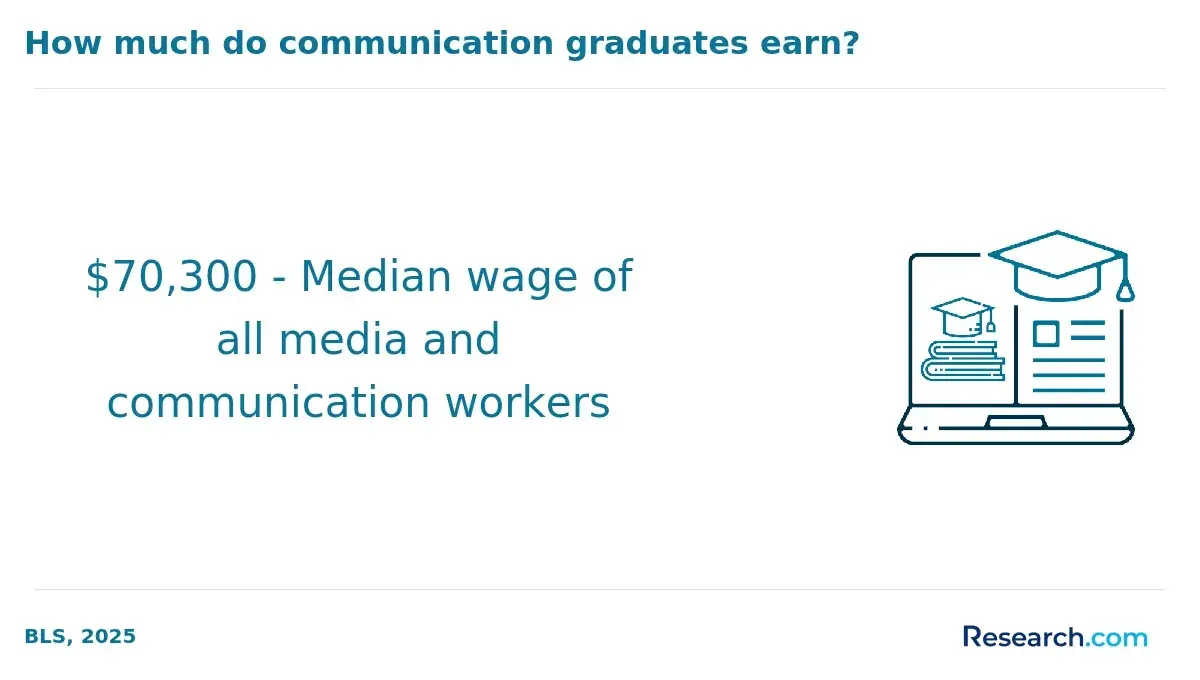
Graduates of online master’s in English programs can pursue roles that rely on advanced writing, interpretation, editing, research, and communication. Common fields include teaching, publishing, journalism, marketing, public relations, technical writing, content strategy, tutoring, research, and corporate communications. Some English professionals work in roles with salaries of $70,000 per year and up, but salaries vary by occupation, employer, location, experience, and portfolio strength.
- Teaching and academia: Graduates may teach writing, literature, or English in settings that accept a master’s degree, including some secondary, community college, online education, tutoring, or adjunct teaching contexts. Requirements differ widely by state, institution, and level.
- Writing and publishing: English graduate study can support careers in editing, publishing, copywriting, content development, journalism, literary work, and freelance writing. A portfolio is often essential.
- Technical and professional communication: Students with coursework in technical writing, editing, usability, documentation, or rhetoric may pursue roles creating manuals, help content, policy documents, proposals, grants, and web materials.
- Public relations and marketing: Strong writers who understand audience, tone, persuasion, and narrative can work on brand messaging, campaigns, press materials, social content, and internal communication.
- Research and consulting: Graduates may use textual analysis, writing, and synthesis skills in nonprofit, policy, market research, cultural research, or consulting settings.
- Doctoral preparation: Students who complete a thesis or research-intensive curriculum may use the degree as preparation for PhD study or advanced academic research.
Because online degrees are increasingly common, the most important question is not whether the course format was online but whether the program helped you produce strong work and meet your career requirements. Research.com’s guide Are Online Degrees Worth It? explores this broader issue in more detail.
How to Fast-Track Your Master’s with Accelerated Online Programs
Accelerated online master’s programs can shorten the time needed to finish a degree by using condensed terms, heavier course loads, year-round enrollment, or streamlined curricula. For disciplined students with strong reading and writing habits, this can be an efficient path. For others, the pace can be overwhelming because English graduate study requires sustained reading, discussion, drafting, research, and revision.
Before choosing an accelerated master’s in English, ask how many courses you must take at once, whether you can slow down if needed, whether a thesis is required, and how faculty feedback works in shorter terms. Faster is not automatically better if it weakens your writing portfolio, research quality, or academic performance.
Students comparing condensed formats across fields can review Research.com’s guide to one year online master's degree programs.
How Can Supplementary Certifications Enhance My Career in English Studies?
Supplementary certifications and micro-credentials can make an English master’s more practical by adding focused skills that employers recognize. Useful areas may include editing, technical communication, grant writing, digital content, instructional design, publishing tools, search-focused writing, project management, or data-informed communication.
Certifications are most valuable when they fill a specific gap. For example, a literature student moving into technical writing may benefit from documentation or UX writing training, while a teacher may seek TESL-related preparation. Students interested in shorter credential pathways can also review Research.com’s resource on the fastest way to get an associate's degree online for broader context on compressed online learning.
How Can Online Master’s Programs in English Enhance Professional Networking Opportunities?
Online English programs can support networking through virtual seminars, alumni groups, writing workshops, digital research collaborations, peer review groups, faculty mentoring, and guest speaker events. The key is participation. Students who attend events, share work, ask questions, and maintain contact with peers often gain more value than students who only complete assignments.
Networking can also help students discover teaching openings, freelance projects, editorial work, conference opportunities, research collaborations, and doctoral pathways. Students building a lower-cost route into graduate education may also compare options such as a cheap bachelor's degree online before moving into a master’s program.
Explore Multi-Disciplinary Careers with an Online Master’s Degree in English
An online master’s in English can serve more than one professional direction. Students who have already completed requirements and courses for a bachelor’s degree in English may use graduate study to specialize in literature, creative writing, professional communication, rhetoric, teaching, publishing, or research. The degree can also support cross-disciplinary work in education, media, nonprofits, marketing, technology, and cultural organizations.
The flexibility of online study can be especially helpful for working professionals and students with family responsibilities. However, flexibility should not be confused with ease. Graduate English work demands frequent reading, sustained writing, revision, research, discussion, and independent time management. Readers considering a different education-focused route can compare this path with masters in education programs.
How do online master’s programs in English incorporate experiential learning opportunities?
Experiential learning helps online English students turn theory into usable professional work. Depending on the program, this may include virtual internships, editing projects, research practica, digital humanities projects, teaching demonstrations, collaborative writing assignments, grant proposals, publication projects, or capstone portfolios.
When reviewing programs, ask whether experiential learning is required, optional, credit-bearing, or student-arranged. Also ask whether the school helps online students find placements or whether students must secure their own opportunities. Programs advertising very fast pathways, such as a masters degree in 6 months, should be reviewed carefully to ensure that speed does not reduce meaningful practice, feedback, or portfolio development.
How do online master’s programs in English support the transition to advanced research?
Research-focused online English master’s programs prepare students for advanced scholarship through literary theory, research methods, close reading, academic writing, source evaluation, archival or digital research, and faculty-guided projects. Students planning doctoral study should prioritize programs with a thesis option, strong faculty mentorship, rigorous methodology coursework, and opportunities to produce polished academic writing.
A master’s degree can also help students clarify research interests before applying to PhD programs. Applicants should ask whether graduates have moved into doctoral study, whether faculty write detailed recommendations for online students, and whether the program supports conference presentations or publication attempts.
Can an Accelerated Bachelor's Degree Propel My Online Master's in English?
An accelerated bachelor's degree can help prepare students for an online master’s in English if it builds strong reading, writing, research, and time-management habits. Students who succeed in accelerated undergraduate programs may already be comfortable with compressed deadlines and independent learning.
Still, graduate English study is different from simply moving faster through undergraduate work. It requires deeper analysis, stronger research, more advanced argumentation, and sustained revision. Before applying, compare your undergraduate preparation with the master’s curriculum and consider whether you need additional coursework in literature, theory, rhetoric, linguistics, or academic writing.
What are the post-graduation outcomes for online master’s in English graduates?
Post-graduation outcomes vary widely because English graduates enter many fields. Some move into teaching, editing, publishing, communications, marketing, public relations, technical writing, research, freelance work, or doctoral programs. Others use the degree to advance in a current role where writing, analysis, and communication are central.
Before choosing a program, ask for the most relevant outcomes data the school can provide, such as alumni roles, doctoral placements, portfolio support, career services access, employer connections, and internship availability. If you are still planning your educational sequence, Research.com’s guide to accelerated online bachelor degree programs may help you compare ways to reach graduate study more quickly.
Current Trends Affecting Online Master’s Degrees in English
- AI is changing writing work: Employers increasingly value writers who can edit, fact-check, prompt, interpret, and improve AI-assisted content rather than simply produce generic text. English graduates should build strengths in originality, source evaluation, audience strategy, and ethical communication.
- Portfolio evidence is becoming more important: A degree helps, but many writing and communication roles require samples. Students should graduate with polished work that shows research, editing, analysis, and practical writing ability.
- Online learning is now more normalized: Remote instruction, virtual collaboration, and digital advising are common in graduate education. Quality still varies, so students must evaluate support and course design carefully.
- Interdisciplinary skills matter: English graduates can improve employability by combining literary and rhetorical training with digital publishing, technical writing, content strategy, grant writing, pedagogy, or data-informed communication.
- Cost scrutiny is increasing: Students are paying closer attention to total program cost, debt, completion time, and career outcomes. A strong program should be able to explain its value clearly.
Key Insights
- An online master’s in English is most valuable when it serves a defined goal. It can support teaching, writing, editing, publishing, communications, technical writing, research, or doctoral study, but it should not be chosen without a career and cost plan.
- Accreditation and program fit matter more than delivery format. Employers typically care about degree credibility, skills, experience, and portfolio quality. Always verify accreditation before enrolling.
- Online does not always mean cheaper. Advanced arts degrees, including communication and English, cost about $71,140 for on-campus programs, while online graduate learners pay $1,099 per class, according to the cited Education Data Initiative figures. Individual program costs can still vary greatly.
- Specialization drives outcomes. Literature, creative writing, technical writing, TESL, and rhetoric lead to different opportunities. Choose electives and projects that match your target role.
- Portfolio development is essential. Save strong research papers, writing samples, edited work, teaching materials, or digital projects throughout the program.
- Accelerated programs require caution. Faster formats can save time, but graduate English coursework is reading- and writing-intensive. Make sure the pace will not undermine learning quality.
- Ask practical questions before applying. Confirm total cost, course format, residency requirements, faculty access, career services, thesis or capstone options, and whether the program supports your intended career path.
References:
- Chakma, U., Li, B., & Kabuhung, G. (2021). Creating online metacognitive spaces: Graduate research writing during the COVID-19 pandemic. Issues in Educational Research, 31(1). Informit
- Hanson, M. (2025, February 22). Average Cost of Online College. Education Data Initiative
- Hanson, M. (2024, November 23). Average Cost of a Master’s Degree. Education Data Initiative
- National Student Clearinghouse Research Center. (2026, January 15). Final Fall Enrollment Trends. National Student Clearinghouse Research Center
- Resume Genius. (2025). 2025 Gen Z Career Prospects Report: What They Really Think About Their Future. Resume Genius
- Townsend, R. (2025). From Matriculation to Completion: How College Students Move Between Majors. American Academy of Arts & Sciences
- U.S. Bureau of Labor Statistics. (2025, August 28). Occupational projections, 2024–2034, and worker characteristics. Retrieved March 2026, from BLS
Other Things You Should Know About Online Master’s in English Degree Programs
In 2027, online master's programs in English offer flexible schedules and diverse digital platforms for creative writing. This setup enables students to engage in global real-time collaborations and projects, differently from traditional classrooms, enhancing peer feedback and access to varied literary resources.
To enroll in the best online master's in English programs for 2027, applicants typically need a bachelor's degree, minimum GPA, transcripts, and possibly GRE scores. Many programs also require a writing sample and letters of recommendation to assess suitability and readiness for graduate-level work.
Online master’s programs in English in 2027 offer comparable academic rigor to traditional ones, with added flexibility in attending lectures and submitting assignments. These programs often provide enriched online resources and virtual discussions, facilitating a diverse learning experience that suits those balancing professional or personal commitments with further education.
The cost varies widely depending on the institution, but online programs often have lower tuition fees compared to on-campus programs due to reduced overhead costs. For example, some online programs charge $500 to $1,000 per credit hour, while traditional on-campus programs can cost about $65,000.
Common courses include Literary Theory and Criticism, British Literature, American Literature, Writing Workshops, Research Methods, Multicultural Literature, and Digital Humanities. Specific course offerings can vary by program.
Online degrees can be cheaper due to lower overhead costs for institutions, but this is not always the case. Some online programs may have additional technology or course material fees. It's important to compare the total cost of online and traditional programs.
Yes, an online degree from an accredited and reputable institution is typically considered just as valuable as a traditional degree. The quality of education depends more on the institution's accreditation and the program's rigor than on the delivery format.


