2027 Online Cybersecurity Degrees for Students Who Want Long-Term Security Careers

Co-Founder and Chief Data Scientist
Choosing an online cybersecurity degree is really a career-risk decision: You want a program that builds durable skills, not just short-term buzzwords. The stakes are high because the U.S. Bureau of Labor Statistics lists information security analysts at a May 2024 median pay of $124,910, with much faster-than-average projected growth.
This guide is for students, career changers, and working IT professionals who want to compare degree levels, costs, accreditation, online labs, certifications, and career outcomes before enrolling.
Key Things You Should Know
- BLS reports a May 2024 median pay of $124,910 for information security analysts, while salaries depend on experience, location, clearance, industry, and technical depth.
- Accreditation matters more than delivery format: a reputable online cybersecurity degree should come from an institution with recognized institutional accreditation, transparent curriculum, qualified faculty, hands-on labs, and clear transfer and tuition policies.
- Most bachelor's programs require about 120 credits, while many master's programs require roughly 30 to 36 credits; total cost depends on residency rules, per-credit tuition, fees, transfer credits, employer tuition assistance, and federal aid eligibility.
What is an online cybersecurity degree and how does it prepare you for security careers?
An online cybersecurity degree is a college program delivered fully or mostly through digital learning platforms that teaches students how to protect computer systems, networks, applications, cloud environments, and data from unauthorized access or disruption. It may be offered as a cybersecurity major, an information assurance degree, a computer science concentration, or an information technology program with a security track.
The best programs do more than explain security concepts. They help students practice technical and analytical work through virtual labs, simulations, secure coding exercises, network defense projects, incident response scenarios, and capstone assignments. This matters because many cybersecurity roles require both conceptual judgment and hands-on troubleshooting.
Students typically use an online cybersecurity degree to prepare for roles in security operations, risk management, digital forensics, cloud security, application security, governance, or security engineering. The degree can be especially useful for people who want long-term advancement because many senior positions expect a mix of education, experience, certifications, and evidence of judgment under pressure.
A degree may be a good fit if you want a structured academic path, access to financial aid, transfer credit options, and a credential that can support advancement beyond entry-level roles. A shorter certificate or bootcamp may make more sense if you already have an IT background and need targeted preparation for a specific tool, certification, or job function.
Are online cybersecurity degrees respected by employers compared with traditional on-campus programs?
Online cybersecurity degrees can be respected by employers when they come from properly accredited institutions and include rigorous technical work. Most employers care less about whether courses were online or on campus and more about whether the school is credible, the curriculum is relevant, and the candidate can demonstrate practical skills.
The online-versus-campus decision should be based on learning style, schedule, access to labs, networking needs, and cost. The comparison below shows where each format can be stronger for different types of students.
| Factor | Online cybersecurity degree | On-campus cybersecurity degree |
| Best fit | Working adults, military students, career changers, and students who need geographic flexibility | Students who want daily in-person interaction, campus recruiting, and local lab facilities |
| Employer perception | Often accepted when the institution is accredited and the program is rigorous | Often familiar to employers, especially when the school has strong regional recruiting relationships |
| Hands-on learning | Usually delivered through virtual machines, cloud labs, cyber ranges, and remote lab environments | May include physical labs, in-person competitions, and campus security clubs |
| Networking | Depends heavily on live sessions, group projects, faculty access, Discord or Slack communities, and career services | Often easier through campus events, student groups, and face-to-face faculty contact |
| Cost considerations | May reduce relocation and commuting costs, but technology fees and out-of-state tuition can still apply | May include campus fees, housing, meal plans, transportation, and lost work flexibility |
One common mistake is assuming "online" automatically means easier or less credible. A strong online program can be demanding, especially if it includes weekly labs, programming assignments, proctored exams, and team-based incident response projects. A weak on-campus program can also underprepare students if it lacks current tools, qualified faculty, or career support.

How can you choose an accredited and reputable online cybersecurity program in the United States?
Choosing an accredited online cybersecurity program starts with verifying the institution, then checking whether the program's curriculum, outcomes, and support services match your career goals. This is where students should slow down; a low advertised tuition rate is not useful if credits do not transfer, labs are shallow, or employers do not recognize the school.
Use the steps below to evaluate programs before you apply or submit a deposit:
- Confirm institutional accreditation through a recognized accreditor listed by the U.S. Department of Education or the Council for Higher Education Accreditation.
- Check whether the program has relevant recognition, such as ABET accreditation for some computing programs or National Centers of Academic Excellence designation from the National Security Agency, while remembering that CAE designation is not the same as institutional accreditation.
- Review the curriculum for networking, operating systems, scripting, secure coding, incident response, risk management, cloud security, and hands-on lab work.
- Ask whether online students receive the same faculty access, tutoring, library services, career coaching, internship support, and job board access as campus students.
- Request the full cost of attendance, including tuition, technology fees, books, lab fees, exam-proctoring fees, residency rules, and graduation fees.
- Compare transfer credit policies, prior learning assessment, military credit, and industry certification credit before assuming the program will be affordable or fast.
If affordability is a primary concern, comparing a cyber security degree list can help you identify lower-cost options, but you should still verify accreditation, total fees, and course quality directly with each school.
Red flags include unclear accreditation language, pressure to enroll immediately, vague career outcome claims, missing faculty information, no lab descriptions, and promises that a degree alone will lead to a specific salary. A trustworthy school should be willing to answer detailed questions before you commit.
What cybersecurity degree levels and specializations are available online for different career goals?
Online cybersecurity programs are available at several academic levels, and the right choice depends on your current education, technical background, and career target. A student seeking a first security operations role may need a different path than a working network administrator aiming for security architecture or management.
The table below summarizes common online degree levels and how they usually connect to career goals.
| Degree level | Typical student profile | Common career direction | Decision note |
| Associate degree | New students or career changers seeking a lower-cost starting point | Help desk, junior systems support, entry-level security support | Can be useful if credits transfer cleanly into a bachelor's program |
| Bachelor's degree | Students seeking a full undergraduate credential for long-term mobility | Security analyst, SOC analyst, vulnerability analyst, junior cloud security role | Often the most flexible degree for students without a prior bachelor's |
| Graduate certificate | Professionals with a degree who need targeted security coursework | Risk, compliance, cloud security, cyber policy, or technical upskilling | May be faster than a master's but usually has less depth and credential weight |
| Master's degree | IT professionals, analysts, engineers, or leaders seeking advancement | Security engineer, security architect, security manager, GRC lead | Best when it aligns with experience and a clear advancement plan |
| Doctoral degree | Advanced professionals interested in research, teaching, executive strategy, or policy | Research, academia, executive leadership, policy analysis | Usually unnecessary for most technical practitioner roles |
Specializations can make a degree more useful when they match a specific job market. Common online cybersecurity concentrations include digital forensics, network defense, cloud security, governance risk and compliance, cyber policy, software security, industrial control systems, and cyber operations.
Cybersecurity also overlaps with analytics, automation, and artificial intelligence. Students who are drawn to threat intelligence, fraud analytics, anomaly detection, or security data pipelines may benefit from comparing cybersecurity coursework with a data science learning path, especially if they want roles that combine security judgment with statistical or machine learning skills.
You should consider a different option if your goal is very narrow and immediate, such as passing one certification exam or learning one cloud platform quickly. In that case, a certificate, vendor training, or employer-sponsored program may offer a faster return than a full degree.
What do students typically study in an online cybersecurity curriculum and core courses?
An online cybersecurity curriculum usually combines computing fundamentals, security theory, technical labs, legal and ethical issues, and applied projects. The exact balance varies: some programs are closer to computer science, while others are closer to information technology, criminal justice, or business risk management.
The table below shows common course areas and why they matter for long-term security careers.
| Course area | What students learn | Why it matters |
| Networking and operating systems | TCP/IP, routing, Linux, Windows administration, endpoint behavior | Security analysts need to understand normal system behavior before identifying abnormal activity |
| Programming and scripting | Python, PowerShell, Bash, secure coding basics, automation | Scripting helps automate investigations, parse logs, and improve security workflows |
| Security operations | Monitoring, alerts, SIEM tools, incident triage, response procedures | This supports SOC, analyst, and incident response roles |
| Risk and compliance | Security policies, audits, privacy, governance frameworks, risk assessment | Many organizations need professionals who can translate technical risk into business decisions |
| Digital forensics | Evidence handling, disk and memory analysis, investigative methods | Useful for incident response, law enforcement support, and breach analysis |
| Cloud and application security | Identity management, secure deployment, cloud configuration, web vulnerabilities | Cloud adoption and software-driven businesses make these skills increasingly important |
| Capstone or practicum | Integrated project, simulated breach, security plan, or research-based solution | Capstones can become portfolio evidence for interviews |
A strong curriculum should help students connect tools to judgment. For example, learning how to run a vulnerability scanner is useful, but learning how to prioritize findings, communicate risk, and avoid disrupting production systems is what makes the skill job-ready.
Students should also look for ethics and law coursework. Cybersecurity training can involve offensive techniques, but professionals must understand authorization, privacy, evidence handling, responsible disclosure, and organizational policy boundaries.
How do online cybersecurity programs work day to day, and what technology or lab access is required?
Online cybersecurity programs usually run through a learning management system where students watch lectures, complete readings, submit assignments, join discussions, and access labs. Some programs are asynchronous, meaning students can complete weekly work on their own schedule, while others include live class sessions, timed labs, or synchronous team exercises.
Day-to-day expectations often include technical practice, not just reading. Before enrolling, students should understand how the program delivers lab access because cybersecurity is difficult to learn through theory alone:
- Virtual labs may provide preconfigured environments where students practice networking, malware analysis, password auditing, firewall configuration, and incident response without risking personal devices.
- Cloud-based labs may require students to use browser-based cyber ranges, remote desktops, or temporary cloud accounts for secure experimentation.
- Local machine work may require a laptop with enough memory and storage to run virtual machines, security tools, packet analyzers, and programming environments.
- Proctored exams may require a webcam, stable internet connection, identity verification, and a quiet test environment.
- Team projects may use collaboration tools such as shared repositories, ticketing boards, chat platforms, and video meetings.
AI is also changing online security education. Students may encounter AI-assisted coding, automated threat detection, security copilots, and AI-generated phishing simulations. These tools can be useful, but a reputable program should still require students to explain their reasoning, validate outputs, and understand when automated recommendations are wrong.
A practical question to ask admissions staff is: "Will I graduate with artifacts I can discuss in an interview?" Examples include a risk assessment, incident report, secure coding project, network defense lab, cloud hardening project, or capstone presentation.
What are the usual admission requirements for online cybersecurity bachelor's and master's programs?
Admission requirements vary by school and degree level, but online cybersecurity programs generally look for academic readiness, basic technical preparation, and the ability to complete college-level work independently. Selective programs may also expect prior coursework or professional experience.
The table below shows common bachelor's and master's admission requirements so you can compare your readiness before applying.
| Requirement | Online bachelor's programs | Online master's programs |
| Prior education | High school diploma, GED, or transfer credits | Bachelor's degree from an accredited institution |
| Transcripts | High school and any college transcripts | Official undergraduate transcripts and sometimes graduate transcripts |
| GPA expectations | Varies by school; some programs are open admission while others are selective | Often a minimum undergraduate GPA or conditional admission option |
| Technical prerequisites | May include math placement, introductory computing, or readiness assessments | May require programming, networking, statistics, IT experience, or bridge courses |
| Testing | Many online programs are test-optional, but policies vary | GRE requirements are often waived or optional, but students should confirm directly |
| Professional materials | Usually limited unless applying to competitive programs | May include resume, statement of purpose, recommendations, or interview |
Career changers should not assume they are disqualified if they lack a technical background. Many programs offer introductory coursework, but students should be honest about the time needed to build comfort with networking, Linux, command-line work, and basic scripting.
Before applying, take these practical steps to reduce surprises during enrollment:
- Ask whether nontechnical students must complete prerequisite or bridge courses before major coursework.
- Send unofficial transcripts for a preliminary transfer credit review before paying multiple application fees.
- Confirm whether certifications such as CompTIA Security+, Network+, or cloud credentials can count for credit.
- Ask how often required courses are offered, because limited course rotation can delay graduation.
- Check whether the program requires internships, residencies, synchronous sessions, or proctored exams that may conflict with work schedules.
How long do online cybersecurity degrees take, and what do they typically cost?
Program length depends on degree level, enrollment pace, transfer credits, and whether the school uses semesters, quarters, or accelerated terms. A bachelor's degree commonly requires about 120 credits, while many master's programs require roughly 30 to 36 credits. Students with substantial transfer credit may finish faster, but only if required upper-division cybersecurity courses are available when needed.
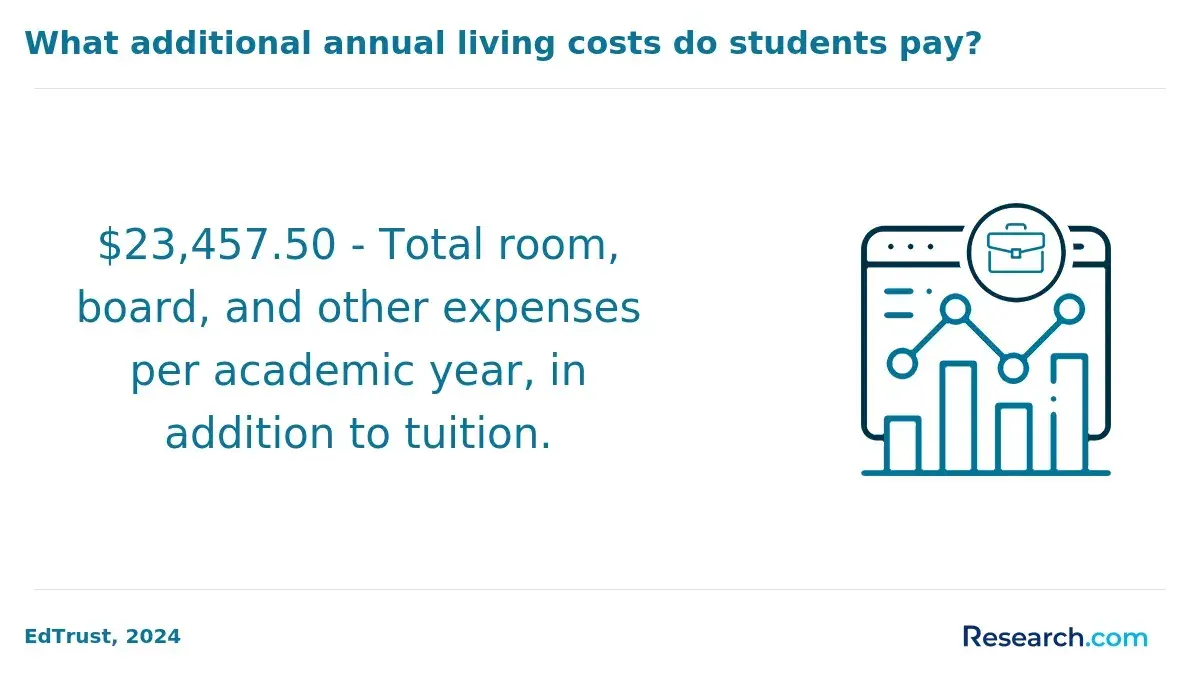
Cost is more complicated than the advertised per-credit price. College Board's 2024 Trends in College Pricing and Student Aid provides a useful national benchmark for published tuition and fees, although online program pricing can differ from campus pricing and net cost may be lower after grants or scholarships.
- Average published tuition and fees for 2024-25 were $11,610 for in-state students at public four-year institutions.
- Average published tuition and fees for 2024-25 were $30,780 for out-of-state students at public four-year institutions.
- Average published tuition and fees for 2024-25 were $43,350 at private nonprofit four-year institutions.
These figures should be treated as comparison benchmarks, not quotes for any specific online cybersecurity program. Online students may save on housing or commuting, but they may still pay technology fees, lab fees, proctoring fees, books, cybersecurity platform fees, and graduation fees.
The table below summarizes major time and cost variables that affect the real price of an online cybersecurity degree.
| Cost or time factor | Why it matters | Question to ask the school |
| Transfer credits | Accepted credits can reduce both time and tuition | How many credits will apply to my major, not just electives? |
| Residency requirement | Some schools require a minimum number of credits taken through that institution | What is the minimum number of credits I must complete here? |
| Flat-rate versus per-credit tuition | Flat-rate pricing can help full-time students but may not benefit part-time students | Is tuition charged by credit, term, or subscription period? |
| Course availability | Infrequent required courses can delay graduation | Are core cybersecurity courses offered every term? |
| Certification exam costs | Some programs include exam vouchers, while others do not | Are certification vouchers, labs, and study materials included? |
| Financial aid eligibility | Accredited degree programs may qualify for federal aid if the school participates | What is my estimated net price after grants, scholarships, and employer benefits? |
A common mistake is comparing only tuition. A better approach is to calculate total estimated cost to graduation, subtract confirmed grants and employer benefits, and then compare that amount against the roles you are realistically preparing for.
What cybersecurity jobs, career paths, and advancement opportunities can these online degrees support?
Online cybersecurity degrees can support a wide range of security careers, but the degree is usually one part of a larger career strategy. Employers often look for a combination of education, hands-on experience, certifications, communication skills, and evidence that candidates can solve problems responsibly.
BLS data shows why the field attracts long-term career planners: information security analysts had a May 2024 median pay of $124,910, and the occupation is projected to grow much faster than average. Readers should use that figure as labor-market context, not as a guaranteed outcome for new graduates.
The table below connects common roles with the type of work they involve and how an online degree may help.
| Career path | Typical responsibilities | How a degree can help |
| SOC analyst | Monitor alerts, investigate suspicious activity, escalate incidents, document findings | Builds foundations in networking, logs, incident response, and security operations |
| Vulnerability analyst | Scan systems, validate weaknesses, prioritize remediation, communicate risk | Supports technical assessment, risk ranking, and reporting skills |
| Incident responder | Contain threats, analyze evidence, coordinate recovery, write incident reports | Provides grounding in forensics, response methods, and legal considerations |
| Cloud security analyst | Review configurations, manage identity controls, secure workloads, reduce misconfigurations | Connects security principles to cloud architecture and automation |
| Governance, risk, and compliance analyst | Assess controls, prepare audits, maintain policies, map requirements to business risks | Strengthens policy, risk management, and communication skills |
| Security engineer | Design security controls, harden systems, automate defenses, support architecture decisions | Requires deeper technical coursework and usually grows from prior IT or analyst experience |
| Security manager | Lead teams, manage programs, report risk, coordinate budgets and strategy | Advanced degrees may help when paired with experience and leadership results |
Career progression is rarely linear. A common path starts in help desk, systems administration, networking, or junior analyst work, then moves into security operations, engineering, architecture, or leadership. Students without IT experience may need an entry-level technical role before moving fully into cybersecurity.
AI is creating both new tools and new risks. Security teams increasingly use automation for alert triage, log analysis, malware detection, and phishing defense, while attackers use similar tools to scale social engineering and reconnaissance. Students interested in the human and automation side of emerging AI work can also explore adjacent AI training jobs, though those roles are not a substitute for security engineering skills.
To improve employability while enrolled, build a portfolio around real learning artifacts: sanitized lab reports, secure coding projects, cloud hardening checklists, incident response write-ups, packet analysis notes, and risk assessments. Employers are more likely to trust candidates who can explain what they did, what went wrong, and how they improved the result.
What certifications, licensing considerations, and professional standards align with online cybersecurity degrees?
Cybersecurity does not usually require a state license in the way nursing, teaching, or some engineering roles do, but employers may require certifications, background checks, security clearances, or compliance knowledge depending on the role. Government contracting, defense, finance, healthcare, and critical infrastructure employers may have especially specific requirements.
Certifications can complement an online cybersecurity degree by validating practical knowledge in a focused area. They are not all interchangeable, so students should choose them based on career stage and job target.
| Credential or standard | Common fit | How it aligns with a degree |
| CompTIA Security+ | Entry-level security and IT professionals | Often aligns with foundational security coursework |
| CompTIA CySA+ | Security analysts and SOC professionals | Connects well with monitoring, threat detection, and incident response courses |
| Certified Ethical Hacker | Students interested in offensive security basics | Can support penetration-testing interest, but hands-on practice and authorization ethics are essential |
| CISSP | Experienced security professionals | Often better after several years of professional experience because it emphasizes broad security management knowledge |
| CISM | Security managers and governance professionals | Pairs well with risk, policy, audit, and leadership-focused graduate coursework |
| Cloud security certifications | Students targeting AWS, Azure, Google Cloud, or multicloud security roles | Useful when paired with cloud labs and architecture coursework |
| NIST Cybersecurity Framework | Risk, governance, compliance, and public-sector work | Provides a common language for identifying, protecting, detecting, responding, and recovering |
Students should also pay attention to professional standards around privacy, evidence handling, data governance, and sector-specific compliance. For example, healthcare security roles may require understanding protected health information, access controls, audit trails, and privacy rules.
Students drawn to that environment may compare cybersecurity training with an online CAHIIM accredited health information management degree if they want a stronger health data governance foundation.
The smartest certification strategy is sequential. Start with foundational credentials if you are new, add analyst or cloud credentials when your coursework and labs support them, and save advanced management certifications until you have enough work experience to benefit from them. Avoid collecting unrelated certifications without a job target, because employers value coherent skill development more than a long list of acronyms.
Other Things You Should Know About Cybersecurity Degrees
You do not need advanced theoretical math for every cybersecurity role, but you should be comfortable with logic, basic statistics, problem-solving, and technical troubleshooting. Cryptography-heavy, research, and data-focused tracks may require stronger math preparation.
Entry-level cybersecurity can be competitive because many employers prefer candidates with prior IT experience. Beginners can improve their odds by building labs, earning relevant certifications, applying for IT support or networking roles, and documenting projects clearly.
Yes, many online cybersecurity programs in 2027 offer entry-level courses designed for students without an IT background. These programs often include foundational courses in computer science and information systems to help newcomers quickly gain the necessary skills.
References
- Online Cybersecurity Technology Master's Degree | UMGC https://www.umgc.edu/online-degrees/masters/cybersecurity-technology
- Cybersecurity Bootcamp | Cybersecurity Salary, Jobs, Internship, Certificate https://www.quickstart.com/bootcamp/cybersecurity/
- Cybersecurity Career Pathway https://www.cyberseek.org/pathway.html
- What to Expect During an Online BS in Cybersecurity Program https://www.umassglobal.edu/blog-news/expect-during-online-bs-cybersecurity-program
- Steps for becoming a cybersecurity analyst | edX https://www.edx.org/become/how-to-become-a-cybersecurity-analyst
- Ultimate Guide to Cybersecurity Bootcamps | CyberDegrees.org https://www.cyberdegrees.org/listings/cyber-security-bootcamps/
- How to Choose an Online Cybersecurity Degree | SANS.edu https://www.sans.edu/insights/online-cybersecurity-degree-cost-vs-quality