2027 Choosing an Online Ed.D. in Leadership and Learning in Organizations for Leadership in University Research Centers
Audited and Verified:
Our Editorial and Data Verification Process
Research.com uses government datasets, official education statistics and primary institutional information to support its career and degree guides. Our review process checks factual accuracy, occupational definitions, source dates and the requirements associated with the credentials discussed.
How This Article Was Fact-Checked
Our editorial team verifies salary estimates, employment projections, education requirements and program information against original data providers and official organizations. Salary figures are checked against the relevant occupational definitions and reporting periods. Information about licensure, accreditation and required in-person training is reviewed separately.
Fact-checked and verified on:

Co-Founder and Chief Data Scientist
Leading a university research center requires more than managing a team. Directors may coordinate faculty across disciplines, develop staff, oversee budgets, and show funders that a center's work has value. An online Ed.D. in Leadership and Learning in Organizations could strengthen some of those capabilities, but it may not provide the disciplinary research record a particular center expects.
This guide is for higher education professionals deciding whether the degree fits their next role. It explains what to look for in a program, what experience still matters, and when another path is more direct.
Key Things You Should Know
- An online leadership and learning Ed.D. is most relevant to research center roles emphasizing organizational change, staff development, partnerships, and evaluation; it does not substitute for a field-specific research record.
- Center leadership requirements vary. Compare actual director job postings and the center's funding model before choosing a doctorate or concentration.
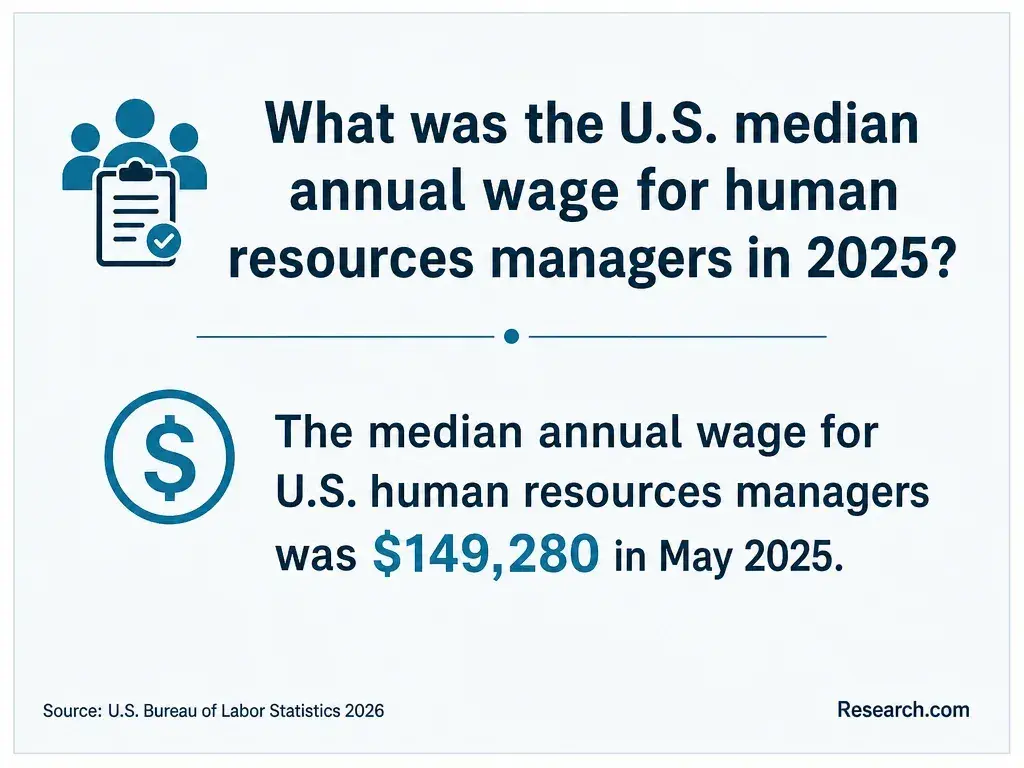
- The Bureau of Labor Statistics reports a $104,590 median annual salary for postsecondary education administrators in May 2025, but that broad occupation is not a salary estimate for research center directors or Ed.D. graduates.
What is an online Ed.D. in Leadership and Learning in Organizations?
An Ed.D. is a Doctor of Education. A program focused on leadership and learning in organizations generally studies how adults learn, how institutions change, and how leaders use evidence to improve practice.
"Online" describes where much of the instruction occurs; it does not establish that classes are self-paced or that campus visits are optional. Exact degree titles, courses, and completion requirements differ by university.
For a research center professional, the important distinction is between leading an organization that supports research and leading a research field. An Ed.D. may suit someone responsible for developing staff, coordinating multidisciplinary work, or evaluating initiatives.
A discipline-specific PhD may be a stronger fit when a director must set a laboratory's scholarly agenda or compete principally on publications and investigator-led grants. Start by choosing the right Doctor of Education study emphasis for the responsibilities in the jobs you want, rather than relying on a program's title alone.
How can an online Ed.D. prepare you to lead university research centers?
A university research center may bring together faculty, research staff, students, external partners, and sponsors.
Its leader may need to set priorities, allocate resources, build productive teams, develop employees, and explain results to university leadership. Leadership and learning coursework can help with those organizational responsibilities, particularly when students apply it to a real problem under faculty guidance.
The fit depends on what the center actually does. These examples distinguish roles for which an Ed.D. may add value from qualifications it cannot replace.
| Center responsibility | Potential Ed.D. contribution | Experience still needed |
| Developing research staff and cross-disciplinary teams | Adult learning, leadership development, and change implementation | Supervising people and working across academic units |
| Assessing a center's programs or partnerships | Evaluation design and responsible interpretation of evidence | Knowledge of the center's mission, measures, and reporting obligations |
| Directing a specialized scientific research agenda | Organizational support for collaboration and execution | Field-specific scholarship, grant experience, or other qualifications the employer requires |
An applied doctoral project might examine a research staff onboarding process or a cross-campus collaboration, if the program approves the topic. Access to center records, permission from university officials, confidentiality protections, and any required research review must be resolved before collecting or analyzing restricted information. A proposed project is not evidence that an intervention worked.
Is an online Ed.D. accredited and recognized for higher education careers?
An online Ed.D. can be a recognized doctorate when it is awarded by an appropriately accredited institution. Confirm the institution's current accreditation with its recognized accreditor and the U.S. Department of Education's accreditation records.
Then confirm that the Ed.D. itself is the degree awarded by the school offering the program. Do not infer that institutional accreditation establishes a particular research-center specialization.
Recognition by an employer is a separate question. Some center director positions prioritize a terminal degree in the center's discipline; others emphasize administration, partnerships, or program leadership.
Review several relevant postings and ask hiring units how they assess a practice-oriented Ed.D. An organizational leadership doctorate also does not, by itself, provide educator licensure or establish eligibility for a faculty appointment.
Useful study for research center leadership combines organizational skills with disciplined inquiry.
Look for substantive work in systems thinking, adult learning, organizational change, stakeholder engagement, and program evaluation. Research methods should help you distinguish a plausible improvement from a demonstrated result, not merely teach you to present a favorable dashboard.
Examine course descriptions and assignments rather than assuming every program covers grant administration, research compliance, budgeting, or higher education governance.
Those are consequential center responsibilities, but they may require job experience, university training, or additional coursework. If an applied project is central to your decision, ask whether it can address a university research center, who supervises it, and what academic deliverable is required.
Requirements vary by institution. Programs may request a completed graduate degree, transcripts, recommendations, a statement of purpose, professional experience, and evidence of readiness for applied doctoral work. An education master's, a particular job title, or a publication record is not a universal requirement.
For a research center applicant, a strong application describes actual responsibilities: decisions made, teams coordinated, improvements attempted, and limits encountered. It can identify an organizational question worth studying without claiming access to data or approval for a future project.
If you have an Education Specialist degree, treat planning the transition from Ed.S. to Ed.D. as a separate policy check: credits that support admission do not necessarily transfer into doctoral requirements. Request a written evaluation from each program.
Time to completion depends on required credits, course scheduling, enrollment pace, and the doctoral project. Tuition may be charged by credit, term, or program. Without a specific school and entry term, a single price or completion estimate would be misleading.
Build a comparison using each school's published charges and requirements. The items below can materially change the total even when two programs advertise similar tuition.
- Required tuition and fees, including any continuing-enrollment charges during the doctoral project
- Travel, lodging, and time away from work for required campus convenings
- Employer reimbursement limits, eligibility rules, and any repayment obligation after leaving the job
- Additional terms if research access, project approval, or course availability delays completion
Use an online Doctor of Education tuition planning comparison as a starting point, then obtain a school-specific cost estimate. For a university employee, also check whether tuition benefits apply to doctoral study at that institution or elsewhere.
Delivery format affects access and scheduling, not the degree's automatic relevance to a center role.
An online program may let a working administrator remain employed, while a campus-based doctorate may offer more routine access to laboratories, research seminars, and faculty networks. Neither format guarantees those opportunities; compare what the specific program requires and makes available.
For research-intensive center directorships, the more consequential comparison may be practice-oriented Ed.D. versus discipline-specific PhD. The PhD may better support an investigator career, while the Ed.D. may better align with organizational improvement and administration.
If speed matters, planning a shorter education doctorate timeline still requires checking course availability, project milestones, and whether the pace is realistic alongside center work.
Potential paths include research center operations director, associate director, research development administrator, partnership or program director, and university-wide professional learning leader.
Duties vary substantially: an operations director may manage staffing and budgets, while a research development administrator may coordinate proposals and faculty collaborations. The Ed.D. can strengthen leadership practice, but hiring decisions will also reflect sector knowledge, grant or administrative experience, and demonstrated results.
If you already manage projects or staff in a university, an internal move that expands your budget, partnership, or evaluation responsibilities may be more useful than another credential alone.
If your target is a principal investigator or discipline-based faculty director, investigate the required scholarly record first. A PhD or sustained field-specific research experience may be the more direct path.
There is no reliable single salary for Ed.D.-holding research center leaders. Centers differ in size, discipline, funding, location, and whether the director also holds a faculty appointment.
As a broad reference, the U.S. Bureau of Labor Statistics reports a May 2025 median annual salary of $104,590 for postsecondary education administrators. That occupation covers many jobs beyond research centers, so the figure is neither a director salary quote nor an expected return on an Ed.D.
For a useful estimate, compare posted salary ranges for the exact role and institution type you seek. Check whether compensation reflects a faculty salary, an administrative appointment, or both, and compare it with your current earnings and the full cost of study. Do not assume a doctorate changes a university's pay band or guarantees promotion.
How do you choose a reputable online Ed.D. program?
Choose against the work you intend to do, not a generic leadership label. First identify target center roles and note which require disciplinary scholarship, grant leadership, people management, or evaluation. Then ask each program for evidence that its curriculum and doctoral project can develop the capabilities you lack.
Before applying, get written answers to the decisions most likely to change your choice:
- What is the exact degree awarded, and which institution holds current accreditation?
- Which classes are live, what attendance is required, and are there mandatory campus convenings?
- Can a student complete the required doctoral project in a university research center, and what approvals and faculty supervision would that require?
- What are the published completion requirements, total charges, and policies if the student changes jobs or loses access to a project site?
Ask for the current handbook and speak with faculty or students whose projects resemble your intended work. Prior doctoral students should also check whether planning an online Ed.D. return after ABD status is relevant.
An unfinished doctorate does not automatically shorten a new program. If a school cannot clarify its project rules or costs, do not rely on an admissions summary alone.
Other Things You Should Know About EdD Leadership Programs
Possibly. A sponsor's rules and the university's principal investigator eligibility policy control that decision; the degree designation alone does not establish eligibility.
Not always. Some centers are faculty-led, while others employ administrative directors. Check the center's governance documents and the specific job posting.
That depends on the university's faculty appointment and graduate-supervision rules. Holding a doctorate alone does not grant supervisory authority.
Seek defined responsibility for a cross-unit initiative, staff development, partnership, or evaluation project. Document your decisions and contributions so you can demonstrate relevant leadership when a role opens.
- Accreditation in the U.S. | ed.gov http://www.ed.gov/laws-and-policy/higher-education-laws-and-policy/college-accreditation/accreditation-in-the-us
- Cost of Attendance (Budget) | 2025-2026 Federal Student Aid Handbook https://fsapartners.ed.gov/knowledge-center/fsa-handbook/2025-2026/vol3/ch2-cost-attendance-budget
- What Is a Capstone Project? - Boston University Questrom https://www.bu.edu/questrom/blog/what-is-a-capstone-project/
- University Accreditation - Institutional Research & Planning https://irp.dpb.cornell.edu/university-accreditation
- Online Ed.D. in Leadership and Learning in Organizations | VU-EDU https://peabodyonline.vanderbilt.edu/edd-in-organizational-learning/
- 2026 UNC Online EdD in Organizational Learning & Leadership https://online.unc.edu/online-doctoral-programs/online-edd-organizational-learning-and-leadership/
- Courses | Organization and Leadership | Columbia University https://www.tc.columbia.edu/organization-and-leadership/courses/
- Doctoral dissertation or capstone: how to choose the right program | PhD/Doctorate | Capella University Blog https://www.capella.edu/blog/phd-doctorate/the-difference-between-a-dissertation-and-doctoral-capstone/
- Research Administration, Certificate | umaryland.edu https://graduate.umaryland.edu/researchadmin/
- Sponsored Project Handbook - Office of Research Services | University of Pennsylvania https://researchservices.upenn.edu/resources/sponsored-project-handbook/