2027 Online Ed.D. in Leadership and Learning in Organizations vs. an MS in Learning and Development: Which Fits Your Goals?
Audited and Verified:
Our Editorial and Data Verification Process
Research.com uses government datasets, official education statistics and primary institutional information to support its career and degree guides. Our review process checks factual accuracy, occupational definitions, source dates and the requirements associated with the credentials discussed.
How This Article Was Fact-Checked
Our editorial team verifies salary estimates, employment projections, education requirements and program information against original data providers and official organizations. Salary figures are checked against the relevant occupational definitions and reporting periods. Information about licensure, accreditation and required in-person training is reviewed separately.
Fact-checked and verified on:

Co-Founder and Chief Data Scientist
An MS in Learning and Development can help you design and improve workplace learning. An Ed.D. in Leadership and Learning in Organizations may make more sense when your work extends to leading organizational change and investigating complex problems of practice. For learning professionals and emerging leaders, the distinction matters: the doctorate requires a larger investment, but neither credential substitutes for relevant experience.
This comparison shows how the degrees differ in preparation, career fit, cost, and practical requirements so you can choose the next step that matches the work you want to do.
Key Things You Should Know
- Choose the MS when your near-term goal is stronger learning design, facilitation, or evaluation skills; choose the Ed.D. when you already lead substantial initiatives and need deeper preparation in organizational change and applied inquiry.
- Neither degree guarantees a management role: the U.S. Bureau of Labor Statistics reports a $133,000 median annual salary for training and development managers in 2025, not an expected salary for graduates.
- Compare actual curricula, project requirements, schedules, and total costs before applying; programs with similar titles can demand different levels of workplace access and leadership experience.
How does an online Ed.D. in Leadership and Learning in Organizations compare with an MS in Learning and Development?
An Ed.D. is a practice-oriented doctorate. In this field, it typically examines how leaders use evidence to improve learning and change across an organization. An MS in Learning and Development is a master's degree more directly focused on building, delivering, and evaluating learning interventions. Both can address adult learning, but they usually prepare students to work at different levels of a problem.
The comparison below describes common emphases, not requirements of every school. Use a prospective program's course list and graduation rules to test whether its version fits your goal.
| Decision factor | Ed.D. in leadership and learning | MS in learning and development |
| Primary question | How can leaders diagnose and improve learning across an organization? | How can practitioners improve a learning program or workforce capability? |
| Typical emphasis | Leadership, systems, change, research methods, and applied inquiry | Adult learning, instructional design, delivery, technology, and evaluation |
| Prior experience | Often best suited to professionals with substantial organizational responsibility | Can suit practitioners building expertise or moving into learning and development |
| Major deliverable | May require a capstone or dissertation in practice | May require a portfolio, project, or other culminating work |
| Investment | Usually a longer, more extensive commitment | Usually a shorter route to focused skills |
The doctorate is not simply an advanced version of every MS course. If your challenge is designing effective training, the MS may be the more direct route. If training keeps failing because of incentives, management practices, or implementation barriers, doctoral-level organizational inquiry may be more relevant - but experience and authority to act still matter.
For an education doctorate with a smaller financial commitment, review budget-friendly online education doctorates alongside their curricula; a lower price does not make two programs academically equivalent.
Which degree better fits your career goals: an Ed.D. or an MS in Learning and Development?
Choose the MS if you need to establish or deepen a learning and development practice. It can help a trainer, subject-matter expert, or career changer build evidence of needs assessment, instructional design, facilitation, and evaluation. A portfolio of work you are permitted to share may matter more to a hiring manager than the degree title alone.
Consider the Ed.D. if you already influence decisions beyond individual courses. For example, a learning manager who coordinates leaders, budgets, and workforce initiatives may benefit from studying organizational systems and evaluating a change effort. The degree is less compelling if the target job primarily asks for design tools you have not yet used or for management experience you have not yet gained.
If you work in a university or public institution, check its hiring rules and pay structure rather than assuming private-sector advancement patterns apply. An employer-supported doctorate can change the financial calculation; employer-sponsored higher education leadership doctoral education is worth exploring if that is your sector. Confirm reimbursement limits, eligibility, and repayment conditions with your employer.
Before enrolling, compare job postings for your target role with work you have already done. If the gap is supervised leadership experience rather than academic knowledge, an internal project, mentor, or focused certificate may be the better next step.
What careers can you pursue with an Ed.D. in Leadership and Learning in Organizations?
Depending on experience, an Ed.D. graduate might pursue learning and development management, organizational development, talent or leadership development, consulting, or administration in a university, nonprofit, or public agency. These roles are not interchangeable. A training and development manager oversees people, resources, and programs; an organizational consultant diagnoses client problems and recommends changes; an instructional designer concentrates more directly on learning experiences.
The Ed.D. may strengthen a candidate's ability to frame organizational problems, assess evidence, and lead cross-functional work. Employers will still evaluate sector knowledge, results, managerial responsibility, and technical skills. A learning specialist seeking a first director role should therefore seek opportunities to own a budget, guide a team, or lead an evaluated initiative - not rely on doctoral study alone. An MS may be sufficient for many specialist roles and can also support advancement when paired with leadership experience.
An MS commonly concentrates on how adults learn, how to assess performance needs, how to design instruction, and how to evaluate whether learning transfers to work. An Ed.D. may revisit those questions through organizational culture, leadership, change implementation, and qualitative or quantitative inquiry. Review required courses rather than assuming a topic in the program description is taught in depth.
The difference becomes clearer when a company's leadership training has low participation. An MS project might redesign the learning experience and its evaluation. An Ed.D. project might also investigate whether managers can release staff, whether incentives support participation, and who has authority to change those conditions. Neither project establishes a cause without appropriate evidence.
Doctoral programs differ in whether they require an individual dissertation, a dissertation in practice, or another approved project. If the deliverable matters to you, compare the rules for choosing an Ed.D. with an applied capstone option. Ask when a project site must be approved and what permission is needed to use organizational data.
An MS generally requires less study than an Ed.D., while a doctorate can extend further if an applied project takes longer than coursework. There is no reliable single timeline or price for either degree: credit requirements, enrollment pace, tuition model, and completion rules vary by institution. Request each school's published degree plan and a personalized cost estimate before comparing offers.
Calculate the full commitment, not just advertised tuition. Include required credits, fees, technology, books, any campus travel, and time away from paid work. Ask whether tuition is charged per credit or term, how charges change if the project extends enrollment, and whether employer reimbursement depends on grades or continued employment. When comparing online leadership doctorate program prices, check that the programs also meet your learning and project needs.
A useful financial test is whether the additional doctoral expense supports responsibilities you can realistically pursue. Do not base the decision on an assumed promotion or salary increase.
MS programs generally ask applicants to document prior undergraduate study; requirements for experience, recommendations, statements, or prerequisite coursework vary. Ed.D. programs may also evaluate graduate preparation, professional responsibilities, leadership evidence, and readiness for applied inquiry. A master's in education is not universally required, and an unrelated undergraduate major does not automatically rule out either pathway.
If you are comparing both routes, ask the Ed.D. admissions office which prior degrees and experiences satisfy its rules, then ask how applicants demonstrate research readiness. Prior graduate credits used to establish admission eligibility are not necessarily transferable into the doctorate. Applicants returning after unfinished doctoral study can review Ed.D. completion pathways after unfinished doctoral study, but should obtain a written program-specific credit evaluation before expecting a shorter route.
Accreditation must be checked for the institution awarding the degree; an online format or a familiar program title does not establish it. Verify the institution's current status with its recognized accreditor and confirm that the exact Ed.D. is an authorized degree offering. Do the same for any MS you are considering.
Institutional accreditation addresses the institution, not whether a particular doctorate meets a licensing board's requirements or carries a specialized programmatic credential. If you have a specific university in mind, confirm its exact award name, academic home, and accreditation disclosures rather than applying another school's claims to it.
A teaching license is generally not a prerequisite for organizational learning study, and neither a leadership-and-learning Ed.D. nor an L&D MS should be assumed to award one. Professional certifications may be valued for particular jobs, but they are distinct from academic degrees and are not universal admission or graduation requirements.
If your goal is to become a teacher, principal, superintendent, or another regulated professional, ask the university whether its specific program is approved for that credential and confirm the answer with the relevant state authority. A course about educational leadership does not, by itself, establish licensure eligibility.
Online study removes some commuting but does not necessarily offer self-paced attendance. Either degree may include live sessions and group work; a doctoral cohort may also require sustained collaboration, faculty meetings, campus convenings, or project-site coordination. Campus-based programs provide in-person contact but can be harder to combine with a full-time job outside commuting distance.
Ask each program for a sample term schedule, attendance policy, group-project expectations, and any required travel. For the Ed.D., also ask how project supervision works remotely and what happens if you change employers or lose access to a proposed site. These details can matter more than the "online" label when deciding which degree is feasible.
What salaries and job outlook can graduates expect from each degree?
Pay and hiring depend on occupation, location, sector, and experience - not simply on whether a candidate holds an MS or Ed.D. The U.S. Bureau of Labor Statistics figures below describe occupations that may be relevant to these pathways; they do not report outcomes for graduates of either degree.
| Occupation | Median annual salary, 2025 | Projected employment growth, 2025-2035 |
| Training and development specialists | $69,280 | +10.8% |
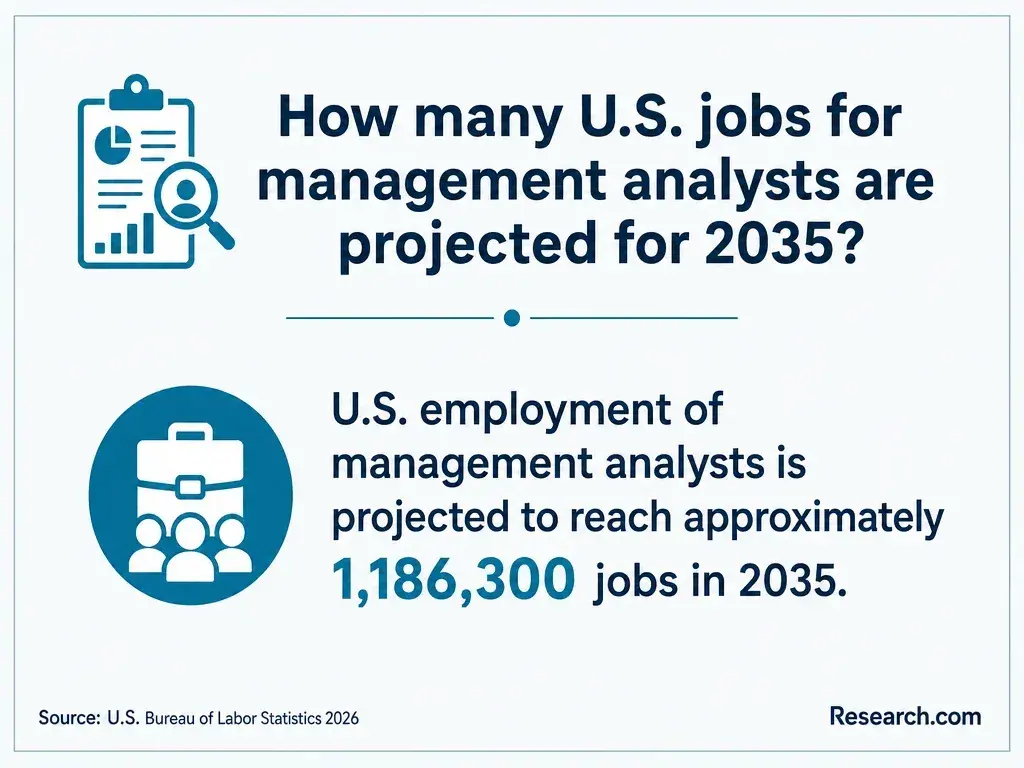
| Management analysts | $101,860 | +10.1% |
| Training and development managers | $133,000 | +6.4% |
Specialist work may be a closer near-term target for someone building L&D experience; management or consulting roles typically call for a stronger record of leading work or advising organizations. The higher managerial median should not be treated as the financial return on an Ed.D. Compare your current experience with actual vacancies before using occupational pay to justify either degree.
Other Things You Should Know About EdD Leadership
Yes. An MS can help you build relevant practice before doctoral study. Admission and any recognition of prior coursework remain subject to the Ed.D. program's rules.
No. An Ed.D. commonly emphasizes research applied to professional problems; a PhD generally emphasizes preparation to produce original scholarly research. Compare actual methods training, faculty interests, and dissertation expectations if research is your goal.
Only with appropriate organizational permission and the program's required oversight. Check privacy rules, data access, consent, and what you may publish before proposing the project.
Ask prospective programs whether an external partner or another approved setting is possible. Do not assume an outside project will qualify without academic approval and the partner's permission.
- Cost of Attendance (Budget) | 2025-2026 Federal Student Aid Handbook https://fsapartners.ed.gov/knowledge-center/fsa-handbook/2025-2026/vol3/ch2-cost-attendance-budget
- EdD vs. PhD in Education: Choosing the Right Program | Goodwin College of Professional Studies https://drexel.edu/soe/resources/career-path/edd-vs-phd/
- What Is a Capstone Project? | National University https://www.nu.edu/blog/what-is-a-capstone-project/
- Adult Learning, Training and Organizational Development | temple.edu https://education.temple.edu/altod
- Online Ed.D. in Leadership and Learning in Organizations | VU-EDU https://peabodyonline.vanderbilt.edu/edd-in-organizational-learning/
- Advanced Online Ed.D. Programs at Illinois https://education.illinois.edu/online/eddonline
- EdD vs. PhD in Education: What's the Difference? | Saint Leo University https://onlinedegrees.saintleo.edu/blog/edd-vs-phd
- Doctorate of Education in Leadership and Adult Learning in Organizations (EdD) - William Woods University https://www.williamwoods.edu/academics-programs/leadership-and-adult-learning-in-organizations-edd-online/
- 2026 UNC Online EdD in Organizational Learning & Leadership https://online.unc.edu/online-doctoral-programs/online-edd-organizational-learning-and-leadership/
- Instructional Design and Technology | Waldorf University https://waldorf.edu/degree-programs/masters/mba-general-master-business-administration/instructional-design-and-technology/