2027 Online Ed.D. in Leadership and Learning in Organizations After a Master of Public Policy: Admission and Credit Questions
Audited and Verified:
Our Editorial and Data Verification Process
Research.com uses government datasets, official education statistics and primary institutional information to support its career and degree guides. Our review process checks factual accuracy, occupational definitions, source dates and the requirements associated with the credentials discussed.
How This Article Was Fact-Checked
Our editorial team verifies salary estimates, employment projections, education requirements and program information against original data providers and official organizations. Salary figures are checked against the relevant occupational definitions and reporting periods. Information about licensure, accreditation and required in-person training is reviewed separately.
Fact-checked and verified on:

Co-Founder and Chief Data Scientist
A Master of Public Policy can provide strong preparation for an online Ed.D. in Leadership and Learning in Organizations, but it does not settle two consequential questions: whether a particular program will admit you and whether any MPP courses will count toward the doctorate.
Those decisions affect your application strategy, budget, and time away from work. This guide explains how to assess your policy background, request a meaningful credit evaluation, and compare programs without assuming that a completed master's automatically shortens doctoral study.
Key Things You Should Know
- An MPP may satisfy a program's master's-degree requirement even if the degree is not in education; the school decides whether your experience and preparation meet its other admission criteria.
- Admission eligibility and transfer credit are separate decisions. A school can accept your MPP for admission while applying no MPP credits to its Ed.D. requirements.
- Before applying, request written answers about course equivalencies, doctoral residency rules, and whether any approved credit would actually reduce tuition or completion time.
What is an online Ed.D. in Leadership and Learning in Organizations?
It is a practice-oriented doctorate focused on how organizations develop people, lead change, and use evidence to improve their work. Depending on the university, students may study adult learning, organizational development, leadership, evaluation, and applied research. The final requirement might be a dissertation in practice, capstone, or another approved project; the exact award name and curriculum vary.
For an MPP graduate, the appeal is often the shift from analyzing policy to leading implementation and learning inside agencies, nonprofits, or other organizations. If your goal is primarily to produce academic research on public policy, a research-focused PhD may fit better. Compare education doctorate program types and leadership directions against the work you actually want to do.
Can an MPP qualify you for an online Ed.D. in Leadership and Learning?
Yes, potentially. An MPP is a graduate degree, and its policy analysis, statistics, program evaluation, and organizational coursework can support an application. An education master's is not a universal prerequisite. Eligibility still depends on the specific program's accepted degrees, academic record, professional-experience rules, and any required preparation.
Your strongest application connects policy work to a learning or leadership problem you have encountered. For example, evaluating a workforce initiative demonstrates more relevant preparation if you can explain how staff training, implementation decisions, and evidence affected the organization - not merely describe the policy itself. Government or nonprofit experience can be valuable even without a senior title, provided you document your actual responsibilities and decision-making.
Ask admissions to distinguish a required prerequisite from preparation they merely recommend. If your MPP included little adult-learning or qualitative-methods work, ask whether the Ed.D. teaches those subjects, expects prior study, or permits a bridge course. Only the program can determine whether your record qualifies.
How many credits can transfer from a Master of Public Policy?
There is no universal number. An Ed.D. may treat the completed MPP as an admission credential while awarding zero transfer credits. Another program may consider particular courses, subject to its credit limits, required curriculum, and rules about where doctoral credits must be earned.
These distinctions show why a transcript review alone may not answer the cost-and-timeline question.
| Decision | What it means for an MPP applicant |
| Degree accepted for admission | The MPP meets an entry requirement; it does not replace Ed.D. coursework. |
| Prior course deemed equivalent | A course may satisfy a prerequisite or permit a substitution without reducing required doctoral credits. |
| Credit applied toward the Ed.D. | Approved graduate credits count toward the degree, subject to program limits and residency rules. |
Send official transcripts and, if requested, syllabi for potentially relevant MPP courses such as evaluation, research methods, or organizational management. Ask the registrar or designated transfer-credit evaluator which grades, course levels, institutions, and course dates are eligible; whether quarter credits require conversion; and how any approval appears on a degree audit. An admissions adviser's preliminary opinion is not a final credit award.
An MPP also differs from unfinished doctoral study. If you previously completed doctoral coursework and reached all-but-dissertation status, investigate doctoral completion options for ABD education students separately rather than assuming the MPP transfer policy governs those credits.
Requirements vary, but programs commonly review graduate transcripts, a statement of purpose, recommendations, a résumé, and evidence of relevant professional work. Some also specify minimum grades, an interview, writing samples, entrance tests, or particular experience. Check the requirements for your intended entry term rather than relying on a general description of doctoral admissions.
For an MPP applicant, the useful evidence is specific: a policy evaluation you helped design, a cross-agency initiative you coordinated, or a training or implementation challenge you can examine ethically. Explain your contribution without claiming authority over decisions you did not make. If a program expects an applied workplace project, ask whether an agency or external partner must sponsor it and what permissions would be needed.
Graduate credentials are not interchangeable for admission or advanced standing. An applicant who holds an education specialist degree should investigate advanced study options after an Ed.S.; those pathways should not be assumed to apply to an MPP.
Online delivery alone does not determine credibility. Verify that the institution is accredited by a recognized institutional accreditor, then examine the Ed.D.'s actual faculty oversight, research training, assessment, and completion requirements. An accredited university can offer rigorous online study, but accreditation does not mean every program has the same curriculum or professional outcomes.
Also distinguish where you study from when you must participate. Live classes, team meetings, or campus convenings may still be required. If you seek a school-administrator position, confirm state licensure eligibility separately; a broadly focused organizational leadership doctorate does not automatically qualify you for principal or superintendent licensure.
Course titles differ, but a relevant curriculum might combine adult learning, leadership and organizational change, program evaluation, qualitative and quantitative inquiry, and an applied doctoral project. MPP graduates may already know policy analysis or statistical reasoning; they should look especially closely at how the program teaches learning design, organizational diagnosis, and implementation.
Compare required courses - not just elective descriptions - with your skills and target work. A public-sector leader responsible for staff development needs opportunities to assess learning needs and evaluate whether training transfers into practice. A policy researcher seeking advanced causal inference may need a different methodological pathway. Ask for the course sequence and project requirements before assuming a familiar-sounding course offers the depth you need.
Duration depends on required credits, cohort sequencing, enrollment pace, and the time needed to complete the final project. An approved transfer course may not shorten a fixed cohort schedule. Before treating accelerated Ed.D. study options as a solution, confirm whether their pace is workable alongside your job and whether they accept MPP credits.
Request a written cost estimate based on your expected course load. Include tuition, mandatory fees, materials, travel for any convenings, and the cost of extra terms if a project takes longer. If your agency or employer offers education assistance, check reimbursement limits, eligible-degree rules, grade conditions, and repayment obligations before subtracting that support from your personal budget. Do not assume transfer approval lowers the bill until the school shows how it changes the required coursework.
An MPP-Ed.D. combination may be useful in public-sector workforce development, nonprofit program leadership, organizational development, training management, or evaluation and implementation roles. The strongest fit is usually a role that builds on your existing policy and sector knowledge while adding responsibility for how people and organizations learn and change.
The doctorate does not replace required experience. A policy analyst moving into a training-director role, for example, may still need evidence of supervising staff, managing learning programs, and working within a budget. If you want a narrower move - such as improving evaluation skills in your current position - a targeted course, mentored project, or employer leadership program may be more direct and less costly.
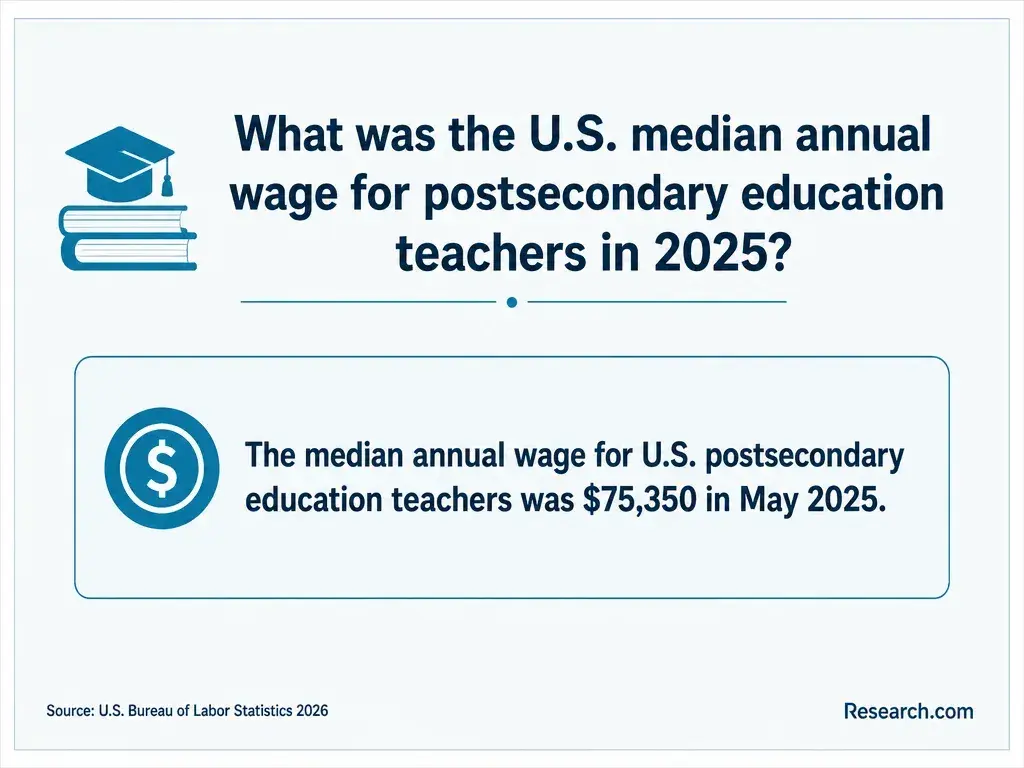
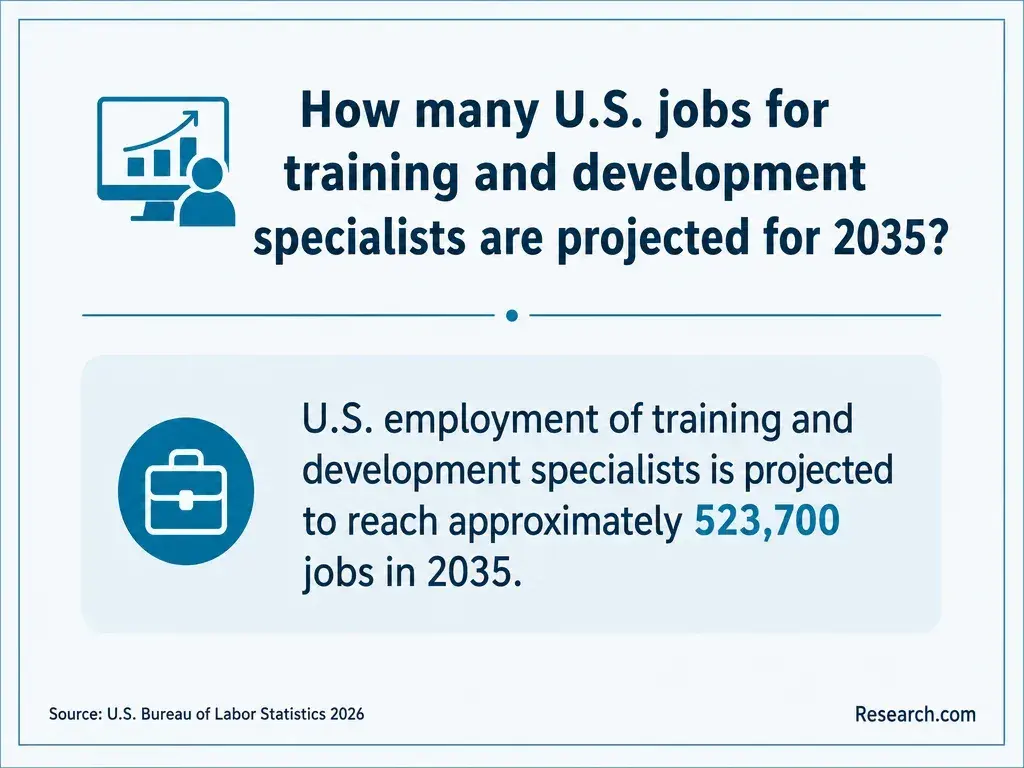
There is no reliable salary that applies to all Ed.D. graduates. Pay depends on the occupation, sector, location, experience, and scope of responsibility. The U.S. Bureau of Labor Statistics reports a May 2025 median annual salary of $133,000 for training and development managers, with projected employment growth of 6.4% from 2025 to 2035. That describes an occupation, not the expected pay or job prospects of someone newly completing this doctorate.
For an MPP holder in government, compare the degree's likely value against the salary bands and promotion rules of the agencies you would actually join. A private-sector occupational median is not a sound basis for estimating a public-sector return on tuition.
How can you choose an accredited online Ed.D. program?
Start with programs whose required learning and applied project match your intended work. Then verify institutional accreditation, the exact degree awarded, admission rules for MPP holders, online attendance obligations, and the authority responsible for transfer decisions. Compare the written answers - not just marketing descriptions - before paying an application fee or committing to enrollment.
Request an individualized degree audit or written preliminary evaluation that identifies which MPP courses, if any, could count toward graduation. Pair it with a full cost estimate and a realistic schedule. Resources on affordable doctoral education in organizational leadership can help you find candidates, but the lowest advertised tuition is not necessarily the lowest total cost for your circumstances.
Other Things You Should Know About EdD Leadership
Possibly. Check the program's instructions and submit only material you have permission to share. Identify your individual contribution if the capstone was a group project.
Choose someone who can describe your analytical work, collaboration, judgment, and capacity for advanced study. A supervisor can be effective, but follow the program's rules about professional and academic references.
Some programs consider applicants completing a degree, but they may require proof that it was conferred before enrollment. Ask admissions for the deadline and any conditional-admission terms.
Ask your former department or registrar for archived course descriptions, then ask the Ed.D. transfer evaluator what alternative documentation it accepts. A transcript alone may not establish course equivalence.
- Types of Financial Aid: Grants, Work-Study, and Loans | studentaid.gov https://studentaid.gov/understand-aid/types
- Employer-offered educational assistance programs can help pay for college | Internal Revenue Service https://www.irs.gov/newsroom/employer-offered-educational-assistance-programs-can-help-pay-for-college
- Training and Experience (T & E) Evaluations | U.S. Office of Personnel Management https://www.opm.gov/policy-data-oversight/assessment-and-selection/other-assessment-methods/training-and-experience-evaluations/
- Rule 3359-60-06.4 | Doctoral degree requirements. https://codes.ohio.gov/ohio-administrative-code/rule-3359-60-06.4
- Leadership and Learning in Organizations Online Ed.D. | Peabody College of Education and Human Development https://peabody.vanderbilt.edu/academics/edd-programs/online-leadership-learning-organizations/
- UNC Charlotte Academic Policy: Ed.D. Degree Requirements https://provost.charlotte.edu/policies-procedures/academic-policies-and-procedures/edd-degree-requirements/
- Academic Procedures | Educational Administration https://cehs.unl.edu/edad/edad-graduate-student-handbook-2017-2020/academic-procedures/
- Program: Out-of-School Learning, EdD Concentration | pitt.edu https://catalog.upp.pitt.edu/preview_program.php
- Application Requirements - Vanderbilt Graduate School https://gradschool.vanderbilt.edu/application-requirements/
- Graduate School Rules and Regulations - Academic Catalog https://catalog.louisiana.edu/content.php