2027 Online Ed.D. in Leadership and Learning in Organizations: Designing a Project About Internal Career Mobility
Audited and Verified:
Our Editorial and Data Verification Process
Research.com uses government datasets, official education statistics and primary institutional information to support its career and degree guides. Our review process checks factual accuracy, occupational definitions, source dates and the requirements associated with the credentials discussed.
How This Article Was Fact-Checked
Our editorial team verifies salary estimates, employment projections, education requirements and program information against original data providers and official organizations. Salary figures are checked against the relevant occupational definitions and reporting periods. Information about licensure, accreditation and required in-person training is reviewed separately.
Fact-checked and verified on:

Co-Founder and Chief Data Scientist
Employees may want to grow within an organization yet struggle to find openings, demonstrate transferable skills, or get considered for new roles. For a learning and development professional or organizational leader, that gap could become a useful Ed.D. project, but only if it is narrow enough to study and supported by the employer.
This guide shows how to define an internal career mobility problem, choose credible measures, protect employee data, and assess whether an online doctorate is worth pursuing for the work you want to lead.
Key Things You Should Know
- A strong project studies a specific barrier, such as access to job information or development opportunities, rather than treating every internal move as evidence that a training program worked.
- Before collecting employee records or interviews, obtain organizational permission and ask the Ed.D. program what academic approval, research review, and publication restrictions apply.
- Career outcomes depend on experience, not the degree alone. The US Bureau of Labor Statistics reports a $133,000 median annual salary for training and development managers in 2025, not a starting salary for Ed.D. graduates.
What is an online Ed.D. in Leadership and Learning in Organizations?
An Ed.D. in leadership and learning in organizations is a practice-oriented doctorate focused on how people learn, lead, and implement change at work. The exact degree title and requirements vary by institution. Online describes where much of the instruction occurs; it does not establish that classes are self-paced or that a workplace project can be completed without faculty oversight.
For an internal mobility project, the academic value lies in connecting adult learning, talent systems, organizational diagnosis, and applied inquiry. A research-focused PhD may fit someone whose main goal is producing generalizable scholarship. A shorter course in talent analytics or an employer-sponsored mobility initiative may fit someone who needs to solve a limited operational problem without earning a doctorate.
How can an Ed.D. project improve internal career mobility?
Internal career mobility means movement into another role, function, or level within the same organization. An Ed.D. project can help an employer understand where that movement breaks down and assess a feasible improvement. It cannot, by itself, create openings, change hiring rules, or prove that a new learning intervention caused more promotions.
Suppose a sponsor reports that employees complete development courses but rarely move into adjacent roles. That observation is a starting problem statement, not a diagnosis.
Openings may be scarce; managers may resist transfers; employees may not know which skills qualify them; or hiring teams may use inconsistent criteria. The project should distinguish these explanations before proposing more training.
A workable project sequence keeps the organizational decision and the academic deliverable aligned:
- Define a bounded question, such as whether employees in one job family can identify and access pathways into a neighboring function.
- Identify a sponsor with authority to review findings and agree with the faculty advisor on the project scope, deliverable, and timeline.
- Check what evidence is authorized: job-posting rules, aggregated application and selection records, pathway materials, or voluntary interviews may answer different parts of the question.
- Document a baseline, then assess an agreed change such as clearer skill criteria or structured development conversations, using measures available both before and after implementation.
- Report what changed, what did not, and what remains uncertain; give the sponsor a practical recommendation and the program its required scholarly deliverable.
Useful measures might include eligible employees' awareness of openings, internal application rates, selection rates, or time to fill vacancies. Define each denominator and observation period in advance.
Review patterns across employee groups when lawful and feasible, but suppress small groups that could identify individuals. A rise in internal hires could reflect a different mix of openings rather than the project intervention; interviews can add context without establishing causation.
Separate employer permission to use data from academic approval of the project and any required institutional research review. Employees should not be pressured to participate because their manager supports the study.
Confirm access controls, consent expectations, retention rules, and what can appear in a dissertation, presentation, or portfolio before work begins. If the employer cannot authorize the needed evidence, narrow the question or ask the program whether another site is acceptable.
Is an online Ed.D. in Leadership and Learning accredited?
Accreditation must be checked for the specific institution and degree; the degree title or online format does not establish it. Verify the institution's current accreditation status with its recognized institutional accreditor, then confirm with the program which school awards the Ed.D. and whether any specialized accreditation claim actually covers it.
Accreditation does not mean an internal mobility project will be approved, nor does a general organizational leadership Ed.D. automatically qualify a graduate for educator or school-administrator licensure. If a regulated position is your goal, check the relevant state authority and the program's licensure disclosures before enrolling.
For this project, the most relevant study connects adult learning and learning transfer with organizational change, talent development, and applied research.
Methods courses should help you distinguish a needs assessment from an evaluation, assess whether survey questions measure what you intend, and explain the limits of comparisons made with workplace data. Leadership coursework can help you work across HR, hiring managers, employee representatives, and operations rather than assuming L&D controls every mobility barrier.
Compare actual course sequences and project requirements, not broad curriculum labels. Ask whether faculty can supervise a mobility study using restricted employer data and whether the program accepts a scoped evaluation, a dissertation in practice, or another deliverable.
If you have substantial unfinished doctoral work, Ed.D. pathways for students with prior doctoral study may be worth examining, but prior work should not be assumed to waive this program's courses or project.
Requirements vary by school and entry term. Programs may ask for graduate transcripts, evidence of professional experience, recommendations, a statement of purpose, and an interview.
An education master's, a particular managerial title, or a publication record is not a universal requirement. Applicants from HR, healthcare, business, government, and other fields can demonstrate readiness through documented organizational problem-solving and sound reasoning about evidence.
For a proposed mobility project, explain your actual responsibilities, the decision your organization faces, and what access you might be able to obtain. Do not claim sponsor approval before it exists.
Ask admissions whether prior graduate credits establish eligibility, whether any credits can be applied to the doctorate, and who makes those separate decisions. Applicants moving from an education specialist degree can use comparing colleges for Ed.S.-to-Ed.D. progression as a starting point, then request a written program-specific credit evaluation.
Completion time depends on required credits, course scheduling, enrollment pace, and the project's approval and data-access timeline. A mobility study can be delayed even after coursework is complete if an employer changes systems, a sponsor leaves, or access to hiring records is denied. Ask each program for its published completion rules and a realistic sequence from proposal to final submission.
Build a cost estimate from the school's charges for the credits you would actually take, mandatory fees, required travel and lodging, and any continuing-enrollment charges. Add time away from work and employer reimbursement conditions.
The online organizational leadership doctoral affordability guide can help frame comparisons, but obtain a current, individualized cost estimate from each school. If your main aim is to improve one hiring process, a sponsored pilot and targeted evaluation training may be less costly than a doctorate.
Delivery format affects whether a working professional can sustain the project, but it does not determine its academic rigor. This comparison highlights the commitments to verify rather than assuming either format is inherently more flexible.
| Factor | Online program | Campus-based program |
| Class participation | May combine live meetings, independent work, and group sessions | Usually involves scheduled in-person attendance |
| Project site | May allow inquiry at the student's workplace, subject to approval | May allow a workplace or partner site, subject to approval |
| Travel | May still require campus convenings | Requires regular travel or proximity to campus |
| Collaboration | Requires deliberate scheduling across locations | Offers more routine in-person interaction |
For either format, ask when live sessions and group meetings occur, whether campus visits are mandatory, and what happens if you change employers before completing the project. Location flexibility will matter little if required meetings conflict with your work or the proposed site cannot support the study.
Professionals with relevant experience may use this degree to deepen work in learning and development, talent management, organizational development, workforce development, or consulting.
A mobility project can provide evidence of needs assessment, stakeholder coordination, evaluation, and responsible communication, particularly if the final portfolio explains your contribution without revealing confidential records.
The degree alone does not qualify someone for a director role. L&D specialists often design and evaluate learning; training managers oversee programs, people, and budgets; organizational consultants diagnose and advise on broader operating problems.
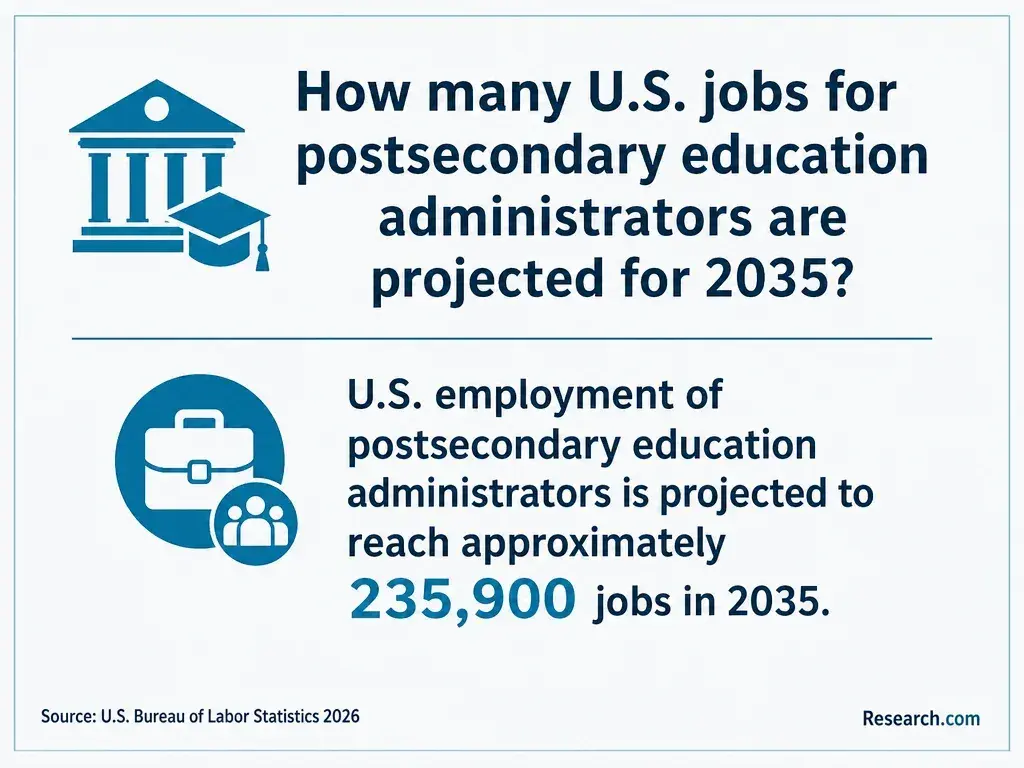
Higher-education administrators face institution-specific hiring expectations, so organizational leadership doctoral options for college administrators are most relevant if that sector is your target. Match your current leadership experience and project evidence to actual job descriptions before choosing the degree.
The US Bureau of Labor Statistics reports a 2025 median annual salary of $133,000 for training and development managers. That occupational figure covers workers with different credentials and experience; it is not an Ed.D. graduate salary or a forecast of what a mobility project will earn you.
Assess the financial decision against roles you could realistically pursue, your current compensation, total program cost, and whether your employer offers support. Scholarship planning for higher education leadership doctoral study is relevant if that sector fits your goals, but confirm each award's eligibility and any employer repayment terms before counting it in your budget.
What is the job outlook for organizational learning professionals?
The US Bureau of Labor Statistics projects 10.8% employment growth for training and development specialists from 2025 to 2035. This is an occupation-wide projection, not a measure of demand for Ed.D. graduates or internal mobility researchers. It supports exploring learning roles, but employers will still assess experience in facilitation, program design, measurement, and collaboration.
If your goal is to lead mobility strategy, look beyond the job title: determine who owns internal hiring policy, skills frameworks, workforce data, and budget at the organizations you hope to serve. That ownership tells you whether a doctorate-supported project would build relevant leadership evidence or whether direct experience on a talent or HR team is the more useful next step.
Other Things You Should Know About EdD Leadership Programs
They may help identify a relevant population, but recruitment should follow the approved study plan. Make participation voluntary where required and avoid having managers learn who declined an interview or survey.
Potentially, if the employer authorizes it and the scope is manageable. Examine the tool's data quality, explainability, privacy safeguards, and potential for unequal recommendations rather than assuming its matches are valid.
Ownership and sharing rights depend on university rules, employment agreements, and any project-site agreement. Resolve those terms before using proprietary materials or promising a public portfolio piece.
Their experiences may reveal barriers that successful applicants cannot describe. Include them only under an approved recruitment and confidentiality plan; an unsuccessful application is sensitive employment information.
- Stakeholder mapping - Government Analysis Function https://analysisfunction.civilservice.gov.uk/policy-store/stakeholder-mapping/
- The case study approach - PMC - NIH https://pmc.ncbi.nlm.nih.gov/articles/PMC3141799/
- Leadership and Learning in Organizations Online Ed.D. | Peabody College of Education and Human Development https://peabody.vanderbilt.edu/academics/edd-programs/online-leadership-learning-organizations/
- The Graduate Field Program and Capstone Evaluation Project | Applied Learning in Social Work Education Journal https://alswe.simmons.edu/article/the-graduate-field-program-and-capstone-evaluation-project/
- Advance Your Leadership Career with an Online Ed.D. | UMass Global https://www.umassglobal.edu/blog-news/advance-your-leadership-career-online-edd
- Internal Mobility Strategy: HR Guide | jerhrgroup.com https://jerhrgroup.com/blog/internal-mobility-promotions-arent-the-only-path-to-career-progress
- What is internal mobility? | Workday US https://www.workday.com/en-us/topics/hr/internal-mobility.html
- Different Types of Career Mobility: Vertical, Lateral, & Hybrid | guild.com https://guild.com/career-mobility/vertical-lateral-hybrid