2027 Self-Paced Online Financial Technology Bachelor's Degree Programs

Co-Founder and Chief Data Scientist
Many working professionals with degrees in unrelated fields seek to enter the rapidly evolving financial technology sector but struggle to find flexible education options that fit their schedules. Self-paced online bachelor's degree programs in financial technology address this challenge by allowing students to learn at their own speed while balancing careers and personal commitments.
According to recent data, enrollment in self-paced online financial technology programs increased by 35% over the past three years, reflecting growing demand for adaptable learning paths. This article explores key self-paced online financial technology bachelor's degree programs, offering insights to help readers choose the right program for career advancement.
Key Benefits of Self-Paced Online Financial Technology Bachelor's Degree Programs
- Self-paced online financial technology programs offer unmatched flexibility, allowing working professionals to balance studies with careers and personal commitments without fixed class schedules.
- These degrees enable accelerated skill acquisition through competency-based models, letting students progress upon mastery rather than time spent, shortening completion times significantly.
- Cost-effective pathways emerge via reduced campus fees and eligibility for financial aid-making accredited bachelor's degrees accessible to non-traditional students seeking career advancement.
What Are Self-Paced Online Financial Technology Bachelor's Degree Programs, and How Do They Differ From Traditional Online Formats?
Self-paced online financial technology bachelor's degree programs allow learners to progress independently without fixed schedules or cohort deadlines. Unlike asynchronous-but-scheduled or cohort-based online formats that follow semester calendars and predetermined start dates, self-paced models offer open enrollment and flexible timelines, enabling students to start anytime and study on their own speed.
This approach fits well with competency-based financial technology online education models, where students focus on mastering specific skills before advancing.
These programs typically use milestone-based progression rather than weekly modules. Progress depends on passing assessments or completing projects to demonstrate competency, contrasting with traditional courses that rely on scheduled lectures, group discussions, and synchronous deadlines.
While instructors provide support, self-paced learners experience reduced faculty interaction and assume greater responsibility for managing their time and motivation, which can present time management challenges.
- Open Enrollment: Students can begin the program at any time during the year without waiting for traditional semester starts, offering maximum flexibility for working professionals or those balancing other commitments.
- Flexible Timelines: Learners control their pace, accelerating through familiar material or spending more time on difficult concepts, making this format adaptable to individual needs.
- Milestone-Based Progression: Advancement depends on mastery of defined competencies rather than fixed deadlines, supporting skill acquisition over pace.
- Student Accountability: Success requires strong self-discipline and initiative since fewer external deadlines and cohort peers may reduce motivation.
Self-paced programs are ideal for first-time college enrollees, non-traditional students, and working professionals seeking flexibility. Many emphasize transfer credit policies and prior learning assessments to recognize existing knowledge, maximizing credit and minimizing time to degree.
Financial aid eligibility is typically comparable to traditional formats. For insight on affordability in advanced degrees, consider reviewing the cheapest online PhD programs, which highlight cost-effective options across disciplines.
Which Accredited Institutions Offer Self-Paced Online Financial Technology Bachelor's Degree Programs?
Several regionally accredited institutions offer self-paced online Financial Technology bachelor's degree programs designed for working professionals, non-traditional students, and first-time college enrollees seeking maximum flexibility. These programs often use competency-based education models that allow students to advance by demonstrating mastery rather than adhering to a fixed semester schedule.
This approach, combined with transfer credit policies and prior learning assessments, can significantly shorten time to degree completion while supporting financial aid eligibility.
- Western Governors University (WGU): Features a competency-based Financial Technology bachelor's degree with flat-rate tuition per term, enabling students to complete as many courses as possible within that period. Accredited by the Northwest Commission on Colleges and Universities, WGU is known for its flexible pacing and prior learning assessments that may reduce the average completion time to about three years.
- Southern New Hampshire University (SNHU): Offers a self-paced online bachelor's program focusing on Financial Technology with per-credit tuition and acceptance of transfer credits. Accredited by the New England Commission of Higher Education, SNHU supports financial aid options and typically allows students to finish within four years, with accelerated paths also available.
- Capella University: Provides a FlexPath competency-based Financial Technology bachelor's degree with subscription-based tuition per term, encouraging students to progress at their own speed. Accredited by the Higher Learning Commission, Capella's prior learning assessments and transfer credit options help many students complete the degree in under three years.
- University of Maryland Global Campus (UMGC): Self-paced Financial Technology bachelor's degree online with per-credit tuition rates. Accredited by the Middle States Commission on Higher Education, UMGC supports military students with flexible transfer policies and an average completion time of three to four years depending on credits transferred.
- Purdue University Global: Offers competency-based Financial Technology bachelor's degree options with subscription tuition fees per term. Accredited by the Higher Learning Commission, Purdue Global allows transfer of up to 75% of credits and prior learning credits, facilitating completion in around three years for motivated students.
When evaluating these programs, consider how their flexible structures align with your goals and schedule. For those exploring advanced business education as a next step after Financial Technology studies, an executive MBA online might also be worth exploring, combining flexibility with career-focused curricula.
2026 Update: Evaluating Hands-On Fintech Tools and Career-Ready Projects
For 2026, this guide adds a closer look at how self-paced online fintech bachelor’s programs help students build practical evidence of their skills, not just complete coursework on their own schedule.
- Whether courses include applied work in payments, digital banking, blockchain concepts, data analytics, or financial software workflows.
- Access to virtual labs, simulations, coding environments, or sandbox-style finance technology tools.
- Opportunities to complete portfolio projects that can be shared with employers after graduation.
- How often course materials are refreshed to reflect changing fintech products, regulations, and security risks.
- Availability of faculty feedback on technical projects, not only automated quizzes or exams.
- Whether the program includes a capstone, internship option, or employer-connected project experience.
Checking these details helps students choose a self-paced fintech program that supports both flexibility and job-ready skill development.
How Long Does It Take to Complete a Self-Paced Online Financial Technology Bachelor's Degree?
Completion timelines for self-paced online financial technology bachelor's degrees vary significantly, influenced by multiple factors. The National Center for Education Statistics (NCES) reports that traditional bachelor's degrees typically take four to six years to complete.
However, self-paced formats allow students to accelerate progress depending on their individual circumstances.
- Prior Credits: Students who start with college credits from previous coursework or Advanced Placement exams can reduce the total number of credits needed, shortening the path to graduation.
- Transfer Coursework: Accepting transfer credits from accredited institutions can decrease required class time, especially by covering general education requirements.
- Weekly Study Hours: The amount of time devoted weekly greatly impacts the speed of completion, with full-time students generally advancing faster than those balancing jobs or family obligations.
- Prior Learning Assessments: Some institutions offer exams or portfolio reviews that recognize existing professional experience, allowing students to earn credits without traditional classes.
Reported fastest completions can range from 12 to 18 months, often when students bring substantial transfer credits or earn credit through prior learning assessments. More commonly, students take two to four years, especially if studying part-time or balancing other commitments.
The U.S. Bureau of Labor Statistics (BLS) confirms that online degree durations depend heavily on personal schedules and prior academic progress.
Setting a feasible study schedule involves assessing prior knowledge, availability, and goals. Many programs offer advising, tutoring, and time management support to help students maintain steady progress and meet graduation targets.
In speaking with a professional who enrolled in a self-paced online financial technology bachelor's program to advance his career, he shared that "balancing work demands with coursework was the hardest part." He emphasized that leveraging prior learning assessments cut down his study load, but managing motivation and time required discipline.
"Having access to academic advisors made a huge difference-they helped me recalibrate my pace when life got busy." His experience showed that while completion speed varies, proactive planning and support systems are key to success.
What Are the Admission Requirements for Self-Paced Online Financial Technology Bachelor's Degree Programs?
Most self-paced online bachelor's degree programs require applicants to hold a high school diploma or GED, ensuring foundational academic preparedness. Many schools ask for a minimum GPA, typically between 2.0 and 3.0 on a 4.0 scale, though some programs have no strict GPA requirement, especially those with open-enrollment or rolling-admission policies that ease access for non-traditional and returning students.
These relaxed eligibility criteria for self-paced online degrees expand opportunities for a diverse student population.
High School Diploma or GED: Most self-paced online financial technology bachelor's degree programs require applicants to present a high school diploma or GED as the fundamental qualification. This criterion ensures applicants have the necessary foundational education while accommodating those with alternative secondary education paths.
GPA Requirements: Many programs set minimum GPA thresholds, typically between 2.5 and 3.0 on a 4.0 scale, to evaluate academic preparedness. However, some open-access programs waive formal GPA demands to broaden eligibility.
Prerequisite Courses: Certain programs request prior coursework in subjects such as mathematics, economics, or computer science to align incoming students' skills. Others integrate introductory classes to establish a consistent knowledge base within the curriculum.
Flexible Admissions Policies: Open-enrollment or rolling admission options are common, particularly in self-paced financial technology bachelor's degree programs, lowering barriers for returning, non-traditional, and working students by allowing year-round application and start dates.
Selective vs. Open-Access: Selective programs often provide enhanced academic advising and closer faculty support but require stricter application standards. In contrast, open-access programs emphasize flexibility and inclusivity, frequently backed by tutoring to promote student success.
Application Strengthening Tips: Candidates who do not fully meet admission criteria can improve prospects by highlighting relevant professional experience, certifications, or compelling personal statements. Completing preparatory coursework or earning transferable credits also aids in meeting program expectations.
For those aiming to enroll at a most respected online university, understanding these eligibility and prerequisites for financial technology online degrees is essential to making informed choices.
How Much Does a Self-Paced Online Financial Technology Bachelor's Degree Cost, and What Affects Tuition?
Tuition models for self-paced online financial technology bachelor's degrees vary significantly, impacting total program costs. Per-credit tuition requires payment for each enrolled credit-typically between $300 and $600-so longer completion times can increase expenses.
Flat-rate subscription plans charge a fixed fee monthly or quarterly, permitting unlimited courses during that timeframe, which favors accelerated learners but may cost more for slower progress. Bundled fees combine tuition with digital materials, software access, and tech support in one upfront charge, simplifying payment but potentially raising initial costs.
- Per-Credit Tuition: Students pay by the number of completed credits, which helps fast finishers save money but can inflate costs if paced slowly.
- Flat-Rate Subscription: Fixed-period pricing lets learners take multiple courses simultaneously, incentivizing speed but possibly increasing total expenses for longer studies.
- Bundled Fees: Inclusive charges cover tuition and essential resources, streamlining billing but sometimes leading to higher upfront payments compared to pay-as-you-go options.
- Hidden Charges: Extra fees may include technology access, proctoring services, software licenses, and materials, adding several hundred dollars per term.
- Transfer Credits and Assessments: Credit transfers and prior learning evaluations can significantly lower total credits needed, reducing tuition expenses.
- Financial Aid Eligibility: Accredited programs often qualify for federal and state aid, which can offset costs based on eligibility and completion speed.
One professional who earned her degree through a self-paced online program shared that navigating the varying costs required careful planning. She recalled feeling overwhelmed by surprise fees early on, particularly exam proctoring and software subscriptions, but found that leveraging transfer credits and fast-tracking courses helped control expenses.
"At times, it was challenging to balance work, study, and budget, but the flexibility allowed me to tailor my pace," she said. Her experience illustrated how understanding each element of tuition and fees is critical to managing finances and successfully completing the degree.
What Financial Aid Options Are Available for Self-Paced Online Financial Technology Bachelor's Programs?
Students enrolled in self-paced online financial technology bachelor's programs can access a variety of financial aid sources, including federal, state, and institutional support. Many competency-based education (CBE) programs align their credit equivalencies with federal aid requirements, allowing applicants to file the Free Application for Federal Student Aid (FAFSA).
However, eligibility and disbursement can differ, since some programs release funds only after students meet specific learning milestones instead of following traditional semester schedules. Confirming these details with the school's financial aid office is essential before committing to enrollment.
State-level grants and scholarships are often available but typically come with residency or enrollment conditions that may affect online learners differently. Numerous institutions also provide tailored payment plans and financial aid packages designed specifically for students progressing at their own pace, helping to bridge gaps in accessibility and cash flow.
Moreover, professional organizations within the Financial Technology sector frequently offer scholarships aimed at encouraging diversity, innovation, and hands-on experience. These awards can significantly reduce the costs for students pursuing careers in this growing field.
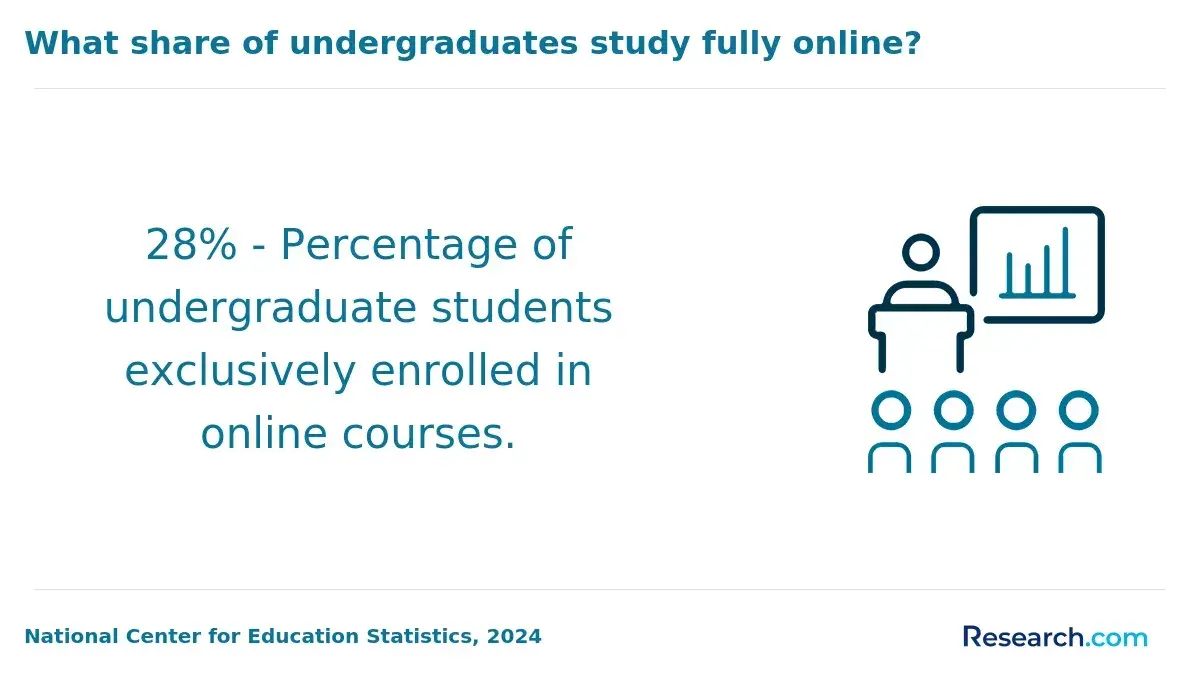
According to the National Center for Education Statistics, roughly one in three undergraduate students have taken at least one distance education course recently, reflecting the increasing acceptance and expansion of online study options and corresponding financial aid availability.
- Federal Aid Alignment: CBE programs often meet federal credit-hour standards but may alter the timing of aid based on student proficiency and program progression rather than fixed terms.
- State and Institutional Resources: Grants and scholarships differ by state and institution, with some offering flexible financing ways suited for self-paced learners.
- Sector-Specific Scholarships: Financial Technology professional bodies provide focused scholarships supporting student engagement and career development in fintech.
- Disbursement Schedules: Funding may be released in stages linked to achievement benchmarks, requiring students to stay informed about their program's policies.
How Do Competency-Based Education (CBE) Models Work in Self-Paced Online Financial Technology Programs?
Competency-based education (CBE) programs in self-paced online Financial Technology degrees allow students to progress by demonstrating mastery through assessments rather than accumulating seat time. Learners complete projects, exams, and practical assignments that verify their skills before moving forward.
For federal financial aid eligibility, many CBE programs convert these demonstrated competencies into traditional credit-hour equivalents, facilitating access to funding and easier credit transfer.
There are two primary types of CBE structures: direct assessment and credit-hour-equivalent programs. Direct assessment models focus solely on skills mastery without aligning to credit hours, offering greater flexibility and personalized pacing. Credit-hour-equivalent programs translate competencies into conventional academic credits, easing processes like transfer and financial aid qualification.
Notable examples include Western Governors University, which employs project-based assessments paired with strong faculty mentorship, and Southern New Hampshire University, which combines exams with real-world tasks in a hybrid CBE approach. Both institutions are well-regarded by employers for their practical, career-aligned training.
Success in these programs requires significant self-discipline and motivation, as students control their own schedules without fixed class times. Prospective students should honestly assess their readiness for independent study and seek programs with clear competency goals and solid instructor support.
According to the National Center for Education Statistics, enrollment in competency-based programs has steadily increased, reflecting growing demand for flexible degree pathways tightly connected to workforce skills.
- Mastery Over Time: CBE programs emphasize assessing actual skills and knowledge rather than time spent in class, enabling personalized progress at each student's pace.
- Credit Translation: Many programs convert competencies to credit hours, preserving students' eligibility for federal financial aid and simplifying credit transfer.
- Program Varieties: Direct assessment CBE offers flexibility without credit focus, whereas credit-hour-equivalent programs bridge innovation with traditional academics.
- Leading Institutions: Western Governors University and Southern New Hampshire University provide recognized Financial Technology CBE degrees featuring project and exam-based assessments with strong faculty involvement.
- Self-Discipline Needed: Students must be motivated and organized to thrive in self-paced CBE settings, needing to evaluate if this learning style suits them.
What Accreditation Should a Self-Paced Online Financial Technology Bachelor's Program Hold?
Accreditation is a vital factor for self-paced online financial technology bachelor's programs, as it ensures quality education and eligibility for federal financial aid. Regional accreditation for financial technology bachelor's programs is the most respected type, holding greater weight with employers and graduate schools. It guarantees a rigorous standard across six regional accrediting bodies recognized by the U.S. Department of Education: the Middle States Commission on Higher Education (MSCHE), the New England Commission of Higher Education (NECHE), the Higher Learning Commission (HLC), the Northwest Commission on Colleges and Universities (NWCCU), the Southern Association of Colleges and Schools Commission on Colleges (SACSCOC), and the WASC Senior College and University Commission (WSCUC).
Some accredited self-paced online fintech degree programs may also hold programmatic accreditation from specialized organizations focused on business or technology education, which further affirms the curriculum's relevance and quality. In contrast, nationally accredited or non-accredited programs often apply less rigorous standards, presenting risks such as limited credit transferability to regionally accredited institutions and challenges in career advancement.
Credits from these programs may not transfer smoothly to regionally accredited schools, complicating further education plans. Additionally, employers and graduate programs commonly view regionally accredited degrees more favorably. Prospective students should use the U.S. Department of Education's accreditation database and the Council for Higher Education Accreditation's (CHEA) directory to verify program status prior to enrollment.
Researching thoroughly can prevent enrollment in programs with limited recognition or federal aid options, protecting one's educational investment.
Working professionals seeking flexible learning paths might also explore short certificate programs that pay well as supplementary credentials in fintech or related areas.
- Regional Accreditation: This is the most respected form of accreditation, with six agencies nationally recognized for overseeing academic quality in specific U.S. regions. It significantly impacts credit transferability and employer recognition.
- National Accreditation: Often applied to vocational or specialized institutions, this accreditation is generally less rigorous and may limit students' academic and professional opportunities.
- Programmatic Accreditation: Some financial technology programs carry additional accreditation from business or technology-specific organizations, indicating specialized curriculum quality.
- Credit Transfer Risks: Credits from nationally or non-accredited programs may not transfer to regionally accredited schools, which can complicate continuing education plans.
- Career Implications: Graduating from a regionally accredited program can enhance employment prospects, while non-accredited degrees may face skepticism from employers and graduate programs.
- Verification Resources: Use the U.S. Department of Education's and CHEA's official databases to confirm a program's accreditation before enrolling, ensuring educational investment security.
How Many Transfer Credits Can Be Applied Toward a Self-Paced Online Financial Technology Bachelor's Degree?
Transfer credit policies for self-paced online financial technology bachelor's degree programs vary, but institutions generally aim to maximize transferability to shorten time-to-degree and reduce costs. Evaluations focus on course equivalency, accreditation of prior institutions, and alignment with core financial technology curriculum requirements.
Many programs feature articulation agreements with community colleges, smoothing the transfer process and increasing credit acceptance.
Some of the most generous programs accept up to 90 transfer credits-allowing students to enter with significant progress toward their degree. Additionally, military training credits are often recognized based on American Council on Education (ACE) recommendations, which grant credit for professional and technical military experience. This is particularly advantageous for veterans and active-duty personnel seeking accelerated pathways.
Prospective students looking for the fastest computer science degree options often find that these financial technology programs offer similar flexibility and credit policies.
Transfer credit evaluations are usually required prior to enrollment, giving students a clear picture of applicable credits, remaining courses, and overall financial obligations. Applicants should consult specific institutional transfer credit pages or statewide articulation databases, such as the Interstate Passport or state university systems, to verify how many credits will be accepted when transferring into self-paced online financial technology degree programs.
Requesting an evaluation beforehand ensures better planning and cost estimation.
- Maximum Credit Acceptance: Some programs accept up to 90 transfer credits, enabling students to apply substantial prior college-level coursework toward their financial technology degree.
- Military Credit Recognition: ACE guidelines allow institutions to award credit for military training and experience, helping service members advance efficiently.
- Articulation Agreements: Collaborative agreements with community colleges guarantee streamlined credit transfers for relevant courses aligned with the financial technology curriculum.
- Course Equivalency Review: Transfer credits undergo academic assessment to confirm alignment with essential program learning outcomes and requirements.
- Pre-Enrollment Evaluation: Obtaining a transfer credit review before enrolling provides clarity on remaining credit needs and financial considerations, supporting informed decision-making.
Can Students Earn Credit Through Prior Learning Assessment in Self-Paced Online Financial Technology Programs?
Prior Learning Assessment (PLA) enables students in self-paced online Financial Technology bachelor's programs to earn credit by demonstrating knowledge gained outside formal education. This includes professional experience, military training, certifications, and independent study, assessed through portfolio evaluations, challenge exams, or standardized tests like CLEP and DSST.
Western Governors University stands out for allowing up to 75% of degree credits through PLA, emphasizing portfolio assessments. Southern New Hampshire University supports CLEP and DSST with clear submission procedures and credit limits, making credits accessible for many students.
The American Council on Education (ACE) plays a crucial role by offering standardized credit recommendations for military and professional learning experiences, which many institutions accept-helping service members and working adults convert real-world training into academic credits efficiently.
To optimize credit transfer, students should compile thorough documentation of work experience, certifications, and relevant coursework aligned with program competencies. Detailed portfolios and well-prepared exam applications can significantly increase credit awards.
According to recent data from the Council for Adult and Experiential Learning, students using PLA have reduced their degree completion time by an average of 10 months.
- Broad Credit Recognition: PLA validates learning from diverse sources including employment, military service, and self-study using methods like portfolio review and official exams.
- Generous Credit Policies: Leading self-paced Financial Technology programs permit substantial credit accumulation-often up to 75%-via PLA, enabling faster degree completion.
- ACE's Essential Role: The American Council on Education's recommendations standardize credit for professional and military backgrounds, improving transferability and acceptance.
- Strategic Documentation: Successful PLA depends on carefully prepared portfolios and matching experiences to course outcomes to maximize credit earned.
- Time-Saving Impact: Leveraging PLA can shorten academic timelines significantly; recent findings show an average reduction of 10 months in time to degree for PLA participants.
What Concentrations or Specializations Are Available in Self-Paced Online Financial Technology Bachelor's Programs?
Self-paced online bachelor’s degree programs often offer a range of concentrations or specializations that allow students to tailor their studies to specific career goals or industry interests. These options help learners build focused expertise while gaining the broader knowledge and skills associated with a bachelor’s-level education.
Data Analytics and Blockchain Technology: This track teaches how to analyze financial data and apply blockchain innovations. Careers include data analysts and blockchain developers, with median salaries between $70,000 and $110,000 per year per BLS data. Some programs recommend blockchain certifications but do not always require them.
Cybersecurity and Risk Management: Focused on securing financial systems against cyber threats, this concentration prepares students for roles like information security analysts, offering median wages near $105,000 annually. Certain programs may require internships or certifications such as CISSP to fulfill industry standards.
Financial Compliance and Regulatory Technology: Students learn to navigate regulations and create compliance solutions, leading to jobs like compliance officers earning around $70,000 on average. Passing licensing exams such as FINRA may be necessary for career progression in this field.
Digital Payments and Mobile Banking Solutions: This area covers payment platforms and mobile banking innovations. Graduates find roles including product managers with average salaries close to $85,000. Practical projects are common, though additional licensure is typically not needed.
Investment Technology and Algorithmic Trading: Emphasizing technology-driven asset management and algorithm development, this specialization aligns with careers like quantitative analysts, earning over $110,000 annually. Completion time can lengthen due to advanced math and programming coursework.
Choosing the right concentration affects program length-more technical or certification-heavy paths may extend study time, while others allow quicker completion focused on practical skills. Aligning specialization with personal interests, labor market demand, and program flexibility-like transfer credits and prior learning assessments-helps optimize both education and career outcomes.
What Graduates Say About Self-Paced Online Financial Technology Bachelor's Degree Programs
- Yeshua: "Choosing a self-paced online financial technology bachelor's degree was crucial for me because I needed flexibility around my busy work schedule. The affordability of the program allowed me to invest in my education without accumulating debt, which was a major relief. Since graduating, I've landed a role in a top fintech firm where the knowledge I gained has proven directly applicable."
- Hugh: "Reflecting on my decision, the self-paced format gave me the freedom to master complex fintech concepts at my own speed rather than rushing through them. The cost was reasonable compared to traditional programs, and the ability to learn anytime suited my lifestyle perfectly. Professionally, this degree opened doors to advanced positions that I wouldn't have qualified for otherwise, marking a true turning point in my career."
- Atlas: "As someone transitioning careers, I chose a self-paced online financial technology bachelor's degree primarily for its balance of career advancement and cost-effectiveness. The program's affordability meant I could pursue my studies without financial strain, and the flexibility helped me juggle work and study. Today, I'm thriving in a fintech startup where my education has been invaluable for developing innovative solutions."
Other Things You Should Know About Financial Technology Degrees
Admission requirements for self-paced Online Financial Technology Bachelor's Degree Programs in 2027 typically include a high school diploma or GED, transcripts, and possibly SAT/ACT scores. Some programs may require a personal statement or references. Check individual programs for specific criteria.
Yes, these programs typically require students to have access to specific financial technology software like Bloomberg Terminal or SAS. Additionally, reliable internet and a computer capable of running advanced applications are essential to effectively participate in coursework and complete assignments.
Most 2027 self-paced online fintech bachelor’s programs require a final capstone in the last 6 to 12 credits. Students usually build a working prototype, risk analysis, or data-driven finance project and present it to faculty for assessment.
References
- Financial Technology (A.T.C.) https://www.fscj.edu/academics/programs/certs/4301
- Can I get financial aid for an online degree? | edX https://www.edx.org/resources/can-i-get-financial-aid-for-an-online-degree
- Designing a Competency Based Education (CBE) Program: Context, Challenges, and Pivots - Connecting Credentials https://connectingcredentials.org/designing-a-competency-based-education-cbe-program-context-challenges-and-pivots/
- Bachelor of Science in Finance and Technology | University of Phoenix https://www.phoenix.edu/online-business-degrees/finance-technology-bachelors-degree.html
- Unlocking Education: The Power of Prior Learning Assessment for Credit Conversion - Pebble Hills University https://pebblehills.edu.pl/article/unlocking-education-the-power-of-prior-learning-assessment-for-credit-conversion/
- How many years does it take to get a finance degree? https://finance.familiaeabiblia.com.br/how-many-years-does-it-take-to-get-a-finance-degree/
- Which FinTech Training Format Is Right for Me? https://www.nobledesktop.com/learn/fintech/which-training-format-is-right-for-me
- How Long Does it Take to Complete an Online Bachelor's in Accounting? https://www.master-of-finance.org/faq/how-long-does-it-take-to-complete-an-online-bachelors-in-accounting/
- Self-Paced Online Degree Programs https://www.umassglobal.edu/why-umassglobal/flexible-ways-to-learn/self-paced