2027 Online Financial Technology Bachelor's Degree Programs Under $10,000

Co-Founder and Chief Data Scientist
Many prospective students face a common obstacle-accessing an accredited online financial technology bachelor's degree without incurring overwhelming debt. Traditional programs often exceed $30,000, creating a barrier for career changers and working professionals seeking affordable, flexible options.
Recent data reveals that nearly 40% of online financial technology degree seekers prioritize programs under $10,000 to manage tuition costs alongside full-time employment.
This article explores a curated list of accredited, cost-effective online degrees, focusing on affordability and quality, to help readers identify pathways that align with their financial constraints and career ambitions within the growing fintech sector.
Key Things to Know About Online Financial Technology Bachelor's Degree Programs Under $10,000
- Online financial technology degrees under $10,000 significantly reduce student debt, allowing greater financial freedom during and after graduation.
- Graduates from these affordable programs often experience strong return on investment, with median salaries rising 20% within five years.
- Flexible course schedules and transfer credit policies cater to working adults and military learners balancing education with career demands.
What Are the Most Affordable Accredited Online Financial Technology Bachelor's Degree Programs Under $10,000?
Programs priced under $10,000 total for an online bachelor's degree in financial technology typically represent the full tuition cost needed to complete around 120 credits, excluding additional fees, books, or living expenses.
This low-cost threshold usually means per-credit-hour rates substantially below national averages, making affordability clear for budget-conscious students.
Accreditation is essential to ensure the program meets recognized quality standards, safeguards transfer and graduate study options, and allows access to financial aid.
Regional accreditation from bodies such as the Higher Learning Commission (HLC), the Southern Association of Colleges and Schools Commission on Colleges (SACSCOC), and the Middle States Commission on Higher Education (MSCHE) stands as the fundamental baseline; programmatic accreditation specifically for financial technology remains rare but desirable.
Examples of top value financial technology bachelor's programs with tuition under $10,000 include the following:
- Fort Hays State University: Approximately $226 per credit hour for 120 credits, totaling about $8,000. Regionally accredited by HLC.
- Western Governors University: Flat-rate tuition around $3,500 per six-month term, with many students finishing the degree in about two terms. Accredited by NWCCU.
- Union Institute & University: Around $500 per credit hour for 120 credits, with generous transfer policies that reduce overall costs under $10,000. Accredited by HLC.
- Columbia Southern University: Roughly $285 per credit hour, offering transfer and credit-by-exam opportunities. Accredited by DEAC with regional recognition.
- American Public University: About $270 per undergraduate credit, with transfer credits often keeping total costs below $10,000. Accredited by HLC.
- Granite State College: Approximately $249 per credit hour for 120 credits. Accredited by NECHE.
- Excelsior College: At $510 per credit hour, strong acceptance of transfer and prior learning assessments typically reduces total costs under $10,000. Accredited by MSCHE.
These most affordable accredited online financial technology bachelor's degrees under $10,000 nationwide stand out through scaled tuition models and flexible credit transfer and prior learning assessments, allowing students to advance quickly and economically.
Although they may offer fewer campus resources than mid-range programs, many graduates find competitive salaries, especially when combining the degree with professional certifications or work experience.
For those exploring further opportunities in healthcare or related fields, institutions also offer quality paths such as an online speech pathology masters, demonstrating that affordable, accredited online education spans numerous in-demand disciplines.
How Do Tuition Costs for Online Financial Technology Bachelor's Programs Under $10,000 Compare Across Public and Private Universities?
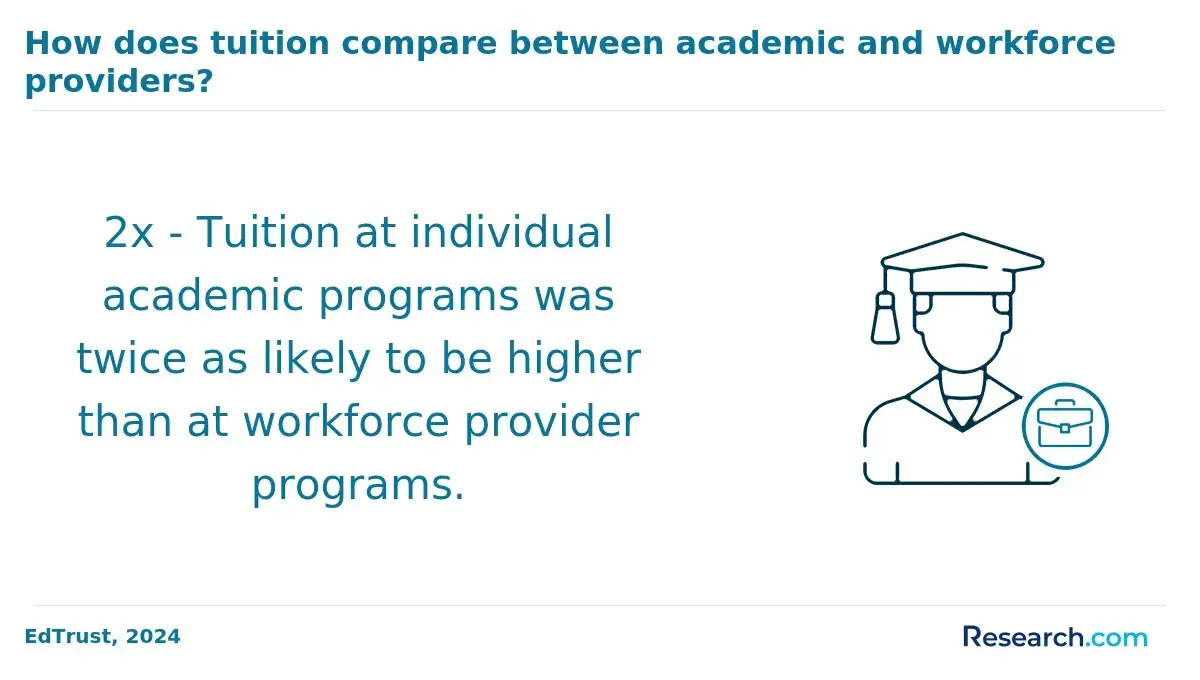
Tuition costs for online Financial Technology bachelor's programs priced under $10,000 show distinct differences between public and private nonprofit universities. These differences can significantly impact which schools offer the best value depending on your financial situation and educational goals.
- Tuition Rates: Public universities typically charge lower per-credit tuition for in-state students because of state subsidies, often keeping total program costs comfortably below $10,000. Out-of-state students, however, usually encounter higher fees that reduce the cost advantage against private nonprofits.
- Private Nonprofit Costs: Although private universities frequently have higher base tuition per credit, some provide substantial financial aid or scholarships enabling total costs to fall under $10,000. Accelerated program formats requiring fewer credits also shorten time and reduce overall expenses.
- Transfer Credit Policies: Private institutions often offer generous acceptance of transfer credits or prior learning assessments that let students finish faster and pay less. Public universities tend to have stricter policies, limiting these savings.
- Financial Aid Availability: Private nonprofits commonly award targeted aid based on merit or need, offsetting higher sticker prices. Public schools rely more on federal and state grants mostly benefiting in-state enrollees.
- Accreditation and Program Quality: Both public and private online financial technology degrees under $10,000 maintain regional accreditation and meet industry standards, ensuring cost does not compromise quality.
- Graduate Outcomes: Salary data suggests that graduates from both sectors can achieve competitive earnings, though private universities with strong employer connections might offer some advantage. Prospective students should weigh tuition costs alongside potential return on investment.
For a deeper look at affordable options, consider exploring an online bachelors degree that fits your budget and career goals.
What Is the Typical Duration of an Online Financial Technology Bachelor's Degree Under $10,000, and How Can Students Graduate Faster?
Most online financial technology bachelor's degrees require about 120 credits, typically completed over four years of full-time study. However, programs priced under $10,000 often adopt alternative schedules to reduce both time and cost.
These accelerated structures help students, especially working adults, finish sooner without compromising quality.
- Standard Credit Framework: Nearly all accredited programs maintain a 120-credit requirement, mirroring national academic standards. This usually translates to a four-year timeline but varies with the student's course load.
- Eight-Week Terms: Many affordable schools organize courses into shorter, intensive eight-week sessions instead of traditional semesters. This model enables learners to complete more courses annually by focusing on fewer subjects at a time.
- Year-Round Enrollment: Continuous enrollment options involving fall, spring, and summer terms eliminate long academic breaks, promoting faster degree completion without extended gaps.
- Competency-Based Progression: Some institutions utilize competency-based education, allowing students to advance by demonstrating mastery rather than meeting seat-time requirements. This flexible pathway benefits those with prior experience or self-directed study habits.
- Representative Programs: Institutions like Western Governors University and Southern New Hampshire University offer financial technology tracks priced below $10,000, with many students completing their degrees in two to three years depending on transfer credits and course load.
- Cost and Opportunity Savings: Accelerated degree options reduce total tuition due to shorter enrollment periods and minimize lost income opportunities by enabling faster entry into the workforce.
A professional who pursued an online financial technology bachelor's degree under $10,000 after military service described the journey as "challenging but manageable." He highlighted balancing rigorous coursework with family responsibilities while navigating enrollment during eight-week terms.
"The ability to leverage my previous technical experience through competency assessments helped speed up my progress," he recalled.
Managing time effectively amid work and studies required discipline, yet finishing early brought "a strong sense of accomplishment" and reduced financial stress, confirming the value of accelerated, affordable programs.
Which Online Financial Technology Bachelor's Programs Under $10,000 Offer the Best Earning Potential After Graduation?
Selecting a concentration track within online financial technology bachelor's degrees under 10k with highest salary outcomes can significantly impact long-term earnings.
According to Bureau of Labor Statistics data, certain specialties consistently yield higher median wages, making them a smart focus for students investing in affordable programs.
- Data Analytics: Graduates concentrating on data analytics often qualify for roles such as data analysts or business intelligence experts. These positions report median salaries above $80,000, fueled by demand for professionals skilled at interpreting complex financial datasets.
- Cybersecurity: Rising cyber threats in finance have created a pressing need for information security analysts, whose median annual earnings reach around $100,000. Pursuing this track can position graduates for lucrative jobs protecting financial systems.
- Blockchain And Cryptocurrency: Emerging blockchain and cryptocurrency roles show median salaries ranging between $75,000 and $110,000 early in careers, with strong growth prospects as these technologies expand within the financial sector.
- Financial Systems Development: Students focused on software development for financial applications can expect median earnings near $110,000, highlighting the value of coding and system design skills in fintech.
Opting for a top accredited online financial technology program under $10,000 that offers flexible transfer credit and prior learning assessments can shorten degree time and reduce costs.
Comparing graduate earnings data alongside tuition helps ensure the best return on investment. For those seeking related affordable options, consider earning an accredited online accounting degree as a complementary pathway.
What Financial Aid and Scholarship Opportunities Can Reduce an Online Financial Technology Bachelor's Degree Cost Below $10,000?
Getting an online financial technology bachelor’s degree under $10,000 is often less about finding the cheapest program and more about maximizing the aid available to you.
Scholarships, grants, and tuition-reduction strategies can dramatically lower your total cost when used effectively. With a thoughtful approach, a degree at the intersection of finance and tech can become far more accessible than it first appears.
- Federal Pell Grants: These need-based grants are provided by the federal government and do not require repayment. Eligible students can receive up to $7,395 annually, making Pell Grants foundational for reducing college expenses.
- Subsidized Federal Loans: Designed to ease repayment burdens, these loans accumulate no interest while students remain enrolled. They complement grant aid but should be considered only after maximizing non-loan assistance.
- Institutional Scholarships: Many online programs offer merit- or need-based scholarships tailored for financial technology students or working adults. Visiting school financial aid offices and websites helps uncover these targeted awards.
- State-Based Grants: Various states provide tuition assistance or grants to residents attending online programs. These vary widely but can be combined with federal aid to lower tuition costs significantly.
- Professional and Nonprofit Scholarships: Associations within the fintech industry and nonprofit organizations often sponsor scholarships aimed at encouraging students pursuing technology careers. These specialized awards can supplement other aid sources.
FAFSA data combined with the College Board's Trends in Student Aid report shows that typical aid packages for low- to moderate-income full-time students average more than $13,000 annually, primarily through grants and scholarships.
Applying early for FAFSA is crucial, followed by a thorough search for school-based and external scholarships. Prioritizing free funds before loans and maintaining organized records throughout the application process maximizes financial aid outcomes and brings online financial technology degrees below the $10,000 mark.
When I asked a professional who built her career after completing an online degree under $10,000 about her experience, she described feeling overwhelmed at first but grateful for the clarity later.
"Navigating the different aid sources was confusing initially," she recalled, "but applying early and keeping track of deadlines helped me stack grants and scholarships effectively."
She emphasized how the combination of institutional awards and external fintech scholarships allowed her to graduate debt-free. Her advice to prospective students is to "stay proactive with paperwork and tap into every available resource-even small awards can add up."
How Many Transfer Credits Do Online Financial Technology Bachelor's Programs Under $10,000 Accept, and How Does This Reduce Total Cost?
Generous transfer credit policies are among the most effective ways to lower the overall cost of financial technology bachelor's degrees priced under $10,000.
Programs that accept a high number of transfer credits from community colleges, military experience, and standardized exams such as CLEP and DSST enable students to bypass lower-level courses, reducing both time and tuition fees significantly.
Several institutions allow transferring up to 90 credits-the equivalent of three years of full-time study-meaning students only need to complete the remaining credits at the university offering the degree. For instance:
- Western Governors University: Accepts up to 90 transfer credits, including those earned via CLEP exams and military experience, which can greatly decrease overall tuition costs.
- Thomas Edison State University: Offers transfer of up to 90 credits from a diverse range of prior learning assessments and standardized test credits.
- Excelsior College: Welcomes up to 90 transfer credits from CLEP, DSST, and military training to accommodate adult and veteran learners efficiently.
To illustrate the impact, consider a $9,000 program requiring 120 credits. Transferring 60 credits - half the degree - could reduce tuition expenses by 50% or more since fees apply only to remaining credits. This reduction can save thousands, especially in programs charging by credit or term.
Prospective students should carefully review their existing transcripts, exam results, and documentation of military or professional training before applying.
Consulting early with admissions or transfer advisors clarifies credit evaluation policies, enabling strategic use of prior learning to ensure earning a financial technology degree within a budget-friendly tuition framework.
What Accreditation Should an Online Financial Technology Bachelor's Program Under $10,000 Have to Ensure Quality and Employer Recognition?
Accreditation plays a vital role in selecting an affordable online Financial Technology bachelor's degree program under $10,000 because it ensures educational quality and wider recognition by employers and graduate schools.
Regional accreditation holds greater esteem than national accreditation, particularly in the Financial Technology sector, as regional accreditors maintain stringent standards and enjoy broad acceptance across academia and industries.
Key regional accrediting bodies include:
- Higher Learning Commission (HLC): Serves colleges in the Midwest and is among the most common accreditors for low-cost online programs.
- Southern Association of Colleges and Schools Commission on Colleges (SACSCOC): Accredits institutions in the southern United States and is well-regarded for its academic rigor.
- New England Commission of Higher Education (NECHE): Oversees respected schools in the Northeast, promoting quality education and smooth credit transfer.
Some affordable programs may also hold programmatic accreditation from industry-specific organizations, which supplements but does not substitute regional accreditation.
Programs with only national accreditation or no accreditation risk limited transfer credits and poorer employer recognition-factors crucial for career advancement and graduate studies. This especially impacts working adults and first-generation college students who rely on flexible, accredited credentials.
What Are the Admission Requirements for Online Financial Technology Bachelor's Programs Priced Under $10,000?
Admission criteria for affordable online financial technology bachelor's degree programs under $10,000 generally require a high school diploma or GED as the basic credential. Many schools have adopted test-optional policies, eliminating SAT or ACT requirements to increase accessibility for adult learners and non-traditional students.
Minimum GPA thresholds typically range from 2.0 to 3.0 on a 4.0 scale, though some programs offer open-admission or rolling-admission policies that allow enrollment without strict academic prerequisites.
This approach is especially beneficial for returning students and those seeking budget-friendly online financial technology bachelor's degree options.
Selective programs often require prerequisite courses in subjects like mathematics, economics, or computer science to prepare students for the analytical demands of the field. These schools tend to offer stronger academic reputations, more extensive student support services, and better employer recognition.
In contrast, open-admission programs provide flexible entry but may have limited transfer credit options and fewer career resources. Understanding these trade-offs is important for students balancing accessibility with academic rigor.
Applicants who do not meet initial requirements can enhance their applications through relevant college coursework, industry certifications, or documented work experience in finance or technology sectors.
Crafting a detailed personal statement outlining career goals and motivation can also strengthen admission prospects. This strategic approach helps prospective students navigate requirements for enrolling in budget-friendly online financial technology bachelor's programs while positioning themselves competitively.
- Educational Credentials: A high school diploma or GED is required; this is the baseline for nearly all programs.
- Minimum GPA: Most programs require a GPA between 2.0 and 3.0, though some offer open admissions without strict GPA criteria.
- Standardized Tests: Many schools have dropped SAT/ACT requirements or adopted test-optional policies to accommodate diverse applicants.
- Prerequisite Courses: Selective programs may require prior study in math, economics, or computer science to ensure readiness for financial technology coursework.
- Admission Policies: Open-admission schools provide flexible access; selective programs offer greater academic rigor and stronger employer recognition.
- Strengthening Applications: Candidates can enhance admissions chances through relevant coursework, certifications, work experience, and detailed personal statements.
For additional insights on graduate earnings and program affordability, students can explore related fields and financial aid options by visiting resources such as child psychology masters programs.
How Do Online Financial Technology Bachelor's Programs Under $10,000 Support Student Success Through Advising and Career Services?
Online financial technology bachelor's degree advising and career support in programs under $10,000 typically includes a range of services to promote student success and timely degree completion.
These programs tailor academic guidance and professional development resources, which is especially crucial for working adults and first-generation college students navigating higher education costs for the first time.
- Comprehensive Academic Advising: Dedicated advisors help students outline degree plans, monitor progress, and coordinate transfer credits or prior learning assessments. This targeted support minimizes unnecessary coursework and reduces overall program expenses while facilitating on-time graduation.
- Targeted Tutoring and Mentorship: Affordable online financial technology programs often provide tutoring focused on core subjects and technical skills. Combined with mentorship from faculty or industry experts, these support services build practical knowledge and confidence essential for career advancement.
- Robust Career Services: Strong career placement services remain a priority even at budget price points. These include career coaching, resume and interview workshops, as well as access to job boards, internship coordination, and active alumni networks that connect students to employment opportunities within the financial technology sector.
- Mental Health and Well-being Resources: Recognizing the challenges of balancing work, study, and personal life, reputable programs include counseling and wellness resources. Supporting mental health contributes significantly to student focus and persistence throughout their studies.
- Impact on Graduation and Cost Efficiency: According to NSSE data, students enrolled in well-supported low-cost financial technology degrees report higher satisfaction and improved preparation for post-graduate employment. Strong student support correlates with higher on-time graduation rates, directly influencing overall affordability.
Choosing an affordable online financial technology degree with these comprehensive student success resources can make a critical difference. For guidance on selecting advanced degrees that align with career goals, consider exploring what masters program should i do.
What Concentrations or Specializations Are Available Within Online Financial Technology Bachelor's Programs Under $10,000?
An affordable online financial technology bachelor’s degree doesn’t mean a narrow academic experience. Even programs under $10,000 often include specialized tracks that let you focus on key areas shaping modern finance—like digital payments, blockchain systems, or data-driven investing.
Choosing a concentration helps you align your studies with the fast-evolving fintech industry while staying within a budget that makes sense.
- Data Analytics: This path enhances skills in analyzing financial data and creating predictive models to support better decision-making. Careers such as financial data analyst and risk manager are projected by the BLS to grow rapidly, with median salaries above $85,000 annually.
- Blockchain and Cryptocurrency: Focused on decentralized finance and secure transaction technologies, this specialization prepares students for roles like blockchain developer and cryptocurrency analyst. Additional certifications may be necessary for advanced positions, potentially adding to overall expenses.
- Financial Programming and Software Development: This track trains students to develop fintech applications and systems. Jobs in financial software engineering often offer salaries exceeding $90,000, though extra coding credentials might increase costs.
- Regulatory Compliance and Risk Management: Preparing students to manage financial regulations and risk evaluation, this area supports careers in compliance and risk analysis. Certain roles demand professional licenses, which could require further investment beyond tuition.
- Digital Payment Systems: Covering technologies behind electronic and mobile payment platforms, this concentration leads to opportunities as payment system analysts or digital banking specialists amid growing demand worldwide.
Students should consider each focus area's job outlook and earnings alongside their interests. Evaluating elements like transfer credit policies, financial aid availability, and prior learning assessments is essential to maintain affordable education costs under $10,000 while planning for possible certification expenses after graduation.
What Technology and Learning Platforms Do Online Financial Technology Bachelor's Programs Under $10,000 Use?
Robust learning management systems (LMS) are essential for delivering cost-effective online Financial Technology programs. Popular platforms include:
- Canvas: Offers an intuitive interface widely used by universities to provide easy access to lectures, assignments, and discussions. It remains reliable even on moderate internet speeds, ensuring uninterrupted study.
- Blackboard: A comprehensive LMS with tools for grade tracking, collaboration, and mobile access. Its scalability makes it a common choice for affordable programs, aiding in student engagement.
- Moodle: An open-source LMS enabling institutions to tailor features with lower licensing costs. Though flexible, it may require more technical assistance for some learners.
Students typically interact with specialized software and simulations that replicate financial markets and blockchain scenarios. These tools aid in hands-on learning but may incur extra fees beyond tuition, potentially raising total costs above $10,000.
- Simulation Software: Provides interactive environments for practicing market strategies and fintech product creation, enhancing practical skills.
- Virtual Labs: Browser-based cloud setups for coding and financial modeling, eliminating the need for complex installations.
Accessibility is a key concern for students with limited internet or outdated devices. Minimum technical requirements often include stable broadband, a computer with at least 4GB RAM, an updated browser, and audio equipment for virtual sessions.
Programs that offer recorded lectures and offline materials further support flexible learning despite technical constraints.
What Graduates Say About Their Online Financial Technology Bachelor's Degree Programs Under $10,000
- Yeshua: "I chose the online financial technology bachelor's degree program under $10,000 because it offered a perfect balance of affordability and quality. The cost allowed me to pursue my education without taking on overwhelming debt, which was a huge relief. Since graduating, I've been able to advance my career more confidently-knowing I have practical skills combined with a solid academic foundation."
- Hugh: "Reflecting on my experience with the online financial technology bachelor's degree program under $10,000, the accessibility was the biggest factor for me. Being able to study remotely while maintaining my job made all the difference. This program's value shows through its comprehensive curriculum and the career growth I've experienced since completing it."
- Atlas: "The professional impact of completing the online financial technology bachelor's degree program under $10,000 exceeded my expectations. I appreciated the focused coursework and the affordable tuition, which made investing in my future manageable. This degree opened doors for me in fintech roles I wouldn't have accessed otherwise, making it a wise choice for career development."
Other Things You Should Know About Financial Technology Degrees
The cost per credit hour for online financial technology bachelor's programs priced under $10,000 is typically significantly lower than the national average.
While the national average for undergraduate credit hours can range between $300 and $500, many affordable programs offer rates below $200 per credit hour. This lower cost makes these programs accessible to students who seek quality education without incurring heavy debt.
Yes, some fully online financial technology bachelor's programs under $10,000 do not charge out-of-state tuition differentials. These programs often have flat tuition rates for all online students, regardless of residency.
Such pricing structures benefit working adults or career changers who live outside the institution's state and want to avoid additional fees.
Many affordable online financial technology programs accept credits from CLEP, DSST, and prior learning assessments, which help reduce time and tuition expenses.
By earning credit for knowledge gained outside traditional classrooms, students can shorten their degree completion timeline. This flexibility supports maintaining the total program cost under $10,000 while advancing efficiently.
References
- Affordable Accredited Online Schools: 5 Great Criteria to Consider - Prereqcourses https://www.prereqcourses.com/affordable-accredited-online-schools/
- 2025 Most Affordable Online IT Degrees https://www.onlineu.com/most-affordable-colleges/information-technology-degrees
- Online Fintech Courses & Certifications - CFTE https://courses.cfte.education/
- Financial Aid For Online Colleges https://www.affordablecollegesonline.org/financial-aid/financial-aid-for-online-colleges/
- Average Private vs Public College Tuition [2025]: Data Analysis https://educationdata.org/private-vs-public-college-tuition
- 20 Most Affordable Online Finance Bachelor’s Options https://www.master-of-finance.org/best/affordable-online-bachelors/
- Types of Financial Aid for Online Colleges https://www.umassglobal.edu/blog-news/types-financial-aid-online-colleges
- Top 60 Tech Scholarships to Apply for in December 2025 https://bold.org/scholarships/by-major/tech-scholarships/
- Best Affordable Online Accounting Degrees of 2025 https://www.accounting.com/degrees/accounting/bachelors/most-affordable/
- Online Bachelor's Degree Completion Financial Aid https://www.hamline.edu/admission-aid/financial-aid/online-bachelors