2027 Online Financial Technology Bachelor's Degree Completion Programs for Working Adults

Co-Founder and Chief Data Scientist
Many working adults with some college credits face difficulty finishing their bachelor's degree in financial technology due to rigid schedules, limited transfer credits, and high tuition costs. As of 2023, 48% of online financial technology bachelor's degree completion students reported balancing full-time employment while studying, highlighting the demand for flexible, affordable options. This stress often leads to stalled academic progress and missed career advancement. This article examines program structures, accreditation, credit transfer policies, pricing, and employer outcomes to help professionals select an online financial technology degree completion program that aligns with their time constraints, budget, and career goals.
Key Benefits of Online Financial Technology Bachelor's Degree Completion Programs for Working Adults
- Online financial technology degree completion programs offer flexibility for working adults, allowing them to balance employment and studies without the constraints of fixed class times.
- Fully asynchronous coursework enables professionals to study around demanding work schedules, maintaining their income while advancing their education at their own pace.
- These programs provide a faster timeline to graduation by awarding transfer credits and focusing on degree completion, avoiding the need to restart a traditional four-year program.
What Are Online Financial Technology Bachelor's Degree Completion Programs, and Who Are They Designed For?
Degree completion programs in financial technology are tailored for adults who have earned some college credits but have not yet completed their bachelor's degree. Unlike traditional four-year bachelor's programs, these completion options focus on finishing remaining coursework, enabling students to leverage previously earned credits and avoid redundant classes.
According to the National Center for Education Statistics (NCES), over 35 million Americans possess some college experience without holding a credential, a group that often faces barriers such as inflexible scheduling and financial limits. Online financial technology bachelor's degree completion programs for working professionals address these challenges through flexible formats and accelerated pacing.
These programs commonly feature an accelerated format, high transfer credit acceptance, and online or hybrid delivery designed to fit professional schedules. The growth of such programs aligns with employers increasingly requiring bachelor's degrees for roles that once did not. Key elements include:
- Accelerated Format: Faster-paced courses help students complete their degree quickly while maintaining comprehensive coverage of financial technology topics.
- High Transfer Credit Acceptance: Most prior college credits are recognized, allowing students to concentrate on specialized upper-division coursework.
- Flexible Delivery: Online or hybrid learning accommodates busy professionals by providing access anytime, anywhere.
- Targeted Audience: Primarily designed for adult learners such as community college transfers, military veterans, and mid-career professionals seeking advancement.
For those interested in supplementing their financial technology degree completion with additional skills, exploring a related artificial intelligence degree online can offer valuable career benefits. Transfer credit policies for online financial technology degree completion programs typically support this approach by recognizing prior learning, which helps students accelerate progress toward graduation.
How Do Online Financial Technology Degree Completion Programs Differ From Traditional Four-Year Financial Technology Bachelor's Degrees?
Online financial technology degree completion programs offer a distinct alternative to traditional four-year bachelor's degrees, especially for students transferring 60 or more credits. These completion programs require fewer total credits-typically around 60 to 70-because they accept a higher number of transfer credits, mainly general education courses. In contrast, traditional programs usually demand 120 to 130 credits covering foundational to advanced coursework.
- Credit Requirements: Completion programs accept more transfer credits, reducing the overall credit load, while traditional degrees involve completing most credits at the institution.
- Curriculum Sequencing: Completion programs tailor curriculum to adult learners by focusing on advanced financial technology topics and professional skills, often substituting general education with competency-based assessments or prior learning recognition. Traditional pathways follow a linear semester-by-semester progression through general education, core, and electives spanning four years.
- Time to Completion: Transfer students with 60+ credits in completion programs typically finish within one to two years online. Traditional students often need two to four years, depending on credits and enrollment status.
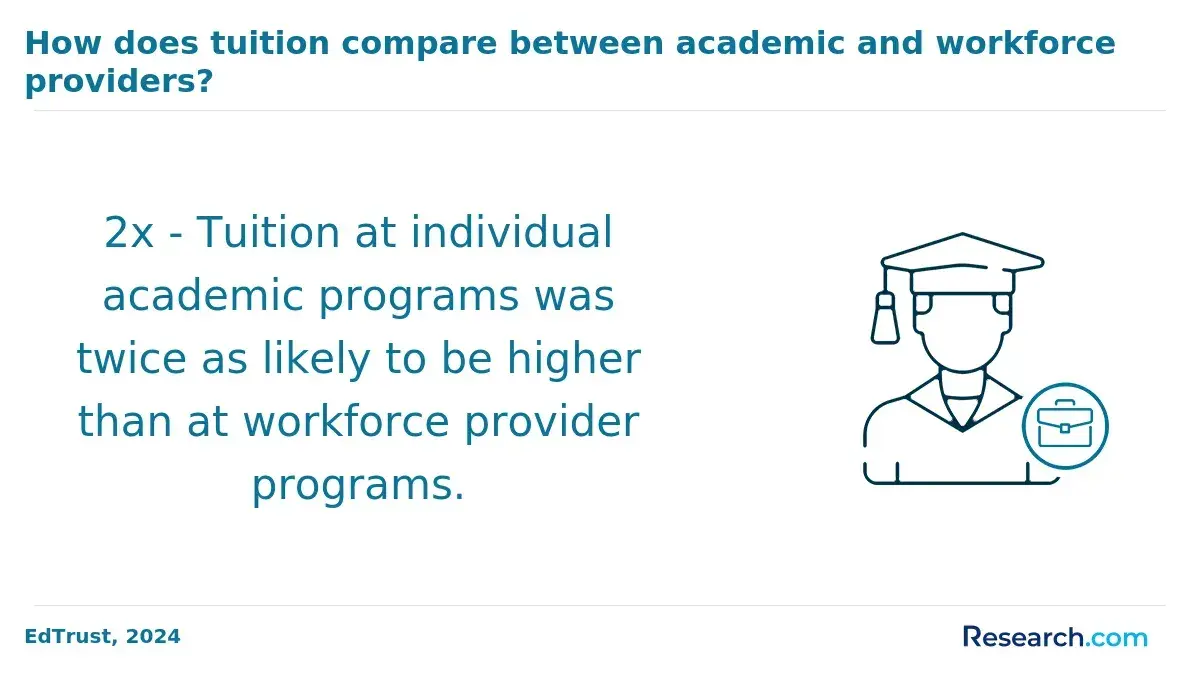
- Cost Per Credit Hour: IPEDS data indicate that completion programs may have a higher cost per credit hour to support specialized student services and flexible delivery but tend to be more affordable overall due to reduced total credits. Traditional programs offer lower credit-hour costs but entail higher total tuition due to the longer duration.
- Curriculum Mapping for Adult Learners: Completion programs use flexible schedules, asynchronous classes, and replace some general education requirements with life-experience credits or prior learning assessments, facilitating faster degree completion.
- Transfer and Accreditation Policies: Both program types maintain rigorous accreditation, but completion programs emphasize articulation agreements with community colleges and acknowledging military or professional training, making them well-suited for non-traditional students.
For working adults comparing online financial technology completion programs to traditional bachelor's degrees, evaluating these factors helps select a program aligned with their professional and personal needs. Whether you are a community college transfer student, a military veteran, or a mid-career professional, this understanding aids in choosing the best pathway.
When researching options, consider exploring the best online business degree programs, many of which offer financial technology completion options with competitive tuition and flexible structures.
2026 Update: Evaluating Hands-On Fintech Skill Requirements
This 2026 update adds a practical lens for working adults comparing online financial technology completion programs: whether the curriculum builds applied fintech skills, not just business or finance theory.
- Look for courses using current financial software, data tools, payment systems, or digital banking platforms.
- Check whether assignments include portfolio-ready projects, case studies, simulations, or capstone work.
- Review how the program covers cybersecurity, data privacy, compliance, and risk in financial technology settings.
- Ask whether technical prerequisites are clearly stated, especially for coding, analytics, or database coursework.
- Confirm that online labs, software access, and technical support are available outside standard business hours.
- See if faculty have professional experience in fintech, banking technology, analytics, or financial services operations.
Focusing on applied skill readiness helps students choose a completion program that fits their current experience while preparing them for practical fintech responsibilities after graduation.
Which Accredited Universities Offer the Most Affordable Online Financial Technology Bachelor's Degree Completion Programs?
These most affordable programs often share key features such as flat-rate tuition models minimizing residency cost differences and generous transfer credit acceptance to reduce total coursework. Regional accreditation paired with relevant fintech connections ensures academic rigor and career relevance. Flexible pacing and assessments recognizing prior learning further support adults juggling education and professional responsibilities.
- University of North Florida: Charging approximately $215 per credit hour for in-state students and around $670 for out-of-state, this program is accredited by the Southern Association of Colleges and Schools Commission on Colleges (SACSCOC). The curriculum emphasizes areas like data analytics, blockchain, and risk management, with flexible transfer policies benefiting adult learners who need to finish their degrees efficiently.
- Fort Hays State University: Offering a flat online tuition rate near $218 per credit, regardless of residency, Fort Hays State is accredited by the Higher Learning Commission (HLC). Its degree completion program blends fundamental financial knowledge with fintech innovations and supports up to 93 transfer credits, significantly shortening time to graduation.
- California State University, East Bay: With tuition rates close to $280 per credit for residents and about $414 for nonresidents, this program holds regional accreditation from the WASC Senior College and University Commission (WSCUC). The curriculum focuses on practical fintech applications, includes prior learning credit opportunities, and offers flexible scheduling.
- University of Texas at Arlington: Texas residents pay roughly $306 per credit hour, while out-of-state students pay about $511. Accredited by the Southern Association of Colleges and Schools Commission on Colleges (SACSCOC), this program aligns closely with industry fintech standards and emphasizes technology integration in finance.
- Western Governors University: Instead of charging per credit, WGU applies a flat tuition of around $3,625 per six-month term. This nonprofit institution, accredited by the Northwest Commission on Colleges and Universities (NWCCU), uses a competency-based approach that allows learners to progress at their own speed, an advantage for professionals balancing work and study.
Reflecting on his experience, a professional who enrolled in one of these online financial technology bachelor's degree completion programs explained that balancing work, family, and studies was initially overwhelming. "I had credits scattered across different community colleges," he noted, "so the transfer process was critical but also a bit complex." Despite these hurdles, the ability to move through competency-based courses at his own pace helped him steadily build confidence and skills. He described feeling motivated by the real-world fintech projects integrated into coursework, which translated directly to his job performance and opened doors to advancement he hadn't anticipated when starting the program.
How Many Transfer Credits Can Working Adults Apply Toward an Online Financial Technology Degree Completion Program?
Degree completion programs in financial technology typically allow working adults to transfer between 60 and 90 semester hours from prior college credits, covering about two-thirds of a bachelor's degree. This limit aligns with accreditation standards that require students to complete enough upper-division courses at the new institution to maintain academic quality.
- Transfer Caps: Most institutions impose a maximum transfer credit limit, commonly set from 60 to 90 semester hours, ensuring students build sufficient expertise within their chosen financial technology bachelor's degree program.
- Credit Evaluation: Transfer credits undergo a detailed review to verify their equivalence to courses at the receiving school. It's essential to request an official transcript evaluation early to clarify which credits will apply.
- Articulation Agreements: Many universities partner with community colleges through formal pathways that guarantee credit acceptability. These agreements help minimize credit loss and streamline progress toward graduation.
- Credit Transfer Loss: According to the U.S. Department of Education's Transfer Summit, students lose about 40% of their credits when transferring between schools. Choosing programs with structured or guaranteed transfer pathways can mitigate this loss effectively.
- Military and Certification Credits: The most transfer-friendly financial technology programs accept ACE-recommended military training credits and relevant professional certifications, recognizing diverse prior learning.
- Transcript Review Advice: Prospective students should secure a formal evaluation of their transcripts before enrolling to ensure maximum credit acceptance and avoid unnecessary duplicated coursework.
If you are researching how transfer credit policies affect your options, exploring marriage and family therapy programs online can provide comparative insights into structured transfer frameworks used in other degree completion fields.
What Are the Typical Admission Requirements for Online Financial Technology Bachelor's Degree Completion Programs?
Most programs require applicants to have completed between 24 and 60 semester credit hours at an accredited institution to demonstrate sufficient college-level experience for upper-division coursework in financial technology. Other admission requirements also include:
- GPA Thresholds: A cumulative GPA of about 2.5 to 3.0 is commonly expected. Some programs enforce stricter admissions standards, while others provide more accessible options to accommodate working adults.
- Documentation Requirements: Prospective students typically submit official transcripts, proof of relevant certifications, and occasionally letters of recommendation. Many also request a personal statement outlining career objectives and motivation for completing a financial technology degree.
- Field-Specific Prerequisites: Introductory classes in accounting, finance, statistics, or programming may be required. Applicants who lack these are often encouraged to complete prerequisite courses at community colleges before enrollment.
- Admission Models: Open-admission programs welcome all qualifying transfer students with minimal barriers, offering flexible schedules and tailored academic support. Selective admission programs establish higher standards, which can enhance credential value but limit access.
- Conditional Admission: Some institutions offer provisional entry to students who slightly miss criteria like GPA or prerequisites, requiring them to meet set goals early in the program to remain enrolled.
- Application Enhancement: Strengthening applications by completing needed prerequisites, obtaining strong recommendations, and showcasing relevant work experience in finance or technology improves acceptance chances and readiness for program demands.
One professional who completed an online financial technology bachelor's degree recalled the initial uncertainty of navigating transcript evaluations and prerequisite requirements. She described the process of completing missing foundational courses at a community college as challenging but ultimately rewarding, providing her with the confidence and skills necessary to succeed in the program. She emphasized how the option for conditional admission gave her a crucial second chance to demonstrate her commitment, motivating her to excel once fully admitted.
How Long Does It Take to Complete an Online Financial Technology Bachelor's Degree Completion Program as a Working Adult?
- Transfer Credit Impact: Students entering with 90 transfer credits typically need only about 30 credits to complete their degree. This can often be finished within a year of full-time study or two years part-time. Those with 60 transfer credits usually require around 60 additional credits, translating to roughly two years full-time or three to four years part-time. Starting with just 30 credits often means the longest path, frequently taking four or more years with part-time enrollment.
- Part-Time Versus Full-Time Enrollment: Taking six credits per semester on a part-time basis extends the time to graduation but accommodates working professionals balancing multiple commitments. Full-time enrollment of 12 or more credits each semester can significantly decrease the duration, though it demands a greater weekly time investment for studying and coursework.
- Realistic Two-Course Load: A common balance for working adults is enrolling in two courses per semester, which generally accounts for six to eight credits. This course pace allows full-time employment alongside studies and usually results in a degree completion timeline of three to four years.
- Accelerated and Competency-Based Options: Programs that offer eight-week accelerated terms, summer classes, and competency-based progression models provide opportunities to shorten degree completion. Competency-based advancement lets students move ahead by demonstrating mastery instead of relying solely on credit hours or time spent in class.
- Life Circumstances and Employer Support: Factors such as family responsibilities, job demands, and employer tuition assistance or flexible work schedules play critical roles in determining how quickly students can complete their degrees. Planning a realistic timeline requires evaluating these supports to maintain steady progress and avoid burnout.
A 2023 National Center for Education Statistics study found nearly 40% of working adults pursuing online degrees prefer programs with accelerated courses and competency-based options, reflecting a growing demand for flexible and efficient learning formats.
What Financial Aid, Grants, and Employer Tuition Assistance Options Are Available for Online Financial Technology Completion Students?
Students completing an online financial technology bachelor's degree have access to diverse financial aid options designed for working adults. Federal aid remains crucial, with Pell Grants and Direct Loans still available to eligible learners who meet income and enrollment requirements. Many states also offer grants targeting adult learners returning to school, which can notably reduce tuition expenses.
Institutional scholarships frequently focus on non-traditional students, including those pursuing a financial technology degree online. These awards may consider professional experience or academic progress and are typically managed by the college or university. Prospective students should inquire about these opportunities during admissions.
Employer tuition assistance programs serve as a valuable funding source for working students. Under IRS Section 127, employers can contribute up to $5,250 annually toward an employee's undergraduate education tax-free. Utilizing this benefit requires coordination with employers to confirm eligibility and secure approvals, often offsetting a significant portion of educational costs.
Specific scholarships and fellowships exist for adult learners returning to complete an online financial technology degree. Organizations dedicated to lifelong learning and career growth often sponsor these awards, which can be found through scholarship search tools and financial aid offices.
Before enrolling, complete this financial aid checklist:
- File the FAFSA: Submit the Free Application for Federal Student Aid early to assess eligibility for federal grants and loans.
- Explore State Grants: Research adult learner grant programs available in your state to reduce costs.
- Request Employer Assistance: Contact your HR department to understand tuition benefits and obtain necessary documentation.
- Apply for Scholarships: Seek institution-specific and adult learner scholarships to supplement federal and employer aid.
How Does Per-Credit-Hour Tuition for Online Financial Technology Completion Programs Compare Across Accredited Institutions?
The national average cost per credit hour for online financial technology bachelor's degree completion programs is approximately $425. This figure is based on NCES and IPEDS data from accredited institutions offering similar programs and serves as a helpful benchmark for working adults. Below is a ranked comparison illustrating per-credit rates and total program cost estimates for students transferring either 60 or 90 credit hours.
- University A: $350 per credit hour; total cost approximately $21,000 (60 hours) / $10,500 (90 hours)
- College B: $400 per credit hour; total cost approximately $24,000 / $12,000
- University C: $450 per credit hour; total cost approximately $27,000 / $13,500
- College D: $500 per credit hour; total cost approximately $30,000 / $15,000
Per-credit tuition rates for online financial technology completion programs only represent part of the full expense. Additional mandatory fees-such as technology charges, graduation fees, exam proctoring, and textbooks-can add 10-25% to the overall cost. These ancillary costs vary significantly by institution and should factor heavily into budgeting decisions.
- National Average Benchmark: The $425 rate is a useful affordability gauge but doesn't capture fee variability or transfer policies between schools.
- Transfer Credit Impact: Students with 90 transfer credits pay roughly half the total cost compared to those with 60 credits due to reduced required hours.
- Ancillary Costs Matter: Beyond tuition, additional fees and supplies often increase the real cost, making a lower per-credit rate less economical in some cases.
- Credit Hour Requirements: Programs requiring more than the standard 120 total credit hours may offer low per-credit rates but incur higher cumulative costs, impacting affordability.
For those exploring options, considering transfer credit policies and total credit hour requirements is essential. Prospective students should also explore flexible pathways such as prior learning assessments and employer tuition assistance to optimize affordability. For those interested in advanced degrees that complement financial technology skills, exploring an online master's in communication can expand career opportunities in finance and technology sectors.
What Prior Learning Assessment and Credit-by-Exam Options Exist in Online Financial Technology Degree Completion Programs?
Prior Learning Assessment (PLA) options empower working adults to leverage their existing skills and experiences towards earning academic credit, accelerating degree completion in online financial technology programs. Many institutions accept credit-by-exam policies, such as CLEP and DSST exams, which evaluate mastery of college-level knowledge in specific subjects. Portfolio assessments allow students to submit comprehensive documentation of their professional training, certifications, or work projects for credit evaluation. Military service members benefit significantly from credit awarded through the American Council on Education (ACE), which formally evaluates military training and corporate education programs, facilitating transfer of relevant credits.
Successful navigation of PLA policies begins with understanding how institutions recognize and award credit. Here are key considerations for students pursuing online financial technology degree completion programs:
- Exam Credit Options: CLEP and DSST exams offer standardized pathways to demonstrate knowledge in foundational topics, reducing course load and tuition expenses.
- Portfolio Preparation: A well-organized portfolio with verifiable evidence such as work samples, certifications, and detailed narratives strengthens credit approval chances under credit-by-exam policies in financial technology degree completion programs.
- ACE Evaluations: Military and veteran students should consult ACE credit recommendations to translate their service and corporate training into transferable academic credit efficiently.
- Institutional Credit Limits: The most expansive online programs accept up to 60 credits through PLA methods, offering significant time and cost savings.
Before submission, students should compile detailed documentation, academic transcripts, and evaluation reports aligned with institutional guidelines to ensure a smooth review. Working adults considering degree completion can investigate which schools implement the most flexible PLA frameworks to maximize prior learning recognition.
For more insights on affordability and credit policies, explore what is the cheapest data science course in the US? This resource also highlights tuition models that complement flexible PLA options for budget-conscious learners.
How Do Asynchronous Schedules in Online Financial Technology Programs Accommodate Full-Time Working Professionals?
- Asynchronous Flexibility: Fully asynchronous programs offer assignments, discussions, and exams that can be accessed and completed at any time, accommodating students across different time zones and demanding work schedules without the need for live attendance.
- Synchronous & Hybrid Formats: Synchronous courses require real-time participation, which can challenge shift workers and travelers, while hybrid programs blend live sessions with asynchronous content, providing some flexibility but less than fully asynchronous models.
- Eight-Week Terms: Several institutions use accelerated eight-week terms, allowing students to concentrate on fewer courses simultaneously. This structure helps balance academic workloads with professional and personal commitments more effectively than traditional semester schedules.
- Time Management: Prioritizing tasks and setting weekly goals are key strategies for success. Using digital calendars, reminder apps, and productivity tools helps students maintain consistent engagement and meet deadlines.
- Digital Tools: Popular platforms like learning management systems, note-taking apps, and collaboration software support organization and communication in asynchronous environments, enhancing learning efficiency for adult students.
What Concentrations and Career Tracks Are Available Within Online Financial Technology Degree Completion Programs?
Most online financial technology bachelor's completion programs offer concentrations embedded within the standard 120-credit framework, avoiding extra credit hours and additional costs. These specializations guide students toward career paths with strong market demand and salary potential, often enabling eligibility for relevant professional certifications.
- Data Analytics: Utilizes big data and statistical methods to analyze financial trends. Graduates typically become financial analysts or risk managers, with median salaries near $86,000 as reported by the Bureau of Labor Statistics (BLS).
- Blockchain Technology: Focuses on decentralized finance and cryptography applications. Career opportunities include blockchain developer and fintech security analyst roles, which often require certifications like Certified Blockchain Professional.
- Cybersecurity: Emphasizes safeguarding financial systems against cyberattacks. Careers as information security analysts offer median wages exceeding $100,000, supported by strong job growth projections.
- Financial Management: Covers investment strategies and portfolio oversight. Professionals such as financial managers and advisors earn median salaries around $131,000 and can pursue credentials like the CFA (Chartered Financial Analyst).
- Regulatory Compliance: Prepares students to navigate complex financial regulations and risk management. Graduates work as compliance officers or auditors, often qualifying for the Certified Regulatory Compliance Manager (CRCM) exam.
Choosing a concentration that matches professional interests and labor market trends can optimize career outcomes for working adults completing their degree. Aligning the specialization with prior credits and career goals helps balance educational time and financial investment with strong prospects in financial technology fields.
What Graduates Say About Online Financial Technology Bachelor's Degree Completion Programs for Working Adults
- Yeshua: "Completing my online financial technology bachelor's degree was a transformative experience, especially given the program's clear structure and solid accreditation. The ability to transfer previously earned credits without hassle made the journey seamless and cost-effective. Knowing the tuition model upfront helped me plan financially while focusing on my career growth."
- Hugh: "Reflecting on my time in the online financial technology program, I appreciate how the prior learning assessment options honored my professional experience, accelerating my path to graduation. The program's recognition by employers in the fintech industry has opened doors I hadn't anticipated. It felt rewarding knowing my existing knowledge and skills were valued and transferred properly."
- Atlas: "As someone balancing work and study, the flexible yet rigorous framework of the financial technology bachelor's completion program was key for me. The transparent credit transfer policies and competitive tuition rates allowed me to pursue the degree without undue stress. Since graduating, I've seen a clear impact on my career trajectory, landing roles with greater responsibility and innovation focus."
Other Things You Should Know About Financial Technology Degrees
Most completion programs accept up to 90 semester credits toward a 120-credit bachelor’s degree, with at least 30 upper-division credits earned at the degree-granting school. Many require a 2.0 GPA for transfer courses, plus official transcripts for evaluation before enrollment.
Most online Financial Technology completion programs offer specialized support including dedicated academic advisors, career counseling, and technical assistance tailored for working adults. These services help students navigate transfer credits, select courses aligned with career goals, and prepare for job placement or further education. Some programs also provide networking opportunities and virtual career fairs.
Yes, some online Financial Technology completion programs use flat-rate tuition or subscription models that allow students to pay a single fee to access multiple courses within a set time frame. These models can benefit working adults by offering flexible pacing and potentially reducing overall costs. However, availability varies widely by institution and program.
References
- Cost of Online Education vs. Traditional Education [2025]: Comparison https://educationdata.org/cost-of-online-education-vs-traditional-education
- Best College Degrees for High-Paying Jobs in Fintech Explained https://www.investopedia.com/best-college-degrees-forjobs-in-fintech-11885532
- The Future of Work: Embracing Asynchronous Work https://www.concur.be/blog/article/asynchronous-work
- Credit Through a Prior Learning Assessment (PLA) Portfolio https://catalog.wmcc.edu/credit-through-a-prior-learning-assessment-pla-portfolio
- Financial Aid for Online Students: Grants, Scholarships, Loans, and Employer Tuition Assistance https://www.smartonlinedegree.com/blog/financial-aid-online-students
- Credit for Prior Learning - The University of Olivet https://www.uolivet.edu/uolivet-online/credit-for-prior-learning/
- Asynchronous Education vs Fixed Schedule Online Classes: Which Works for Working Professionals https://puie.ac/asynchronous-education-vs-fixed-schedule-online-classes-which-works-for-working-professionals/
- Why Choose an Online Finance Degree in the Digital Age https://manavrachnaonline.com/blogs/why-choose-online-finance-degree-in-digital-economy/
- Online Bachelor of Business Administration and Digital Innovation with Finance & FinTech https://www.global-business-school.org/programs/bachelor-europe-bachelor-of-business-administration-online/online-bachelor-of-business-administration-and-digital-innovation-with-finance-fintech/
- Fintech and Digital Transformation in Finance (Major on the Financial Management bachelor program) https://www.kozminski.edu.pl/en/fintech-and-digital-transformation-finance-major-financial-management-bachelor-program