2027 Paying for an Online Ed.D. in Leadership and Learning in Organizations: A Fixed Education Budget and Variable Annual Tuition
Audited and Verified:
Our Editorial and Data Verification Process
Research.com uses government datasets, official education statistics and primary institutional information to support its career and degree guides. Our review process checks factual accuracy, occupational definitions, source dates and the requirements associated with the credentials discussed.
How This Article Was Fact-Checked
Our editorial team verifies salary estimates, employment projections, education requirements and program information against original data providers and official organizations. Salary figures are checked against the relevant occupational definitions and reporting periods. Information about licensure, accreditation and required in-person training is reviewed separately.
Fact-checked and verified on:

Co-Founder and Chief Data Scientist
A fixed education budget does not necessarily cover a doctorate with tuition that may change each academic year. For working leaders and learning professionals, the decision is whether an online Ed.D. remains affordable through completion - not just at enrollment.
This guide shows how to estimate the full cost, test each year's cash flow, evaluate employer support and borrowing, and identify the program terms that could change your plan. You can then decide whether to enroll, adjust your pace, or pursue a less costly route to your professional goal.
Key Things You Should Know
- Compare your fixed budget with the entire degree cost and with each year's payment deadline; enough money overall does not prevent a short-term cash gap.
- If tuition is charged per credit and can change annually, later credits may cost more than an estimate based solely on the entry-year rate.
- Request a term-by-term cost projection and written funding terms before committing; neither an online format nor anticipated employer reimbursement guarantees affordability.
What Is an Online Ed.D. in Leadership and Learning in Organizations?
An online Doctor of Education (Ed.D.) in leadership and learning in organizations is a practice-oriented doctorate focused on how organizations develop people, make decisions, evaluate initiatives, and implement change. It can fit experienced professionals in workforce learning, higher education, healthcare, government, nonprofits, or business. The exact degree title, curriculum, and final project vary by institution.
For a budget decision, the distinction from a research-focused PhD matters: an Ed.D. may let a working professional continue earning while studying, but online enrollment does not mean low tuition, self-paced study, or guaranteed access to a workplace project. If your goal is a specific skill rather than doctoral-level applied inquiry, a focused certificate, employer leadership program, or supervised project may meet it at lower cost.
How Much Does an Online Ed.D. in Leadership and Learning Cost?
There is no responsible single price for this degree without a named program and entry term. Schools may charge per credit, per term, or under another published structure; tuition and mandatory fees may also change during enrollment. A fixed budget should therefore be tested against a full-degree estimate and a term-by-term payment schedule.
The table separates charges and household effects that are easy to combine incorrectly. Ask each school which amounts are required, which are estimates, and which may change.
| Cost component | What to obtain or verify | Budget implication |
| Tuition | Required credits or terms, published rate, rate-change policy, and charges during the final project | Later enrollment may be billed at later rates; a longer timeline can increase exposure. |
| Mandatory fees | Technology, enrollment, graduation, and project-related charges | Fees may remain due even when employer support covers tuition. |
| Attendance costs | Required campus visits, travel, lodging, and materials | Online delivery may still create expenses outside tuition. |
| Household and work effects | Childcare, schedule changes, and any reduced earnings or unpaid leave | These affect affordability even if they do not appear on a university bill. |
For per-credit pricing, calculate tuition by multiplying the credits you expect to take in each academic year by that year's applicable rate, then add mandatory fees and other expected costs. Because future rates are unknown unless the school offers an enforceable price guarantee, run a second scenario with higher later-year rates rather than presenting one entry-year calculation as the final price. The planning tuition for an online Ed.D. resource can help frame comparisons, but obtain a current, individualized estimate from each institution.
Finally, distinguish a lifetime budget limit from an annual spending limit. A program can fit the former yet require a payment before savings, aid, or employer reimbursement becomes available. Ask the bursar for actual billing dates and payment-plan terms.
How Can You Pay for an Online Ed.D. in Leadership and Learning?
Start with funds you can count on, then treat conditional support separately. Personal savings, a formal employer tuition agreement, a reimbursement policy, scholarships, and loans have different timing and obligations. Professional doctorates should not be assumed to receive the funding commonly associated with some research doctorates.
Use the following sequence to identify a funding gap before enrollment rather than after a bill arrives:
- Set the maximum total amount you can commit without compromising essential household obligations, and identify how much is available by each tuition deadline.
- Request the school's written aid offer and confirm doctoral eligibility, renewal conditions, enrollment requirements, and disbursement timing.
- Ask your employer whether support is paid directly or reimbursed later, what expenses qualify, and whether grades, continued employment, or a repayment agreement apply.
- Subtract only confirmed, usable funds from each term's projected bill; examine loan terms and repayment capacity before using borrowing to close a gap.
Employer interest in your organizational project is not the same as a tuition commitment. If reimbursement arrives after grades are posted, you may still need cash or financing when tuition is due. Readers comparing possible awards can consult higher education leadership doctoral scholarships, while confirming that any opportunity actually applies to their program and circumstances.
The financially relevant difference is not simply tuition. Online study may reduce routine commuting or relocation costs, while campus programs may offer different tuition structures, support, or access to workplace-relevant faculty and projects. Either format can require travel, scheduled participation, or time away from paid work.
Compare the same proposed enrollment pace in both formats. Verify live-class attendance, group-meeting expectations, campus convenings, and final-project requirements, then price the resulting travel, childcare, and work-schedule changes. A lower advertised tuition rate is not the cheaper choice if completing the program requires substantial unpaid leave; conversely, online convenience is not worth a cost your fixed budget cannot absorb.
Programs may cover adult learning, leadership and organizational change, program evaluation, qualitative and quantitative inquiry, and an applied doctoral project. Required courses and the form of that project differ. A course on organizational learning does not, by itself, establish a formal specialization or prepare someone for every learning-and-development role.
Read the curriculum as a cost and value document. Check when required courses are offered, whether electives are reliably available, and whether the project needs organizational access or employer permission. If your existing experience already covers much of the leadership coursework, compare the degree's added research and evaluation preparation with a shorter program before committing your budget.
Requirements are set by each program. Applicants may be asked for prior graduate education, transcripts, professional experience, recommendations, a statement of purpose, and evidence of readiness for applied doctoral work. An education master's, a particular job title, or a standardized test is not a universal requirement.
Before paying an application fee, ask whether your academic record meets eligibility rules and whether prior graduate coursework is considered for admission, transfer into the degree, or both. Those are different decisions: qualifying for admission does not mean credits will reduce tuition or time. Applicants returning after an Education Specialist degree can use evaluating education specialist to doctorate pathways as a starting point, then request the program's written credit evaluation.
Completion time depends on the required sequence, course availability, enrollment pace, and the school's rules for the final project. Ask for a term-by-term plan based on the pace you can sustain while working - not merely the shortest advertised timeline.
Pacing changes the fixed-budget calculation in two directions. Taking fewer credits at once may ease each bill but expose more credits to future tuition rates or add term-based fees. A faster pace may limit that exposure yet require reduced work hours or additional care arrangements. Request projected costs for both feasible schedules and ask what happens financially if the project extends beyond coursework.
Depending on prior experience, graduates may pursue greater responsibility in learning and development, organizational development, workforce training, consulting, or higher education administration. These jobs involve different work: training managers direct learning functions, while organizational consultants diagnose and advise on operational or change problems. The degree can strengthen applied inquiry and leadership practice, but employers still assess relevant experience and demonstrated results.
For someone already working at a college or university, higher education leadership through an organizational leadership Ed.D. may be worth comparing with institution-specific advancement requirements. A general leadership Ed.D. does not automatically confer school-administrator licensure or qualify its holder for an executive appointment. If a desired role primarily requires hands-on training design or management experience, obtaining that experience may be a better first investment.
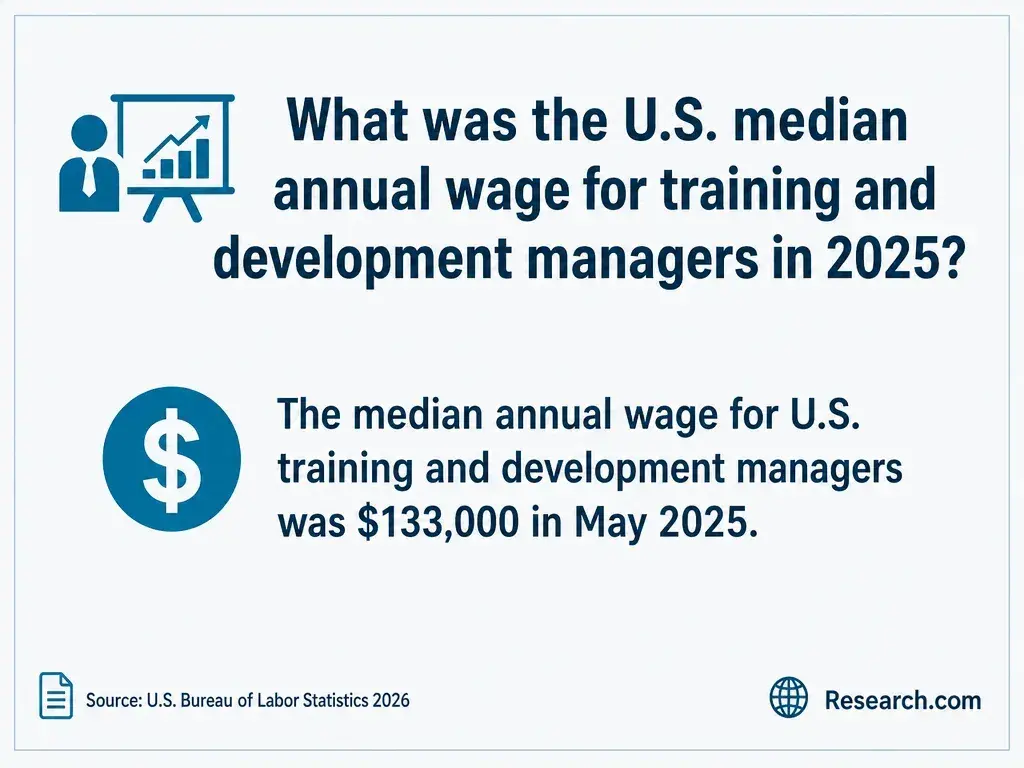
There is no reliable salary attached to the degree itself. The U.S. Bureau of Labor Statistics reports a May 2025 median annual salary of $133,000 for training and development managers, with projected employment growth of 6.4% from 2025 to 2035. That occupation is relevant to some experienced learning leaders, but its median describes workers in the occupation - not Ed.D. graduates or the pay an individual applicant can expect.
For a financial decision, compare compensation for roles you could realistically obtain with and without the doctorate, accounting for your sector, location, experience, and employer pay rules. Do not use an occupational median as a promised raise or rely on an uncertain promotion to make an otherwise unaffordable tuition plan work.
How Do You Choose an Accredited Online Ed.D. Program?
Verify the institution's accreditation with the accreditor and confirm the exact degree name, delivery rules, required credits, project structure, and any licensure disclosures with the program. Accreditation establishes an institutional status; it does not guarantee affordability, job placement, or eligibility for a regulated education role.
For this particular decision, compare programs using the same expected pace and the same categories of cost. Request a current tuition schedule, fee list, rate-change or price-guarantee policy, attendance requirements, sample course sequence, aid conditions, and rules for project extensions. The online organizational leadership doctoral affordability guide can help identify options to investigate, but published comparisons should not replace a written estimate for your entry term.
Choose only after the projected full cost fits your fixed limit and the payments due in each term fit your cash flow under a plausible higher-cost scenario. If the plan depends on unconfirmed aid, a future raise, or credits the school has not accepted, postpone the commitment or compare a lower-cost credential.
Other Things You Should Know About EdD Leadership
Not necessarily. Ask whether the institution offers a written tuition guarantee, which charges it covers, and whether a leave or change in enrollment pace ends the guarantee.
Possibly, but leave rules vary. Confirm reentry procedures and whether a break affects aid, loan repayment, course sequencing, or an employer agreement before pausing.
Only if its policy or written agreement covers those expenses. Ask separately about tuition, required fees, travel, data collection, and any project-related materials.
Potentially, if the institution is eligible and the expense qualifies under applicable tax rules. Confirm the school's eligibility and review your plan's rules with a qualified tax professional before withdrawing funds.
- Cost of Attendance (Budget) | 2025-2026 Federal Student Aid Handbook https://fsapartners.ed.gov/knowledge-center/fsa-handbook/2025-2026/vol3/ch2-cost-attendance-budget
- Employer-offered educational assistance programs can help pay for college | Internal Revenue Service https://www.irs.gov/newsroom/employer-offered-educational-assistance-programs-can-help-pay-for-college
- Understanding College Costs | studentaid.gov https://studentaid.gov/resources/prepare-for-college/students/choosing-schools/consider-costs
- Frequently Asked Questions - Tuition Rates and Fees https://www.tuition.pitt.edu/frequently-asked-questions
- Late payment consequences - One Stop Student Services https://onestop.umn.edu/finances/billing-and-payment/late-payment-consequences
- Ed.D. Tuition and Financial Aid - Peabody | VU-EDU https://peabodyonline.vanderbilt.edu/edd-in-organizational-learning/tuition-and-financial-aid/
- Tuition and Fees | Distance and Online Education | The University of Iowa https://distance.uiowa.edu/online-programs-and-courses/admissions/tuition-and-fees
- Financial Aid FAQ - UNC-Chapel Hill Online https://online.unc.edu/online-doctoral-programs/online-edd-organizational-learning-and-leadership/admissions/tuition-financial-aid/financial-aid-faq/
- Tuition in Detail - One Stop Student Services https://onestop.utk.edu/billing-payments/tuition-detail/
- Tuition & Fees | National University https://www.nu.edu/admissions/tuition/