2027 Online Ed.D. in Leadership and Learning in Organizations: Evaluating Research Preparation for Protecting Employee Confidentiality
Audited and Verified:
Our Editorial and Data Verification Process
Research.com uses government datasets, official education statistics and primary institutional information to support its career and degree guides. Our review process checks factual accuracy, occupational definitions, source dates and the requirements associated with the credentials discussed.
How This Article Was Fact-Checked
Our editorial team verifies salary estimates, employment projections, education requirements and program information against original data providers and official organizations. Salary figures are checked against the relevant occupational definitions and reporting periods. Information about licensure, accreditation and required in-person training is reviewed separately.
Fact-checked and verified on:

Co-Founder and Chief Data Scientist
A workplace research project can reveal more about employees than its investigator intended. A small team's survey responses, interview quotations, or linked HR records may identify people even after names are removed. For leaders and learning professionals considering an online Ed.D., the issue is whether its research preparation will help them study organizational problems without exposing colleagues. This guide explains the methods and safeguards to look for, the approvals a project may require, and how to judge whether a doctorate - or more focused training - is the right investment.
Key Things You Should Know
- Look for supervised practice in study design, confidentiality, data access, and reporting - not just a general research-methods course.
- Removing names is not enough: small groups, distinctive quotations, and combinations of HR variables can still identify employees.
- Before collecting workplace data, establish employer permission, the program's review requirements, and a plan for restricted access, retention, and safe reporting.
What Is an Online Ed.D. in Leadership and Learning in Organizations?
An online Doctor of Education in leadership and learning in organizations is a practice-oriented doctorate concerned with how people learn, how organizations change, and how leaders use evidence to improve decisions. Program names and requirements vary. Some emphasize adult learning and organizational development; others emphasize education administration or a particular sector. "Online" describes where much instruction occurs, not necessarily a self-paced program: live meetings, group work, and campus convenings may still be required.
For someone investigating employee experiences, the useful distinction is between studying an organizational problem and obtaining unrestricted access to personnel information. An Ed.D. may teach applied inquiry, but enrollment does not confer authority to inspect HR files, recruit employees, or publish workplace findings. A research-focused PhD may better suit a goal of developing generalizable theory; a focused evaluation or privacy course may be enough if the immediate task is to improve one internal process.
How Does an Online Ed.D. Prepare Students to Protect Employee Confidentiality?
Strong preparation connects research ethics to the actual path information takes: recruitment, collection, storage, analysis, presentation, and deletion. Students should learn to distinguish anonymous data, which cannot reasonably be linked to a person, from confidential data, whose identity is known or could be reconstructed but is protected through controls. A survey is not anonymous merely because its results omit names.
Consider an illustrative project evaluating a leadership-development course. An employee's job title, department, tenure, and unusual comment could identify them when combined, particularly in a small team. Asking only for information needed to answer the evaluation question may reduce risk more effectively than collecting detailed records and attempting to remove identifiers afterward.
A sound program should give students supervised opportunities to make the following decisions before using employee data:
- Define the decision the project will inform and collect the minimum information necessary to answer it.
- Confirm who can authorize access and recruitment, whether an agreement is needed, and what the university requires for ethics review before data collection begins.
- Separate research participation from managerial pressure, explain foreseeable privacy limits, and establish who can view raw responses.
- Specify approved storage, access controls, retention and deletion rules, and how results will be reported without exposing individuals or small groups.
Employer permission and university review serve different purposes; neither automatically substitutes for the other. Whether a project falls under human-subjects research rules, qualifies for an exemption, or is treated as internal evaluation depends on its design and the institution's determination - not a student's label. Healthcare, school, government, and other settings may impose additional rules on particular records. Ask the program who makes review determinations and whether faculty examine students' actual data-management plans.
What Research Methods Are Taught in Leadership and Learning Ed.D. Programs?
Leadership and learning Ed.D. programs commonly teach qualitative, quantitative, or mixed-methods inquiry and applied evaluation, but their depth and required sequence differ. The most relevant preparation is the ability to choose a method that answers a workplace question without collecting more identifiable information than necessary.
The comparison below shows how familiar methods create different confidentiality challenges. It is a guide to assessing coursework, not a claim that every program offers each method.
| Method | Useful organizational question | Distinctive confidentiality concern |
| Interviews or focus groups | How do employees experience a new learning process? | Voices, quotations, and detailed accounts may identify participants; group members also hear one another. |
| Surveys | How do employees describe access to training? | Demographic combinations and small-group breakdowns may reveal respondents. |
| HR or learning-system analysis | How does participation vary across roles or time? | Linked records, timestamps, and individual histories may be identifying even without names. |
| Mixed-methods evaluation | What changed after a program, and how do participants explain it? | Combining datasets can make individuals easier to recognize. |
Methods instruction should also cover sampling, measurement quality, missing data, alternative explanations, and the limits of pre/post comparisons. For example, improved course ratings do not establish that training caused better job performance. Ask whether students practice reporting uncertainty and withholding revealing subgroup results, rather than simply learning to run analyses.
A capstone is especially useful when faculty review the proposed question, recruitment, data access, and disclosure risks before work begins. If you are comparing applied-project routes through an education doctorate, verify the actual deliverable and oversight; "no dissertation" does not mean no rigorous inquiry or confidentiality obligations.
First verify the institution's current accreditation and the exact Ed.D. award through the university and its recognized accreditor. Institutional accreditation matters for academic legitimacy, but it does not establish that a particular curriculum teaches employee-data governance well. Nor does it imply eligibility for a regulated education role.
For this topic, request a current course map, research handbook, capstone or dissertation requirements, and any available sample project guidance. Ask who reviews protocols, what happens if an employer refuses data access, whether students can use simulated or public data where appropriate, and how online students receive methods and library support. An answer such as "students complete ethics training" is less informative than a description of faculty feedback on recruitment, storage, analysis, and reporting plans.
Compare the full cost alongside those academic supports, rather than selecting the cheapest advertised tuition. Resources on financial support for online higher education leadership doctorates can help frame questions, but confirm aid eligibility and terms directly with each school.
Requirements differ by institution and entry term. Programs may ask for prior graduate study, transcripts, a statement of purpose, recommendations, a résumé, or evidence of professional experience. Neither a published article nor a particular research-software credential should be assumed necessary unless the program says so.
An applicant proposing workplace inquiry should explain the organizational decision they want to improve and what access is potentially available, without promising employee participation or confidential records they cannot authorize. Experience leading a training initiative or evaluation can demonstrate readiness, but the admissions office determines whether it meets that program's criteria. Ask whether methods preparation is required before entry or taught within the degree.
Applicants returning to doctoral study should distinguish admission eligibility from credit applied to the new degree. Resources on comparing education doctorate ABD completion routes may help identify questions, but only the receiving institution can determine whether prior work satisfies its curriculum and progression rules.
Course titles vary, but relevant study may combine adult learning, organizational change, leadership, program evaluation, qualitative and quantitative methods, and an applied project. For confidentiality preparation, examine what students must produce: a defensible research question, recruitment materials, a data-management plan, an analysis, and a report appropriate for its audience are more revealing than a course title alone.
Look for instruction that treats privacy as a design constraint throughout the sequence. An adult-learning course might help frame the training problem; a methods course might address sampling and interview protocols; a project seminar might require review of access permissions and reporting risks. Confirm which courses are required, which are electives actually available to online students, and whether an advisor will review a project involving employees. Exposure to these subjects is not proof of independent expertise in employment law, information security, or research ethics.
Time to completion depends on the required credits, course schedule, enrollment pace, and how long the approved doctoral project takes. Workplace access can become the controlling factor: an employer change, delayed authorization, or a revised research plan may extend a project even when coursework is on schedule. Request the program's published completion requirements and ask how interruptions affect enrollment and fees.
For a realistic budget, calculate required tuition and fees from the school's current schedule, then account for technology, books, any required travel, and the cost of taking time away from work. Employer reimbursement may depend on continued employment, grades, or repayment conditions. Organizational leadership doctoral study on a budget is worth exploring, but compare each program's total required commitment - not a single per-credit price.
If the immediate need is to run one confidential evaluation, compare that commitment with targeted methods training and support from an authorized workplace research or privacy specialist. A doctorate makes more sense when broader leadership and applied-research development is itself the goal.
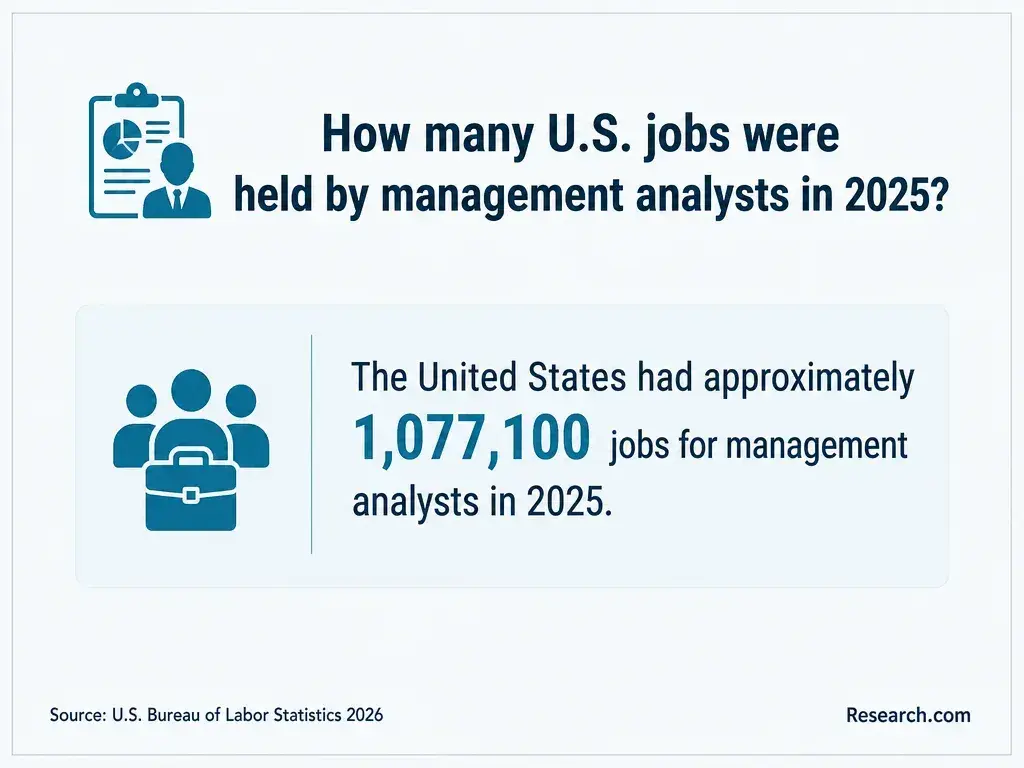
Experienced learning professionals and organizational leaders may apply the degree in training management, organizational development, evaluation, consulting, or education administration. The relevant work differs: a training manager oversees learning strategy and staff; a management analyst examines organizational processes; an education administrator works within an institution's governance and employment requirements.
For roles involving employee evidence, employers will also look for judgment demonstrated in real projects: defining a useful question, securing appropriate access, protecting participants, and communicating limitations. A carefully redacted portfolio can show those skills without disclosing raw records. An Ed.D. does not replace experience managing teams, budgets, or sensitive information.
If your aim crosses between a university and another type of organization, online Ed.D. study connecting organizations and higher education may inform program comparisons. Check the target employer's actual role requirements rather than assuming cross-sector vocabulary makes positions interchangeable.
There is no reliable single salary for graduates of leadership and learning Ed.D. programs. As an occupational benchmark, the U.S. Bureau of Labor Statistics reports a May 2025 median annual salary of $133,000 for training and development managers. That figure covers people in the occupation across educational backgrounds; it is not an Ed.D. graduate salary or a projected raise.
Use compensation data only after identifying a plausible target role and location. Prior management experience, sector, employer size, and responsibilities may matter more to an offer than the doctorate. For a confidentiality-focused goal, weigh the degree's cost against the opportunities it realistically adds to your existing work, not against a broad managerial median.
Do Ed.D. Graduates Need Licensure or Professional Certification?
Organizational learning, training, and many consulting roles do not have a universal Ed.D.-specific license. Particular jobs may require another credential, however, and school-administrator licensure depends on state rules and an approved preparation pathway - not on the word "leadership" in a degree title. Verify eligibility with the relevant licensing authority and the program before enrolling for a regulated position.
Professional certifications can document narrower skills, but they do not replace employer authorization to use employee data or the university's project-review process. If your goal is solely to handle a specific dataset safely, ask your employer's privacy, security, legal, or research office what training and permissions are required; an Ed.D. may be unnecessary.
Other Things You Should Know About EdD Leadership
Only if your employer's rules, participant disclosures, and university-approved project plan allow that tool and its data handling. Check where recordings are processed, who can access them, and whether the provider retains or uses the content.
Not without qualification. A manager should explain who will see responses, the limits of confidentiality, and how participation relates to the reporting relationship. Independent recruitment or analysis may reduce perceived pressure.
Revise the question or design with your advisor and organizational sponsor. Existing aggregate reports, appropriately authorized alternatives, or a different project site may be feasible, but none automatically satisfies a program's doctoral requirements.
Check employer agreements and program rules first. A portfolio may describe the question, methods, and your decisions while omitting restricted data, identifying quotations, and results the organization has not approved for disclosure.
- Human Subjects and Privacy Protection | National Institute of Justice https://nij.ojp.gov/funding/human-subjects-and-privacy-protection
- Institutional Review Boards Frequently Asked Questions | fda.gov https://www.fda.gov/regulatory-information/search-fda-guidance-documents/institutional-review-boards-frequently-asked-questions
- Data protection | The Office of Research Integrity https://ori.hhs.gov/content/Chapter-6-Data-Management-Practices-Data-protection
- Principles and Best Practices for Protecting Participant Privacy | Grants & Funding https://grants.nih.gov/policy-and-compliance/policy-topics/sharing-policies/dms/privacy/best-practices
- An Overview of Data Management in Human Subjects Research | nih.gov https://pmc.ncbi.nlm.nih.gov/articles/PMC10898467/
- Exempt, Expedited and Full Board Review | University of Pittsburgh https://www.hrpo.pitt.edu/exempt-expedited-and-full-board-review
- Quantitative vs. Qualitative Methods: Choosing the Right Approach for Your Research Question | Kent State Online https://onlinedegrees.kent.edu/blog/quantitative-vs-qualitative-methods-choosing-the-right-approach-for-your-research-question
- Doctoral Learning and Resources - Section 7. Learning Modalities and Resources - Academics at Walden University https://academics.waldenu.edu/handbook/learning-modalities/doctoral-research-resources
- Data Security, Management and Retention | Research | UW-Madison https://research.wisc.edu/data-security-management-and-retention/
- Working with Your Own Students | Guides & Resources | Columbia University https://www.tc.columbia.edu/institutional-review-board/guides--resources/working-with-your-own-students/