2027 Online Ed.D. in Leadership and Learning in Organizations: Working with a Partner That Requires Confidential Findings
Audited and Verified:
Our Editorial and Data Verification Process
Research.com uses government datasets, official education statistics and primary institutional information to support its career and degree guides. Our review process checks factual accuracy, occupational definitions, source dates and the requirements associated with the credentials discussed.
How This Article Was Fact-Checked
Our editorial team verifies salary estimates, employment projections, education requirements and program information against original data providers and official organizations. Salary figures are checked against the relevant occupational definitions and reporting periods. Information about licensure, accreditation and required in-person training is reviewed separately.
Fact-checked and verified on:

Co-Founder and Chief Data Scientist
An organization may welcome an Ed.D. student's help with a learning or leadership problem but refuse to release its findings publicly. That condition can shape the project before data collection begins: the university must still be able to assess the work, and the student must protect the partner's information.
This guide is for working leaders and learning professionals considering an online Ed.D. project with an employer or external partner. It explains which permissions to secure, how to design a defensible confidential deliverable, and when a proposed partnership may not be workable.
Key Things You Should Know
- A partner's confidentiality agreement does not replace faculty approval, organizational data authorization, or a determination of whether institutional research review is required.
- Confirm before collecting data that authorized faculty can examine enough evidence to assess the work and that the program permits any proposed redaction, embargo, or restricted-access deliverable.
- If the partner cannot permit adequate academic review, redesign the question or data source, seek another site, or choose a program with compatible project rules.
What is an online Ed.D. in Leadership and Learning in Organizations?
An online Doctor of Education in leadership and learning generally combines professional study of organizational change, adult learning, and applied inquiry. Its purpose is to help practitioners investigate and improve problems in settings such as workplaces, nonprofits, colleges, or public agencies.
The exact degree title, courses, and final project vary by institution; a program may require a dissertation in practice, capstone, or another approved doctoral deliverable.
For a student working with a confidential partner, the decisive feature is not the program's title. It is whether the program's assessment and disclosure rules can accommodate restricted organizational information. Compare the actual project requirements alongside Ed.D. specialization choices for professional goals; a relevant concentration does not, by itself, authorize a private final report.
How does an online Ed.D. compare with a campus-based doctoral program?
Online study can make coursework accessible without relocation, but it does not necessarily make partner research self-paced. Live classes, team meetings, campus convenings, and faculty review deadlines may affect when an organization must grant access.
A campus-based program may offer more in-person collaboration, yet it faces the same fundamental question: can the student present sufficient evidence for doctoral assessment without violating the partner's restrictions?
If the partner is a college, confirm which institutional offices control learner records, employee information, and permission to study the proposed problem.
Those checks matter regardless of delivery format. Readers focused on that setting can also compare Ed.D. options for organizational improvement in colleges, while verifying each program's own project and attendance rules.
What accreditation should an online Ed.D. in leadership have?
Confirm that the degree-awarding institution holds recognized institutional accreditation and that the accreditation covers the institution offering the online program.
Check the institution's current status through the accreditor and the U.S. Department of Education's accreditation resources. Do not assume that institutional accreditation establishes approval of a particular capstone arrangement or qualifies graduates for school-administrator licensure.
For a confidential project, accreditation is a starting point, not the deciding test. Request the doctoral handbook and ask who has authority to approve partner-site arrangements, restricted data, final-document access, and any exceptions to repository requirements. A recruiter's informal assurance is not a substitute for the responsible academic office's written determination.
Relevant programs may cover adult learning, leadership, organizational diagnosis, change implementation, qualitative and quantitative methods, and program evaluation.
Course names alone cannot show whether students learn to manage restricted records or negotiate a partner-approved reporting plan. Examine assignments and research guidance for instruction in consent, data minimization, secure storage, measurement, and communication of limitations.
A useful sequence moves from a partner's decision, such as whether to revise a supervisor-development program, to a feasible question, authorized evidence, an appropriate analysis, and a report the intended audience can use.
Confidentiality must not turn weak evidence into a stronger claim: if only a small, self-selected group responds, the student should explain that limitation rather than claim organization-wide impact.
Requirements vary. Programs may assess prior degrees and graduate work, academic performance, professional experience, recommendations, and a statement connecting the applicant's goals to a practice problem.
An education master's or a senior job title is not a universal requirement. Applicants proposing partner research should demonstrate relevant responsibilities without claiming that an organization has approved access it has not granted.
In an application, describe the proposed problem and identify access as a feasibility condition: who could sponsor the work, what information might be available, and what approval would be needed?
If you have unfinished doctoral study, ask separately about admission, transfer credit, and final-project rules; comparing education doctorate ABD completion routes can help frame those questions. Prior work does not automatically replace a new program's research requirements.
Completion time and total cost depend on the program's required credits, pacing, fees, convenings, and final-project rules. For a confidential partnership, also budget time for contract review, site approval, data access, ethics determinations, and revisions to a restricted report. These steps can delay progress even when coursework stays on schedule.
Request a written cost estimate for your intended enrollment pattern, including any travel and continuation charges. Compare it with employer reimbursement terms and the risk of paying for additional enrollment if partner access stalls.
Tuition-focused choices for a leadership doctorate can narrow a search, but the lowest advertised tuition is not necessarily the lowest feasible cost for this project.
It involves designing an academically assessable project whose data, analysis, and reporting comply with both university rules and the partner's authorized restrictions.
Confidentiality can apply to raw records, participant identities, the organization's name, findings, or the final document. Specify which of these the partner means; a blanket promise that "everything stays private" may be impossible to honor.
Before committing to the site, work through these decisions with the responsible people:
- Define the decision and scope: Agree on the organizational problem, the question the student can investigate, the expected deliverable, and what the partner will do with it.
- Map authority and access: Identify the sponsor, data owner, authorized participants, permitted records, retention period, and who can approve access after a staffing change.
- Obtain academic and ethical direction: Ask the advisor and designated university office whether the activity requires institutional research review; obtain partner permission and check applicable employment-data, FERPA, consent, and contractual obligations.
- Agree on review and disclosure: Confirm what faculty and examiners must see, whether an abstract or final document enters a repository, and which redactions, restricted-access copies, or embargoes the university actually allows.
- Plan a fallback: Set a decision point for changing the question, using less sensitive evidence, or moving sites if authorization is denied or withdrawn.
A workable arrangement might give authorized faculty secure access to the evidence needed for assessment while limiting what appears in a public-facing document. That is an option to seek approval for, not a standard entitlement.
Removing names may still leave people identifiable through job titles, quotations, or small groups. Agree on suppression and quotation rules before analysis, and report enough about methods and limitations for readers to understand the conclusions.
The university determines whether the work meets doctoral standards; the partner controls access to its information within applicable agreements. Neither party should promise the other unilateral control over academic conclusions.
If the partner demands approval to change unfavorable findings or bars faculty from examining supporting evidence, the student should resolve that conflict before beginning, not after collecting restricted data.
Professionals in learning and development, organizational development, nonprofit management, and higher-education administration may use an Ed.D. to deepen their ability to diagnose problems, lead change, and evaluate initiatives.
A confidential partner project can demonstrate those skills, but its portfolio value may be limited: the student might be able to describe the question, approved methods, and personal contribution without sharing findings or identifying the organization.
Career fit depends on prior responsibility as well as the degree. A practitioner seeking to lead cross-functional learning initiatives may benefit from doctoral inquiry and faculty feedback.
Someone who primarily needs a first supervised evaluation project may gain more immediate value from an employer-sponsored assignment or targeted methods training. A general leadership Ed.D. does not automatically qualify a graduate for educator licensure or an executive position.
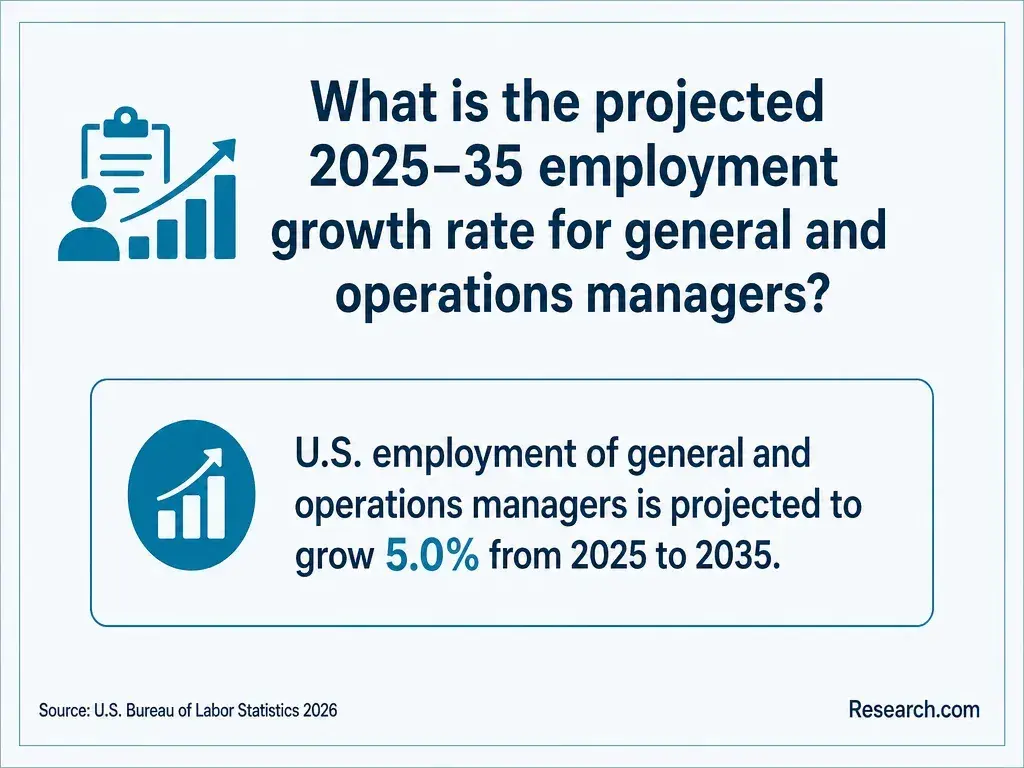
There is no reliable salary figure for graduates of every leadership and learning Ed.D. program. As occupational context, the U.S. Bureau of Labor Statistics reports a May 2025 median annual salary of $133,000 for training and development managers, with projected employment growth of 6.4% from 2025 to 2035.
Those figures describe an occupation, not the earnings or promotion prospects of new Ed.D. graduates.
Use the occupation that matches your actual target responsibilities when evaluating a program's cost. Management, consulting, specialist, and education-administration roles have different experience requirements and pay structures. A confidential capstone may strengthen an internal advancement case if the employer can evaluate the work, but it should not be counted as a promised salary return.
How can you choose a reputable online Ed.D. program?
Shortlist accredited institutions, then test each program against the proposed partnership rather than relying on broad claims about applied learning. Send the same project scenario to the program coordinator and request the written policy or handbook provision behind each answer.
The most useful questions are whether external sites are allowed, who approves them, what faculty must inspect, whether the final work becomes public, and what happens if access ends midproject.
Ask for a sample project timeline and a written estimate of total charges under a realistic completion schedule. If financing is central to your decision, review higher education leadership doctoral grants and aid as a starting point, then verify actual eligibility and employer conditions with the school and your workplace.
Choose the program only after its academic rules, the partner's restrictions, and your available time and funding can coexist.
Other Things You Should Know About EdD Leadership
Ownership depends on university policy and any signed agreements. Have the university's authorized office review proposed intellectual-property terms before you or the partner signs them.
Not necessarily. An embargo may expire, and a university may still require a record or abstract. Obtain the institution's written rules on duration, access, and what remains visible.
Only if the partner's permissions, university rules, consent terms, and the tool's data-handling arrangements allow it. Do not upload restricted records to a personal account by default.
Ask who can renew authorization and whether existing permissions survive the change. Notify your advisor promptly; a new sponsor, revised scope, or different site may require fresh approvals.
- FERPA | Protecting Student Privacy - Department of Education https://studentprivacy.ed.gov/ferpa
- What Is a Problem of Practice? | spalding.edu https://online.spalding.edu/blog/what-is-problem-practice
- Leadership and Learning in Organizations Online Ed.D. | Peabody College of Education and Human Development https://peabody.vanderbilt.edu/academics/edd-programs/online-leadership-learning-organizations/
- Admissions and Application Requirements - UNC Online https://online.unc.edu/online-doctoral-programs/online-edd-organizational-learning-and-leadership/admissions/
- Capstone Partnerships | Virginia Commonwealth University https://soe.vcu.edu/academics/leadership/leadership-edd/capstone-partnerships/
- Does My Research Need IRB Review | Rhode Island Small Business Development Center https://web.uri.edu/research-admin/integrity-security/human-subjects/does-my-research-need-irb-review/
- Student Privacy & FERPA for Faculty | indiana.edu https://registrar.indiana.edu/policies/ferpa/student-privacy-faculty.html
- Courses | Organization and Leadership | Columbia University https://www.tc.columbia.edu/organization-and-leadership/courses/
- What's the Difference Between Asynchronous and Synchronous Learning? | Ohio State Online https://online.osu.edu/content-hub/blogs/whats-the-difference-between-asynchronous-and-synchronous-learning/
- FERPA Guidelines for Faculty and Staff | psu.edu https://www.registrar.psu.edu/confidentiality/guidelines-faculty-staff/