2027 Online Ed.D. in Leadership and Learning in Organizations: Agreeing on a Capstone Scope Before Collecting Data
Audited and Verified:
Our Editorial and Data Verification Process
Research.com uses government datasets, official education statistics and primary institutional information to support its career and degree guides. Our review process checks factual accuracy, occupational definitions, source dates and the requirements associated with the credentials discussed.
How This Article Was Fact-Checked
Our editorial team verifies salary estimates, employment projections, education requirements and program information against original data providers and official organizations. Salary figures are checked against the relevant occupational definitions and reporting periods. Information about licensure, accreditation and required in-person training is reviewed separately.
Fact-checked and verified on:

Co-Founder and Chief Data Scientist
A promising workplace problem can become an unfinishable Ed.D. capstone if the student, faculty advisor, and organization mean different things by "the project." Before collecting data, they need to agree on what will be studied, who can authorize access, and what the final work can reasonably claim.
This guide is for organizational leaders and learning professionals considering or beginning an online Ed.D. It shows how to turn a broad improvement goal into a bounded, approvable project - and how to recognize when the proposed scope needs to change.
Key Things You Should Know
- Bound the capstone to a defined organizational problem, setting, population, timeframe, and deliverable; "improve leadership culture" is not yet a workable scope.
- Before data collection, secure distinct decisions about academic fit, organizational permission, data access, and the institution's required ethics review. A willing sponsor cannot grant all four.
- Match the claim to the evidence: without a credible baseline or comparison, a capstone may assess needs or implementation, but should not claim that an intervention caused improvement.
What Is an Online Ed.D. in Leadership and Learning in Organizations?
An online Doctor of Education in leadership and learning in organizations is a practice-oriented doctoral pathway concerned with how people learn, lead, and implement change at work. Depending on the program, students may study adult learning, organizational development, leadership, evaluation, and applied research while remaining employed. The exact degree name, curriculum, and final project vary by institution.
For a prospective capstone student, the consequential distinction is between studying an organizational problem and simply carrying out an assigned workplace task. A doctoral project needs an answerable question, defensible evidence, faculty-supervised analysis, and an academically acceptable deliverable. Online coursework may let a student work from another location, but it does not remove meetings with an advisor, project partners, or a cohort. Confirm those obligations before promising an employer a completion date.
How Does a Capstone Differ From a Traditional Dissertation?
A capstone commonly centers on a bounded problem of practice and a usable product, such as an evaluation or evidence-based recommendation. A traditional dissertation generally places greater emphasis on an original scholarly research contribution. These are tendencies, not interchangeable definitions: some Ed.D. programs require a dissertation in practice, and each institution sets its own standards for methods, writing, review, and final approval.
The comparison below helps clarify what must be agreed upon with a project sponsor. Neither format excuses weak evidence or bypasses research oversight.
| Feature | Practice-focused capstone | Traditional research dissertation |
| Central purpose | Inform a decision about a defined practice problem | Address a scholarly research question and contribute to the literature |
| Typical setting | A specific organization, program, or partnership | A setting and sample selected to answer the research question |
| Likely output | Analysis and recommendations, sometimes with an implementation product | A sustained research manuscript |
| Approval standard | Program requirements plus applicable site and ethics approvals | Program research requirements plus applicable site and ethics approvals |
If the final-project format is an important enrollment decision, compare actual handbook requirements rather than assuming "capstone" means no substantial research. Online education doctorates with alternative final projects offer a starting point for identifying formats to verify directly with programs.
How Do You Define a Manageable Ed.D. Capstone Scope?
A manageable scope is small enough to complete within the program's approval and submission windows, yet substantial enough to support a meaningful organizational decision. The student should draft a short scope agreement before designing surveys, requesting records, or recruiting participants. The following sequence makes disagreements visible while changes are still inexpensive.
- Name the decision: Specify what the sponsor could decide after reading the project, such as whether to revise a supervisor onboarding process.
- Set boundaries: Identify the site, participating unit, eligible population, existing program or process, and period under study. Record what is excluded.
- Specify the output: Agree on the academic manuscript and any separate organizational briefing; neither party should assume the other can be shared publicly.
- Test feasibility: Check available records, recruitment routes, advisor capacity, approval timelines, and the student's authority to conduct the work.
- Record responsibilities and a fallback: Identify the faculty decision-maker, organizational sponsor, data custodian, review process, and a narrower option if access or sponsorship changes.
For example, "improve our leadership culture across the company" spans too many causes, units, and outcomes. "Examine how one division's new-supervisor onboarding is implemented and what participants report needing after its first cycle" identifies a setting and feasible decisions without presuming that onboarding caused a performance change. The sponsor may agree that the issue matters; only the program can decide whether the proposed work meets doctoral requirements.
A useful question identifies the organizational process or intervention, setting, people or units, outcome or experience of interest, and relevant timeframe. It must be answerable with evidence the student can lawfully and practically obtain. The wording should also match the decision: a needs assessment asks what is missing; an implementation study asks what happened during delivery; an outcome evaluation asks what changed.
For the illustrative onboarding project, a question might be: How do newly appointed supervisors in one division describe the usefulness and barriers of the division's onboarding process during its first cycle? That question supports interviews or appropriately authorized feedback, but not a claim that onboarding reduced turnover. If the sponsor instead needs to know whether turnover fell because of onboarding, the student would need a stronger design, suitable measures, and a credible way to address other explanations.
Ask the faculty advisor whether the question fits the required capstone format and methods expectations. Ask the sponsor whether an answer would change a real decision. If either answer is no, revise the question before seeking participants or records.
Choose evidence backward from the question, not from whichever dashboard is easiest to open. Existing process documents may show what was intended; attendance records may show participation; interviews may reveal experiences; performance measures may describe outcomes. None is a substitute for the others, and self-reported satisfaction alone cannot establish improved job performance.
Before collecting anything, document the source, data owner, permitted use, access method, retention rules, and what can appear in the submitted capstone. Aggregated or deidentified information may reduce privacy risk but is not automatically unrestricted. Identifiable employee records, learner records, and confidential business information may require additional permission or controls. If educational records are involved, check applicable FERPA obligations. Ask the institution to determine whether its human-subjects review process applies; do not decide independently that a workplace evaluation is exempt.
Plan for imperfect evidence. If no trustworthy baseline exists, an implementation analysis or needs assessment may be more defensible than a before-and-after impact claim. If participation is voluntary, explain how nonparticipation could shape the findings. Report limitations and recommendations even when the evidence does not support the sponsor's preferred conclusion.
Programs commonly combine leadership and learning coursework with research methods and a culminating project, but required courses and project milestones differ. For capstone planning, look specifically for preparation in organizational diagnosis, qualitative or quantitative methods, evaluation, research ethics, and communicating findings. Ask when students select a site, receive an advisor, submit a proposal, and obtain permission to begin data collection.
Admission rules also vary. A program may consider prior graduate study, professional leadership experience, recommendations, a statement of purpose, and evidence of research readiness; an education master's or a particular job title is not universally required. Applicants with an Ed.S. should distinguish credits considered for admission from credits actually applied to the doctorate. When comparing Ed.S.-to-Ed.D. program options, request a written evaluation rather than assuming prior coursework shortens the capstone or degree.
An applicant should describe an authentic organizational problem without promising site access they do not control. Before enrolling primarily for a workplace project, ask admissions and the capstone coordinator whether an external partner is permitted and what happens if an employer withdraws cooperation.
There is no reliable single duration or price for an online Ed.D. Completion depends on required credits, course sequencing, enrollment pace, project approvals, data access, and revision cycles. A capstone can take longer than its scheduled course sequence if recruitment, organizational authorization, or ethics review is delayed. Ask each program for its published time-to-completion policy and the actual sequence from proposal approval through final submission.
For a meaningful cost comparison, obtain the current tuition basis - per credit, term, or program - and add mandatory fees, required travel and lodging, technology, and any continuing-enrollment charges. Also consider time away from paid work and whether an employer's reimbursement requires continued employment or satisfactory grades. Low-cost Doctor of Education programs online can help identify candidates, but a lower advertised tuition figure is not proof of a lower total cost or a workable project timeline.
If the immediate goal is to evaluate one workplace initiative rather than earn a doctorate, employer-supported evaluation training or a smaller supervised project may be a faster, less costly choice.
Compare the support and constraints surrounding the capstone, not just where lectures occur. An online program may make continued employment easier while still requiring live classes, team meetings, campus convenings, and access to a project site. A campus-based program may offer more in-person advising or local partnerships but demand regular travel or a schedule change. Neither format guarantees an available organizational sponsor.
Request a sample term schedule and ask how often students meet advisors, who arranges project sites, whether team projects are required, and how remote data collection is supervised. Confirm travel expectations and compare the full cost of each format; organizational leadership doctoral study on a budget is most useful when the comparison includes fees and travel as well as tuition. Choose the format in which you can reliably attend required activities and sustain an approved project.
A well-executed capstone can demonstrate needs assessment, stakeholder collaboration, evidence interpretation, and decision-oriented communication. Those skills may support advancement in learning and development, organizational development, consulting, or education administration. Employers still assess relevant experience, functional expertise, and leadership responsibility; the doctorate alone does not qualify someone for a director or executive role.
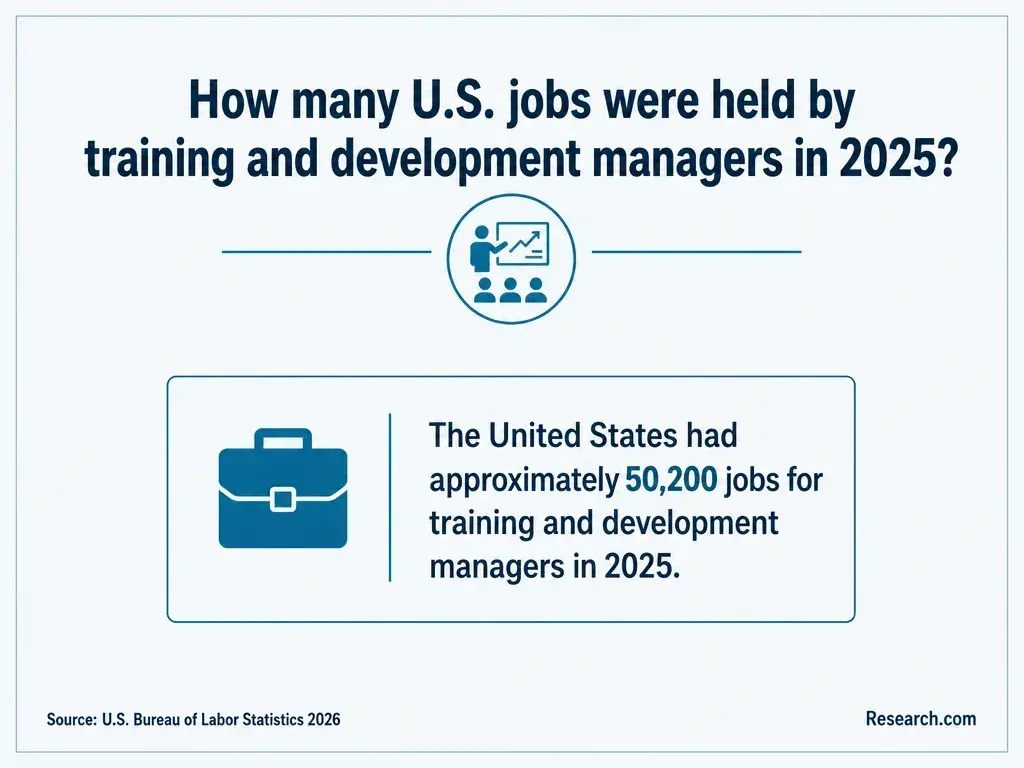
The U.S. Bureau of Labor Statistics reports a May 2025 median annual salary of $133,000 for training and development managers. That is an occupational median, not an expected salary for Ed.D. graduates or a return on the cost of a capstone. A student aiming for college administration should assess that sector's hiring requirements separately; online Ed.D. pathways for college organizational leadership may be relevant, but a workplace learning project does not replace higher-education experience.
How Can You Evaluate Accreditation, Licensure, and Program Quality?
Verify that the institution holds recognized institutional accreditation, then confirm the exact Ed.D. award and its published capstone rules with the university. Accreditation does not establish that a general leadership doctorate meets a state's principal, superintendent, teacher, or other licensure requirements. If licensure is your goal, obtain the program's disclosure and check with the relevant state authority before enrolling.
For this article's decision, quality also means clear project governance. Ask for the capstone handbook, advisor assignment policy, proposal and review checkpoints, rules for external sites and team work, data-security expectations, and examples of permissible final deliverables. Ask who resolves a conflict between a sponsor's requested analysis and the faculty advisor's academic requirements. A program is a stronger fit when it can explain that process before you commit tuition or organizational resources.
Other Things You Should Know About EdD Leadership
Possibly. Access granted through your former role may end when employment does. Tell your advisor promptly, check the site agreement and program policy, and obtain new authorization before using or collecting organizational data.
They may be able to support implementation or provide authorized information, but the program determines whether the academic work can be completed as a team and how individual contributions are assessed. Clarify roles before collaborating.
Only if the institution and data owner permit that tool and its handling of recordings meets applicable consent, confidentiality, and security requirements. Do not upload identifiable interviews to an unapproved service.
A well-designed project can still be valuable. Report the result accurately, examine measurement and implementation limitations, and explain what the organization can reasonably decide from the evidence.
- IRBs | ORI https://ori.hhs.gov/content/chapter-3-The-Protection-of-Human-Subjects-IRBs
- Ethical Guidelines and the Institutional Review Board - PMC https://pmc.ncbi.nlm.nih.gov/articles/PMC10885741/
- Frequently Asked Questions | Protecting Student Privacy https://studentprivacy.ed.gov/frequently-asked-questions
- Leadership and Learning in Organizations Online Ed.D. | Peabody College of Education and Human Development https://peabody.vanderbilt.edu/academics/edd-programs/online-leadership-learning-organizations/
- Use of Student Data in Human Participant Research | Cornell Research Services https://researchservices.cornell.edu/resources/use-student-data-human-participant-research
- Capstone and Thesis Research Guide: Writing a Research Proposal | uwsuper.edu https://library.uwsuper.edu/Capstone/Proposal
- Online Ed.D. in Higher Education | Rockhurst University https://onlinedegrees.rockhurst.edu/programs/online-edd-education-leadership/higher-ed
- Advance Your Leadership Career with an Online Ed.D. | UMass Global https://www.umassglobal.edu/blog-news/advance-your-leadership-career-online-edd
- EdD Organizational Leadership Online | Saint Leo University https://onlinedegrees.saintleo.edu/programs/edd-organizational-leadership-online
- Category 4 - Secondary Use of Data | Office of Research | The University of Alabama at Birmingham https://www.uab.edu/research/home/category-4-secondary-use-of-data